Potty Training a Puppy
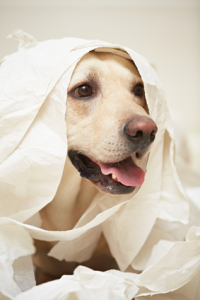
Still struggling with potty training your puppy? I have potty training tips for you! These work for a new puppy, an older puppy, a newly adopted dog and even a dog that suddenly begins pottying in the house.
Step 1: Create a Set Schedule
This is a huge step. Consistency is key for potty training success. Create a daily schedule for your puppy, such as:
- 7 a.m.: Wake up and potty.
- 7:15 a.m.: Feed.
- 7:30 a.m.: Potty (puppies and dogs will usually poop after they eat).
- 7:40 a.m.: Supervised playtime.
- 8 a.m.: Crate time with a food stuffed toy.
- 10 a.m.: Potty.
- 10:15 a.m.: 30-min walk in neighborhood.
- 10:45 a.m.: Water break.
- 11 a.m.: Crate time. Repeat the above example throughout the day.
Step 2: Confine Your Dog When Unsupervised
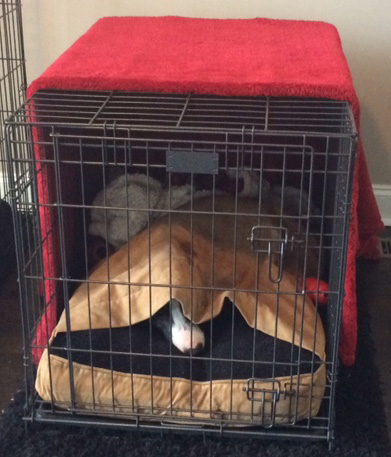
Keeping your puppy in a crate (or behind a gate in a small room) teaches your puppy to hold it. This is new for many puppies, but we need to teach them this valuable skill. Crate training should be fun. Your dog should love his crate, as this is his private spot where scrumptious food stuffed toys hide. As a general rule, your puppy should be crated for a maximum of 4 hours at a time. This rule applies for older dogs too. For young puppies, calculate 1 hour per 1 month of age (2 months old, 2 hours; 3 months old, 3 hours and so forth). Keep your puppy in his crate when you are unable to watch him closely even if for a few minutes when cooking dinner or taking a shower. Many pet owners worry their puppies are crated too much during potty training. However, it’s vital your puppy learns potty training skills. Once your puppy has been accident-free for two days, he earns more time outside of his crate. Also, make sure your puppy has plenty of playtime outdoors, regular walks and lots of food stuffed toys to keep him mentally and physically entertained.
Step 3: Bring Your Puppy or Dog to a Designated Potty Area on Leash
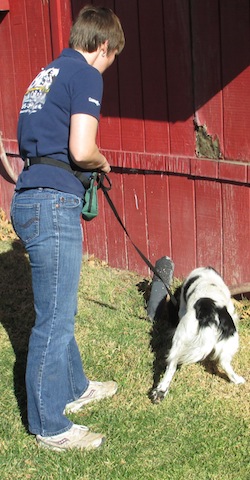
Many times, I’ve heard: “I let my dog out in the yard to potty, but she came back in the house and peed on the rug!” Oops! Your dog was having way too much fun outside and forgot to potty. 🙂 We need to teach puppies to potty first, then they can play. Bring your puppy on leash to the most boring part of your yard and wait. He will sniff around, pull on the leash (keep your feet planted in one spot like a tree), and it will happen. If your dog has not pottied within 15 minutes, then bring him indoors and put him in his crate (he is learning to hold it). Wait about 20 minutes, bring him back outside to the boring spot and wait. Repeat this process if nothing happens. When your dog does potty in his designated potty area, do the potty dance! The potty dance looks like: high-pitched praise while jumping up and down. You’re cheering for your fur baby! I promise, your neighbors are not watching. 🙂 Now, unclip the leash from his collar, as he has earned playtime in the yard.
RELATED: Housebreaking a Puppy
Measuring Success
It’s our job to teach dogs where they can potty. When your dog potties in the right spot, you have taken one step forward. When your dog potties in the wrong spot, you’ve taken two steps back. Think about it from your dog’s point of view: who would not want to potty inside? It’s climate controlled with plenty of thick carpet to absorb everything. Our dogs are smart! Teach your dog to signal you when he needs to potty. Some pet owners attach bells that hang from the backdoor knob, and your puppy pushes the bell to signal he needs to potty. Personally, I recommend watching your puppy’s body language and choosing a specific signal, which means, “Oh, you need to potty? Let me grab the leash!” This signal can be puppy pacing in front of you, puppy standing by the backdoor, puppy touching your foot or arm with his nose or paw. Choose the signal and stay consistent. The moment your puppy performs the potty signal, bring him outside. Many times, our puppies become confused when they begin to potty in the house, as they know this will get your attention and you’ll bring them outside. Many owners worry their dogs will potty signal, meaning they want to go outside and play instead of pottying outside. I would not worry about this too much, as your puppy is leashed and potties in the most boring part of your yard (for right now). This may happen when they become adults. However, it can easily be fixed. 🙂
A Few Side Notes
- If an older dog, whom was previously potty trained, suddenly begins to have accidents in the house, always consult with your veterinarian first. Always rule out a UTI or other ailments.
- For folks living in the city and want to teach your puppy or dog to potty on puppy training pads (or litter train), click on the blue link for specifics. You will use the three-step potty training process. However, I’ve included a few extra tips for you!
- Remember, your crate is not punishing your dog. The crate is teaching him to hold it. If you bring him indoors and he has free roam of your home, he will sneak off and potty in another room (usually the formal dining room since no one really uses that room anyways).
- If you are following the steps and your puppy or dog is pottying on his crate bedding, remove it for one week. Sometimes, dogs will potty on their bedding as it absorbs their urine (the mess is gone!). You can certainly add crate bedding in later. However, we are teaching the puppy to hold it in the crate so let’s set them up for success. 🙂
- Accidents will happen so don’t worry. Clean the area with pet enzyme-based spot cleaners and vow to watch your puppy closer.
- Lastly, punishment is useless for potty training. It’s the truth. If you punish for accidents, you’ve confused the dog. Trust me, it does not work. Accidents mean to keep a closer eye on your dog while loose and it’s that simple!
Potty training takes time, consistency and learning your dog’s signal and sticking to the plan. Please note your questions in the comments section below!
READ ALSO: How to Stop a Puppy From Biting

[…] This is a Dog Training secret! A set schedule provides reminders, so your puppy is given plenty of opportunities to potty. We live busy lives, and forget it’s been hours since their puppy had a chance to potty. 2-3 month old puppies can only “hold it” for 2-3 hours, max! Place schedule on your refrigerator, for quick reference, also all members of your family should follow this schedule. View a Potty Training Schedule example and learn more at Potty Training Tips. […]