Dog Training Nation

In Dogs We Trust

  • Home
  • Training
    • Dogs
    • Puppies
    • Clients
  • Behavior
    • Breeds
  • Health
  • Safety
  • Resources
    • Equipment
    • Books
  • Dog Training Videos
  • About
You are here: Home / Archives for Fanna Easter

Train Your Dog to Leave Food on the Ground

December 31, 2014 by Fanna Easter

How to Train Your Dog to “Leave It”

Teach Your Dog to Leave It
Teach “leave it” with food on the ground. olovedog/iStock

If your dog understands to “leave it” on cue, it’s time to take it a step further! When training your dog to “leave it,” take it in small steps for maximum effectiveness. Usually, this article is step 3 for most dogs, but if your dog will reliably ignore treats in your hand 80% of the time when given the “leave it” cue, it’s time to step it up a notch.

Why Dogs Eat Things Off the Ground

There’s something about food on the ground that makes most dogs go bonkers! Usually, this is a learned behavior. They’ve been rewarded by finding small tidbits hidden from the naked human eye so this explains their enthusiasm. Shoot, I would be looking under cabinets too if I found hidden $100 bills down there. 🙂

How to Stop Your Dog From Eating Off Floors

Hidden Food Hand

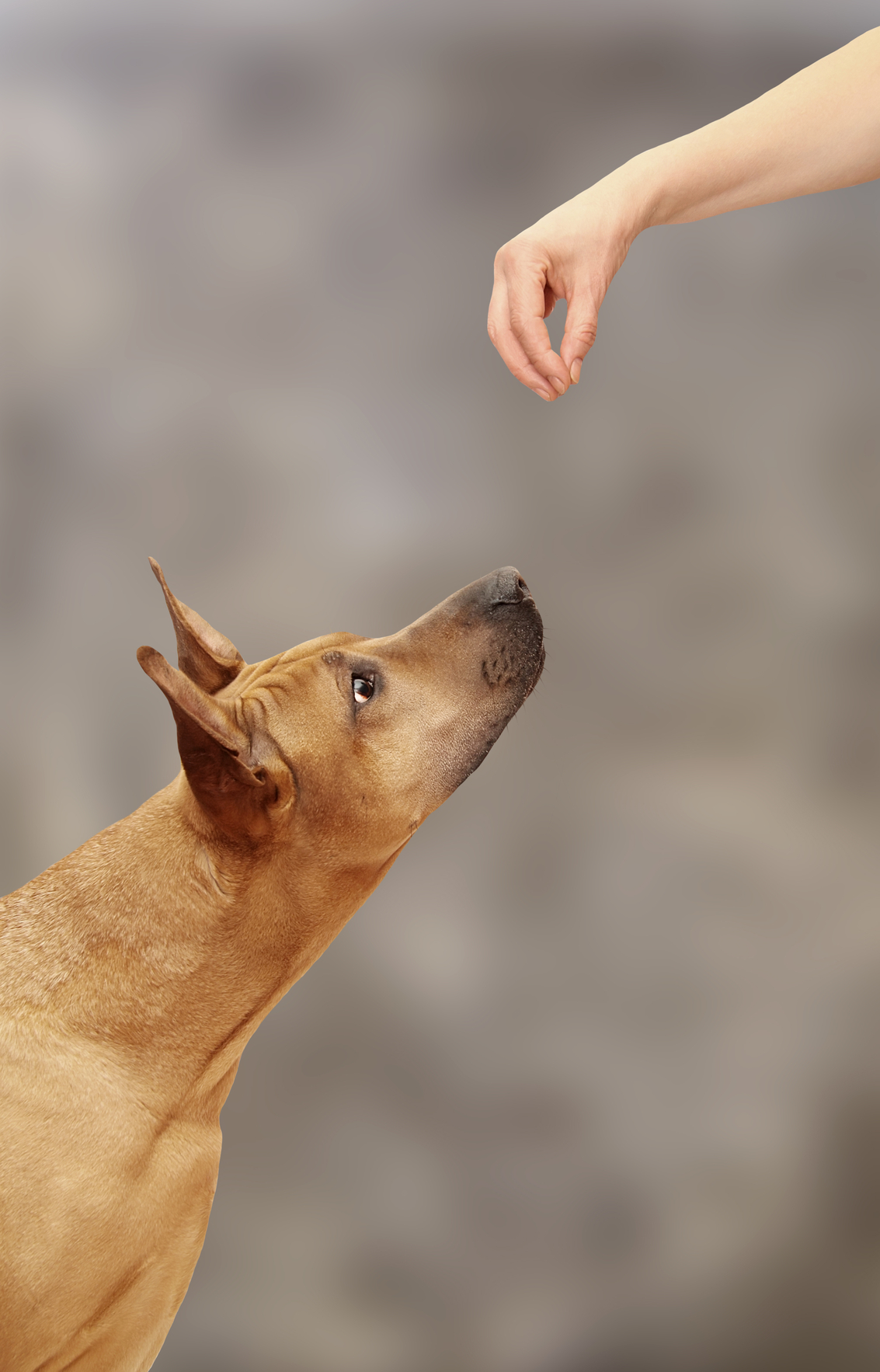
While holding a treat in your closed fist, lower your hand to the ground. As you’re lowering your hand, say “leave it.” By now, your dog has learned “leave it” means to ignore your “closed treat hand,” but sometimes he regresses. The food is now on the ground, oh my!

Once your dog ignores your “treat hand,” click and give him the treat in your hand. Practice 5 times and end the sessions. Over the next two days or so, practice using treats or a few pieces of kibble from your dog’s meals.

Treat in Open Hand

Once your dog successfully ignores your hidden food hand on cue, it’s time to make it a tad tougher. Place open hand with back of hand touching ground and treat inside palm. As you’re lowering your hand, say “leave it” and open your hand. Most dogs will rush for the treat, they can see it now. Once he starts moving toward your hand, close it so he can’t get the treat. Once he moves back from your hand, click and give him the treat.

Dogs are fast! If he successfully gets the treat from you, tether or ask someone to hold the other end of the leash for you. If your dog strains to reach the visual treat, take a step back to “hidden food hand” or try with a piece of kibble instead of a hot dog. Some dogs will do anything for hot dogs! 🙂

Practice 5 times in a row, then end the training session, regardless of success. Breaks are invaluable in dog training. They prevent boredom, and I’ve found dogs excel at the next training session. It’s almost like they marinated over the previous training session, worked out the kinks, and are much more successful during the next training session.

If, even after a break, your dog is still confused, take a step back to “hidden food hand” or “adding a cue.” It’s perfectly normal to take a step back. It’s like learning a new language where you’re confused on when or how to use the new word you learned. 🙂

VIDEO: How to Train Your Dog to Ignore Food on the Ground

More:
Picky Dog Eaters
Food Puzzles for Dogs
Prevent Resource Guarding
How to Give a Dog a Pill
Filed Under: Dogs, Training Tagged With: clicker training leave it, clicker training videos, demo on teaching dog to leave it, doggy zen, how to teach a dog to leave it, how to teach a puppy to leave it, how to teach your dog leave it, how to teach your dog self control, how to teach your puppy to leave it, how to train a hyper dog, how to train your dog to leave it, teaching a bull terrier to leave it, teaching a miniature bull terrier how to leave it, teaching a rottweiler to leave it, teaching the leave it command, teaching your dog self control, teaching your dog to leave it, tips for training a hyper puppy, tips on training easily excited dogs, what is doggy zen

Add a Cue During Training

December 31, 2014 by Fanna Easter

When to Add a Cue

How to Train Your Dog
Say “leave it,” as you’re dropping your hand to his nose.

“Leave it” is a must for all dogs, not only will they ignore spilled medication on the ground, but it’s also a great skill to teach self-control. Learn how to teach your dog to leave it using quick and effective steps.

If You Missed Step 1

If you missed step 1, which demonstrates the beginning stage of teaching “leave it,” check it out here. Don’t rush when teaching a behavior. Step 1 is laying the foundation, and a strong foundation supports a new behavior. This is especially important for energetic dogs. 🙂

If, at anytime, your dog becomes confused, go back to step 1. Do know, it’s perfectly normal to take a step back. Think about learning algebra. It’s pretty important to understand what “x and y” mean, right?

Why Add the Cue Later?

Excellent question! I recommend adding a cue once a dog will offer the behavior 80% of the time. By adding the cue later, you’re removing any confusion plus it’s quicker and faster. I’ll give you a scenario to illustrate this point.

Let’s say I’m teaching you a new behavior and I begin by saying “retour.” You’re totally confused because you don’t speak German so you freeze and look at me for help. Instead, I repeatedly say “retour, retour, retour, retour, retour” while getting louder and louder. Does this help your confusion? Probably not.

If I dangle a $100 bill on your nose and lure you backwards while saying “retour, retour, retour, retour,” would that help? A bit, as you’re pairing “retour” with a $100 bill and maybe moving backwards. Now, be honest, all the “retour” babbling probably is distracting you, as I’m getting louder and louder, right? It’s like turning down the car radio when navigating a new route through dense traffic. That’s why we refrain from saying the cue. In the beginning stages, let’s allow your dog to concentrate.

Now, if I clicked and gave you a $100 bill every time your left foot stepped backwards, you’ll start to understand. Once you’ve practiced moving your left foot back several times while being clicked and treated, you’ll feel pretty darn confident. Now, I’ll say “retour” and wait. I’m waiting for you to take a step back with your left foot. Once that left foot moves back, I click and give you another $100. We practice a few more times and soon you’ll pair “retour” with stepping back with your left foot. Voila!

And if you have not Googled it yet, “retour” means “back” in German. 🙂

How to Add the Cue

Once your dog ignores your hand while holding a treat next to his nose 80% of the time, it’s time to add the cue. Say “leave it” as you’re moving your hand in front of your dog’s nose. Click and treat when they ignore your hand.

Tips

  • Say cue once. Repetition is confusing and remember all that “retour” babble. 🙂
  • Give cue as you’re moving your hand toward your dog.

Teach Your Dog to Leave It – When to Add a Cue

Filed Under: Dogs, Training Tagged With: clicker training leave it, clicker training videos, demo on teaching dog to leave it, doggy zen, how to add a cue during dog training, how to teach a dog to leave it, how to teach a puppy to leave it, how to teach your dog leave it, how to teach your dog self control, how to teach your puppy to leave it, how to train a hyper dog, how to train your dog to leave it, teaching a bull terrier to leave it, teaching a miniature bull terrier how to leave it, teaching a rottweiler to leave it, teaching the leave it command, teaching your dog self control, teaching your dog to leave it, tips for training a hyper puppy, tips on training easily excited dogs, what is doggy zen

How to Stop a Male Dog From Marking

December 31, 2014 by Fanna Easter

Dog Marking Behavior

Dog Marking Behavior
Why is he marking?

Tired of yellow spots and stains in your home? Are you irritated by frequent stops, so your male dog can mark everything? Before preventing dog marking behavior, it’s important to understand the cause.

Why Dogs Mark

Leaving small amounts of urine behind is normal. It’s like leaving a message for other dogs to read. I joke, but watching dogs sniff urine markings is like reading their Facebook pages. They may choose to “post back” or not. Intact males and females mark more often, as they’re usually trying to find a mate (you can say the same thing for single humans on their Facebook page too). Usually, males mark more often than females, but I’ve watched some intact females that can give the boys a run for their money!

Health

Anytime you notice a change, either heath or behavioral, bring your dog to a vet. As a dog trainer, I’ve personally witnessed an “un-potty trainable” dog that couldn’t hold his urine. This went on for a year, and this poor boy was only a year old. After a thorough vet exam, he had a congenital issue (born with it), which prevented him from holding his urine. After a quick surgery, he’s completely potty trained. Never assume. Always rule out health issues first.

Urinary tract infections (UTIs) are a cause of marking behavior and frequent urination. Plus, if you notice your dog drinking and urinating more, this is cause for alarm. Health issues should be ruled out first before starting any training.

Anxiety

Anxiety is a cause of excessive marking. I’ve encountered this behavior with many stressed male dogs. Usually, anxiety-induced marking is accompanied with other abnormal behaviors, such as hyper vigilance (constant scanning of their environment for threats), suspicious behavior, pacing, moving slowly and/or an inability to relax.

If anxiety is suspected, contact a professional dog trainer or animal behaviorist. He can point you in the right direction. Punishing or expecting an anxious dog to get over it will not work. Just like people, some dogs are unable to calm themselves. In the meantime, try DAP therapy, soft music and Thundershirts. For maximum effectiveness, it’s best to use a combination approach while seeking professional help.

Is He Truly Potty Trained?

It’s a valid question and worth taking a day or two to incorporate potty training tips. If dog marking stops, then he wasn’t really potty trained, which is a relief. You found the cause and can easily move forward. 🙂

Clean the Marked Area

Most pet owners clean urine stains using everyday house cleaning products. While they remove the stain, they don’t remove the urine odor. Have you ever noticed your dog pees in the same place, outside or on pee pads? This is normal dog behavior, and we use it to our advantage when potty training a dog.

Dog have an intense sense of smell. As an example, if you walk into someone’s house and they’re cooking soup, you smell soup. But dogs smell each specific ingredient in the soup, such as onions, carrots, beef, noodles and so on.

Back to cleaning, clean and then re-clean the marked areas using recommended enzyme cleaners.

Dog Marks in One Spot

If your boy marks in one specific spot, keep it simple. Block the area with a gate or close the door. Most pet parents balk at these suggestions. They’re convinced that the door will remain closed or the item will be removed permanently. Actually, by removing the marked object, you’re removing the temptation to mark. When a dog practices a behavior, it gets stronger. Same goes with dog marking. Plus, it can become a learned behavior, which is tougher to manage. Trust me, remove it or close the door, clean the area using recommended enzyme cleaners (multiple cleanings are recommended) and, in six months, your dog will forget about it.

He’s a Multiple Spot Marker

This can be a bit tougher, so I’ll make a few recommendations. Usually, these boys have an underlying anxiety issue. To prevent, seek professional assistance, employ potty training techniques (crate when left alone) and try a belly band. While belly bands prevent urine from touching precious items, it doesn’t really teach a dog not to mark. Belly bands wrap around a dog’s waist, covering his private area, which acts as a protective barrier between urine and furniture.

Punishment

I know you were thinking about it, so let’s discuss it. In my 22 years of dog training, punishment has never worked for urine marking. What ends up happening is your dog will learn to mark when you’re not present. When this happens, you have a real challenge. For anxious dogs, the problem will worsen.

Prevention

Spaying and neutering will reduce dog marking behavior, especially if done before sexual maturity. If you want to dive further into this topic, take a peek at Anneke E. Lisberg’s article about the effects of neutering and scent marking.

Filed Under: Behavior, Dogs, Training Tagged With: canine urine marking, does anxiety cause urine marking, house training a urine marking dog, how to stop urine marking, preventing urine marking, stop urine marking, territorial marking, urine marking behavior dogs, urine marking dogs, urine marking health issues, urine marking in dogs, urine marking male dogs, why do dogs mark, why does my dog mark

How to Remove Dog Urine From Carpet

December 31, 2014 by Fanna Easter

Removing Dog Urine From Carpet

Dog Urine Carpet
Here are the best dog urine remover product recommendations!

If you share your home with a dog, or any pet really, you’ll encounter urine, feces or vomit. It’s part of it. 🙂 Next, you’ll have to find out how to remove dog urine. With so many products out there, which works best? I’ve gathered product recommendations from top dog trainers, breeders and show folks. See what products really work.

Nature’s Miracle

This product has been around for awhile and is highly recommended by top dog trainers. All products contain an effective bio enzyme cleaner, meaning not only will it remove the stain, but the enzymes will also remove odor. This prevents dogs from pottying in the spot again. Personally, I’ve added the Nature’s Miracle Orange Oxy Pet Stain Remover to our carpet cleaning machine, which really removed pet odors and left a clean orange scent behind. And I shared my home with four Bouviers. We have white carpet — what was I thinking?

As for removing old stains, it was okay. It works really well on fresh urine carpet spots, dog crates, dog laundry and messes on hardwood floors.

Biokleen Bac-Out Stain and Odor Removal

This is a newer product on the market, but highly recommended by seasoned dog people. So much so, I’m going to give this a try! Bac-Out contains a “blend of natural live enzyme cultures, citrus extracts and plant-based surfactants,” which is effective for removing odor and stains. This product is excellent for removing laundry stains (children or dog made), old urine, blood, vomit and fecal stains quickly.

Fizzion Pet Stain & Odor Remover

With an Amazon rating of 4.7 stars (244 reviews), I would say this is a pretty effective product! Fizzion Pet Stain & Odor Remover is another dog trainer favorite and highly recommended by professional car cleaning businesses. Plus it’s received glowing reviews from cat enthusiasts (now that means something!). This product is definitely worth a try! Not only will this product remove odor (using enzyme-based cleaners), it will also remove really tough cat odors (cat urine is the worst!). Add one tablet to 8 ounces of water. It works great in steam cleaners or on its own.

Folex Instant Carpet Stain Remover

Looking for a scent-free, yet effective stain remover? Try Folex! This product is water-based, “non-toxic, completely non-irritating to normal skin; non-flammable, contains no solvents of any kind; odor-free, no unpleasant chemicals; CFC and Petroleum Free” per Folex’s website. Plus, you can use this product on everything!

What is your favorite product to remove pet stains? The more we share, the less yellow spots we have to live with!

Filed Under: Equipment, Resources Tagged With: best cleaner for dog crates, best cleaner for dogs, best dog urine removers, biokleen bac out review, dog odor eliminator, dog urine, dog urine cleaner, folax carpet stain remover review, frizzino pet stain remover review, how to clean dog urine, how to clean up puppy accidents, how to remove cat odors, nature's miracle review, removing blood, removing cat odors, removing feces from carpet, safe dog cleaners, tips for removing dog odors

Interactive Dog Toys for Car Rides

December 29, 2014 by Fanna Easter

How to Entertain Your Dog

Interactive Dog Toys
I’m bored. Can I play with a puzzle please?

Children play video games or watch their favorite DVDs during car rides, but how do we keep the family pooch entertained? Road trip puzzle toys! Interactive dog toys are not for home use only. They’re portable so take ’em on the road.

Using Interactive Dog Toys During Car Rides

Dogs get bored and frustrated during long car rides just like children and even adults. You have to give them something to do too. Chews are great, but sometimes they don’t last long enough. Try an interactive dog toy instead.

  • Smear peanut butter, cream cheese, baby food or a mixture of all three along the sides of an interactive dog toy.
  • To keep mess to a minimum, freeze overnight. Most dogs will like the smeared mixture for hours.
  • If your dog is prone to car sickness, smear ginger jelly on the inside of her toy. Ginger is a useful remedy to keep car sickness at bay.

Dog Toys Make Car Rides Fun

Some dogs (and puppies) just don’t like riding in vehicles. This is pretty normal and it’s a weird sensation. By providing interactive dog toys during car rides, your dog will associate yummy food (aka fun) with car rides. The more fun they have during car rides, the more likely they will learn to enjoy them.

Want to make car rides even more fun? Enroll in a group class so your dog has plenty of opportunities to practice her new car riding behavior while arriving at a fun place with lots of treats. Perfect combo! 🙂 My clients have mentioned their dogs love to ride in the car now. They know they’re going to class so they hop in and grin. Add a road trip-worthy interactive toy and you’re both well on your way to becoming road warriors soon!

Check out more tips on traveling with your dog here.

Filed Under: Games, Resources Tagged With: dog puzzles in car, how to teach a dog to ride i cars, how to use an interactive dog toy, interactive toy ideas, my dog hates riding in cars, puzzle toys for dogs ideas, travel tips for dogs, traveling with dogs in a car

  • « Previous Page
  • 1
  • …
  • 107
  • 108
  • 109
  • 110
  • 111
  • …
  • 135
  • Next Page »

About

Dog Training Nation is a community of dog trainers, dog owners and dog lovers. Our mission is to provide trainers and owners valuable information to enrich dogs' lives. We cover a range of topics, from socializing puppies to dealing with aggressive dog behavior to selecting the best dog products. It is our hope you share our content to make the dog and owner world a better place.

​

Facebook

Video

Dog Training Nation is a dog training blog for pet owners and dog lovers. We cover a range of topics from puppy socialization tips to dog aggression to dog health. It is our hope you share our content to make the world a better place for dogs.

Dog Training Nation

Quick Links

Dog Training
Dog Behavior
Dog Training Videos
Become a Dog Trainer
About
Contact Us

Copyright © 2026 · Lifestyle Pro Theme on Genesis Framework · WordPress · Log in