Dog Training Nation

In Dogs We Trust

  • Home
  • Training
    • Dogs
    • Puppies
    • Clients
  • Behavior
    • Breeds
  • Health
  • Safety
  • Resources
    • Equipment
    • Books
  • Dog Training Videos
  • About
You are here: Home / Archives for Fanna Easter

Dog Obedience Training Techniques

July 17, 2014 by Fanna Easter

Which Dog Obedience Training Technique Will You Use?

Dog Obedience Training
What’s the difference?

When training a dog, consequences (i.e. a result or effect of an action) are rewarded or punished. For example, you go to work and then you get paid. You don’t go to work and then don’t get paid. Not receiving a paycheck is a punishment, which is what you learn to avoid. Thus, you go to work. Receiving a paycheck is a reward, so you go to work more often. This is the basis of how we all learn. Let’s discuss the three most popular dog obedience training methods, which are food rewards, clicker training and corrections.

Food Rewards (Positive Reinforcement )

Positive reinforcement dog training is a large umbrella, so let’s make it simple. Reward behaviors you like. Ignore or redirect behaviors you don’t like. Positive reinforcement means to reward a dog’s behavior, such as “sit,” so your dog will sit more often.

  • Rewards can be food, toys or games. Your dog should choose his reward, as it’s his currency.
  • Many dog trainers use and recommend food rewards because it’s user-friendly for pet owners and dogs love food. This method is very forgiving for both you and your dog.
  • If a dog refuses to eat his food reward, this is usually a clue that your dog is too stressed or fearful to learn or doesn’t like his reward.
  • Food rewards fade. Once the dog knows the behavior, he will do the behavior on cue 80 percent of the time. You don’t need to carry treats in your pocket all the time. 🙂

RELATED: The Right Way to Do Lure Reward Dog Training

Clicker Training

Clicker training has become widely popular lately. Clicker training uses the same premise as positive reinforcement training except you use a clicker to click when the dog performs a good behavior.

  • The click is used to mark the good behavior and means the dog has earned a treat.
  • Before using a clicker, dog owners need a firm understanding of clicker mechanics, which means they should learn perfect timing of the click, shaping and capturing a behavior, and basic guidelines for using a

Corrections (Compulsion Training)

Compulsion means “to compel or coerce.” In dog training terms, this means to physically place (i.e. using your hands) a dog into a behavior and use leash tugs and verbal sounds as corrections.

  • This method of dog training was hugely popular 15 to 20 years ago, and was based on military dog training.
  • Some dog trainers don’t use food rewards. Rather, they correct a dog until he does the right behavior, such as “sit,” and then praise the dog. In my opinion, this is a difficult way to learn.
  • Now, I’m not saying punishment doesn’t work. Think about speeding on the highway and a policeman gives you a ticket. You learn to drive slower for at least awhile until you learn to scan your area for policemen.
  • Punishment works, but it has fallouts. Punishment teaches a dog to become helpless and confused, so he offers nothing. This is sad.
  • This dog training technique isn’t user-friendly. You must know what you’re doing and give the smallest amount of correction to stop the behavior or else you can damage a dog. Also, when giving corrections, most pet owners go overboard. Punishing is very rewarding for the person doing it, as he’s releasing his anger.

What questions do you have about dog obedience training methods? Please comment in the section below.

More:
Choosing the Right Dog Trainer
3 Behaviors All Dog Trainers Should Know
Handling Difficult Dog Training Cases
Best Dog Training Books

Filed Under: Dogs, Training Tagged With: dog training, dog training method, obedience training

How to Choose Dog Training Treats

July 16, 2014 by Fanna Easter

Dog Training Treats

Puppy Training Treats
Fabulous treats! L-R: Dried venison, cheese, blue cheese, salami, peanut butter and hot dogs.

So many times, clients bring their dogs into the training center and their bait bag is filled with dry kibble or biscuits. Their dogs are overwhelmed with others dogs, sights, smells, sounds and ignore their owners as everything else is more exciting. Learn how to train a dog by choosing treats your dog loves!

Treats are your dog’s currency. Be generous, pay well and often.

Think about it: If I were paying you for a job well done, would you work harder for $100 or $1 bill? Now translate to food: If I paid you with donuts or broccoli, which would you choose? Personally, I would work for donuts and a $100 bill. I think you see my point now. 🙂

Now, I’m not saying you must have treats in your pocket for your dog to sit. We use treats and rewards in the learning phase, and then wean him after the dog understands the cue. By “weaning,” I’m not saying remove treats entirely. I’m saying reward behaviors intermediately (like a slot machine). We, as humans, have an obsession with weaning our dogs off treats too fast. Not sure why we do it. When you are thinking of not rewarding a dog for a great job, think of a stingy boss from your past – yuck!

RELATED: Healthy Dog Treats

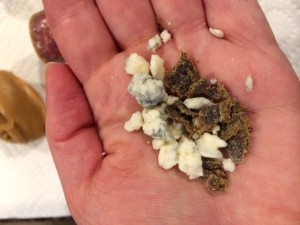
Stinky, small, easy to chew dog treats
Stinky, small and easy to chew dog treats.

Try these dog training tips when selecting fantastic treats for your pooch. He will thank you with his full attention and polite behavior.

  1. Treats must have a strong aroma. The stinkier, the better, as your dog has a fabulous nose. Meat-based treats, especially fish, smell luscious!
  2. Tiny like the size of a pea. Look for treats that break up easily and don’t crumble. Keeping the treat size tiny keeps your dog hungry, calories down and treat cost low. We ask pet parents to bring 100 tiny treats to each class. 🙂
  3. Easy to chew. Soft treats are easy for your dog to chew and swallow quickly. With hard treats, you are waiting for your dog to crunch, crunch and crunch some more before moving forward.

Some dogs love catching their favorite ball or a game of tug as a reward, but 9 times out of 10, most dogs respond to scrumptious treats in high distraction places (i.e. dog training classes). Praise is awesome too. However, this is the icing on the cake with treats. Again, think of working on a project with a friend: praise is nice for a while. Currency is better because you need to pay your bills and eat. 🙂

How to Tell if Your Dog Loves His Treats

  1. As you cut treats or open the bag, your dog is glued to your side sniffing.
  2. You have his full and undivided attention during class.
  3. Immediate and improved success when teaching behaviors.

What’s in my bait bag? Mozzarella cheese sticks, hot dogs, cooked chicken breast, blue cheese (yes, they love it!), cubed round steak and any fish-based treats.

What treats does your dog love? Please comment below and tell us what is in your bait bag!

You may also like: Picky Dog Eaters

Filed Under: Dogs, Health, Resources, Training Tagged With: dog training, dog training classes, dog training treats, dog treats, how to train a dog, how to train a puppy, how to train your dog, how to train your puppy, puppy training, puppy training classes

How to Potty Train a Puppy

July 16, 2014 by Fanna Easter

Potty Training a Puppy

Potty Training a Puppy
Learn the three steps of potty training your puppy.

Still struggling with potty training your puppy? I have potty training tips for you! These work for a new puppy, an older puppy, a newly adopted dog and even a dog that suddenly begins pottying in the house.

Step 1: Create a Set Schedule

This is a huge step. Consistency is key for potty training success. Create a daily schedule for your puppy, such as:

  •  7 a.m.: Wake up and potty.
  • 7:15 a.m.: Feed.
  • 7:30 a.m.: Potty (puppies and dogs will usually poop after they eat).
  • 7:40 a.m.: Supervised playtime.
  • 8 a.m.: Crate time with a food stuffed toy.
  • 10 a.m.: Potty.
  • 10:15 a.m.: 30-min walk in neighborhood.
  • 10:45 a.m.: Water break.
  • 11 a.m.: Crate time. Repeat the above example throughout the day.
Stella Mae's Spa
Stella Mae’s Spa

Step 2: Confine Your Dog When Unsupervised

Keeping your puppy in a crate (or behind a gate in a small room) teaches your puppy to hold it. This is new for many puppies, but we need to teach them this valuable skill. Crate training should be fun. Your dog should love his crate, as this is his private spot where scrumptious food stuffed toys hide. As a general rule, your puppy should be crated for a maximum of 4 hours at a time. This rule applies for older dogs too. For young puppies, calculate 1 hour per 1 month of age (2 months old, 2 hours; 3 months old, 3 hours and so forth). Keep your puppy in his crate when you are unable to watch him closely even if for a few minutes when cooking dinner or taking a shower. Many pet owners worry their puppies are crated too much during potty training. However, it’s vital your puppy learns potty training skills. Once your puppy has been accident-free for two days, he earns more time outside of his crate. Also, make sure your puppy has plenty of playtime outdoors, regular walks and lots of food stuffed toys to keep him mentally and physically entertained.

Step 3: Bring Your Puppy or Dog to a Designated Potty Area on Leash

Potty Training on Leash
Potty training on leash.

Many times, I’ve heard: “I let my dog out in the yard to potty, but she came back in the house and peed on the rug!” Oops! Your dog was having way too much fun outside and forgot to potty. 🙂 We need to teach puppies to potty first, then they can play. Bring your puppy on leash to the most boring part of your yard and wait. He will sniff around, pull on the leash (keep your feet planted in one spot like a tree), and it will happen. If your dog has not pottied within 15 minutes, then bring him indoors and put him in his crate (he is learning to hold it). Wait about 20 minutes, bring him back outside to the boring spot and wait. Repeat this process if nothing happens. When your dog does potty in his designated potty area, do the potty dance! The potty dance looks like: high-pitched praise while jumping up and down. You’re cheering for your fur baby! I promise, your neighbors are not watching. 🙂  Now, unclip the leash from his  collar, as he has earned playtime in the yard.

RELATED: Housebreaking a Puppy

Measuring Success

It’s our job to teach dogs where they can potty. When your dog potties in the right spot, you have taken one step forward. When your dog potties in the wrong spot, you’ve taken two steps back. Think about it from your dog’s point of view: who would not want to potty inside? It’s climate controlled with plenty of thick carpet to absorb everything. Our dogs are smart! Teach your dog to signal you when he needs to potty. Some pet owners attach bells that hang from the backdoor knob, and your puppy pushes the bell to signal he needs to potty. Personally, I recommend watching your puppy’s body language and choosing a specific signal, which means, “Oh, you need to potty? Let me grab the leash!” This signal can be puppy pacing in front of you, puppy standing by the backdoor, puppy touching your foot or arm with his nose or paw. Choose the signal and stay consistent. The moment your puppy performs the potty signal, bring him outside. Many times, our puppies become confused when they begin to potty in the house, as they know this will get your attention and you’ll bring them outside. Many owners worry their dogs will potty signal, meaning they want to go outside and play instead of pottying outside. I would not worry about this too much, as your puppy is leashed and potties in the most boring part of your yard (for right now). This may happen when they become adults. However, it can easily be fixed. 🙂

A Few Side Notes

  • If an older dog, whom was previously potty trained, suddenly begins to have accidents in the house, always consult with your veterinarian first. Always rule out a UTI or other ailments.
  • For folks living in the city and want to teach your puppy or dog to potty on puppy training pads (or litter train), click on the blue link for specifics. You will use the three-step potty training process. However, I’ve included a few extra tips for you!
  • Remember, your crate is not punishing your dog. The crate is teaching him to hold it. If you bring him indoors and he has free roam of your home, he will sneak off and potty in another room (usually the formal dining room since no one really uses that room anyways).
  • If you are following the steps and your puppy or dog is pottying on his crate bedding, remove it for one week. Sometimes, dogs will potty on their bedding as it absorbs their urine (the mess is gone!). You can certainly add crate bedding in later. However, we are teaching the puppy to hold it in the crate so let’s set them up for success. 🙂
  • Accidents will happen so don’t worry. Clean the area with pet enzyme-based spot cleaners and vow to watch your puppy closer.
  • Lastly, punishment is useless for potty training. It’s the truth. If you punish for accidents, you’ve confused the dog. Trust me, it does not work. Accidents mean to keep a closer eye on your dog while loose and it’s that simple!

Potty training takes time, consistency and learning your dog’s signal and  sticking to the plan. Please note your questions in the comments section below!

READ ALSO: How to Stop a Puppy From Biting

Filed Under: Puppies, Training Tagged With: house breaking a dog, house training an older dog, potty training a puppy, potty training a puppy at night, potty training tips, puppy training a puppy schedule

Crate Training

July 16, 2014 by Fanna Easter

How to Crate Train a DogCrate Training a Puppy

In the dog world, there are many opinions on how to crate train your puppy and I’ll share mine. But first, I need to explain what crate training is not:

  • A crate is not used for punishment ever.
  • Dogs should not be left in their crates longer than 4 hours at a time. If you work an 8-to-5 job, please hire a pet sitter. Pet sitters are worth every penny. You will definitely get your return on investment. 🙂 You can begin searching and interviewing pet sitters here.

Keep these thoughts in your mind as I explain how to crate train your puppy or dog. 🙂

Choosing a Crate

  • A dog should be able to stand up, turn around and lay down comfortably.
  • For a fast growing puppy, choose a crate he can fit in as an adult. These large crates have a moveable divider so you can adjust as your puppy grows.
  • If a crate is too big (too long or wide), your puppy will sleep in the front and poop in the back- oops! 🙂
RELATED: Choosing a Dog Crate

Purpose of a Crate

  • Teaches your dog bladder and bowel control, and basically how to hold it.
  • Provides your pooch a relaxing and safe napping place and a getaway from distractions (visitors, children playing, etc.).
  • Serves as a secure and safe place to leave your puppy alone when no one is home (keeps him from chewing drapes, carpet, furniture, electrical cords, etc.).
  • Serves as a great tool when traveling with your dog!

Once upon a time, a puppy was left alone in the apartment all day (no crate was used). He chewed through the drywall and entered the next door neighbor’s apartment and destroyed his home too! Yes, it happened!

Training Your Dog to Go in His Crate

Plan on teaching your puppy these steps before you plan on leaving him alone. This will take 1-2 days to teach, depending on your training skills.

Step One

  • Start by tossing a treat in your puppy’s crate so he can walk in and eat it. Keep the crate door open so he can come right back out. Repeat this 10 times in a row.

Step Two

  • Toss a larger treat in the crate. As he enters and eats the treat, close the door. Once he is done eating his treat, open the door and let him out. Say nothing, as the reward is the crate door opening. Repeat this 10 times in a row.

Tip: Toss the treat in the back of the crate so your dog walks all the way inside the crate. Please don’t push your puppy inside.

Good girl, she goes in her crate!
Crate training. Good girl!

Training Your Puppy to Stay in His Crate Quietly

Step One

  • Hide treats in his crate (10 treats) and then open the crate door. Once your puppy goes in the crate, close the door behind him. Once he is done eating the treats, open the door so he can step out.

Step Two

  • Hide 2-3 treats in his crate and close the door after your dog steps all the way inside. Once he is finished eating these treats, throw a few treats in the crate with him (crate door is still closed). Throw treats five times in a row about 10 seconds apart. If you wait too long to give him treats, he will begin to whine in his crate. We want him to learn that staying in his crate quietly earns treats!

Step Three

  • Throw a larger treat (biscuit) in his crate and close the door once he walks inside. Take a few steps away from the crate, then walk over and toss one treat in the crate. Count two seconds silently (1 Mississippi, 2 Mississippi), walk over and toss another treat in the crate. Repeat until your dog can stay in his crate for 10 seconds (Move slowly. We don’t want him to whine!). After 10 seconds, toss a treat and open the crate door. Great job!

Step Four

  • Add a luscious food filled toy in his crate. He only gets this wonderful reward when he is in his crate. Toss the filled toy in his crate, walk away and let him enjoy!
RELATED: Puppy Training Classes

Troubleshooting

Barking/whining in crate:

  • Oops, if this happens, you moved too quickly with the above steps. Take a few steps back and begin again. If your dog is whining, don’t open the crate until he is quiet (opening the crate door is a reward).
  • Ensure your dog has plenty of exercise (a minimum of a 30-minute walk) before going in his crate.
  • Freeze his food stuffed toy so it will last longer.
  • If your puppy or adult dogs whine at night, bring him potty on leash, and put him back in his crate with a treat. You are not rewarding whining, as he may very well need to potty. We don’t want puppies to learn to potty in his crate. 🙂
  • If your dog is pottying on his crate bedding, remove it for a week until he learns to hold it. Once he understands to potty outside, you can add his bedding back.

 Barking at visitors when in crate:

  • Set up a bowl of treats about 6 feet from your dog’s crate.
  • Put dog in his crate.
  • When guests walk by, toss a treat into your dog’s crate and keep walking past him.
  • Have all guests play this game. Soon your dog learns guests equals treats.

Leaving your dog alone in crate:

  • Before leaving your puppy alone in his crate, exercise him mentally and physically.
  • Leave a frozen food stuffed toy in his crate anytime you leave. (A frozen food stuffed toy will help puppies while teething.)
  • Play soft music in the background. Dogs have excellent hearing. Try crinkling a potato chip bag when your dog is upstairs, he will come running! Help him tune out neighborhood dogs’ barking, nearby construction and sirens. I recommend Through a Dog’s Ear Music. I have the entire series and it works! I will admit it helps calm me too, especially when I’m stuck in traffic. 🙂
  • This may sound hokey, but spraying lavender has proven to calm dogs (and humans!). What will it hurt? At least your house will smell wonderful!
  • Another tool I recommend are Dog Appeasing Pheromone Sprays and Diffusers. Personally, I’ve had wonderful results and have a diffuser plugged in near my dogs’ crates. There is supporting research on DAP’s effectiveness.

In the comments below, tell us how you create a spa atmosphere in your dog’s crate.

READ ALSO: Dog Time Out

Filed Under: Puppies, Training Tagged With: crate training, crate training 101, crate training a puppy, crate training an older dog, crate training at night, crate training schedule, crate training while at work, crate training whining, dog training advice, how to train a dog, how to train a puppy

Dog Trainer Karen Pryor

June 23, 2014 by Fanna Easter

Dog Trainer Karen Pryor pictured with Certified Dog Trainer Fanna Easter
Karen Pryor and Fanna Easter pose for a photo at ClickerExpo 2014.

As a dog trainer, Karen Pryor brought clicker training to the industry of dog trainers in the mid-1980s. Her background comes from a career in marine mammal biology and behavioral science. More than 40 years ago, Karen pioneered force-free training methods for animals by using a clicker and a guide stick as a means to training animals, specifically dogs, with positive reinforcement training methods.

Karen has done remarkable things in the industry, not only for dog trainers, but she has also done cognitive research of many species of animals.

She is an accomplished author of many books and research papers, including her infamous book “Don’t Shoot the Dog.”

She began by training dolphins using a whistle and soon figured out that she wanted to bridge her dolphin training experience with other applications, such as dog training.

Karen Pryor on Training Animals

In the training video below, Karen Pryor explains the simplicity of using  positive reinforcement training to train her beta fish. She demonstrates how these techniques can be used to train just about any animal with a marker, target object and training treat.

VIDEO: An Introduction to Target Training a Fish!

“Don’t Shoot the Dog” was published in 1984 and quickly changed the landscape of the dog training industry. What dog trainers refer to as clicker training was adapted from an application of Animal Behavior Analysis invented and developed by Keller Breland, Marian Breland Bailey, and Bob Bailey.

Dog Trainer Books by Karen Pryor

Karen Pryor has published 21 unique works throughout her career, including:

  • “Clicker Training for Dogs” (1999)
  • “Getting Started: Clicker Training for Dogs” (2001)
  • “Click To Win: Clicker Training for the Show Ring” (2002)
  • “Getting Started: Clicker Training for Cats” (2003)
  • “Click Tricks: 10 Fun and Easy Tricks Any Dog Can Learn” (2010)

VIDEO: Cat Clicker Training in Action

She continued to blow the dog training world away with “Reaching the Animal Mind.” According to ClickerTraining.com, the book “describes how to bring out the undiscovered creativity, intelligence, and personality of the animals in our lives.” She expanded the first edition of “Don’t Shoot the Dog,” and went into a much deeper level on how animals learn in her revised edition of “Don’t Shoot the Dog – The New Art of Teaching and Training.”

She has spoken all across the globe about the neurobiology and behavior science, including a lecture she gave during a TagTeach seminar in 2012.

You may also like: Clicker Training

Filed Under: Clients, Training Tagged With: clicker, clicker training, dog clicker training, dog trainer, how to train a dog, how to train a fish, karen pryor

  • « Previous Page
  • 1
  • …
  • 129
  • 130
  • 131
  • 132
  • 133
  • …
  • 135
  • Next Page »

About

Dog Training Nation is a community of dog trainers, dog owners and dog lovers. Our mission is to provide trainers and owners valuable information to enrich dogs' lives. We cover a range of topics, from socializing puppies to dealing with aggressive dog behavior to selecting the best dog products. It is our hope you share our content to make the dog and owner world a better place.

​

Facebook

Video

Dog Training Nation is a dog training blog for pet owners and dog lovers. We cover a range of topics from puppy socialization tips to dog aggression to dog health. It is our hope you share our content to make the world a better place for dogs.

Dog Training Nation

Quick Links

Dog Training
Dog Behavior
Dog Training Videos
Become a Dog Trainer
About
Contact Us

Copyright © 2026 · Lifestyle Pro Theme on Genesis Framework · WordPress · Log in