Dog Training Nation

In Dogs We Trust

  • Home
  • Training
    • Dogs
    • Puppies
    • Clients
  • Behavior
    • Breeds
  • Health
  • Safety
  • Resources
    • Equipment
    • Books
  • Dog Training Videos
  • About
You are here: Home / Archives for Fanna Easter

Solutions To Common Dog Training Mistakes

May 24, 2017 by Fanna Easter

Don’t Make These Dog Training Mistakes Again
Dog Training
DNF-Style/Adobe Stock

Everyone makes dog training mistakes; it’s part of the learning process. When mistakes happen, it’s important to recognize and learn from them and leave frustration at the door. If you’re making these common mistakes in dog training, give these simple solutions a try!

Mistake #1: Ego Getting in the Way

Solution: Record Your Sessions

Human egos can quickly interfere a dog training session. When pet owners justify that their choices were right and their dogs were wrong, that’s ego creeping in. Justification rears its ugly head when pet owners blame their dogs for certain choices when actually their dogs didn’t know what else to do instead.

It’s hard to hear it, but the human ego is part of each dog training mistake made. As humans, we assume we’re right and our dogs are “just not getting it.” Instead of assuming, look at each dog training session from the perspective of a learner.

Still not convinced? Record your dog training sessions using a dog camera and review afterwards. Are your instructions clear to you? If you’re still not convinced, mute the video and ask a truthful friend what behavior you’re teaching in the video. If you nor someone else aren’t sure, then your dog certainly isn’t either.

Mistake #2: Touching Your Dog

Solution: Use a Clicker and Treats

Humans are very tactile, resulting in numerous mistakes during dog training sessions. When teaching new dog training behaviors, refrain from touching, pushing, pulling or forcing a dog into a behavior. Physically reaching out and touching dogs get in the way.

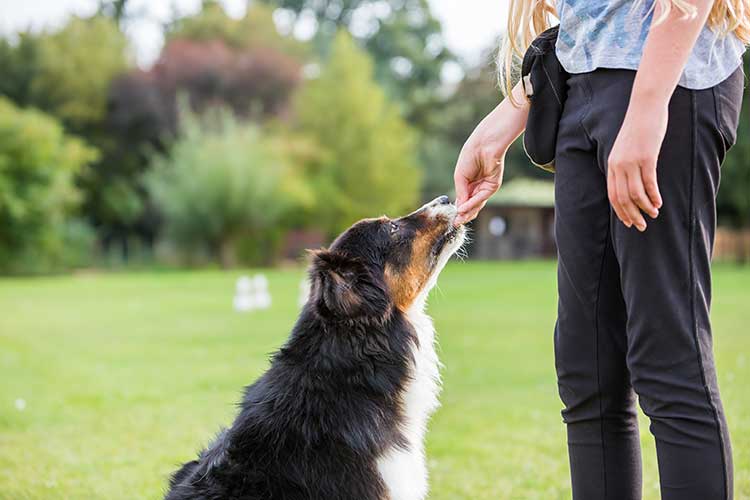
Use a hands off approach via clicker and treats instead. At first, it might be difficult using new dog training techniques because you’re learning something new, but it’s so worth it. (Remember, your dog is learning to adapt to this training technique as well!)

Hands off dog training means no physical or verbal corrections either. Remove your dog’s leash when practicing behaviors in your home. If your dog disengages, then you need better treats or your dog will become completely confused. For dog training sessions outdoors, attach your dog’s leash to a body harness instead of a collar. This prevents collar corrections.

Taking a hands off approach to training your dog will boost your dog’s success. Quickly reward any of your dog’s attempts toward the desired behavior. As a rule, you should be rewarding more than withholding treats.

If your dog makes a mistake—remember, it’s part of the learning process—just withhold a treat. Take a break and rethink your training plan, and keep your ego in check please.

Mistake #3: Using Low Value Treats

Solution: Use Treats Your Dog Loves

Dog training treats are your dog’s paycheck, so pay him or her extremely well. Using treats during training is not bribery; it’s far from it. Rewarding good behaviors with yummy treats works, and it works super fast. High value treats include chopped up hot dogs, baked chicken, cheese cubes or anything your dog absolutely adores. Using a high value treat will make training your dog so much easier because your dog wants to earn it.

Mistake #4: Using Huge Cheese Chunks

Solution: Break Treats Into Small Pieces

Break training treats into small pieces. Pea-sized treats work best for all dogs. Clicking and tossing pea-sized treats ensures excitement during training, and sessions move quickly with lots of success.

While it’s tempting to toss a huge cheese chunk every time, it’s actually slowing down the process. Dogs take forever to eat a cheese chunk (well, most do), and they’ll fill up on the treat fast. There’s nothing wrong with tossing a cheese chunk, but use it strategically.

Save large cheese chunks for breakthrough moments, such as your dog responding to a cue for the first time, ignoring another dog or coming when called.

Mistake #5: Making Assumptions

Solution: Practice the Behavior

Again, the human ego is the cause of this common dog training mistake. Pet owners assume things too quickly, and will justify why their dogs should know a cue. Do the following sound familiar?

  • “But he’s done this behavior before.”
  • “He knows how to do this.”
  • “She’s ignoring me.”
  • “She knows better.”
  • “He’s choosing not to listen to me.”
  • “This is the first time this has happened.”

This is justification. Instead of assuming and justifying, teach your dog the behavior. 🙂

Dogs ignore a cue for two reasons: 1) They’ve never practiced the behavior in a specific situation before (e.g. a squirrel runs in front of them) or 2) They’re confused. So many times, pet owners convince themselves that canine confusion doesn’t exist, and their dogs should know the behavior.

Yes, human ego rears its ugly head again. Practice a behavior in a myriad of situations, including an environment where a squirrel runs in front of your dog. Always remember, dogs are a living soul, not a robot, so understand they may not respond every time.

Happy Training!

Filed Under: Behavior, Clients, Training Tagged With: common dog training mistakes, dog obedience mistakes, dog obedience tips, dog trainer advice, dog trainer tips, dog training, dog training errors, dog training mistakes, Dog Training Tips, how to train a dog, my dog stopped listening to me, stubborn dog training

Does Positive Reinforcement Really Work?

May 23, 2017 by Fanna Easter

Yes, Positive Reinforcement Dog Training Does Work

Positive Reinforcement Dog Training
Christian Müller/Adobe Stock

Every single day, I’m asked whether or not positive reinforcement dog training works. While many pet owners purposely pursue a positive dog trainer, there are still doubts written across their face. This is very evident when working with reactive dogs; many pet owners just don’t trust the dog training technique.

As with anything, there are pros and cons, but you’ll notice very few cons with positive reinforcement dog training. When doubt creeps in, tell yourself to trust the process because positive dog training really works.

What is Positive Reinforcement Dog Training?

Positive reinforcement dog training is when you reward your dog for a specific behavior, so the behavior will happen more often. When a dog sits, and he gets a treat, he learns to sit more often. Positive reinforcement works even when pet owners don’t suspect it.

Positive Reinforcement Examples

If you open a crate door, while your dog is barking inside it, your dog learns barking means you’ll open the crate door. Begging is a good positive reinforcement example too. If you feed your dog while he sits next to your plate, he learns that sitting close to your plate makes food happen. Yup, this is positive reinforcement too!

Positive reinforcement works in the human world too. We work for paychecks—that’s our reward for working hard. Pats on the back, bonuses and hugs are human rewards too. Super yummy treats are easily great dog rewards because everyone loves food. Praise, pats, fun games, tidbits from your dinner plate, escaping a boring crate or moving away from a scary dog are great positive reinforcement examples for dogs too.

Pros and Cons of Positive Reinforcement Training

Pros

  • Easy to do: You can’t make mistakes.; just reward behaviors you want to see more often.
  • Fun for dog and pet owner: Positive reinforcement is fun because earning rewards is fun! Celebrating wins are much more fun than digesting mistakes.
  • Extremely effective: Hands down, positive reinforcement works much faster than punishment-based dog training methods. Don’t believe me? Check out the latest research on teaching children. 🙂
  • Can be done anywhere: Dog training sessions can happen anywhere; just grab food treats and go!
  • You don’t need fancy equipment: Throw out choke chains, pinch collars and electronic collars. All you need are a handful of treats, a clicker and your dog! If you’re training your dog outside, attach a leash to your dog’s body harness.

RELATED: Clicker Training Game for Beginners

Cons (And Solutions)

  • Treat dependency: Dog will only work for treats.
    • This is an easy fix; just fade training treats once a dog understands a cue.
  • Withholding treats is frustrating: In the beginning, this can happen.
    • Again, this is a quick fix. Set a dog up for success and reward every single step toward a goal.
    • If needed, take a few steps back and build until the desired behavior happens.
  • What if you don’t have treats? Simple. Use praise, games and the happy dance to reward your dog for good behaviors.

Filed Under: Dogs, Puppies, Training Tagged With: best dog training methods, dog behavior, dog training, Dog Training Tips, how to train a dog, how to train a puppy, positive dog trainer, positive dog training, positive reinforcement, positive reinforcement dog training, positive reinforcement examples, positive reinforcement works, treat training dogs, treat training puppy

What To Look For In An Essential Oil For Dogs

May 17, 2017 by Fanna Easter

Choosing an Essential Oil for Dogs

Essential Oil For Dogs
kerdkanno/Adobe Stock

Essential oils are extremely popular lately, and now being used on family pets and in shelters. It’s important to know that using essential oils topically is not a new trend. It’s been used for thousands of years. As with anything, the moment a product becomes popular, everyone jumps on the bandwagon, which is why you’re seeing essential oils at discount prices.

Though the quality of the essential oil differs between brands. Put down that bottle you purchased on Amazon or at a superstore down and choose a high quality essential oil instead!

Be Picky

Essential oils can be applied on skin, ingested or inhaled, so consumers must be picky when selecting an essential oil for dogs. When choosing an essential oil, select one that is:

  • Made from plants and flowers
  • Void of added ingredients, such as water or alcohol
  • Single or blended
  • 100% pure of the listed oil type

Beware of an essential oil that is always in stock because this means they’re not selective of which plants are used during the distillation process. Lastly, choose an essential oil for dogs that has been lab-tested to verify promised concentration (i.e. not diluted with water or carrier oils). Be super picky!

Where to Purchase Essential Oils

Stay away from Amazon and superstore essential oils for dogs. There’s no guarantee as to what’s in the bottle. By far, the best essential oils are made by Young Living and doTERRA. Both essential oil brands follow stringent regulations on growing, distilling, testing and selling their products. They also don’t sell their products in superstores, including Amazon. Plus, their oils contain 100% therapeutic oils, which means no water or alcohol. 🙂

Purchase a Starter Kit

Each single or essential oil blend has a purpose. Once you’ve chosen a reputable essential oil company, purchase their starter kit, which should contain multiple small bottles. Reputable essential oil companies label and carefully explain each oil’s purpose and recommendations.

Some oils are very calming for dogs while others will repel insects, soothe skin irritations, and disinfect bedding/surfaces. For reactive and anxious dogs, check out these recommended oils. Remember dogs have an incredible sense of smell, so learn how to appropriately use calming essential oils around them.

WATCH: Choosing An Essential Oil For Dogs

Filed Under: Health, Resources Tagged With: best oils for dogs, choosing an oil for dogs, essential oil review dogs, essential oils for dogs, lavender for dogs, young living oils dogs, young living oils pets

How To Use Essential Oils For Dogs

May 16, 2017 by Fanna Easter

Using Essential Oils For Dogs

Essential Oils For Dogs
Africa Studio/Adobe Stock

With the sudden surge of popularity, calming essential oils for dogs are popping up everywhere. As pet owners, we understand how to use essential oils for our personal use, but how should we use essential oils for dogs?

Purchase an Oil Diffuser

Diffusing is the best way to introduce an essential oil to a dog. Before diffusing, it’s vital to choose an essential oil that is lab-tested for purity. That is, it contains no harsh chemicals, water or alcohol.

Next, choose a diffuser that successfully circulates essential oils throughout a large room. The diffuser you choose should be made by a reputable essential oil company because many off-brands don’t work well. Now, place your oil diffuser in a large room on top of a shelf or countertop.

When introducing essential oils to dogs, start slow and never use a diffuser in a closed up room. Dogs have an amazing sense of smell, so essential oils can become overwhelming for them. Make sure your dog is able to leave the diffused room if needed.

Fill the diffuser with water, add two drops of an essential oil and plug in. Use 1-2 drops of lavender in the beginning and watch your dog’s reaction. Usually, most dogs will stay far away from the diffuser, but eventually choose to creep closer and closer.

Be a Diffuser

Dab 1-2 drops of lavender oil on your wrists or hands and be a walking oil diffuser for your dog. Be a diffuser during car rides, vet visits, walks, or visits with friends and their dogs. At night, I dab a drop of lavender on my neck for a restful night’s sleep. Usually, about an hour or two later, I notice both dogs snuggling up around my neck. Dab oils on you instead of your dog. 🙂

Few More Tips

Refrain from applying concentrated oils directly onto your dog’s skin. It’s hard for your dog to get away from a strong smell when it’s on his body. Be careful when diffusing strong scented essential oils, such as peppermint, lemon and cinnamon. They can become overpowering quickly. Last, speak with your veterinarian before adding essential oils to your dog’s food or water. 

Be considerate and diffuse oils for your dog. 🙂

WATCH: Using Essential Oils for Dogs

Filed Under: Health, Resources Tagged With: calming essential oils, dogs and essential oils, essential oil diffuser, essential oil dogs, essential oil for dogs, essential oil puppies, how to use essential oils around dogs, oil diffuser, use essential oils for dogs

Calming Essential Oils For Dog Anxiety

May 15, 2017 by Fanna Easter

Calming Essential Oils

Calming Essential Oils
Rawf8/Adobe Stock

For thousands of years, we’ve used essential oils to ward off illnesses, repel insects and calm anxious minds. Now, calming essential oils are becoming popular within the dog world as pet owners seek out ways to help their anxious dogs. Learn which essential oils calm dogs plus how and when to use them.

Do Calming Oils Really Work?

Two decades ago, I attended a dog training conference where I sat in on a two-hour seminar discussing alternative therapies on a whim. While I was skeptical entering the packed conference room, my attitude quickly changed when I watched these modalities work their wonders.

I specifically remember the speaker, a noted integrative veterinarian, spraying lavender oil into the air to calm 250 attendees. It seemed a bit hipster at the moment, but the lavender silenced hundreds of dog trainers within seconds (seriously, that’s a miracle!). Hmm, I thought maybe essential oils did work!

Fast-forward two decades, and essential oils for dogs are still extremely popular today. I recently attended a two-day essential oil seminar with veterinary professionals, and it’s nice to see science catching up and showing promising results within humans and dogs alike.

As for the effectiveness of essential oils for calming animals, lavender is showing great results. In a study on Effect(s) of Lavender Aromatherapy on Acute-Stressed Horses, they found that lavender aromatherapy can significantly decrease heart rate after an acute stress response. Additionally, it can signal a shift from the sympathetic nervous control from the parasympathetic system. If lavender calms horses, then it can surely calm acute or chronically stressed dogs too!

Choosing a Calming Essential Oil for Dogs

High quality calming essential oils don’t contain water or alcohol. Choose 100% therapeutic blends that are lab-tested independently for quality. My favorite single or oil blends are: Young Living Lavender Peace & Calm and Stress Away. While Peace & Calm and Stress Away are blended oils, meaning several oils are combined for a specific purpose, lavender is included in both blended options.

When and How to Use Calming Oils

Use calming essential oils sooner rather than later. Diffuse calming oils in the background to start the day off on a stress-free and positive note. Diffuse a calming oil every day for two weeks, and note the difference in your anxious dog. You’ll likely notice you’re in a better mood, and diffusing calming oils at night will help you unwind too.

A typical diffuser will emit calming essential oils into the air for two to three hours, so place it in a large room for best results. Never crate or secure a dog in a small room with a diffuser brewing nearby. Dogs must have the option to leave a diffused room if they like.

Also, it’s best to diffuse oils into the air instead of applying oils directly onto a dog. Dogs have a powerful sense of smell and applying essential oils to your dog may be too strong for him. Dab a drop of lavender on your neck before bedtime (you become a diffuser), and everyone in the room (including your dog) will sleep much better.

WATCH: Calming Oils For Anxious Dogs

Filed Under: Health, Resources Tagged With: best essential oils for dogs, best essential oils for puppies, best oils for dogs, calming oils for stressed dogs, how to choose an oil for dogs, lavender oil for dogs, oils for anxious dogs, oils for fearful dogs, oils for scared dogs, young living oils for dogs

  • « Previous Page
  • 1
  • …
  • 19
  • 20
  • 21
  • 22
  • 23
  • …
  • 135
  • Next Page »

About

Dog Training Nation is a community of dog trainers, dog owners and dog lovers. Our mission is to provide trainers and owners valuable information to enrich dogs' lives. We cover a range of topics, from socializing puppies to dealing with aggressive dog behavior to selecting the best dog products. It is our hope you share our content to make the dog and owner world a better place.

​

Facebook

Video

Dog Training Nation is a dog training blog for pet owners and dog lovers. We cover a range of topics from puppy socialization tips to dog aggression to dog health. It is our hope you share our content to make the world a better place for dogs.

Dog Training Nation

Quick Links

Dog Training
Dog Behavior
Dog Training Videos
Become a Dog Trainer
About
Contact Us

Copyright © 2026 · Lifestyle Pro Theme on Genesis Framework · WordPress · Log in