Dog Training Nation

In Dogs We Trust

  • Home
  • Training
    • Dogs
    • Puppies
    • Clients
  • Behavior
    • Breeds
  • Health
  • Safety
  • Resources
    • Equipment
    • Books
  • Dog Training Videos
  • About
You are here: Home / Archives for Fanna Easter

Should Your Dog Chew Pig Ears?

April 7, 2017 by Fanna Easter

Pros and Cons of Pig Ears for Dogs

Pig Ears for Dogs
klaventure1976/Adobe Stock

Dogs love and need to chew. Chewing provides mental stimulation and exercise, keeps teeth clean, is fun and super relaxing. If dogs aren’t given plenty of chewing opportunities, they’ll likely create their own, which is never a good thing. So, should your dog chew pig ears? It depends. Learn the pros and cons of pig ear chews for dogs.

Pros of Pig Ear Dog Treats

The most appealing advantage about pig ear chews is dogs find them simply delicious! In my 20-plus years as a dog trainer, I’ve never witnessed a dog turning his or her nose up at a smoked pig ear dog treat.

Their thick hide and density make pig ears easy to chew for small, delicate chewers and senior dogs. Another huge plus is pig ear chews keep your dog’s teeth clean and gums healthy, which means fresh breath. Pig ear chews are also odorless even while your dog chews them.

Due to their popularity, pig ear dog treats are readily available at pet retailers and online, and are relatively inexpensive compared to other dog chews.

RELATED: Are Antler Chews for Dogs Safe?

Cons of Pig Ear Dog Treats

Pig ear dog treats are high in fat. When consumed daily, pig ear chews can cause vomiting and diarrhea. Overzealous chewing dogs (power chewers) may choke or swallow large chunks, causing GI obstruction hazards.

Another pro about pig ear chews is power chewers can literally consume a pig ear chew within seconds, which can get very expensive. Most pig ear dog treats are also covered in chemicals, additives and preservatives, so choose chews made in the USA only.

Since pig ear chews for dogs taste so delicious, some dogs may exhibit resource guarding behavior and protect these treats from other dogs, people and children.

Pig Ear Chew Safety

If your dog is prone to obesity, has pancreatitis, is currently eating a bland diet or consumes chews too quickly, then it’s best to provide a different type of dog chew.

Pig ear chews are best for small dogs, delicate chewers and seniors in moderation (one chew per week). For power chewing dogs, bully sticks are a better option. Remember, supervision is vital while dogs chew. It’s the best preventative for choking or digestive obstructions.
Filed Under: Health, Puppies, Training Tagged With: best treats for dogs, best treats for puppies, chew stick dogs, chew sticks puppy, dog training, Dog Training Tips, how many pig ears can I give my dog, my dog ate a whole pig ear, pig ear chews, pig ear chews for dogs, pig ears vs bully sticks, pig ears vs rawhide, puppy training, puppy training tips

Is Honey Good For Dogs?

April 5, 2017 by Fanna Easter

Honey for Dogs

Honey for Dogs
Daniel Vincek/Adobe Stock

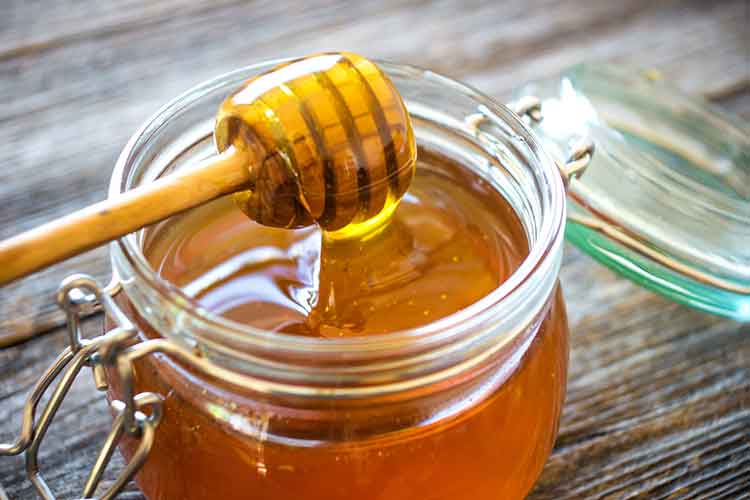
When flowers start blooming, it means it’s almost honey harvesting time! Honey is delicious, but is honey good for dogs? The answer is yes. Dogs can eat honey, and it’s actually quite healthy for dogs. As with all healthy foods, moderation is key to reaping the benefits of honey for dogs.

Before grabbing a bottle of honey at your local grocery store, learn which honey is best for your dog (and you too). Plus, learn the health benefits of honey and serving tips.

Benefits of Honey for Dogs

Honey is packed with antibacterial properties, antifungal properties and antioxidants, and it tastes amazing too! The sweet substance has been known to soothe upset tummies, calm scratchy throats, suppress mild coughs and keep allergies at bay. It also works wonders for skin. You can use it to moisturize skin as well as protect and heal small wounds.

Raw Honey vs. Processed Honey

Raw honey is unpasteurized, unfiltered, unprocessed, and exposed to little or no heat. Due to the lack of processing, raw honey maintains its natural vitamins, antioxidants and enzymes opposite to processed honey.

When shopping for raw honey, you’ll notice that raw honey looks different than processed honey. Raw honey is usually in a jar. It has a white tinge to it and is thicker than processed honey. Unlike those squeeze bottles, you have to spoon out raw honey.

Best Honey for Dogs

Choose local raw honey for your dog. Many pet owners swear feeding their dogs local raw honey daily reduces their dogs’ allergies over time. It makes sense when you think about it.

Honey and bee pollen are produced from local trees, grasses and plants. If you think pollen is causing your dog’s allergies, slowly introducing your dog to local bee pollen should reduce your dog’s allergic reaction—similar to allergy shots. Note that every dog is different. Some dogs have success while others don’t. However, giving your dog bee pollen is certainly worth a try.

How Much Honey?

Honey is mostly sugar, but it’s beneficial in moderation. It’s safe to feed small dogs ½ teaspoon, medium-sized dogs 1 teaspoon and large dogs 1 tablespoon of honey per day. Start introducing honey slowly in small amounts, and increase it over a period of 7-10 days.

When using honey topically (on skin), add a small dollop (size of a dime) of honey into your dog’s shampoo to moisturize his skin and coat.

Don’t feed obese, diabetic and young puppies honey—not even local raw honey. Remember, honey is sugar and can pack on extra calories for obese dogs and cause major issues for diabetic dogs. The FDA doesn’t recommend feeding honey to children under one year of age due to honey’s bacteria content, so use caution when feeding honey to very young puppies. When in doubt, consult your holistic veterinarian.

How to Feed Your Dog Honey

This is the easy part because dogs love honey. They’ll gobble it right up! Add or mix honey into your dog’s daily meals or add honey in food stuffed toys. Smear honey inside a rubber toy, such as a Kong, and give it to your dog as a snack during the day.

Stuffing honey inside toys works well for coughing dogs too, as the toys slowly dispense honey as dogs lick away. You can also mix honey with yogurt, stuff the mixture into a Kong and freeze overnight. Honey does an excellent job of hiding yucky tasting medicines and powders too due to its sweet taste.

Honey is healthy for dogs in moderation. 🙂

Filed Under: Health Tagged With: can I feed honey to my dog, honey dogs, honey for dogs, honey for puppy, how much honey can I give to my dog, how much honey for dog, is honey good for dogs, raw honey for dogs

How To Protect Your Dog From Dog Food Recalls

April 3, 2017 by Fanna Easter

Dog Food Recall Safety Tips

Dog Food Recalls
mmilliman/Adobe Stock

At least once a month, it seems a new dog food recall floods social media channels. For those who remember, 2007 was a terrible year for dog food recalls, which resulted in dogs dying from kidney failure. Yet, dog food recalls are still happening. All dog food brands have issued a recall regardless of cost and quality. Dog treats and chews are being recalled now too. With so many recalled dog food, how can you protect your dog?

What Causes Dog Food Recalls?

There are numerous reasons why a dog food or dog treat is recalled, including:

  • Poisons and chemicals
  • Unhealthy bacteria
  • High or low levels of vitamins and minerals

Poisons & Chemicals

In 2007, wheat gluten imported from a Chinese company was contaminated with melamine, resulting in mass recalls and deaths of many dogs (2007 Pet Food Recalls, 2017). Melamine is essentially an industrial chemical that’s considered a poison when ingested. How melamine contaminated wheat gluten used for dog food is still a mystery. However, most brands are now testing vegetable proteins before adding them to dog food.

Just last month, Evanger’s dog food was recalled due to high levels of phenobarbital found in a specific flavor of canned dog food. Phenobarbital is a drug used to control seizures and euthanize animals, and it’s uncertain exactly how this drug made its way into this food.

Bacteria

While some bacteria is good, some are deadly. Most dogs can handle commonly ingested bacteria with minimal discomfort, yet chronically ill or older dogs can not. Plus, humans are at great risk when handling foods contaminated with salmonella, listeria and E. coli.

Treat all dog food, treats and chews like raw meat. This means washing your hands thoroughly with antibacterial soap and warm water after handling.

High or Low Levels of Vitamins, Minerals & Hormones

Kibble-fed dogs eat the same food every day. There’s no variation in micronutrients—just the amount of kibble they eat throughout the day. When high levels of certain vitamins and minerals are consumed every day, this can cause illness.

The same applies for low levels. More than a decade ago, many cats suddenly went blind after eating a specific brand of cat food too low in taurine (an essential amino acid). Make sure you’re feeding your dog a balanced diet of vitamins and minerals. Too much or too little of a nutrient can be dangerous.

Stay Updated

Before feeding any type of commercially prepared food, it’s best to check the item out first. While your social media may blow up when a dog food product is recalled, many recalls go completely unannounced. For up-to-date information, check out the FDA’s website on Animal Food Recalls. This website provides a list of all recalled items, including reason for the recall, customer service number and important brand information. Before buying any pet food products, including dog chews, check the FDA’s website first.

Consider Feeding a Home-Cooked Diet

Due to dog food recalls, many pet owners are now making dog food and treats at home. Home cooking for dogs has become so popular, there are now veterinarians board certified in nutrition. This trend makes complete sense, especially if your dog has lived through a dog food recall. When you cook at home, you purchase ingredients from a local grocery store and prepare the meal yourself, so you’re fully aware of what your dog is eating. Believe it or not, cooking for your dog is pretty easy too.

Stay informed and check it out, or better yet cook for your dog!

Filed Under: Health, Resources Tagged With: dog food recalls, is my dog food recalled, protect your dog food recalls, recalled dog chews, recalled dog treats

Introducing Your New Puppy To Your Older Dog: Date Walks

March 31, 2017 by Fanna Easter

Doggy Date Walks for Your New Puppy and Older Dog

Dog Dates
evafesenuk/Adobe Stock

New puppies and older dogs can live together happily and peacefully so long as pet owners introduce them to each other slowly. Many pet owners assume a new puppy will improve their senior dog’s quality of life, but that’s not always the case. When bringing home a new puppy, you may find him bouncing around, biting and harassing your older dog.

Remember, your senior dog didn’t get to choose his new roommate, so it’s best to introduce your new puppy to your older dog slowly—and a great way to do that is with daily doggy date walks.

What’s a Doggy Date Walk?

Taking two dogs on a walk together is considered a “date walk.” Daily date walks provide each dog with an opportunity to get to know one another with minimal tension. Think about it this way: It’s much easier to meet a new person during a leisurely walk around the park than a formal sit-down dinner in your home.

Walking provides your puppy and older dog opportunities to meet without the added pressure of being face-to-face. Plus, doggy date walks provide needed space when meeting someone new. If a dog becomes a bit overwhelmed, he or she can increase the distance between them to feel comfortable. Date walks take the pressure off until both dogs get to know each other.

Going on Doggy Date Walks

Attach a 6-foot leash (no retractable leashes) to each dog. Ask a friend to join you, so she can hold one dog’s leash.

Provide Space

During the walk, you should keep a distance of between 3-6 feet between you and your friend. This allows your puppy and older dog the opportunity to move away, fall back or pull ahead from the other dog. Giving your dogs plenty of space is critical.

On that same note, don’t expect both dogs to walk side-by-side, especially in the early stages. Sometimes, an older dog will hang back a bit and sniff independently, so respect his request. Puppies are usually more eager and pull forward, which makes for a great dog training opportunity to reward polite leash manners.

While both your new puppy and older dog are aware they’re walking together, they also know they have some distance between them, which is a good thing.

RELATED: What to Do When Your Puppy Won’t Walk on Leash

Prevent and Redirect

If your new puppy harasses your older dog during date walks, it’s best to redirect the puppy with treats. An older dog will surely growl, snap or bite if a young puppy chases, bites his ears or jumps on him. To prevent fights, intervene quickly and redirect.

When redirecting a puppy, you should call your puppy. When the puppy looks away from the older dog, say “yes” and toss a food reward in the opposite direction of the other dog. Don’t forget to reward the older dog for remaining calm too. If your puppy insists on harassing your older dog, walk over and pick the puppy up immediately and walk ahead to prevent further harassing behavior.

Prevent Resource Guarding

During sniffing opportunities, some eager puppies will run over and investigate something that a senior dog is sniffing. When this happens, you should stop walking forward and call the puppy over for a reward. When two dogs push against each other during sniffing opportunities, this can cause resource guarding. When in doubt, don’t let it happen.

When Date Walks Don’t Work

If, at anytime, one dog tries to attack the other dog during walks, it’s best to stop all doggy date walks immediately. While doggy date walks work, they may not work in this situation. It’s unfair for the attackee to be forced to walk next to the attacker; it’s actually cruel. If this happens, discontinue walks and keep both dogs separated at all times. Contact a positive reinforcement dog trainer and veterinary behaviorist ASAP.

Daily date walks provide easy exercise, mental stimulation, and bonding time between dogs and pet owners. 🙂

Filed Under: Puppies, Training Tagged With: bringing home new puppy, dog training, Dog Training Tips, how to train a dog, introducing new puppy, introducing puppy to resident dog, new puppy and older dog, older dog hates new puppy, teaching a dog

The Key To Introducing A New Puppy To Your Older Dog

March 29, 2017 by Fanna Easter

How to Introduce a New Puppy to Your Older Dog

Introducing a New Puppy to Your Older Dog
Tracy King/Adobe Stock

Bringing home a new puppy with a current older dog at home can be challenging, but it can be done peacefully and positively. As dogs get older, they prefer quiet and comfy spots with minimal distractions. In contrast, puppies are loud, move really fast and can pester older dogs, which can quickly cause conflicts.

If you’re wondering how to introduce a new puppy to an older dog, start by separating them first. Keeping them separated in the beginning is the first step to peaceful co-existence. It’s a tool for teaching boundaries and polite manners while preventing dog anxiety and aggression from developing later on.

Watch Your Older Dog’s Body Language

Some pet owners assume their senior dogs will flourish with a new puppy around, but the opposite actually happens. When you introduce a new puppy to your older dog, you may notice your new puppy harassing him. If this happens, watch your older dog’s body language. If your older dog moves away from or ignores your puppy, support her decision by redirecting the puppy away from her.

Keep squeaky toys and yummy treats close by to give your puppy something else to do instead of chase his older sister. Your older dog will soon warm up to the puppy. It just takes a while to trust a roommate, especially if you didn’t pick your roommate. 🙂

Feed Meals Separately

Keep your new puppy and older dog separated during meals. Puppies should eat in their crates, so they learn good things happen there. If your older dog finishes her food quickly and walks over while your puppy is eating, redirect her with a potty break outdoors. Prevention is key to keeping your older dog from stealing food. Resource guarding behavior can easily rear its ugly head before you know it.

Never Allow Harassment

[perfectpullquote align=”right” cite=”” link=”” color=”” class=”” size=””]Allowing dogs to “work it out” never works. It never ends nicely.[/perfectpullquote]

Puppy zoomies and sharp teeth? Yikes! It’s important to provide your new puppy plenty of playtime, but never allow him to harass your older dog. If your puppy chases, climb ups or harasses your older dog, that’s your call to intervene. Immediate intervention prevents an older dog from growling, snapping or biting your new puppy. Allowing dogs to “work it out” never works. It never ends nicely.

If your new puppy runs over to pester your older dog, call him to you and reward with super yummy treats. If your puppy continues to chase your older dog, quickly walk over and pick your puppy up. Now, walk to the other side of the living room and play with your puppy. Soon, your new puppy will learn that fun happens with you, and it’s rewarding to not pester an older dog.

RELATED: Choosing the Best Dog Monitor Camera for Your Home

Keep Them Entertained While You’re Away

Teach your new puppy that crates are fun, and keep your puppy crated whenever you’re not home. By now, your older dog has already earned free access to your home, so continue to allow your older dog to nap on the sofa while you’re away.

Do keep your puppy’s crate away from your senior dog’s favorite napping spots though. Try placing the dog crate in your bedroom or dining room. Turn on soft music and toss everyone a frozen food stuffed toy before leaving.

Having your new puppy and older dog in the same house with relaxing music on and letting them enjoy something yummy together teaches them to associate good things with being together. Soon, your puppy and older dog will enjoy chilling at home while you’re away.

Puppies and older dogs can get along happily, but it takes time.

Filed Under: Puppies, Training Tagged With: dog training, Dog Training Tips, how to teach a dog, how to train a dog, introducing new puppy, introducing puppy to resident dog, new puppy and older dog, puppy and current dog, tips for new puppy and older dog

  • « Previous Page
  • 1
  • …
  • 23
  • 24
  • 25
  • 26
  • 27
  • …
  • 135
  • Next Page »

About

Dog Training Nation is a community of dog trainers, dog owners and dog lovers. Our mission is to provide trainers and owners valuable information to enrich dogs' lives. We cover a range of topics, from socializing puppies to dealing with aggressive dog behavior to selecting the best dog products. It is our hope you share our content to make the dog and owner world a better place.

​

Facebook

Video

Dog Training Nation is a dog training blog for pet owners and dog lovers. We cover a range of topics from puppy socialization tips to dog aggression to dog health. It is our hope you share our content to make the world a better place for dogs.

Dog Training Nation

Quick Links

Dog Training
Dog Behavior
Dog Training Videos
Become a Dog Trainer
About
Contact Us

Copyright © 2026 · Lifestyle Pro Theme on Genesis Framework · WordPress · Log in
