Dog Training Nation

In Dogs We Trust

  • Home
  • Training
    • Dogs
    • Puppies
    • Clients
  • Behavior
    • Breeds
  • Health
  • Safety
  • Resources
    • Equipment
    • Books
  • Dog Training Videos
  • About
You are here: Home / Archives for Fanna Easter

Easy Impulse Control Exercises To Teach Dogs Self-Control

January 23, 2017 by Fanna Easter

Self-Control Games For Dogs That Work

Self-Control Games for Dogs
supercat67/iStock

Controlling your behavior in certain situations is tough, so it’s easy to sympathize with dogs. Many dogs struggle to behave calmly in exciting situations because they haven’t been taught what to do. As pet owners, it’s our responsibility to teach dogs self-control at an early age. Never punish a dog for getting excited, knocking over furniture, jumping up on people or stealing food from your hand. Train your dog what to do instead. These fun and quick self-control games teach dogs to control their impulsive behavior to earn rewards.

What You’ll Need

You’ll need lots of pea-sized high value treats (i.e. chopped up hot dogs, cheese chunks), a dog training clicker (or verbal marker “yes”) and your dog. Each dog training session should last 1-2 minutes, so set a kitchen timer. Give your dog a break in between sessions, and practice again for 1-2 minutes. Practice once or twice a day for best results.

Self-Control Games for Dogs

Each impulse control exercise teaches your dog how to control her behavior to earn a reward. Basically, you’re teaching your dog that doing this, instead of that, will make a treat appear.

1. Touch

Many dogs get excited and nip or mouth hands, especially if hands are moving away really fast. During a game of “touch,” dogs learn to calmly and lightly touch their noses toward the palm of your hand rather than touching your hand with their teeth. This self-control game is fun and addicting for dogs, which is a good thing. Additionally, this game can be played anywhere and at anytime.

https://youtu.be/d-spTywRXEo

2. Leave It

During this self-control exercise, dogs learn that ignoring a treat makes it appear. To begin, hide a super yummy treat inside of your closed fist. Now, place your fist right in front of your dog’s nose and wait.

At first, your dog will lick at your hand in attempt to reach the treat. The moment you no longer feel your dog touching your hand, say “yes” and reward with the treat in your open hand. You’re rewarding your dog to leave your treat hand alone. Soon, your dog will turn her head away, or even remain seated when presented with a treat in your hand. Now that’s self-control!

3. Place

Teaching an energetic dog to settle in one spot is challenging. With this self-control game for dogs, you’ll teach your dog to lie down on a mat. In the beginning, you’ll teach her to place two paws on the mat, then place four paws, sit and finally lie down on the mat. Check out details for teaching the “place” behavior.

4. Sit

Usually, “sit” is the first dog behavior most puppies and dogs learn, which is a good thing. When your dog jumps up, runs out the door or gets super excited, ask her to “sit.” When your dog sits, reward her immediately and generously. Soon, your dog will learn to “sit” when guests come over, when food is on the counter or before she walks out a door.

https://youtu.be/5aaa7DxKDfo

5. Wait Before Eating

When it’s dinner time, dogs get excited! Mealtimes are a perfect time to practice self-control. When lowering a food filled bowl down for your dog to eat, wait for your dog to “sit” or back away from the food bowl. If your dog rushes toward the bowl, simply pick up the bowl. Once your dog sits or stands quietly back, lower the bowl again. Once the bowl is down, say “okay,” so your dog can enjoy her meal.

https://youtu.be/2jBFJ2fGiqA
Filed Under: Dogs, Games, Resources, Training Tagged With: dog training, Dog Training Tips, help for excited dog, help for hyper dog, how to teach a dog, how to train a dog, hyper dog tips, impulse control games for dogs, self control games for dogs, teach your dog self control, teaching a dog, training a dog

How To Protect Yourself From Stray Dogs While Walking

January 20, 2017 by Fanna Easter

Stray Dog Protection Tips

Stray Dogs
Yuri Kravchenko/Adobe Stock

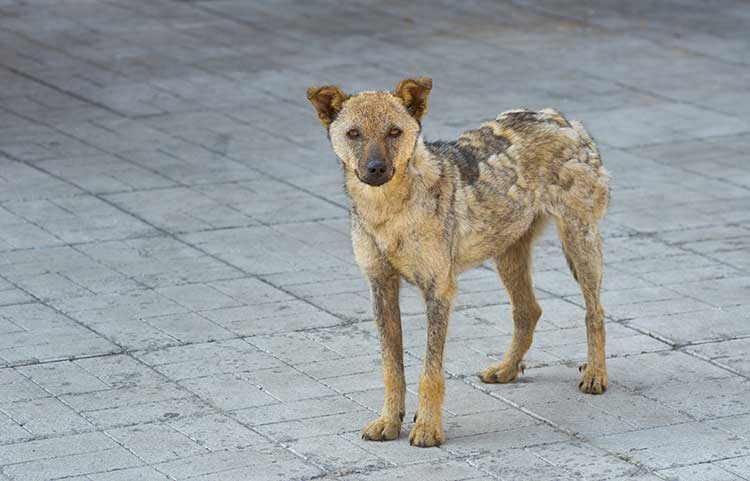
It’s a brand new year, which means New Year’s resolutions are in full swing. Since losing weight is a popular resolution, many people are out walking, jogging and running. With that comes the off chance that exercisers encounter a stray dog while walking through the park or neighborhood. These chance encounters can be a bit scary because the stray dog’s behavior is unknown. What should you do?

How to Protect Yourself From Stray Dogs

When encountering a loose dog while walking or jogging, the first initial seconds will provide a lot of information. The moment you see a stray dog, start walking away slowly from the dog. Refrain from abruptly turning around and running away in the opposite direction. This can cause a dog to chase you even if he’s friendly. Instead, walk at an angle away from the dog, so you can keep an eye on him.

If children are present, ask them to get off their bikes and walk slowly next to you. Walk between the dog and children, and try not to stare. Continue to walk slowly while glancing back and forth to keep track of the dog’s location.

If the Stray Dog is Friendly

When a friendly dog sees you, he’ll likely bounce right over to you while licking and jumping around with loose body language. If a loose dog is friendly, slowly reach down and check his collar for an ID tag with pet owner contact information.

Most friendly dogs will follow you around, so if you’re walking in a neighborhood, knock on a few doors and ask if anyone recognizes the loose dog. When walking in a park, ask fellow walkers and runners if they’ve seen the dog before. If no one claims the dog, give animal control (AC) a call and stay with the dog until they arrive.

While no one wants to relinquish a dog to animal control, it’s important to know animal control is the first place pet owners will look if they’ve lost their dogs. Plus, animal control officers can scan the dog for a microchip and contact the pet owners if one is detected. Ask the AC officer to contact you after the mandatory 10 hold, and you can adopt or place the dog yourself.

If the Stray Dog is Fearful

When a fearful dog sees you, he’ll likely stop and sniff the ground for a few seconds. Then, he’ll run the other direction. Whew, that’s a good thing. Continue walking slowly because you may encounter this dog again.

If the Stray Dog is Aggressive

Aggressive dogs will quickly run straight toward you. Some scary dogs will bark; others may be completely silent. And yes, aggressive dogs can wag their tails too. These dogs may charge toward you, stop about 1-2 feet in front of you and bark. Other times, aggressive dogs will stand a couple of feet away, while barking, and bite when you turn around.

Scream “Sit”

When a stray dog starts charging straight toward you, it’s impossible to determine if he’s friendly or not. In this case, the moment a loose dog starts running toward you, scream a common cue, such as “sit.” You can determine the type of dog by his reactions to your cue.

  • Most dogs: Stop and run away when someone screams
  • Friendly dogs: Likely stop for a moment, which gives you time to escape
  • Fearful dogs: Will run away
  • Aggressive dogs: Completely stop moving for at least a second

When a stray dog stops walking or running toward you, this is your moment to walk away slowly at an angle. Keep the front of your body facing the dog—you may need to walk backwards a bit—to prevent the dog from running up behind you and biting.

Once you’re safely away, call animal control with a description of the dog. If this dog has a pet owner, she’ll immediately contact her local animal control first. Stray dogs can certainly bite, but more than likely they’ll be injured by a passing car instead.

Bring Spray Deterrent

Seasoned walkers, joggers and runners carry spray deterrent to protect themselves from loose dogs. Instead of using pepper spray, it’s best to use a citronella spray that sprays at least 8-10 feet away. Citronella smells strongly to dogs, and will stop a dog from running toward you. Plus, having something sprayed in their eyes will cause them to stop and paw at their faces. Citronella spray won’t permanently harm a dog, but it will stop a dog from charging toward you, so you can safely get away.

Filed Under: Clients, Training Tagged With: dog training, Dog Training Tips, how to protect yourself from dogs when jogging, how to protect yourself from dogs when walking, protect yourself from a loose dog, protect yourself from loose dogs

Teaching Dogs Polite Manners Around Treats

January 18, 2017 by Fanna Easter

Games That Will Teach Your Dog Manners

Dog Manners
highwaystarz/Adobe Stock

Dogs love training treats, as they should, because dog training treats are their paychecks. Sometimes, excitement takes over around high value treats, and dogs snatch treats from their pet parents’ hands or bait bags. This behavior is frustrating. Dogs quickly learn that snatching treats from your hand works, especially if they were successful at stealing and eating the treat. If this has happened to you, then you were mugged by your dog. 🙂

Just like humans, dogs need to be taught how to behave politely around resources they want. Soon, your dog will learn that if you do this, she can have that. Here are a couple of games that will teach your dog manners around something she really loves. Remember, it’s all about self-control.

Leave It Game

When you’re standing in front of something you really want, it’s hard to stand still and ignore it. Imagine a deliciously frosted cupcake sitting inches from your hand, and your tummy is growling. Don’t like cupcakes? Then, picture a frosty mug of beer on a 110-degree day. Self-control is key here.

Your parents have likely taught you to wait until everyone else selects a cupcake before reaching for one. It’s manners 101. Self-control is a learned behavior, and most of us need daily practice to remind us to control our behavior.

Self-control is a learned behavior for your dog too. It’s time to teach your dog the “leave it” game. Hold a pea-sized piece of cheese in your closed hand and place your hand 1-2 inches in front of your dog’s nose. Of course, she’ll lick your hand, but the moment she stops touching your hand, say “yes” and give her the treat.

[perfectpullquote align=”right” cite=”” link=”” color=”” class=”” size=””]It’s important to teach dogs that human hands make good things happen.[/perfectpullquote]

Using a marker word teaches your dog her action is why she earned the reward. Take another treat and practice again. If your dog stops licking or touching your hand for a nanosecond, immediately say “yes” and reward. Practice 1-2 minutes per day. Soon, your dog will ignore your closed treat hand because she’s learned ignoring makes the treat appear.

Touch Game

It’s important to teach dogs that human hands make good things happen. The “touch” game teaches your dog to touch her nose to the palm of your hand. It’s a quick and fun dog game that can be played anywhere. Plus, this game teaches your dog how to politely earn treats instead of mugging you for them. 🙂

Holding your hand sideways, place your palm about 2 inches away from your dog’s nose. Your dog will look at you for a second and likely sniff your hand. The moment you feel her nose touch your hand, say “yes” and give her a treat. Practice for 1-2 minutes per day. Once your dog understands to touch your hand, start moving your hand farther away. Dogs learn this behavior quickly, and it’s a fun game to play with guests!

Now, your dog has learned a game that makes dog training treats appear. Be prepared, your dog may start an impromptu game to earn some treats or share food from your dinner plate. Dogs are super smart, and you can’t blame her for trying, right? If this happens, ignore it. When your dog pokes your hand, leg or treat bag with her nose, just look away for a second. Walk away and play a quick game of “touch” with your hand. This teaches your dog that an open hand means “the bar is open” and when your hand is away “the bar is closed.”

Filed Under: Dogs, Games, Puppies, Training Tagged With: calm dog, dog freaks out around treats, dog games, dog gets excited around treats, dog manners, dog training, Dog Training Tips, excited dog, impulse control, impulse control training exercises, leave it game, self control, teaching dog manners, teaching dogs polite behavior, teaching dogs polite manners, teaching dogs self-control, touch game

Can A Dog Be Too Food Motivated?

January 16, 2017 by Fanna Easter

Your Food Obsessed Dog May Just Be Distracted

Food Obsessed Dog
Mikkel Bigandt/Adobe Stock

When pet owners are introduced to positive reinforcement, a common question they ask is, “Can a dog become too food motivated?” I must say the concern is a very misunderstood one.

When teaching your dog new behaviors, there are no black-and-white answers. Instead, there are shades of gray that can confuse novice pet owners and dog trainers alike. What seems like excessive excitement about food may simply be something completely different.

Before assuming your dog is too food motivated, you should make a few dog training adjustments, which can make a huge difference in food obsessed dogs.

Signs of a Food Obsessed Dog

When dogs get excited about food, many pet owners feel they’re “too food motivated.” From another perspective, I know many people that behave similarly when margaritas are served. 🙂 When dogs are excited, they may:

  • Jump up
  • Drool
  • Knock over furniture and people
  • Lack focus
  • Focus only on food in hand, on floor, etc.
  • Ignore (not listen to) “commands”
  • Will only sit for a treat
  • Mug, bump or steal from treat bag

Is It Really Food Causing Excitement?

Dogs get excited about food; it’s natural canine behavior. When dogs are introduced to high value treats (i.e. baked chicken, cubed cheese, chopped up lunch meat), especially if they’ve never eaten it before, over excitement is understandable.

Excessive excitement can frustrate the pet owner and dog, so it’s important to bring a dog’s arousal level down a bit. Plus, excited dogs have a harder time learning because they lose focus. During dog training sessions, pet owners should be aware of their own behavior too.

To keep your behavior in check during training sessions, record both you and your dog on your smartphone. Then, make the following adjustments suggested below and record again. You’ll notice a quick and positive difference in your food obsessed dog’s behavior.

Avoid High-Pitched Rapidly Repeating Sounds

Dogs love high-pitched and rapidly repeating sounds—that’s why dog toys have squeakers. When dogs hear squeaky sounds, they get excited. They jump up, run over to the sound, focus on the person or thing making the sound, and dance around because they’re excited!

Fortunately, humans can easily mimic these high-pitched sounds. While many pet owners use these sounds as rewards for good behavior, they can inadvertently use these sounds during dog training too. When pet owners rapidly repeat a cue (e.g. “sit,” “sit,” “sit”), this can cause excitement even if said in a deep tone.

When teaching your dog a new behavior, or practicing an old behavior, say the “sit” cue once. If your dog doesn’t respond, he or she probably doesn’t understand what the verbal cue means. Or your dog has never practiced this behavior in that situation, and is too distracted. Never assume your dog understands a cue. Even if your dog has done the behavior before or will do it elsewhere, it may have been a fluke or you forgot to reward it.

RELATED: What Is Your Dog Saying? Interpreting Dog Sounds

Go Slowly

Oh, this is a big one! Fast movement will get a dog super excited—and quickly! Don’t believe me? Try running around the backyard with your dog. Even better, try running around the backyard while your dog watches you from a window. 🙂 Not only is movement fun, but it’s very distracting for dogs too.

During dog training sessions, it’s important to move slowly. Stand still and hold a treat in one hand. When luring a dog, place the treat on your dog’s nose and move slowly. If you move a food lure too quickly, your dog will move just as fast. When in doubt, put the treat back in your pocket and take a deep breath. Slowly remove the treat from your pocket and try moving slower. Make sure to keep the food lure in front of your dog’s nose. Holding treats too high will cause your dog to jump up for the treat. When you move slowly, your dog will too. 🙂

Make It Clear

When teaching or practicing a dog behavior, clear communication is key. Confusion can look like excitement, especially if a treat is bouncing around a dog’s face. If someone is holding a $100 bill in front of you, while speaking in a foreign language, you’ll try to figure out how to earn the $100.

Now, if this person moves the money around your face really fast, while repeating a sound over and over again loudly, you’ll likely snatch at the money due to frustration. From your perspective (learner), this person is teasing you with a $100 bill, right? From the other person’s perspective (teacher), he’s just holding the money in his hand while asking you to “sit.” 🙂

When in doubt, stop and video record your dog training sessions. When re-watching the video, ask yourself if you’re clearly communicating with your dog. If not, take a moment and think through your plan. Better yet, ask a certified dog trainer for tips. They can help jump-start your training sessions.

Still Think You Have a Food Obsessed Dog?

High-pitched, rapidly repeating sounds coupled with fast movements are exciting for your dog. Add a dash of confusion into the mix, and your dog is bouncing around like a ping-pong ball. Ninety percent of the time, a dog will sit still around food when pet owners remove these exciting and distracting factors. As for the other 10%, these dogs will relax quickly after earning and consuming a high value reward a few times. If a dog still leaps into the air for baked chicken, it’s time to reward impulse control games.

Filed Under: Behavior, Dogs, Puppies, Training Tagged With: dog gets excited with treats, dog too food motivated, dog training, Dog Training Tips, dogs loves training treats too much, food driven dog, food obsessed dog, how to teach a dog, how to train a dog, teaching a dog, training a dog

Why Does My Potty Trained Dog Pee In The House?

January 13, 2017 by Fanna Easter

Managing Dog Peeing Behavior

Dog Peeing in House
bitenka/iStock

Last night, a very upset pet parent contacted me about her dog. This client was completely convinced her dog pees in the house out of vengeance. During our conversation, she mentioned her dog is completely potty trained, but has just started urinating in one spot in her bathroom. She was recently hospitalized for a week, leaving her dog home alone. She assumed her dog was peeing in her bathroom because she wasn’t home.

Once I calmed her down, I asked several questions and we chatted about appropriate steps to prevent this dog behavior from happening again. Inappropriate urination in dogs happens quite often, but it’s not caused by vengeance.

Dogs Don’t Seek Vengeance

Dogs are simply blessed creatures. They don’t seek revenge, vengeance, payback or retaliation. Honestly, that’s a wonderful way to live. While it’s easy to attribute human emotions to our dog’s actions (we are human; that’s what we do), dogs don’t think that way. Science has debunked this common dog myth too. On that same note, dogs don’t feel guilt either.

Dogs are opportunists. They make decisions based on current circumstances. Dogs do what works for them in that moment.

After asking this upset client about her dog peeing in the bathroom, it turns out Sugar Bear doesn’t like pottying outside in the rain. It had rained every day for 10 days. If Sugar Bear refuses to pee outside, his pet parent brings him back indoors and forgets about it. Well, Sugar Bear still needs to pee. So, he trots off and finds a room far away and pees in a specific corner of the bathroom. Problem solved: His bladder is empty and life can happily carry on.

How to Prevent Your Dog From Peeing in the House

Anytime a previously potty trained dog urinates in the house, it’s best to rule out any health issues first. A quick trip to your vet’s office, with a urine sample in hand, should be the first step to prevent your housebroken dog from peeing in the house.

Once your dog’s health has been cleared, it’s time to change his behavior through management. Block access to the bathroom or the one room where your potty trained dog pees with a securely placed baby gate. Managing your dog’s environment prevents him from wandering off and peeing in the house. Keep this barrier up for several weeks until your dog has learned to potty outside instead.

Take a Step Back to Potty Training 101

Start Off With Leashed Potty Breaks

Taking a step back in your dog training progress and reteaching a behavior is completely normal. Reintroduce your dog to leashed potty breaks for several days. Grab your dog’s leash, stuff a few treats in your pocket and take your dog outside in the most boring area of your home. Now, just stand there and wait.

Likely, your dog will sit, down, bark, or stand there and look at you. He’s trying to figure out how to earn the treat in your pocket. Just ignore him and wait. Your dog will walk away and urinate. As your dog pees, say “yes” softly. Once he’s done urinating, give him a treat.

The word “yes” marks the behavior you want (i.e. urinating outside) and means he earns a treat for doing this behavior. Remember to say “yes” softly or you’ll risk startling your dog and he’ll stop urinating. Oops!

If your dog doesn’t potty after 10 minutes, bring him back inside and keep an eye on him. You might want to consider crating your dog since you might get distracted. After 30 minutes or so, take your dog back outside on leash and wait in the boring spot again.

All dogs need to urinate, so the behavior will happen. If he doesn’t urinate now, he will eventually; you just have to wait for it. Continue taking your dog to potty in the boring part of your backyard until he potties on leash. Remember to say “yes” softly as he urinates and reward once he’s completely done.

Teach Him to Potty First, Play Later

After a few days of leashed potty breaks, you’ve likely rewarded outdoor urination many times. Now, take your dog outside, off leash, and reward him for peeing outside. Once your dog potties, play a quick game of fetch. Your dog will learn to potty first and play later. In the rare instance your dog runs around and plays instead of urinating outside, return to leashed potty breaks again.

Remove the Baby Gate

Once you’ve witnessed your dog urinate outside for two weeks, you can now remove the baby gate. Make sure the previous indoor potty spot has been thoroughly cleaned with an enzyme-based cleaner specifically made for dog urine before removing the gate. Watch his old indoor potty spot carefully for any new marks.

Usually, following these steps will eliminate inappropriate urination 80% of the time. However, if your dog continues to potty indoors, it’s time to hire a professional dog trainer. There are oodles of reasons why this behavior continues to happen, so it’s important for you to contact a positive reinforcement dog trainer to assess and recommend.

Hang in there!

Filed Under: Behavior, Health Tagged With: dog marking in house, dog urinating in house behavioral, housebroken dogs pees in house, housebroken dogs urinates in house, how to stop a dog from urinating in the house, potty trained dogs peeing in house, potty training dog urinating in house, why does dog pee in house, why dog pees in house

  • « Previous Page
  • 1
  • …
  • 29
  • 30
  • 31
  • 32
  • 33
  • …
  • 135
  • Next Page »

About

Dog Training Nation is a community of dog trainers, dog owners and dog lovers. Our mission is to provide trainers and owners valuable information to enrich dogs' lives. We cover a range of topics, from socializing puppies to dealing with aggressive dog behavior to selecting the best dog products. It is our hope you share our content to make the dog and owner world a better place.

​

Facebook

Video

Dog Training Nation is a dog training blog for pet owners and dog lovers. We cover a range of topics from puppy socialization tips to dog aggression to dog health. It is our hope you share our content to make the world a better place for dogs.

Dog Training Nation

Quick Links

Dog Training
Dog Behavior
Dog Training Videos
Become a Dog Trainer
About
Contact Us

Copyright © 2026 · Lifestyle Pro Theme on Genesis Framework · WordPress · Log in
