Dog Training Nation

In Dogs We Trust

  • Home
  • Training
    • Dogs
    • Puppies
    • Clients
  • Behavior
    • Breeds
  • Health
  • Safety
  • Resources
    • Equipment
    • Books
  • Dog Training Videos
  • About
You are here: Home / Archives for Fanna Easter

Keeping You And Your Dog Safe During Nighttime Walks

December 30, 2016 by Fanna Easter

5 Tips for Walking Your Dog at Night

Walking Your Dog
GunjanGupta/iStock

With shorter daylight during winter, or hot 90-degree summer days, sometimes it’s best to walk your dog at night. Walking at night creates one huge obstacle though: it’s difficult to see in the dark. Many things can hide in darkness, so it’s best to take a few safety precautions before going on a nighttime walk with your dog.

1. Wear Reflective Collars & Harnesses

When it’s dark outside, it’s impossible to see moving objects in the distance. Visibility is key at night, and it’s important for drivers, cyclists, joggers and fellow walkers to see you and your dog ahead in the dark. Choose a reflective or glow-in-the-dark dog collar or harness. While white dogs reflect light better than dark-colored dogs, it’s important for all dogs to wear some type of light reflective material during nighttime walks.

These principles apply to pet owners too. Wear light-colored reflective clothes or shoes or carry a flashlight.

2. Walk on Lighted Paths

When walking your dog at night, choose lighted pathways for safety. You can find these in most parks and neighborhoods. Lighted pathways will allow drivers to see you when you’re walking near roadways, so they slow down.

Lights also provide you security. You’ll be able to see any approaching criminals, so you can react quickly. Additionally, lighted pathways will identify loose dogs, potholes, wild animals, broken glass and other harmful hazards that might be in your way.

RELATED: Walking Two Dogs at Once Tips

3. Use a Short Leash

During nighttime dog walks, it’s important to keep your dog close to you. Attach a 4-foot leash to your dog’s harness, or keep retractable leashes locked at 4 feet. Better yet, keep retractable leashes at home. They’re cumbersome during emergencies.

Dogs can navigate through darkness fairly easy, as their noses detect every scent and their ears hear every sound. Having a short leash on your dog’s harness will prevent your dog from stepping on broken glass, munching on discarded food or encountering wildlife. For you and your dog’s safety, keep your dog close to you during night walks.

4. Choose a Safe Path

Aside from choosing a lighted pathway, make sure it’s safe. Choose a path located in a safe and quiet neighborhood instead of a busy street. Safe paths should be free of loose dogs running around, barking dogs at fence lines, wildlife sightings (i.e. snakes, scorpions, raccoons, opossums) and criminal activity. Walking your dog at night may deter some criminals, but it certainly won’t stop all. Before heading out for a nightly walk, tell a friend or family member the path you’ll take and when you’ll be home.

5. Keep Your Phone in Your Pocket

Keep your phone in your pocket and ear buds at home. Unplug and enjoy this bonding time with your dog. Listening to music and talking on your phone are extremely distracting, which take your focus away from keeping you and your dog safe. Always be aware of your surroundings.

Be safe!
Filed Under: Clients, Safety, Training Tagged With: are you safe walking dog at night, dog training, Dog Training Tips, dog walk night, how to teach a dog, how to train a dog, night time walking dog safety, night time walking dogs, reflective collars dogs, reflective harness dog, should you walk dog at night, teaching a dog, tips for walking your dog at night, training a dog, walking at night tips, walking dog at night

6 Tips For Dining In Dog-Friendly Restaurants

December 28, 2016 by Fanna Easter

Dog-Friendly Restaurant Etiquette

Dog-Friendly Restaurants
IPGGutenbergUKLtd/iStock

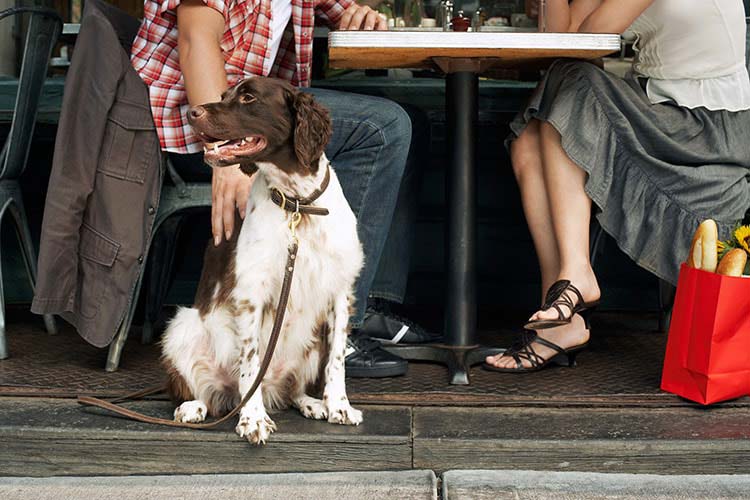
Dog-friendly restaurants are popping up everywhere, and many are now offering outdoor seating for pet owners and their dogs. Enjoying a scrumptious meal while relaxing at a restaurant with your dog is a privilege, so proper dog restaurant etiquette is a must.

1. Leashed Dogs Only

When dining at dog-friendly restaurants, keep your dog on a short leash that’s preferably 4 feet long. Short dog leashes prevent dogs from bugging nearby guests while they eat, snatching fallen food crumbs from nearby tables, or jumping on tables and servers. While it’s tempting to tie your dog’s leash to your chair or table, it’s best to attach it to yourself instead.

For smaller dogs, tie the handle around your belt loop or wrist. For larger dogs, I’d recommend attaching the handle of your dog’s leash to your belt. Unbuckle your belt and slide your belt through the leash handle, and then refasten your belt. If this is too complicated, try waist belts or simply hold your dog’s leash with one hand.

2. No Barking Please

Barking dogs will be asked to leave. If your dog barks at people or dogs, it’s best to keep him at home. Some dogs are uncomfortable in fast-paced environments even if they’re dog-friendly places. They end up hiding under chairs. Movement can scare some dogs too, especially when guests or servers walk toward your table. If, at any time, your dog becomes fearful, worried, stressed or vocal, ask your server to box your meal up to go. It’s the right thing to do for your dog. 🙂

3. Polite Manners are a Must

Dogs should sit quietly near their pet owners and relax while waiting at dog-friendly restaurants. This is tough for most dogs though because they easily get excited around people. Before going to a dog-friendly restaurant, make sure he’s able to “sit,” “down” and “stay” on cue in high distraction areas.

Additionally, your dog shouldn’t jump up on people or pull on leash. Teaching polite manners around myriad distractions may take years before a dog is comfortable enough to relax in a restaurant. Practice, practice and practice some more before expecting your dog to sit quietly for an hour. Start slow by popping into a dog-friendly cafe and practice “settle” while waiting for your order.

4. Bring a Portable Water Bowl

Dogs get thirsty, so bring along a collapsible water bowl. Ask your server for a glass of water, and pour it into your dog’s bowl. Place your dog’s bowl under your table to avoid guests’ feet or your dog from knocking it over. Replenish water as necessary, especially on warm days.

RELATED: Dogs Die in Hot Cars

5. Choose a Quiet Location

Most dog-friendly restaurants offer outdoor seating for pet owners and dogs, so choose a quiet location. Ask for a table off in a corner and away from high traffic areas. Remember, not all guests like dogs, and many may startle when seeing a dog in their path. Additionally, a quiet location prevents guests and servers from stepping on your dog, and provides a nice place for your dog to truly relax.

6. Keep Your Dog Busy

Expecting a dog to sit quietly for an hour around food, noise and fast-moving people in a strange location is impossible. Bring plenty of high-value chew toys or food stuffed toys for your dog to enjoy. Bully sticks are a great high value treat that will keep your dog busy for 10-20 minutes, depending on your dog’s chewing style. If your dog refuses to chew or lick high value treats, he may be nervous. When in doubt, ask the server to box your food up to go.

As pet owners, we represent all pet owners. Take your time and teach your dog how to politely react in a restaurant environment. It will make us all look good! 🙂

Filed Under: Clients, Resources, Training Tagged With: dog friendly restaurant etiquette, dog friendly restaurants, dog training, Dog Training Tips, how to teach a dog, how to train a dog, pets in restaurants, should you bring your dog to a restaurant, teaching a dog, tips for bringing dog to restaurants, training a dog

How to Save Money on Prescription Dog Food

December 27, 2016 by Fanna Easter

Prescription Dog Food: Money Saving Tips

Prescription Dog Food
pedphoto36pm/iStock

When your veterinarian utters, “Your dog must eat a prescription diet for life,” your heart and wallet sink. Prescription dog food diets can slow down a progressing disease due to their specific ingredients, vitamins, minerals and supplements.

Veterinarians prescribe prescription diets specifically formulated for kidney, cardiac, diabetic and gastrointestinal disease, and these diets do work. However, prescription dog foods are expensive, especially for dogs weighing more than 70 pounds. On average, a prescription inflammatory bowel disease (IBD) diet for dogs can cost between $200-$350 a month for a 110-pound Rottweiler. Ouch!

Check out these money saving tips on prescription dog food.

Check With Pet Insurance

Pet insurance is a must due to rising costs of veterinary medicine. Many pet insurance polices cover prescription dog food costs, so check your policy or contact your pet insurance company for more details. If your dog isn’t currently covered by pet insurance, reach out to several companies for quotes. Many companies offer discounted pet insurance rates for employees too, so it’s certainly worth asking your Human Resource department for information.

Some monthly insurance premiums may be cheaper than your dog’s monthly prescription diet bill, which is an added bonus since pet insurance premiums will cover additional vet bills. Before enrolling, calculate prescription dog food costs and vet bills, then ask if a pet insurance policy will cover pre-exisitng conditions.

Purchase Kibble Over Canned Food

By far, purchasing prescription kibble is much cheaper than prescription canned food. Additionally, dogs consume more canned food than kibble, which again makes kibble an affordable option. Sometimes, purchasing prescription kibble in bulk will keep costs down. Ask your veterinarian about this option. Surely, bulk orders will keep shipping costs to a minimum, saving you money in the long run.

Turn Prescription Dog Food Into Treats

Skip expensive prescription diet treats, and make your own instead. Purchase a case of prescription canned food and turn them into dog treats. Each week, chop up the contents of 1 can of prescription dog food into pea-sized bites and bake at 200 degrees for 20 minutes. Baking will remove excess moisture, so treats will hold their shape. Place prescription dog treats in a zipped plastic bag and keep refrigerated for one week.

RELATED: Healthy Dog Treats

Make Your Own Prescription Dog Food

This last money saving tip will save you hundreds of dollars on prescription dog food each year. Plus, homemade foods are better for your dog’s health and immune system. Ask your veterinarian for a homemade prescription dog food recipe to make at home.

At first, your veterinarian may seem a bit stubbed, but explain that dog food costs are a concern. Most veterinarians will certainly accommodate your homemade food requests, and will likely point you to Balance It supplement website, which contains numerous homemade prescription diet recipes targeting most diseases. Also, Monica Segal’s “Optimal Nutrition: Raw & Cooked Diets- The Next Level” contains oodles of raw and homemade prescription diets for dogs too.

How do you save money on prescription dog foods? Please share your tips below!

Filed Under: Health Tagged With: budge prescription dog food, cheap prescription dog food, cost saving tips prescription dog food, cutting costs prescription dog food, homemade prescription dog food, how to make homemade prescription dog food, prescription dog food, prescription dog food treats, save money prescription dog food

5 Tips For Sharing A Home With An Incontinent Dog

December 23, 2016 by Fanna Easter

Managing Senior Dog Incontinence

Senior Dog Incontinence
BigRedCurlyGuy/iStock

Sharing a home with a senior dog should be a badge of honor. As pet owners, we work hard to provide the best nutrition, veterinary healthcare, exercise, mental stimulation, dog training and unconditional love throughout our dogs’ lives. So, if we’re lucky enough to share our home with a senior dog—even if she’s incontinent—be proud.

Managing dog incontinence is stressful, but it can be done successfully. It’s important to remember, your older dog isn’t choosing to potty indoors. She simply is unable to hold her urine or feces any longer. With that said, making a few easy changes within your senior dog’s environment will make the process much easier. Fortunately, I’ve had the pleasure of sharing my home with many senior dogs, and these dog incontinence tips have worked every time. 🙂

Reminder: If your dog suddenly becomes incontinent, always follow up with your veterinarian first.

1. Use a Plastic Bed Protector

For the most part, accidents happen most often while your dog sleeps. Instead of washing your dog’s bed several times a day, wrap a waterproof bed protector around her bed. Depending on the size of your dog’s bed, choose between a large waterproof mattress bed protector or a waterproof pillow cover for smaller beds.

Waterproof bedding protectors can be purchased online or in the baby department of most stores. Some plastic waterproof bed covers make strange sounds, which can frighten dogs. Additionally, some are slick, which can cause your dog to slide off her bed. If this happens, choose a soundless bed protector made of coated plastic, such as Pet Dreams waterproof bedding cover.

Once you’ve wrapped your dog’s bed with a waterproof protector, cover her bed with old blankets or comforters that can be easily washed. In the past, I’ve used old twin bed comforters wrapped in soft waterproof covers. Each day, I swapped out the comforters and washed as needed. Adding a soft waterproof cover protector on the outside of a comforter protected the interior padding and made washing super easy.

2. Create a Safe & Comfortable Space

Senior dogs deserve a warm, clean, safe and comfortable spot to rest each day. Choose an area that can be easily cleaned up as washable items. When leaving home for work, I’d fence off an area inside my kitchen, covering all accessible flooring with rubber-backed rugs, adding a super comfy bed and toys, and filling a bowl with water.

While it’s tempting to cover your dog’s entire space with Wee Wee pads, it’s not in the best interest of your incontinent senior dog. Potty pads have plastic backing and are super slippery when walked on, which can cause your old dog to slip and fall. Instead, choose rubber-backed rugs with short carpeting. They’re easy to rinse and clean in a pinch.

Each day, as I’d head out for work, I’d give my senior dog a frozen stuffed Kong for her to enjoy. Around noon, my pet sitter would arrive for potty breaks and cleanup. After work, I’d sanitize my senior dog’s area and wash rugs and bedding as needed.

RELATED: How to Stop Your Senior Dog From Slipping

3. Throw Out Diapers

This is a tough topic, as many pet owners disagree on the effectiveness of doggie diapers. Dog diapers will catch urine and fecal accidents, but will also cause skin scalding if dirty diapers are left in place for longer than 10-15 minutes.

It’s understandable to assume dog diapers will prevent accidents from happening in your home, but they should only be used when you’re home to change them often. When left alone for hours, senior dogs should never sit or lie in their own mess; it’s simply cruel. When leaving your dog home alone, keep your incontinent dog in a safe and easy-to-clean area because accidents will happen.

4. Use a Waterless Dog Shampoo

For easy cleanup after potty accidents (because they will happen), keep a large bottle of waterless dog shampoo close by. After potty accidents, simply wipe up any urine or fecal matter from your dog’s skin and coat. Then, spray waterless shampoo onto soiled areas of your dog’s coat and wipe with a clean towel. For dried fecal matter, brush your dog’s coat to remove first, and then clean the area with waterless dog shampoo.

5. Clean Up After Accidents

With so many cleaning solutions available now, purchase or make a natural and odorless product out of hydrogen peroxide, baking soda and water. Keep a spray bottle nearby, and clean and sanitize the area immediately after accidents. When cleaning up accidents, keep the mood light and bring your incontinent dog outdoors, so she doesn’t slip on wet flooring. As you’re cleaning up, remember it’s not her fault. 🙂

We never had enough time with our dogs, so enjoy every moment with your senior dog. 🙂

Filed Under: Equipment, Health, Resources Tagged With: dog bowel incontinence, dog incontinence products, female dog incontinence, incontinence dog tips, incontinence old dog tips, incontinence senior dog tips, incontinence your elderly dog, male dog incontinence, natural solutions dog incontinence, old dog bladder control, old dog can't hold bowls, old dog can't hold urine, old dog incontinence, senior dog care, senior dog lost bladder control, senior dog tips, urinary incontinence dog, waterproof bedding incontinent dog

Dog Behavior: Help! My Dog Has Zoomies

December 21, 2016 by Fanna Easter

Don’t Worry, Dog Zoomies are Normal

Dog Zoomies
kopophoto/iStock

Get out of the way! Is my dog possessed? Nope, he just has dog zoomies.

This crazy dog behavior is witnessed by pet owners every day. Dogs will randomly run through the house like a speeding missile that leaps, runs, bounces, nips and turns circles so fast they resemble a blur. This sudden burst of energy is lovingly called zoomies, and is normal canine behavior. Technically, zoomies are called frenetic random activity periods, or FRAP, for short.

Thankfully, zoomies end just as quickly as they start up, but many pet owners wonder what causes dog zoomies and how to best handle them.

What are Dog Zoomies?

Zoomies refer to a dog’s random burst of energy that can last seconds or several minutes. Easily excited dogs, or dogs with extra bouts of energy, may zoomie more than other dogs. However, I’m not certain this is completely true. I’ve watched senior dogs zoomie for a few seconds when their human comes home. They do this out of excitement.

One thing we can assume from this quirky dog behavior is zoomies are caused by excitement and powered by energy. Sometimes, when pet owners elicit play, this may cause their dogs to zoomie around the house. When we come home from work, our Bull Terrier does somersaults on top of our bed, which we lovingly call huckle butting. 🙂

What Should You Do?

Just step out of the way, and let your dog enjoy his or her zoomies. Some pet owners will clap or speak in a high-pitched voice while dog zoomies happen. This will ensure zoomies carry on for several more minutes.

Let Him Outside

For larger dogs that knock over furniture or people during zoomie time, let them out into the backyard to enjoy their zoomies. Remember, dog zoomies are powered by excitement, so allow your large dog to celebrate your arrival home in a safe place. Nothing ruins a good zoomie than getting into trouble.

If your large dog gets too excited, ask him to play a game of “touch” or play a quick game of fetch. Asking your dog to “sit” or “down” when he’s excited won’t happen and isn’t fair. It’s equivalent to asking a young child to stand completely still when walking through Disney World gates. It’s impossible. 🙂

Don’t Chase

Now, refrain from chasing your dog during zoomies, as this will teach your dog to run away from you. While it’s fun it the moment, it can turn into a game of “keep away,” which isn’t fun when trying to catch your dog.

Too Many Zoomies?

A few zoomies are fun, but several zoomies a day means your dog needs additional exercise. Plan to walk younger dogs for 30 minutes per day. During walks, make sure your dog has plenty of sniffing opportunities too. This uses up excess energy. Also, feed daily meals from food puzzles and provide plenty of chewing opportunities too.

Enjoy zoomies with your dog. Celebrate together!

Filed Under: Behavior Tagged With: dog frap, dog gets excited and runs, dog zoomies, puppy gets excited and runs, puppy zoomies, why dog gets excited and knocks over things, zoomie dog behavior

  • « Previous Page
  • 1
  • …
  • 31
  • 32
  • 33
  • 34
  • 35
  • …
  • 135
  • Next Page »

About

Dog Training Nation is a community of dog trainers, dog owners and dog lovers. Our mission is to provide trainers and owners valuable information to enrich dogs' lives. We cover a range of topics, from socializing puppies to dealing with aggressive dog behavior to selecting the best dog products. It is our hope you share our content to make the dog and owner world a better place.

​

Facebook

Video

Dog Training Nation is a dog training blog for pet owners and dog lovers. We cover a range of topics from puppy socialization tips to dog aggression to dog health. It is our hope you share our content to make the world a better place for dogs.

Dog Training Nation

Quick Links

Dog Training
Dog Behavior
Dog Training Videos
Become a Dog Trainer
About
Contact Us

Copyright © 2026 · Lifestyle Pro Theme on Genesis Framework · WordPress · Log in
