Dog Training Nation

In Dogs We Trust

  • Home
  • Training
    • Dogs
    • Puppies
    • Clients
  • Behavior
    • Breeds
  • Health
  • Safety
  • Resources
    • Equipment
    • Books
  • Dog Training Videos
  • About
You are here: Home / Archives for Fanna Easter

Get Your Dog Checked For Vitamin D Deficiency

June 27, 2016 by Fanna Easter

Dogs Need Vitamin D Too

Vitamin D for Dogs
Boarding1Now/iStock

Honestly, I consider myself an educated doggie momma and dog trainer. I live for continuing education pertaining to dogs and behavior. How the importance of vitamin D for dogs skipped right passed me, I’ll never know. I’ve been checked, and I’m within normal limits, but I never thought about checking my dogs’ vitamin D levels until our holistic veterinarian mentioned testing them.

When she first mentioned testing for vitamin D deficiency, I crinkled my nose. Was she trying to upsell me? She read my expression instantly, and then explained the importance of vitamin D in a dog’s diet. I agreed to have both dogs tested. While we waited for the results, I researched the topic like a mad woman.

Wow, I learned a ton! Although both of my dogs’ tests revealed they’re insufficient in vitamin D—boo.

Why Test Vitamin D Levels in Dogs?

Both of my dogs are hyperactive, have issues digesting certain foods, and have anxiety (stress) or OCD issues. These are issues I can’t control; they’re part of my dogs’ personality and genetic makeup. Impulse control exercises help with hyperactivity, but sometimes my dogs just lose it in new situations. Also, I don’t have a clue on why they can’t digest their food properly—even with enzymes. I don’t mind hyperactive dogs. From my experience sharing a home with both hyperactive and reactive dogs, I think the former is much easier to live with. However, back to vitamin D for dogs.

When our holistic vet walked into the room, she carefully asked questions about each dog’s health history and reviewed both of their past medical records. She explained that vitamin D is extremely hard for dogs to absorb if digestive issues are present. While dogs can absorb vitamin D through their skins like humans, their coats act as a natural sunscreen, which prevents adequate amounts of vitamin D to be absorbed. Plus, she explained that dogs can eat the same food every day, but each dog would probably have a different vitamin D level due to their varying health and ability to absorb it.

While vitamin D deficiency symptoms differ between each dog, she said generally low vitamin D levels could contribute to hyperactivity, anxiety, depression and reactivity. Though, sometimes, dogs don’t show any symptoms, which is why they should be tested. Check out this article on further studies pertaining to vitamin D levels in dogs. It seems to mirror exactly what our vet said.

RELATED: Free Feeding or Scheduled Feeding Dogs: Which is Best?

Testing Your Dog for Vitamin D Deficiency

Testing your dog’s vitamin D level is a simple process that requires the drawing of blood and waiting for the lab results. We received results within 5 days, and I picked up my dogs’ Rx vitamin D liquid supplement the same day.

Interesting Facts About Dog Vitamin D

Here’s what I found most interesting throughout this entire vitamin D adventure. Stella has a very short, light-colored coat (about 50% white coat). She’s a spayed Bull Terrier and a sun-worshipper; she “bully bakes” daily for at least 10 minutes. Sobek, my Rottweiler, has a longer jet black coat and avoids the sun like a vampire. Guess who had the lowest vitamin D level? Stella! Her levels were dangerously low while Sobek’s levels were insufficiently low.

Check out these facts pertaining to vitamin D levels in dogs. These facts were attached to the last page of our dogs’ lab test results, and I found them so interesting.

  • Spayed female dogs are 10% lower in vitamin D than intact females (Sharp, 2015 BMC Res Notes).
  • Dogs with IBD have significantly lower vitamin D levels (median 25 ng/mL) than healthy dogs (Gow, 2011 J Small Animal Pract).

Vitamin D Supplementing

Both dogs consume vitamin D supplements in the form of liquid drops right after a full meal every day. We add these drops into caffeine-free chamomile tea and mix it in with other powder and liquid supplements. It’s been a couple of weeks of supplementation, and I’ve already noticed both dogs sleep deeper and are able to relax quicker when around distractions.

Retesting for vitamin D deficiency is a must! Dogs can overdose on vitamin D with potentially deadly consequences, so monitoring vitamin D supplementation is required by your vet. So many articles suggest throwing in eggs and salmon to supplement your dog with vitamin D, but avoid doing that until you’re certain your dog is vitamin D deficient. Otherwise, vitamin D poisoning in dogs may occur. Digestion plays a huge role in absorption, and a holistic vet can help heal your dog’s tummy.

Once we began supplementing our dogs with vitamin D, we were required to have them both rechecked in 30 days. Time will tell, and I’ll update everyone with another article.

Spend the $75 and get your dog’s vitamin D level tested. It’s worth it. 🙂

Filed Under: Health, Resources Tagged With: dog vitamin d deficiency, how to test dog for vitamin d, is my dog getting enough vitamin d, low levels vitamin d dogs, should my dog get tested for vitamin d, testing dogs for vitamin d, vit d dog, vitamin d dog levels, vitamin d dogs

Reactive Dog Resources You Need to Get Started

June 24, 2016 by Fanna Easter

Reactive Dog Resources

Reactive Dog Resources
alexandrshevchenko/iStock

As a reactive dog owner, you should stay up-to-date on reactive dog resources and training tips. Dealing with a reactive dog can be difficult, which is why you should seek help from qualified professionals who will provide support, listen to you throughout the entire process, use positive reinforcement training and provide results.

While positive results are important, teaching you how to handle a stressful situation quickly and how to positively change your dog’s behavior is much more valuable in the long run. If you’re looking for answers, check out these resources below. You’ll find plenty of reactive dog resources and dog training solutions. 🙂

RELATED: 5 Reactivity and Aggression Tips That Will Make Your Life Easier

Veterinary Behaviorists

Finding a veterinary behaviorist should be the first step pet owners take when dealing with a reactive dog, but unfortunately many pet owners seek these professionals as a last resort. A veterinary behaviorist is a veterinarian who’s board certified in animal behavior. These professionals treat reactive dog cases every day. Plus, they’re up-to-date on the latest behavior protocols, tests and medications. To find a veterinary behaviorist in your area, check out American College of Veterinary Behaviorist.

If you’re fortunate to live near a veterinary behaviorist, it’s worth scheduling an appointment with that person face-to-face. Now, some pet owners aren’t that lucky. If you’re unable to speak directly to a vet behaviorist, do know that all veterinary behaviorists will consult with your regular veterinarian by phone. There are so many benefits to bringing a veterinary behavior expert into the mix. For example, she can recommend a local qualified dog trainer and point you in the right direction.

Qualified Dog Trainers

Not all dog trainers are qualified to work with reactive dogs; actually, most of them aren’t qualified. Keep in mind there’s no such thing as an animal behaviorist. This is a made-up term in the dog training world. Anyone can call herself an animal behaviorist, as there’s no certification or requirement to do so.

When searching for a qualified dog trainer, you can ask your veterinary behaviorist for a referral. In most cases, she’ll know local dog trainers who have experience working positively with reactive dogs. Seek a dog trainer who is Behavioral Adjustment Training (BAT) certified. These dog trainers know how to use counter-conditioning and desensitization for reactive dog training, and they clearly explain their process to pet owners.

If your veterinary behaviorist doesn’t know of any dog trainers in your area and you’re unable to find a BAT-certified dog trainer nearby, then I suggest searching for a professional dog trainer who specializes in dog reactivity or aggression. The dog trainer you choose should have a minimum of 5 years of experience—not counting school—because it takes years of hands-on experience and continuing education to learn how to successfully change a reactive dog’s behavior.

Check out Karen Pryor Academy of Dog Trainers, Pet Professional Guild, International Association of Animal Behavior Consultants (IAABC) and Animal Behavior College.

RELATED: How to Choose a Good Dog Trainer

Books & DVDs

There are a ton of books that discuss dog behavior and dog reactivity, but many are too difficult to read. I’ve compiled a few must-have books for reactive dog training below. Each book is different and reading them all will help you interpret dog body language and understand why reactive dogs act a certain way and how to change their behavior.

“Calming Signal – What Your Dog Tells You” by Turid Rugaas

This easy-to-read booklet gives you the foundation to both successfully interpret your dog’s body language and change his behavior. If you can’t identify when something bad is about to happen, you can’t prevent it from happening.

“Feisty Fido: Help for the Leash-Reactive Dog” by Patricia McConnell and Karen B. London

This quick read will teach you the importance of an emergency U-Turn as well as how to handle situations when your dog reacts.

“Behavior Adjustment Training 2.0: New Practical Techniques for Fear, Frustration, and Aggression” by Grisha Stewart, M.A., CPDT-KA

This book, which also comes in a DVD set, will teach you how to change your dog’s behavior. Now, this book will be a bit challenging to read for most pet owners, so I highly recommend referring to this book when working with a veterinary behaviorist and qualified dog trainer.

Hopefully, these reactive dog resources will help you get started in your quest for answers. Good luck on your journey. Many of us have taken it with great success. 🙂

Filed Under: Behavior, Books, Clients, Resources, Training Tagged With: dealing with dog aggression, dog aggression, dog aggression tips, dog barks at other dogs, dog barks at people, dog dislikes other dogs, dog dislikes people, dog lunges at other dogs, dog lunges at people, dog trainer dog aggression, dog training, Dog Training Tips, help for dog aggression, help for dog reactivity, how to teach a dog, how to train a dog, stop dog aggression, teach a dog, train a dog

Dog Apartment Living: Tips & Tricks to Make It Work

June 22, 2016 by Fanna Easter

7 Tips for Dog Apartment Living

Dog Apartment Living
iStock/gpointstudio

Dog apartment living can be a bit more challenging than detached home living. In an apartment, your neighbors are so close and you share the same stairwells, hallways and entrances. All of this adds up to creating an uncomfortable environment for you and your dog. I’m sure you’re probably already aware of these issues, so hopefully these tips will make dog apartment living a bit easier for the both of you.

1. Always Keep Your Dog on Leash

As apartment dwellers, there’s a tiny tinge of guilt you feel when your dog must be leashed at all times when outdoors (I know the feeling). It’s important to understand that a leash keeps your dog from running away, walking into traffic or harassing other people and dogs. Basically, your dog’s leash is a safety line.

While we envision our dogs yearning to run freely in a never-ending pasture of green grass, most dogs would rather sniff and explore. Walks are important for releasing pent-up energy, but allowing your dog to stop, sniff and explore will mentally tire her out too. When your dog stops to sniff, she’s basically checking her social media page. She’s finding out what’s going on and who’s doing what in the neighborhood. She may respond back by marking the area. Overall, allowing her to sniff and explore is vital for dog apartment living.

2. Create a Sound Barrier Inside

Apartments share walls, elevators and entrances, which can all cause some creepy sounds. When not home, play soft music or a sound machine at medium level. Creating a calming sound will drown out any other noises and ensure your dog sleeps soundly while you’re away.

If your neighbors are loud, even when you’re home, turn on a portable fan to drown out the noise. I find portable fans provide more white noise than a ceiling fan. By drowning out typical apartment living noises, you prevent your dog from barking when they hear these sounds. Check out the benefits of calming music for dogs.

3. Make Weird Noises Fun

Some neighbors are so loud that even white noise can’t drown them out. In order to combat this, make it rain treats next time. Keep a bowl of tiny, super yummy treats near your chair and toss your dog a treat when a neighbor slams his door. When a nearby dog barks or people argue loudly in the hallway, toss your dog a treat the moment the sound begins. By pairing good things with sounds, you’re teaching your dog that weird sounds will make it rain treats, which prevents barking or stress.

4. Check Out Entrances & Exits

When walking out of your front door, or through the building entrance, take a moment and make sure the coast is clear. As you approach an entrance, ask your dog to “sit” and “wait.” Now, peek out the entrance to make sure other dogs or people aren’t approaching. Once the coast is clear, tell your dog “let’s go” and walk through the entrance way.

Checking out all entrances and exits before walking through them is so important for dog apartment living, especially if your dog reacts to other dogs or people. We lived on the 7th floor with two Rottweilers, and we learned quickly that rounding the corner with unsuspecting people approaching us will cause screams, spilled coffee and frowns.

Our Rotties were super sweet, but they scared our neighbors, so just taking this extra step reassured our neighbors that our dogs are polite. Afterwards, we witnessed many smiles going forward. Make sure the coast is clear every time.

5. Keep Your Distance

I can’t say this enough: not all dogs want to meet other dogs. Just because you pass another dog walking around your apartment building, it doesn’t mean your dog wants to meet the other dog. I’m pretty sure you don’t shake hands with your neighbors every time you see them because that would be a bit creepy. It’s the same thing for your dog. If a neighbor with a dog makes a beeline for you and your dog, just tell him you’re training a new dog behavior and don’t have time to chat, but thank him along the way.

6. Pick Up Your Dog’s Poop Every Time

Pick it up every time despite rain, sleet, monsoons, hurricanes, blizzards and heat waves. If you forget a poop bag, bring your dog upstairs. Afterwards, grab a poop bag and head back down to pick it up. When this happens to us, I place a stick vertically into the ground that’s right next to the poop, so I can find it easier. Plus, by flagging the area, your neighbors will know you’re coming back to pick up your dog’s poop—because we all know someone is always looking, right?

7. Play Dog Apartment Living Games

Walks are good, but sniffing opportunities are better, so make sure your dog has fun sniffing activities in your apartment too. Toss out your dog’s food bowl because feeding your dog in a bowl is so boring and a huge waste of an enrichment opportunity. Instead, stuff your dog’s food in interactive toys.

For example, hide bits of kibble behind furniture or scatter your dog’s kibble in a shag rug. This encourages sniffing and hunting, which is excellent mental stimulation. For games that don’t involve food (because some dogs are watching their waistlines), grab a bottle of dog-friendly bubbles and play bubble games, or play a fun game of tug. Inside your apartment, your dog can run freely and play, so take advantage of it.

Filed Under: Dogs, Safety, Training Tagged With: apartment big dogs, apartment dog, apartment living dogs, apartment puppy, dog training, Dog Training Tips, games for apartment living dogs, how to teach a dog, how to train a dog, living with dogs in an apartment, my dog barks at noises apartment, teach a dog, tips for apartment with dogs, tips for living in an apartment with dogs, train a dog

Surviving Crate Rest: Secrets of Success

June 20, 2016 by Fanna Easter

How to Survive Crate Rest

Surviving Crate Rest
tongchuwit/iStock

Every pet owner cringes when her veterinarian says, “You’ll need to rest your dog in a crate.” Your shoulders drop to your knees and you ask, “For how long?” Hopefully, it’ll just be a couple of days, but even that can feel like a lifetime for young and active dogs. Whether you have to crate rest your dog for a few days or couple of weeks, check out these crate rest tips that are sure to keep your dog mentally happy during recovery while maintaining your sanity.

Choose Comfortable Bedding

Make sure your dog has plenty of comfortable bedding. It’s quite uncomfortable lying on hard surfaces for an extended period of time. Comforters and blankets are OK, but it’s best to add a memory foam type of bedding in your dog’s crate first, then layer with sheets, comforters and blankets. If your dog gets hot easily, like our Rottweiler, look for a memory foam bed with a gel topper. This will keep your dog comfortable and cool.

To keep your dog’s bedding clean longer, toss an old towel on top of your dog’s bedding before serving him meals and food stuffed toys. Once your dog is finished eating, remove the towel and wash off any crumbs or debris.

Place the Dog Crate in a Corner

Location, location, location is so important. Even during crate rest, your dog wants to hang out with his people, so place his crate in the corner of your TV room. If you have small children, I recommend placing a portable fence around your dog’s crate to keep little fingers from poking at and disturbing your dog. I also highly recommend purchasing a second dog crate to keep in your bedroom at night. This way, your dog can sleep with you too while resting.

Keep Your Dog Mentally Stimulated

Since your dog is unable to move, he’s probably bored lying around all day. Remember, dogs don’t have TV or video games to keep their minds busy while their body recovers, so it’s our job to create mental games for them.

Crate Rest Activities

Divide your dog’s daily meal into four portions. Stuff each portion inside four different interactive toys. My favorite interactive toy is the Kong. All you need to do is sprinkle a few bits of kibble at the bottom of the Kong, then layer with a tiny bit of canned food. Continue layering the kibble and canned food like a cake until ¼ of your dog’s daily ratio of food is inside. Then, fill the other three toys the same way. Freeze all four toys overnight and keep in the freezer for best results.

Every six hours, give your dog a frozen food stuffed toy inside his crate, so he can lick away. It usually takes dogs anywhere between 20-45 minutes to empty a frozen Kong toy, which is equivalent to playing video games or solving a puzzle for the same amount of time.

In between frozen Kong-licking sessions, play a few games of “touch” or “find the treat” in your hand. To play “find the treat,” hold a treat in one hand and then hold both hands in front of your dog’s nose. Give him the treat when he sniffs the hand holding the treat. Check out “Crate Rest Games for Dogs” for more crate rest activities.

Take Your Dog Out to Potty on Leash

Always take your dog out to potty on leash. I recommend using a short leash that’s about six feet long. A short leash prevents your dog from running around or experiencing short bursts of zoomies because your dog is excited to be outdoors.

For potty breaks, put on your dog’s collar and attach your dog’s leash while he’s in his crate. I don’t recommend keeping a collar on your dog while he’s crated. I’ve had a dog get part of his collar stuck on his crate and he freaked out. I had to cut the collar off through the crate, as it was strangling him. Thank goodness I was home; I shudder to think about what could’ve happened if I were away.

Once your dog is leashed, walk your dog through the house and take him to his potty spot. When your dog’s pottied, bring him back indoors on leash and toss a treat in his crate. After he follows the treat, unleash him and close the crate door. Walking your dog through your home prevents slips and falls and keeps your dog from running around.

Stick to It, Don’t Fall for Those Sad Eyes

This is a big one! Every time you reward your dog’s sad eyes or whines by opening your dog’s crate and allowing him free time, you’re rewarding the wrong behavior. If your dog learns he only comes out of his crate when quiet, he will learn to remain quiet.

It’s not fair to your dog to allow him free access under strict crate rest; it’s just not worth the risk. While we hope nothing bad happens, in most cases (80% of the time) your dog will jump up, slip, fall or further injure himself. This statistic comes from Sobek’s orthopedic surgeon, which I found to be quite alarming.

Be strong. Keeping your dog quiet is the best thing for your dog. Just don’t forget to keep his mind active.

UP NEXT: Surviving the First Night With Your Puppy

Filed Under: Behavior, Health Tagged With: crate games for dogs, crate rest dog, crate rest for dogs, crating a dog after surgery, dog confined to crate rest, how to crate rest a dog, keep dog quiet in crate, surviving crate rest for dogs, tips for crate rest dog after surgery

Why You Should Get Certified In Pet First Aid

June 17, 2016 by Fanna Easter

Pet First Aid Certification: Why and How You Should Get It

Pet First Aid Certification
zoran simin/iStock

“Should I become certified in pet first aid?”

You probably know the answer to this question already, which is yes! Just like human CPR, learning how to do pet CPR is a skill you’ll hopefully never need, but if the situation arises, you’ll know exactly what to do. When it comes to obtaining your pet first aid certification, there are a couple of programs to choose from and, as always, I have recommendations for you. 🙂

What You’ll Learn in Pet First Aid

Pet first aid certification is not just CPR anymore. In pet first aid certification programs, you’ll learn how to identify critical situations, such as shock and heat stroke. Plus, you’ll learn how to locate and check your dog’s vital signs, which is an essential skill required during any emergency situation or illness. You’ll also learn how to perform CPR on dogs of different sizes and what to do if a dog is choking. They’ll even train you on how to take care of a dog that is bleeding, impaled or has fractured bones. Some pet first aid courses also discuss management of insect bites too. It’s difficult to discuss, I know, but learning how to manage different emergency situations is a skill all pet owners should learn. With pet first aid training, you’ll learn how to maximize those precious moments while a dog is rushed to a veterinarian.

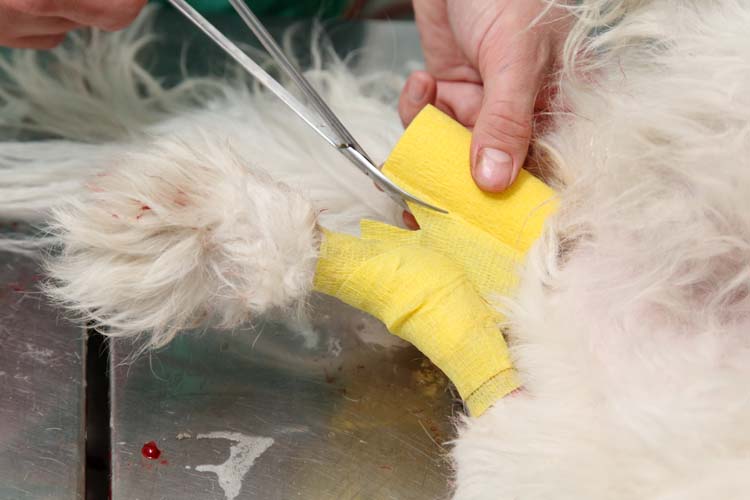
You may also be interested in: Treating Your Dog’s Paw Pad Injury

Pet First Aid Courses

There are several options to choose from. Here are the largest and most reputable pet first aid certification courses currently being offered.

Pet Tech

By far, this is the best pet first aid course out there due to its extensive hands-on workshops. I firmly believe students learn quicker and retain more information in a hands-on classroom environment with a qualified instructor.

Many years ago, I took a Red Cross pet first aid course that had an instructor who covered emergency situations from a book. Several years later, I attended an eight-hour Pet Tech course where I learned so much more and felt confident that I could calmly handle a situation. The hands-on portion was key!

Pet Tech Instructors have all completed an extensive course before teaching hands-on seminars. They work with you during group exercises and one-on-one practice sessions. Also, Pet Tech offers a smartphone app that can be used for reference during emergencies in case you forget exactly what to do.

During the course, I learned:

  • How to perform CPR for dogs of different sizes
  • How to identify and monitor vital signs (identification isn’t easy)
  • What to do if your dog is choking (whether he’s conscious or unconscious)
  • How to identify and handle heat stroke or hypothermia
  • How to control bleeding
  • How to stabilize fractures
  • How to treat minor insect bites
  • How to identify and mange a dog that goes into shock

All of this information teaches an average pet owner how to handle emergency situations when he’s rushing his dog to an emergency veterinarian.

American Red Cross

After doing some research, I don’t think the American Red Cross offers seminars or meetings on pet first aid anymore. They do, however, offer a rather large workbook and DVDs that can be purchased online as well as a smartphone app.

The app covers pet CPR, emergency situations and many other emergency topics. My favorite part of the app is that it can locate a veterinarian near you. This is an invaluable app if you travel with your dogs. The organization also offers pet first aid bags too. If you’d like to take the DIY approach, learn what to pack in a pet first aid kit here.

Which Pet First Aid Certification is Right for You?

Basically, it’s your choice. I do believe the Pet Tech program is far more superior due to its hands-on workshops. On the other hand, if you don’t have a Pet Tech Instructor in your area, downloading a Pet Tech or American Red Cross app will most certainly help you during emergency situations.

Filed Under: Resources, Safety Tagged With: getting certified in pet first aid, how to get certified in pet first aid, pet first aid for pet owners, pet tech review, red cross pet first aid

  • « Previous Page
  • 1
  • …
  • 47
  • 48
  • 49
  • 50
  • 51
  • …
  • 135
  • Next Page »

About

Dog Training Nation is a community of dog trainers, dog owners and dog lovers. Our mission is to provide trainers and owners valuable information to enrich dogs' lives. We cover a range of topics, from socializing puppies to dealing with aggressive dog behavior to selecting the best dog products. It is our hope you share our content to make the dog and owner world a better place.

​

Facebook

Video

Dog Training Nation is a dog training blog for pet owners and dog lovers. We cover a range of topics from puppy socialization tips to dog aggression to dog health. It is our hope you share our content to make the world a better place for dogs.

Dog Training Nation

Quick Links

Dog Training
Dog Behavior
Dog Training Videos
Become a Dog Trainer
About
Contact Us

Copyright © 2026 · Lifestyle Pro Theme on Genesis Framework · WordPress · Log in