Dog Training Nation

In Dogs We Trust

  • Home
  • Training
    • Dogs
    • Puppies
    • Clients
  • Behavior
    • Breeds
  • Health
  • Safety
  • Resources
    • Equipment
    • Books
  • Dog Training Videos
  • About
You are here: Home / Archives for Fanna Easter

Dog-Friendly Floor Cleaners That Really Work

April 18, 2016 by Fanna Easter

Natural Floor Cleaners Safe for Dogs
Natural Floor Cleaners
damedeeso/iStock

Over the years, I’ve tried to limit chemicals used in our home due to my severe allergies and, of course, my dog’s health. Keeping my allergies in check means minimal carpet that can easily be cleaned thoroughly. Searching for a chemical-free floor cleaner was challenging, but I finally found a few options.

How to Clean With Natural Floor Products

When choosing a natural floor cleaner, I had a couple of requirements: it must be easy to use and work. Oh, I’ve tried every gadget imaginable until I stumbled upon the Bona Hardwood Floor mop at a local discount store. This mop can be purchased alone, meaning you don’t have to purchase the Bona floor care products to get the mop. Thankfully, this mop contains a wide cloth pad that can easily be removed for washing once floors have been cleaned.

Before mopping my floors, I sweep up or vacuum debris and dog hair. Then, I wet the attachable mop pad using hot water, wring out any excess water and attach it to the floor mop. Now, I spritz floor cleaner in small sections on the floor and follow up with the mop to clean the surface thoroughly. As I move through each room, I rinse the mop pad and squeeze out any extra water. Once all the floors are clean, I toss it in the washer.

RELATED: Hypoallergenic Dogs Don’t Exist

Natural Floor Cleaners That Work

From my experience, I’ve learned which products cleaned floors well and didn’t harm my dog’s feet or skin. So far, in 10 years, I’ve never left a streak on dark chocolate brown hardwood floors or a sticky film on ceramic tile. 🙂

Seventh Generation Multi-Surface Disinfectant Cleaner

Floors are germ magnets. We walk on them and so do our dogs. With that in mind, I scoured the cleaning world for a gentle, yet effective disinfectant that would clean floors without leaving a sticky film or streaks on very dark hardwood floors. This product did an amazing job and it killed 99.99% of household germs without bleach. Instead, this natural floor cleaner contains thyme oil, oregano oil, citronella and lemongrass, which leaves a lightly scented smell behind while it zaps germs into oblivion.

Good Old Vinegar and Water (With a Dash of Essential Oil)

In a pinch, this works really well too. Pour one cup of distilled white vinegar into a gallon of warm water and add 1-2 drops of your favorite essential oil. Personally, I strongly dislike the smell of vinegar, so the essential oil makes the smell much more pleasant. Dunk the mop pad into the mixture and wring out excess water. As you’re cleaning, rinse the mop pad as needed. Or you can cheat like I do, and pour this mixture into a spray bottle and clean as you go.

Use this mixture on vinyl and ceramic flooring. I would not recommend using on hardwood floors. I tried it once and it left a horrible film, which the Seventh Generation floor cleaner promptly removed.

Once you’ve started using a new floor cleaner, check your dog’s paws and skin (elbows, tummy and chest) daily for irritation. Now, sit back and enjoy your gleaming chemical-free floors! 🙂

YOU MAY ALSO LIKE: Flea Products for Dogs With Seizures

Filed Under: Health, Resources Tagged With: ceramic tile safe for pets cleaner, diy dog safe floor cleaners, dog safe floor cleaners, pet safe hardwood floor cleaners, safe household cleaners for dogs

A Solution for the Dog Afraid of Plastic Bags

April 15, 2016 by Fanna Easter

Why Dogs are Afraid of Plastic Bags

Dog Afraid of Plastic Bags
Photobos/iStock

While working with a client and her dog at a city park, I heard a low rumbling growl from my client’s dog that was staring into a large patch of trees. A blue plastic bag was caught within the tree’s branches, causing a whipping sound, as sheer plastic dances loudly in the wind. If your dog is afraid of plastic bags like my client’s dog, we can certainly work on changing his behavior.

Why are Dogs Afraid of Dancing Plastic Bags?

Noise can be a trigger, as we know a wind-whistling plastic bag caught in a tree is loud. Movement seems to be the most common trigger though. When a billowing plastic bag floats around your backyard, some dogs will chase it, completely ignore it or run for the hills. Sometimes, when a plastic bag is left on counters and a ceiling fan causes portions of it to rise and fall, it can freak out some dogs.

Watch your dog’s reaction when he spots a scary plastic bag and note how he reacts. Does he jump back when it makes noise or growl when it moves? This will provide a ton of information when changing his behavior. In the section below, we’ll focus on noise and movement.

How to Change Dog Behavior

When dogs look at scary things, they usually react by growling, running away, displaying fearful body language, lunging, barking and so forth. When changing this fearful dog behavior, you’re teaching your dog a different way to react. He can look at what makes him afraid safely and realize it will not hurt him. Plus, he’ll learn to ignore it and look at you instead.

You’ll need lots of super yummy treats, a clicker (or verbal marker) and a plastic grocery bag. As you’re working through the process, you’ll be shocked how fast it actually goes. With that said, trust the process and don’t move too fast.

After a few practice sessions, you’ll notice your dog will look at the plastic bag and then look right back at you. That’s because he’s been rewarded for calmly looking at the scary thing and waiting for his much deserved reward. This is a huge step! This means he understands the meaning of the clicker and is confident enough to look away from the plastic bag.

Remember, your dog is learning to willingly offer a calm behavior around something scary, which is totally different than shutting down. The difference is a happy dog holds his ears up, looks alert, moves his head from the object toward you and wags his tail. A shut down dog holds his ears back, widens his eyes, freezes, flops on the ground, looks away from the scary object, shakes, blinks and remains completely still.

Step One

While holding a crumpled plastic bag in your hand (make the bag as small as possible) and keeping your hand still, hold your hand at waist height and wait for your dog to look at the bag. If he doesn’t look at it, crumple the bag to generate a small noise. The moment your dog looks at the hand holding the bag, click (or say a verbal marker) and give your dog a treat. Practice a few more times, and then end the training session.

Remember, you’re not waving the bag around yet. You’re changing your dog’s thought process when he first sees the plastic bag. If you wave the bag now, you’ll surely scare your dog and take several steps backwards.

Step Two

If your dog easily looks at the bag in your hand, it’s time to add a cue. Hide the bag behind your back. As you’re moving the bag toward your side (so your dog can’t see it), say “look at that.” Say the cue only once and wait for your dog to look at the bag in your hand. The moment he looks at it, click and give him a treat.

Step Three

Exposing more of the plastic bag, say “look at that,” as you’re moving the hidden bag from behind your back. Click the moment your dog looks at your hand holding the plastic bag. Practice a few times when your dog easily looks at the bag.

Step Four

Loop the plastic bag handle around one finger and let the bag hang. Now, the bag will move a bit now, so move slowly at first. Continue to move the bag from behind your back while saying the cue and click the moment your dog looks at the bag.

Step Five

Ask a friend to stand about 10 feet away and practice steps 1-4 from a distance. While it seems like this will take forever, it usually takes a few minutes to walk through the steps. If your dog becomes afraid of the plastic bag, ask your friend to bundle the bag in her hand again and reward at this step. After a few practice sessions, slowly pull the bag out in small increments.

Once your dog becomes comfortable with steps 1-4, ask your friend to stand further back and hold the bag over her head while waving it slightly from side to side. Ask your dog to “look at it,” click the moment he looks at it and give him a treat.

In the Real World

Regardless where you’re at in the dog training process, move away from the plastic bag and practice “look at that.” After a few sessions (4-6 times), move on and you’ll soon notice your dog looking at something scary and then looking at you. Reward this behavior!

Filed Under: Behavior Tagged With: dog afraid of plastic bags, dog barks at plastic bags, dog fearful plastic bags, dog growls at plastic bag, dog hates noise plastic bag, puppy afraid of plastic bags, why is my dog scared of plastic bags

Which Pool Fence Is Best For Dogs? I Did The Research For You

April 13, 2016 by Fanna Easter

Best Swimming Pool Fencing for Dogs

Swimming Pool Fence for Dogs
Keith Muratori/iStock

When house hunting, I did not want a swimming pool, which made searching for the perfect home difficult. Then, the perfect home fell into our laps. It was love at first sight until I noticed the pool. We have a Miniature Bull Terrier and the breed is terrible at swimming. Most sink straight to the bottom, which is why I adamantly did not want a pool.

However, we purchased our beautiful home with the pool, so I started researching best pool fencing for dogs immediately. Shockingly, tips on choosing the right pool fencing for dogs were scarce online, so I emailed and called top-notch pool fence companies for recommendations. Here’s what I found!

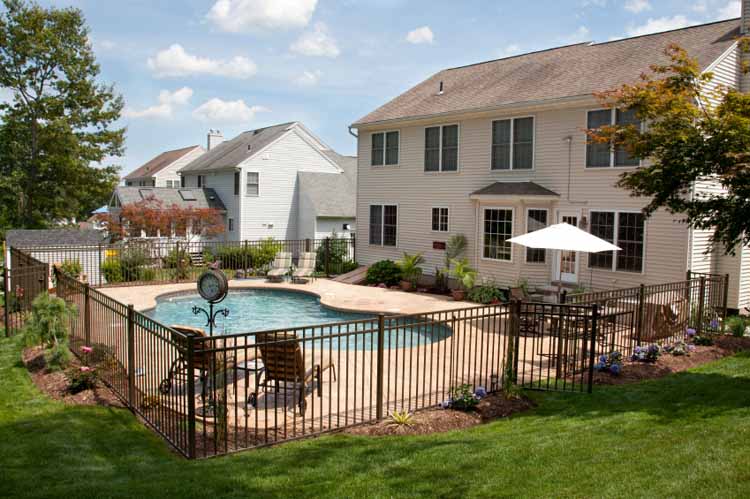
Wrought Iron Fence

Wrought iron fences were the most expensive swimming pool fence costing between $1,000-$5,000, depending on length. When speaking with several pool fence companies, wrought iron fencing offers limited options for fence height (standard is 5 feet tall) and spacing between railings (standard is 4 inch wide). For really small dogs, standard spacing between each bar may be a bit too wide and they can slip right between the bars. I highly recommend measuring the front of your dog’s chest (at the widest point) before purchasing.

Also, after viewing several pictures, I just didn’t like the look of the wrought iron fence around the pool. Our pool was in the middle of the backyard, and a wrought iron fence would’ve been an eye sore. Plus, it had a rather large gap under the fence. A determined Bull Terrier could easily dig under if the fence was mounted on dirt.

RELATED: 4 Tips for Moving With Your Dogs

Mesh Pool Fence

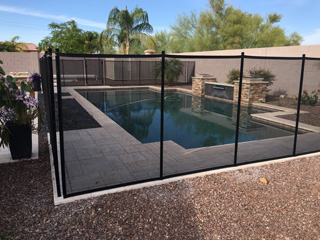
Probably the most popular and less expensive option, mesh pool fences consist of mesh panels that are pressure-mounted to evenly spaced poles installed in tile, cement or dirt. Mesh panels are flush against the ground, keeping critters out of the pool, and offered in a variety of heights. We chose a 4-foot tall mesh pool fence. Additionally, there are a few colors to choose from (we chose black) and most reputable companies offer a warranty on color fading and construction. One of the best features of mesh pool fences is they can be removed and easily reinstalled after a pool party.

Mesh Pool Fence for Dogs
My pool 🙂

At first, I was convinced mesh pool fences would not hold back a determined Bull Terrier, so I inquired about its stability and sturdiness with different pool fence companies. As with anything, choose a reputable mesh pool brand because strength comes from the poles and not mesh panels. Cheaply made poles will bend and fall over with moderate amounts of pressure while reputable brand poles will absorb impact and bounce back into place. If you need further proof, search for “mesh pool fence videos” and you’ll watch children using different brands of mesh fencing as vertical trampolines and bowling balls knocking over cheaply made options. 🙂

Lastly, I think it looks really nice too!

How to Find a Reputable Pool Fence Company

Believe it or not, this was the easy part. I looked up pool fence companies using the Better Business Bureau website and called each company to ask for their recommendations and warranties on swimming pool fences for dogs.

Good luck, and I hope this helps!

Filed Under: Resources, Safety Tagged With: best pool fence for animals, best pool fence for bull terriers, best pool fence for dogs, best pool fence for dogs that can't swim, best pool fence for pets, best pool fence options

Moving Cross-Country With Dogs? Read This First

April 11, 2016 by Fanna Easter

How to Move Cross-Country With Dogs

Cross Country Moving
wojciech_gajda/iStock

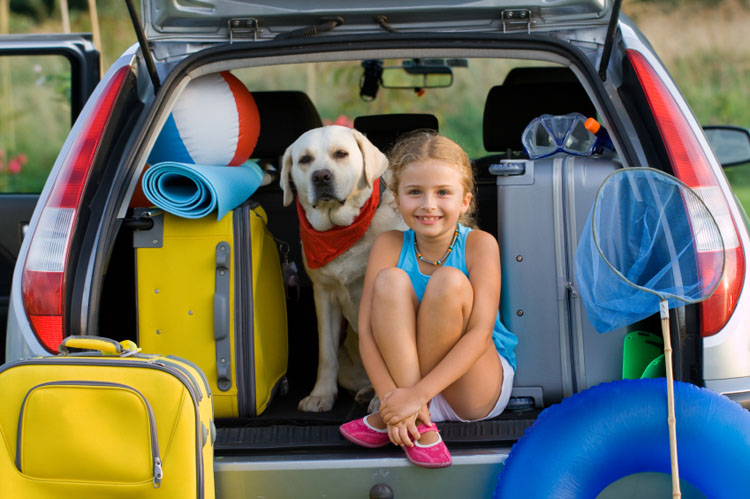
I’ll admit it. I was a bit too confident when moving cross-country with my dogs. We travel with our dogs a lot, so I thought our cross-country journey would be a piece of cake–I was wrong. Recently, we moved across the country and I learned some valuable lessons while stuck in a car with my husband and two dogs during a 17-hour road trip that never seemed to end (it should’ve been a 15-hour trip). If you’re traveling longer than 10 hours, it pays to be proactive and plan before the big trip.

Stop Every 3-4 Hours

I know you want to get there as fast as possible, but trust me take 15 minutes and potty your dogs every 3-4 hours. Our cross-country road trip presented many obstacles, including a horrendous sandstorm and ridiculously long traffic jams that extended our journey by 2 long hours. When humans and dogs haven’t pottied in 5 hours, it quickly becomes a painful experience, especially when the delay was completely involuntary. Set a timer on your watch and stop at safe rest areas. You never know what can happen during your journey.

Freeze Lots of Food Stuffed Toys

This is a must-have. Just like children, dogs can get restless during long drives. Travel savvy dogs mostly sleep, but when stuck in a car for extended amounts of time, they become agitated just like their pet owners. Give your dog something to do while traveling.

Plan to bring one food stuffed toy for every 4 hours traveled per dog. So, you’ll need 2-3 frozen food stuffed toys per dog for a 10-hour drive. And pack extra frozen food stuffed toys! I learned my lesson when I didn’t pack enough food stuffed toys. I had to improvise while traveling, so I stuffed toys with nuts and crackers from the gas station.

Keep Your Dog’s Regular Meal Schedule

You have a few feeding options here, but make sure your dogs eat at their regular time per your past time zone (the time zone at your starting location). It can become confusing quickly when traveling through several time zones, so beware when crossing into different time zones. It’s posted on the interstate.

As for feeding, I recommend stuffing your dog’s meal in a food stuffed toy. If you feed kibble (dog food), layer kibble and peanut butter over and over until the toy is filled, then freeze over night before your trip. Keep frozen toys in your cooler and toss in your dog’s crate when it’s meal time. If your dog is larger, than divide meals into several food stuffed toys and feed every 4 hours after each rest area stop.

Don’t Forget Your Dog First Aid Kit

Thankfully, we packed our dog first aid kit, but we’ve never needed it until this cross-country trip. We stopped to potty our dogs at night when one dog cut his pad on a sharp rock. We promptly cleaned up the area using a flashlight packed in the first aid kit, wrapped it up and were on our way. Make sure your dog first aid kit is packed in an easily accessible area; you don’t want to unpack to find it.

Play Soothing Music For Dogs & People

Oh my gosh, this helped us so much! Whenever we were stuck in traffic or stopped during a sandstorm, we played soft music. Whenever someone (dogs included) became restless, we switched to our soft music CD. Within minutes of soft music playing, our dogs would settle down and sleep. As for humans, we slowly chugged caffeine drinks, but settled in nicely too.

While you can’t plan for everything, it’s pretty satisfying having everything you need while traveling across the country. Good luck during your journey. May roads be clear and the weather perfect!

Filed Under: Resources Tagged With: tips for traveling cross country with dogs, tips on long car rides with dogs, tips on traveling long distances with pets, traveling by car with dogs, traveling cross country with dogs, traveling with dogs

Dogs vs. Sprinklers: Avoiding a Water Obsession

April 8, 2016 by Fanna Easter

Dog Training Tips for the Dog Obsessed With Water

Dog Obsessed With Water Hose
Joshua_Todd/iStock

What human or dog doesn’t love running through a water sprinkler on hot, humid days? Playing with water sprinklers can be exciting and exhausting fun for dogs, especially dogs that were bred to love water. To answer the question of whether or not dogs should play with water sprinklers: of course, dogs can play in water sprinklers, but add a couple of cues first! There are a few dogs that become obsessed with water. Let’s discuss how to prevent this behavior.

When Water Fun Turns Into Obsession

Some dogs become completely obsessed with water from a hose, lawn sprinkler or bathroom faucet. For the most part, these dogs will play endlessly for hours and never tire. But when dogs stand next to a hose, lawn sprinkler or faucet, waiting for it to be turned on, that may indicate an obsession. Some dogs take it a bit further; they become consumed with waiting for water to spray out of these devices. Some dogs refuse to eat or drink and, instead, they wait tirelessly next to a hose.

Many pet owners think it won’t happen to their dogs, but prevention is worth its weight in gold!

How to Prevent Dog Water Obsession

Before turning on spraying water, give your dog a cue that means it’s about to happen. Examples of cues are “water time,” “let’s play” or “sprinkler.” Usually, your dog will respond when you walk toward or touch the hose, which is a different type of cue than verbal, which is totally fine. Now, turn on the water and have a blast!

When it’s time to end the water session, give your dog a different cue, such as “all done” or “game is over” and turn the water off. If your dog sits next to the hose or sprinkler, just walk away and ignore your dog. The worst thing you could do is reward your dog’s cue for turning the water on. Yes, when your dog sits next to the water hose, he is basically asking you to turn it on. 🙂 If you reward this behavior, you’ll have a dog that sits next to the water hose waiting for someone to turn it back on. Yes, dogs teach us cues all the time, and we respond pretty darn quickly too. 😉

If your dog is still waiting by the hose in hopes it will turn on, call him inside for treats. Or better yet, grab a frozen food stuffed toy out of the freezer and show him the peanut butter stuffed treat. He will gladly follow you back indoors to enjoy his prize!

While this seems like a lot of work, it’s a safe way to prevent water obsession and still have loads of fun.

If It Doesn’t Get Better

If your dog refuses to eat, drink or move away from the water hose (lawn sprinkler, faucet, etc), then it’s time to get professional help. A professional dog trainer can watch your dog’s behavior and make additional suggestions. If your dog truly suffers from his obsession, which is called Obsessive Compulsive Disorder (OCD), a dog trainer will quickly refer you to a veterinarian board certified in animal behavior.

Have fun and stay cool this summer!

YOU MAY ALSO LIKE: Laser Pointer Games are Bad for Dogs

Filed Under: Behavior, Resources Tagged With: aggression towards water hose dog, dog attacks the water hose, dog obsessed water hose, dog obsessed with spraying water, dog obsessed with water, dog will not playing with water, how to stop dog from playing with water hose

  • « Previous Page
  • 1
  • …
  • 53
  • 54
  • 55
  • 56
  • 57
  • …
  • 135
  • Next Page »

About

Dog Training Nation is a community of dog trainers, dog owners and dog lovers. Our mission is to provide trainers and owners valuable information to enrich dogs' lives. We cover a range of topics, from socializing puppies to dealing with aggressive dog behavior to selecting the best dog products. It is our hope you share our content to make the dog and owner world a better place.

​

Facebook

Video

Dog Training Nation is a dog training blog for pet owners and dog lovers. We cover a range of topics from puppy socialization tips to dog aggression to dog health. It is our hope you share our content to make the world a better place for dogs.

Dog Training Nation

Quick Links

Dog Training
Dog Behavior
Dog Training Videos
Become a Dog Trainer
About
Contact Us

Copyright © 2026 · Lifestyle Pro Theme on Genesis Framework · WordPress · Log in