Dog Training Nation

In Dogs We Trust

  • Home
  • Training
    • Dogs
    • Puppies
    • Clients
  • Behavior
    • Breeds
  • Health
  • Safety
  • Resources
    • Equipment
    • Books
  • Dog Training Videos
  • About
You are here: Home / Blog

Small Dog Dental Care Tips

February 13, 2015 by Fanna Easter

Dental Care for Small Dogs
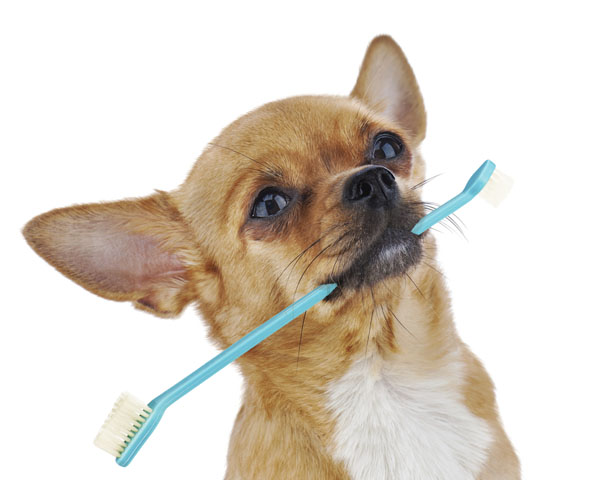
Dog Dental Care
Brushing keeps plaque away!

“In a small breed dog without home dental care, periodontal disease can start as early as 9 months of age,” states the American Animal Hospital Association (AAHA). Now knowing this valuable bit of information, it’s important to follow a combination approach for small dog dental care.

Tooth Brushing

Brushing your dog’s teeth is the single most effective means to maintain oral health between professional dental examinations. By regularly brushing your small dog’s teeth, you’re removing “the bacterial film known as ‘plaque,'” which keeps periodontal disease away, cited by the American Veterinary Dental College (AVDC).

Small dog toothbrush

Before teaching, choose a Veterinary Oral Health Council (VOHC) approved dog toothbrush. The VOHC recommends “American Dental Association (ADA) compliant, soft-bristle, flat head toothbrush.”

The size of the toothbrush is important. For a small to medium-sized dog, I recommend a child-sized brush. For tiny dogs, using your toothpaste-covered finger tip, swabs or dental wipe work well too.

RELATED: Best Dental Products for Dogs

Dog toothpaste

Choose a toothpaste made especially for dogs. Human toothpastes have high levels of fluoride as well as bleaching agents and detergents, which are toxic to pets. Plus, dog toothpaste is usually flavored, which makes tooth brushing a tad easier. So far, VOHC recommends Petsmile by Supersmile dog toothpaste, which comes in beef flavor to effectively keep plaque at bay.

Pressure

With such a small dog mouth, it’s hard to gauge pressure when brushing teeth. Bristles should touch teeth, but they should not flatten against teeth. Allow the bristles to do the work. When using wipes or swabs, gently move back your dog’s lips so you’re sure you’ve covered all tooth area. If your small or medium-sized dog is uncomfortable with mouth handling, check out this article.

Chews, Treats and Vet Exams

Tooth brushing is one part of small dog dental care. It’s important to provide chews and treats that scrub your dog’s teeth too. Check out VOHC’s recommended products, which are proven to remove tartar and plaque. Yearly vet exams of your small dog’s mouth are a must, as they can provide additional tips as needed.

VIDEO: Brushing a Small Dog’s Teeth

READ ALSO: 5 Reasons Why You Need a Dog Dentist
Filed Under: Health Tagged With: brushing small dog teeth video, how to brush small dog teeth, small dog dental care, teaching small dogs teeth brushing

Large Dog Dental Care Tips

February 13, 2015 by Fanna Easter

Dental Care for Large Dogs

Large Dog Dental Care“Periodontal disease usually appears around three years of age in larger dogs,” cites the American Animal Hospital Association (AAHA). This is worrisome, as most pet parents consider periodontal disease as a senior dog issue. Before reaching for a dog chew, upon hearing this news, it’s best to use a combination of dental care products for best results.

Tooth Brushing

Brushing your dog’s teeth is the single most effective means to maintain oral health between professional dental examinations. By brushing your dog’s teeth, you’re effectively removing the bacteria film known as plaque, which prevents periodontal disease, according to the American Veterinary Dental College (AVDC).

Before you grab any old toothbrush and paste, check out a few tips on choosing products that work. Then, learn how to teach your dog to enjoy tooth brushing, which increases owner compliance. Since it’s easy and fun, we are more likely to continue doing it. 🙂

Choosing a Toothbrush

Before teaching your dog to enjoy the tooth brushing experience, choose a Veterinary Oral Health Council (VOHC) approved dog toothbrush. The VOHC recommends American Dental Association (ADA) compliant, soft-bristle, flat head toothbrush. For large to giant dogs, I recommend an adult or children-sized brush — whichever is easiest for you to hold and maneuver.

Dog Toothpaste

Always use toothpaste made especially for dogs, as human toothpaste contains high levels of fluoride, bleaching agents and detergents, which are toxic to pets, especially if swallowed. Plus, dog-specific toothpastes are usually flavored, which is very enticing for dogs and makes tooth brushing a bit easier.

Pressure

Use light pressure when brushing your dog’s teeth. The bristles should be touching teeth, not flatten against teeth. Stop frequently, and check, as rough tooth brushing will cause damage to gums.

Chews and Treats

With larger dogs, we usually provide extremely hard chews and treats because large chews are expensive. It’s tough watching your Rottweiler devour a $10 bully stick in 10 minutes — I’ve been there! However, those large and extremely hard chews can cause slab fractures and broken teeth, which usually goes unnoticed by pet owners.

So what are large dog owners to do? Choose VOHC-approved products, which have been proven to remove plaque instead of those huge plastic bone-shaped chews. As for treats, I started giving Science Diet T/D nuggets for good behavior, such as coming when called outside. Wow, I was shocked at how clean both of my dog’s teeth were even after one week.

RELATED: “Come When Called” Part 1: Intro

Vet Wellness Exams

Regular checkups are vital, as your vet can take a peek in your dog’s mouth and look for anything abnormal. Plus, it’s kind of nice showing off your dog’s pearly whites because you’ve been good and you followed your dog’s dental care program!

READ ALSO: 5 Reasons Why You Need a Dog Dentist

Filed Under: Health

Teaching Your Dog to Wait for His Food Bowl

February 13, 2015 by Fanna Easter

Teaching Your Dog Table Manners

Teaching a Dog to Wait for Food
Good boy! He’s waiting as the food bowl lowers.

Does your dog gobble his food down before you’re able to put his food bowl on the ground? Check out our tips and video focused on teaching dogs to wait for meals. Polite behavior is a good thing!

Why Does This Happen?

When you’re hungry, you’ll inhale your meal the moment the plate hits the table. Dogs are the same way plus they never read the pet parent guide for polite dog manners so let’s teach them. If your dog is a resource guarder, meaning he guards his food bowl, then teaching him to wait for meals is a huge plus. Not only is teaching dogs to wait for meals polite behavior, it also teaches hyper dogs how to calm themselves.

How to Teach Your Dog Table Manners

It’s pretty simple to teach. All you need is a food bowl with a few treats in it and your dog. Remember: When your dog tries to mug the food bowl, it goes away. When he waits, he’s rewarded with the bowl on the floor with treats.

  • Lower the food bowl slowly toward the ground. If your dog tries to get the treats, pick the bowl up so he can’t get the treats.
  • Try again and lower the bowl again. Same boundaries apply. If your dog mugs the food bowl, it goes away.
  • You’ll notice your dog sitting or lying down. This is not required, but he may choose to perform these behaviors instead. He’s trying to figure out what will make the food bowl lower. Plus, “sit” and “down” keep your dog’s nose out of the bowl so it’s a win-win.
  • Now, you can ask your dog to “sit” or “down” before lowering the food bowl. It’s up to you. Personally, I prefer the appearance of the food bowl as the cue for polite meal behavior.
  • Practice each meal and make sure the entire family is on board. Consistency is important.

Check out this video, which demonstrates how to teach Sobek, my Rottweiler, polite meal behavior. You’ll notice him hopping when I pick up the food bowl. He’s getting a tad frustrated and hence the hopping. This is the first time I taught him this behavior.

VIDEO: Teaching Dogs to Wait for Meals

READ ALSO: Keep Your Dog From Pulling

Filed Under: Dogs, Puppies, Training Tagged With: dog wait food, excited dog tips, hyper dog tips, polite dog meal behavior, puppy wait food, teach your dog to wait for the food bowl, teaching dogs to wait for meals, train your dog to sit and wait for food, training a hyperactive dog to calm down, training an excited dog

5 Reasons Why You Need a Dog Dentist

February 12, 2015 by Fanna Easter

Dog Dentists

Dog Dentist

Dog dentists are veterinarians who have been board certified in dentistry. They’ve graduated vet school, completed a three-year dental residency and passed the American Veterinary Dental College. These experts provide specialist care for dental needs. Before you giggle, let’s chat about the seriousness and five reasons why you need one.

Routine and Periodontal Care

You may want to sit down before reading this. According to Dr. Keith Stein, DVM, AVDC, over 80% of dogs 3 years and older have a dental disease. Yes, plaque is probably forming in your dog’s mouth right now. Leaving it untreated can cause periodontal disease. Nasty plaque buildup causes bacteria to creep under the gum line and travel to your dog’s heart, liver and kidneys, causing damage. Routine cleanings are a must for all dogs. If you’re dog’s teeth have been neglected, seek guidance from a veterinary dentist.

Endodontic Therapy: Root Canals & Crowns

Dog teeth can and do break more often than you think, and usually unbeknownst to the pet parent. Most pet parents notice their dogs hiding, seeming a bit off, not wanting to eat or finish meals. Upon exam, a broken or abscessed tooth is discovered. Ouch! As many as 60% of pet owners report friskiness once broken teeth are repaired.

Your veterinarian will likely refer you to a veterinary dentist for evaluation because root canals and crowns can save teeth. We think of dental disease as a small dog problem. There is some merit to it, as small dogs have big teeth in a tiny mouth, so plaque collects and causes periodontal disease.

Now, medium and large dogs have dental issues too. They are more likely to chew something hard and crack teeth. Plus, it’s not easy removing teeth from a larger dog, especially large molars and canines, so seek advice from a veterinary dentist first. Root canals and crowns work exactly the same as human dentistry.

Orthodontic Therapy: Malocclusions

Malocclusion means teeth don’t fit or line up correctly, which can cause fractures, pain and discomfort, higher risk of periodontal disease, soft tissue trauma and premature dental weariness. Malocclusions are mostly seen in brachycephalic (short muzzled) breeds, such as Boxers, Bulldogs, Shih Tzus and Boston Terriers. Now, all dogs are prone to malocclusions, even long muzzled dogs, as this is considered hereditary.

Stella, my Miniature Bull Terrier, had a malocclusion. Her bottom canines did not fit perfectly within her top canines. Her right bottom canine punctured a hole in her pallet (soft tissue damage), which caused pain when eating. Dr. Keith Stein DVM, AVDC, at Tennessee Veterinary Dentistry and Oral Surgery shortened, capped and performed a root canal to save Stella’s canines and pallet. She can now eat and chew normally, and is frisky as ever!

Oral Masses

Oral tumors account for 10% of all tumors found on dogs. Usually masses need to be removed, depending on type and location as well as if they’re malignant or benign. Wound healing is tough in a dog’s mouth. There’s moisture and bacteria so this is the time to lean on a specialist.

Oral Radiology

Over 60% of a dog’s tooth is under the gum so X-rays are pretty important for identifying tooth issues. Veterinary dentists are trained to spot issues and equipped to treat them too. Just like your dentist reads dental X-rays all day, I would trust a veterinary dentist to do the same for my dogs.

All dogs deserve a glistening smile and live pain-free. Now you know veterinary dentists are out there and willing to help!

READ ALSO: Best Dental Products for Dogs

Filed Under: Health Tagged With: can you fix malocclusion for dogs, canine periodontal care, canine periodontal disease, does my dog need a dog dentist, dog braces, dog crown, dog dentist, dog dentistry, dog dentists, dog root canal, malocclusion for dogs, malocclusion for puppies, oral masses in dog's mouth, removing a tumor in dog's mouth, tumors in dogs mouth, veterinary dentists, what is a dog dentist

Best Dental Products for Dogs

February 12, 2015 by Fanna Easter

VOHC-Approved Dental Products

Dog Dental Care
Look for VOHC’s seal of approval for best results.

Dental disease affects 70% of dogs 3 years and older. As concerned pet owners, we scour the earth looking for the best dental products for dogs. Boy was I schooled on dog dental products during my last veterinary dentist visit. Thank you Dr. Keith Stein, DVM, AVDC!

What is VOHC?

Veterinary Oral Health Council (VOHC) was created by the Academy of Veterinary Dentistry and American Veterinary Dental College (AVDC) with the sole purpose of creating standards of approval for products proven to control and remove plaque on your dog’s teeth. Many companies claim it, but does it really work? VOHC has preset criteria on testing chews, gels and water additives. Each category has specific criteria plus additional requirements.

Let’s look at chews. Not only is there a specific criteria set for trails, protocols, control diets and much more, but VOHC also requires chews to not “cause inflammation, ulceration or laceration anywhere in the oral cavity.” How many times have you noticed blood on chews? I know, so have I, so it’s not a good thing. Your dog is damaging his mouth.

Look for VOHC Seal of Approval

Dogs will chew on anything, but, if you’re shelling out hard-earned cash, choose products that clean teeth and gums while keeping dogs occupied. There’s a lot of claims out there on water additives and dental gels so choose VOHC for maximum benefits.

VOHC Recommended Products

Honestly, I’m not surprised at their product recommendations. Most are well known and really do work. Do note there are a few newcomers too! As a pet parent, it’s super nice to know these products have been proven under stringent testing protocols.

Products include:

  • Prescription and Regular Foods (e.g. Science Diet Oral Care and TD).
  • Chews and Treats: Greenies and Milk Bone.
  • Toothbrush: ADA compliant soft bristle flat head toothbrush.
  • Toothpaste: Petsmile by Supersmile toothpaste.
  • Water Additives and Gels: Dog::Essential (We’ve been using their water additive at our home for a few weeks now and I’m totally impressed!) Take a peek at their trails.

You can find all VOHC recommended products here. Stella had a dental cleaning by Dr. Stein and her teeth are still sparkling white after several weeks. Sobek, my Rottweiler, had some minor accumulation on his back molars, which these products have certainly helped remove tartar and keep it away.

READ ALSO: 5 Reasons Why You Need a Dog Dentist

Filed Under: Health Tagged With: avdc, best dental products for dogs, best toothbrush for dogs, best water additive for dental issues dogs, dental dog chews, dental dog cleaning products, dog dental care, dog dental cleaning aftercare, dog dental water additive, dog gums, dog teeth, dog teeth cleaning, dog::essential review, dog::essential water additive review, greenies, how to keep my dog's teeth clean, veterinary oral health council, vohc, vohc product recommendations

  • « Previous Page
  • 1
  • …
  • 101
  • 102
  • 103
  • 104
  • 105
  • …
  • 135
  • Next Page »

About

Dog Training Nation is a community of dog trainers, dog owners and dog lovers. Our mission is to provide trainers and owners valuable information to enrich dogs' lives. We cover a range of topics, from socializing puppies to dealing with aggressive dog behavior to selecting the best dog products. It is our hope you share our content to make the dog and owner world a better place.

​

Facebook

Video

Dog Training Nation is a dog training blog for pet owners and dog lovers. We cover a range of topics from puppy socialization tips to dog aggression to dog health. It is our hope you share our content to make the world a better place for dogs.

Dog Training Nation

Quick Links

Dog Training
Dog Behavior
Dog Training Videos
Become a Dog Trainer
About
Contact Us

Copyright © 2026 · Lifestyle Pro Theme on Genesis Framework · WordPress · Log in