Dog Training Nation

In Dogs We Trust

  • Home
  • Training
    • Dogs
    • Puppies
    • Clients
  • Behavior
    • Breeds
  • Health
  • Safety
  • Resources
    • Equipment
    • Books
  • Dog Training Videos
  • About
You are here: Home / Blog

Stop Your Dog From Biting on His Leash

February 9, 2015 by Fanna Easter

How to Stop Leash Biting
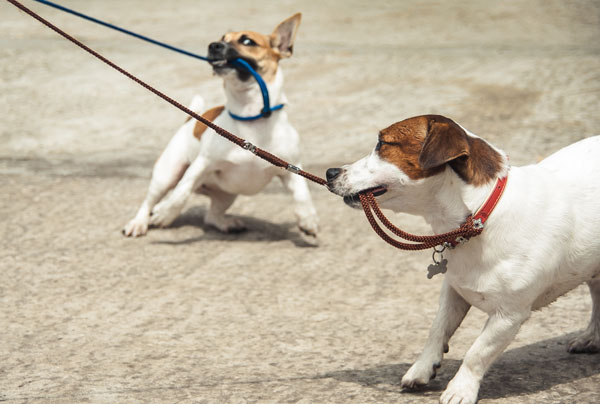
How to Stop Dog From Biting on Leash
“We don’t want to go home yet!”

Watching a dog, or puppy, using his leash as a tug toy makes me giggle. I know it’s frustrating so I’ve compiled causes and dog training tips to prevent leash biting.

Causes and Tips

When dogs pull on their leashes using their mouths, they are usually overly excited. Now, a few dogs will bite and tug on their leash when frustrated. I’ve witnessed this during group class. The pet parent is chatting away with her neighbor and her pooch is saying, “Um, I want to keep playing” or “I just sat and laid down. You missed it. Where’s my treat?” Sometimes, dogs will stand still and chew their leashes. This usually happens with puppies and adolescent dogs. They’re totally bored. 🙂

Frustration

When teaching your dog skills, stay with him through the process. If you become sidetracked by a chatting neighbor or an adorable puppy, still click and treat your dog for good manners using the below tips.

RELATED: Parking Your Dog

At home, when dog training sessions are done, say “all done” and put away your clicker and give your dog the rest of the treats. Basically, you’re asking your dog to punch out so he can go play or relax.

Excitement

Click and treat your dog when he lets go of the leash. By rewarding this behavior, your excited dog will learn two things: it pays to stop biting the leash and self-control.

RELATED: Teaching Dogs Self-Control

When your dog starts leash biting, stand still and refrain from pulling against the leash. When you become quiet, dogs will usually become quiet too. Bingo! Reward good behavior. If you pull the leash, fuss at your dog. Your dog will continue to become more excited, which means stronger leash biting.

Start a game of touch. This gives your dog something else to do with his mouth instead of leash biting. Plus, jumping into a fun game redirects excited dogs and puppies from the leash.

Sometimes, dogs will bite and tug on their leash when it’s time to turn around and go home from a fun walk. Wait until your dog stops biting the leash and click. Then, toss several treats ahead of you. Once your dog eats his treats, say “let’s go” and click/treat for loose leash walking.

VIDEO: Leash Biting

Happy training!

You may also like: Stop Your Dog From Pulling on the Leash

Filed Under: Dogs, Puppies, Training Tagged With: biting leash, dog bites leash, dog biting leash, dog chews on leash, dog pulls on leash with mouth, dog training leash biting, get dog stop biting leash, how can I stop my dog from biting the leash, how can I stop my puppy from biting the leash, leash biting, puppy bites on leash, puppy biting leash, puppy chews leash, stop dog biting leash

How to Train a Puppy to Give Items Back

February 4, 2015 by Fanna Easter

Teach a Puppy to Give

Puppy Trade Game

Train a Puppy to Give Items Back
Teach your puppy to trade the sock for a yummy treat. willeecole/Deposit Photos

Puppies were not born with nor read, the pet owner’s guide to polite manners so it’s important to teach them the trade game. Would you give up the $100 bill you found at the park? Probably not. 🙂

Trade Game

When puppies or dogs find something, they intend to keep it. Guarding resources is a natural instinct. The more you have, the more likely you’ll survive. Plus, puppies and dogs will pick up items, such as socks, to instigate play like chase. Oh, it’s tempting to chase a puppy with your sock. We panic and think, “Oh my god, they will swallow it!” and we continue chasing. Not fun huh?!

Instead, teach your puppy or dog how to trade instead. And say goodbye to crazy chases around the dining room table. 🙂

RELATED: Resource Guarding

How to Teach Your Dog to Give Items Back

Whenever your puppy or dog picks up a sock, shoe or a child’s toy, instead of chasing him, try:

  • Stop moving. Your puppy will probably stop moving too.  He’s not sure what’s going on.
  • Walk to the refrigerator and select a yummy treat. These treats must be yummy. They should behoove your puppy to trade the smelly sock for something better.
  • Approach your puppy. If she runs away, stand still.
  • Say “trade” and show her the yummy treat. She probably smells it already, but thinks the treat is for you and not her.
  • Remain still and wait for your puppy to drop the sock. If she continues running with the sock, your treat needs to be yummier. She’s saying, “Nah, I would rather keep my stinky sock instead.”
  • As she drops the sock, say yes and toss the yummy treat in the opposite direction of the sock.
  • When she runs for the treat, pick up the sock.

Now, you’re not rewarding your dog for stealing socks. You’re rewarding her for giving it up.  

VIDEO: Teach Your Dog the Trade Game

Taking Items From a Puppy’s Mouth?

On rare occasions, such as a puppy snatching up a cooked chicken bone or medication, I would remove it from her mouth. Now, as I explain to my puppy people, don’t make this a habit. If you do, your puppy will learn to swallow an item quickly, usually as you approach. She knows you’re going to take it away!

You may also like: Free Games for Dogs

Filed Under: Puppies, Training Tagged With: dog trainer tips for puppies, how to train a puppy, how to train your puppy, polite puppy manners, preventing resource guarding, puppy guards toys, puppy trade game, puppy trade me game, puppy training, puppy training tips

Help! My Dog Refuses to Walk

February 4, 2015 by Fanna Easter

What to Do When Your Dog Refuses to Walk

Dog Refuses to Walk
Learn tips to un-pancake your dog!

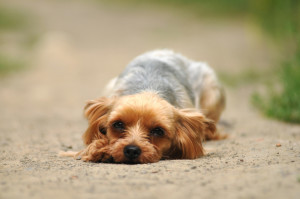
Most likely, you’ve had this happen during walks. When you’re heading home after a fun walk in the park, your healthy dog flattens himself to the ground, refusing to walk any farther. I call this “pancake dog,” meaning a dog will splat himself against the ground and refuse to walk.

Now, if your dog is limping, ill or injured, this doesn’t apply. Bring your dog to the vet ASAP.

Why Dogs Refuse to Walk

Below are a few reasons why a dog refuses to walk and flatten himself onto the ground.

Fearful

About 50% of the time, I notice puppies and dogs refuse to move forward due to fear. Usually, their bodies are lying backwards away from whatever is frightening them. This happens because a puppy or dog is scared of whatever he is approaching at the time. This could be another dog, person, narrow space, barrier or she has not learned how to walk on a leash. Honestly, it could be anything.

Never force or drag a dog past a scary object. Instead, stop to give your dog some time to process the situation. If she’s still scared, use the Hansel and Gretel technique described below. For smaller dogs, it may be easier to pick them up and walk past the scary thing. At home, practice confidence building games, such as Touch the Goblin.

RELATED: How to Train Fearful Dogs

Don’t Let the Fun End

Dog Training Tips
Learn tips to get your dog happily moving forward!

And this is the other 50%. 🙂 Puppies and dogs are smart. They’ve learned that splatting against the ground and holding firm keeps them in their favorite environment longer. Dogs will refuse to move usually once you turn to head home. I’ve had puppies splat after class. They don’t want to leave. 🙂

The Hansel and Gretel technique will get them moving. Also, practice randomly walking away from the park and then rewarding good behavior (non-splatting) by walking back to the park for another game of fetch. No one wants the fun to end, but by making the act of going home fun, you don’t have to worry about pancaking along the way.

Un-Pancaking Your Dog

The goal of this dog training exercise is to get your dog up and willingly move forward, which builds confidence. Studies have shown giving dogs choices and allowing them to choose is just as reinforcing as treats—something to ponder!

Hansel and Gretel

Unlike the children’s fable, you’re moving your dog away from the monster not toward it. Sprinkle yummy treats in a trail past the scary thing. Using super yummy treats will really help. Your dog (or puppy) will eat the treats while keeping an eye on the monster. But he’s moved himself, which is a big step forward!

Plus, pairing yummy treats with something scary, well, makes things less scary. If you were stuck in an elevator, you would probably freak out. But what if you were stuck in an elevator with a dozen delicious cupcakes or a six-pack of your favorite beer? Not so bad, huh? You’ll indulge while waiting for someone to rescue you. 🙂

Touch the Goblin

During this game, you’ll need a clicker and lots of yummy treats. Introduce something odd in your home, such as the vacuum or folding step stool (both usually freak dogs out). Practice each step 10 times and then move onto the next one. If your dog becomes frightened, take 1 to 2 steps back.

Never move, wiggle or touch the scary thing during training sessions. This just makes the scary thing even more terrifying to your dog.

  1. Click and treat when your dog looks at the scary object.
  2. Now, click and treat when your dog walks over to the scary thing.
  3. Usually, after a few sessions, dogs will try to touch the scary thing with craned necks, wide eyes and splayed out back legs. Click and treat this behavior. They are being pretty darn brave right now.
  4. Say “touch the goblin” as they lean forward, trying to touch it with their muzzle.
  5. After a few touches, your dog will exude confidence. He successfully slayed the dragon so be proud! We call this building confidence. 🙂

After a few “touch the goblin” sessions with different scary things, you’ll notice your dog will likely march right up and touch the next scary thing. He’s learning that scary things will not harm him.

WATCH: How to Get a Dog Moving When He Refuses to Walk

You may also like: Humping Dogs

Filed Under: Behavior, Dogs, Puppies, Training Tagged With: dog refused to move, dog refuses to get out of water, dog refuses to go outside, dog refuses to leave, dog refuses to leave dog park, dog refuses to walk during walks, dog training, Dog Training Tips, dog training videos, fearful dogs, how to train a puppy, my dog refuses to walk on leash, my dogs stops moving on leash, positive reinforcement dog videos, professional dog training tips, puppy is scared of moving cars, puppy training tips

Appropriate Puppy Play

February 3, 2015 by Fanna Easter

Puppy Playtime

Be Your Puppy’s Voice

Puppy Play
Appropriate play is happening. This is a snapshot of mouth wrestling. 🙂

It’s important for puppies to play with other puppies. However, it’s vital to make sure puppy play is safe while your puppy has fun in addition to your puppy learning proper doggie behavior. After learning appropriate puppy play tips, check out how to interrupt puppy play.

What Good Puppy Play Looks Like

Many pet parents ask, “What does bad puppy play behavior look like?” However, let’s first discuss what good behavior looks like. You can’t spot bad behavior until you understand and can spot good puppy play.

Puppies play in dyads, or pairs. When another puppy approaches, the third puppy is usually left out. If your puppy is the third puppy out, dog trainers who are supervising puppy play will usually rotate puppies out so everyone gets a turn.

VIDEO: Appropriate Puppy Play

Supervised Puppy Playtime

Please, if you follow just one thing from this article this would be it. Attend Puppy Playtime session with a professional dog trainer. Dog behavior is hard to interrupt and pro dog trainers are fluent in this language. Please refrain from bringing your puppy to dog parks, especially with unknown dogs, as this can be a recipe for disaster.

Taking Turns

When puppies play, they take turns chasing each other being the puppy on top of the pile and so forth. It’s like watching a dance, but each puppy takes a turn at leading the session.

If one puppy becomes too rough, the other puppy will stop playing and freeze. This is a signal saying, “Um, dude, this is not funny anymore and I’m uncomfortable.” The other puppy should stop playing, interrupt and understand freeze behavior and adjust his play style to keep the session going. Sometimes, you’ll notice the other puppy jumping, dancing, play bowing and even rolling over on his back to entice the unsure puppy back into the play session.

Growling Happens

Growling, during puppy play, can send pet parents into fits. Some puppies are more vocal than others. My sister is pretty quiet; I’m not! Growling won’t erupt until later during a play session. Some puppies learn that vocalizing is fun when playing with a different puppy. They begin growling and it concerns the new puppy so they stop growling.

RELATED: My Dog Growls at Me

Mouth Wrestling

This usually means his mouth is wide open, teeth are showing sprinkled in with a bit of growling. Mouth wrestling sessions are usually short, and both puppies are sitting or lying down next to each other.

You Should See Soft Curves

When puppies are playing, you should see soft curves and roundness, usually around their rumps and shoulder areas. Even when running and chasing, you’ll see curves. If you notice straight lines, stop puppy play. This means someone is not happy any longer.

Stop Bad Puppy Behavior Immediately

Unfortunately, I see a lot of bad puppy play at dog parks and it breaks my heart. Also, I’ve watched good puppy play turn badly quickly. What happens during puppyhood stays with a puppy forever.

RELATED: Puppy Training

Is Your Dog a Bully?

Bullying is a part of society. As much as we ban it, it still emerges. This behavior is learned. A puppy or person chooses this path to survive because it works. I add people as examples because I see this everyday. Someone posturing to get ahead or stop specific behaviors. Best thing to do with a bully is to walk away and ignore him. The same applies to puppies. Don’t allow a bully to practice his behavior. The more he practices, the better he gets.

Bullying behavior looks like:

  • Pinning other puppies (or dogs) and holding them on the ground.
  • Overwhelming, rough and persistent play. They’re harassing other dogs who are trying to ignore them.
  • Constantly nagging other dogs to play with them usually includes nips, muzzle punches or body slams.
  • Ignores body freezes from other dogs and continues to jump or bite. (Nip other puppies to continue playing.)

Pinning

Bully puppies will run at full blast right up to other puppies and pin them to the ground. They’ll hold them down and growl while their body language is stiff and straight. Even if the held down puppy screams, they continue to pin and growl in their face. If the frightened puppy gets away, the bully runs after him and pins again. This will go on until a person intervenes or the scared puppy displays defensive aggression. If you can’t get away, you fight.

RELATED: Defensive Dog Aggression

Scary Chasing

Bully puppies, and dogs, will seek one specific puppy and chase this poor thing until they can pin him down or attack. You can spot scary chasing, as the scared puppy looks like he is running for his life with his tail tucked, ears laid back and eyes wide. He is terrified. The bully’s body language is straight and stiff, and relentlessly picks on the scared puppy.

Be your puppy’s voice!

READ ALSO: Dog Time Out

Filed Under: Behavior, Puppies, Training Tagged With: appropriate puppy play, is my puppy a bully, managing puppy play, puppies at dog parks, puppy play, puppy play groups, puppy play time, puppy play tips, should I bring my puppy to dog parks, what happens during puppy play time

Teach Your Dog the “Off” Command

February 3, 2015 by Fanna Easter

Train Your Dog “Off”

How to Keep Dog Off Couch
Say “off” while tossing yummy treats on the ground. Voila!

Very often during puppy and adult group classes, I’m asked to teach clients the “off” command. Yesterday, a puppy pet parent admitted to standing up when eating all meals, as his puppy mugs him for food. Follow this one super easy step for teaching your dog “off.”

When to Use the “Off” Cue

Use the “off” cue when asking your dog to jump off something, such as:

  • Furniture
  • Bed
  • You
  • Guests

Use the “off” cue after your dog understands not to jump on guests. Think of it as a reminder when she gets really excited. If your dog continues to jump on guests, it’s time for remedial “no jumping” practice).

How to Teach “Off”

  • When you notice your puppy (or dog) on the sofa, grab a few pieces of yummy treats and walk over to the sofa.
  • Say “off” while tossing yummy treats on the ground. Voila!
  • Your dog will jump right down and wolf down the treats. If he doesn’t, you’re probably not using super yummy treats.

Yes, it’s that simple. Soon your dog will learn “off” means to jump down for yummy treats. You’re not rewarding your puppy for jumping on the sofa. Instead, you are rewarding her for jumping off.

RELATED: Choosing Dog Training Treats

About treats, they really do matter. Would you get out of a warm bed for pennies? Probably not. What if I offered you a $100 bill? I think you would get the point. 🙂

Teaching Your Dog “Off” Video

Punishment Doesn’t Work

When polling past clients, most walk over and push their dogs off the sofa or bed. Well, it works sometimes. Opposition reflux comes into play here. You push and your dog pushes back against you. The more you push, the more she pushes back, which is not working. Plus, using a physical cue, such as touching or pushing, is hard to fade unless you really like walking over and pushing your dog off the furniture every time. A verbal cue can be given from across the room so it’s much easier. 🙂

Another thing about punishment is it’s labor intensive. Let’s say you’re speeding down I65 and you’re pulled over by the police and given a speeding ticket. For the next week or two, depending on how expensive your speeding ticket was, you’ll drive slow. But what happens later? You start scanning your environment for police cars. After a week or two, you notice a lack of police cars so what happens? Well, you know, you start speeding again. Not as fast as you once were, you’ll usually build in 5 mph increments. As you’re giggling, this is punishment. It’s a short term solution that causes fear and confusion.

Tossing a few treats on the ground when teaching “off” provides a plentiful ROI (return on investment).

Oh, and One More Thing

There’s nothing wrong with allowing your dog or puppy to nap on the sofa or sleep with you at night. Many, many years ago, someone mentioned dominance with allowing dogs on furniture. This is a myth. Snuggle with your fuzzy baby. 🙂

READ ALSO: Stop Your Dog From Digging

Filed Under: Dogs, Training Tagged With: how to get dog off furniture, how to get puppy off sofa, how to teach a dog off, keeping dog off furniture, teach dog off, teaching puppy to stay off something, teaching your dog off, train a dog the off command, training puppy to stay off furniture

  • « Previous Page
  • 1
  • …
  • 103
  • 104
  • 105
  • 106
  • 107
  • …
  • 135
  • Next Page »

About

Dog Training Nation is a community of dog trainers, dog owners and dog lovers. Our mission is to provide trainers and owners valuable information to enrich dogs' lives. We cover a range of topics, from socializing puppies to dealing with aggressive dog behavior to selecting the best dog products. It is our hope you share our content to make the dog and owner world a better place.

​

Facebook

Video

Dog Training Nation is a dog training blog for pet owners and dog lovers. We cover a range of topics from puppy socialization tips to dog aggression to dog health. It is our hope you share our content to make the world a better place for dogs.

Dog Training Nation

Quick Links

Dog Training
Dog Behavior
Dog Training Videos
Become a Dog Trainer
About
Contact Us

Copyright © 2026 · Lifestyle Pro Theme on Genesis Framework · WordPress · Log in