Dog Training Nation

In Dogs We Trust

  • Home
  • Training
    • Dogs
    • Puppies
    • Clients
  • Behavior
    • Breeds
  • Health
  • Safety
  • Resources
    • Equipment
    • Books
  • Dog Training Videos
  • About
You are here: Home / Blog

How to Puppy-Proof Your Christmas Tree
November 20, 2014 by Fanna Easter

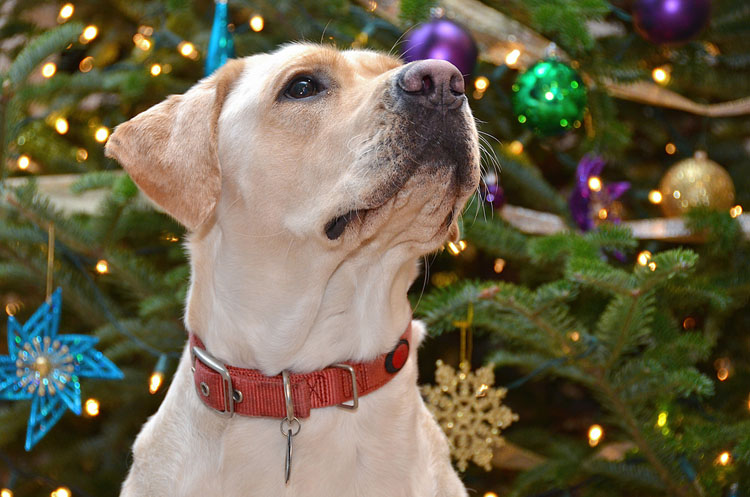
Puppy-Proof Your Christmas Tree

Puppy-Proof Your Christmas Tree
jentara/Deposit Photos

Can Christmas trees and puppies co-exist? Yes, they can live peacefully together!

Take a few moments to puppy-proof your Christmas tree and you’ll keep everyone safe and still have a beautifully decorated and lit tree. 🙂


 When in doubt, confine puppies when left alone.


Christmas Tree Location

Height

If you have a young puppy, I would recommend a four-foot tree placed on a three-foot side table covered with a holiday-themed cloth. Trust me, when having young puppies (six months and younger), it’s just not worth your time preventing puppy face plants at the bottom of a tree.

For taller trees and wildly running dogs, I would secure the middle/top of the tree to the wall. For security, choose a location that prevents visibility of the “tie down,” such as the wall behind the tree. I’ve used command mini hooks, which are strong, yet easily removed, and won’t leave wall marks.

Location

Place your tree in a low traffic area to keep decorations safely in place from romping puppies. I recommend choosing a corner or at least a location with one wall on the side or behind the tree. This provides a safe barrier to hide presents later.

Christmas Lights

Push light wires deep inside tree branches. Also, hide plugs behind the tree or place a barrier over the main outlets. If this is not an option, place lights so the main electrical strip is three to four feet from the ground or higher, depending on the size of your dog. Place the main electrical strip on a side table away from the floor.

Other Decorations

While puppy-proofing your Christmas tree is important, you may have other decorations you need to protect from your puppy. Here’s where things can quickly get crazy!

  • Refrain from using any glass or easily breakable ornaments. They now create plastic ornaments with the shine or gloss of glass.
  • Keep food off the tree. This means candy canes, popcorn, cranberries and so on. Instead, choose plastic candy canes or fill in holes with fake poinsettias flowers.
  • Tinsel is deadly for dogs. I would bundle yarn, ribbon and string right next to tinsel. This stuff is a digestive nightmare for dogs, as it can really cause major issues by blocking the intestines.
  • Holly, poinsettias and mistletoes are toxic to pets. Use artificial lookalikes instead or keep the real ones up high, so your puppy can’t reach.
  • Keep candles up high and away from dogs. Choose a location, so it’s not easily knocked over, preferably a mantle.

Keeping Presents Safe

Puppies (1 year and under)

  • Place presents on a table next to the tree.
  • Put presents out on Christmas Day (or when your family gets together to open presents).
  • Place a metal gate around tree to protect presents.
  • Always confine puppy when you leave.

Adult Dogs

  • Push presents deep into the corner under the tree.
  • If you’re gift wrapping a dog chew to place under the tree, keep hidden in a safe place until the day you open presents. This is just too tempting even for a senior dog.
  • Confine your dog whenever you leave. Don’t give him any chance to explore.

Christmas Tree Fascination Tips

It happens. Your dog finds the Christmas tree fascinating and just can’t leave it alone!

Male dog marks the tree

  • Protect the Christmas tree by placing a foldable metal gate to block your dog from marking the tree. 🙂
  • Try a Belly Band. This band fits around the waist and prevents male dogs from marking.

“I just can’t leave the tree alone”

  • When your dog is sniffing the tree, call him to you. Reward with a fabulous food stuffed Kong to enjoy. This teaches him the tree is boring, but being next to you is fun!
  • Supervised tethering works great when teaching your dog to ignore the tree.

Have a fabulous holiday and enjoy your beautiful tree!

Filed Under: Safety Tagged With: christmas tree pet proofing, dogs and christmas trees, holiday pet dangers, holiday pet safety tips, holiday safety tips for dogs, holidays and dogs, how to keep pets safe during Christmas, pet proof electrical cords, pet proofing christmas tree, pet proofing holidays, puppy and christmas tree

How to Stop a Dog From Digging

November 20, 2014 by Fanna Easter

Stop Your Dog From Digging

How to Stop a Dog From Digging
Save your backyard from your digging dog. irinafuks/Deposit Photos

Does your backyard resemble the moon’s landscape riddled with craters and holes? Well, I have some tips for keeping your dog from digging to the center of the Earth — I promise!

Why Do Dogs Dig?

  • Dogs were bred to dig:  While many folks believe this is a Terrier thing, I beg to differ. Pretty much all dogs like to dig, some more than others (hence Terriers). I would lump Dachshunds and many scent hounds in this digging group too.
  • Dogs smell vermin under the ground: This scent is mesmerizing to just about all dogs even that darling little Maltese with bows in her hair!
  • Dogs left outdoors, especially in the heat, will dig a hole to cool themselves off. To prevent this from happening, bring them indoors.
  • Bored dogs dig: If a dog is alone and bored in the backyard (and sometimes dig indoors too), he will entertain himself this way. And it’s usually digging up your petunias. 🙂 Instead, provide him with plenty of puzzle toys, or better yet, hire a pet sitter to bring him on a long walk.
  • Trying to escape or get to something: Prevent by never leaving a dog outside unattended. Cover a hole with dirt and secure fence lines, if needed. The more your dog practices digging out the yard, the better he will get at it so prevent. 🙂
  • Bury something: Sometimes dogs want to bury a bone or chew.
  • It’s fun! Who doesn’t love cool dirt running through your paws?

Pre-Dug Holes — Don’t Fill Them Yet!

Before filling holes dug by your dog, do one extra step and add poop in the hole first! Poop is a powerful deterrent for most dogs. Go ahead and try it. Add fecal chunks in the hole and let your dog out in the yard. You’ll notice his disgust once he notices what’s in the hole and he’ll meander away — bingo! Leaving poop in the hole, even if filling with dirt, will continue to deter your dog from digging in that spot again.

Now, if your dog enjoys eating stool, you just made him a buffet! Instead, add several large rocks in the hole, then cover with dirt.

Digging Pit

Actually, this idea works really really well! Dogs will dig so it’s best to teach them where they are allowed to dig and to their heart’s content!

Fill a plastic swimming pool

Place in a shady spot and fill with dirt. When choosing dirt, choose regular dirt or sand. Stay away from potting soil, which can contain chemicals. Bury toys, treats and bits of kibble within the layers of dirt and turn your dog loose. Cheer him on while he’s digging. This is very rewarding (who doesn’t love his own cheering section?).

Section off a small part of yard

Choose a shady area (who wants to dig in the heat?). 🙂 Till or shovel the digging pit area, which exposes and loosens the dirt, making digging easier and fun. While your dog watches, hide treats, chews or kibble within the loose dirt. Several times a week, hide treats in your dog’s new digging pit and cheer him on while he’s digging in his new spot.

Indoor Digging Area

Find a large box, then cut a side hole so your dog can easily enter and exit the box. Now fill the box with old towels and newspaper, then scatter treats within the layers. Turn your dog loose, show him the hole and now he has a digging pit! If he’s not sure about entering the hole, scatter a few treats next to the outside and inside entrance.

Does your dog love to dig? Mine sure does!

Filed Under: Behavior, Dogs, Training Tagged With: digging, digging dog, dog training digging, Dog Training Tips, how to create a digging pit for your dog, how to get your dog to stop digging, how to stop by dog from digging, my dog digs, prevent dog from digging, stop dogs from digging in yard, why does my dog dig

Why Do Dogs Eat Poop?

November 20, 2014 by Fanna Easter

How to Stop a Dog From Eating PoopDog Eating Poop

Before you’re completely grossed out by this topic, do know it’s quite common. When discussing this topic during Puppy and Basic Manner group classes, usually 50% of enrolled dogs have or had this issue. This issue can be fixed. However, it takes some trial and error to find out which solution works for your dogs.

Coprophagia is the technical term for stool eating and is usually due to a poor diet. Even dogs that have super healthy diets eat poop.

  • Dogs smell undigested food, such as rawhide bits and undigested supplements, in stool.
  • Some dogs lack digestive enzymes that break down their food. If a dog is unable to digest his food properly, he possesses ravenous appetites, which can include stool eating. Usually, these puppies or dogs are thin even though they eat a tremendous amount of food. Always rule this out with your vet.
  • Diet lacking essential vitamins, minerals and probiotics. In this case, upgrade to a high quality diet, which fills these needs.

How to Stop Coprophagia


100% effective way to prevent stool eating: pick up immediately after each dog poops.


Is This a Behavioral Issue?

For 90% of the dog population, I would say it’s not a behavioral issue. Changing a dog’s diet, including adding taste deterrents, probiotics, digestive enzymes or upgrading to premium dog food usually stops the issue. For persistent coprophagia, immediately picking up fecal matter prevents this behavior from being practiced. Over time, when a behavior is not practiced, it extinguishes (goes away on its own). For some dogs, this may be behavioral, especially if they’re lacking mental and physical exercise.

Don’t feel alone. We’ve all been there. 🙂

Filed Under: Behavior, Dogs, Training Tagged With: coprophagia, dog eating feces, how to stop by dog from eating their stool, how to stop dog from eating poop home remedies stop coprophagia dog eating feces meat tenderizer how to stop dog from eating poop pineapple, my dog eats poop, stop dog from eating poop, tips to stop a dog from eating poop, why do dogs eat poop, why do puppies eat poop

Choosing the Right Dog Crate for Your Pet

November 20, 2014 by Fanna Easter

How to Choose a Dog Crate

Dog Crate
Imfoto/Deposit Photos

With so many dog crate options, which one should you choose? Before choosing a dog crate, understand the pros, cons and best uses for different types of crates.

Dog Crates

Wire Crates

Wire crates — ah, the SUV of dog crates. They’re extremely versatile for many different situations.

Pros:

  • Allows plenty of ventilation, especially useful in warmer climates.
  • Easy to clean.
  • Folds down easily for quick storage.

Cons:

  • Heavier than plastic or fabric crates.
  • Determined dogs can bend small wire cage. Choose a larger cage crate to prevent dog from chewing.
  • Dog is exposed. Use visual barriers, such as blankets or towels that provide security, especially around distractions, such as dog shows.
  • Can easily collapse and break apart during a vehicle collision.

Best Use:

  • At home use for potty training and confinement.
  • Bring along on road trips.

Plastic Crates

Plastic crates are the workhorses of dog crates. They’re sturdy, dependable and a safe option for traveling.

Pros:

  • Easy to clean.
  • Plastic provides den-like feeling (limited visibility).
  • Most are airline-approved.
  • Lighter weight than wire crates.

Cons:

  • When not in use, plastic top and bottom take up valuable storage space.
  • Limited ventilation, especially in warmer climates.

Best Use:

  • When tied down, they’re a safe option for car rides.
  • Airline-approved: Not all plastic crates are airline-approved, so contact airlines before purchasing plane tickets to ensure you’re investing in the right one.
  • Potty training or everyday containment.

Fabric Crates

Fabric crates are the newcomer of the dog crate world and are becoming very popular quickly!

Pros:

  • Ultra light! Easily the lightest crate version.
  • Easy to set up and break down.
  • Easily storable (folds down).

Cons:

  • Limited ventilation due to small holes in fabric.
  • Structure is not very secure. Dog can easily flip crate sideways.
  • Dogs can easily chew and destroy fabric.
  • Same cost as wire and plastic crates, which I consider a con due to this crate’s limitations.
  • Not suitable for vehicle restraint, as they will rip and tear during collisions.
  • Dog is exposed. Use visual barriers, such as blankets or towels, to cover sides of fabric crate

Best Use:

  • For dogs with solid crate training skills.
  • Always supervise dogs while restrained in a fabric crate.

READ NEXT: Crate Training

Which dog crate is your favorite?

Filed Under: Equipment, Resources Tagged With: best dog crates, choosing a dog crate, dog crate buying guide, dog crate reviews, dog crates, dog kennel review, fabric dog crate, how to choose a dog crate, how to choose the right dog crate, plastic dog crate, wire crate vs plastic dog crate, wire dog crate

How to Stop a Puppy From Biting

November 14, 2014 by Fanna Easter

Puppy Biting

Puppy Biting
Learn how to manage puppy biting. Ow! lifeonwhite/Deposit Photos

Pet Parent Question:

I have a question on a new puppy. I’ve always had dogs, and currently have two Yorkies, a Rottie and a new pup. The new pup is a Beagle and Dotsy mix, extremely smart at 12 weeks, completely house and kennel trained — I’ve never had a dog that young be so quick to house train. Though she is a huge biter! By that I mean she brings blood, nothing is off limits — arms, legs, hands, face if she gets close enough. I’ve tried scolding her, stop showing attention, giving chew toys when she bites, and I’m lost. Nothing has worked. I’ve even used a fly swatter, which she will turn and attack. She is very, very active and has a doggie door she can go through and run around, which she definitely does for hours. Any advice that I haven’t tried?

Dog Trainer’s Answer:

Congrats on your new family member and huge congrats on potty/kennel training your new puppy! A high five to a fellow Rottie pet parent! Do know the secret to potty training is providing clear boundaries and rewarding good behavior often, which you did so pat yourself on the back. 🙂

Ah, puppy nipping, or as we say in the dog training world bite inhibition. It’s pretty important to teach your puppy that teeth on skin does not pay. Now, your puppy is probably beginning the teething process and it takes a few times to teach your puppy what he can chew on so hang in there. 🙂

A couple of things to try:

  • Teach boundaries. If you’re rude when playing, the game is over: The moment you feel teeth on your skin squeak loudly, freeze for a moment, then walk away from your puppy. If your puppy chases you or tries to pull on your pant leg, repeat the squeak and freeze. Then walk away.
  • Redirect to a toy. Wiggle a toy in front of your puppy and play a quick game of tug. This redirects your puppy from you and onto the toy — works like a charm.
  • Lastly, spray bitter apple on your arms. Careful though, as some dogs love the taste of bitter apple. When polling my students, over half the puppies love the stuff.

Puppy nipping will pass. This is a normal part of puppyhood. 🙂 Punishment usually makes it worse, as any fast movement is play behavior. Hence, chasing the fly swatter. Just as you did with potty training, set boundaries early and follow them. Soon your new puppy will learn to control those little shark teeth!

Check out my article on puppy nipping. There’s some really good tips on helping your puppy through the teething process to puppy biting.

Happy training!

Do you have a dog or puppy training question? Ask the dog trainer!

Filed Under: Dogs, Training Tagged With: ask a professional dog trainer, ask the dog trainer, ask the dog trainer online, clicker training, dog behavior, dog training, dog training advice, Dog Training Tips, how to train a dog, how to train a puppy, information about dogs, obedience training, puppy biting, puppy nipping, puppy tips, puppy training, puppy training tips

  • « Previous Page
  • 1
  • …
  • 113
  • 114
  • 115
  • 116
  • 117
  • …
  • 135
  • Next Page »

About

Dog Training Nation is a community of dog trainers, dog owners and dog lovers. Our mission is to provide trainers and owners valuable information to enrich dogs' lives. We cover a range of topics, from socializing puppies to dealing with aggressive dog behavior to selecting the best dog products. It is our hope you share our content to make the dog and owner world a better place.

​

Facebook

Video

Dog Training Nation is a dog training blog for pet owners and dog lovers. We cover a range of topics from puppy socialization tips to dog aggression to dog health. It is our hope you share our content to make the world a better place for dogs.

Dog Training Nation

Quick Links

Dog Training
Dog Behavior
Dog Training Videos
Become a Dog Trainer
About
Contact Us

Copyright © 2026 · Lifestyle Pro Theme on Genesis Framework · WordPress · Log in