Dog Training Nation

In Dogs We Trust

  • Home
  • Training
    • Dogs
    • Puppies
    • Clients
  • Behavior
    • Breeds
  • Health
  • Safety
  • Resources
    • Equipment
    • Books
  • Dog Training Videos
  • About
You are here: Home / Blog

Types of Service Dogs

June 6, 2014 by Fanna Easter

Service Dogs Helping People in Need
Service Dogs
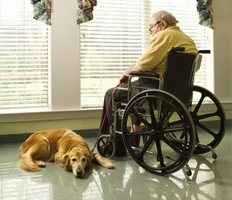
A service dog at work.

We can train a dog to assist a person in every aspect of his life. How wonderful! Every day, I hear of another way a dog has touched someone’s life. Have I said how much I worship dogs? Let’s discuss the top five purposes for a service dog, in which dogs have enriched lives even further.

Top 5 Service Dog Types

Vision/Hearing Impairment

Service dogs are extensively trained to guide a person around his home, neighborhood, shopping centers, airports and so much more. Training a service dog can take over 1 year. Service dogs used for the vision and hearing impaired have been trained for years to stop at curbs, go around cars, alert a person of sounds and keep both of them safe.

Seizure Alert

Not knowing when a seizure happens can be frightening and many people have stayed hidden in their homes afraid a seizure may happen anytime and anywhere. Somehow, service dogs are able to detect when a person is going to have a seizure and no one can give specifics on how they know. Could it be a specific scent or behavioral change in the person? Maybe. Dog trainers don’t know for sure, but well trained service dogs can detect seizures minutes or hours before they happen. When seizure alert dogs alert a person, they usually sit or lay on them. This cues the person to take medication or move to a safe place.

Diabetic Alert

As with a seizure alert dog, service dogs for diabetics are able to detect when a diabetic person’s blood sugar drops to a dangerous level. Per Dogs 4 Diabetics Inc. notes, “Our dogs are trained to identify a scent obtained from a diabetic when the diabetic is undergoing a low (blood sugar generally below 70). This type of service dog is trained to identify that particular scent from other scents that are presented to them.” Dogs are trained to sit, lay on, stare, nose push the person to let him know his blood sugar has dropped.

Assistance

This covers a wide range, as dogs are taught to complete everyday tasks for people whom are unable to. Dogs are taught to pick up dropped items, pull a wheelchair, turn lights off/on and stand and brace themselves so a person can place a hand on the dog’s back to assist with the person standing up.

Post Traumatic Stress Disorder (PTSD)

Many people suffer from PTSD for many different reasons. These injuries are commonly found with military veterans returning from war. Many times, veterans come back from a tour with PTSD and/or traumatic brain injury. Soldiers and veterans with these injuries are generally withdrawn, angry, show signs of increased anxiety and can’t stop thinking about what they have endured while at war. Dogs have found a way into their hearts. Service dogs are often assigned to these veterans to help heal from such tragic situations and flashbacks. I’ve seen young soldiers whisper their most terrifying moments in a dog’s ear, knowing they’ll never be heard and judged. The power of service dogs in these types of circumstances are extraordinary.

Did you know dogs are able to detect cancer in urine and cancerous melanomas? I’m sure dogs are able to detect many more illness. We just need to learn how to listen to our dogs. Hug your dog today and smile when you see a service dog doing his job. He deserves the utmost respect and gratitude.

Are you following us on Twitter? Follow us @DogTrainNation.

You may also like: Service Dogs

Filed Under: Dogs, Training Tagged With: service dog vest, service dogs

Service Dog Certification

June 6, 2014 by Fanna Easter

Training Service Dogs

Service Dog Certification
Learn how to become a service dog trainer.

As a dog trainer, I’m often asked how to become a service dog trainer by up-and-coming dog trainers.

Becoming a Service Dog Trainer

To become a certified service dog trainer, first you will need a dog training certification as your foundation. Understanding dog behavior and training is key to training a service dog for any need. As a professional dog trainer with over 22 years of dog training experience in the field, I strongly believe in becoming a certified dog trainer before moving on to service dog training.

Continuing your education as a dog trainer is a lot like adding new additions to your home. After the foundation has been laid, it requires walls and a roof before you can build the garage and the bathrooms. A person never stops updating a house. A home will eventually need landscaping, painting, windows and doors. Think of this home building analogy in terms of your growth in the expertise of dog training.

Like a home, your dog training career and the level of behavior training and analysis that you gain each day is what will help your dog training career blossom into certified service dog training.

RELATED: Service Dogs

Many students of Animal Behavior College go on to pursue service dog training, working with organizations like Train A Dog Save A Warrior (TADSAW), Canine Companions for Independence, Big Paws Canine Foundation, and Forever Paws.

Service dog training is an extension of your current skill level as a certified dog trainer. Always, always, always keep continuing your education. As a dog trainer and behavior specialist, you should never stop learning!

5 Ways to Become a Certified Service Dog Trainer

  1. Volunteer (Foundation): This is vital! Volunteering exposes you to so many different parts of dog training from puppy raisers to meeting new people in the service dog industry. If someone asks me the first step to becoming a pet dog trainer, I always tell that person to volunteer at a shelter, as he will learn so much while positively impacting these dogs’ lives. I recommend Guide Dogs of the Blind.
  1. Learn Dog Training Basics (Walls of House): This includes learning the nuts and bolts of training, such as how to teach basic polite behaviors. Also, you will learn how to positively socialize a dog, troubleshoot when a dog becomes confused, set a dog up for success and link behavior together (behavior chains), such as teaching a dog to turn off lights by pawing the light switch. There are many dog training schools out there. I recommend Animal Behavior College and then take Karen Pryor Academy Professional Course (I strongly advise taking a basic course before taking the KPA course, as you must have dog training experience before enrolling in KPA).
  1. Service Dog Schools (Roof): There are many service dog schools scattered across the U.S. and I would recommend contacting them, looking at their syllabi and requirements and speaking to former graduates. For a quick peek at service dog schools, view Service Dogs Inc. Again, there are many others out there and your volunteering and chosen dog training courses will guide you in the right direction.
  1. Certifications (House Inspections): I am a firm believer in dog training certifications, as anyone can hang a shingle outside and call himself a dog trainer. I recommend Animal Behavior College Dog Trainer – Level 2 Certification, Council of Certified Pet Dog Trainer and International Association of Animal Behavior Consultants.
  1. Continuing Education (Home Improvements): As a dog trainer, you should never stop learning. There will always be new, updated and easier ways to train a dog. I recommend attending Fenzi Dog Sports Academy, APDT Dog Training Conference, Clicker Expo Dog Training Conferences and at least one or two dog training seminars per year. Read everything. You can start by reading this list at IAABC Required Reading List and Basic Dog Training DVDs.

I’ve been very lucky to mentor some great dog trainers and this has been the path I’ve always recommended, depending on which category my student has chosen. Please, never stop learning.

Tell us how you have become a service dog trainer. Leave us a comment in the section below.

MORE:
Service Dogs
Types of Service Dogs
Therapy Dogs: How to Become a Healing Team

Filed Under: Dogs, Training Tagged With: service dog certification, service dog trainer

Clicker Training for Dogs

June 5, 2014 by Fanna Easter

Dog Clicker Training

Dog Clicker Training
Dog training clickers.

The power of clicker training for dogs is amazing. You are rewarding a thinking dog, which is awesome!

Many people use a verbal marker, such as yes to replace a click sound. Keep in mind that people can say yes using many different tones so this can be confusing and may not be the ideal word to use for the behavior praise. The click is a consistent way of marking the behavior before rewarding the treat. The click sound always stays the same whereas the cadence, tone, excitement, clarity and words used with a voice are not always the same.

Why Clicker Training Works

Hypothetically, if I placed a chair in the middle of a room and asked you to sit in it, the moment that you sat down in the chair, I would click and reward. That is the premise we have discussed using clicker training so far. Sounds simple, yet it’s possibly something that a human might get bored with rather quickly. But if every time that she asked you to sit, after you have properly done so, I could click and then reward you with a $100 bill.

What might the outcome be?

Most people would immediately continue to stand up and sit back down in the chair. What has happened is that the dog trainer has now reinforced the proper behavior using clicker training! You have learned that each click meant that you did what was asked. In this case, you were then given a $100 for doing so.

When you should click:

  • Sit: As your dog’s behind touches the ground.
  • Down: As your dog’s elbows touch the ground.
  • Loose Leash Walking: When the leash is loose (your dog is not pulling).
  • Attention: When your dog looks at you instead of the other dogs or distractions.
  • Barking: When your dog stops barking even for a nanosecond, click/treat!
  • Anything you like! If you can think it and your dog is physically able to do it, go for it!

– When your dog stretches while coming out of his crate, click and treat. Do this several times and add a cue, such as “pray.”

– Click when your dog looks to the left and add a cue, such as left.

– Click when your dog backs up and add a cue, such as back.

I have trained my Beta fish, Dribble, to touch my finger with his mouth, follow my finger around his bowl and swim through a hoop using these same clicker training methods.

While I’m not sure he could hear the sound of a click, I used a pen light and blinked when he did the correct behavior and fed him Beta kibble as a reward!

Apply Clicker Training to Other Animals

You can train chickens, horses, cows, guinea pigs and bunnies to do agility by using clicker training. I have even trained humans to sit in a chair. There are tons of games that can sharpen your clicker training skills and keep your dog mentally stimulated. I enjoy 101 Things to Do with a Box. Have fun training your dog!

VIDEO: How to Use a Clicker

What dog training clicker games do you play with your pets? Tell us in the comments below.

You may also like: Clicker Training

Filed Under: Dogs, Equipment, Resources, Training Tagged With: clicker training for dogs, dog clicker training tips, fanna easter, how to train a dog, learn clicker training, positive dog training

Clicker Training

June 5, 2014 by Fanna Easter

Clicker Training for Dogs

Clicker Training Dogs
Clicker training is fun!

Clicker training is used as a very effective way to train dogs. Clicker training is a positive form of dog training that produces the desired results quickly with minimal effort for dogs and the dog trainer. Professional dog trainer Fanna Easter explains to pet parents in her dog training class that the clicker is a magic tool. Dog owners enrolled in dog training classes have been awed by the power of clicker training. “With a clicker, I can train a dog within minutes to quickly learn a new behavior,” says Fanna Easter.

In this post, you will learn how to train a dog using a clicker!

What is a dog training clicker?

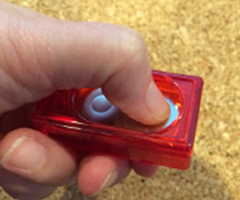
  • A small device that makes a click sound when pressed with your finger.
  • A clicker makes the same sound every time it does not change. It’s a quick sound.
  • A dog training clicker adds consistency to marking the correct behavior that you will want to reward, which lets the dog know immediately that he has done what you asked of them. Remember: cue, click, then treat!
  • When a dog trainer clicks, it’s a promise that the dog has rightfully earned a treat.
RELATED: Dog Trainer Karen Pryor

How to Train a Dog Using a Clicker

  • Click when your dog is doing something you like. It’s that simple.
  • The click sound marks the good behavior and the dog learns that s/he did well and earned a treat.
  • The sound of a clicker is meaningless to your dog, but if you click and then immediately give your dog a treat, your dog learns to associate the click sound with rewards for doing what was asked of him.
  • Use this powerful tool to your advantage when training a dog. Click and treat to imply he is correct.
  • Dog treats are the dog’s currency or motivator so use treats that your dog loves!

Clicker Dog Training Guidelines

  • When you click, always give the dog a treat. If you do not, then the dog will learn to ignore the click sound. Even when you clicked at the wrong moment, your dog is still learning.
  • Click once and then treat once. Multiple clicks are confusing, as the dog does not know which click marked the correct behavior.
  • The clicker is not a remote control so no need to point it at him. Just hold the clicker with your leash hand, as shown in the video “How to Train a Dog Using A Clicker.”

VIDEO: How to Train a Dog Using a Clicker

3 Steps to Clicker Dog Training

1. When training a dog with a clicker, use the clicker to mark the new behavior that you are teaching.

2. Once your dog responds to the cue, such as sit, mark the correct behavior with the training clicker and then treat the pet with a reward.

3. Once the dog gets the cue, correct 80% of the time. You can remove the clicker from the equation.

You may also like: Healthy Dog Treats

Filed Under: Dogs, Training Tagged With: clicker training, clicker training dogs, dog training, how to train a dog, how to train a puppy, karen pryor clicker training, puppy training tip

How to Get Your Dog to Stop Barking

June 4, 2014 by Fanna Easter

Stop Your Dog From Barking Now

Barking Dog
Elenarts/Deposit Photos

Wow wee, this is a tough one! But don’t worry folks, I have lots of tips for your barking dog. 🙂

Barking is a symptom and we need to find the cause to effectively address this behavior. First, it helps to understand why your dog is barking so we can manage and redirect this behavior. Many clients will correct their dogs whenever they are barking instead of understanding what is causing them to bark. This will confuse you and your dog quickly, which leads to frustration.

Now, some dogs are more vocal than others. I’m hesitant to label a specific breed of dog as more vocal than others. I’m just not a fan of labels. Think about a litter of puppies: some are quiet and others are vocal (Sobek, my Rottie, is super vocal and has been since he was 2 days old). Now, think of your family. We all have a talker in the group. In my family, it’s me! I’m much more vocal than my sister and our family video confirms it every holiday!

Why Do Dogs Bark?

Vocalizing (aka barking), for some, is a reinforcing way to release stress and tension. Again, let’s think in human terms. Some folks can deal with stress by bottling it up inside and never speak a word about it. Others must talk it out with anyone who will stand still long enough to listen. Managing a dog and person, both who vocalize due to stress is a tough one, but it can be managed.

Managing vs. Fixing Behaviors

Note that I mention managing an inappropriate behavior instead of saying fixing an issue. With my past experience, I don’t think we can 100% fix an issue with a living being. You can fix a car or TV, but living beings have learned behaviors that will pop up no matter how much you try to fix them. So, when I say manage, we can manage 99.9% of the time, which works for me! Example: I’m terrified of crickets. You can manage my dislike by feeding me donuts when around a cricket, but if I’m shopping at Macy’s (odd place for a cricket) and a cricket suddenly jumps on me, you better believe I will react! My fear of crickets is a learned behavior. Okay, I’ll contain my nerdy side now — back to managing barking.

3 Steps to Stop a Barking Dog

  1. Identify the trigger. What is causing your dog to bark in that environment?
  2. Choose an incompatible behavior to teach your dog (e.g. quiet, look at you or touch).
  3. Reward the incompatible behavior that prevents your dog from barking.

Dog Training Tips

  • Notice I said in that environment, which means the very moment that caused your dog to bark. Was it another dog that approached, a loud sound, a person walking up to your dog, doorbell ringing, umbrella opening, your dog noticing a strange object, or was he standing too close to another dog?
  • If your dog is a stress barker, find out what triggers the stress. Does it happen when you ignore him (attention-seeking behaviors, frustration due to confusion during a training session, an approaching dog, etc.)? Now address the stress and reward the dog when he is quiet (if he exhibited attention-seeking behavior). Take a step back in your training session and reward a simple behavior or walk the opposite way of an approaching dog.
  • Ask your dog to perform the incompatible behavior before he begins barking. If he begins barking, it’s too late. I say, “The horse is already out of the barn.” Back up until your dog quiets and try again. Timing is key!
  • If your dog barks, will not take a treat, or stop barking, back up from the trigger. In the dog training world, we say your dog is over threshold.
  • You need a really good reward. Barking is self rewarding, especially for stress barkers. Break out the really good stuff (cubed lunchmeat!).
  • At first, keep your dog on a leash so you have some control to move away from the trigger.
  • Manage the environment so your dog does not practice the behavior. This means, don’t let him bark at the trigger as this will only strengthen that behavior (think many repetitions of practice to strengthen muscles).

Example: Your dog barks at other dogs through the window.

  1. Close the curtains when you are not around. We don’t want the dog to practice this behavior and it getting stronger.
  2. Leash your dog and click/treat an incompatible behavior, such as quiet. Yes, he needs to breathe in between barks so reward the nanosecond of quiet. Or ask him to look at you and reward that behavior.
  3. If your dog will not focus on you, then back up from the window and try again.
  4. Practice this several times with fabulous treats.
  5. Keep curtains closed until your dog has more success with the incompatible behavior instead of barking at the dogs.
  6. Trust me, your dog will learn not to bark at other dogs through the window. 🙂

What Not to Do

  • Screaming, yelling and telling him to stop it right now. Basically, you are joining in with the barking party. 🙂
  • Penny cans, spray bottles and leash corrections. While it may seem to stop the behavior, it more or less suppresses it in my opinion. And I’ve seen it time and time again, corrections scare the dog and the dog thinks the trigger caused it. Now you have a dog that is scared of other dogs, people, etc. Punishment may work, but you really need to know what you are doing to prevent fallout behaviors. Make your mistakes with positive reinforcement, as it’s much more forgivable and it works!

Barking dogs of the world, unite! Share what causes your dog to bark in the comments below.

More:
Request Dog Barking
Stop Dog Barking Next Door
Attention Seeking Barking
Calming Music for Dogs

Filed Under: Dogs, Training Tagged With: dog barking, dog barking all night, dog barking at night, dog barking in crate, dog barking stop, dog barks

  • « Previous Page
  • 1
  • …
  • 130
  • 131
  • 132
  • 133
  • 134
  • 135
  • Next Page »

About

Dog Training Nation is a community of dog trainers, dog owners and dog lovers. Our mission is to provide trainers and owners valuable information to enrich dogs' lives. We cover a range of topics, from socializing puppies to dealing with aggressive dog behavior to selecting the best dog products. It is our hope you share our content to make the dog and owner world a better place.

​

Facebook

Video

Dog Training Nation is a dog training blog for pet owners and dog lovers. We cover a range of topics from puppy socialization tips to dog aggression to dog health. It is our hope you share our content to make the world a better place for dogs.

Dog Training Nation

Quick Links

Dog Training
Dog Behavior
Dog Training Videos
Become a Dog Trainer
About
Contact Us

Copyright © 2026 · Lifestyle Pro Theme on Genesis Framework · WordPress · Log in