Dog Training Nation

In Dogs We Trust

  • Home
  • Training
    • Dogs
    • Puppies
    • Clients
  • Behavior
    • Breeds
  • Health
  • Safety
  • Resources
    • Equipment
    • Books
  • Dog Training Videos
  • About
You are here: Home / Blog

Lumps On Dogs: What Should You Do?

April 19, 2017 by Fanna Easter

4 Steps to Take When You Find Lumps on Dogs

Lumps on Dogs
cynoclub/Adobe Stock

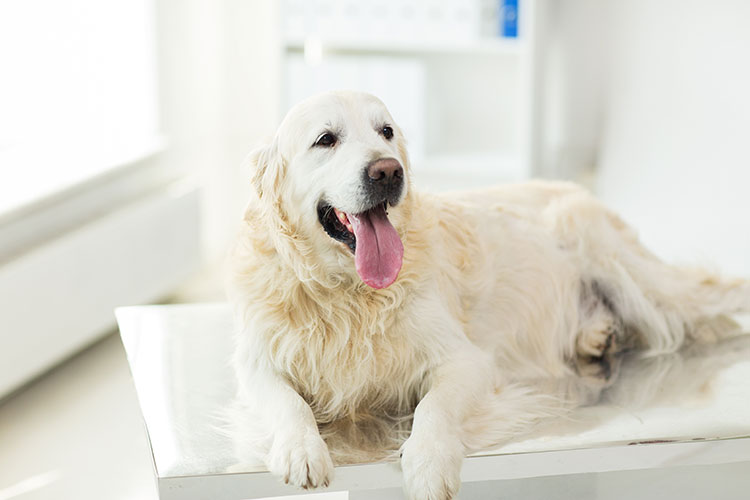
Finding a lump or bump on your dog is scary, and most pet owners aren’t sure what to do next. Before assuming the worst case scenario, it’s important to follow a few steps to keep your dog healthy.

For early prevention, check your dog’s body from nose to the tip of his tail weekly.

1. Take a Deep Breath & Investigate

Before freaking out, take a deep breath slowly in and then out. It’s time to take a good look at your dog’s lump. Move into a room with really strong lighting or grab a flashlight for a close inspection. To keep your dog still, smear peanut butter on a plate and then place it on the ground. As your dog happily licks away, part your dog’s coat and take a closer look at the lump.

While investigating the lump, it’s important to answer these questions:

  • Does the lump under your dog’s skin move? (i.e. moves side to side easily)
  • What shape is the lump? (i.e. round, shape of chewed bubblegum, ulcer, mushroom, etc.)
  • Is the lump bleeding or oozing clear sebum?

Now, run your fingers across your dog’s body to check for any other lumps. Take your time and check between your dog’s paw pads, under his tail and around each leg.

2. Take a Picture

To keep track of the lump’s size, it’s best to take photos the moment you notice the lump and every couple of days afterwards. Some lumps on dogs appear quickly and stop growing while others continue to slowly grow larger. Part your dog’s coat, place a flexible tape measure adjacent to the lump and snap a photo. These photos will be extremely beneficial for your veterinarian.

3. Jot Down Notes

Along with photos, you should document details of the lump on paper or in a Word doc. Remembering specific details about a lump and its growth over a span of time can be difficult. By jotting down notes, you can have a written account of the lump, which will be invaluable for your vet.

You should write down the date of when you first noticed the lump along with any photos. Then, every 2-3 days, note the date and any observational findings (e.g. bleeding, dried up, growing, decreased in size, etc.). Don’t forget to include any pictures as well. All of this information is important to your dog’s health, so keep track and write notes on a regular basis even if you didn’t notice any changes.

4. Make a Vet Appointment

Never monitor a lump without consulting your veterinarian first, including tiny lumps. Lumps and bumps have many causes, and one is cancer. Other lumps on dogs may indicate lymphoma or bone cancer, which should never be ignored. When lumps are found and diagnosed early, a dog has a better chance of surviving certain types of cancers.

After finding, investigating, taking photos and jotting down notes, pick up your phone and schedule a vet appointment. Never wait. Schedule a vet appointment within 24 hours of finding a new lump on your dog. During the visit, your dog’s veterinarian will aspirate (remove lump cells with a needle) and view these cells under a microscope. Most scary cancers can be diagnosed and removed quickly with great success.

When in doubt, get a lump checked out. Prevention is worth it.
Filed Under: Grooming, Health Tagged With: bump dog, bump on dog's skin, cyst on dog, dog warts, hard lump on dog, large lump on dog, lump dogs, lump on dogs, lump puppy, lump under dog's skin that moves, soft lump on dog, wart on dog

Reiki For Dogs: Transferring Healing Energy

April 17, 2017 by Fanna Easter

Reiki for Dogs

Reiki for Dogs
Monika Wisniewska/Adobe Stock

Due to the overwhelming positive reactions to our article on psychic readings, I’ve decided to discuss Reiki for dogs. 🙂 Reiki is considered an alternative therapy, but it’s a hot research topic lately. Regardless of a pet owner’s beliefs, it’s important to note Reiki certainly has benefits for both dogs and pet owners. Chances are pet owners are probably performing a version of Reiki now.

What is Reiki?

During a Reiki session, one person passes healing, calm and positive energy to another. Energy can be sent remotely or in-person between individuals and animals, and it’s pretty cool to watch the process. When someone is sick, saying a prayer or sending positive thoughts to that person is considered a type of Reiki. Just sitting quietly next to someone for support is another form of Reiki too. Dogs are famous for sitting next to an upset person to comfort him. 🙂

Reiki is more flexible than prayer, as an individual is more focused on sending positive energy than remembering prayer wording. However, there are Reiki practitioners who find peace reciting mantras and positive intentions. Honestly, it depends on an individual’s belief system and what he finds most comforting.

Does Reiki Work for Dogs?

Everyone has a different belief system, which can cloud perspectives. Many pet owners with strict religious beliefs may deny the power of Reiki despite alternative belief systems describing its effectiveness. In short, there’s no wrong or right answer, depending on your belief system.

With that said, there’s a sense of peace when a person quiets his mind while praying or focusing on positive thoughts. Simply sitting in a room with a quiet, calm and positive person can bring immediate relief to a worrying individual sitting close by. Research has proven sitting still and taking deep breaths while petting a dog can improve one’s well-being.

Reiki Sessions for Dogs

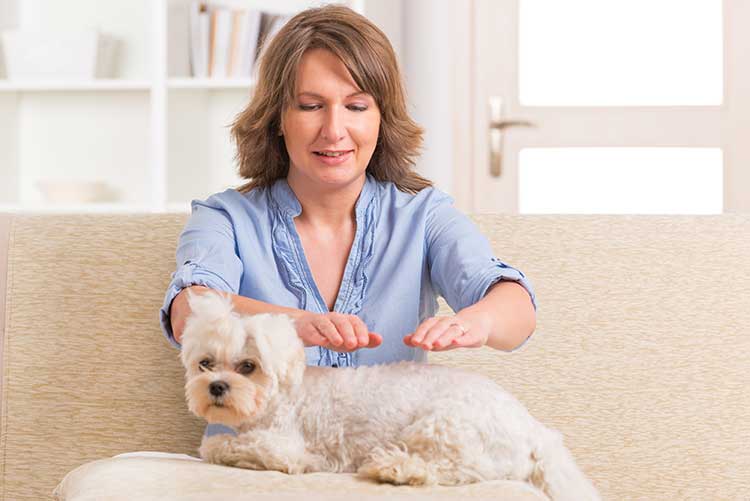
Sitting still and sending quiet therapeutic energy to your dog is calming. Not only will Reiki calm an anxious dog, but it will quiet an anxious pet owner too. Find 10 minutes in your evening schedule and sit in a quiet part of your home. Turn on soft music, sit on the floor (if able) and slowly pet your dog.

Similar to massaging your dog, moving slowly and taking slow deep breaths are key. Close your eyes and visualize healing energy emanating from the palm of your hands. Now lay your hands on your dog, and envision this healing light and energy radiating into your dog. Continue to take deep breaths and focus. If your dog has trouble spots, such as arthritic hips, lightly hover over or lay your hands on both of your dog’s hips.

Continue to send positive energy to certain areas for 2-5 minutes, and then move to another troublesome area for a couple of minutes. Reiki sessions can last 10-90 minutes. It depends on the individuals giving and receiving Reiki. Most dogs fall fast asleep during the process, and pet owners are usually relaxed and a bit tired afterwards too. Honestly, there’s no wrong or right answer to how long or often you do Reiki. It depends on both individuals.

Regardless if you believe in Reiki or not, quieting the mind is greatly beneficial. Take a moment and include your dog in the process too. It can heal you both. 🙂

Filed Under: Health, Resources Tagged With: does reiki work for dogs, dog reiki, dog reiki session, how to do reiki on animals, reiki for dogs, reiki healing anxious dog, reiki healing dogs, reiki healing puppies

6 Benefits Of Adopting An Older Dog

April 14, 2017 by Fanna Easter

Adopting an Older Dog Has Its Benefits

Adopting An Older Dog
lpictures/Adobe Stock

Sad photos of older dogs needing homes have been surfacing social media lately. How someone could drop off his beloved senior dog at Animal Control is something I’ll never understand. Thankfully, adopting senior dogs have become a huge trend lately! Let’s discuss the benefits of adopting an older dog because there are many.

[perfectpullquote align=”full” cite=”” link=”” color=”” class=”” size=””]Remember, bringing a dog into your home is for life. [/perfectpullquote]

1. Already Potty Trained

Older dogs are much easier than new puppies. On average, it takes a full month of potty training before a puppy learns to potty outdoors. When you adopt an older dog, they’re potty trained already! Plus, senior dogs are crate trained and know how to relax in your home with no accidents. They will also let you know when they need to potty, relieve themselves quickly and head right back inside to lounge on the sofa. How easy is that?

2. Have Polite Manners

Looking for a calm and polite dog? Older dogs have learned and practiced polite manners in a myriad of situations already. They know how to sit, down, come when called and walk politely on leash.

Puppies and adolescent dogs are full of energy while senior dogs prefer to relax quietly. Before assuming older dogs are solely couch potatoes, do know they still enjoy chasing a thrown ball, happily greeting their pet owners and walking in the park.

3. Make for the Perfect Cuddle Buddy

Oh, older dogs make create snugglers. They’re happiest snoring away while you’re binge watching Netflix episodes, chatting on the phone or revealing your darkest secrets. Senior dogs will comfort you when you’re sad, and lick away your tears. There’s nothing better than a gray muzzle kissing your face. 

4. Have Minimal Health and Temperament Issues

For some reason, potential pet owners assume older dogs are riddled with health issues, but that’s simply not true. Time and time again, senior dogs are passed up for a new puppy. Pet owners assume a new puppy will be a blank slate and senior dogs carry baggage. Allow me to set that record straight now: This is a complete myth.

Puppies aren’t blank slates. They carry their own genetic baggage, of which most potential pet owners are unaware. With older dogs, what you see is what you get—and that’s a fabulous and friendly dog. As for medical issues, most older dogs are healthy with minimal health issues.

5. Can Learn New Tricks

Older dogs are always learning, and adapt to new situations quickly. Bringing your newly adopted older dog to a group dog training class provides mental stimulation and bonding time for both you and your dog. You’ll both sharpen your skills, and soon your senior dog will show the youngsters how it’s done in class. 🙂

6. You Saved a Life

Even if it’s a few years or a month, adopting an older dog in need and bringing her into your home will provide her a warm, soft and safe place. All dogs deserve to live out their golden years in comfort, and providing a senior dog these comforts is well worth it. Revel in the fact that you saved a life while enjoying the perfect addition to your family. 🙂

Filed Under: Clients, Training Tagged With: adopt old dog, adopt senior dog, adopting a 5 year old dog, adopting a 6 year old dog, adopting a dog from a previous owner, adopting an older dog from a breeder, adopting an older dog vs a puppy, benefits of adopting older dog, dog training, how to teach a dog, how to train a dog, reasons to adopt a senior dogs, reasons to adopt an older dog, should I adopt an older dog

How To Break Up With Your Veterinarian

April 12, 2017 by Fanna Easter

What’s Involved When Changing Vets

Changing Vets
Syda Productions/Adobe Stock

Breaking up with anyone is difficult. Choosing to leave your current veterinarian, regardless of the reason, is extremely uncomfortable. Many pet owners put off this decision, hoping something changes soon, but it rarely does. If your gut is screaming that you and your dog need a new vet, then it’s time to pull up your socks and get it done. Yes, switching veterinarians can be done painlessly and graciously. 

Trust Your Gut

It’s easy to second-guess your gut feeling, but that feeling is there for a reason. If your previous vet left your vet clinic, you’ve moved or you had a difficult time scheduling an appointment, then breaking up with your vet is easy.

When you’re dissatisfied with your dog’s health care or staff members are rude, then that’s when it gets tricky. Many times staff members are rude because there was a misunderstanding. In that case, speak with your veterinarian or practice manager about it. However, sometimes those discussions just don’t work and it’s time to move on.

Trust and listen to your gut, and start looking for a new vet before something happens to your dog. Ask dog friends or your dog trainer for referrals and look into force-free vet clinics.

Transferring Vet Records

This is the point where most pet owners chicken out. While it’s easy to start from scratch with a new vet, it’s not fair to your dog. Your dog’s previous health records are extremely valuable to your new vet.

[perfectpullquote align=”right” cite=”” link=”” color=”” class=”” size=””]Remember, you don’t owe anyone an explanation.[/perfectpullquote]

There are two ways you can transfer vet records. One way is to ask your previous vet to transfer your dog’s health records to your new vet. The second way, which may be a little less uncomfortable for you, is to contact your new vet’s office and have them request your dog’s medical records from your previous vet. What’s most important is your new vet receives those health records.

Remember, you don’t owe anyone an explanation unless you want to. Do tread carefully though and explain why you’re searching for a new vet. Maybe mention that you’re seeking a more integrative approach, you need a vet closer to your home or you received a referral from a fabulous dog-savvy friend. Never burn bridges, so handle this situation politely.

Meeting the New Vet

Assuming you’ve completed extensive research, it’s time to meet your new vet. Keep an open mind and refrain from bashing your previous vet. When pet owners speak negatively about others, it’s uncomfortable for everyone in the room. Switching vets is explanation enough; your new vet knows there was a reason. Instead of explaining why you left, provide details of your dog’s medical history that your vet may need to know.

Also, observe how your new vet and her staff handle your dog, how she explains your dog’s health, and how she answers your questions.

Never Give Up

Hopefully, your new vet fulfills your and your dog’s needs. Sometimes, it just doesn’t work out and that’s OK. Remember, you’re your dog’s voice, so never give up until you find the best veterinarian and support staff. Yes, it’s difficult and uncomfortable, but it’s completely worth it. You’re your dog’s advocate, so speak up. 🙂

Filed Under: Clients, Health, Training Tagged With: breaking up with your vet, can I switch vets, changing vet's moving, changing vets, divorcing your vet, dog training, Dog Training Tips, finding a new vet, how to change vets, how to switch veterinarians, pet vet records, should I change vets, transferring vet records

Pros And Cons Of Cow Hooves For Dogs

April 10, 2017 by Fanna Easter

Cow Hooves for Dogs

Cow Hooves for Dogs
Carola Schubbel/Adobe Stock

Last week, we went over pig ear dog chews. This week, we’ll discuss the pros and cons of cow hooves for dogs. Pet owners and pet professionals have mixed reviews about this dog chew, so it’s best to decide yourself whether or not cow hooves will make an appropriate dog chew for your pet.

Cow Hoof Pros

If your dog loves to chew for hours, then she’ll love chewing on cow hooves. A cow hoof is durable, easily lasting a full day for moderate to power chewers. That’s a long time for a dog chew.

Cow hooves are also relatively cheap. One hoof costs less than a dollar, and cow hooves are even cheaper when purchased in bulk. Hooves are available at most pet retailers and online, including hooves from cows born and raised in the USA.

Cow hooves are considered a natural product because they’re the actual hooves from a cow. Once a cow is slaughtered, hooves are sold to pet food vendors that completely clean, shave and dry them for pet resale. The hooves are hollowed out after cleaning, making it easy to squeeze in cheese or peanut butter inside.

Cow Hoof Cons

The biggest con of cow hooves for dogs is the smell. Cow hooves stink! The smell is worse when hooves are chewed, which can linger on carpet for days or even weeks.

When arriving home from work, many pet owners take one whiff and assume their dogs had a potty accident indoors until they find a half chewed cow hoof sitting on the living room floor. Yes, cow hooves smell that bad. You’ve been warned. 🙂 While this strong odor is a major turnoff for pet owners, it’s probably a pro for dogs because dogs love stinky smelling stuff!

As with all durable dog chews, there’s always the risk of tooth fractures, gum lacerations, choking and digestive obstructions. Chewed cow hooves can splinter and develop sharp edges, which can cause mouth lacerations, punctures and bleeding.

Dogs also seem to become extremely thirsty after chewing on cow hooves. It may be from the act of chewing or the additives on cow hooves.

Cow Hoof Chew Safety

Cow hooves are best for moderate chewers, so use with extreme caution for power chewers. Light chewers will likely get bored with these chews because they’re so tough.

Always supervise your dog when she’s chewing on any type of toy or chew even if your dog has chewed these items before. Every 10 minutes or so, walk over and trade the cow hoof for a piece of hot dog or cheese. Playing this dog game gives you the opportunity to inspect the chew for splinters, large chunks or sharp edges. The trade game also prevents resource guarding and teaches your dog good manners. During the break, take a moment to check your dog’s mouth and gums for bleeding or chipped teeth.

Once a cow hoof has been chewed to a small nugget, it’s best to throw it out to prevent your dog from swallowing the last piece. Any dog chew can be harmful, so supervision is key.

Filed Under: Health, Resources Tagged With: are cow hooves digestible, cow hoof chews, cow hoof chews for dogs, cow hoof chews for puppies, cow hooves chews, what are cow hooves made of

  • « Previous Page
  • 1
  • …
  • 22
  • 23
  • 24
  • 25
  • 26
  • …
  • 135
  • Next Page »

About

Dog Training Nation is a community of dog trainers, dog owners and dog lovers. Our mission is to provide trainers and owners valuable information to enrich dogs' lives. We cover a range of topics, from socializing puppies to dealing with aggressive dog behavior to selecting the best dog products. It is our hope you share our content to make the dog and owner world a better place.

​

Facebook

Video

Dog Training Nation is a dog training blog for pet owners and dog lovers. We cover a range of topics from puppy socialization tips to dog aggression to dog health. It is our hope you share our content to make the world a better place for dogs.

Dog Training Nation

Quick Links

Dog Training
Dog Behavior
Dog Training Videos
Become a Dog Trainer
About
Contact Us

Copyright © 2026 · Lifestyle Pro Theme on Genesis Framework · WordPress · Log in