Dog Training Nation

In Dogs We Trust

  • Home
  • Training
    • Dogs
    • Puppies
    • Clients
  • Behavior
    • Breeds
  • Health
  • Safety
  • Resources
    • Equipment
    • Books
  • Dog Training Videos
  • About
You are here: Home / Blog

Can Dog Collars Cause Neck Injuries? Yes, They Can

August 24, 2016 by Fanna Easter

Prevent Dog Neck Injuries With the Right Equipment

Dog Neck Injury
Yurikr/iStock

Dog collars can cause neck injury. Dog neck injuries occur when dogs pull against their collars. While we assume this only happens to large dogs, it can happen to any dog regardless of size. If your dog pulls against his collar, it’s time to change up his equipment for walks around the neighborhood and visits to the vet’s office. The equipment I’m about to tell you should be used until your dog is taught how to walk politely on leash. 🙂

Why Dogs Pull Against Their Collars

Dogs pull against their collars because it works for them. Dogs will pull against restraints, such as tight collars, because these forward movements will inevitability move them and their pet owners to where they want to go. It sounds overly simplistic, but that’s why dogs pull. I see it happen every day. When a dog pulls his neck against a collar, both the pet owner and the dog move forward—or the pet owner’s arm will grow three inches longer—but something has to give.

Dog Neck Injuries are Common

It’s very common for dogs to experience a neck injury or throat damage from pulling their collars. When dogs pull against their collars, the front of their necks sustains the most amount of trauma. It’s important to understand that a dog’s trachea (windpipe) is located in the front part of his neck, which is why your dog chokes, gasps and coughs when he pulls against his collar. Other areas are affected too.

For example, a dog’s spine can easily be damaged from collar pressure, his delicate thyroid can be damaged because it sits right where a collar digs into a dog’s neck and his eye pressure can increase. Collar pressure can also cause glaucoma. A 2006 study conducted by a veterinary ophthalmologist “showed an increase in intra-ocular pressure (IOP) in dogs while pulling on a collar, confirming a correlation between glaucoma and collar stress” (Tremayne, 2006). In addition, a dog’s eye pressure can increase after just one collar-pulling incident. I mean when you think about it, all that forward pressure has to go somewhere.

RELATED: How to Get Your Puppy Used to a Collar

Best Collar for Dogs That Pull

Of course, I don’t recommend pinch or choke collars. Those types of dog collars are the main causes of neck injuries and throat damage. Somehow, pinch collar enthusiasts feel that pinch collars won’t choke a dog, but they think it’s OK for its metal spikes to dig into fleshy and fragile neck areas. I would rather base my dog training methods on facts by leading veterinary behaviorists instead of feelings.

Research shows that pinch collars do cause damage and dogs will pull against them too. Do know that flat buckle collars and Martingale collars can still cause dogs neck injury if the dogs are constantly pulling against them. If your dog pulls against his collar, regardless if he weighs 5 pounds or 150 pounds, stop this behavior before your dog gets hurt.

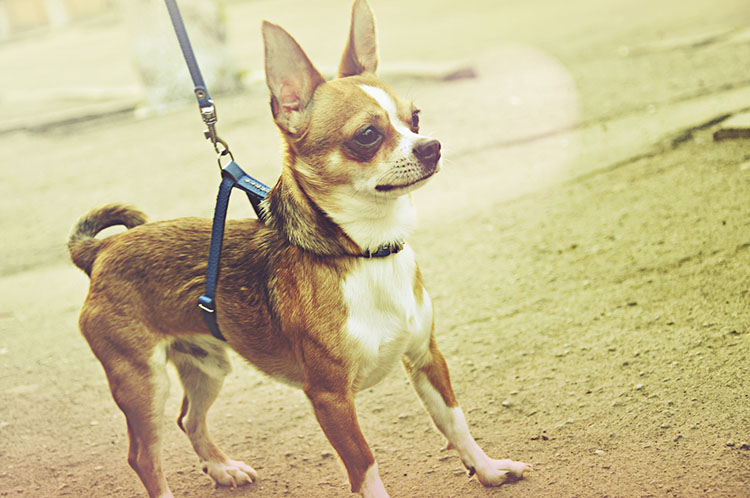
For strong-pulling dogs, I recommend a front clip harness. For this type of dog harness, you clip the leash in front of your dog’s chest and back. Yup, instead of putting all the force in one area of your dog’s body, this harness evenly distributes the force onto the front and back of your dog’s chest. Plus, you have more control over your dog’s forward movements because you’re controlling your dog’s body and not just his neck.

Dogs will pull against collars, it’s going to happen, so it’s important you have the right dog training equipment to keep your dog safe and prevent you from being pulled toward another dog or moving car. Plus, this harness is an excellent dog training tool to positively teach your dog how to walk politely on leash.

But What About Your Dog’s Collar?

Flat buckle collars should be worn for ID tags only. If your dog pulls, give a front clip harness a try. It’s a new piece of equipment that works amazingly and it keeps your dog’s neck injury-free.

Does your dog pull like a freight train?

YOU MAY ALSO LIKE: DIY Comfy Alternative to the Cone of Shame

Filed Under: Equipment, Resources, Safety Tagged With: can collars harm a dog's neck, dog choke collar injuries, dog neck injury from collar, dog pulling on collar eye damage, dog pulling on leash trachea, my dog pulls against his collar

How to Get Your Puppy Used to a Collar

August 22, 2016 by Fanna Easter

Training a Puppy to Wear a Collar in One Week

Puppy Doesn't Like His Collar
ChrisLeRoy/iStock

Puppies aren’t born wearing collars, so when a collar is first fastened around a puppy’s little neck, it can feel strange for her. Most puppies will bite, scratch, turn circles or refuse to walk while wearing a collar. This is totally normal behavior. As pet owners, it’s our job to train a puppy to wear a collar.

How to Teach Your Puppy to Wear a Collar

Once your puppy is home, it’s time to teach her that wearing a puppy training collar makes good things happen. Move slowly and reward your puppy often while she’s wearing a collar.

Choose the Right Puppy Collar

Puppies should wear an expandable flat buckle collar without tags at first. ID tags can be a bit distracting, as most puppies will mouth or paw at the dangling bits of metal clanging under their chins. They’re simply too distracting for an inquisitive puppy. After a week of your puppy successfully wearing her collar, then you can add ID tags.

Puppies, or all dogs really, shouldn’t wear choke chains, cloth slip collars or prong collars. They need a flat buckle collar. Harnesses are OK too, but make sure the straps don’t rub against your puppy’s skin, apply pressure to your puppy’s neck or restrict her movement.

Give Her a Food Stuffed Toy

Before introducing a collar or harness to your puppy, fill a toy with food and freeze overnight. Now, fasten your puppy’s collar in place and immediately give her the food stuffed toy to enjoy while she’s wearing her collar.

Once she’s emptied all the food from the toy, remove her collar and toy and place both up high, so she can’t reach it. Practice this several times a day. Feel free to stuff your puppy’s regular meals inside of a food toy for additional practice sessions. By pairing good things with the sensation of wearing a collar, your puppy learns that collars are harmless and pretty darn fun.

Puppy Doesn’t Like Her Collar?

If your puppy starts pawing or scratching her collar, distract her by playing a 1-2 minute game of “touch.” Distracting her without saying “stop” or “no” gives your puppy something else to do instead of worrying about the collar on her neck.

Learn how to teach the “touch” behavior in the video below. This dog training game is easy to teach and extremely useful in many different situations. The “touch” behavior is vital—so much so that it’s the first behavior I teach during dog training classes or private lessons.

WATCH: Teach Your Puppy the “Touch” Cue

https://youtu.be/d-spTywRXEo

Teach Collar Pressure = Treats

Once your puppy is completely comfortable with the sensation of a collar, it’s time to teach her that collar pressure makes treats happen. Collar pressure can cause a puppy to freak out because she may not be used to feeling pressure against her neck, which limits her movement.

Collars can scare puppies so much that they will usually hop, buck, or “pancake” on the ground and refuse to move forward. If this happens, immediately stop the pressure by walking over to your puppy or letting go of her collar, and practice the collar pressure game.

When teaching collar pressure, you’re not pulling against your puppy. Instead, you’re holding your puppy’s collar in place while your puppy pulls against it. The moment your puppy stops pulling against the collar, you click and reward your puppy.

Pulling against pressure is a natural reaction to restraint; it’s called opposition reflex. Your goal is to teach your puppy to move with pressure. This is the first step when teaching loose leashing walking and teaching your dog to walk with you while touching her collar. Plus, every time your puppy pulls against her collar, it increases her chances of injury in her neck area.

Practice this dog training behavior several times a day with super yummy treats. If your puppy balks when you reach for her collar, take a step back and teach her that collar touches are a good thing.

WATCH: Dog Training Tip: Teach Collar Pressure

https://youtu.be/I39BE4xOnLY

Attach a Leash

Always teach your puppy how to wear a collar first, then master the collar pressure game before attaching a leash to her collar. On average, it takes about a week for a puppy to feel comfortable wearing a collar and respond well to collar pressure. Attaching a leash to your puppy’s collar is a completely different lesson.  Check out this article on teaching a puppy to walk on leash for additional details.

Puppies are tiny little sponges. Take advantage and teach them that the world is full of fun!

Filed Under: Behavior, Equipment, Puppies, Resources, Training Tagged With: best collar for puppy, choosing a collar for a puppy, dog training, Dog Training Tips, how to teach a dog, how to teach a puppy to wear a collar, how to train a dog, opposition reflex dogs, puppy collar, puppy collar tips, puppy dislike collars, puppy hates wearing a collar, puppy scared of collar, puppy scratches at collar, puppy training, puppy won't walk with collar, teach a dog, teach puppy how to wear a collar, teaching collar pressure dog, teaching collar pressure puppies, train a dog

DIY Comfy Alternative To The Cone Of Shame

August 18, 2016 by Fanna Easter

Homemade Dog Cone Alternative

Dog Cone Alternative
Sobek, my Rottweiler. 🙂

Sooner or later, it’s going to happen. One day, your dog will need to wear the dreaded cone of shame. Honestly, I think an Elizabethan collar (plastic dog cone, cone of shame, e-collar, etc.) has earned a bad reputation. It’s all about perspective, right? In our home, we call dog cones “party hats” because we make them fun to wear. If your dog absolutely hates wearing a plastic dog cone, give this homemade dog cone alternative a try.

Disclaimer: Hands down, a plastic Elizabethan collar works best. There’s no comparison. Always follow your veterinarian’s advice. If you decide to try a towel dog cone alternative, partner with your vet first.

Meet the Towel Dog Collar

Last year, my Rottweiler chewed a couple of hot spots between both front paw pads. As part of our vet’s recommended treatment plan, we were told to focus on preventing my dog from licking the area. He’s pretty happy wearing a plastic dog cone, but I wanted to try a dog cone alternative—something that would be more comfortable while sleeping. I call this DIY dog cone alternative a towel collar and it works really well.

When designing this homemade dog cone alternative, I used the Bite Not Collar as inspiration. This dog collar resembles a human neck brace. It prevents dogs from turning their necks from side to side or downward, but this collar wasn’t perfect. The bottom edges would dig into my dog’s shoulders—ouch! Hmm, I thought maybe I could make something a bit better.

Using the Bite Not Collar design, I rolled up a thick towel and taped it into place. It took several days of trial and error, but I finally figured out how to keep the towel securely in place without putting too much pressure around Sobek’s neck, head and shoulders. Also, since the dog cone is a soft towel, no edges dug into my dog’s shoulders!

How to Create a Towel Dog Collar

You’ll need a thick towel, duct tape, smeared plate of peanut butter, friend to hold the peanut butter in front of your dog’s face and, of course, your dog. When picking peanut butter, make sure it doesn’t contain xylitol. If your dog is unable to stand still while you wrap the dog cone towel around his neck, check out these easy tips that will keep your dog happily standing still.

Step One: Choose a Towel Size

Depending on the size of your dog, choose a thick towel that can easily be folded into thirds and covers your dog’s neck area only. For my large Rottie, I used a super thick full-sized towel (a beach towel was too long). Several friends tried this method successfully using a kitchen towel for smaller dogs and a washcloth for very tiny dogs (under 10 pounds).

Step Two: Fold Towel

Fold the towel into thirds lengthwise. This way you can wrap the towel around your dog’s neck slowly.

Step Three: Don’t Wrap Too Tightly

Have your friend hold a smeared plate of peanut butter in front of your dog’s mouth, as you start wrapping the towel around your dog’s neck. When wrapping, make sure the towel isn’t too tight. Otherwise, your dog may choke or experience neck pain or breathing issues. Once wrapped, make sure your arm can easily fit between the wrapped towel cone and your dog’s neck.

For smaller dogs, make sure your hand or at least two fingers can easily slide all the way down between your dog’s neck and towel. If it’s too tight, rewrap until it’s just right.

Don’t worry. It will take a few tries to make sure the towel fits correctly, and hence the benefits of a smeared plate of peanut butter to keep your dog busy while you experiment.

Step Four: Tape in Place

Mimicking the Bite Not Collar straps, cut three pieces of duct tape to wrap 2/3 around the towel. Place one tape strip at the top edge of the towel, place the second strip at the bottom edge and, lastly, wrap the third strip around the middle of the towel collar. Stick your hand between your dog’s neck and the towel to ensure the towel dog cone wasn’t pulled too tightly while taping.

Was My Dog OK Wearing This Dog Cone Alternative?

Thankfully, my Rottie, did well with his homemade dog cone alternative; and it stopped him from chewing on his front feet. He was able to sleep, eat, drink and potty comfortably, and he looked adorable wearing it too. 🙂

Every day, I would remove the towel dog cone and rewrap it. If you don’t rewrap it each day, the towel will lose its fluffy thickness and your dog will be able to turn his neck around. Throughout the day, make sure the towel doesn’t twist and tighten. If the towel gets dirty, take it off and wrap a new towel in its place; it’s super easy.

If you decide to give this DIY dog cone alternative a try, supervise your dog for the first few days of him wearing it and always partner with your veterinarian first. If your dog has neck pain during or after wearing his towel collar, remove it and contact your vet immediately.

WATCH: How to DIY Dog Cone Alternative

https://youtu.be/M4LzVp3vLMI

Filed Under: Equipment, Health, Resources Tagged With: alternatives to a dog cone, cone of shame, diy dog cone, dog cone collar, dog cone ideas, dog cone neck, homemade dog cone, my dog hates his cone, soft dog cone

Dog Urine Sample: How To Collect Your Dog’s Urine For Testing

August 17, 2016 by Fanna Easter

Collect a Urine Sample From Your Dog With These Tips

Dog Urine Sample
MartinCParker/iStock

Sooner or later, you’ll need to collect a urine sample from your dog to rule out illness or to bring to your dog’s annual exam. Of course, your vet’s office can collect your dog’s urine sample, but sometimes it’s a bit more difficult if your dog is easily excited or fearful—that’s where the pet owner enters the situation. Believe it or not, it’s pretty easy to collect a urine sample from your dog and you won’t even have to touch his urine! I promise.

Check out these simple tips on collecting a urine sample from your male or female dog!

First, Be Prepared

To make this procedure as simple as possible, you’ll need to plan ahead and use the right tools. You’ll need a container to collect your dog’s urine while he or she is urinating, and then transfer the collected urine into a sterile urine sample cup. As a veterinary technician, this is how I was taught to collect urine and I still use this method today. 🙂

What You’ll Need to Collect a Urine Sample

Sterile Urine Sample Cup

Ask your veterinarian for a sterile urine sample cup first. The urine sample cup is used for pouring your dog’s collected urine into it. You label it with your dog’s name and time his urine sample was collected, and transfer it safely to your vet’s office. Trying to collect a urine sample with this cup is next to impossible. If you’ve tried using it before, you know the struggle. 🙂

Urine Samples Have a Short Life

If you’re wondering how long you can keep a dog’s urine sample before testing, it’s best to collect your dog’s urine right before a vet visit because urine has a short life once collected. For best results, urine samples should be tested within 30 minutes of collection.

Urine samples that sit at room or warm temperature for longer than 30 minutes may produce unreliable test results. However, I’ve also found old urine samples that have been sitting in the refrigerator for more than 30 minutes may still provide unreliable results, so time is definitely a factor.

Usually, I bring my dog potty in our backyard, collect the urine sample, place the sample in an insulated bag containing plastic bags of ice and head straight to our vet’s office. Sometimes, I’ll arrive at our vet’s office early and collect a urine sample in their parking lot, but I’ve noticed most dogs get really excited in a new place, which can make collecting a urine sample challenging.

Dog Leash

Always leash your dog when trying to collect a urine sample, and shorten your dog’s leash to 3 feet. That way, when your dog starts to pee, you’re right there to collect his or her urine. Keep movements slow and calm. Any fast moments will cause your dog to stop urinating.

RELATED: What to Do When Your Puppy Won’t Walk on Leash

How to Collect a Urine Sample From Your Dog

Collecting a Urine Sample From a Female Dog

Collecting a female dog’s urine is pretty straightforward and simple. Since female dogs squat to urinate, you’ll need a narrow and flat collection surface with sides to prevent urine from spilling out and grass or dirt from getting into the urine sample.

For large to medium female dogs, I use a saucer plate with sides. If your dog is small, try using a plastic container lid; make sure it has edges to prevent urine from spilling.

Bring your female dog out to her favorite potty area on leash, and walk behind her while holding the saucer. Once she squats to urinate, slide the saucer under her vulva to catch her urine. Remove the saucer as she stands up, being careful to move slowly as not to startle her. Moving the saucer as your dog is standing prevents her from stepping into the urine sample. Now, take the urine sample and pour into the sterile urine sample cup provided by your vet, label it with your dog’s name and time of collection, and head to your vet’s office.

Soon, you’ll be a pro at collecting your dog’s urine!

WATCH: How to Collect a Urine Sample From a Female Dog

https://youtu.be/zlflG8sNaCQ

Collecting a Urine Sample From a Male Dog

It’s a bit tougher collecting a male dog’s urine. You would think it would be easier, but that’s not always the case. A soup ladle is the best and easiest way to collect a urine sample from a male dog. Just make sure to clean the ladle cup with alcohol before using.

Leash your male dog and bring him out into your backyard to potty. Shorten your leash and walk behind your dog while holding the soup ladle in your hand. Now, think of the soup ladle handle like an arm extension; you need to keep the handle flush with your wrist and move it slowly or else it will distract your dog. The moment your dog starts urinating, place the soup ladle cup in your male dog’s urine stream and remove once he stops urinating. Once urine has been collected, pour it in a sterile urine sample cup, label it with your dog’s name and information, and bring it to your vet’s office immediately.

A Word About Soup Ladles

Personally, I find plastic soup ladles are easier to use as a urine collection device than stainless steel versions. When a male dog urinates into a stainless steel ladle, it makes a loud sound, which can startle the dog. A startled dog will stop urinating and possibly refuse to urinate while you’re holding the ladle. I’ve had it happen to me many times. 🙂

WATCH: How to Collect a Urine Sample From a Male Dog

https://youtu.be/f3IC5FUTyjg

Filed Under: Health, Resources Tagged With: catching a dog's urine sample, collect urine sample female dog, collect urine sample female dogs, dog urine sample, female dog urine sample, getting urine sample female dog, getting urine sample male dog, how to collect your dog's urine, how to get a dog urine sample, male dog urine sample

What to Do When Your Puppy Won’t Walk on Leash

August 15, 2016 by Fanna Easter

How to Teach a Puppy to Walk on Leash

Leash Training a Puppy
Ollleke/iStock

Puppies refusing to walk on leash is an extremely common behavior. Walking with restricted movement due to a leash is unnatural for dogs, so we as pet owners should positively teach puppies and dogs that walking on leash is a good thing.

So many times, we snap a leash onto a puppy’s collar and take off walking, but the puppy becomes confused and tries running the opposite direction or refuses to walk. They flatten themselves onto the ground like a pancake. When we continue to pull on the leash, it causes the dog to panic. If you combine this scary scenario with a highly distracting environment, such as the park, neighborhood or vet’s office, or continue to pull on your confused puppy’s leash, you’ll teach your puppy that leashes make scary things happen.

Now, let’s start on the right paw and discuss how to teach a puppy to walk on leash. 🙂 Dog leashes are basically a safety line that keeps pets safe. They should never be used for jerking, yanking or any other type of punishment.

Leash Training a Puppy Tips

Teaching a puppy to walk on leash is pretty easy. You’ll need lots of super yummy treats, a body harness, and a six-foot nylon or cotton leash.

There are a few steps on teaching this dog behavior, so take your time and teach your puppy each step thoroughly before moving on. If your puppy or dog becomes confused, take a step or two back until your puppy is comfortable again. Understand, it’s completely normal to take a few steps backwards before moving forward again; it’s part of the learning process. I’m sure you painfully remember learning a foreign language or algebra at one point. 🙂

Also, it’s important to teach this behavior before attaching a leash to your puppy. Plan ahead and teach this puppy training skill before vet visits or walks around the neighborhood.

Step One: Introduce the Leash

Goal: Teach your puppy that leashes are positive things and leashes make treats happen.

With your dog indoors, sit on the floor and put your puppy’s leash on the floor in front of you. Whenever your puppy looks at the leash, click and give your dog a treat. If your puppy stays next to the leash (that’s a good thing), toss a treat in the opposite direction of the leash (e.g. toss treat across the room). That way your puppy must approach the leash for another click and treat. Play this game for a minute or two, then pick up the leash and put it in a location where your puppy can’t see it.

Practice this step 2-3 times per day for 3 days. By then, your puppy will run toward the leash whenever you bring it out.

Step Two: Fun Happens While Wearing a Leash

Goal: Puppy is comfortable with a leash attached to his harness or collar.

For this step, I’ll assume your puppy is already comfortable wearing a harness or flat collar. If not, take a moment and teach your dog that wearing a harness/collar is a good thing before completing this step.

Fill an interactive toy with food and freeze overnight. Now, attach a leash to your dog’s harness and let your dog drag it around the house for a bit. To make this experience positive and to keep a puppy from chewing on the leash, give your dog a frozen food stuffed toy to enjoy while wearing and dragging his leash around the house.

Once your dog has finished his food stuffed toy, remove the leash and put it away. Practice this game several times a day. You can certainly fill interactive toys with your dog’s daily meals for more leashes-make-fun-things-happen moments.

Remember, you’re not holding the other end of the leash. Your dog is learning that attached leashes are harmless and make good things appear like food stuffed toys. Practice for 3-4 days before moving onto the next step.

Step Three: Hold Other End of Leash

Goal: Puppy learns that leash pressure is fun.

By now, your dog has learned that fun things happen when a leash is present, so it’s time to hold the other end of the leash. This is the part that usually freaks some puppies out. They’re not used to limited mobility caused by leash restraint, so they pull, buck or lie flat on the ground. Teach your puppy or dog that collar pressure is a good thing by watching the video below.

WATCH: Teaching Collar Pressure

https://youtu.be/I39BE4xOnLY

Treats = Leash Pressure

You’ll need a handful of super yummy treats and a clicker. Attach the leash to your puppy’s harness and hold the leash handle in one hand. Lure your puppy around with a treat while holding the leash, and give him the treat. You’ll notice your puppy pulling ahead or lagging behind. Call your puppy to you and reward with many dog treats. Practice for 1-2 minutes and end the dog training session.

If your puppy freaks out when he feels leash tension, don’t pull the leash toward you. Instead, move toward your dog to release the pressure. Once your puppy is completely comfortable walking on a leash, you can then teach him how to walk politely on leash. Remember, crawl before walking. 🙂

Practice this step for 3-4 days and make a game out of it. Reward your puppy often like every 10-20 seconds.

Step Four: Walk on Leash Outdoors

Goal: Puppy learns how to walk on leash outdoors.

By now, your puppy should be completely comfortable walking on leash indoors, so it’s time to take leash walking outside. Practice luring and holding the other end of the leash in your backyard for several days—you’re not ready for walks in the neighborhood just yet.

You’ll notice your puppy becoming a bit more distracted, so he’ll probably feel more leash resistance while in the backyard due to him lunging toward squirrels or watching neighbors walk by. When your dog pulls, stand still and reward your dog the moment you feel less pressure on the leash. I recommend tossing a few treats in front of your feet, so your dog returns to you for rewards.

Once your puppy will walk around your backyard on leash comfortably, then you can try walking in your neighborhood.

Make walking on leash fun for your puppy, so he learns that fun things happen when leashes are present no matter where you are.

Filed Under: Behavior, Puppies, Training Tagged With: dog afraid collar, dog afraid of leash, dog freaks out on leash, dog hates leash, dog refuses to walk on leash, dog training, Dog Training Tips, dog will not walk on leash, how to teach a dog, how to train a dog, leash aversion, puppy afraid leash, puppy freaks out on leash, puppy refuses to walk on leash, puppy training, puppy will not walk on leash, teach a dog, train a dog

  • « Previous Page
  • 1
  • …
  • 42
  • 43
  • 44
  • 45
  • 46
  • …
  • 135
  • Next Page »

About

Dog Training Nation is a community of dog trainers, dog owners and dog lovers. Our mission is to provide trainers and owners valuable information to enrich dogs' lives. We cover a range of topics, from socializing puppies to dealing with aggressive dog behavior to selecting the best dog products. It is our hope you share our content to make the dog and owner world a better place.

​

Facebook

Video

Dog Training Nation is a dog training blog for pet owners and dog lovers. We cover a range of topics from puppy socialization tips to dog aggression to dog health. It is our hope you share our content to make the world a better place for dogs.

Dog Training Nation

Quick Links

Dog Training
Dog Behavior
Dog Training Videos
Become a Dog Trainer
About
Contact Us

Copyright © 2026 · Lifestyle Pro Theme on Genesis Framework · WordPress · Log in