Dog Training Nation

In Dogs We Trust

  • Home
  • Training
    • Dogs
    • Puppies
    • Clients
  • Behavior
    • Breeds
  • Health
  • Safety
  • Resources
    • Equipment
    • Books
  • Dog Training Videos
  • About
You are here: Home / Blog

Smiling Dogs: Are They Really Happy?

June 15, 2016 by Fanna Easter

What Dog Smiles Mean
Dog Smiles
sanjagrujic/iStock

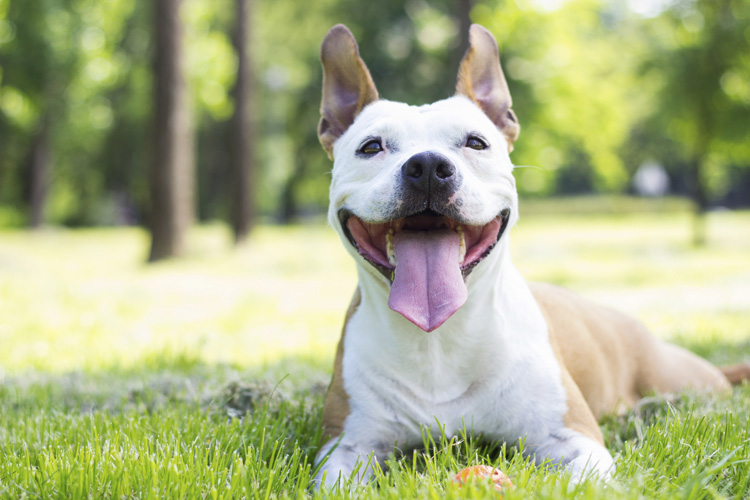
Dogs smile when they’re happy, but their smiles are different from human grins. From a human perspective, when a person displays a large, toothy, upturned, cornered grin stretching from ear to ear, this giant smile is interpreted as friendly and happy behavior. So, when a dog displays the same smiling behavior, it’s understandable why humans interpret this behavior as friendly. However, the majority of dog smiles aren’t happy ones. Here’s the difference.

Dog Smiles are Different

Taking into consideration that humans automatically interpret smiling behavior as friendliness, let’s take it a step further with an analogy. Not all dog smiles are friendly. To interpret whether or not a smiling dog is a happy dog, we must look at his body language first.

Smiling Human Body Language

Let’s assume we’re walking down a busy street and watching people interact. We notice a woman grinning from ear to ear while stiffly standing still. Her eyes are wide and round and her arms are held tightly at her sides while making direct eye contact with her greeter. Immediately, we would interpret this behavior as a bit bizarre and assume she wasn’t excited about meeting her greeter. Even though she’s smiling at her greeter, she looks a bit worried or scared. So much so, that some people would intervene in this situation by asking, “Are you okay?”

Now, if we watch a smiling woman touching her greeter’s arm and moving her neck, arms, hands and body freely, we could easily assume and interpret that she’s happy to see her greeter. With this example in mind, let’s discuss smiling dogs again.

RELATED: Why Your Dog is Shaking or Shivering When Not Cold

Smiling Dog Body Language

It’s so important to look at your dog’s entire body language before trying to understand how she feels in certain situations. Dogs will grin, which is actually called a grimace in the animal world, but this is often not friendly dog behavior.

Dog Grimace

Grimacing happens when a dog retracts the corners of his mouth backwards (toward his ears). This causes its lips to lengthen horizontally, which exposes a fair amount of teeth. Some dog experts call this a submissive grin, but I interpret a dog grimace as discomfort, stress and fear.

If you watch smiling dog videos online, you’ll notice a grimace is pretty much always accompanied by a stiff body (non-moving), pinned back ears (flat against the head), wide open eyes (white of eye showing) and firm legs. While many well-meaning pet owners assume their dog is smiling when given a verbal cue, the dog will grimace when the camera is pushed into her face. If you look within the entire video frame, the dog is usually backed up against a wall or furniture, meaning there’s no way out because a human is standing right in front of her holding a scary, flashing box.

Watch What Happens After the “Smile”

While watching smiling dog videos, watch the dog’s behavior after she smiles. You’ll notice the dog is displaying stressed behavior. She’ll turn away from the camera, yawn, constantly blink her eyes, scratch longer than 10 seconds or remain frozen in place. Thinking back to the stiff, smiling woman, we know this isn’t normal behavior.

What are Happy Dog Smiles?

Dogs smile when they’re happy and excited. They’ll also loosely wag their tails, do the happy dance (pick paws up and down quickly) and have relaxed ears (natural placement) while moving toward their greeter. In my professional opinion, this article’s photo displays a beautiful example of a happy dog smile.

Now, I’ve personally witnessed very happy dogs flash a quick grin, with front teeth showing, when their pet owners arrive home. I was there to witness each dog’s body language, and both dogs were over the moon excited. So much so, that a tooth grin just so happened to appear on one dog’s muzzle. These happy grins were quick, less than a second, and followed by happy dancing, tail wagging and friendly dog body language.

Interpreting your dog’s reaction by focusing only on a smile is like reading a sentence and ignoring certain words—you’ll never understand the whole meaning.

Filed Under: Behavior, Safety Tagged With: are dogs happy when they smile, do dogs grin, do dogs smile, dog smiling videos, the truth about dog smiling videos

Should You Treat Dogs Like Humans?

June 13, 2016 by Fanna Easter

Do’s and Don’ts of Treating Dogs Like Humans

Treating Dogs Like Humans
thisislover/iStock

It depends. There’s a long, fancy word for treating dogs like humans, and it’s called anthropomorphism. Anthropomorphism is defined as the “attribution of human traits, emotions, and intentions to non-human entities and is considered to be an innate tendency of human psychology” (Oxford Dictionary, 1885).

You’re probably wondering how anthropomorphism applies to you and your dog, which is a fair question. As a professional dog trainer, I have mixed emotions about ascribing human feelings to dogs. I think there are good and bad parts of this puzzle, so let’s discuss whether or not you should treat dogs like humans.

DO: Treat Your Dog Like a Human

Some aspects of anthropomorphism are good. In my opinion, I believe pet owners can relate to pets by attributing certain human characteristics to their puppies and dogs. As pet owners, we watch our fuzzy family member closely. We try interpreting her facial expressions, wagging tail and body positioning to understand her needs. Of course, as pet owners, we tap into the only knowledge we have, which come from our own emotions and body language.

As pet owners, when our dog or puppy whimpers, we run to console her because the sound resembles a small child in need. We want to protect, nurture and love her; it’s normal human behavior. I believe anthropomorphism creates empathy, which I feel is a good thing between pet owners and their precious dogs.

When pet owners dress their dogs in darling little dresses, place barrettes in their hair or push their dogs in baby strollers, this is an example of anthropomorphism. Some pet experts feel treating dogs like human children is taking the behavior a bit too far, but honestly, I don’t have an issue with it. When I see a dog wearing a fabulous polka dot dress or sporting a trendy bandana, I see this as the pet owner loving and caring for his dog intensely, and I feel all dogs deserve this type of love and devotion.

RELATED: What to Do When Your Dog Bites

DON’T: Attribute Guilt or Vengefulness to Your Dog

Attributing human feelings and emotions can get a bit tricky in certain circumstances, and pet owners have a difficult time understanding how dogs really think in these situations. Sometimes, a dog’s body language will portray a certain human emotion, but it’s not always what it seems.

Guilt

Guilt is a big one and probably the most challenging part of anthropomorphism toward dogs. This is the truth: dogs don’t feel guilt. I know you could swear on your life your dog was ashamed for chewing your shoe when you showed it to her, but she wasn’t feeling guilt. Instead, she was scared.

When dogs pin their ears back, freeze, walk away, blink quickly, lick their lips, flick their tongues, turn their head sideways and lower their bodies downward, they’re actually reacting to your angry body language. When you’re angry, your dog’s slinking behavior is trying to calm you down. Your dog isn’t guilty; he’s scared. You don’t even have to say a single word to your dog. Just standing still, staring and breathing deeply in front of your dog will cue her that you’re angry. Still don’t believe me? There’s plenty of research proving that dogs don’t feel guilt; and, as a human, I wish I didn’t feel guilt either. 🙂

Dogs don’t feel guilt. They just don’t think that way.

Revenge

Dogs don’t seek revenge. They don’t pee on your bed because you left them alone all day. Your dog didn’t chew, urinate and poop on your favorite shoe because you yelled at her earlier. Dogs aren’t spiteful.

When I explain how this anthropomorphism concept isn’t true during group dog training class, some pet owners will look at each other with confused expressions and then ask, “So why did my dog do that?” Dogs chew on shoes because you left them out, dogs potty on bedding or furniture because they’re scared from being alone all day or hearing thunderstorms, and dogs poop because they’re practicing marking behavior.

I know, you’re probably saying, “But my dog hasn’t chewed my shoes in over a year.” If the right opportunity presents itself, your dog will chew your shoe no matter how long it’s been since the last incident. Personally, I think this is where dog behavior supersedes human behavior, as we all know revenge and spite will eat you alive.

It’s not revenge your dog is after; it’s opportunity. 🙂

What This Means for You and Your Dog

Continue singing your dog little songs, use baby talk to convince her meal times are a good thing, dress her up in a darling dress, love her, nurture her, protect her and cater to all of her needs, but don’t assume she’s guilty or vengeful. Keep anthropomorphism in check, please. 🙂

YOU MAY ALSO LIKE: Do Dogs Like to Be Hugged?

Filed Under: Behavior, Clients, Training Tagged With: anthropomorphism dogs, do dogs seek revenge, does my dog feel guilt, dog revenge, dog training, Dog Training Tips, dogs spite, how to teach a dog, how to train a dog, is it bad to treat dogs like children, is it bad to treat dogs like kids, is my dog guilty, is my dog spiteful, teach a dog, train a dog, treating dogs like children, treating dogs like kids, why did my dog chew my shoe, why did my dog pee on my bed, why is my dog guilty

Rotating Your Dog’s Food: Tips and Tricks

June 10, 2016 by Fanna Easter

Rotate Dog Food Like a Pro

Rotating Dog Food
pedphoto36pm/iStock

You’ve probably heard the benefits of rotating dog food and the benefits make total sense. Now, I’ve attempted to find hard facts and research on this subject, but there’s simply no research—at least that I could find—on the benefits of rotating different types of food in your dog’s diet. However, a rotation diet for dogs makes sense if you think about it. I know many holistic veterinarians, including mine, who highly recommend it.

Why Rotate Dog Food?

We all know the secret to a healthy life is eating nutrient-dense food that provides adequate amounts of vitamins and minerals. The best way to absorb different vitamins and minerals is by eating a diet with a variety of proteins, fruits, grains, vegetables and fats—we learned this in elementary school. With that idea in mind, it makes perfect sense to rotate food in the dog world too.

When pet owners rotate different proteins, carbs and fats in and out of their dog’s bowl every few months, their dog benefits by consuming and absorbing needed nutrients from a variety of dog food ingredients since each ingredient offers a different nutritional profile. Chicken contains higher levels of tryptophan than fish while organ meat has higher amounts of vitamins than flesh. By rotating your dog’s diet every couple of months, you’re ensuring your dog adsorbs different nutrients, which keeps food allergies at bay.

RELATED: Can Dogs Eat Mushrooms?

Which Dog Foods Should You Rotate?

Most veterinary nutritionists and holistic vets recommend rotating different proteins every couple of months for best results. You can switch proteins between one brand or, better yet, switch proteins within different brands of dog food. When you switch to a different brand, you’re exposing your dog to different carbs and fats that are sourced differently than if you had switched within a single brand of dog food.

To explain further, most dog foods source carbs and fats from the same place and add different flavors from their line of dog food as needed. By rotating a different brand of kibble, your dog is exposed to carbs and proteins sourced from a different area.

RELATED: Raw Dog Food: Not All Dogs Can Eat It

How to Switch Your Dog’s Food

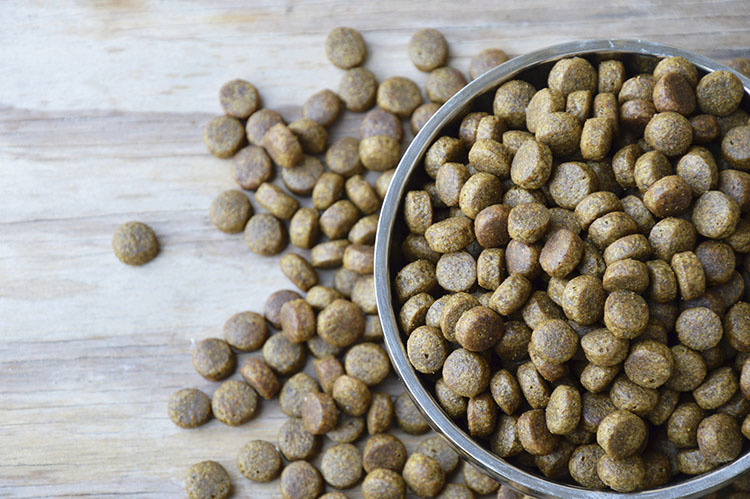
Every 2 to 3 months, choose a high-quality kibble and slowly introduce it into your dog’s diet over a period of 7 days. Slowly add the new kibble into your dog’s diet with your goal as serving 50% new food and 50% old food by day 5. Continue to gradually increase your dog’s new food while decreasing the amount of old food until your dog is eating 100% of his new food.

Now, some dogs may need more time to adjust to a new food, so move slowly and don’t worry if it takes 10-15 days to switch over. Switching foods slowly prevents your dog from getting an upset tummy, so take your time. Also, adding probiotics to your dog’s diet will help the process a bit too.

Rotating Dog Food Might Not Work for All Dogs

Oh, did I learn this lesson the hard way! Always listen to your dog. Sometimes, it’s impossible to switch your dog’s food without causing weight loss or an upset tummy. If your dog can only eat a specific food due to allergies or an easily upset tummy (i.e. IBD, IBS), then there’s nothing wrong with feeding your dog the same diet every day. In this case, a rotation diet is not worth causing flare-ups.

Filed Under: Health Tagged With: changing dog's food, dog diet rotation, how to change dog's food, how to rotate your dog's food, how to switch dog food, rotating your dog's food, switching dog's food

What Is Your Dog Saying? Interpreting Dog Sounds

June 8, 2016 by Fanna Easter

Understanding Dog Sounds

Understanding Dog Sounds
bpretorius/iStock

Dogs can make many different sounds besides just barking or growling sounds. Certain dog breeds will grunt, yelp, yep, yodel, rumble and howl, and some of these dog sounds are downright hilarious. What’s even more interesting is pet owners can identify their dog’s vocalizations even when intermingled with other dogs barking in the same area. Once, while showing our Rottweiler at a dog show with more than 200 other Rotties, I could hear his whine, signaling he needed to potty. Plus, we can all identify with picking up our dogs at the vet clinic (or grooming salons or kennel) and distinguishing our dog’s sounds from the other dogs in the facility.

Just remember: it’s important to interpret your dog’s body language while he is making dog sounds to make sure you understand exactly what your dog is saying.

Rapidly Repeating, High-Pitched Sound

Sounds like: “YELP, YELP, YELP, YELP!”

What your dog is saying: “I’m Scared,” “Don’t Hurt Me,” “Stop Hurting Me”

For the most part, pet owners are pretty good at interpreting loud, rapidly repeating and high-pitched yelps that signal a dog is in distress. Some dogs may growl while others yelp continuously, but in both cases they’re begging someone or something to stop hurting them. Once you’ve heard this dog sound, especially when a dog is in pain, it will haunt you.

Long Strings of Loud, Forceful Barking

Sounds like: “Booo, wooo, wooo, wooo!” Pause (dog looks around). “Wooof, woof, woof.”

What your dog is saying: “Mom! Someone is at the Door!”

Dogs alert their owners when someone is at the door with rapid and long strings of loud and forceful barking. When dogs get really excited seeing someone approach the driveway, their first bark will be loud, long and exaggerated with their front feet stomping. It almost sounds like “BOOOOOroooooo, bark, bark, bark.” Some dogs will pause and look for their pet owners and then continue barking while others will continue barking for several minutes; it depends on the dog and past experiences.

Growling

Sounds like: “Grrr, grrr.” Pause. “Grrr.”

What your dog is saying: “I’m Warning You, Stop Now!”

Growling means your dog is begging you or someone (or something) else to stop whatever is happening in that moment. Never ever punish a dog for growling. That would basically turn the safety off of a gun.

When your dog growls, stop, listen, interpret and react to your dog’s growling by stopping whatever is happening. It’s important to understand you’re not rewarding a dog for growling when you stop a situation from happening; you’re preventing aggression from escalating. If your dog is growling at an object, never force him toward the object because that will only make it worse. Check out these tips on growling.

Rumble Sounds

Sounds like: Boat motor

What your dog is saying: “I’m Friendly” or “I’m Warning You”

Some dogs will rumble, which resembles a growl. When a dog rumbles, it sounds more like a boat motor (even pitch sounds, almost monotone) than a deep throaty, fluctuating warning growl. Some dog experts claim dog rumbling is equivalent to a cat purring and I agree, depending on certain situations.

As a dog trainer for 24 years, I’ve witnessed friendly rumbling about five times. Every other time, the dog was politely asking his pet owners to stop kissing his face and hence a warning growl. When it comes to dog sounds, distinguishing between a friendly rumble and a warning growl is very tricky; it’s vital to closely watch a dog’s body language while the sound is being made. If you’re not sure whether your dog is growling or friendly rumbling, ask a professional dog trainer to watch interactions that produce this dog sound.

Short Sounds With Pauses and Wagging

Sounds like: “Woo, woo, woo.” Pause with lots of dancing and wagging. “Woo, woo, woo.”

What your dog is saying: “I’m Happy You’re Home!”

Most happy dog barks and sounds are short with lots of pauses in between vocalizations and accompanied by lots of wagging, dancing and forward movement. Happy dog sounds can vary; it all depends on your dog’s size, breed and personality. Our Miniature Bull Terrier will yodel when we arrive home, which is a short sound with lots of paw dancing (i.e. dog moves all four feet up and down while standing in place).

Sharp Whistle Sounds

Sounds like: “Meee, meee, meeep”

What your dog is saying: “I’m Worried” or “I’m Hurting”

When dogs whine, it sounds like sharp whistle sounds. Whining is one of the trickier dog sounds because it can mean a variety of things. Dogs will whine when they’re uncomfortable or in pain, such as an upset stomach or painful arthritis. Another reason dogs will whine is fear or distress from events, such as loud thunderstorms, banging firework displays or loneliness. Never dismiss whining because there’s always a cause. If you’re not sure, record your dog whining and play it for your veterinarian and professional dog trainer for their expert opinions.

Howling

Sounds like: “WOOOooooo”

What your dog is saying: “Mom’s Home,” “Company is at the Door,” or “I’m Bored”

Howling sounds like one extremely long note held for a period of time. Many pet owners often misinterpret howling and, honestly, it’s tripped me up a few times too. Some dog breeds, such as hounds (Beagles, Bloodhounds, Foxhounds), were bred to yodel loudly, which signals to the hunter that game has been cornered. With hounds, yodeling can mean, “Mom’s home,” “company is at the door” or “I’m bored.” Sometimes, howling can mean a dog’s in pain, bored and lonely. Again, you need to watch your dog’s body language when he’s howling to correctly interpret the meaning.

Filed Under: Behavior Tagged With: understanding your dog's vocal sounds, what does a dog bark mean, why does my dog growl, why does my dog howl, why does my dog whine

Bubbles For Dogs: A Great Summer Game

June 7, 2016 by Fanna Easter

Dog Bubbles to Save Your Summer

Dog Bubbles
Gianluca D’Auri Muscelli/iStock

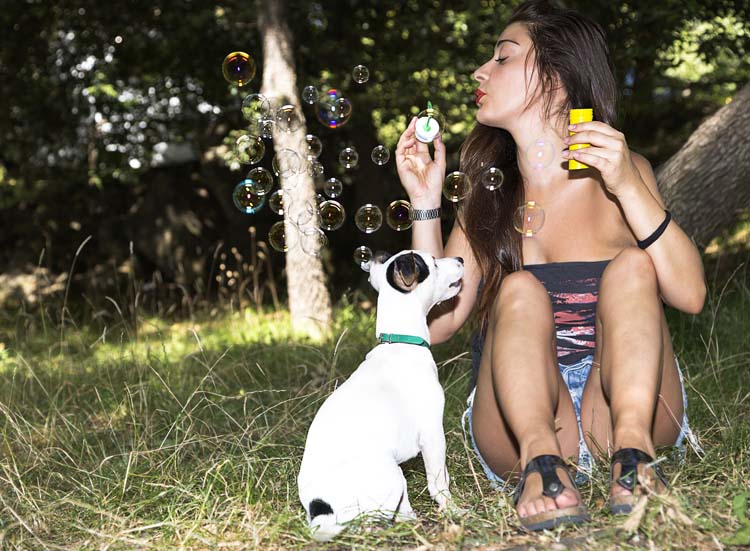
Who doesn’t love bubbles? I mean they’re fun to watch form through the bubble wand, peaceful to watch float through the air and so enjoyable to pop. Oh, and dogs love to play with bubbles too. If you and your dog have never played with flavored dog bubbles before, you’re missing out!

Choosing Bubbles for Dogs

When choosing dog bubbles, select bubble formulas specially made for pets. Most commonly found bubbles are made for children and they contain toxic ingredients that can be harmful to your dog, especially since dogs pop bubbles with their mouths. Most dog bubbles are scented with bacon or peanut butter, which entices most dogs to chase, play, bounce and pop all visible bubbles. And yes, dog bubbles are highly scented, so expect to smell like bacon afterwards. 🙂

IncrediBubbles by Pet Qwerks

By far, IncrediBubbles are our favorite non-toxic bubbles for dogs! These flavored bubbles will stay intact longer than other bubble brands, so bubbles will land on the ground (stick on the side of furniture or even land on your dog) and not pop. They work perfectly for dogs that love to pounce on and pop bubbles instead of chasing them. One drawback about this brand of bubbles is that the solution is thicker than most other brands, so it can get a tad messy. However, it’s an easy cleanup with a wet rag. You’ll probably need to wipe or brush your dog’s face afterwards too. The mess is worth the fun though!

Bubble Machines for Dogs

If your dog is addicted to bubbles, then a bubble machine for dogs just might keep up with your bubble-obsessed dog’s demand. There are several bubble machines to choose from; some can be placed on the ground and others are handheld. One thing all bubble machines have in common is that they’ll produce a lot of bubbles quickly, so expect to refill the reservoir often. Now, if your bubble-loving pooch hovers over the bubble machine placed on the ground—hey, it happens—place the bubble machine on a sturdy stool or counter, so bubbles can float away from the machine to keep the game going. If your dog still hovers, then a handheld bubble machine is probably best.

DIY Homemade Dog Bubbles

There are many non-toxic homemade dog bubble recipes floating around online, but I haven’t had the best luck with them. When blowing homemade bubbles, I’d notice the majority of bubbles would burst as I blew through the wand or shortly afterwards. Now, I’m not a pro in the kitchen, so it could very well be an “operator issue.” Making homemade flavored bubbles for dogs can be a fun project for children; just make sure the recipe states it’s non-toxic for dogs.

Playing Bubble Games

Grab your chosen pet-friendly bubbles and your dog, and start playing bubble games on a non-skid surface. If this is your dog’s first time playing the bubble game, bend down and slowly blow a few bubbles away from your dog, so the bubbles are at your dog’s chest level. For very small dogs, have a seat on the ground and blow a few bubbles at first. Refrain from showering your dog with bubbles. This can creep out most dogs, so move slowly in the beginning.

The first time your dog sees bubbles, a couple of things can happen. Either your dog will be a bit confused and walk away or your dog will immediately pounce on them. If your dog hesitates, encourage him to play with the bubbles. Holding a bubble in your hand for your dog to investigate could help too. Just remember, it’s a game and not all dogs are excited about bubbles bursting in their faces. If your dog dislikes the game, no worries, let him scamper inside or into another room while you blow bubbles for your own enjoyment.

Bubble games are a wonderful way for children to play with dogs. There’s no physical contact, and dogs learn children make good things happen. If your dog stands too close to a child (or you) blowing bubbles, then only blow bubbles when your dog moves back from you. Trust me, your dog will quickly learn that standing a certain distance from you makes bubbles happen.

This is a great indoor or outdoor game for dogs, and very entertaining for both pet owner and dog!

READ NEXT: How to Stop Your Dog From Eating Cat Food

Filed Under: Games, Resources Tagged With: bacon flavored dog bubbles, best dog friendly bubbles, bubbles dogs, bubbles machines for dogs, handheld bubble machines dog, how to teach a dog to play with bubbles, incredibubbles for dogs review, indoor game for dogs, my dog loves bubbles, non-toxic bubbles for dogs, outdoor games for dogs, peanut butter dog bubbles, playing with bubbles dogs

  • « Previous Page
  • 1
  • …
  • 48
  • 49
  • 50
  • 51
  • 52
  • …
  • 135
  • Next Page »

About

Dog Training Nation is a community of dog trainers, dog owners and dog lovers. Our mission is to provide trainers and owners valuable information to enrich dogs' lives. We cover a range of topics, from socializing puppies to dealing with aggressive dog behavior to selecting the best dog products. It is our hope you share our content to make the dog and owner world a better place.

​

Facebook

Video

Dog Training Nation is a dog training blog for pet owners and dog lovers. We cover a range of topics from puppy socialization tips to dog aggression to dog health. It is our hope you share our content to make the world a better place for dogs.

Dog Training Nation

Quick Links

Dog Training
Dog Behavior
Dog Training Videos
Become a Dog Trainer
About
Contact Us

Copyright © 2026 · Lifestyle Pro Theme on Genesis Framework · WordPress · Log in