Dog Training Nation

In Dogs We Trust

  • Home
  • Training
    • Dogs
    • Puppies
    • Clients
  • Behavior
    • Breeds
  • Health
  • Safety
  • Resources
    • Equipment
    • Books
  • Dog Training Videos
  • About
You are here: Home / Blog

Ask The Dog Trainer: Why Is My Dog Stubborn?

May 23, 2016 by Fanna Easter

Dealing With a Stubborn Dog

Stubborn Dog
David Baileys/iStock

It’s highly unlikely your dog is stubborn—he’s probably confused—but not stubborn. With that said, when a dog chooses to chase a squirrel instead of coming when called on cue, that’s not stubbornness; that’s lack of training around such distractions. And know that it happens to the best of us. Dogs are not robots nor should they be expected to be, but stubborn they are not. When a student starts using the word “stubborn,” I know her training message is not clearly reaching her dog.

Getting stuck during the learning process is a valuable part of learning, believe it or not. As the teacher, it’s your job to figure out what will work, so your dog understands not to jump on people, chew your hands or jump up on furniture. You probably just need a few tweaks to make sure your message is crystal clear to your dog.

The Word “No” Means Nothing

If your dog is jumping up or chewing on your hands, figure out what your dog could do differently, so they’re unable to do those annoying things. So many pet owners say “no” loudly or over and over again, which basically means nothing to their dogs.

Since I love a good analogy, let’s look at this from a human perspective. If you walk into a room and someone says “no, no, no,” you would become completely confused. What does “no” mean? Stop? Don’t walk, don’t stand, don’t look, don’t breathe, what? The word “no” is meaningless communication and can cause confusion quickly, so throw that word in the trash can. 🙂

How to Train a Stubborn Dog

Ask For Something Different

Now that we understand “no” means nothing, it’s time to reward your dog for doing something else. If your dog barks, reward him for being quiet. Here are a few other examples:

  • Reward your dog for keeping all four feet on the floor instead of jumping up. It’s impossible to jump up and keep your feet on the floor.
  • The moment you feel your dog’s (or puppy’s) teeth on your skin, leave the area or redirect him to another toy. By getting up and leaving whenever your dog’s teeth touch your skin, your dog learns to keep his teeth to himself.
  • Teach and heavily reward your dog for lying on anywhere else but furniture. Crate him when you leave, so he doesn’t learn to relax on your expensive sofa while you’re away. It won’t be forever; just until your dog learns what is expected.

Take a moment and think about what you want your dog to do instead of an annoying behavior. Usually the opposite behavior is key, such as standing still at the doorway instead of dashing out. If you can’t decide on an opposite behavior, you can always teach stationary behaviors, such as “sit,” “down” or “place.” Usually, dog movement is an underlying part of an undesirable behavior for people (e.g. pulling, running away, jumping up, dashing out doors, knocking people over, etc.).

Remember, teaching your dog an alternative behavior is much more effective than punishing him.

Make Sure Everyone is on the Same Page

To keep confusion to a minimum, make sure each family member understands how to manage a puppy chewing on his hands or what to do when a dog jumps up. Let’s use another analogy to further explain this concept. If you’re learning a new language, let’s say German, and each family member pronounces things completely different, it would be very challenging to learn German.

With that said, once you have figured out when to reward your dog, hold a family meeting to discuss and practice your dog training solution, so everyone is on the same page. I ask clients to keep homework directions in a highly visible place like the refrigerator, so each family member gets a quick refresher every time she grabs a beverage or food.

Practice, Practice, Practice

Now that you have developed a crystal clear solution for your dog’s unwanted behavior, practice it several times a week with really good rewards in a low distraction environment. Once your dog understands to stand instead of jump, keep teeth off human skin, be quiet instead of bark, or lie on his bed instead of the sofa, it’s time to practice with family members around for distractions. Expect a few hiccups until everyone gets into a rhythm and keep dog training sessions short (1-2 minutes long).

It’s impossible to be fluent in German without practicing it over and over—the same goes for dog training. 🙂

Dogs Forget Just Like We Do

Let’s take a step back to the foreign language analogy again. If you don’t practice speaking German several times a month, you’ll likely forget how to pronounce even the easiest words. Well, this applies to training your dog too. If your dog forgets, take a few steps back and practice your crystal clear solutions again. Going forward, vow to practice every week, so your dog doesn’t forget. We all forget; it’s not stubbornness. It’s either confusion or lack of training. 🙂

Filed Under: Behavior, Dogs, Puppies, Training Tagged With: dog behavior, dog training, Dog Training Tips, how to make a dog listen, how to make a puppy listen, how to teach a dog, how to train a dog, how to train a stubborn dog, how to train a stubborn puppy, my dog doesn't listen, my dog ignores me, my puppy doesn't listen, puppy training, stubborn dog, stubborn dog breeds, stubborn dog training tips, teach a dog, train a dog, training stubborn dog breeds, why does my dog not listen, why is my dog so stubborn, why is my dog stubborn

5 Grooming Tips For Short-Haired Dogs

May 20, 2016 by Fanna Easter

Grooming Short-Haired Dogs

Grooming Short-Haired Dogs

Short-haired dogs need grooming too! While it’s easy to assume short-haired dogs only require wash-and-go baths, they actually need a bit more. Short-haired dogs do shed. While their shedding coat doesn’t fall out in clumps during spring, it does slowly shed year-round.

Check out these 5 dog grooming tips that will keep your short-haired dog looking stunning regardless of the season. And be prepared for fellow short-haired dog owners to stop and ask, “How do you keep your dog’s coat so shiny?”

How Short is Short?

Just to make sure we’re on the same page, I classify short-haired dogs by their coat length. Short-haired dogs should have a coat length of 1 inch or shorter, and their hair should be very straight.

Examples of short-haired dog breeds are:

  • Rottweilers
  • Labrador Retrievers
  • American Pit Bull Terriers
  • Bull Terriers (Standard & Miniature)
  • Chihuahuas
  • Boston Terriers
  • Greyhounds

1. Invest in a Good Brush

Yup, short-haired dogs need to be brushed. Short-haired dogs need regular brushing with a really good brush made specifically for short hair. You’ll need a stiff bristle brush with bristles that are tightly pushed together to remove the maximum amount of dead hair. You can pick one up at your local pet supply store or, if you want to splurge on a super nice brush, I suggest Chris Christenson’s Original Ionic Brass Boar Brush (he has a nylon version too if the boar thing creeps you out). Use this brush for daily brushing on dry hair.

For baths, I highly recommend the Zoom Groom by Kong. For some reason, dogs tend to shed a bit more during a bath, so use this to your advantage. After applying shampoo to your dog’s coat, slowly brush in the direction of your dog’s coat.

2. Use a Gentle Dog Shampoo and Conditioner

Ideally, short-haired dogs should be bathed once a week. I know many old school dog owners still follow the timeless motto of “bathe your dog only when he needs it” rule, but I think times have changed. Dogs are sleeping in our beds now, going for walks and traveling with us; you’ve also got to remember they don’t wear shoes. Plus, bathing your dog weekly removes dead hair and dander and moisturizes your dog’s skin and coat.

Before bathing your dog, brush your dog thoroughly with a bristle brush first. This pre-bath step will help loosen and remove dead hair plus loosen dry skin flakes and dander, so shampoo can penetrate and moisturize your dog’s skin during the bathing process.

Choose a gentle and natural shampoo that rinses easily and leaves no residual stickiness behind. Check out this article on my favorite gentle dog shampoo and tips on washing your dog effortlessly.

Conditioner for Dogs

There’s a lot of debate on using conditioners on short-haired dogs’ coats. Personally, I think it depends on your dog’s coat needs. Also, conditioners have come a long way; they are no longer heavy oil-based concoctions that leave a greasy feeling after rinsing. Newer conditioners contain silk proteins, aloe and shea butter that moisturize your dog’s skin while leaving his coat feeling like soft, expensive suede.

For short-haired dogs, you’ll need light or leave-in conditioners that also protect your dog’s coat from the sun. My favorite is Chris Christenson’s Silk Spirits. It smells heavenly, can be used as a leave-in conditioner or rinsed out, and can be purchased on Amazon.

3. Keep Dog Nails Trimmed Short

While your dog is standing, take a look at his paws from the side. Nails should be touching the ground, which means you don’t hear tick-tick when he walks on hard surfaces. Long dog nails are painful, and will cause arthritis, so trim your dog’s nails weekly. Check out this article on trimming overgrown dog nails if your dog’s nails are way too long.

4. Keep Brushing Those Pearly Whites

I’m totally obsessed with canine dental hygiene; it’s something that can be easily prevented with daily brushings. Diseased teeth and gums not only smell bad and look horrible, but it can also cause heart and kidney disease too. If your dog’s breath smells, you’ll probably need to schedule a veterinary dental appointment. After your dog’s dental, keep his teeth clean with regular brushings.

RELATED: Best Dog Toothbrush for Every Dog Size

5. Spot-Check Pads, Ears and “Down There”

During your dog’s bath, take a look at your dog’s paw pads, ears and genital area too.

Paw Pads

Look for dryness, cracks or cuts on your dog’s paw pads and moisturize as needed. If your dog’s paws are dry and cracked, I would moisturize them with paw cream daily. For cuts, keep the area clean. If your dog is licking at the area or you notice his paw cut is getting worse, it’s time to schedule a vet visit.

Ears

Now, take a peek and sniff in your dog’s ears. You should see healthy light pink skin and your dog’s ears should be odor-free. If you see debris and it smells yeasty or foul in your dog’s ears, it’s time for a veterinary checkup.

“Down There”

Now, it’s time to look at your dog’s genital and anal area. 🙂 Female dogs, especially those spayed before one year of age, can develop brown residue around their vulvas. Don’t freak out. This residue can be easily and gently cleaned during their bath. For males, check the penis opening for healthy looking skin. If crust or redness is present, I suggest a vet checkup. Checking and cleaning your dog’s anal area is pretty important too. Dry fecal matter builds up in the area, which can irritate your dog’s skin. If you notice any discharge, swelling or lumps around your dog’s anus, I highly recommend scheduling a veterinary exam promptly. It could be anal gland issues or worse.

Now, you can certainly glam it up with spray glosses made for dogs, but that’s a whole other topic. Short-haired dogs can wear it all! 🙂

Filed Under: Grooming, Health Tagged With: bathing shorthaired dogs, best brush for a chihuahua, best brush for a pit bull, best brush for a rottweiler, best brush for shorthaired dogs, best shampoo for shorthaired dogs, brushing shorthaired dogs, grooming a chihuahua, grooming a pit bull, grooming a rottweiler, grooming shorthaired dogs, how often bath rottwieler, how often to bathe a pit bull

How to Protect Dog Paws From Heat

May 18, 2016 by Fanna Easter

Summer Dog Paw Protection

Dog Paw Protection From Heat
rubisco67/iStock

It’s getting warmer, which means summer is pretty much around the corner. As the temperature rises, so does surface temperatures. With that said, humans are oblivious to hot surfaces because we wear shoes; we don’t know how hot surfaces can become. Now, let’s transfer this to dogs. They don’t wear shoes and their paw pads are not invincible calluses. Your dog’s paws are super sensitive like the heels of our feet and can easily burn from exposure to warm or hot surfaces. Some dog paw burns are so severe that layers of paw pads disappear, causing tissue to be exposed. This happens way more frequently than most pet owners would ever think.

So it’s important you protect your dog’s paws from burns caused by hot surface areas, such as sidewalks, roadways, gravel, artificial grass (this stuff gets really hot!) and other surfaces that heat up quickly.

How to Protect Dog Paws From Heat

Feel Surfaces For Heat

Don’t assume surfaces are cool. Ignore the temperature outside because sidewalks can heat up quickly even on sunny 75-degree days. You need to feel surfaces for a true test.

Before walking your dog, take a moment and feel the temperature of different surfaces by standing on them barefoot. If you’re unable to stand or walk for a short period of time on any heated surface, then it’s too hot for your dog’s paws too.

RELATED: My Dog Refuses to Go Outside When It Rains

Purchase Dog Booties

There are several ways to protect your dog’s paw pads from the heat, but the easiest way is walking your dog early in the morning. Allowing cement, gravel, asphalt or any easily heated surface to cool down overnight is best, but make sure walks are completed before or as the sun is rising. An added bonus of walking your dog early in the morning is being able to watch the beautiful sunrise with your best buddy!

If walking in the early morning doesn’t work for you, and you prefer to walk your dog late in the afternoon, remember that outdoor surfaces are still scorching hot. You’ll need to purchase protective dog booties for your dog’s feet. My favorite brands are Muttlinks and Ruffwear booties. They’re easy to put on and stay on and they’ll protect your dog’s feet. However, never assume your dog’s new booties are invincible. Always check your dog’s feet several times (every couple of minutes) while he’s wearing his new booties. You want to make sure they’re working. Once you’ve test-driven your dog’s new booties several times, and you know your dog’s feet are protected, then have fun!

What Doesn’t Work

While I try to focus on what works (being positive), sometimes I need to discuss ways that don’t keep your dog’s paws protected from the heat. Paw wax, thin socks or booties, or dog booties with thin soles won’t last on hot surfaces. We all know walking on hot concrete wearing socks, thin lotion or thin-soled shoes is painful. Splurge on the good dog booties that truly work. 🙂

In Hot Climates, Set Up a Potty Area

Dogs don’t necessarily understand that hot surfaces will burn their feet. This sounds a bit naive, but do you remember walking on warm sand at the beach? It didn’t feel hot at first, but after walking for a couple of minutes, it got really hot!

Keeping this in mind, if you live in a really hot climate, fence off a shaded area for potty breaks during the day. We live in the desert. It’s literally 104 degrees today and it’s only early May, so we’ve sectioned off a shaded portion of our yard to protect our dogs’ feet. Never assume certain surfaces are cool. I was shocked at how warm our little patch of grass could get during the day.

Ignore the air temperature. Take a moment to feel surfaces with your bare feet before walking your dog on it. 🙂

YOU MAY ALSO LIKE: Stop Using Retractable Dog Leashes in Public Places

Filed Under: Equipment, Resources, Safety Tagged With: dog booties for hot surfaces, dog boots hot surface, dog paws summer, dogs feet summer, protect dogs feet hot, summer paw protection

1 Simple Way to Keep Your Dog Safe in the Backyard

May 16, 2016 by Fanna Easter

How to Keep Your Dog Safe in the Backyard

How to Keep Dog Safe in Backyard
michaelpuche/iStock

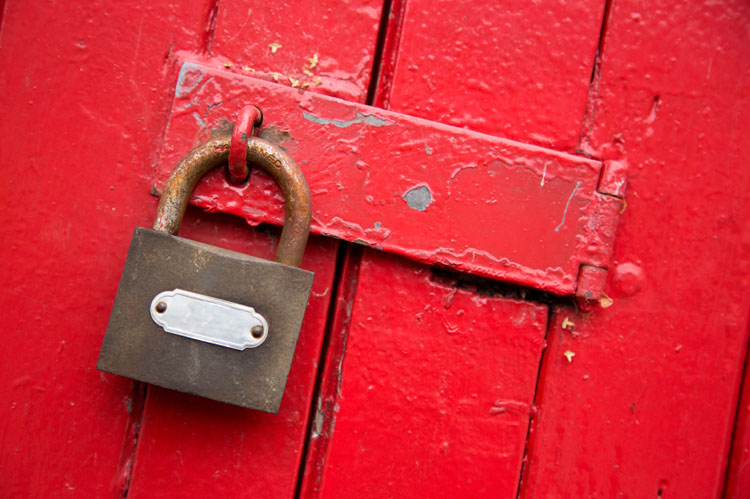
While it seems like a no-brainer, not many pet owners know a simple way to keep their dogs safe from intruders in the backyard. This simple little device will prevent most dogs from escaping the backyard. Drum roll please: place a simple lock on each fence gate.

I Learned The Hard Way

Many years ago, I was sitting in the backyard with both of my dogs when I noticed someone slowly walking up to our front fence gate. Apparently, this person didn’t see me sitting in the backyard brushing one of my dogs, which was a good thing. Once I noticed the stranger approaching, things happened really quickly.

My other dog bounced over to the fence gate to greet this strange man and, before I could say a peep, this stranger tried to open the gate. Well, the latch was a bit rusty and wouldn’t budge, so he started kicking the gate to open it! By this time, I shook off the initial shock and started screaming and running toward the gate. This well-dressed middle-aged man, wearing a crisp white dress shirt and dark jeans, ran toward the front of our home. As I rounded the corner, I noticed he was jumping into a white pickup truck with several different sized dog crates in the truck bed. My heart dropped.

As the man sped away, I gathered both dogs indoors and then called the police. My brain was racing and just shocked at what had happened. Once the policeman arrived, I explained the event in detail. And no, I didn’t memorize his license plate. I wished with everything I had I remembered.

The policeman delicately explained that several dogs within a 10-mile radius of our home had gone missing from their backyards over the last couple of weeks. Clutching my throat, I asked why someone would do such a thing. The policeman said thieves are stealing and selling dogs to animal laboratories in the next county. I’ll never forget the next words that cautiously fell from his mouth: “Buy a lock and keep all gates locked at all times.” I still live by these words every day.

RELATED: How to Find a Good Dog Breeder

How to Purchase the Right Fence Gate Lock

Your lock doesn’t need to be fancy, but it definitely needs to be sturdy. I prefer a huge combination lock, which I lock from the inside of our backyard. By keeping the lock inside and facing toward your home, you’ll prevent thieves from trying to remove the lock. When pest control or lawn care companies need access to your backyard, place the lock on the front of the gate, so they can easily unlock to enter and lock upon leaving. When you get home, move the lock inside the gate.

Key locks are nice, but many pet owners mistakenly keep the key either in the lock or next to it. Yes, you can install a camera right over the fence gate too, but a camera will not immediately stop an intruder from stealing your dog. Purchase a good lock for each fence gate; write the combination down and keep it indoors. A lock will also prevent wind from blowing fence gates open and is a way to make sure gates are closed at all times. No one remembers to close the gate.

Another Thing That Saved My Dogs

I was outdoors with them. If I were not there to intervene immediately, this creep would’ve opened the gate and stole my dogs. As of this day, regardless of the temperature outside, snow or rain, my husband or I am always outdoors with our dogs. While I was extremely lucky my dogs were safe, I learned a valuable lesson the hard way. I wish someone had shared this tip with me 17 years ago.

Now, go buy a lock and install it today and keep it locked at all times! 🙂

Filed Under: Equipment, Safety Tagged With: backyard gate lock, cheap backyard security idea, dog backyard secure, inexpensive security idea backyard, keep dog safe backyard, keeping dog in your yard, lock backyard gate, prevent dog from escaping backyard

How to Cure Dog Car Sickness

May 13, 2016 by Fanna Easter

Dog Car Sickness Remedies

Dog Car Sickness
lilu13/iStock

Oi, motion sickness is the worst. For me, it starts with a bit of queasiness and usually ends with gut-wrenching nausea that causes vomiting. I feel for motion sick dogs; my heart hurts for them. When dogs experience motion sickness, you’ll notice drooling that likely ends with vomiting–that’s no fun for anyone. Thankfully, dog car sickness usually gets better after a few car rides. However, for dogs that still get sick while riding in a car, here are a few car sickness remedies that work.

How to Prevent Dog Car Sickness

For the most part, car sickness in dogs is not preventable, but it does lessen with age. During a puppy’s or dog’s first car ride, you’ll likely notice stillness, drooling and then vomiting. After a few more car rides, motion sickness seems to disappear as your dog becomes accustomed to riding in cars.

When bringing a puppy or dog that hasn’t ridden in a car before, I would certainly assume he will become car sick. Install a crate in your car with easily washable towels as bedding, and keep your car nice and cool to prevent nausea. If your puppy or dog becomes car sick, start with short car rides around the block and slowly increase car ride distances.

RELATED: Car Seat Covers for Dogs

Treatments for Car Motion Sickness in Dogs

Some older dogs just never get over motion sickness or only become car sick during long trips, so I recommend a few treatments that really work.

Bonine

By far, Bonine has worked the best for my dogs and client dogs. Many years ago, my older Bouvier had a bout of vestibular disease, which affects a dog’s balancing system, and the emergency veterinarian recommended Bonine.

You can find these tablets at your local pharmacy or grocery store. They’re easy to slide in peanut butter, so your dog will gobble them up. I recommend giving Bonine about 30 minutes before car rides for best results. Bonine is considered non-drowsy, but it does have a bit of a sedation effect. Now, the sedation is minimal and it doesn’t have a hangover effect like Dramamine.

Dosage

For dogs and puppies over 25 pounds, give one tablet (25 mgs). For dogs and puppies lighter than 25 pounds, give ½ tablet. For dogs or puppies lighter than 10 pounds, I would recommend giving a very small dose of ¼ of a tablet. If you have any questions, contact your veterinarian for specific dosage directions for your dog.

Dramamine

For years, Dramamine has been the go-to treatment to prevent dog car sickness. However, I’ve never liked the effects during and after giving it to my dogs (or taking it myself). My dogs would literally knock out. It was challenging to get them on their feet during potty breaks or to eat meals. Plus, I found it had a lasting effect; some dogs were drowsy the following day. As with other motion sickness treatments, give Dramamine to your dog about 30-45 minutes before traveling. With that said, it does work and will prevent motion sickness. Just expect a very sleepy dog or puppy.

Dosage

Give 5 mgs for every 10 pounds of body weight. If you have any questions, contact your veterinarian for specific dosage directions for your dog.

RELATED: Turmeric for Dogs

Ginger

This powerful plant helps calm queasy stomachs and can be found in just about everything–from dog biscuits to pills. Personally, I haven’t had good luck with it. After an hour or two of giving a ginger supplement to my dogs for motion sickness, I usually end up giving them Bonine, which remedies car sickness within 30 minutes. Now, that’s just my opinion, but I would give it a try.

Stay away from any ginger products made for humans; they contain high levels of ginger, which can make your dog sick. I’ve heard several clients having great results with Travel-Eze, which can be purchased online.

Dosage

Follow manufacturer’s recommendations and only choose ginger products made for dogs. If you have any questions, contact your veterinarian.

Give a Small Meal Before Car Rides

I know, I know, many people recommend not feeding your dog before car rides, but I have to disagree. While not feeding your dog keeps cleanup easy, I’ve observed empty tummies become nauseous quickly during car rides. Now, I’m not saying to feed your dog a huge meal, but give him a light snack about 20 minutes before travel. Or better yet, give your dog a frozen food stuffed toy once he’s secured inside the car. As your dog licks at the food inside, the food inside will melt and provide tidbits every few minutes. Plus, we all know staying cool helps keep motion sickness at bay.

Good luck!

YOU MAY ALSO LIKE: My Dog is Afraid of Passing Cars

Filed Under: Resources Tagged With: dog car sick, dog car sick ginger, dog car sick natural remedies, dog car sick remedies, dog car sickness, dog motion sickness, dog motion sickness bonine, dog motion sickness dramamine, dog motion sickness ginger, preventing dog car sickness, preventing dog motion sickness, puppy car sick, puppy motion sick

  • « Previous Page
  • 1
  • …
  • 50
  • 51
  • 52
  • 53
  • 54
  • …
  • 135
  • Next Page »

About

Dog Training Nation is a community of dog trainers, dog owners and dog lovers. Our mission is to provide trainers and owners valuable information to enrich dogs' lives. We cover a range of topics, from socializing puppies to dealing with aggressive dog behavior to selecting the best dog products. It is our hope you share our content to make the dog and owner world a better place.

​

Facebook

Video

Dog Training Nation is a dog training blog for pet owners and dog lovers. We cover a range of topics from puppy socialization tips to dog aggression to dog health. It is our hope you share our content to make the world a better place for dogs.

Dog Training Nation

Quick Links

Dog Training
Dog Behavior
Dog Training Videos
Become a Dog Trainer
About
Contact Us

Copyright © 2026 · Lifestyle Pro Theme on Genesis Framework · WordPress · Log in