Dog Training Nation

In Dogs We Trust

  • Home
  • Training
    • Dogs
    • Puppies
    • Clients
  • Behavior
    • Breeds
  • Health
  • Safety
  • Resources
    • Equipment
    • Books
  • Dog Training Videos
  • About
You are here: Home / Blog

Is Turmeric Good For Dogs?

November 25, 2015 by Fanna Easter

Turmeric for Dogs

Turmeric for Dogs
Eduard Lysenko/iStock

OK, I’m a bit skeptical about turmeric for dogs.

It seems every other year, an herb or oil is touted as a cure-all for cancer, lesions and allergies. Honestly, I’m just not buying the hype. I don’t believe swallowing turmeric will magically cure cancer. It can help, but it’s not a cure-all. If I’m wrong, please share your story because this is a new one for me.

I do believe in supplementation, which you probably know if you’ve read any of my articles. So I dove feet first in all the research to prove the health benefits of turmeric and curcumin for dogs. Then, I tried it personally before supplementing by dogs and I discovered a few interesting findings.

This is my honest review on turmeric for dogs. Here it goes!

What is Turmeric?

Turmeric is part of the ginger family and used as an aromatic spice in Indian and Middle Eastern dishes, especially in curries. Once ground into a fine bright yellowish orange powder, it’s used not only as a spice, but also as medicine following many Traditional Chinese Medicine (TCM) practices.

Benefits of Turmeric

So I did a ton of research and found some very interesting facts about turmeric and, more importantly, its main anti-inflammatory component called curcumin. Curcumin can lower cancer risks, improve digestion, reduce pain and help fight infections, according to a University of Maryland Medical Center study. Check out the entire research findings here. At this point, I think I’m starting to believe there are positive benefits of turmeric for dogs. Time to order a good turmeric supplement!

RELATED: Human Medications Deadly to Dogs

Turmeric or Curcumin Supplements?

This topic totally confused me. While researching, I noticed many brands promoting curcumin instead of turmeric. Well, we know turmeric contains curcumin, so how in the world is curcumin now becoming a supplement?

It appears some brands are able to “naturally” remove curcumin from turmeric to increase curcumin properties per capsule. My dogs and I would rather ingest the healing component in its natural form as nature intended. With that said, some folks are fighting terrible diseases and need supplements with higher levels of curcumin, so I feel this is a personal decision. Choose the supplement that works best for you and your dogs. As always, more options are always better.

My Personal Review

Now, it’s my turn to try it. I’m one of those that suffer from chronic sinus infections and severe allergies (all related to inflammation), which turmeric is recommended for per TCM practices. After taking 200mg daily dosages for three weeks, I started noticing a difference in my skin.

I have rosacea (redness of the face) and it pretty much disappeared within three weeks. Rosacea is caused by inflammation, which seems to be my major issue. As for my sinuses, they were still the same. Expecting a miracle in three weeks was asking for too much. I’ve had this issue since I was a child.

Next, I started supplementing both dogs twice a week with turmeric. I didn’t really notice an immediate effect. They’re both younger dogs, so maybe signs of inflammation weren’t evident quite yet, but I did notice turmeric’s calming effects on my anxious dog. He was more relaxed than usual. After a bit more research, it seems turmeric reduces inflammation in the brain, which then reduces anxiety and depression.

Final Thoughts

Turmeric is definitely worth a try. For dogs, the recommended dosage is 15-20mgs per pound of body weight, but I would most certainly consult with your vet first. Many times, we assume herbs and supplements are natural, meaning they’re harmless, but that’s far from the truth. Some herbs and supplements can actually interact with medications your dog is already taking, which can lead to illness and death. Also, herbs will increase your dog’s liver enzymes (this happened to us a few years ago).

Lastly, turmeric has been used as a dye for thousands of years. If your dog vomits it up, it will stain carpeting and clothing. Also, my dogs had a grassy smell around their muzzles a couple of hours after ingesting turmeric and apparently I did too per my hubby, so just an FYI. 🙂

If you’re looking for more information on turmeric for dogs, I highly recommend the Turmeric Users Group on Facebook. They have a recipe for Golden Paste made from turmeric and coconut oil, and offer an amazing support group.

Filed Under: Health, Resources Tagged With: does turmeric work for dogs, dog turmeric, giving dogs turmeric, golden paste for dogs, turmeric review, turmeric supplements for dogs

Raw Dog Food: Not All Dogs Can Eat It

November 24, 2015 by Fanna Easter

Raw Dog Food Diets Don’t Always Work

Raw Dog Food
Kri3X/iStock

OK, this is hard to admit as I’m a die-hard raw dog feeder, but not all dogs can eat raw dog food. Yes, it’s true. I’ve lived the struggle and want to share my story. Understand, I believe a raw or cooked diet is best for most dogs, but not all dogs.

Story That Changed My View

Looking outside the box of processed kibble, I began feeding my dogs a raw diet about 15 years ago. Most dogs thrive on a raw dog food diet, but over the years I noticed Kira, my fawn Bouvier, and Sobek, my Rottweiler, didn’t do so well. Both lost weight within a week of eating only raw dog food. They didn’t just lose a few pounds; they lost 10-15 pounds on average. Folks, that’s not normal.

Both dogs were restless. They had a very difficult time settling down. After a raw meal, both would pace back and forth while panting, which would last for hours. Sobek whined relentlessly while moving back and forth from a play bow to stretching out his back legs. This boy was in pain.

Plus, on raw dog food, both my dogs had dry flaky skin and a sour mildew odor present at all times. Oddly, their fur felt like straw. It was stiff and dry, and it felt like a pig’s coarse coat. They developed hot spots every couple of months and had smelly ears and horrible breath, but had spotless teeth from eating raw meaty bones. I knew a raw food diet wasn’t working. I had to fix it.

Allow me to explain that Kira passed away in 2010 and Sobek was born in 2012, so they never knew each other. However, they both exhibited the same symptoms. I know each dog is sent to teach me something new, but I guess I needed another reminder to stop being a dog food snob again.

RELATED: Can I Feed My Dogs Eggs?

Switching to Kibble, Oh My

Personally, I believe some dogs just aren’t able to digest a raw food diet. Both dogs didn’t thrive on cooked foods either. I tried everything. Again, before raw dog food enthusiasts start listing things I should’ve done instead, allow me to explain further. This is not my first rodeo.

Both dogs were fed ample amounts of raw green tripe, digestive enzymes (over 10 different brands), probiotics made for dogs and store-bought raw meat. They followed a balanced diet per Monica Segal, consulted with multiple holistic vets and followed Traditional Chinese Medicine (TCM) food recommendations for balance. And yes, I tried the all-prey diet and so forth; nothing worked. I tried feeding different raw and cooked diets for years; it just didn’t work for them.

Once I put both dogs on kibble–and, interestingly, it was always a very specific brand–they flourished. Their stool was normal within 24 hours of transitioning from raw to kibble, and they gained two to three pounds per week. Their body odor and sour breath were gone within 24 hours too. After a week, their coat became lush and soft to the touch, and both dogs were finally able to settle down.

Now, Kira lived to 14 years of age. We helped her “cross the rainbow bridge” due to poor quality of life brought on by canine cognitive dysfunction. During her last two years, she didn’t have any idea where she was and lost all control of her bowels. This was no way to live.

Don’t Be a Dog Food Snob

As an educated dog lover, I had to stop being a dog food snob. We’re bombarded with commercials and blogs basically telling us we’re terrible pet owners if we feed meat byproducts, corn, wheat or kibble to our dogs. This is simply not the truth. Stop listening to what others say, and start listening to what your dog is trying to say.

Interestingly enough, both dogs thrived on a very specific brand and recipe of kibble, which mortified me in the beginning. Then, I needed to suck it up and feed them what worked best for them and not me. Some dogs are able to spin kibble into gold, and we must honor that. It’s what works best for them.

Listen to your dog. He’ll guide you in the right direction.

Filed Under: Health Tagged With: before feeding raw dog food, feeding raw dog food tips, getting started raw dog food, homemade dog diets, my dog can't eat raw dog food, raw diet for dogs, raw dog food, raw dog food diet, raw dog food versus kibble, should you feed raw dog food

My Dogs Refuse to Go Outside When It Rains

November 23, 2015 by Fanna Easter

6 Tips to Get Your Dog to Potty When It Rains

Potty Training a Dog
Chalabala/iStock

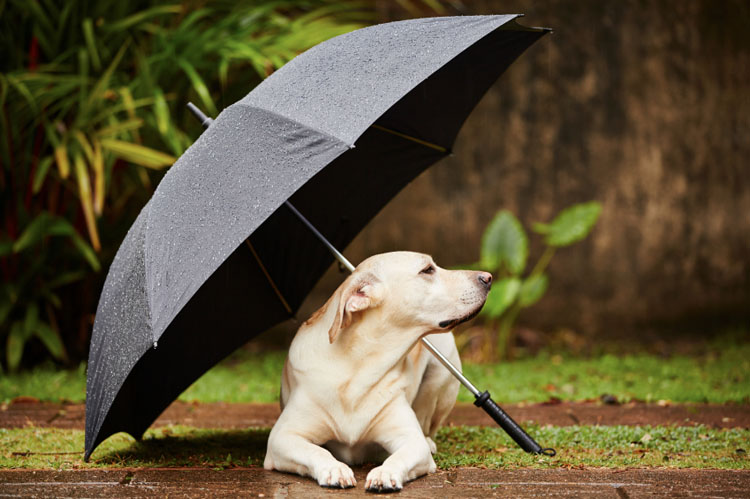
Believe it or not, dogs refusing to go outside when it rains is a pretty common issue with all types of dogs–big or small, male or female. Boy, it can be frustrating, especially when it rains for days straight. If your dog stops in her tracks the moment she steps outside on a rainy day, give these tried and true dog training tips a try. They really work. Pssst I live with a dog that hates going outside on drizzly days. He even hates stepping on wet grass. Yes, he’s a big old male Rottweiler. 🙂

Everyone Hates Getting Rained On

If you’ve ever been caught in a rainstorm, you understand sitting in wet clothes is torture. The same applies to your dog. They don’t enjoy getting wet and having to sit around with wet fur. With that said, many dogs need to potty outside, so what should you do?

Grab Your Leash and Umbrella

By far, this is the easiest way to potty your dog during the rain. When it’s potty time, attach a leash to your dog and grab your umbrella as you both head outside in the yard. For small dogs, you can most certainly pick them up and place them on the grass to potty. For larger dogs, grab several yummy treats and lure them outside.

Once you’re outside on the grass, wait patiently while keeping yourself and your dog covered with an umbrella. Ninety-percent of dogs will usually potty using this technique. They just want to get it over with, so they can go back inside. As your dog potties, slowly praise her for doing such a good job and reward with a treat once inside. Now, you can certainly give her a treat once she’s done, but most dogs would rather head inside than chew on a treat on wet grass.

After a few rainy day practice sessions, your dog will learn to run out and potty quickly, then run like mad for the door. 

For the other 10 percent of dogs that just stand there, looking up at you with pleading eyes while holding up a foot, stand still and wait outside for 10 minutes. By standing still, you’re keeping rain off you and your dog with the umbrella. Plus, it prevents your dog from pulling you toward the backdoor. If, after 10 minutes, your dog still hasn’t gone to the bathroom, maybe you need another plan.

Set Up a Covered Potty Area

It’s all about choices, and some of us are unable or unwilling to stand outside with our dogs in pouring cold rain. That’s totally fine. Instead, try pottying your dog in a covered area indoors or outdoors.

When my older dogs needed to potty while it was pouring rain outside, I placed several potty pads under our covered backyard deck. If you don’t have a covered deck, try placing some type of tarp on the corner of your house. This prevents your senior citizen from getting soaked. For smaller dogs, place potty pads in the bathroom or laundry room on rainy days.

RELATED: Housebreaking a Puppy

Dry Your Dog Afterwards

Completely dry off your dog after he potties outside. Keep large towels next to your backdoor. Don’t only dry your dog’s body, but also wipe her wet feet and tail. On cold, rainy days, I like to quickly blow-dry my dogs, which dries their coat and immediately warms them up.

Try Rain Boots

Personally, I don’t think raincoats really help, especially if your dog has never worn sweaters or clothes before. However, booties do help. I’ve seen it happen many times. Velcro waterproof booties will keep your dog’s feet from getting in direct contact with wet and muddy grass. For Sobek, my Rottweiler, putting rain booties on his feet made all the difference. He’ll actually walk out and potty after it rains. It’s definitely worth a try.

Plan Ahead

Watch your weather forecast and bring your dog outside to potty right before it starts to rain. If it’s pouring rain, wait a few minutes for it to die down before you take your dog outside to potty. It’s not fun being outside during torrential downpours. Also, if you’re heading out for a daily walk, either postpone or reschedule. Remember, you may love walking in the rain, but your dog hates it.

Keep potty sessions extremely short. If it starts to thunder and lightning strikes, bring your dog inside and dry her off.

Use Potty Pads

If your dog is terrified of thunderstorms, I highly recommend either placing potty pads inside your home for small dogs or walking your leashed larger dog out to a covered potty area. For thunder-phobic dogs, it’s not exactly the rain that’s frightening them; it’s the thunder, lightning and changes in barometric pressure that terrifies them.

If your dog hates going outside when it’s raining, she isn’t a wimp. She just doesn’t like getting wet like some people. 🙂

Filed Under: Behavior, Dogs, Training Tagged With: dog hates rain outside, dog training, Dog Training Tips, dog will not pee outside raining, dog won't go in the rain, dog won't go in the snow, dog won't pee outside in rain, dog won't potty outside when raining, dog won't walk on wet grass, getting dog to potty outside during rain, how to get a dog to pee outside in the rain, how to teach a dog, how to train a dog, teach a dog, train a dog

Training a Boxer to Calm Down

November 19, 2015 by Fanna Easter

Boxer Behavior: Training Them to Calm Down

Boxer Behavior
belchonock/Deposit Photos

Is living with a Boxer any different than living with a German Shepherd or Pug? Yes and no. All dogs have their own breed characteristics and traits that speak so loudly of that breed, but on the other hand there are certain behaviors all dogs have. The next question is: can dog behaviors that are sometimes not considered polite to humans be trained or are they just what you have to deal with owning a Boxer? All behaviors are trainable. We just need to find what works for your Boxer.

Not So Polite Boxer Behaviors

Boxers are a fun, loving, outgoing and high-spirited breed that have a lot of energy and affection to expel. That being said, some inappropriate dog behaviors can come from all this energy and desire for attention. The most common impolite behaviors I see with Boxers are excessive jumping, pawing and muzzle punching. I’m sure anyone who has a Boxer and is reading this is thinking: “Yes ma’am. I deal with this on a constant basis!” Well, let’s talk about how we can refine your Boxer a little bit.

Jumping

Jumping is common for many dogs, especially energetic and excited dogs. Boxers kind of do this wiggle jump because they can barely contain their excitement. On the positive side of this, they’re quite happy dogs and they radiate excitement. The negative end of this excitement level is they’ll jump all over you or at least right in front of you when you’re trying to get through the door.

A great way to deal with this behavior is to teach an alternate behavior like “sit.” You will want to work on the new desired behavior in a low distraction area when you’re not coming home from being away. What do you do when you come home and your Boxer is wiggling and jumping all over the place? Every Boxer I’ve ever met is food motivated, so let’s use this to our advantage.

Keep tasty treats outside the door in a jar, grab a handful of them before you walk in and toss them on the floor when you enter the house. This distracts your dog for long enough for you to get in the house without being trampled as well as breaks the jumping routine and rewards your dog for keeping all four feet on the floor. Now that you’re inside the house and things are a little calmer, you can ask your Boxer for the “sit” behavior before giving him attention.

Pawing and Muzzle Punching

These two Boxer behaviors go hand-in-hand because your Boxer is usually doing them for the same reason: attention! As we all know, Boxers are usually very affectionate and can be attention hogs, which I love, but sometimes they become a little pushy about it. I have a great exercise that can help your Boxer build some self-control and teach him that patiently waiting for attention will get him the attention he desires.

Begin in a quiet low distraction area. Place medium grade treats in your hand and make a closed fist to present to your dog. Ignore any pawing or muzzle punching from your dog. Say “Eh-Eh” if the bad behaviors become excessive. Once your dog stops pawing or muzzle punching, open your hand full of treats and use your other hand to take a treat to give to your dog. If your dog goes toward the baited hand (hand with treats) when you open it, simply close it and begin the dog training session again.

Continue working on this exercise until you can open your baited hand and reward your dog with each piece of food one at a time, waiting three seconds in between each treat. Soon, you’ll be able to carry the “Eh-Eh” cue over to when your dog is nudging you or pawing you for attention, which should make your Boxer default into the correct patiently waiting behavior.

Dog behaviors are only considered bad if you, the owner, doesn’t like them or finds them a nuisance. Sometimes, you like the behaviors in moderation, which is why working on these exercises will help you gain a little more control in these situations.

READ NEXT: How to Choose a Sport for Your Dog

Filed Under: Behavior, Breeds, Dogs, Training Tagged With: boxer dog training, dog training, Dog Training Tips, how to teach a dog, how to train a dog, teach a dog, train a dog, training a boxer

How to Stop a Dog From Eating Too Fast

November 18, 2015 by Fanna Easter

Stop Your Dog From Eating Too Fast

How to Stop a Dog From Eating Too Fast
studioportosabbia/iStock

If your dog inhales his food like a Hover vacuum cleaner, then you know the struggle. Eating too fast can result in choking, gagging, vomiting and swallowing excessive air, which causes bloating (accumulation of gas in the stomach). So it’s important to slow down your dog’s eating habits.

For the most part, I’ve always shared my home with fast eating dogs, so I’ve gotten used to this behavior. However, just because I’m used to it doesn’t mean it’s allowed to happen. I take many precautions to stop my dogs from eating too fast, which I’ll happily share with you. 🙂

Spread Out the Goodness

By far, this is the easiest (and cheapest) way to make your dog eat slower. Take your dog’s daily meals and spread them out on a rug or smooth surface. At first, you should make it easy for your dog to eat by sprinkling food in clumps on your cement patio (weather permitting).

Once he gets really good at eating his food spread out, increase the distance between the kibble by fanning out his food in a larger smooth-surfaced area. By increasing the distance between the kibble, you’re forcing your dog to search for each kibble. To make it even harder, sprinkle his kibble on a large rug where he must hunt through the fibers for his food. This makes a great rainy day game. If you want to make it even more challenging, sprinkle his kibble in a shag rug. It could easily take 30 minutes for him to find all his food.

Refrain from tossing your dog’s kibble in the yard. It’s very difficult for your dog to find each and every piece plus it attracts ants and rodents. Tossing your dog’s meals into your yard is like tossing a free meal out, which isn’t fair to your dog. Don’t be surprised if your dog starts fighting wildlife once he learns you give out his meals on a daily basis.

WATCH: How to Stop a Dog From Eating Too Fast

https://youtu.be/C6jR5Pawwt0

Slow Feed Dog Bowls

Slow feed dog bowls are flat on the bottom and usually contain lots of hiding places for your dog’s food. You fill these dishes with food and place them on the ground during meal times. While they’re interactive, they don’t move. They sit in place like your dog’s regular food bowl.

Lately, there’s been an explosion of dog food bowls promising to slow your dog’s eating habits, but I don’t believe these bowls work for all dogs. Most dogs that eat fast slightly suffer from an underlying anxiety, which can cause them frustration while trying to chase or lick food trapped between barriers and crevices. If they can’t get to the food fast enough, most dogs will flip over the food bowl to gain access, then it’s a feeding frenzy.

If you decide to give an interactive feeding dog bowl a whirl, make sure it’s big enough for your dog. Choosing a dog bowl too small will surely cause frustration. When introducing your dog’s new dish, make the game easy in the beginning–no one wants to keep chipping away at a new game that’s way too hard, especially when you’re hungry! Check out interactive feeding dishes here.

Interactive Dinner Toys

These dog toys are filled with your dog’s daily meals. You give them to your dog with which he can chew, paw and lick clean. For the most part, these toys promote gnawing and chewing, which is very satiating and will certainly extend dinner meals from 10 seconds to 20 minutes, depending on the chosen toy.

When introducing an interactive dinner toy, make the game easy for the first few days. Loosely sprinkle food inside and outside the toy, so your dog learns to associate food with the toy. Over the next few days, start to tightly pack food in by using peanut butter or wet food as a binder. My favorite interactive dinner toy is the Kong Wobbler. It’s really good!

Try rotating between each option to make eating even more challenging for your dog. Soon your dog will learn to enjoy eating slowly!

Filed Under: Behavior, Equipment, Health, Resources Tagged With: dog eats fast and don't chew, dog eats fast chokes, dog eats fast throws up, dog eats fast vomits, dog eats too fast, how to get my dog to stop eating so fast, kong wobbler review, puppy eats to fast, slow eating feeding dishes dogs, slow fast eating dogs down, slow feed dog bowl large, slow feed dog bowl reviews, slow feed dog bowl small, slow feed dog bowls, slow feed dog dishes

  • « Previous Page
  • 1
  • …
  • 66
  • 67
  • 68
  • 69
  • 70
  • …
  • 135
  • Next Page »

About

Dog Training Nation is a community of dog trainers, dog owners and dog lovers. Our mission is to provide trainers and owners valuable information to enrich dogs' lives. We cover a range of topics, from socializing puppies to dealing with aggressive dog behavior to selecting the best dog products. It is our hope you share our content to make the dog and owner world a better place.

​

Facebook

Video

Dog Training Nation is a dog training blog for pet owners and dog lovers. We cover a range of topics from puppy socialization tips to dog aggression to dog health. It is our hope you share our content to make the world a better place for dogs.

Dog Training Nation

Quick Links

Dog Training
Dog Behavior
Dog Training Videos
Become a Dog Trainer
About
Contact Us

Copyright © 2026 · Lifestyle Pro Theme on Genesis Framework · WordPress · Log in