Dog Training Nation

In Dogs We Trust

  • Home
  • Training
    • Dogs
    • Puppies
    • Clients
  • Behavior
    • Breeds
  • Health
  • Safety
  • Resources
    • Equipment
    • Books
  • Dog Training Videos
  • About
You are here: Home / Blog

3 Tips That Make Brushing Your Dog Much Easier

November 17, 2015 by Fanna Easter

Brushing Your Dog Has Never Been Easier
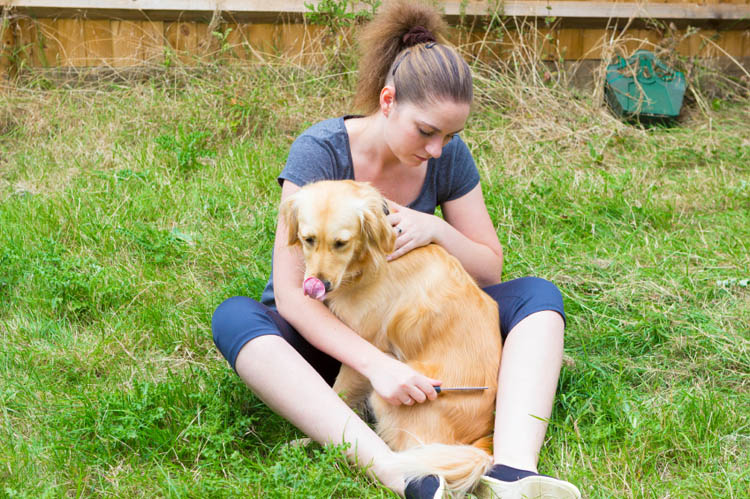
Dog Brushing
olgamarc/iStock

As a general rule, dogs should be brushed weekly. You may need to brush more frequently, depending on your dog’s coat needs. When discussing the importance of brushing with students in my dog training class, many admitted skipping it because it’s such a chore for them. So I asked all of my students to bring their dog brush to the following class, and then I understood their struggle. After a few minutes of practicing the three tips below, we had quietly lying dogs and pet owners actually enjoying the dog brushing process. Give these tips a try and let me know your thoughts!

Make Him Stand Still

By far, this was the biggest obstacle to stress-free brushing. Dogs don’t understand they should stay completely still, as they were never taught that. Remember teaching your child to stay still while you coiffed his hair or pulled her hair into the perfect ponytail for school? Yup, it’s the same thing.

Watching students struggle to keep their dogs still with one hand and brush with the other was a sight to see. If your treat hand moves even a tiny bit, your dog’s head will move too. He’s following the treat. Frustration builds quickly!

Instead of holding treats in one hand, smear peanut butter or cream cheese along a vertical wall. Bathroom tile is best. Please don’t use dry wall :). Keep smearing within a 3 x 3 inch area to prevent your dog from moving around. With this method, you can really get some brushing done now that both hands are free.

You can also smear peanut butter on floor tile or all along the inside of a heavy plate placed on the floor–weight keeps it from sliding around while your dog licks. As you’re brushing, keep an eye on the smeared peanut butter supply and reapply when needed.

Before you frown at the fact it took several spoons of peanut butter to brush your dog, you have to admit it was super easy. Plus, the smeared treats are teaching your dog to enjoy brushing and standing still. See, it’s not a bribe!

WATCH: Make Brushing Your Dog Much Easier – Standing Still

https://youtu.be/54vdWZSphFY

Rotate Your Dog’s Body Effortlessly

For long-coated dog breeds, it’s probably easier to brush your dog while he’s lying on his side on the floor. Once that side is done, it’s time to turn him over to brush the other side. Instead of pushing and pulling, try luring him to lie on his side.

Place several treats in a small bowl on the floor and have a seat next to it. Hold a treat on your dog’s nose and lure him onto the ground. Refrain from saying “down” because you’re teaching him to lie on his side instead; it’s totally different than laying down. Once his elbows and behind touches the ground, keep the treat on his nose and slowly turn it toward his shoulder.

A funny thing begins to happen when he follows the treat. His body turns sideways and he ends up lying down. Bingo, give him the treat. Afterwards, ask your dog to stand. If he doesn’t stand on cue, ask him to “touch” your hand, which will help him stand up. Now, practice luring him onto his other side. You’ll find some dogs have an easier time turning their body in a certain direction, so be patient. (We’re the same way.) Practice several times before introducing any type of brushing.

When first brushing your dog, give him a treat once he’s lying on his side. Brush once and then give him a treat for staying still, then brush twice and reward. You can see the pattern. If he’s struggling to lie still, have someone hold a food stuffed toy next to his face, so he can happily lick while you brush.

WATCH: Teach Your Dog How to Roll on His Side

https://youtu.be/bPlN5WWsLVQ

Use the Right Brush

When brushing your dog, make sure the right brush removes the maximum amount of loose hair. Super short-coated breeds need a rubber currycomb that won’t damage their exposed skin. Use a slicker brush for short- to medium-coated breeds, but never push down since it may cause skin abrasions. Long coats tangle and break easily, so I recommend using a pin brush.

Brushing should be bonding time for you and your fuzzy friend, so never rush through it. Relax and soon your dog will fall asleep once the brush touches his body.
Filed Under: Grooming Tagged With: best dog brush, brushing dog, brushing long hair dog, brushing puppy, brushing short hair dog, brushing wiggly dog, brushing your dog, brushing your puppy, grooming dog tips, keep dog still while brushing

Stop Using Retractable Dog Leashes in Public Places

November 16, 2015 by Fanna Easter

Why Retractable Dog Leashes Don’t Work

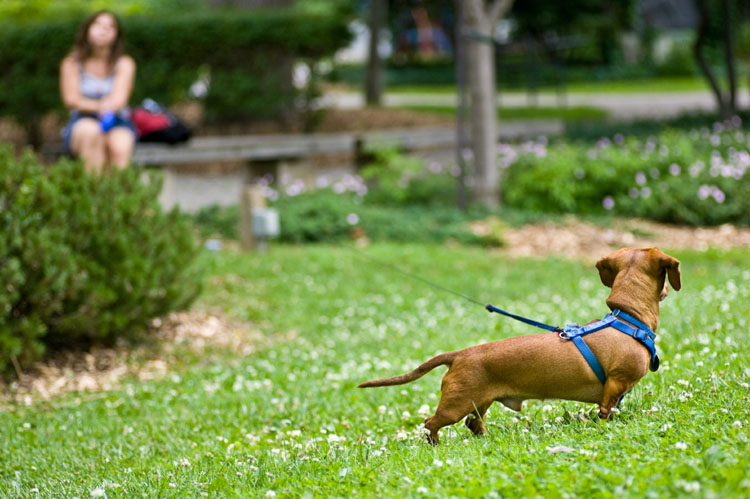
Retractable Dog Leashes
woodygraphs/iStock

Oh, I know I’ll ruffle some feathers with this topic, but it needs to be said again. Stop using retractable dog leashes in public. They’re dangerous. Never use a retractable dog leash at the vet’s office, park, festivals, farmers’ markets, large retail pet stores, neighborhood or any public area where your dog comes into contact with other dogs or people.

Terrible Retractable Dog Leash Story

Today, I had a run-in with a Terrier mix wandering inside a large retail store on a retractable dog leash and it didn’t end on friendly terms. Thankfully, I didn’t have a dog with me or it would’ve been much worse.

As I browsed through dog toys, I heard dog nails tapping along the concrete floor next to me, which was followed by a low deep growl. As I slowly turned around, I saw teeth and a little dog lunging for the back of my leg. When I stepped away to throw a toy between us, I noticed his pet owner wasn’t standing there. He was on a retractable leash that extended from the next aisle.

I prayed for patience and then shouted, “Somebody better come get this dog now.” A 20-something woman causally walks over, picks up her dog, smiles and attempts to walk away like nothing ever happened. Oh, no honey, this happened to the wrong person today. She got an ear full about the dangers of retractable dog leashes and I further explained I had every right to file charges and a complaint.

RELATED: Walking Two Dogs at Once Tips

Honestly, You Know You Can’t Control the Leash

Retractable dog leashes are impossible to control. The stop button never really works, especially when a dog is charging forward. To make matters worse, once pet owners realize their dog is running forward, it’s too late to press the stop button. Face it, you have no control–even the best dog trainers are unable to properly control a retractable dog leash.

Plus, retractable leash burns are painful and happen quite often. If you haven’t experienced a burn from a retractable leash, consider yourself lucky. They feel like rope burns. Not only can leashes cause you or a dog harm, but they can also lead to a lawsuit if they wrap around a  stranger’s leg. I’ve watched young children knocked off their feet when a dog charges past them wearing a retractable leash. These things are downright dangerous. Understand, this is not a big dog problem. Little dogs can cause just as much harm by tripping someone. Little dogs are usually the ones getting hurt by wearing this type of leash, as they can easily get stepped on or walk up to the wrong dog.

They also break easily! I’ve watched hundreds of dogs charge forward and break the leash off their retractable device. The pet owner just stands there shocked, holding the retractable handle. Yes, many of these dogs ran into moving traffic and didn’t survive.

Lastly, if your dog wanders over and attacks another dog, person or child, you’re 100 percent liable. If you knowingly walk an aggressive dog on a retractable leash, you should be prosecuted.

Your Dog Must Stay Four Feet Next to You in Public

When asking dog owners why they use retractable dog leashes over conventional leashes, most mention they want to offer their dog more freedom during walks. I’m totally for allowing dogs to sniff and explore things, but putting a dog on a long retractable leash is going a bit too far. I’m sure you’ve heard the old saying, “Give someone too much rope and they’ll hang themselves.” Well this most certainly applies to retractable leashes. Dogs don’t understand other dogs and people aren’t dog-friendly, so offering them free reign to wander about is a recipe for disaster. Also, if your dog encounters a chicken bone, you’ll never know he gobbled it up because he was 15 feet away.

Please leash your dog with a sturdy four- to six-foot leather or nylon leash instead of using a retractable leash. Dogs should stay next to you. Allow sniffing and exploring, but with supervision.

Where Can You Use a Retractable Leash?

Only use a retractable leash in a fenced backyard. Yes, they’re that unreliable. I’m angry because these types of accidents can easily be prevented by not using retractable leashes ever.

Thanks for listening. Please pass the message on. No more retractable leashes please!

You may also like: Protect Your Car Interior From Your Dog

Filed Under: Equipment, Resources, Safety Tagged With: dangers of retractable dog leashes, extra long retractable leash dog, retractable dog leash, retractable leash, retractable leash heave duty dog, retractable leash reviews

Best Head Collars for Boxers

November 12, 2015 by Fanna Easter

Boxers and Head Collars

Head Collars for Boxers
MarcinSl1987/Deposit Photos

Head collars fit over your dog’s muzzle and clip behind the ears with the leash attached under the chin. This collar controls your dog’s head kind of like a bridle on a horse–the body will follow the head. Head collars are great for powerful pulling dogs or overly rambunctious dogs like the Boxer!

Types of Head Collars

Head collars come in a few varieties, depending on the brand. Below, I’ve listed three of the most popular brands that I’ve personally purchased for my Boxers. Finding the right dog head collar for your Boxer’s face shape is imperative, as some of those small variations might hinder the collar’s effectiveness.

Halti Head Collar

The Halti head collar has a nylon nose strap that fits over the dog’s muzzle with additional nylon straps that reach behind the dog’s ears and clip. There are additional smaller straps located underneath the muzzle that are attached to an O-ring. This is where the leash clips too. Most of the straps on the Halti head collar are adjustable, so you can fit them according to your dog’s size. However, in my experience, the extra straps around the mouth sometimes aggravate the dog and don’t always work best for shorter muzzle dogs, such as Boxers.

Gentle Leader Head Collar

Gentle Leader head collars have one nylon strap that goes around the dog’s nose and two additional straps that attach behind the dog’s ears with fewer straps around the muzzle. The Gentle Leader has an O-ring that hangs on a strap under the dog’s chin where the leash attaches. The cool thing about this collar is it has a clip where you can adjust the tightness around the muzzle. This collar also has adjustments around the ears to fit a wide range of dogs. This type of dog collar was always more practical for both my Boxers.

Walk‘n Train! Dog Head Collar

Walk’n Train! head collars are similar to the Gentle Leader head collar in design. It only has one main strap around the nose, two straps going around the ears, a strap with an O-ring where the leash clips and an adjustment clip under the dog’s chin to maintain a proper fit. However, there are some differences that make this collar stand out, such as a pad on the nose strap to add comfort for the dog. Overall, this was my number one choice in terms of head collars for Boxers because of the minimal straps and muzzle adjustments along with the nose pad. As you know, Boxers are short-muzzled with short slick hair. The one strap around the muzzle is versatile for any sized muzzle and the padded strap prevents any chafing or irritation on their noses.

Pros and Cons of Using a Head Collar on Your Boxer

Pros

In my opinion, I love the head collar for Boxers! They’re a great tool to help control these exuberant, loving dogs that tend to be powerful pulling dogs.This type of head collar redirects your dog’s attention quickly and easily with little to no force, and can be used by anyone. They come in all different colors and sizes, and are available at your local pet store or even Walmart.

Cons

With anything, there are cons to using a dog head collar. Nothing is perfect. The main cons for this type of collar are having to properly fit the collar and desensitize your dog to wear the collar as well as your Boxer’s ability to get the collar off. You can usually overcome these obstacles by making a positive association with wearing the head collar.

RELATED: How to Choose Dog Training Treats

Fitting Your Boxer for a Head Collar

Last, but definitely not least, how do you actually fit your Boxer in the proper head collar? Choose a head collar that best fits your Boxer. As I said above, I recommend the Gentle Leader or Walk’n Train! head collar due to the minimal straps.

Now that you’ve chosen your collar brand, read the back of the package to see what size it suggests for your size Boxer. This way you have somewhere to start. Unclip the neck strap, hold one side in each hand, place the high around your dog’s neck and clip it behind the ears. Then, tighten the adjustable straps to make the collar snug, but not too snug where your Boxer can’t open his mouth and pant. You should only be able to fit two fingers between the collar and your dog’s neck.

Next, pull the nose loop through the bracket and place it around your Boxer’s muzzle. Move the adjustable clamp where the nose strap is below your Boxer’s eyes. Don’t make it too loose that he can take off the collar with his paws. All Boxer owners know how talented their Boxers are with their paws. 🙂

If you have a friendly dog, I suggest taking him to the pet store with you and asking one of the employees to help you select the proper dog head collar. This will prevent ill fitting collars and possibly negative associations to the collar. Make sure you bring your Boxer’s favorite treat to make that positive association.

For additional information on the collars mentioned above, check out the links below.

http://www.coastalpet.com/products/product/wthh1.aspx?style=06100
http://www.companyofanimals.us/brands/halti
http://www.petsafe.net/gentleleader

NEXT: Should You Let Your Dog on the Couch?

Filed Under: Equipment, Resources

Teach Your Dog to Wear a Sweater

November 11, 2015 by Fanna Easter

How to Train Your Dog to Wear a Sweater

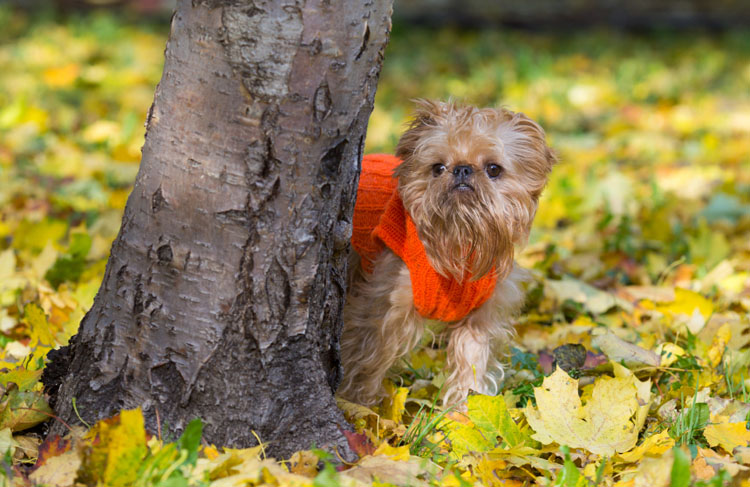
Dog Sweater
michellegibson/iStock

You’ve scoured the Internet looking for the perfect sweater for your dog and it finally arrives. Now is the real test. How does it look and will your dog wear it? After stuffing your dog into his new sweater, he refuses to walk forward. Yup, this happens a lot.

Most dogs will either stand still, pancake to the ground, or, worse, run and hide. Some dogs will growl while you’re trying to stuff them in the sweater. They’re not happy. Understand wearing clothes is totally new to your dog. If you ran around naked most of your life and then someone stuffed you into a tight turtleneck sweater, you would cringe and stiffen up too. Thankfully, we can teach dogs wearing sweaters is a good thing!

Fit is everything when it comes to dog sweaters. You can’t expect a dog to enjoy wearing a sweater if it impacts his movement.

RELATED: Fit Matters When Choosing a Dog Sweater

Dog Sweater Means Treats

Take your time introducing the sweater to your dog, especially if you plan to purchase an extensive wardrobe for your pooch! Teaching your dog to enjoy putting on and wearing a sweater (or clothes) ensure proud prancing while wearing fabulous garments.

Putting It On

Before training your dog to wear a sweater, you’ll need several super yummy treats and your dog’s new sweater. Better yet, practice with an older sweater or a child’s shirt. This prevents stretching and stains.

Head First

Bunch up the fabric, so only the neck portion is visible. Hold the neck hole in front of your dog’s face and hold a treat on the opposite side. Basically, your dog will follow the treat through the neck hole. Once the sweater is around your dog’s neck, give him the treat. Now, stop there and take the sweater off your dog. Practice teaching your dog to push his head through the neck hole and reward every time.

Now the Body

After a couple of sessions, lure your dog’s head through the neck hole. Give your dog a treat as you pull the sweater over one leg at a time. Sometimes, it’s easier having a person hold a spoonful of peanut butter in front of your dog, so he can lick away while you’re maneuvering the sweater in place.

If your dog backs away when putting on the sweater, allow him to collect himself for a few minutes and decide if he’ll engage again. If he’s confused, go back to luring his head through the sweater neck hole and move slowly.

Wearing It Proudly

Once the sweater is on, have a party! Good things happen when wearing a sweater, so clap, speak in happy high-pitched tones and, of course, reward with lots of super yummy treats. Then, take the sweater off and end the party. Seriously, who wouldn’t want to put the sweater back on, right?

If your dog refuses to walk forward, sprinkle a few treats about a foot in front of your dog like a trail. This will surely get him moving. Keep sprinkling treats until he’s walked a few feet. Don’t forget to have a party while he’s wearing it. Once the sweater is off, the party stops. Keep practicing, and soon your dog will run toward his new sweater, happily stick his neck through the hole and walk around proudly!

If you take your time, your dog will love his sweater! Have a sweater party!

You may also like: Training Your Dog to Give Kisses

Filed Under: Dogs, Equipment, Puppies, Resources, Training Tagged With: dog hates sweater, dog hates wearing clothes, dog training, Dog Training Tips, dog wear clothes, dog wear sweater, get dog wear coat, get dog wear sweater, how to teach a dog, how to train a dog, puppy wear sweater, teach a dog, teach dog wear sweater, train a dog

Fit Matters When Choosing a Dog Sweater

November 10, 2015 by Fanna Easter

Choosing the Right Dog Sweater

Dog Sweaters
Okssi68/iStock

As the weather gets chilly, it’s time to unpack our winter clothes or, better yet, buy new clothes! What about your dog? It has to be chilly pottying outside, right? Brrr! Before purchasing your dog a sweater, understand fit is most important. Ignore unnecessary attachments, such as faux fur-lined hoodies that never stay in place.

Being fabulous is nice; however, if it fits poorly, it looks frumpy.

Should All Dogs Wear a Sweater?

The short answer is no. Now, I do recommend sweaters for very short-coated breeds of dogs, especially when they’re exposed to below 45-degree weather. Short-coated breeds include Pugs, Italian Greyhounds, Boston Terriers, Dachshunds, Miniature Bull Terriers and Chihuahuas. If your normally long or double-coated dog is shaved or clipped short during colder months, then a dog sweater is probably a good idea.

Many pet owners assume their long-coated dogs are cold because they shake and shiver. Before assuming temperature is the reason, it’s important to understand that dogs shiver when scared too. This is true for about 80 percent of small dogs.

How to Choose a Dog Sweater

Dog sweaters should cover your dog’s chest, tummy and back, but make sure there’s plenty of room for your dog to easily potty. Sure, there are long-legged varieties, but they just get messy from spraying urine or wet from rain and snow. Body coverage is most important. It’s easier to buy dog sweaters for females, as their sweaters cover most of their tummies. Male dogs can be a bit challenging. You need to make sure there’s plenty of room in the tummy area. Better yet, choose a tight-fitting sweater for your male dog that stops just short of his “business.” This prevents him for urinating on any low-hanging sweater areas.

Always Measure (This Prevents Returns & Stress)

Measure your dog first with a soft measuring tape (same version used to measure your waist). Write down your dog’s neck and chest circumference, making sure the measuring tape is not too tight. Lastly, measure your dog’s body length by placing one end of the tape measure on your dog’s shoulders and then extending it toward your dog’s rump. For male dogs, measure length from bottom of their chest to ½ inch before his “business.” Trust me, rolling any excess fabric forward never works; your dog will just pee on it when it unravels while walking. Armed with your dog’s measurements, it’s time to shop!

RELATED: Proper Pet Store Etiquette for Dogs

Search Wisely

Start your search, but keep it simple by focusing on the sweater’s fit. If your dog has a long body, you’ll probably need to search for sweaters made for longer dogs. There’s nothing worse than a short sweater on a Dachshund. The dog will resemble a tall person in a short sweater, and we all know that’s not cute. 🙂  If your dog’s body is short, it’s the same principle. Find a sweater that’s made for short-bodied dogs, so it fits his body perfectly.

Shop Online

By far, online shopping offers the best variety and prices, but measure first! Also, use gender-specific wording to narrow down options for male dogs. If your dog has a short or long body, add this descriptor in your search terms to further narrow results. Depending on a dog sweater’s design, some manufacturers require specific measurements for certain areas, especially if a sweater features a turtleneck or covers your dog’s entire body. Lastly, browse through the reviews section. I check out three-star reviews first because they’re usually honest on whether a dog sweater runs too small or large, washes easily, and fits their dog.

Keep Dressing Room Sessions Short

You know it’s fall when hordes of pet owners swarm the dog sweater section at your nearest pet store. Before you pick up the cutest sweater, know your dog’s size and body needs first just like if you were shopping for a sweater for yourself. I’ve witnessed a pet owner trying to yank a tight sweater off his Yorkie, which caused tremendous stress for the dog and garment. Be respectful and keep sweater try-on sessions short. If your dog tried on more than three sweaters, you weren’t choosing wisely.

Happy dog sweater hunting!

READ NEXT: 3 Reasons Why You Need Non Slip Socks for Dogs

Filed Under: Equipment, Resources Tagged With: closing a dog sweater, dog clothes size, dog shirt, dog sweater, dog sweater size, finding a dog sweater, finding a puppy sweater

  • « Previous Page
  • 1
  • …
  • 67
  • 68
  • 69
  • 70
  • 71
  • …
  • 135
  • Next Page »

About

Dog Training Nation is a community of dog trainers, dog owners and dog lovers. Our mission is to provide trainers and owners valuable information to enrich dogs' lives. We cover a range of topics, from socializing puppies to dealing with aggressive dog behavior to selecting the best dog products. It is our hope you share our content to make the dog and owner world a better place.

​

Facebook

Video

Dog Training Nation is a dog training blog for pet owners and dog lovers. We cover a range of topics from puppy socialization tips to dog aggression to dog health. It is our hope you share our content to make the world a better place for dogs.

Dog Training Nation

Quick Links

Dog Training
Dog Behavior
Dog Training Videos
Become a Dog Trainer
About
Contact Us

Copyright © 2026 · Lifestyle Pro Theme on Genesis Framework · WordPress · Log in