Dog Training Nation

In Dogs We Trust

  • Home
  • Training
    • Dogs
    • Puppies
    • Clients
  • Behavior
    • Breeds
  • Health
  • Safety
  • Resources
    • Equipment
    • Books
  • Dog Training Videos
  • About
You are here: Home / Blog

Help! My Restless Dog Doesn’t Sleep

November 8, 2017 by Fanna Easter

Why Your Restless Dog Isn’t Sleeping and Solutions

Restless Dog
Lindsay_Helms/Adobe Stock

Everyone needs sleep—even our dogs. Being able to sleep soundly is an important part of our health because it’s when our bodies repair and heal. When deep sleep is interrupted, regardless of the reason, it creates sleep deprivation, which is unhealthy. If your restless dog has a hard time falling into a deep sleep, it’s time to contact a professional dog trainer or veterinary behaviorist.

Is Your Dog a Restless Sleeper?

Depending on your dog’s age, dogs sleep between 11-14 hours per day. Senior dogs sleep much more than puppies, but all dogs should sleep deeply at night and during naps. Restless dogs never really sleep soundly. These dogs wake up every 20-30 minutes, stand up and walk around until they find another spot to nap, and repeat this process all day and night long. Some restless dogs sleep for an hour, pace for an hour or longer, and repeat the process.

Many pet owners assume their dogs get too hot or cold, so they wake up to look for another spot. While it’s normal to wake up once or twice a night, dogs that continually wake up or pace at night are not getting enough deep sleep.

Why Can’t My Restless Dog Sleep?

There are many reasons restless dogs have a difficult time falling into a deep sleep. Here are the most common causes for your dog pacing at night as well as solutions.

Sounds

Barking dogs off in the distance, sirens during the night, construction sounds during the day and ringing doorbells are common sounds that cause dogs to wake up.

Solution: Turn on a box fan or sound machine to drown out distracting noises at night and during the day.

Boredom

Dogs need physical and mental enrichment every day. If a dog’s needs are not met each day, he will find something to keep himself occupied. Think about it this way: Dogs are unable to binge-watch Netflix all day while their pet owners are at work.

Solution: Provide multiple food puzzles and 30-minute walks daily.

Health Issues

Dogs have a difficult time sleeping when in pain. These dogs will pace at night and often wake up to reposition themselves.

Solution: When in doubt, schedule a thorough veterinary examination to rule out any health issues.

Anxiety

Anxious dogs have a very hard time sleeping deeply. Sometimes, they may fall asleep due to pure exhaustion, yet wake themselves up with a startle. These dogs have a hard time settling down and sleep mostly on their sternum (chest) instead of flopping over onto their sides. If someone walks nearby, anxious dogs will become startled and jump up. They have multiple spots they rotate through at night, and they never really fall into a deep sleep.

Solution: It’s important to find professional help to reduce your dog’s anxiety.

Getting Help

Drowning out sounds and providing daily enrichment are easy fixes; however, anxiety is an ongoing challenge. If a dog seems anxious, then it’s time to partner with a positive reinforcement dog trainer and veterinary behaviorist to address the issue.

Anxiety won’t get better on its own. The sooner it’s addressed, the better. Never punish an anxious dog; it will only make his anxiety much worse. The same goes for health issues. Follow your vet’s advice, and be your dog’s advocate if his pain does not subside.

Everyone deserves a peaceful night of deep sleep. 🙂

Filed Under: Behavior, Health Tagged With: dog doesn't sleep, dog health, dog restless at night, dog restless at night not sleeping, dog training, Dog Training Tips, dog will not sleep, how to teach a dog, how to train a dog, my dog keeps waking me up at night, my dog won't sleep at night, my dog won't sleep during the day, my dog won't sleep through the night, restless dog, sleep aid for dogs, teaching a dog, training a dog, what can i give my dog to make him sleep, what can i give my dog to sleep at night

Is Your Dog Trainer A Bully?

November 6, 2017 by Fanna Easter

Signs You Should Find a New Dog Trainer

Good Dog Trainer
michaelheim/Adobe Stock

Yes, you read that correctly. Some dog trainers are capable of bullying pet owners. Bullying behavior is common within all professions, and it happens within the dog training industry too. Some dog trainers can be downright mean to pet owners and dogs while others are sneakier about it. Is your dog trainer a bully?

Expectations of a Dog Trainer

Before discussing bullying behavior, it’s important to understand the expectations of a dog trainer. Dog trainers are hired to teach pet owners how to communicate with their dogs effectively. Of course, dog trainers can teach dogs polite manners quickly, but it’s pretty ineffective unless pet owners learn how to teach and reinforce polite behaviors themselves.

In essence, dog trainers teach people and not dogs. Since dog trainers teach people, they must have excellent communication skills. Professional dog trainers should treat pet owners and dogs with respect and kindness, set everyone up for success, use positive reinforcement training methods, and celebrate wins.

Belittles Pet Owners

When teaching pet owners how to communicate with their dogs, some dog trainers will belittle pet owners throughout the entire process. Dog trainers should not blame pet owners for their dogs’ behavior if pet owners are seeking professional help. Everyone makes mistakes; you do better when you know better. Dog trainers should acknowledge that, and then explain to pet owners what to do instead of focusing on negative behavior. Finger-wagging and blaming halts the learning process and teaches nothing.

Positive reinforcement dog trainers should treat clients with the same kindness and respect they would extend to their canine clients. Additionally, good dog trainers understand pet owners are learners, so they must adjust their communication style to ensure all learners understand the concepts. If your dog trainer is belittling you, then it’s time to find a new dog trainer.

Makes Questionable Choices

There’s no room for physical pain, force, fear or yelling in dog training. These methods do not work. Instead, punishment inhibits behavior and will cause anxiety and fear. Dog trainers should never recommend hurting dogs or putting dogs in a situation that makes their behavior worse. Additionally, dog trainers should not joke about a dog’s breed tendencies or assume all breeds of dogs learn the same because every dog is an individual. Dog trainers should never recommend physical corrections with collars, leashes, shock or force.

As an advocate for your dog, if something feels wrong, don’t do it and leave immediately.

Filed Under: Clients, Training Tagged With: am I making dog training mistakes, dog behavior, dog trainer, dog trainer is mean, dog trainer near me, dog training, dog training methods, Dog Training Tips, finding a dog trainer, how to find a good dog trainer, how to teach a dog, how to train a dog, questionable dog trainer, teaching a dog, tips for finding a dog trainer, training a dog

DIY Cavaletti Course For Dogs

November 3, 2017 by Fanna Easter

Building a Dog Cavaletti Course at Home

Build Dog Cavaletti
taniasv/Adobe Stock

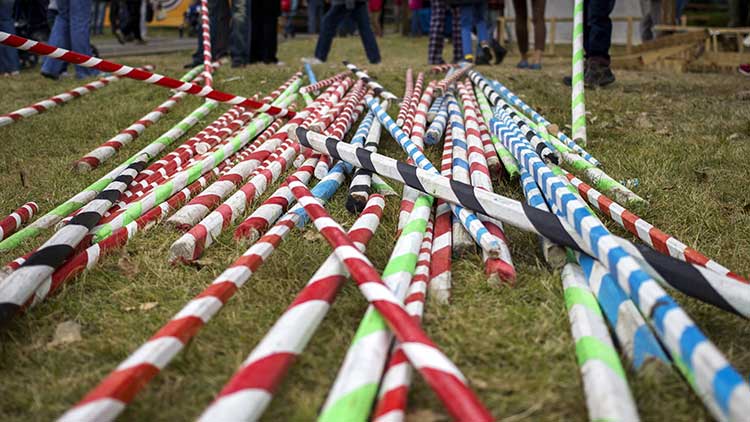
Cavaletti is a fun exercise that teaches dogs to walk over poles at various heights or across different surfaces. Most pet owners have watched horses complete cavaletti courses with some obstacles featuring fallen logs or low jumps.

Cavaletti is an excellent way to improve your dog’s balance, help him rebuild muscle after surgery, lengthen his stride for the show ring and regain range of motion after an injury. Plus, cavaletti courses are a great form of exercise that also builds confidence in dogs.

With your veterinarian’s permission, have your dog practice cavaletti for 10 minutes a day. Below are tips for building a dog cavaletti course at home.

DIY Cavaletti Equipment Ideas

With a bit of imagination and a non-skid surface, you could create a DIY cavaletti set from things lying around your home.

  • Use broomsticks or mop handles as cavaletti poles, and place horizontally on the ground.
  • Place 2×4 boards about 2-3 feet apart with the flat part (widest part) on the ground.
  • For small dogs, place a ladder horizontally flat on the ground.
  • If you have a large dog, create a ladder out of 1-inch PVC pipes.
  • Use large fallen branches as poles. Place 2-3 feet apart in your backyard.
  • To increase the height, place broomstick ends inside holes of a laundry basket.

Purchasing Cavaletti Sets Online

If you’re not crafty, and would rather purchase a cavaletti set, there are several options online. By far, the most popular cavaletti set is made by FitPaws and costs $60. FitPaws offers a set of 3 poles and 6 cones with several height adjustment levels. There are other brands available, but they don’t offer the adjustability that FitPaws offers with their cavaletti set. Plus, FitPaws’ equipment is yellow, blue and green, which are colors easily seen by dogs. With moderate use, this cavaletti set will last years.

A Few Cavaletti Tips

Slow controlled movements are best. Set up your cavaletti set on a non-skid surface, such as grass, rug or rubber. If it’s too warm outside, practice indoors on a thick rug. Remember to lure your dog over each pole slowly. If your dog jumps or hops over any pole, you’re moving the lure too quickly. For dogs that leap in the air around treats, practice loose leash walking across the bars.

Show us pictures of your DIY cavaletti course! Post below. 🙂

WATCH: DIY Cavaletti Equipment Ideas For Dogs

Filed Under: Equipment, Games, Resources Tagged With: build dog cavaletti, canine cavaletti training, cavalettis for dogs, DIY dog cavaletti, dog behavior, dog cavaletti, dog games, dog training, Dog Training Tips, homemade cavalettis, how to make cavalettis, how to teach a dog, how to train a dog, teaching a dog, training a dog

How To Teach Your Dog Cavaletti

November 1, 2017 by Fanna Easter

Cavaletti for Dogs

Cavaletti for Dogs
ARochau/Adobe Stock

Cavaletti training teaches dogs to walk over poles and different surfaces placed on the ground. It is a form of exercise that focuses on slow controlled movements. As a dog approaches and steps over each pole, she must lift up each leg carefully to prevent stepping on or bumping the pole. While this seems easy, it’s really challenging, especially when dogs have altered their gait due to injury.

Benefits of Cavaletti for Dogs

During a cavaletti exercise, dogs relearn how to maintain their balance as they carefully place one paw down over a pole while raising their other paw up. Cavaletti increases a dog’s range of motion and teaches her to put equal amount of weight on each limb.

Cavaletti courses are fun exercises for all dogs even for those without injuries. It’s a great way to build a dog’s confidence, lengthen her stride, and keep her fit both mentally and physically. Plus, you can place cavaletti equipment anywhere.

RELATED: Barn Hunt: The Nose Sport Your Dog Needs to Try

How to Set Up a Cavaletti Course

On a non-skid surface, place cavaletti poles horizontally and flat on the ground. For large dogs, place poles 3 feet apart and, for smaller dogs, 1-2 feet apart.

Lure your dog over each pole slowly with a yummy treat. If your dog hops or jumps over the poles, you’re moving too quickly. Sometimes, dogs get a bit nervous when poles roll around under their feet, so secure them by stepping on a pole as your dog crosses over it. Bumping and tapping poles are normal at first. After some practice, your dog will precisely pick up and place her feet between each pole! If your dog becomes super excited around treats, practice loose leash walking across poles first. Remember, slow controlled movements are key.

Making It More Difficult

Slow controlled movement builds muscle and teaches dogs how to balance around obstacles. Once your dog learns to carefully step over each pole, move the poles closer together. Now, she will have to step over several poles at one time, which is extremely challenging, so move slowly. For larger dogs, slightly increase the height of poles, so they must pick up each leg.

Has your dog tried cavaletti yet? Post your pictures below!

WATCH: How To Teach Your Dog Cavaletti

Filed Under: Games, Resources Tagged With: cavaletti for dogs, cavaletti jumps for dogs, cavaletti poles, DIY dog cavaletti, dog agility cavaletti, dog behavior, dog cavaletti, dog sports, dog training, Dog Training Tips, how to make cavalettis, how to teach a dog, how to teach cavaletti, how to train a dog, teaching a dog, training a dog

How To Stretch Your Dog’s Neck

October 30, 2017 by Fanna Easter

Dog Stretching Exercise for Neck Injuries

Dog Stretching
Nebojsa/Adobe Stock

It’s official: My dog has a muscular neck injury. The last six years of trying to determine the exact cause of my dog’s neck injury has proven to be fruitless. Our veterinarian thinks there are many causes that have resulted in this injury. Stella is a Miniature Bull Terrier; so, when hucklebutting through our home, she does bounce off the walls.

While this issue has festered off and on, it’s gotten much worse lately. She started having daily muscle spasms that sent her hiding under our bed. Even with rest and pain medication, her spasms have continued.

Thankfully, we partnered with our veterinarian and a holistic veterinarian who specializes in chiropractic and acupuncture care to find a cure. Neck stretches are our daily homework now. Our holistic vet was adamant about how to perform these dog stretching exercises, so I’ll share them with you!

First, Ask Your Veterinarian

Dog neck injuries are very serious. Your veterinarian must thoroughly examine your dog before adding neck stretches into her daily routine. Some dogs have slipped discs and nerve damage that will worsen with neck exercises and stretches, so rule out major issues first.

Fortunately, Stella’s neck issue is muscle related. Bi-weekly chiropractic and acupuncture adjustments, coupled with stretches and heat therapy, have been extremely beneficial.

How to Stretch Your Dog’s Neck

Use yummy treats, such as chopped up hot dogs or cheese chunks, and place a large treat chunk about an inch from your dog’s nose.

  1. Slowly move the treat toward your dog’s left shoulder and give her the treat.
  2. Now, grab another treat and lure your dog’s nose toward her right shoulder, then give her the treat.
  3. Place another treat on your dog’s nose and slowly raise the treat up and over her head to extend her neck fully upright, then give her the treat.
  4. Lastly, hold a treat between your dog’s front legs (at her mid-chest), so your dog bows her head downward.

All dogs (and humans) have different ranges of motion, so resist the temptation to overstretch (move head further up, down or over). Refrain from holding or lengthening a stretch for too long, as this will be painful and cause muscle spasms. Once your dog’s head is in place, quickly give her a treat and move onto the next stretch.

How Often You Should Stretch Your Dog

Our chiropractic veterinarian recommended doing dog stretching exercises followed by a warm compress for 15 minutes every day. Usually, we complete neck and shoulder stretches in the evening, so we can get comfy while placing a warm compress across Stella’s neck and shoulders.

Results

Fingers crossed, Stella is doing well! Since starting acupuncture, chiropractic adjustments and stretches, my dog has not had a muscle spasm and is off all pain medicine. (Knock on wood!)

WATCH: Dog Stretching Exercises for Neck Injuries

Filed Under: Health Tagged With: canine stretching exercises, dog health, dog neck stretches, dog stretching, dog stretching neck, dog training, Dog Training Tips, how to teach a dog, how to train a dog, neck exercises for dogs, ROM neck dog, teach a dog, train a dog, using food for dog next stretches

  • « Previous Page
  • 1
  • …
  • 5
  • 6
  • 7
  • 8
  • 9
  • …
  • 135
  • Next Page »

About

Dog Training Nation is a community of dog trainers, dog owners and dog lovers. Our mission is to provide trainers and owners valuable information to enrich dogs' lives. We cover a range of topics, from socializing puppies to dealing with aggressive dog behavior to selecting the best dog products. It is our hope you share our content to make the dog and owner world a better place.

​

Facebook

Video

Dog Training Nation is a dog training blog for pet owners and dog lovers. We cover a range of topics from puppy socialization tips to dog aggression to dog health. It is our hope you share our content to make the world a better place for dogs.

Dog Training Nation

Quick Links

Dog Training
Dog Behavior
Dog Training Videos
Become a Dog Trainer
About
Contact Us

Copyright © 2026 · Lifestyle Pro Theme on Genesis Framework · WordPress · Log in