Dog Training Nation

In Dogs We Trust

  • Home
  • Training
    • Dogs
    • Puppies
    • Clients
  • Behavior
    • Breeds
  • Health
  • Safety
  • Resources
    • Equipment
    • Books
  • Dog Training Videos
  • About
You are here: Home / Archives for Behavior

How to Get Your Dog to Take Treats Gently

March 7, 2016 by Fanna Easter

Teaching Your Dog to Take Treats Gently
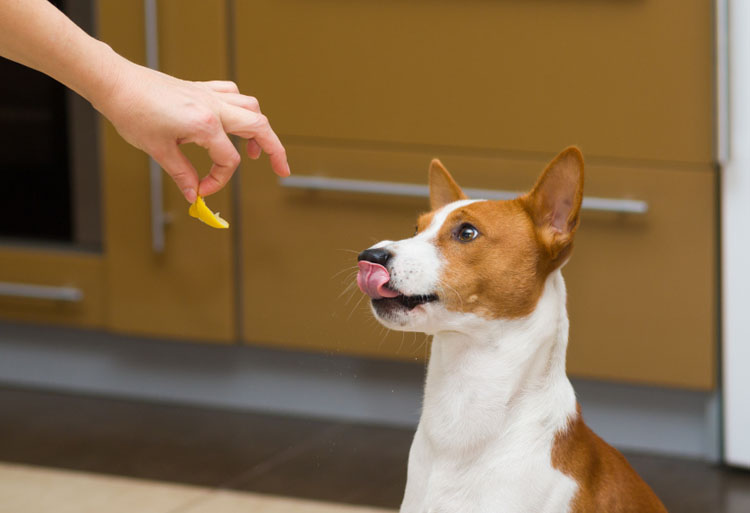
How to Train a Dog to Take Treats Gently
Yurikr/iStock

Ouch! If your dog takes treats from your fingers roughly, you know the feeling. Before punishing dogs for this behavior, understand that dogs haven’t read an etiquette guide teaching them proper manners around food. When dogs see a treat they like, they take it vigorously until they’re taught to take treats nicely. Try these dog training tips to teach your dog to take treats gently.

Polite Manners Please

We love holding small pieces of food between our fingers. It’s a natural behavior used when handing another person something small or eating finger foods. However, some dogs don’t understand how to remove food held between two fingers. They either snap at your fingers or place their mouth over your fingers and remove the treat with their tongue. Either way, it can be painful or scary. Hence, the importance of teaching your dog to take treats gently.

Put Out an Open Hand

In the beginning, place dog treats on your open flat palm. If you’ve fed horses treats before, it’s the same technique. An open palm creates a flat surface that keeps fingers out of the way and minimizes nibbles and bites. Plus, most dogs will use their tongues to grab a treat from your open palm instead of their teeth. By feeding large or small treats from your hand, your dog is learning to slow down and take treats gently.

By using the open hand technique, you’ll notice your dog taking his time to remove a treat from your hand. While holding your palm upwards, cup your hand slightly and offer your dog a treat. Slowly cup your upturned hand further, so your dog learns to softly search and grasp the treat in your hand.

Also, when guests come over and want to offer your dog a treat, always advise them to use the open hand technique. It reduces the chances of your dog’s teeth pinching their fingers, as some guests are easily overwhelmed when a dog rushes forward for treats.

RELATED: Healthy Dog Treats

Feed the Floor

When dogs get excited or stressed, they’re more likely to painfully snatch treats from hands and fingers. During dog training classes, I can spot dog owners who have the “pinched treat finger” grimace from across the room. Dogs taking treats roughly is quite common in class. Their dogs are probably super excited.

My advice is to feed the floor instead of handing each treat to your dog or placing a treat in your dog’s mouth. By feeding the floor, you’re tossing earned treats within two to three feet of your dog’s paws, so he must pick up the treat from the floor instead of your hand.

Use a Spoon

Yes, your dog can easily learn to take treats from a spoon. When teaching loose leash walking, most dogs snatch treats roughly, as you’re probably moving quickly with lots of verbal praise and happiness. Instead of feeding the floor, which can cause your dog to run after a bouncing treat, try placing peanut butter in a spoon and offering a lick as a reward. For larger dogs, fill a plastic or wooden spatula with Swiss cheese and offer a lick or two in place of a treat.

Most dogs learn to take treats gently, so use these dog training tips as needed. Remember, dogs get really excited during dog training, so you may need to give your dog treats with a flat palm, feed the floor or fill a spoon when needed.

Filed Under: Behavior, Dogs, Training Tagged With: dog bites fingers when taking treats, dog bites hands when taking treats, dog eats treats gently, dog takes treats hard, dog takes treats roughly, dog training, Dog Training Tips, how to teach a dog, how to teach a dog to take treats gently, how to train a dog, train a dog

Teach Your Dog to Enjoy Body Handling

March 2, 2016 by Fanna Easter

Body Handling Tips

How to Teach a Dog Body Handling
damedeeso/iStock

Body handling is easily one of the most important behaviors to teach your puppy or adult dog. Dogs are not programmed to understand that humans looking into their ears, mouth and body is normal. Human handling frightens most dogs. Just like children, dogs need to be taught that body handling is rewarding.

Body Handling Goals

When touching or restraining your dog, you’re using the least amount of pressure possible. Basically, you’re not holding your dog’s head still. Rather, your dog is choosing to hold her head still while your hand rests on it. From another perspective, think about retraining zoo animals. There’s no way a human can restrain an elephant, but teaching an elephant to allow restraint is much easier than forcing him.

How to Teach Your Dog to Like Body Handling

You’ll need lots of super yummy treats, so don’t skimp here. Remember, dog training treats are your dog’s paycheck. You’ll also need some type of reward marker, so use a clicker or mark the behavior by saying “yes.”

Point and Click

In the beginning, click or say “yes,” as you’re reaching for your dog and then reward. Usually, when someone reaches toward his dog, this is a trigger that causes most dogs to shrink backwards away from pet owners. Start by pointing at your dog and, if she remains still, click and treat. Now, progress moving your pointed hand in small increments until you’re able to touch her side with your index finger. Once you’re able to touch her, click or say “yes” the moment your finger touches her. Then, draw your hand back and give her a treat.

Goal: Your dog remains still while you reach toward and touch her.

Touch Longer

Once your dog is comfortable with you reaching for her, meaning she will remain still and even walk toward you, it’s time to touch her longer. In the beginning, you quickly touched her and then immediately removed your hand away. Now, you’ll reach out and touch her, but hold the “touch” for a second. After five or six repetitions, end the practice session.

Goal: Reach out and touch your dog for 1-2 seconds.

Hand Touch

Now, you’ll reach out and touch your dog with your hand. As you place your open-palmed hand on your dog’s side, click or say “yes,” remove your hand, and give her a treat. After a few repetitions, end the practice session.

Goal: Reach out and touch your dog with your flat hand.

Restrain and Reward

Retraining means holding your hand against your dog, which prevents her from moving sideways. For some reason, we force our dogs to accept restraint, especially at the vet’s office or during nail trims. Trust me, it’s easier to teach a dog to enjoy restraint as a rewarding experience than force your dog to comply with it.

When teaching body restraint, move slowly and apply the least amount of pressure possible. Never force the issue. Soon, and with lots of practice, you can teach your dog to say “ah,” easily hold your dog’s leg for blood withdrawals, stand still while the vet examines her and so forth.

WATCH: Teach Your Dog to Enjoy Body Handling


It’s much easier to teach your dog to enjoy body handling than force her to comply–much easier.

Filed Under: Behavior, Dogs, Puppies, Training Tagged With: dog body handling, dog scared when you reach for him, dog training, Dog Training Tips, handling and touching your dog, how to teach a dog, how to train a dog, teach a dog, touch dog's ear, touch dog's leg, train a dog

My Dog is Afraid of Passing Cars

March 1, 2016 by Fanna Easter

Dealing With a Dog Afraid of Passing Cars

Dog Afraid of Passing Cars
PauuletHohn/iStock

When dogs lunge toward or away from passing cars, it can become suddenly dangerous for both pet owners and dogs. While it’s frustrating, dogs afraid of passing cars is actually quite common, so you’re not alone. If your dog is afraid of cars driving by or when walking, try these tips to change his behavior.

Why Dogs Lunge Toward or Away From Cars

Determining the cause of your dog’s fear of cars can be difficult for most pet owners, so if needed, I highly recommend partnering with a professional dog trainer. Many times, pet owners assume their dogs want to chase a car, yet it could be something totally different.

Herding Breeds

Some dog breeds were bred to chase anything moving, and these instincts are really hard to resist. Herding breeds, and any herding breed mixes, have a tendency to herd children around the backyard or lunge toward passing cars and bicycles. Terriers were bred to watch for any fast moment, so they will chase anything fast-moving too. However, I’m not totally convinced that the chasing or herding instinct is the real reason dogs lunge or bark at moving cars.

Anxiety

By far, dog anxiety is usually the main reason dogs bark, lunge toward or leap away from cars, in my opinion. When dogs are scared and have had a negative experience with something, they can become anxious and react. Maybe a loud car zoomed pass your dog and scared him one day, or your dog is just scared of fast-moving objects near him. Plus, we assume anxiety is caused by aggression, but it’s actually the other way around. Aggression, such as lunging and barking at cars, is a symptom of anxiety.

Dog Training Tips

Make Approaching Cars Fun

If your dog is afraid of passing cars, never walk him alongside a road. So many times, unaware pet owners assume walking a scared dog next to cars driving by will teach him that cars are harmless. Actually, you’re doing the exact opposite; you’re scaring him even more.

Choose a Quiet Park for Walks

For daily walks, choose a quiet park with minimal distractions of passing cars. For walks around your neighborhood, walk your dog during minimal car traffic to keep his fears from becoming worse.

Associate Parked Cars With Treats

Parked cars are meaningless or they can be quite scary, so you need to teach your dog that parked cars mean treats appear. Grab lots of super yummy treats, leash your dog and walk toward a parked car. As you approach, take one step at a time and give your dog a treat for each step forward. You’re not really saying anything; you’re just pairing something really good (yummy treats) with something kind of scary (car). If your dog pulls back, you probably moved a bit too fast, so take three large steps backwards and reward your dog for looking at the car or not reacting. After a minute, end the session.

Practice this dog behavior several times a week until you’re able to walk right up to a car. Once you’re next to the car, give your dog five treats in a row–we call that a jackpot!

Ask Someone to Drive By Slowly

Always keep your dog leashed and grab lots of super yummy treats during these dog training sessions. Now, have a seat on your front porch. Ask a friend to drive by slowly and reward your dog the moment he notices and looks at the car approaching slowly. Reward your dog continuously, as the car slowly passes both of you. Once the car is gone, so are the treats. Basically, you’re teaching your dog that treats appear when cars appear and drive past.

Keep Your Distance

I can’t say this enough, but distance is so important for success. Start far away from passing cars; you’ll know you’re far enough when your dog can look at the car and not react. If your dog freaks out, you are way too close. Only move forward once your dog is comfortable with cars passing at that distance. When moving forward, take a couple of steps forward and practice from there. As an example, if you start 25 feet away from cars, then move in small three-feet increments forward.

If the Behavior Gets Worse

If your dog’s fear of passing cars continues or gets worse, even after some practicing, then I recommend consulting with a professional dog trainer. Dog training experts can certainly recognize specific behaviors and provide suggestions.

Filed Under: Behavior, Safety Tagged With: dog chases cars, dog chases cars on leash, dog chases cars on walk, dog is afraid of passing cars, dog is scared of cars, dog scared moving cars

Causes of Dog Aggression

January 20, 2016 by Fanna Easter

Dog Aggression: What Are Triggers?

Dog Aggression
Eldad Carin/iStock

If your dog is fearful or aggressive toward anything, it’s extremely important to understand the object that triggers your dog’s reaction. You need to determine the small triggers that cause your dog to react and pair those dog aggression triggers with good things. Sound tricky? It most certainly can be, so I highly advise finding a professional dog trainer with lots of reactive dog experience.

What are Triggers?

Triggers are anything in your dog’s environment that cause your dog to react. Triggers are usually a sight, sound, smell or a combination of all three. Reacting means your dog reacts negatively toward a trigger; he either freezes, lunges, barks, backs away or starts fooling around (i.e. sniffing the group excessively, biting the leash, etc.).

Examples of triggers for most dogs:

  • Jingling of dog ID tags (indicating another dog is close by).
  • Barking dog (indicating another dog is close by).
  • Sight of a dog from a distance.
  • Smell of a dog (this one is hard for us to identify).
  • Person running behind or past during walks.
  • Fast-moving cars zooming past.
  • Approaching person.
  • Plastic bag floating through the wind.
  • New object (trash can, sign, new furniture) appears.
  • Bearded man walking with an umbrella.

Basically, triggers can be anything.

How to Identify Your Dog’s Triggers

If your dog has been reactive for some time, you probably have a pretty good idea what causes him to negatively react. However, it’s important to narrow down the trigger that sends your dog into a barking frenzy.

Many times, pet owners describe their dogs’ trigger as “seeing another dog,” but you need to narrow this down even further. How far away is the other dog before your dog reacts? Some dogs will look at other dogs calmly about 50 feet away, but when the other dogs move closer, the dog starts reacting. In this case, the specific distance between the dog and other dogs is the trigger.

Many times, reactive dogs react to sounds. Reactive dogs will freak out over the sound of jingling ID tags, four feet scampering in the distance or dogs barking. These sounds alert reactive dogs that a dog is nearby, so they better get ready to fight or flee.

Power of Triggers

Once your dog’s triggers have been identified, it’s time to start building positive associations with them. Super yummy treats should be given the moment your dog experiences a trigger, but of course always from a safe distance. If your dog reacts around other dogs or people, never allow your dog to meet them ever.

If your dog alerts or barks at jingling ID tags, then give him a treat as you’re jingling his tags. If it’s the ID tags of other dogs, borrow your neighbor’s dog’s tags. Remember, treats should be given the moment you start jingling ID tags.

For dog barking triggers, give your dog several yummy treats while a dog barks far away in the distance. Start with very far-away barks, then slowly work toward dogs barking down the street, next door and so on.

Get Help

So many pet owners try to manage dog reactivity, including dog aggression, on their own. I know you don’t want to hear this, but I’m being totally honest, you won’t get great results unless you seek professional help. As someone who works with reactive dogs for a living, I still need someone to confirm certain triggers; it’s impossible to narrow them down by myself.

Please find a dog training professional who only uses positive reinforcement methods. Punishment never works with anxiety or aggression; it’ll just make it much worse. If you’re afraid of heights and I scream and slap at you while you’re standing on the roof of a tall building, I don’t think that would help your fear. You would probably snap back at me, so please never use punishment-based methods.

Good luck and set yourself up for success by finding a professional.

Filed Under: Behavior, Dogs, Training Tagged With: dog aggression, dog aggression triggers, dog hates other dogs, dog training, Dog Training Tips, getting help dog aggression, helping an aggressive dog, how to teach a dog, how to train a dog, teach a dog, train a dog, triggers dog

Reactive Dog Classes for Aggressive Dogs

January 18, 2016 by Fanna Easter

Dog Aggression: Reactive Dog Classes Can Help

Reactive Dog Class
mj0007/iStock

If you share your home with a dog that freaks out around other dogs or people, you’ve probably been refused or kicked out of regular group dog training classes. Luckily, there’s a new class emerging called reactive dog class that focuses on teaching aggressive dogs different skills in a group class setting.

Now, it’s not like a traditional dog training class, but the results are amazing. I’m lucky to teach these types of classes for the local veterinary behaviorist in my area, but not all dog aggression classes are alike. Here are a few tips on finding the right reactive dog class to reduce your dog’s aggression while teaching him new behaviors.

What are Reactive Dog Classes?

In the dog training world, we actually say “reactive dog classes” instead of “dog aggression classes,” as aggression is a symptom of anxiety and we all know anxiety makes you (and dogs) reactive. Knowing this, your dog training instructor will work within each dog’s threshold (the line before a dog freaks out) to slowly introduce positive associations with other dogs and teach new polite behaviors.

From a Dog’s Perspective

During reactive dog classes, dogs will learn how to behave properly rather than freak out, bark, lunge or freeze. You’re probably thinking this class won’t help your dog if other reactive dogs are attending, but these classes are purposely kept small (no more than five students and their dogs) and everyone stands behind visual barriers. Trust me, your dog will know other dogs are there. Since the sound or sight of other dogs are triggers for reactive dogs, keeping everyone safely tucked behind barriers works really well.

Dogs are slowly taught self-control exercises (e.g. control their behavior for a treat), relaxation methods (something most reactive dogs find extremely difficult) and positive associations with their triggers (e.g. sight of another dog or the sound of ID tags jingling). Each dog has his or her own set of triggers, which an excellent dog trainer can identify to ensure counter conditioning and desensitization works.

RELATED: 11 Common Questions Dog Trainers Are Asked

From a Pet Owner’s Perspective

Believe it or not, how you react around your dog’s triggers can either help or hurt your dog. Yes, you’re a valuable part of the team. In reactive dog classes, you’ll learn how to handle stressful situations before they happen, manage an encounter with your dog’s trigger (e.g. another dog approaching) and relax. Most reactive dog pet owners tense up. They’re terrified something will set their dogs off, so they walk around in a complete state of anxiety.

How to Find Reactive Dog Classes

Not all dog trainers can teach reactive dog classes or work with aggressive dogs. Even those calling themselves animal behaviorists (FYI there’s no such thing) aren’t equipped to work with dog reactivity. So finding an excellent reactive dog class can be challenging.

My advice is to find a local veterinary behaviorist and give her a call. These folks are veterinarians who are board-certified in animal behavior and know qualified reactive dog trainers within their surrounding states. They can most certainly point you in the right direction. It’s worth the extra effort because asking around or calling local dog trainers about reactive dog classes is extremely risky. If a dog trainer is in over her head, she can certainly make your dog much worse.

Secondly, reactive dog trainers never use punishment-based methods ever. This means dogs don’t wear choke chains, pinch collars or electronic collars. There’s no yelling, pushing or pulling a dog around. Punishment will only make a dog more anxious, as studies have proved it time and time again. Also, would you overcome your fear of driving over bridges if I yelled at you? Nope, you’ll just end up yelling back at me, which increases your anxiety. Ask your reactive dog trainer what methods she uses before enrolling.

What to Expect When You Enroll

These classes fill up quickly, so don’t be surprised if there’s a waiting list. Once you’re enrolled, you’ll probably receive specific directions on entering and exiting the training center about a week before your scheduled class. Dogs should never be allowed to see or bump into each other. Lastly, you’ll probably need some special equipment to keep you, your dog and other dogs safe if a dog should lunge. Don’t forget to bring lots of super yummy treats (100-150 pea-sized treats should be enough for one class).

If, at any time, you’re not comfortable, always inform your instructor. Sometimes, my students are so scared (they’re just as traumatized as their dogs) that we break a few exercises into smaller pieces. I do this because I know how difficult it is to learn when you’re anxious.

During reactive dog class, remember to take deep breaths. It will relax you and your dog!

READ NEXT: Resources for Dealing With Reactive Dogs

Filed Under: Behavior, Clients, Training Tagged With: class that help dog aggression, dog aggression classes, dog aggression tips, dog aggression to other dogs, dog hates other dogs, dog to dog aggression, dog training, Dog Training Tips, handling dog aggression, help for dog aggression, how to teach a dog, how to train a dog, managing dog aggression, reactive dog classes, teach a dog, train a dog

  • « Previous Page
  • 1
  • …
  • 15
  • 16
  • 17
  • 18
  • 19
  • …
  • 33
  • Next Page »

About

Dog Training Nation is a community of dog trainers, dog owners and dog lovers. Our mission is to provide trainers and owners valuable information to enrich dogs' lives. We cover a range of topics, from socializing puppies to dealing with aggressive dog behavior to selecting the best dog products. It is our hope you share our content to make the dog and owner world a better place.

​

Facebook

Video

Dog Training Nation is a dog training blog for pet owners and dog lovers. We cover a range of topics from puppy socialization tips to dog aggression to dog health. It is our hope you share our content to make the world a better place for dogs.

Dog Training Nation

Quick Links

Dog Training
Dog Behavior
Dog Training Videos
Become a Dog Trainer
About
Contact Us

Copyright © 2026 · Lifestyle Pro Theme on Genesis Framework · WordPress · Log in