Dog Training Nation

In Dogs We Trust

  • Home
  • Training
    • Dogs
    • Puppies
    • Clients
  • Behavior
    • Breeds
  • Health
  • Safety
  • Resources
    • Equipment
    • Books
  • Dog Training Videos
  • About
You are here: Home / Archives for Behavior

New Dog Anxiety Medication for 2016

December 31, 2015 by Fanna Easter

Dog Anxiety Supplement: New For 2016

Dog Anxiety Medication
W1zzard/iStock

Dog anxiety is exhausting not only for the dog, but for his pet owner as well. As someone who works directly with anxious and fearful dogs daily, I’m always looking for a new way to reduce anxiety in dogs every day. Well, as luck would have it, I share my home with an anxious dog too, and our holistic veterinarian recently recommended a newer supplement with promising results.

I’ve kept up with every type of supplement out there promising to reduce anxiety–I sampled and read the latest research. As with anything, some work, some don’t and others work well with prescribed medications. Learning that there was another option in the dog anxiety supplement category, I wasn’t exactly sure what to expect. Now, this supplement is not necessarily new, but it just fell under my radar. I’ll admit, so far I’ve witnessed amazing results.

Kemin Resources Anxiety & Stress

Kemin Resources Anxiety & Stress contains a combination of herbs and melatonin in a chewable tablet form, and can be easily purchased through your veterinarian or online (Amazon has best prices). I’ve tried melatonin on its own, which works well, but there’s something about Kemin’s combination that seems to reduce anxiety quicker and longer.

Ingredients

Besides a healthy dose of melatonin, this dog supplement also contains herb powerhouses that are proven to reduce anxiety on their own. Lately, I’ve dabbled into the power of herbs and so far I’ve seen some really good results. I’ll write more about this in 2016, so stay tuned!

Oyster Shell

Made from the interior and exterior of oyster shells, this supplement causes relaxation within the brain, and has been known to decrease gastric ulcers. Dogs sensitive to shellfish may have a reaction.

Chamomile

Most commonly used in tea, chamomile settles upset tummies and relaxes the body to promote sound sleep. This little herb works wonders. When I was living in Germany, many German veterinarians recommended soaking wounds in strong chamomile tea twice a day every day. The results were simply amazing; they healed quickly with little scarring.

Ginkgo Biloba

Ginkgo biloba is used to improve cognitive performance by improving memory and stabling the mood, which increases positive social interactions. Plus, several studies have found ginkgo biloba to reduce anxiety. Check out this interesting article here.

Dan Shen

Also known as “red sage,” Dan Shen is known to have anti-bacterial and anti-inflammatory properties. Interestingly, anti-inflammatories have shown to reduce anxiety and depression in many recent studies hence the increase of turmeric as an anti-depressant.

Magnesium Aspartate

Supplemental magnesium has been a lifesaver for me. Not only does it relax stressed muscles, but it has also been proven to lower high blood pressure. Usually, I take magnesium before bed because it promotes relaxation without tranquilizing the body. Now, magnesium can certainly cause a reaction if your dog is taking other medications, so always ask your vet first.

Usages

Kemin Anxiety & Stress Calming supplement is recommended to reduce canine anxiety. Plus, it works well when dogs are exposed to stressful situations (i.e. car rides and veterinary visits). Now, this supplement isn’t a fix-all. It’s best used in combination with prescribed medications or supplements, and only administered under a veterinarian’s guidance.

What to Expect

Sobek, my Rottweiler, gets anxious during car rides so much so he whines continuously. About 20 minutes after taking this dog anxiety medication, his vocalization stops. He’s able to lie down and relax instead of pace and whine. Now, this supplement doesn’t knock him out like Dramamine; he is still awake, takes treats and responds to cues. Rather he’s much calmer with relaxed body language. After taking Kemin Anxiety & Stress Calming supplement at home, he remains active, but has the ability to self-settle quickly and reserve a calm demeanor.

Dosage Recommendations

Always follow your veterinarian’s recommendations. Fortunately, Kemin’s supplement provides dosage recommendations by weight. Just to be safe, serve this supplement with a small meal.

Be your dog’s voice!
Filed Under: Behavior, Health, Resources Tagged With: anxiety medication dog, anxiety supplement dog, kemin anxiety stress supplement, kemin anxiety supplement review, resources dog anxiety

Should You Take Your Dog to Dog Parks?

December 28, 2015 by Fanna Easter

To Dog Park or Not to Dog Park

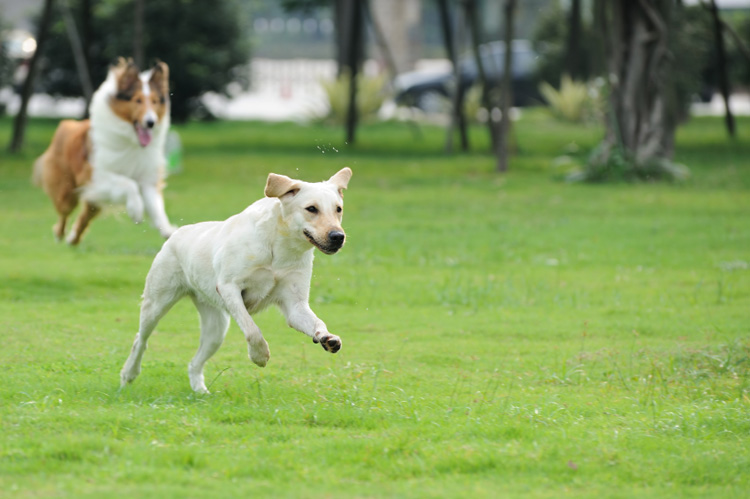
Dog Park
raywoo/iStock

Some people think dog parks are all the rage while others are hesitant of them. I’ve had my fair share of dog park experiences as well as a variety of breeds and temperaments. I thought I’d give you my two cents on the pros and cons of dog parks.

Dog Park Information

Dog parks are usually made up of two different fenced areas–one side for small dogs and one side for large dogs. Most dog parks have rules and regulations posted outside the gate before you enter for safety reasons. Some of these rules include, but are not limited to, no leashes inside the fenced area, no food, dogs must be vaccinated and no aggressive dogs allowed. However, there’s no one to reinforce these rules. Many times they’re completely ignored.

Pros of Dog Parks

Dog parks allow dogs an area to play off leash with other dogs and socialize with people as well. This is especially handy for people who live in the city or apartments. They’re a great place for advanced training practice, enrichment and energy burning. In theory, this sounds great, but usually the cons outweigh the pros of dog parks.

RELATED: Stop Using Retractable Dog Leashes in Public Places

Cons of Dog Parks

In my experience, there are way more cons than pros when dealing with dog parks due to the lack of monitoring. Most dog parks don’t have someone on duty to enforce the listed rules, which leaves a lot of room for error. The dog park isn’t a good place for a dog that suffers from anxiety, fear or aggressive behaviors since the added excitement from other dogs and people could make the issues worse. You also wouldn’t want to take a puppy who hasn’t had all of his vaccinations to a dog park, as it’s not safe for his health

Choosing a Dog Park

Now that you know what you’re up against, it’s time to figure out which dog park if any is a good choice for you. First, you should evaluate your dog and his personality. If you have a friendly, confident dog with all of his vaccinations, he may be a good candidate for a dog park. If you’re hesitant of dog parks, I suggest locating dog parks in your area and visiting them. I usually bring my dog with me along with some really tasty treats on hand. During the initial visit, I don’t actually allow my dog to enter the dog park; rather I observe the goings-on from outside. This allows me to see what the dynamic of this particular dog park is like. I’m also helping my dog build a positive association with the dog park by rewarding good behaviors in the park area.

If I see dogs bullying other dogs and pet owners allowing this behavior, I leave immediately! Most dog parks have regulars from the area, so you can kind of get a feel for how things work. If I see friendly dogs with attentive owners, then this might be a dog park that I choose to try out on my next visit. The key to choosing the right dog park is making sure you and your dog are comfortable with the area.

Be your dog’s voice. When in doubt, stay away from dog parks.

READ NEXT: How to Park Your Dog

Filed Under: Behavior, Safety Tagged With: dog parks

How to Ease Your Dog’s Fear of Sirens

December 21, 2015 by Fanna Easter

Tips for Dogs Afraid of Sirens

Dog Afraid of Sirens
egiadone/iStock

If you live in the city, you and your dog are probably pretty used to screaming ambulance and police sirens sounding off near your home. However, it’s not uncommon for dogs afraid of sirens to run, hide, or even howl at the ambulance. As a pet owner, it’s your responsibility to teach your puppy or newly adopted dog that sirens are harmless. You can train puppies, newly adopted dogs and dogs afraid of sirens to not fear the sound with these dog training tips below!

When You Hear Sirens, Give Your Dog a Treat

Many years ago, we lived in a quiet subdivision where the loudest sounds were chirping birds. We moved to downtown Nashville, which then took us a couple of weeks to teach our dogs sirens were harmless. When we brought Sobek, who was a puppy at the time, to our home, I immediately paired food with sirens to prevent fearful behavior. Now, ambulances and police cars can blare sirens in our back alley and all of our dogs completely ignore it. Here’s how we handled sirens.

Puppy’s or Dog’s First Time Hearing Sirens

If this is your puppy’s or dog’s first time hearing sirens, it’s best to pair siren sounds with a super yummy treat. We assume puppies and dogs will get used to the sound over time, but it’s almost a 50/50 chance your dog will learn to ignore the sound or react to it. Personally, I’d rather be proactive by teaching puppies and dogs that sirens are harmless than try to fix fearful behavior.

When pairing dog treats with sirens, your dog learns sirens make good things happen, such as the appearance of yummy cheese or hot dog chunks. When sirens go away so do the treats. By pairing something good with something scary, you’re changing the way your dog reacts to something scary.

RELATED: Why Acepromazine Should Not Be Used for Dogs

Dog is Already Afraid of Sirens

Scared dogs will usually flatten their ears against their head, tuck their tails in, widen their eyes, and either freeze up or run away to hide. Usually, it’s the siren sound that scares dogs, especially if an ambulance siren is screaming close to your home. Some dogs will even react to the red and blue flashing lights. Whatever is scaring your dog, it’s important to teach your dog siren sounds are harmless.

If your dog has learned to be afraid of siren sounds, still pair treats with the sound. Keep in mind, it may take a bit longer for your dog to stop being scared, as your dog has already learned to fear the sound.

Some dogs howl at sirens whether they’re close up or at a distance, as dogs have excellent hearing. Howling doesn’t dictate fear; however, it’s always best to watch your dog’s body language when this happens. If he displays the above fearful body language, then I would most certainly pair food with siren sounds. If your dog is not fearful, but just loves to chime in, I wouldn’t worry. For apartment dwellers, it’s best to teach your dog to ignore sirens by pairing food with the sound.

Changing Behavior, Time to Practice

You’ll need quick access to super yummy treats to train your dog properly. I hide treats in plastic bags near my recliner and next to the front and back doors to reward good behavior. Dogs love fresh food just as much as we do, so grab half a cheese stick and keep it next to your chair every night. If you don’t use it for siren sounds, then reward your dog for calm behavior (i.e. sleeping calmly).

Here Come the Sirens!

When introducing dogs to sirens, start tossing treats toward your dog the moment you hear sirens in the background–preferably before flashing lights appear. Once your dog has eaten the treat and sirens continue your way, keep tossing treats toward your dog until the sirens have disappeared.

If your dog is already afraid of siren sounds, you’ll need to start tossing treats the moment your dog hears sirens. Remember dogs can hear much better than us. What usually happens is your dog will sit up the moment he hears sirens, so it’s important to start tossing treats sooner than later. If you’re too late, your dog will run and hide. You can still follow him and toss treats, but he’s probably so scared by then he won’t eat treats. Start tossing treats the very moment your dog responds to the siren. Sooner is always better.

Continue Pairing Treats With Sirens

Over the next two weeks, keep pairing yummy treats with sirens. By now, puppies and dogs that haven’t heard sirens in the past will totally ignore sirens. It may take an additional week or two for scared dogs to tolerate the sound, meaning no more running and hiding. Take your time and move at your dog’s speed. As always, if you’re stuck, reach out to a professional dog trainer for any questions you may have.

Being proactive is key. Start pairing food with siren sounds immediately.

READ NEXT: Supplements for Anxiety in Dogs

Filed Under: Behavior Tagged With: dog afraid of sirens, dog hates siren, dog howls at sirens, dog scared loud noises, dog terrified of sirens, why is my dog afraid of sirens

Why Acepromazine Should Not Be Used For Dogs

December 17, 2015 by Fanna Easter

Acepromazine for Dogs is a Bad Idea

Acepromazine for Dogs
James Johnson/iStock

Acepromazine, also known as ace, has been used as a tranquilizer for years. However, acepromazine for dogs has recently shown some pretty nasty side effects. Before giving your dog acepromazine, even if your vet recommended it, it’s important to understand why scared dogs should never take acepromazine. 

Now, I’m not a veterinarian, but I do work with moderate to severe dog fearfulness and anxiety on the daily, have earned multiple nationally recognized animal behavior certifications, have worked as a vet tech for many years, am currently a psychology major, and currently work for a veterinarian pursuing my animal behavior certification. I also learned the hard way about the pitfalls of acepromazine for dogs, and I can tell you I’ll never do it again. So yes, I do feel I can speak on this subject.

Acepromazine Won’t Reduce Fear or Anxiety

Acepromazine Side Effects

While acepromazine for dogs will tranquilize the body, it doesn’t sedate a dog’s brain, which is where fear and anxiety are created. After taking acepromazine, your dog’s body is unable to move, but his brain is fully functional and freaking out.

To understand the effect of acepromazine on dogs, let’s look at this situation from our perspective. Let’s say you’re terribly afraid of loud noises and decide to take acepromazine to reduce your fear. After 20 minutes or so, you hear fireworks exploding in your neighbor’s backyard. When you try to move away from the sound, your body doesn’t move. However, your brain is still responding with fear. You start to cry because you can’t move, close the curtains or scream for help.

Yes, this is what happens when dogs take acepromazine and then are exposed to fearful stimuli (i.e. loud sounds, anxiety-filled car rides, thunderstorms, scary dogs and people).

[perfectpullquote align=”full” cite=”” link=”” color=”” class=”” size=””]Telling an anxious dog to relax works about just as well as telling someone on fire to not think about it. It’s impossible.[/perfectpullquote]

Acepromazine For Dogs Will Make Fears Worse

Can you imagine being stuck in your body, yet unable to move while being exposed to your deepest and darkest fears? When dogs are repeatedly exposed to scary situations, their fear worsens. Remember, anxiety is a symptom of fear and it’s learned. Anxiety is predicting your fear will happen.

Let’s say a man wearing a red shirt mugs you. You’ve never had a problem with men wearing red shirts before, but you just learned they’re scary (fear). The next time you see a man wearing a red shirt, you’ll likely become anxious (anxiety) because of your past scary experience (fear). It would take many positive experiences with red shirt-wearing men before your anxiety reduces, which takes time.

Now, let’s say you took acepromazine to reduce your fear of red shirt-wearing men during a party. Then, a red shirt man mugs you at the party while you were completely helpless and unable to move because you consumed ace, yet your brain was fully engaged. Now, your fear is complete terror. I think you now understand how acepromazine can worsen your dog’s fear.

Medications for Anxiety in Dogs

Trazodone for Dogs

Thankfully, there are a couple of dog medications that can reduce anxiety (and fear) within your dog’s brain, causing his body to relax. By far, I’ve seen amazing results giving my dog trazodone before he’s exposed to something scary. Many of my dog training clients have had great results with Xanax (alprazolam) too, but I’ve personally witnessed better results using a combination of trazodone and alprazolam.

After Sobek, my two-year-old Rottweiler, had his ACL repaired, he was given strict bed rest for 12 weeks. Keeping a young dog quiet for that long is pretty impossible, so our orthopedic veterinary specialist prescribed trazodone twice a day during that period. Honestly, we couldn’t have made it through the healing process without it, especially since jumping on our bed once could have destroyed his orthopedic repair.

If your dog requires strict crate rest, ask your veterinarian to prescribe trazodone. Please never use acepromazine for dogs. Trazodone calms the brain, so a completely bored dog doesn’t panic when his body is unable to respond. No one should be trapped in an unresponsive body with a completely engaged brain ever—that’s torture.

Drug-Free Ways to Reduce Anxiety and Fear

Fear and anxiety can be draining, so I definitely recommend trying drug-free ways to help your dog. Don’t rely only on drug-free options though; sometimes, dog medications are needed to prevent anxiety and fear from becoming worse. Remember, the more your dog freaks out, the worse it’ll get. Telling an anxious dog to relax works about just as well as telling someone on fire to not think about. It’s impossible. Check out a few drug-free ideas here. As with everything, a combination approach always works best.

Be your dog’s voice. Keep him safe and fear free. 🙂

Filed Under: Behavior, Health Tagged With: ace for dog, acepromaxine side effects dog, acepromazine and dogs, acepromazine anxiety dog, acepromazine caution dogs, acepromazine fearful dog, acepromazine for dogs, does acepromazine help dogs after surgery, giving ace to your dog, keeping dog still acl, keeping dog still after surgery, keeping dog still broken leg, strict crate rest dog acepromazine, when to use acepromazine for dogs

How to Train a Bulldog to Be Polite

December 10, 2015 by Fanna Easter

Teaching Your Bulldog Polite Behaviors

How to Train a Bulldog
SuziMcGregor/iStock

Bulldogs are no different than any other dog when it comes to training. However, some dog training techniques or exercises may work better when considering a Bulldog’s personality traits. Bulldogs tend to be a little more unmotivated or stubborn in my opinion. When training your Bulldog, find what your Bulldog loves most. This will make all the difference in your positive reinforcement-based training. Let’s talk about some of the not-so-polite behaviors you may encounter with your Bulldog!

Common Impolite Bulldog Behaviors

Stubbornness

In my experience, I’ve encountered some stubborn Bulldogs, especially when training certain behaviors. However, I love a challenge, so I always welcome these Bulldogs with open arms. Plus, how can you not want to love on a Bulldog? In your everyday life, you may encounter your Bulldog’s stubborn behaviors, such as your dog ignoring obedience cues or not responding to you in general.

Lack of Maturity

You’ll usually witness a lack of maturity in puppies, but you may also see it in older Bulldogs. You’ll likely notice problem behaviors (chewing, mouthing, etc.), spurts of wild behaviors and inability to maintain focus.

How to Teach Your Bulldog Polite Behaviors

Good news, ladies and gentlemen! All of the above mentioned issues can easily be managed by using positive reinforcement based training. 

Remember, the key to training your Bulldog is to find out what motivates him whether it’s a chew toy, steak or squeak toys. Stubbornness doesn’t mean your dog is refusing to do a behavior; it just means he’s either confused or doesn’t really know what the cue means. When the latter happens, take a moment to refresh the cue you’re teaching your dog. I mean, seriously, sometimes we forget how to do things too. For lack of maturity issues, take a few steps back and give your dog plenty of items to chew on. If your Bulldog is still biting your hands, revisit mouthing techniques.

Good luck and kiss your Bulldog today! Yes, on the lips!

Filed Under: Behavior, Breeds, Training Tagged With: ask the dog trainer bull dog, bulldog training, bulldog training tips, dog training, Dog Training Tips, how to teach a dog, how to train a dog, how to train your bulldog, teach a dog, train a dog, training bull dog puppies

  • « Previous Page
  • 1
  • …
  • 16
  • 17
  • 18
  • 19
  • 20
  • …
  • 33
  • Next Page »

About

Dog Training Nation is a community of dog trainers, dog owners and dog lovers. Our mission is to provide trainers and owners valuable information to enrich dogs' lives. We cover a range of topics, from socializing puppies to dealing with aggressive dog behavior to selecting the best dog products. It is our hope you share our content to make the dog and owner world a better place.

​

Facebook

Video

Dog Training Nation is a dog training blog for pet owners and dog lovers. We cover a range of topics from puppy socialization tips to dog aggression to dog health. It is our hope you share our content to make the world a better place for dogs.

Dog Training Nation

Quick Links

Dog Training
Dog Behavior
Dog Training Videos
Become a Dog Trainer
About
Contact Us

Copyright © 2026 · Lifestyle Pro Theme on Genesis Framework · WordPress · Log in