Dog Training Nation

In Dogs We Trust

  • Home
  • Training
    • Dogs
    • Puppies
    • Clients
  • Behavior
    • Breeds
  • Health
  • Safety
  • Resources
    • Equipment
    • Books
  • Dog Training Videos
  • About
You are here: Home / Archives for Behavior

How to Stop Bullying Behavior

February 10, 2015 by Fanna Easter

Interrupting Puppy Play
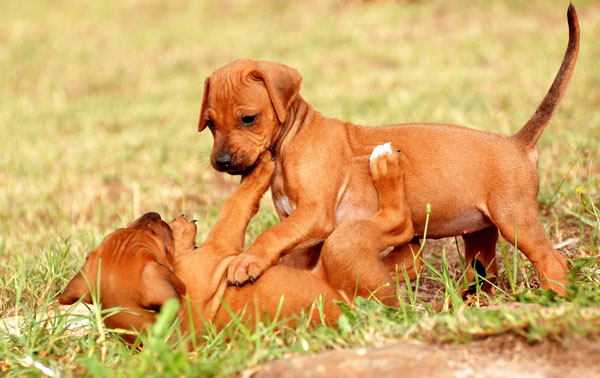
Bully Dog
The top puppy is bullying. Notice her straight lines and stiff body.

As pet parents, it’s our duty to protect our puppies and dogs. Be your dog’s voice is my motto. Dogs can’t speak, but we can. Yes, bad things happen in life, but that doesn’t mean we should allow bullying to happen. Honestly, watching your dog, or someone else’s dog, being bullied is cruel. By saying or doing nothing, you’re saying it’s okay so let’s chat about how to interrupt puppy play.

Are Puppies Having Fun?

If you’re not sure, pick the “top” puppy (puppy on top of the other puppy) up and hold her waist high. If the bottom puppy jumps up and wants to continue playing with the top puppy, then puppy play was fun. If the bottom puppy runs away, then the top puppy was being a bully. Remove the bully from the playgroup. If not, she will chase down this puppy again, or pick another one, and bully her too.

RELATED: Appropriate Puppy Play

How to Stop Inappropriate Play

When you recognize bullying behavior, step in immediately. Time is of the essence here.

Puppy Being Picked On

If your puppy is being picked on, pick her up and hold waist level. Don’t forget to tuck her tail under her because a bully will jump up and try to pull her tail too.

Bully Puppy

For bully puppy pet parents, it’s best to pick up their puppies and remove them from the play session. Bring her outside the play area, attach her leash and go for a long walk. Trust me, allowing your bully puppy to continue playing will not cure her naughty behavior. It will make it worse. Plus, it’s not fair to the other puppies. Before you think I’m judging, I’ve been that pet parent before — Stella Mae is a bully. We tried puppy playtime, but she insisted on pinning and chasing. I removed her within seconds. Instead of relying on puppy play to exhaust her, I brought her on walks.

You can teach bully puppies to play nicely. However, it’s best to partner with a professional dog trainer. It’s not easy as you think. 🙂

Be your puppy’s voice!

More:
How to Train a Puppy
Top 10 Puppy Training Tips
Surviving the First Night with Your Puppy
Complete New Puppy Checklist

Filed Under: Behavior, Puppies, Training Tagged With: how to stop dogs from picking on your dog, interrupting puppy play, is your puppy a bully, my puppy gets picked on, my puppy is a bully, my puppy is scared of other puppies, puppy play, puppy play session tips, puppy playtime, puppy playtime tips

Training Dogs Polite Greeting Behavior

February 9, 2015 by Fanna Easter

Stop Your Door-Dashing Dog

Training Dogs Polite Greeting BehaviorIf your dog thinks the door threshold is the Indy 500 line, then check out these door-dashing dog tips. Plus, check out demo videos that teach large and small dogs.

What is Door Dashing?

Door dashing is about excitement on the other side. Dogs can’t wait to see what’s happening. Have you seen children piling out a doorway, trying to get into Chuck E. Cheese or Disneyland? That’s door-dashing at its finest. 🙂

Door dashing has nothing to do with aggression, mate seeking or dominance. This is totally unproven. If your dog barks and lunges at guests coming through the door, this is totally different than door dashing. This sounds like defensive aggression, meaning he is afraid of what’s coming through the door.

RELATED: Dog Aggression

Teaching Polite Door Manners

It’s all about consequences. If you push or rush toward the door, it closes. If you move away from the door, it opens —  voila! Dogs pick up on this quickly too. Even the best door dashers can learn polite manners within minutes.

Opening and Closing the Door

Before we start, let’s chat about opening and closing the door. Never close your dog’s nose in the door. This will teach him to be afraid of the doorway. By slowly closing it, you’re keeping the door from opening further. Close the door as your dog moves his nose from the open crack. If your dog’s nose remains in the crack of the door, hold the knob to prevent the door from opening further. After a few seconds of sniffing or patiently waiting for you to open the door further, your dog will walk away. He knows it’s not working. This is a good thing since your dog is learning that door rushing is not working.

Rewards

Most dogs love playing in the yard, going for walks or having guests visit so they get super excited about going through a door. Use this excitement as a reward! If you want, you can toss a treat just outside the open door for a super nice reward.

Front Door Precautions

Living in an urban area, about 40% of my clients don’t have backyards so they reward with walks. Plus, door dashing happens when guests come over when dogs wait for the moment to dash through the door and romp the neighborhood. Yikes! When practicing polite greeting manners using the front door, make sure your dog is leashed.

Adding a Cue

When teaching polite door manners, you can use a verbal cue, such as “wait” at the door. Think of a “wait” cue as a pause button when your dog remains with you until released. Personally, my cue for “wait” at the door is my hand touching the doorknob. Then, I say “yes” or “OK” to release them. Now, you can say “wait” if you like. It’s up to you.

How to Stop Your Dog From Door Dashing

Practice each step until your dog will wait patiently for the door to open all the way.

  1. Place your hand on the doorknob. If your dog rushes toward the door, remove your hand from the knob. Note, the door has not opened yet. Most dogs will launch toward the door when you touch the knob. 🙂
  2. Now, slowly open the door to leave a tiny crack. Keep practicing until your dog moves away from the cracked door. Once he ignores the opening door or moves away from the door as it opens, say “yes” or “OK” and open the door.
  3. Open the door further, working in small increments. When your dog waits, moves away from the door, sits, lays down or whatever, say “yes” or “OK” and let him out in the backyard.

Door-Dashing Dogs: Tips for Small Dogs Video

Personally, I find teaching polite greeting manners a tad more difficult with smaller dogs. Small dogs can fit through small door cracks and between your feet so it’s probably best to leash them during the first steps.

Teaching Door Manners to Big Dogs Video

Larger dogs are pretty easy to teach polite door manners. If you’re unsure, leash your dog during the first steps.

Happy training!

You may also like: My Dog Refuses to Move

Filed Under: Behavior, Dogs, Training Tagged With: dog runs out door, door dashing dogs, how to teach polite door manners for dogs, how to teach your dog to wait, how to teach your puppy wait, my dog always runs of door, my dog charges through the door, my dog keeps running out the door, my dog runs of the door, preventing dog door dashing, puppy runs of door, teach your dog to wait at the door, teaching dogs not to run out the door, tips for dog dashing dogs, tips for teaching your dog not to run of the door

Help! My Dog Refuses to Walk

February 4, 2015 by Fanna Easter

What to Do When Your Dog Refuses to Walk

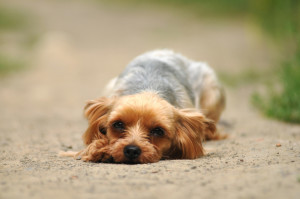
Dog Refuses to Walk
Learn tips to un-pancake your dog!

Most likely, you’ve had this happen during walks. When you’re heading home after a fun walk in the park, your healthy dog flattens himself to the ground, refusing to walk any farther. I call this “pancake dog,” meaning a dog will splat himself against the ground and refuse to walk.

Now, if your dog is limping, ill or injured, this doesn’t apply. Bring your dog to the vet ASAP.

Why Dogs Refuse to Walk

Below are a few reasons why a dog refuses to walk and flatten himself onto the ground.

Fearful

About 50% of the time, I notice puppies and dogs refuse to move forward due to fear. Usually, their bodies are lying backwards away from whatever is frightening them. This happens because a puppy or dog is scared of whatever he is approaching at the time. This could be another dog, person, narrow space, barrier or she has not learned how to walk on a leash. Honestly, it could be anything.

Never force or drag a dog past a scary object. Instead, stop to give your dog some time to process the situation. If she’s still scared, use the Hansel and Gretel technique described below. For smaller dogs, it may be easier to pick them up and walk past the scary thing. At home, practice confidence building games, such as Touch the Goblin.

RELATED: How to Train Fearful Dogs

Don’t Let the Fun End

Dog Training Tips
Learn tips to get your dog happily moving forward!

And this is the other 50%. 🙂 Puppies and dogs are smart. They’ve learned that splatting against the ground and holding firm keeps them in their favorite environment longer. Dogs will refuse to move usually once you turn to head home. I’ve had puppies splat after class. They don’t want to leave. 🙂

The Hansel and Gretel technique will get them moving. Also, practice randomly walking away from the park and then rewarding good behavior (non-splatting) by walking back to the park for another game of fetch. No one wants the fun to end, but by making the act of going home fun, you don’t have to worry about pancaking along the way.

Un-Pancaking Your Dog

The goal of this dog training exercise is to get your dog up and willingly move forward, which builds confidence. Studies have shown giving dogs choices and allowing them to choose is just as reinforcing as treats—something to ponder!

Hansel and Gretel

Unlike the children’s fable, you’re moving your dog away from the monster not toward it. Sprinkle yummy treats in a trail past the scary thing. Using super yummy treats will really help. Your dog (or puppy) will eat the treats while keeping an eye on the monster. But he’s moved himself, which is a big step forward!

Plus, pairing yummy treats with something scary, well, makes things less scary. If you were stuck in an elevator, you would probably freak out. But what if you were stuck in an elevator with a dozen delicious cupcakes or a six-pack of your favorite beer? Not so bad, huh? You’ll indulge while waiting for someone to rescue you. 🙂

Touch the Goblin

During this game, you’ll need a clicker and lots of yummy treats. Introduce something odd in your home, such as the vacuum or folding step stool (both usually freak dogs out). Practice each step 10 times and then move onto the next one. If your dog becomes frightened, take 1 to 2 steps back.

Never move, wiggle or touch the scary thing during training sessions. This just makes the scary thing even more terrifying to your dog.

  1. Click and treat when your dog looks at the scary object.
  2. Now, click and treat when your dog walks over to the scary thing.
  3. Usually, after a few sessions, dogs will try to touch the scary thing with craned necks, wide eyes and splayed out back legs. Click and treat this behavior. They are being pretty darn brave right now.
  4. Say “touch the goblin” as they lean forward, trying to touch it with their muzzle.
  5. After a few touches, your dog will exude confidence. He successfully slayed the dragon so be proud! We call this building confidence. 🙂

After a few “touch the goblin” sessions with different scary things, you’ll notice your dog will likely march right up and touch the next scary thing. He’s learning that scary things will not harm him.

WATCH: How to Get a Dog Moving When He Refuses to Walk

You may also like: Humping Dogs

Filed Under: Behavior, Dogs, Puppies, Training Tagged With: dog refused to move, dog refuses to get out of water, dog refuses to go outside, dog refuses to leave, dog refuses to leave dog park, dog refuses to walk during walks, dog training, Dog Training Tips, dog training videos, fearful dogs, how to train a puppy, my dog refuses to walk on leash, my dogs stops moving on leash, positive reinforcement dog videos, professional dog training tips, puppy is scared of moving cars, puppy training tips

Appropriate Puppy Play

February 3, 2015 by Fanna Easter

Puppy Playtime

Be Your Puppy’s Voice

Puppy Play
Appropriate play is happening. This is a snapshot of mouth wrestling. 🙂

It’s important for puppies to play with other puppies. However, it’s vital to make sure puppy play is safe while your puppy has fun in addition to your puppy learning proper doggie behavior. After learning appropriate puppy play tips, check out how to interrupt puppy play.

What Good Puppy Play Looks Like

Many pet parents ask, “What does bad puppy play behavior look like?” However, let’s first discuss what good behavior looks like. You can’t spot bad behavior until you understand and can spot good puppy play.

Puppies play in dyads, or pairs. When another puppy approaches, the third puppy is usually left out. If your puppy is the third puppy out, dog trainers who are supervising puppy play will usually rotate puppies out so everyone gets a turn.

VIDEO: Appropriate Puppy Play

Supervised Puppy Playtime

Please, if you follow just one thing from this article this would be it. Attend Puppy Playtime session with a professional dog trainer. Dog behavior is hard to interrupt and pro dog trainers are fluent in this language. Please refrain from bringing your puppy to dog parks, especially with unknown dogs, as this can be a recipe for disaster.

Taking Turns

When puppies play, they take turns chasing each other being the puppy on top of the pile and so forth. It’s like watching a dance, but each puppy takes a turn at leading the session.

If one puppy becomes too rough, the other puppy will stop playing and freeze. This is a signal saying, “Um, dude, this is not funny anymore and I’m uncomfortable.” The other puppy should stop playing, interrupt and understand freeze behavior and adjust his play style to keep the session going. Sometimes, you’ll notice the other puppy jumping, dancing, play bowing and even rolling over on his back to entice the unsure puppy back into the play session.

Growling Happens

Growling, during puppy play, can send pet parents into fits. Some puppies are more vocal than others. My sister is pretty quiet; I’m not! Growling won’t erupt until later during a play session. Some puppies learn that vocalizing is fun when playing with a different puppy. They begin growling and it concerns the new puppy so they stop growling.

RELATED: My Dog Growls at Me

Mouth Wrestling

This usually means his mouth is wide open, teeth are showing sprinkled in with a bit of growling. Mouth wrestling sessions are usually short, and both puppies are sitting or lying down next to each other.

You Should See Soft Curves

When puppies are playing, you should see soft curves and roundness, usually around their rumps and shoulder areas. Even when running and chasing, you’ll see curves. If you notice straight lines, stop puppy play. This means someone is not happy any longer.

Stop Bad Puppy Behavior Immediately

Unfortunately, I see a lot of bad puppy play at dog parks and it breaks my heart. Also, I’ve watched good puppy play turn badly quickly. What happens during puppyhood stays with a puppy forever.

RELATED: Puppy Training

Is Your Dog a Bully?

Bullying is a part of society. As much as we ban it, it still emerges. This behavior is learned. A puppy or person chooses this path to survive because it works. I add people as examples because I see this everyday. Someone posturing to get ahead or stop specific behaviors. Best thing to do with a bully is to walk away and ignore him. The same applies to puppies. Don’t allow a bully to practice his behavior. The more he practices, the better he gets.

Bullying behavior looks like:

  • Pinning other puppies (or dogs) and holding them on the ground.
  • Overwhelming, rough and persistent play. They’re harassing other dogs who are trying to ignore them.
  • Constantly nagging other dogs to play with them usually includes nips, muzzle punches or body slams.
  • Ignores body freezes from other dogs and continues to jump or bite. (Nip other puppies to continue playing.)

Pinning

Bully puppies will run at full blast right up to other puppies and pin them to the ground. They’ll hold them down and growl while their body language is stiff and straight. Even if the held down puppy screams, they continue to pin and growl in their face. If the frightened puppy gets away, the bully runs after him and pins again. This will go on until a person intervenes or the scared puppy displays defensive aggression. If you can’t get away, you fight.

RELATED: Defensive Dog Aggression

Scary Chasing

Bully puppies, and dogs, will seek one specific puppy and chase this poor thing until they can pin him down or attack. You can spot scary chasing, as the scared puppy looks like he is running for his life with his tail tucked, ears laid back and eyes wide. He is terrified. The bully’s body language is straight and stiff, and relentlessly picks on the scared puppy.

Be your puppy’s voice!

READ ALSO: Dog Time Out

Filed Under: Behavior, Puppies, Training Tagged With: appropriate puppy play, is my puppy a bully, managing puppy play, puppies at dog parks, puppy play, puppy play groups, puppy play time, puppy play tips, should I bring my puppy to dog parks, what happens during puppy play time

Calming Dogs During Thunderstorms

February 2, 2015 by Fanna Easter

Calming Dogs Afraid of Thunderstorms

How to Calm a Dog During a Thunderstorm
Don’t wait until a storm hits. Prevention is best for calming dogs afraid of thunderstorms.

If you’ve never woken up, panicked by thunder and lightening, and immediately started looking for your dogs, then you’ve not shared your home with a dog frightened by thunderstorms. I’ve been there, many times actually, and even though it’s been five years since the last thunder girl passed, I still wake up looking for her among the light casted by a storm.

Why Are Dogs Afraid of Thunder?

We don’t know for certain, but the common denominator for thunder phobia is anxiety. Astraphobia, commonly known as thunder phobia, is an abnormal fear of lightening and thunder, and develops in both animals and humans. Some claim thunder phobia is treatable and I agree to a point.

Dog trainers relentlessly debate on precursors, meaning triggers that cause anxiety before thunderstorms. Many theorize dogs are sensitive to a drop in barometric pressure while others believe the loud boom of thunder or flashing light of lightening is the main culprit. Personally, I feel it could be all or one. All dogs are different and will react differently.

Anxiety is a wicked and complex little demon. While it can be learned, I feel some dogs and people are prone to feelings of anxiety. Some dogs are cool as cucumbers while others react to anything, but it’s the latter who usually succumb to phobias.

Just because a dog is afraid of thunderstorms, it doesn’t mean he isn’t afraid of all loud sounds. Strange, huh? At one time, I lumped sound phobic dogs into one category, but not anymore. Personally, I’ve shared my home with two dogs who were terribly afraid of thunderstorms, but completely nonreactive to fireworks. Then, I’ve encountered dogs afraid of all loud noises so be careful of labels. 🙂

Thunder-Phobic Behavior

For the most part, dogs will exhibit one, several or all of these behaviors before a storm approaches. It’s common for nervous behaviors to increase during a storm.

  • Pacing
  • Drooling
  • Heave Panting
  • Vocalizing
  • Trembling
  • Seeking Comfort From a Person (Waking You Up, Trying to Get Close to You)
  • Hiding in the Bathroom (Sometimes in the Bathtub) or Closet

Severe Displays

  • Rips crates apart, if kenneled during storms.
  • Escapes. Destroying doors, jumping through windows or crawling under fences to escape a storm.
  • Aggression. Some dogs panic. It’s just like a panic attack.

How to Calm Down a Dog

When tackling thunderstorm phobia, I find a combination approach is best. I would recommend trying each suggestion and then combining them for the best results. Another tip is to introduce products and supplements when thunderstorms aren’t present, or you’ll end up teaching your dog that putting on a Thundershirt means a storm is looming. 🙂

RELATED: Thundershirt for Dogs

Preparation

Usually, we focus on the preventive part instead of prevention, which is human nature. Use preventive products 30 minutes before a storm approaches or, better said, before your dog displays thunder-phobic behavior.

Thundershirt

As the name implies, this product works wonders for thunder-phobic dogs. It actually pushes against calming acupressure points just like swaddling a baby lulls a cranky baby to sleep.

Music

Oh, the power of music. I wish more pet parents incorporated it into their dog’s daily life. Not only will classical music calm a nervous dog, it will also likely drown out thunder noises. Now, when living in Texas, storms were so loud I had to blare The Doors until 4 a.m., which worked like a charm.

RELATED: Calming Music for Dogs

Turn on Lights

When lights are out, our body knows it’s time to rest. Turn on a few lights, especially if lightening is frequent and bright. This will diminish the haunted house effect of lightening. Or, better yet, turn on the TV. The constant changing light and sound will drown out all aspects of thunderstorms.

Melatonin

My first choice for thunder-phobic dogs is melatonin. It has a pleasant calming effect with minimal drowsiness. Usually, I dose 20-30 minutes before a storm approaches. If the storm misses you, no worries, your dog will get a good night sleep.

When to Seek Animal Behavior Treatment

Seek professional assistance from a veterinarian board certified in animal behavior. These experts can rule out heath issues plus have the most up-to-date information on medications for treatment, which provide minimal side effects. If your dog displays severe thunder-phobic behaviors or thunderstorms affect your dog’s quality of life, seek professional help.

Thunder phobia is treatable with a healthy dose of prevention sprinkled with a mixture of preventive products!

READ ALSO: Anxious Dog Tips

Filed Under: Behavior Tagged With: are all dogs afraid of thunderstorms, calming dogs during thunderstorms, canine thunderstorm phobia, do thundershirts work, dog afraid of lightening, dog afraid of loud noises, dog afraid of thunder, dog hates thunderstorm, dog scared of lighting, dog scared of thunder, dog shakes during thunderstorms, dog thunderstorm melatonin, dogs afraid of thunderstorms, dogs and thunderstorm remedies, dogs anxiety thunderstorms, dogs fear of storms, dogs fear thunderstorms causes, handling thunderstorm phobia in dogs, thunderstorm dog tips

  • « Previous Page
  • 1
  • …
  • 23
  • 24
  • 25
  • 26
  • 27
  • …
  • 33
  • Next Page »

About

Dog Training Nation is a community of dog trainers, dog owners and dog lovers. Our mission is to provide trainers and owners valuable information to enrich dogs' lives. We cover a range of topics, from socializing puppies to dealing with aggressive dog behavior to selecting the best dog products. It is our hope you share our content to make the dog and owner world a better place.

​

Facebook

Video

Dog Training Nation is a dog training blog for pet owners and dog lovers. We cover a range of topics from puppy socialization tips to dog aggression to dog health. It is our hope you share our content to make the world a better place for dogs.

Dog Training Nation

Quick Links

Dog Training
Dog Behavior
Dog Training Videos
Become a Dog Trainer
About
Contact Us

Copyright © 2026 · Lifestyle Pro Theme on Genesis Framework · WordPress · Log in