Dog Training Nation

In Dogs We Trust

  • Home
  • Training
    • Dogs
    • Puppies
    • Clients
  • Behavior
    • Breeds
  • Health
  • Safety
  • Resources
    • Equipment
    • Books
  • Dog Training Videos
  • About
You are here: Home / Archives for Behavior

How to Train Fearful Dogs

August 8, 2014 by Fanna Easter

Fearful Dog Training Tips

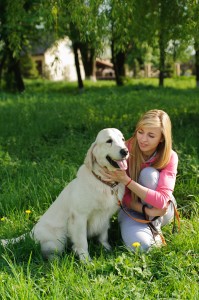
Fearful Dog
ArenaCreative/Deposit Photos

Fearful dogs break my heart. It’s not their fault they’re scared. They are either born this way and/or learned through scary encounters.

When training or living with a fearful dog, you’re using the same basic learning principles, but doing a few things differently. Always remember: fear causes aggression. We are all equipped with “fight or flight” mode. It’s a defensive mechanism. In fearful dogs, this mode is turned up a few notches.

Never use punishment-based training methods. Never punish a dog for being fearful, you will make it much worse. Punishment means yelling, screaming, pushing, pulling, correcting with a collar or verbally, and hitting a dog. It’s not their fault. Would you punish a child for being scared? I think not.

First, enroll in a Relaxed Rover class. Relaxed Rover classes are designed for fearful dogs and incorporate the below fearful dog tips. Class size is smaller than regular group classes and provides plenty of opportunities for practicing while offering guidance from a professional dog trainer.

Use the Very Best Treats

This is so important. I’m shocked how many dog owners disregard dog training treats. This is your dog’s currency, so use treats your dog loves!

Control His Environment

If your fearful dog refuses to eat his treats and you’re using hot dogs and string cheese (i.e. high value treats), stop and assess the situation. Is your dog distracted by:

Another dog standing too close?

o Move your dog away, at least 10 feet, if possible and try again.
o Provide visual barriers, such as bushes, fences and distance.

A person standing too close?

o Move your dog away, at least 10 feet, if possible and try again.
o Provide visual barriers, such as bushes, fences and distance.

Loud noise?

o Move away from loud noises and refrain from teaching your dog around loud noises. This could mean walking your dog in a park instead of alongside a busy road.

Quick movement?

o This startles many fearful dogs, as they believe quick movement means they are coming to get me.
o Provide visual barriers.

Teach Redirection

Redirection means to reward your dog for doing something else. If your dog jumps up, reward him for sitting instead. When redirecting, always continue to manage your environment.

If another dog is standing too close,

o Teach your dog the “look at that” cue.
o When your dog looks at another dog, click and treat. Your dog learns dogs equal food.

If a person is standing too close,

o Teach your dog the “look at that” cue.
o When your dog looks at a person, click and treat. Your dog learns strangers equal food.

If there is loud noise,

o Feed your dog as a loud noise is happening.
o Trust me, you’re not rewarding your dog’s scared behavior. You are pairing yummy food with something scary, such as a noise. This works wonderfully!

If there is quick movement,

o Teach your dog the “look at that” cue.
o When your dog looks at whatever is causing quick movement, click and treat. Your dog learns quick movement equals food and quick movement does not mean you are coming to get him.

Build Confidence

By teaching a fearful dog the “look at that” cue, he’s learning the world is not scary, which is very empowering. The more your fearful dog learns, the more confidence he will build!

I highly recommend enrolling in controlled dog sports, such as agility and nosework. By controlled, I mean one dog and handler are allowed in the ring at a time. This means low distractions and lots of one-on-one attention from the dog trainer.

Nosework is awesome for fearful dogs! Nervous dogs usually blossom after just one session. They learn to do something else instead of worry, and every dog has a good nose–even baby Pugs. 🙂

Preventing Shut Down Dogs

When a dog shuts down, he has given up to the extent he becomes frustrated. This condition is called learned helplessness, which can be treated. We cover learned helplessness in more detail in this article.

Bark back! What tips have worked for your fearful dog?

Filed Under: Behavior, Dogs, Training Tagged With: dog aggression, dog bite, dog trainer advice, dog training, dog training advice, Dog Training Tips, fearful dog, how to train a dog, how to train a scared dog, my dog is scared, puppy aggression, puppy bite, scared puppy

Can Dogs Speak Human?

August 6, 2014 by Fanna Easter

Communicate With a Dog, Don’t Scare Him!

Dog Speak
Your dog’s point of view!

Can dogs understand human behavior? Yes and no. Mostly, humans confuse dogs. Some human behaviors are offensive to dogs, especially when we crowd and insist on petting them. In this guide, we teach you how to better communicate with a dog.

How to Communicate With a Dog

Dos

As a dog approaches you, stand still and turn sideways.

  • Turning sideways is much more inviting than facing a dog with your body held forward (same for people too!).
  • Standing still asks the dog to make the first move.

Allow a dog to approach you first.

  • If a dog ignores you, it’s OK. Do you want to meet and shake hands with everyone in the grocery store? Probably not.
  • Dogs can engage without physical contact just like when a person nods and then goes about his business. Take the hint and do the same. 🙂

Bend down when attaching your dog’s leash or collar or petting him.

  • It’s intimidating when someone looms over you. I’m 5’2″ and it’s uncomfortable when this happens. I move away from the person.
  • Toss treats toward your dog. He learns you equals treats.

RELATED: Dog Socialization Tips

Only pet a dog when he wants to be petted.

  • Never reach out and sneak a few pats in. Read the dog’s body language if he’s ignoring you. Take the hint! 🙂
  • If you reach out to pet a dog and he moves away, it’s OK. Most people take this as an insult, but it’s your dog’s way of saying, “Nice to meet you too, but I’m not too sure about this situation.”
  • Always listen to the dog’s body language, then explain to the pet parent, “Well, she’s not too sure about me, so I’ll respect her space.”

Allow a dog to sniff you before petting him.

  • When dogs sniff you, they’re deciding if they want to meet you or not.
  • Just because a dog sniffs you does not mean he wants to be petted. If he moves away from you, do not attempt to pet him.

Provide plenty of space, especially if a dog is fearful or stressed.

  • Respect a dog’s bubble. We all have space bubbles and some have larger bubbles than others. We dread the guy who gets in your face when talking. He has a small bubble!
  • If a dog is uncomfortable, take 4 steps away from the dog. Respect the bubble!

Don’ts

How to Interact With Dogs
Good job! Bend down, stand sideways and pet dog’s chest.

While you’re reading these examples, imagine a person doing these things to you. Scary, right?

  • Stare directly into a dog’s eyes. Instead, look at the dog’s chin or upper neck.
  • Walk directly toward a dog to pet him.
  • Reach out and pet a dog you’ve never met before. Allow the dog to approach your hand held by your side.
  • Greet a dog and pet him on top of the head or face.
  • Force a dog to meet another person, dog or scary object.
  • Force your dog to play with other dogs, and it’s clear he isn’t comfortable in that situation. Not all dogs enjoy playing with other dogs. Just like some people don’t like hanging out with a bunch of other people.
  • Put your face next to your dog’s face (hugging or kissing your dog). In the dog world, this is rude behavior. Remember, dogs smell each others’ butts as greetings. 🙂 If your dog turns his head away or pulls away from you, he doesn’t like it.
  • Yell or scream at your dog. Dogs don’t know why you’re mad. They live in the moment and act guilty because you’re scaring them. Acting guilty is a combo of stress behaviors.
  • Play “I’m gonna get you!” game with a dog you’ve never met before. Usually, this involves a person jumping toward a dog, which is very scary to dogs. I’ve seen dogs lunge and attack a person because they were terrified. Dog are fast and have huge teeth, so never tease them.
  • Chase a scared or stranger dog. Instead, stop, bend down and say “puppy puppy puppy” in a high-pitched voice. Remember, when you’re standing still and squatting down, you’re more approachable and the high-pitched voice will draw the dog toward you.
  • Take a treat away from a dog. Instead, play the trade game.
  • Scare your dog by hiding and jumping out, wearing a mask, etc. Your dog learns you’re unpredictable, and this could cause a dog to become aggressive to people.

Can you imagine a person patting you on the head or a stranger walking directly up to you and touching you—yikes, respect the bubble! If you’ve done some of these human behaviors dogs hate, don’t beat yourself up. You did it because you didn’t know any better. 🙂 But now you do! It’s time to try to communicate with your dog again with these tips! Trust me, your dog will thank you!

Now, it’s your turn! How well do you communicate with your dog? What human behaviors have you noticed your dog hates? Please comment below!

Filed Under: Behavior Tagged With: dog aggression, dog aggression to other dogs, dog behavior, dog growls, dog tips, dog training, dog training advice, Dog Training Tips, how to train a dog, how to train a puppy, how to train your dog, how to train your puppy, preventing dog aggression, preventing dog bites, puppy training, puppy training tips, stop a dog from biting

Is Your Dog Confused?

August 4, 2014 by Fanna Easter

Confused Dog: Dog Training Tips

Confused Dog
Huh? What do you want?

If you’re wondering whether or not your dog is confused, the answer is probably yes!

I will say it: it’s our fault when a dog becomes confused. We didn’t give clear instructions. Many teachers are quick to blame their students, but it’s not the students’ fault when they make mistakes. The teacher wasn’t clear enough for the students to understand. Students must be successful within 1-2 attempts. If not, they will become confused.

Don’t allow your dog to make mistakes. If he doesn’t understand within 1-2 attempts, stop and make the next attempt easy. Mistakes are part of the learning process, but too many mistakes cause frustration, which stops the learning process.

What does a confused dog look like?

Confused dogs display many signs, such as:

  • Become hyperactive
  • Ignore you and their high value treats
  • Startle easily
  • Bark or lunge at other dogs
  • Lay on the ground and totally ignore you

During group dog training class, when I notice a confused dog, the owners are usually very frustrated at this point. They feel the dogs are blowing them off. I gently explain their dogs are simply confused and they should take a break. If you keep pushing, your dog will shut down completely, and we never want to get this far ever.

What should I do?

When you have a confused dog, remain still and drop 10 treats on the ground for your dog. Take 5 deep breaths and relax for a few minutes. Continue relaxing until you and your dog feel better. Pushing, pulling, tugging or yelling will only make the situation worse.

In a few minutes, your dog will look up at you, so smile and ask your dog to “touch.” Touch is an easy cue, which sets your dog up for success immediately. We all like small wins, right? Now, you and your dog are feeling much better, so you can get started again.

VIDEO: Teach the “Touch” Behavior

How to Prevent Confusing Your Dog Again

  • Use treats your dog loves! Confused dogs are more forgiving if you’re using fabulous treats. 🙂
  • Take lots of breaks: Let your dog drink some water, enjoy a quick play session in the backyard or let him sniff outside. Meanwhile, you should sit and relax, drink some water, or read the paper.
  • Keep dog training sessions short: Think 1-2 mins.
  • If your dog becomes confused and isn’t successful within 2 attempts, this means it’s too difficult for him to understand. End the dog training session with an easy behavior, such as “touch.”  Then, try to simplify the behavior further by breaking it into smaller sections.
    • Example 1: Your dog will stay until you step away. This is normal, as your dog has learned that your movement means he’s moving too.
    • Instead of stepping away, shift your feet while remaining in the same place.
    • When your dog is successful, take one step back and then one step forward, and so on.
    • Move at your dog’s pace until he learns “stay” means to remain in this spot while you walk away.

Prevent Learned Helplessness

Learned helplessness is when your dog shuts down, meaning he’s become so discouraged. Make sure to listen to your dog.

It’s your turn! When does your dog become confused?

READ ALSO: Leash Corrections & Leash Pops Don’t Work

Filed Under: Behavior Tagged With: clicker training, dog behavior, dog training, dog training advice, Dog Training Tips, how to train a dog, how to train a puppy, how to train your dog, how to train your puppy, obedience training, puppy training classes, puppy training tips

Desensitization Training

August 1, 2014 by Fanna Easter

Desensitizing DogsDesensitizing Dogs

Desensitization means to become less sensitive over time to something you do not like.

Desensitization teaches a dog to become less sensitive around other dogs. Counter conditioning changes your dog’s uncontrollable reaction when around something scary (like other dogs). Counter conditioning and desensitization work together as a team. Counter conditioning is used in human and dog behavior to change a negative reaction (barking at a dog) to an accepted behavior (not barking at a dog).

How does desensitization work for dogs?

To begin the process, it’s vital to break the scary or unpleasant thing into tiny pieces, and become less sensitive to one piece at a time. While this seems simple to do, it takes lots of time working within a dog or person’s under threshold. Under threshold refers to maintaining a low level reaction to something scary so your dog can still learn. The term over threshold implies that you have moved too fast and now your dog is barking at the other dogs, animals, people or objects that he is scared of.

Desensitization Examples

Dog barks at other dogs:

  1. Move away from other dogs until the dog will look at you instead of other dogs. This is your threshold, or safe distance, and it means your dog is comfortable and not worried that other dogs will get them.
  2. When your dog ignores other dogs, click and treat. This is when counter conditioning comes into play, as you are associating yummy treats with other dogs.
  3. Move one foot towards other dogs in the distance. Click and treat when dog ignores them.
  4. Continue to move slowly until your dog can stand within 3 feet of another dog. Click and treat.

Threshold Examples:

  • Dog runs toward your dog and base his safe zone.  Dog becomes scared and barks at other dogs.
  • When you move dog too close to other dogs, your dog barks at other dogs.

Desensitization always works for training dogs if done correctly.

When desensitizing your dog, it’s always best to involve a professional dog trainer for the best results. If your dog has moderate to severe reactions, it’s best to partner with a qualified animal behaviorist.

Now it’s your turn. How would you use desensitization when training your dog? I want to hear from you!

READ ALSO: Prevent Resource Guarding

Filed Under: Behavior Tagged With: dog behavior training, dog training

How Counter Conditioning is Applied to Dogs

August 1, 2014 by Fanna Easter

Counter Conditioning Dog Training

Counter Conditioning Dog Training

You’ve heard this technical term before, but what does counter conditioning mean? Is it only for dogs? Does it work? How does it work?

What Does Counter Conditioning Mean?

Counter means to change. Conditioning refers to the word train. As you guessed it, counter conditioning means to change your dog’s negative feeling or behavior toward something. This is done by training your dog to react differently (i.e. positively) when he sees, smells, hears or feels something that makes him uncomfortable.

When referring to a negative feeling, this is the feeling that comes as second nature to your dog. It’s instinctive and it’s something your dog can’t control when seeing an object, person or animal that makes him uncomfortable.

Counter conditioning is used in dog training to correct a negative reaction, such as barking at another dog, being destructive, fear growling and yelping, to a desired behavior (e.g. not barking at a dog, staying calm and sitting patiently).

RELATED: What is Your Dog Saying? Interpreting Dog Sounds

How Counter Conditioning is Applied in Dog Training

When training your dog, counter conditioning and desensitization work hand-in-hand. Desensitization teaches a dog to become less sensitive around other dogs or whatever is causing him to feel uncomfortable. In contrast, counter conditioning changes your dog’s reaction to the negative natural associations.

Counter Conditioning Illustrated

In a human’s mind:

  • A person shrieks at the sight of a spider.
  • When he sees the spider, a natural instinctive fear of the negative association that person carries with spiders kicks in.
  • But while he is looking at the spider, his parent hands him a $100 bill as a reward.
  • Next time the person sees a spider, he can associate seeing the spider with a $100 reward.
  • Now he is excited to earn $100 instead of shrieking in the presence of the spider.

The $100 reward given to the person has counter conditioned him that spider equals rewards (don’t be afraid).

In a dog’s mind:

  • Your dog barks at other dogs. When your dog stops barking at other dogs, he gets a super yummy treat. Your dog learns that seeing other dogs mean a super treat is coming! He has been counter conditioned to seeing a dog without barking. If he does not bark, that means good things happen.

Counter conditioning always works if done correctly!

Consult with a Professional Dog Trainer

You achieve the best results when you work with a professional dog trainer. An animal behaviorist can also help your dog if he suffers from moderate to severe reactions.

Now, it’s your turn. How would you use counter conditioning when training your dog? We want to hear from you! Post your comments below!

You may also like: How to Train Fearful Dogs

Filed Under: Behavior

  • « Previous Page
  • 1
  • …
  • 30
  • 31
  • 32
  • 33
  • Next Page »

About

Dog Training Nation is a community of dog trainers, dog owners and dog lovers. Our mission is to provide trainers and owners valuable information to enrich dogs' lives. We cover a range of topics, from socializing puppies to dealing with aggressive dog behavior to selecting the best dog products. It is our hope you share our content to make the dog and owner world a better place.

​

Facebook

Video

Dog Training Nation is a dog training blog for pet owners and dog lovers. We cover a range of topics from puppy socialization tips to dog aggression to dog health. It is our hope you share our content to make the world a better place for dogs.

Dog Training Nation

Quick Links

Dog Training
Dog Behavior
Dog Training Videos
Become a Dog Trainer
About
Contact Us

Copyright © 2026 · Lifestyle Pro Theme on Genesis Framework · WordPress · Log in