Dog Training Nation

In Dogs We Trust

  • Home
  • Training
    • Dogs
    • Puppies
    • Clients
  • Behavior
    • Breeds
  • Health
  • Safety
  • Resources
    • Equipment
    • Books
  • Dog Training Videos
  • About
You are here: Home / Archives for Behavior

Dog Breed Of The Week: Shih Tzu

November 28, 2016 by Fanna Easter

Shih Tzu Breed Information

Shih Tzu Breed Information
animalinfo/iStock

Many centuries ago, it was believed that the first Shih Tzus originated from China. It was thought that Shih Tzus were bred for indoor companionship, but had the heart of a lion. Hence, they were given the name “Shih Tzu” to mean “lion.”

During World War II, Shih Tzus were brought into the US by military personnel who were visiting and fighting overseas. One thing that is certain is Shih Tzus still have the heart of a lion today. 🙂

General Characteristics

Shih Tzus are small dogs, weighing between 9-16 pounds and standing 9-10½ inches at the shoulder. The Shih Tzu breed has a long, thick flowing coat that needs regular trimming and brushing. Shih Tzus have a range of coat colors, including white and red, solid black, white and tan, gold with a black mask, solid liver, and so forth.

They have a characteristically round face with a short muzzle, or otherwise known as having a brachycephalic face. Basically, their noses look pushed in toward their face. Their round and expressive eyes are simply gorgeous, especially when framed with long fringed ears. Shih Tzus have square bodies and tails that fall right over their backs.

Health

Shih Tzus are a healthy dog breed, but do have inherited and congenital health issues as well. Responsible dog breeders health test all dogs before breeding, which reduces the chances of passing preventable diseases to puppies. If adult dogs don’t pass health tests, they’re immediately spayed or neutered.

Common inherited and congenital issues within the Shih Tzu breed include:

  • Hip dysplasia
  • Thyroid issues
  • Shunts
  • Allergies
  • Von Willebrand’s (bleeding disorder)
  • Renal dysplasia

Every responsible dog breeder must be aware of diseases that are common within their lines. If a dog breeder claims their dogs and puppies have no health issues, they’re not telling you the truth. Please, if you decide to purchase a Shih Tzu puppy, only purchase from responsible breeders who are held to strict breeding regulations by the American Shih Tzu Club. Interestingly, responsible dog breeders charge the same or even less for a puppy than unethical breeders.

Buyer Beware: Imperial or Teacup Labels

Unethical breeders use marketing strategies to attract and charge more money for smaller Shih Tzu puppies within a litter. There’s no such thing as an “Imperial Shih Tzu.” This is a deceitful ploy to charge customers more money for runts of a litter. The same goes for the term “teacup” because there’s no such thing as a teacup Shih Tzu. Responsible breeders won’t charge more for smaller puppies. If someone claims to breed “Imperial Shih Tzus” or “Teacup Shih Tzus,” run away!

RELATED: Correct Dog Breed Names

Grooming

Oh, Shih Tzus need extensive grooming! Most Shih Tzu coats are clipped into a puppy cut (about 1½ inch) with longer ear hair and tail coat. A full show coat that touches the ground requires hours of grooming each day. Puppy clips are easy to brush and bathe, but still require grooming every 6-8 weeks. Trim nails weekly to an acceptable length (nails shouldn’t touch the ground), and brush teeth daily.

Exercise & Dog Training

While Shih Tzus are a smaller breed, they still need daily exercise and mental stimulation. Plan to walk your Shih Tzu at least 30 minutes every day, and provide mental stimulation with puzzle and food stuffed toys during meal and snack times.

All Shih Tzu puppies should enroll and complete a Puppy group to learn polite manners and socialize with other dogs and people. But don’t stop there; enroll your adolescent Shih Tzu into a Basic Manners group dog training class for further socialization.

RELATED: Why You Should Enroll in Puppy Training Class

Rescue or Breeder?

Of course, adopting a Shih Tzu from a rescue is best because you’re saving a life. If you decide to purchase a Shih Tzu puppy or adult, please only buy from responsible breeders. Don’t purchase puppies from pet shops because their parents aren’t health tested. Plus, the breeder’s sole purpose is to churn out as many puppies as possible for money.

To find out more details about Shih Tzus, breeders, rescue and anything else related to this strikingly beautiful breed, please visit the American Shih Tzu Club website.

Filed Under: Behavior, Breeds Tagged With: find a shih tzu breeder, imperial shih tzu, rescue shih tzu, shih tzu, shih tzu health, teacup shih tzu, training a shih tzu

Can Chiropractic Care Reduce Dog Aggression?

November 23, 2016 by Fanna Easter

Chiropractor for Dogs With Aggression

Dog Chiropractor
Wavebreakmedia/iStock

Dog aggression is a tough situation regardless of the cause. Pet owners scour the earth to find solutions for their dogs’ aggressive behavior, picking up each and every rock to find a magic cure or some positive nugget of hope that will bring peace. As a dog trainer, and someone who has shared her home with aggressive dogs, I completely understand the search for a solution.

With that said, I’ve recently discovered newer modalities that promise to reduce aggression and I’m intrigued. It seems regular chiropractic adjustments are helpful for certain causes of dog aggression. But it’s not a magic cure.

Dog Aggression Caused By Pain

Depending on the cause of your dog’s aggression, regular chiropractic adjustments from a qualified practitioner can help. Many dogs growl, lunge, snap and even bite because they’re in pain. So many times, we completely miss or ignore our dogs’ body language indicating that they’re suffering. Then, a well-meaning family member pats or walks next to our dogs and unfortunately they lunge, snap and bite.

Know the Signs

Since pain can cause aggression in dogs, it’s important to rule out disease or any abnormalities that may be causing your dog discomfort. If, at any time, your dog begins acting strangely, bring him or her to your veterinarian immediately. When dogs are in pain, their symptoms aren’t as obvious as limping, whining, whimpering and so forth.

Some suffering dogs will distance themselves from family members by hiding in another room. Because all dogs are different, some dogs will stiffen up as you reach out to pet them while some will turn away, leave the room or growl. When in doubt, check it out.

RELATED: How to Know If Your Dog Has Thyroid Dysfunction

How a Dog Chiropractor Can Help

Chiropractic adjustments not only bring your dog’s body back into alignment, but they also allow energy to move better. While this may sound a bit “woo woo” to some, I’ve witnessed it work on myself and my dogs. Chiro adjustments provide great results for arthritis, chronic tummy issues, ligament strains, injuries, chronic illnesses and so forth.

Each chiropractic adjustment builds on itself, which means each adjustment is like taking a step forward in the right direction. Many dogs feel relief immediately during or after their first adjustment. Stella, my Bull Terrier, rams into walls like a small tank while playing. Our vet adjusted her neck and she was a totally different dog afterwards. She slept for 3 days, and her typical crankiness was gone!

Find a veterinary chiropractor here.

Can Chiro Adjustments Reduce Other Types of Aggression?

The simple answer is we don’t know yet. Some dog-to-dog aggression cases have benefited from regular chiropractic adjustments while others saw no change in behavior. Without solid research, it’s hard to say for sure. However, knowing that pain can cause dog aggression, I do believe regular adjustments can certainly help.

As I’ve dabbled in Traditional Chinese Medicine (TCM), I’m pretty impressed with the results so far. Keeping an open mind to all modalities will most certainly benefit dogs and my clients, but I’m not quick to assume one thing can change everything.

It Takes a Combination Approach

As I’ve said before, I wish magic wands worked for dog behavior. If it were that simple, our local shelters would be empty. Be careful of quick-fix promises because they’re extremely rare. I believe a combination approach works best for changing dog behavior. Relieving your dog’s pain, or bringing his body into alignment will help, but it’s vital to teach your dog how to react differently around triggers too.

Regular chiropractic adjustments are certainly worth a try!

Filed Under: Behavior, Health Tagged With: benefits of chiropractic care for dogs, can chiropractic care stop dog aggression, chiropractic adjustments dog aggression, chiropractic care for dogs, how to find a chiropractor for dogs

Leash Corrections & Leash Pops Don’t Work

November 16, 2016 by Fanna Easter

Dog Training: The Problem With Leash Corrections

Leash Corrections Don't Work
Smitt/iStock

Punishment is an extremely controversial subject, and highly debated between parents, grandparents and even dog trainers. Most pro or con debaters quickly take a position and fiercely argue why it’s the only option available. But I don’t think anyone really hears each other between the name-calling, finger-pointing, flaming social media posts and so on.

While I’m not a parenting expert, I’m certainly an expert in dog training. With that said, I’d like to explain why leash corrections are an issue. Leash corrections are when you pull on your dog’s leash to get him to do something. They’re also called leash pops.

Before firmly digging in and protesting, please take a moment to understand why leash corrections are bad. Seeing both sides makes for a well-rounded person. Allow me to explain why and show research proving leash pops do more harm than good.

Leash Corrections Don’t Teach Dogs Anything

When correcting your dog with a leash pop, you’re not really teaching your dog anything. Many years ago, I worked for a huge pet retailer where an older and very wise District Manager leader once said, “Anyone can tell someone what he or she did wrong, but a great leader teaches him or her what to do instead.”

That resonated with me on another level. I understood those principles from a dog training perspective, but to watch a proven leader teach his team how to excel in every situation using his motto was extremely powerful.

Physical or verbal corrections will destroy your relationship with your dog. I’ve personally witnessed how leash corrections ruined the bond between dog and owner many times. Pet owners swear their dogs “appreciate fair corrections because they’re done with love.” Yet, their dogs’ body language would say otherwise.

Punishing is more rewarding to the punisher than the punished. That statement probably stings, but it’s true—even Dr. Phil agrees.

It’s Not Your Dog’s Fault

Pet owners become frustrated with their dogs, and then take their frustrations out on their dogs. Anything and everything that goes wrong during the learning process is blamed on the dog. In my 20-plus-years of dog training, I’ve only witnessed one pet owner take responsibility. Another invaluable quote I learned the hard way will always stay with me is: “As a teacher, it’s our job to teach a learner. If the learner is confused, the teacher did something wrong.”

A Valuable Lesson From Training My Fish Dribble

While completing a 6-month-long national dog training certification program, I had to train a non-canine species to perform certain tasks. Teaching a fish to perform tasks was super exciting and really challenged my animal training skills. Here’s a tiny gilled animal floating around in water that couldn’t care less what I did or didn’t do. This quote stays near my heart because it’s true: When Dribble (my blue betta) became confused, it was my job to figure out a better way.

When dogs (fish or humans) become confused, they either stop moving, choose to do something else or leave. If your dog doesn’t respond to a cue, he’s either confused or wasn’t trained to do otherwise. The learner is right, my dear reader. 🙂 As a pet owner, it’s your job to teach your dog how to co-exist politely with humans.

As for Dribble, he learned quickly and so did I! Plus, he lived a long and happy life and performed his learned behaviors every day. 🙂

Why Punishment is a Slippery Slope

Now, back to leash corrections. Most pet owners justify their uses of leash pops, or punishment, with the following reasons:

  • “My dog stopped listening to me.”
  • “He knows better.”
  • “She knows what I’m asking her to do.”

All three reasons boil down to: “My dog embarrassed me, so I corrected him.” Or “I had to chase you for 10 minutes, and I’m going to punish you because I’m frustrated” or even “How dare you do that to me?”

These are also the same reasons why dog owners scream “no” at a dog. And if you disagree, you’re not being completely honest with yourself. Are you happy when giving your dog leash pops? 99.9% of pet owners punish their dogs when disappointed. Leash corrections are used to indicate “wrong choice,” but we all know the “no” command is meaningless.

Take Responsibility

I’m aware that life isn’t filled with rainbows, unicorns and sunshine all the time. Though, I do know how we react to life is most important. Yes, your dog will chew a hole straight through your mattress, hike his leg and pee on your leg during an important presentation, and knock you down so hard that both shoes fall off (all true stories), but how you react is key.

Next time you become frustrated during a dog training session or in any other scenario, take a moment to breathe deeply. Excuse yourself or hand your leash over to a friend, walk away, and compose yourself. Once you calm down, it’s your duty to figure out a better way to teach your dog that doesn’t involve punishment. That’s what all great teachers do.

If your dog misbehaves, use that opportunity to reteach a behavior and practice it in the situation that caused your dog to run off, ignore your cue, jump up on someone or dash through the door. Don’t punish. Teach your dog what is expected of him in that situation instead. 

This is More Than Just My Opinion

Many naysayers will claim this is just my opinion. While that’s true to a certain extent, I’ve based my opinion on scientific learning principles that have been proven time and time again. Shoot, these are the same principles Dr. Phil uses with children and adults. These learning principles work for humans, dogs, cats, tigers, dolphins and even snails. We all learn the same way, and saying punishment must be used with certain breeds of dogs is completely ridiculous. And dare I say, a bit disrespectful too. All humans are taught the same, so why are we breed discriminating?

Times have changed and research has finally caught up with dog training. It’s time to embrace dog training methods that work instead of listening to or reading outdated material. Your dog deserves it. 🙂

Filed Under: Behavior, Clients, Training Tagged With: best dog trainer tips, dog leash corrections, dog obedience tips, dog trainer tips, dog training, Dog Training Tips, how to correct a dog, how to correct a puppy, how to punish a dog for bad behavior, how to punish a puppy for bad behavior, how to teach a dog, how to train a dog, positive dog trainer tips, positive dog training tips, problem with punishing your dog, problem with punishing your puppy, punishment dog, puppy obedience tips, should you correct your dog, should you correct your puppy, teaching a dog, training a dog

A Massage to Calm Hyperactive Dogs

November 14, 2016 by Fanna Easter

Calming a Hyperactive Dog Through Massage

Hyper Dogs
fcscafeine/iStock

Last week, I explained how to massage your dog. Immediately, several readers asked, “How and could you massage a hyperactive dog or puppy?” Of course! Each and every dog will benefit from massage, especially hyperactive and easily excited dogs. One of the best benefits of calming a hyperactive dog through massage is she learns how to self-settle in the process. 🙂

Here’s how to give your hyper or excited dog a massage.

Give Your Dog Something Else to Do

In the beginning, I recommend pairing something yummy with massage. This not only teaches your dog that massages make fun things happen, but it also keeps a wiggly dog calmly busy until she learns to relax. Dog treats should last several minutes, so I recommend filling and freezing a toy with yummy food or making a peanut butter plate.

Find a comfortable seating spot, such as the floor with a pillow under your bum. The moment you sit on the floor, your dog will bounce right up to you. Place the food stuffed toy or peanut butter plate on the ground and start slowly massaging your dog.

Start Massaging the Less Wiggly Part

As your dog enjoys her treat, start massaging your dog’s back or rear end. It’s a bit tough massaging her ears while she’s licking away at food, but you can certainly give it a try. If your dog bounces with excitement when you touch her, lightly place your hand on her chest or back, and hold it there for a few seconds. Now, move your hand slowly toward your dog’s rear end.

If your dog starts bouncing around again, remove your hand and wait until your dog settles down with her toy before trying again. Sometimes, slow petting can be too much for easily excited dogs, which is completely fine. Start and move slowly in the beginning.

Of course, if your dog is uncomfortable with you approaching or touching her with food around, I wouldn’t recommend a food stuffed toy. If this happens, check out this resource guarding article.

Take It Slow

For hyper dogs, massaging them slowly is key. For example, one massage stroke should last one second. Count “one Mississippi” silently as you’re gliding your massage hand across your dog’s shoulder, chest, neck or hind legs. For smaller dogs and smaller body areas, that means slowing down even more. Slow is good.

Rhythmic sounds and beats are calming, and that pertains to massage too. After completing a one-second massage glide, continue to silently count for another second as you lift up your hand and place it back down on your dog. Better yet, use your breath to count. As you exhale, massage your dog. When you inhale, pick up and reposition your hand. Slow rhythmic massage will calm hyper dogs. 

If your dog raises her head, sits up or stands, that means your hands were moving too fast. Or it could simply mean your dog has had enough. She will probably find a nice comfy spot to relax post massage, and that’s a good thing! Keep massage sessions short at first, and soon your dog will become a massage junkie.

Set the Mood

Play calming music for dogs in the background like falling rain or soft classical music. Remember, slow rhythmic music is best. In a pinch, “Riders on the Storm” by The Doors works great. 🙂 Music will calm you too. If you’re calm and relaxed, your dog will follow suit.

Take a deep breath, especially when your hyper dog gets amped. You might be surprised at her calm reaction! Keep practicing. 🙂

Filed Under: Behavior, Health, Resources Tagged With: can you massage a hyper dog, can you massage a hyper puppy, does massage help a hyper dog, how to calm a hyper dog, how to massage a hyper dog, how to massage a hyper puppy, massage excited dog, massage excited puppy

What to Do When Leaving Your Dog Alone

November 9, 2016 by Fanna Easter

Tips for Leaving Your Dog Alone

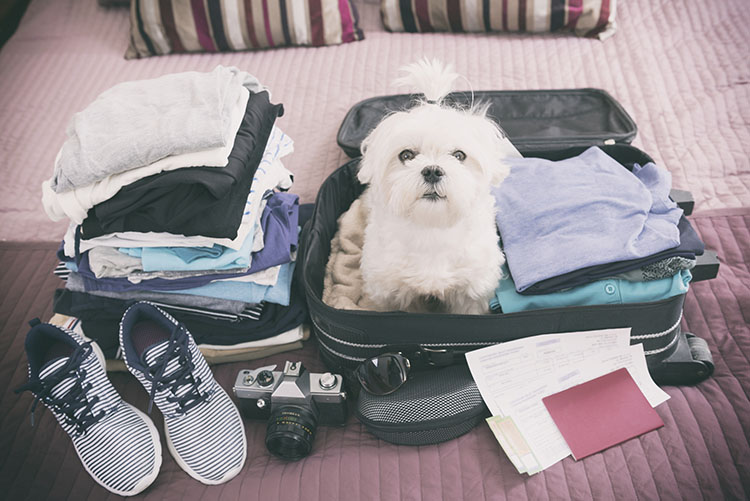
Leaving Your Puppy Alone for 8 Hours
Please don’t leave.
humonia/iStock

Oh oh, the suitcase is out. Now your dog knows you’re leaving.

It’s amazing how quickly dogs understand very subtle cues that indicate you’re leaving for vacation, work, errands or outdoors to check the mail. Next time your dog looks worried when you’re reaching for your car keys, try these dog training tips to positively change his behavior.

Pair Goods Things With Leaving

The first tip for leaving your dog alone for 8 hours is to pair good things with the action of you leaving. When we pair good things in certain situations, we teach dogs that good things happen during those situations. Think about it this way: if you’re waiting for a server to bring you a glass of wine at a restaurant, you become frustrated if it takes long. But if your server offers complimentary appetizers while you wait, it’s not so bad. Now, what if it rains $100 bills while you wait? That’s even better! You learn that waiting patiently is a good thing. 🙂

As pet owners, it’s our job to find what our dogs absolutely love! This is the first step to positively changing your dog’s behavior. Once we find it, it’s time to pair good things with leaving your dog home. Check out these examples of good things that can be paired with the action of you leaving:

  • Kong filled with layers of baked chicken and peanut butter
  • Canned food stuffed inside an interactive toy that’s been frozen overnight
  • Fetch with your partner
  • Sprinkled kibble along a huge area rug

But, How Does Your Dog Know You’re Leaving?

This next step takes a bit of detective work. While getting ready for work, watch your dog’s body language. It’s important to find which action cues your dog that you’re leaving him alone. While you assume grabbing your car keys is a cue, trust me, your dog knew way beforehand—just like getting out the suitcase is a dead giveaway.

To successfully change your dog’s behavior when you leave for work or vacation, it’s important to find the very first cue that tips your dog off. Does your dog’s face change when you’re taking a shower, running the water for your shower, combing your hair, putting out your work clothes or moving quickly around the house? My dog knows something is up the moment I touch my hair straightener. 🙂

Once you’ve figured out exactly what cues your dog that you’re leaving, it’s time to pair good things with that cue.

RELATED: Separation Anxiety in Dogs

Reiterate That Good Things Happen When You Leave

It’s important to pair something good with your “I’m leaving home” cue. As you touch your hair straightener, take a shower or put on cologne, give your dog a food stuffed toy to enjoy. If another person plans to stay home while you’re away, ask him or her to play ball with your dog outdoors. This keeps your dog happily distracted and busy with something they love.

Good things shouldn’t stop there though. Toss your dog another food stuffed toy as you’re heading out the door too. This further pairs good things with you leaving home. After a game of fetch, your family member can toss your dog a food stuffed toy to enjoy afterwards. This prevents your dog from wandering around the house looking for you. If this seems like a lot of food, split your dog’s daily meals into frozen food stuffed treats. Now, you can head off to work guilt-free. 🙂

Pair Goods Things 95% of the Time

To be effective, good things must happen often during stressful times. If it doesn’t happen often enough, it won’t work. Keep frozen food stuffed toys in the freezer for easy access. Give your dog a delicious bully stick to enjoy while you’re getting ready for work. When it’s time to head out the door and leave your dog alone, trade the bully stick for a food stuffed toy and voila! Aim to pair good things about 95% of the time.

Now, it’s time to change your behavior too. The moment you feel a tinge of guilt develop in the pit of your tummy, picture your dog happily playing or licking a yummy food toy. 🙂

Filed Under: Behavior, Dogs, Puppies, Resources, Training Tagged With: dog cries when I leave, dog gets upset when you leave home, dog hates staying home alone, dog hates when I leave, dog training, Dog Training Tips, I feel guilty leaving dog home alone, puppies cries when I leave, puppy hates when I leave, separation anxiety dog, tips to prevent separation anxiety dogs, tips to prevent separation anxiety puppies

  • « Previous Page
  • 1
  • …
  • 6
  • 7
  • 8
  • 9
  • 10
  • …
  • 33
  • Next Page »

About

Dog Training Nation is a community of dog trainers, dog owners and dog lovers. Our mission is to provide trainers and owners valuable information to enrich dogs' lives. We cover a range of topics, from socializing puppies to dealing with aggressive dog behavior to selecting the best dog products. It is our hope you share our content to make the dog and owner world a better place.

​

Facebook

Video

Dog Training Nation is a dog training blog for pet owners and dog lovers. We cover a range of topics from puppy socialization tips to dog aggression to dog health. It is our hope you share our content to make the world a better place for dogs.

Dog Training Nation

Quick Links

Dog Training
Dog Behavior
Dog Training Videos
Become a Dog Trainer
About
Contact Us

Copyright © 2026 · Lifestyle Pro Theme on Genesis Framework · WordPress · Log in