Dog Training Nation

In Dogs We Trust

  • Home
  • Training
    • Dogs
    • Puppies
    • Clients
  • Behavior
    • Breeds
  • Health
  • Safety
  • Resources
    • Equipment
    • Books
  • Dog Training Videos
  • About
You are here: Home / Archives for Behavior

6 Ridiculous, Yet Common Dog Myths Dispelled

November 4, 2016 by Fanna Easter

Dog Myths Dispelled: Know Your Dog Facts
Dog Myths
AprilCarlsonPhotography/iStock

You’ve heard these dog myths before, I’m sure. Every pet owner has encountered myths about dogs from well meaning animal lovers, and it’s time to dispel these dog myths. While growing up in South Louisiana, people would say that feeding a dog gunpowder will make them mean. Um, no. It will make them sick; not aggressive.

Believe it or not, I heard these 6 ridiculous dog myths this week and I’m here to debunk them.

Giving Your Dog Human Food Will Cause Begging Behavior


via GIPHY
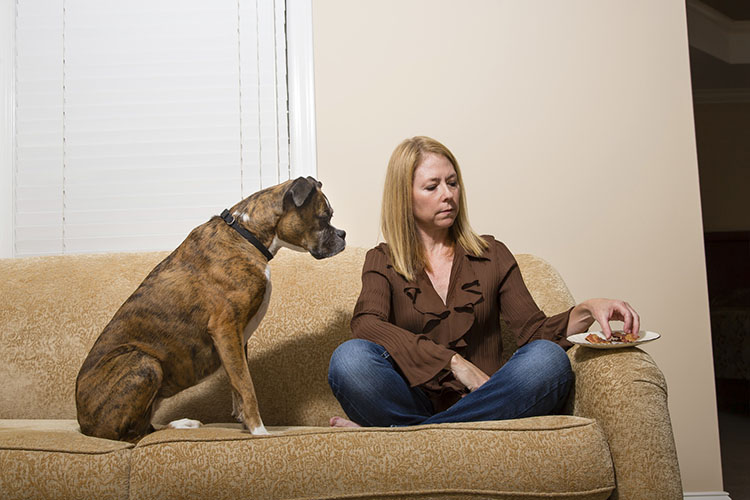
False. Giving your dog “people” food won’t cause your dog to beg. Now, giving your dog food (even his own kibble) from your dinner plate or the dining room table will teach your dog to beg.

Think about it this way: If someone hands out cupcakes or $10 bills by the toilet, you would hang around the toilet if you like cupcakes and money. In a nutshell, if good things happen in specific areas, your dog will learn to hang out there. Instead of handing your dog food tidbits from the dinner table, give your dog a food-filled Kong in his crate. That way, you can enjoy your meal and your dog learns that dog crates mean peanut butter Kongs (a good thing!).

Your Dog’s Warm Nose Means He’s Sick


via GIPHY
Nope, this is false too. Your dog’s nose reacts to the temperature or humidity and not illness. Dogs’ noses will look and feel warm, especially after a long nap. If your dog acts differently, hides in another room, refuses to eat or drink, limps, vomits, or has loose stool, then he’s probably sick.

Dogs Eat Grass Because They Have Worms


via GIPHY
False. Dogs eat grass because they like it, especially young green grass that grows during springtime. When dogs eat grass, it’s best to keep them outdoors for a few more minutes, as most will vomit afterwards. If you notice worms in your dog’s poop or around his anus, then it’s time for a vet visit.

Humping Dogs are Seeking Dominance


via GIPHY
This is false too. Humping is a normal part of play behavior; it has nothing to do with dominance. When playing, each dog has his or her own specific play style. Some dogs pull ears, others grab another dog’s hocks and some dogs hump. If the humpee feels uncomfortable, he moves away and the humper learns to change his play style or no one will play with him.

Allow Dogs to Work It Out


via GIPHY
Beyond false. Never allow dogs to work it out, ever. Allowing dogs to work it out will teach dogs to fight it out. If one dog is bullying another dog and the scared dog is unable to get away, he will fight to get away. This is called fight or flight behavior. If you’re unable to leave a scary situation, then you’ll fight to get away. When in doubt, interrupt or prevent your dog’s behavior and consult an experienced positive reinforcement dog trainer.

Dogs Run Through Doorways First to Show Dominance


via GIPHY
Nope, this is false too. Dogs run through doorways first because they weren’t taught differently. It has nothing to do with dominance. If you’re walking toward a doorway, such as the back door, your dog runs through the door because he wants to go outside. That’s it, I promise. Now, it’s the pet owner’s job to teach a dog to wait at the door. This prevents dogs from running out and getting hurt.

What’s the craziest dog myth you’ve ever heard? I promise I won’t laugh. I may giggle a bit, but won’t laugh.

Filed Under: Behavior, Clients, Resources, Training Tagged With: does giving dog's human food cause begging, dog dominance, dog myths, dog training, Dog Training Tips, dog warm nose mean he's sick, dominance myth, stop dog begging, stop dog humping, stop puppy begging, warm dog nose mean sick, what causes a dog to beg, what dogs hump, why does my dog bed

Why You Shouldn’t Teach Your Dog the “No” Command

November 2, 2016 by Fanna Easter

The “No” Command is Meaningless

Teach Dog No
VehicleShoot/iStock

Honestly, some dogs have learned “no” is their name. It’s true, as a dog trainer, I’ve watched pet owners say “no, No, NO” over and over again to their dogs. Sometimes, the “no” command makes up the entire interaction between pet owners and their dogs. Not only is this puzzling and depressing, but it also doesn’t work.

Dogs learn to tune out unimportant information and the “no” command soon becomes background noise. So, let’s look at this word differently and see if “no” even teaches your dog anything. The answer just might surprise you.

What Does the “No” Command Mean?

Seriously, what does “no” mean? It could mean:

  • Stop that
  • Don’t move
  • Stay there
  • Don’t look at me
  • Don’t walk toward me
  • Stop touching me
  • Stop licking
  • Stop jumping
  • Don’t run away
  • Don’t dig
  • Stop barking
  • Wrong
  • Stop pulling

“No” has multiple meanings, so when telling your dog “no,” what are you asking your dog to do? It gets confusing, especially for the dog. Basically, telling a dog to stop doing something is the most common reason pet owners say “no.” Here’s the tricky part though: if your dog stops doing a behavior (i.e. barking, jumping, pulling, or growling), what do you want your dog to do instead? Before you answer, let’s visit this scenario from a human perspective.

Let’s say you and your husband go out to dinner. As you’re driving down the road, you notice that your husband is speeding. The moment you notice he’s speeding, you tell her “no.” In this situation, what are you asking her to do? “No” could mean take your hands off the wheel, close your eyes, turn around, look at you, stop the car or go faster. The word “no” provides little information. Instead, say “please slow down” and your husband will lift his foot off the accelerator.

Does “N0” Teach Your Dog Anything?

It really doesn’t. Instead of saying “no,” teach your dog an alternative behavior. When teaching your dog an alternative behavior, you’re rewarding a behavior that’s opposite of what you’re asking your dog to stop doing. This may sound complicated, but it’s actually quite easy and works quickly. Basically, you’re asking your dog to do this instead of that. Check out these examples:

  • If your dog is jumping on guests, ask your dog to “sit” instead.
  • When a dog barks, reward her for being quiet.
  • If your dog potties inside your home, reward her when she potties outside.
  • When your dog pulls on leash, reward a loose leash.
  • If your dog moves around while brushing, reward your dog when she stands still.
  • If your dog runs away from you, reward your dog for running toward you.
  • If your dog tries to eat food on the ground, teach the “leave it” cue and reward when she “leaves it.”
  • If your dog has something in her mouth, teach “trade game.”

Believe it or not, teaching and rewarding an alternative behavior works every time! Instead of focusing on what your dog did wrong, figure out what your dog should do instead. Here’s a huge hint: choose the opposite behavior. It’s really hard for a dog to jump and sit at the same time. 🙂

Should You Teach Your Dog the “No” Command?

No, you shouldn’t. Remember the word “no” is meaningless. Instead, teach your dog what to do instead. When I explain this “no” concept, most pet owners ask, “Well, what should I say when my dog is running toward a busy road?” My response to that is: “Teach your dog a rocket recall, and say “Rover, come here” when this happens. Then, reward your dog thoroughly with treats and tons of praise.” Screaming “no” won’t stop your dog from running away. I wish it were that simple.

Beware of dog trainers and websites claiming that dogs must learn the “no” command. Remember, “no” could mean anything. Plus, “no” means nothing during the learning process. If you were learning a foreign language, such as French, and I said “no” when you spoke French, what am I teaching you? Not to speak French, it would seem. But, if I asked you to pronounce a French word differently, that would help you learn quicker and faster. It’s the same with dogs, horses, snails, fish and even children. Teach an alternative behavior instead of saying “no.”

Teaching an alternative behavior may seem a bit different, but it’s the best way to stop unwanted dog behavior. Before saying “no,” figure out what your dog should do instead. Remember, teach your dog to do this instead of that!

Filed Under: Behavior, Dogs, Training Tagged With: does your puppy understand what no means, dog doesn't know what no means, dog doesn't understand no, dog training, Dog Training Tips, how to teach a dog, how to train a dog, my dog won't listen when I say no, show dog no, teach dog no, teaching a dog, teaching your dog no, teaching your puppy no, train dog to respond to no, training a dog, training your dog no

How Muffin’s Halo Protects Blind Dogs

October 27, 2016 by Fanna Easter

Muffin’s Halo for Blind Dogs

Muffin's Halo for Blind Dogs

Several months ago, a couple consulted me about their blind dog. This case involved a younger dog that was slowly losing her eyesight, and she was bumping into furniture and walls inside her home. She had injured her muzzle several times running into a wall, and became terrified to move forward. Her pet owners felt completely helpless and wanted to improve her quality of life.

The pet owners and I agreed that moving furniture against walls would certainly help, but then I remembered something I saw a long time ago. Muffin’s Halo. They took my advice and ordered a halo for blind dogs. Soon after, their young dog regained her confidence and started happily running outdoors again.

If your dog is visually impaired, I’d certainly recommend giving this blind dog harness a try! Dogs acclimate to wearing the harness quickly and, with a bit of confidence-building games, your dog will regain her freedom again.

About Muffin’s Halo

Muffin’s Halo was created by a pet owner looking for a solution for her visually impaired dog. Muffin, the namesake for this wonderful tool, regained her confidence and was able to move through life free from stress and injury due to her new halo.

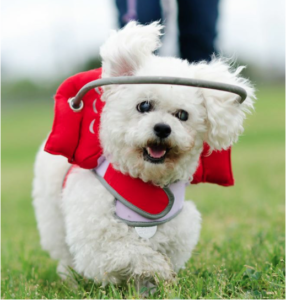
This halo for blind dogs has a lightweight ring that sits just above your dog’s head. It protrudes past your dog’s muzzle, protecting her face from bumping into walls or furniture. Not only will this ring prevent your dog from getting hurt, but it also slowly becomes a cue to navigate around an object.

Now, the ring attaches to a plush high collar that resembles angel or butterfly wings. The high collar and halo are attached to a comfortable harness that easily attaches to your dog. The harness doesn’t restrict your dog’s movement. Plus, it’s machine washable.

It’s important to securely fence off stairs and pools as a precaution. Also, move furniture against walls or provide a clutter-free walking path for your dog though each room. For the most part, small and medium dogs need at least a 3-foot wide clearance to walk through and turn around if needed. Larger dogs may need 4-5 feet, depending on their size.

Teaching Your Dog to Wear Muffin’s Halo

Dog BlindnessAnytime your dog wears a new collar or harness, it’s important to pair it with good things. You’ll need lots of super stinky and yummy dog treats that your dog absolutely loves!
  • Feed your dog treats while placing the blind dog harness onto your dog.
  • Keep rewarding your dog while she’s wearing the harness.
  • Reward her for every step she takes while wearing the harness.
  • Now, take it off and give her a break.

Continue to practice several times a day until she’s completely comfortable wearing Muffin’s Halo. Most dogs do amazingly well wearing a halo for blind dogs immediately, but it’s important to take a few extra steps to ensure she feels comfortable wearing it.

Confidence Building Game for Blind Dogs

Tap into your blind dog’s inner canine abilities—her nose! Dogs have an amazing sense of smell. They can detect cancer and low blood sugar using their noses. Once your dog is comfortable wearing her Muffin’s Halo, it’s time to teach her to walk while wearing it.

Play these games several times a day in the beginning. Going forward, these games are very useful in new environments, such as your backyard, a new home or hotel room.

To play this dog game, you’ll need several stinky treats cut into pea-sized bites and your dog with the blind dog halo on. I recommend bits of blue cheese, salmon treats or chopped hot dogs.

Step One: Follow the Treat

  • Hold 1 treat right next to your dog’s nose and give it to her.
  • Next, hold the treat about an inch from her nose, so she’s forced to take a step forward. As she walks forward, pop the treat in her mouth. Practice this a few times.
  • Now, hold a treat about 2 inches from her nose. Pop the treat in her mouth as she walks forward.
  • Continue playing this game until she quickly moves forward for a treat.

Step Two: Follow the Food Trail

  • In front of your dog, sprinkle treats 1-2 feet apart along a clear path.
  • Your dog may quickly walk along and gobble up the treats, which is fantastic! If she’s hesitant, verbally encourage her as she walks toward the sprinkled treats. The halo may touch the ground as your dog eats treats, but she’s learning that halo-bumping is harmless and rewarding.
  • If your dog’s halo bumps into furniture or walls, reward her as she’s stepping away from the object.

Keep practicing!!!

Learn More About Muffin’s Halo

Check out this video created by the inventor of Muffin’s Halo and her sweet Muffin! This product is made in the USA and available worldwide.

Do you have questions? I can answer them here!

Filed Under: Behavior, Equipment, Resources Tagged With: blind dog, blind dog scared to move, help for blind dog, muffin's halo, muffin's halo review, teach dog to wear muffin's halo, teaching blind dogs, tips for blind dogs

Help! My Dog Hates The Vet

October 18, 2016 by Fanna Easter

What to Do If Your Dog Hates the Vet

My Dog Hates the Vet
Piter1977/iStock

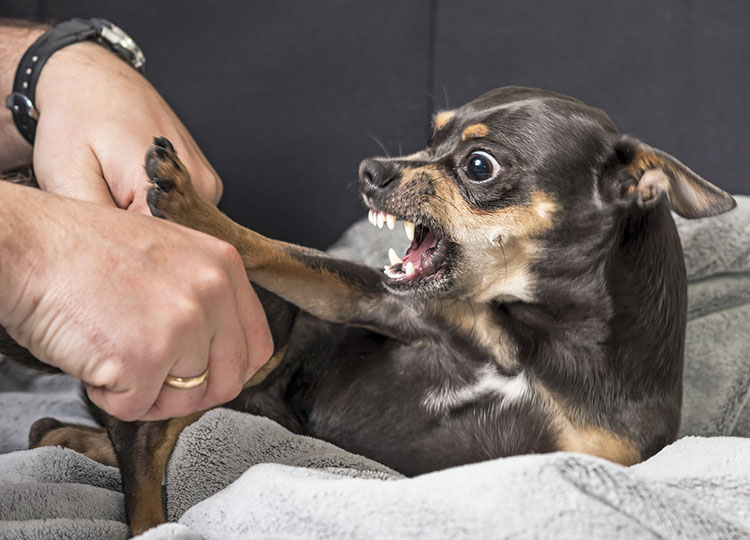
Guess what? I’ve been there, and it’s a tough place to be. Many years ago, I shared my home with a dog that growled, snarled, snapped, lunged and tried to bite our veterinarian and her entire staff. It was gut-wrenching. I know the embarrassment of watching your dog lash out, feeling helpless and frustrated.

Oh, and I know that pit in your stomach. You know, the one that forms while scheduling a vet visit when your dog hates the vet. Yup, that one. Your dog needs veterinary care, but there are things you can do that can positively change your dog’s behavior while keeping everyone safe.

Why Does My Dog Act This Way?

Your dog doesn’t behave this way because he chooses to; he doesn’t know what else to do instead. Basically, your dog is so terrified of the vet that he’s unable to control his behavior. It’s that simple. It’s easy to blame the dog; I see it every day. However, it’s not your dog’s fault for not being able to control his behavior in this stressful situation.

The good news is you can change your dog’s behavior. It may take awhile, but it’s completely worth it because it keeps everyone and your dog safe. Just remember, pairing good things with scary situations will eventually change your dog’s behavior. It works, so stay the course.

How to Change Your Dog’s Behavior

Train Your Dog to Wear a Muzzle

If your dog has lunged or snapped at the vet, your dog has been muzzled before. Muzzling a frightened dog is difficult and it certainly will cause a frightened dog to panic even more. Instead of muzzling your dog at the vet’s office, positively teach your dog that wearing a muzzle is a good thing.

For this behavior, I recommend using a basket muzzle and lots of yummy treats. Check out my favorite video on teaching your dog to love wearing a muzzle.

Muzzle training tips:

  • Practice at home first.
  • Keep sessions short like 1-2 minutes at a time.
  • Once your dog is comfortable wearing his muzzle, take your dog to your vet’s office with his muzzle on.
  • It will take 1-2 weeks of daily practice until your dog is comfortable wearing a muzzle.

In the beginning, just driving over to the veterinary office while your dog wears a muzzle is good practice. Then, you should reward your dog for comfortably wearing his muzzle while sitting in the car in your vet’s parking lot and later for walking around the parking lot. Move slowly and reward often, especially when you move to a new location. Soon, your dog will learn that getting dressed, or wearing his muzzle, means good things will happen.

Also, if you’re new to clicker training, check out this clicker training article. If you’re uncomfortable using a clicker, you can use a verbal marker, such as “yes.”

Teach Body Restraint at Home

Being held down by a complete stranger is definitely weird—no wonder our dogs freak out at the vet! All dogs (and puppies) should learn that restraint makes good things happen. It’s best to start teaching this dog behavior at home and practice for weeks before your dog (or puppy) goes to the vet’s office. During my puppy and basic manners group class, we focus on body handling and restraint, and pet owners practice daily with their dogs.

WATCH: Train Your Dog to Enjoy Body Handling

Oh, don’t forget! When your dog is being restrained during vet visits, stand next to your dog and reward him. I bring peanut butter filled Kongs and hold one next to my dog’s mouth. That way, my dog can happily lick away while being restrained. If your dog is muzzled, I recommend using canned squeeze cheese as a reward. This way, you can poke the canned cheese nozzle through your dog’s basket muzzle and squirt away during your dog’s exam.

If All Else Fails, Try Meds

Sometimes, it’s best to sedate your dog. I know it’s hard, but it may be the best option. Remember, the more your dog practices a behavior, the stronger it gets. If your dog is sedated, he won’t remember what happened, which is a good thing. Also, sedating your stressed dog will allow your veterinarian to conduct a successful physical exam.

If your dog needs to be sedated, speak with your veterinarian first. Your vet will recommend specific medications to calm your dog before a vet visit, such as Trazodone, Valium or Xanax. Please, don’t give your dog acepromazine. It doesn’t prevent your dog from panicking. Check out why acepromazine should never be used as a sedative.

Remember: If your dog could do better, he would do it. Changing behavior takes time, so keep practicing! Also, you’re not alone, we’ve all been there.

Filed Under: Behavior, Health, Resources, Training Tagged With: dog bites vet, dog hates going to vet, dog terrified of vet, dog training, Dog Training Tips, how to train a dog, my dog freaks out at the vet, my dog growls at vet, my dog hates vet, taking aggressive dog to vet

How To Create An Anxiety Wrap For Dogs At Home

October 12, 2016 by Fanna Easter

DIY Dog Anxiety Wraps

Dog Anxiety Wrap

Dog anxiety wraps are used to reduce a dog’s anxiety. Most pet owners use anxiety wraps when their dogs are afraid of thunderstorms, but anxiety wraps for dogs can also be used in many different situations. If your dog is continuously stressed, fearful or anxious or just needs help learning how to self settle, anxiety wraps are wonderful tools. Here’s how to create a DIY dog anxiety wrap.

Should You Use an Ace Bandage or Anxiety Jacket?

Back in the day, we used ace bandages as anxiety wraps because they were all we had. When applied correctly, anxiety wraps apply pressure to acupressure points, which promotes calmness. The best way to describe an anxiety wrap is a cozy hug. When newborn babies cry, they relax when swaddled in a blanket. Studies show anxiety wraps work well for autistic children too.

You’ve probably noticed Thundershirts and Calming Coats in most pet retailers. Both products are designed to mimic an ace bandage anxiety wrap. Anxiety jackets certainly look better than an ace bandage wrap, especially if your dog needs an anxiety wrap in public. But time and time again, I’ve found ace bandage anxiety wraps work a bit better than jackets. Plus, sizing isn’t an issue when you’re creating a custom wrap with an ace bandage. There are many anxiety wrap options, but the most popular is the half wrap for calming.

How to DIY Dog Anxiety Wrap

You’ll need a 2-inch wide ace bandage, which you can find at most drug stores. A 2-inch wide ace bandage is long enough for an anxiety half wrap. For dogs that weigh more than 100 lbs, you may need two 2-inch ace bandages for full coverage. If you need two ace bandages, you can extend the length by tying one end to another end.

Before wrapping your dog, you’ll need lots of super yummy treats, a helper and of course your ace bandage. In the past, I’ve used a peanut butter plate to keep my dog busy and still when a helper isn’t available.

While wrapping your dog, don’t pull or stretch the bandage when crossing and tying. An ace bandage wrap should give when your dog walks, sits or lies down.

  1. Start by placing the ace bandage on the front part of your dog’s neck.
  2. Bring both sides of the bandage toward the top of your dog’s shoulders and cross them (bring left side over the right side, etc.).
  3. Once you’ve crossed over your dog’s shoulders, bring both bandages under your dog’s chest and cross again (left side over right side, etc.).
  4. Bring both bandage ends up and tie on top of your dog’s waist. I recommend tying both ends on the side of your dog’s spine, but not directly on it.
  5. Anxiety wraps should stay in place for 20 minutes. Also, never leave your dog alone while wearing a DIY anxiety wrap. Remember it’s been tied into place, and can easily get caught onto something.

When to Use an Anxiety Wrap

You can use a DIY dog anxiety wrap anytime your dog needs one. You can certainly wrap your dog during stressful times, including car rides, vet visits (vet can move bandage around when examining your dog), guest visits and of course thunderstorms. Anxiety wraps work great when teaching young dogs how to self-settle too.

Anxiety wraps for dogs really do work! Grab an ace bandage and give it a try!

Filed Under: Behavior, Equipment, Resources Tagged With: ace bandage anxiety wrap, anxiety wrap, anxiety wrap instructions, anxiety wrap vs thunder shirt, bandage anxiety wrap, DIY anxiety wrap, DIY anxiety wrap for dogs, dog anxiety wrap, dog anxiety wrap pattern, half wrap anxiety wrap, how to do anxiety wrap dog, puppy anxiety wrap, wrap for stressed dogs

  • « Previous Page
  • 1
  • …
  • 7
  • 8
  • 9
  • 10
  • 11
  • …
  • 33
  • Next Page »

About

Dog Training Nation is a community of dog trainers, dog owners and dog lovers. Our mission is to provide trainers and owners valuable information to enrich dogs' lives. We cover a range of topics, from socializing puppies to dealing with aggressive dog behavior to selecting the best dog products. It is our hope you share our content to make the dog and owner world a better place.

​

Facebook

Video

Dog Training Nation is a dog training blog for pet owners and dog lovers. We cover a range of topics from puppy socialization tips to dog aggression to dog health. It is our hope you share our content to make the world a better place for dogs.

Dog Training Nation

Quick Links

Dog Training
Dog Behavior
Dog Training Videos
Become a Dog Trainer
About
Contact Us

Copyright © 2026 · Lifestyle Pro Theme on Genesis Framework · WordPress · Log in