Dog Training Nation

In Dogs We Trust

  • Home
  • Training
    • Dogs
    • Puppies
    • Clients
  • Behavior
    • Breeds
  • Health
  • Safety
  • Resources
    • Equipment
    • Books
  • Dog Training Videos
  • About
You are here: Home / Archives for Safety

Stop Walking Your Aggressive Dog In Public

January 22, 2018 by Fanna Easter

Why You Shouldn’t Walk Your Aggressive Dog

Aggressive Dog
Art_man/Adobe Stock

Yes, this is a very strong statement, but allow me to explain why you shouldn’t walk your aggressive dog in public. As a professional dog trainer, who works mostly with reactive dogs, there’s a reason for this strong position. Of course, it’s a free country and you can make your own decisions, but are your choices making things worse? If you share your home with a reactive dog that displays aggression in public, take a moment and think twice before leashing your dog up.

Do Public Walks Help Your Dog?

Think about this question from your dog’s perspective. If your dog lunges, barks, growls, shakes, refuses to walk forward and displays fearful body language, then your dog doesn’t like public walks. Most pet owners walk their fearful dogs in public, hoping their dogs will overcome their fears.

This is a tough way to change your dog’s behavior; it’s equivalent to asking a fearful person to walk along a bed of snakes, so he learns snakes are safe. When dogs are afraid of people or other dogs, yet are asked to walk amongst them, they are just as terrified. Plus, walking a fearful dog in public will only deepen a dog’s fearful behavior, so she will react aggressively more often.

Change Behavior With Minimal Distractions First

Pet owners wanting to change their dog’s fears is completely understandable, and what’s best for the dog. Start in a quiet environment with a certified positive reinforcement dog trainer, and move at your dog’s pace. Think about it this way: It’s best to teach a fearful person snakes are safe by introducing one snake at a time. Hold the snake far away, while giving the person $100 bills when he chooses to look at it without freaking out.

Pairing good things with scary things works, but must happen in a controlled environment to be effective. Once a dog learns that scary things make good things appear, she will become less fearful—however, this takes time.

Your Dog’s Aggression Causes Ripples in Public

When dogs bark and lunge at other dogs or people in public, it sends out a negative ripple effect. No one enjoys being barked at by a scared dog—not even other dogs. When this happens, dogs, puppies, people and children learn that dogs are scary and learn to avoid them. Soon, they become fearful of other dogs all because a dog behaved aggressively to them once. Yes, it can take one bad situation to scare a dog, puppy, person or child permanently.

Walking an aggressive dog in public definitely makes the situation worse for everyone, especially your fearful dog.

Filed Under: Clients, Safety, Training Tagged With: aggressive dog, aggressive dog in public, barking dog during walks, dog behavior, dog scared during walks, dog training, Dog Training Tips, fearful dog, how to train a dog, my dog barks at strangers during walks, teaching a dog, training a dog, walking fearful dog, walking scared dog in public

The Meaning Behind Those Yellow Ribbons On Dogs

January 16, 2018 by Fanna Easter

The Yellow Dog Project

Yellow Dog Project
Africa Studio/Adobe Stock

Walking reactive or anxious dogs in public is challenging, especially when strangers and dogs walk over to greet your dog. It’s best not to walk fearful dogs around triggers that scare them because it will only make it worse. Sometimes, avoiding scary triggers is impossible during potty walks though, especially for apartment dwellers and for those without backyards. Due to this issue, a smart individual started The Yellow Dog Project, which has gained popularity within the dog world.

What is the Yellow Dog Project?

The Yellow Dog Project is a movement to help dogs get the space they need during walks. When walking through a public area, it’s nearly impossible to identify a reactive or anxious dog unless you’re skilled in dog body language. If you have a reactive or anxious dog, the Yellow Dog Project recommends tying a yellow bow on your dog’s leash to signal to others that your dog needs space.

In general, the color yellow means caution and to slow down just like police caution tape and yellow traffic lights. When choosing a yellow bow, it’s best to use a larger brightly colored yellow bow, so it’s easily seen from a distance. Of course, if your dog is frightened by the bow, it’s best to introduce it slowly until your dog learns his or her yellow bow makes treats appear.

Does the Yellow Dog Project Work?

The Yellow Dog Project is a fantastic way to ensure strangers won’t approach your dog—that is if strangers understand what the presence of a yellow bow means when attached to a dog’s leash. This idea works best for apartment dwellers who must cross paths with other dogs and people daily due to limited space.

To ensure fellow apartment dwellers learn what a yellow bow means, hold a meeting within the apartment complex with all dog owners, families and children. Additionally, post The Yellow Dog Project flyers in common areas, such as community mailbox locations. If implemented, your neighbors will understand that yellow ribbons attached to a dog’s leash means to never approach the dog.

Try a Yellow Vest

You may find that attaching a yellow ribbon or bow to your dog’s leash may actually draw more attention, causing others to approach your dog since not everyone will know what it means. If you find this to be the case for you and your dog, purchase a yellow vest or harness that states “Do not touch,” “Do not pet” or “Do not approach.” This will make it clear to passersby.

A Word of Caution

When walking a reactive dog, always keep your distance and know when to head home. A yellow ribbon or vest won’t keep a dog safe; that’s the pet owner’s job. If a fearful dog’s behavior worsens during walks in public, then it’s best to stop walks and seek advice from a professional positive reinforcement dog trainer.

Filed Under: Safety Tagged With: anxious dog, i need space dog, i need space dog bandana, keep fearful dog safe during walks, reactive dogs, using a yellow ribbon for dog walks, walking anxious dog, walking reactive dogs, what do the yellow ribbons on a dog mean, yellow dog project, yellow ribbon dog, yellow ribbon project dog, yellow ribbon puppy

Children And Puppies: Keeping Everyone Safe And Happy

December 28, 2017 by Fanna Easter

6 Safety Tips for Children and Puppies

Children and Puppies
goce risteski/Adobe Stock

It’s that time of year where families are bringing new puppies home. One major concern most new pet owners have is introducing their new puppy to their children. Before your new puppy arrives, hold a family meeting and discuss each puppy safety tip in detail with your children. It’s vital to teach young children polite behaviors around puppies. While most of these safety tips pertain to dogs of all ages, there are a few specific to puppies only.

1. Crate Your Puppy in a Quiet Room

Place your puppy’s crate in a quiet place, such as your master bedroom. When puppies are crated, they need peace and quiet to rest and enjoy food filled toys. Refrain from placing your puppy’s crate in your children’s playroom, living room, kitchen or another busy area. Children should not harass your puppy, so close the bedroom door to ensure privacy.

2. Never Disturb Your Puppy While Eating

Puppies should be left alone during mealtime. When children approach a puppy’s food bowl, pet the puppy while eating or stick their fingers in the food bowl, this can cause a puppy to resource guard her food. It’s best to feed puppies in their crates with the crate door securely closed. Even better would be to feed your puppy her meals from food stuffed toys when crated. This applies to when your puppy is chewing on a bully stick or toy too.

3. Give Your Puppy Plenty of Space

Many children like to pick up and hold puppies like babies, but this can quickly annoy a puppy. It’s important for children to understand that puppies need plenty of space and that they should have the choice to be held or picked up.

Hugs and kisses are fine, if the puppy walks over and initiates this behavior. However, children should not walk over and hug or kiss a puppy first. Also, children should never sit, step on or lie down on a puppy. This hurts, and will cause the puppy to growl or bite.

4. Never Take Toys From Your Puppy

Puppies will chew anything and everything; it’s part of being a puppy. When a puppy grabs your child’s favorite toy, it’s important your child doesn’t pull the toy out of your puppy’s mouth. This will cause a tug-of-war game, and some puppies learn to resource guard toys from children. Instead, teach children 5 years and older to play the “trade” game. For children under 5 years of age, you should play the “trade” game.

5. Pet With Gentle Hands

Children should learn to gently pet puppies the moment a new puppy arrives in the home. Gentle petting involves slow strokes with light pressure along a puppy’s side. When children pet a puppy, they should use a flat palm and move slowly. Children should not pet puppies on top of the head, touch their faces, pull their tails, poke with fingers or throw items at the puppy. When children or adults pet puppies too quickly, it causes puppies to get excited.

6. Never Leave Children and Puppies Alone—Ever

Children and puppies (dogs too) should never be left alone together unsupervised ever. It can take less than a second for a young child to unintentionally hurt a puppy, and the puppy bites the child out of self-defense. When in doubt, place your puppy in her crate with lots of yummy treats if you need to answer the front door or cook dinner.

Filed Under: Puppies, Safety, Training Tagged With: children and puppies, dog trainer, how to teach a dog, how to train a dog, introducing puppy to child, introducing puppy to toddler, kids and puppy tips, puppy training, safety for kids and puppies, safety tips for children and puppies, teaching a dog, tips for puppies and children, training a dog, training puppies, what children should know before getting a puppy

Beware Of Bone Treats That Killed 15 Dogs

December 6, 2017 by Fanna Easter

Dog Chew Bone Safety

Dog Chew Bones
alexei_tm/Adobe Stock

The U.S. Food and Drug Administration (FDA) issued a warning about giving dogs a certain type of bone chew. Unfortunately, this bone treat caused 15 dogs to die and numerous dogs to have emergency surgery. Unfortunately, these dog chew bones have been around for decades and I’m pretty sure this isn’t the first time they’ve killed dogs. Learn which bone treats you should never give dogs as well as safe alternatives.

Stay Away From These Dog Bone Treats

Most pet retailers sell flavored and smoked bones for dogs in various sizes. These nasty bone chews have caused dogs to die. They’re real bones that have been cooked, dehydrated or smoked in various ways. Smoked bones are available in different sizes: from large femurs to knuckle bones to ribs to even kneecaps. Regardless of the bone chew’s origin (bovine or swine), never give these bone chews to dogs. If you already have these in your home, throw them out immediately.

Cooked Bones are Dangerous

When animal bones are cooked, moisture is removed from the bones. These bones are rock hard and can easily crack floor tile if dropped. So, imagine what they will do to your dog’s teeth. Cooked bones also splinter, which can give your dog dangerous gastrointestinal issues that can result in emergency surgery or even death.

Additionally, splintered bones can become lodged in a dog’s throat, cause gum laceration, crack teeth and cause punctures. If large chunks of smoked bones are swallowed, it can cause painful and deadly impactions.

Try These Dog Chew Ideas Instead

Dogs need to chew; it’s fun and a great exercise. Give your dog a yummy food stuffed Kong that has been frozen overnight, so it lasts longer. Bully sticks are a great dog chew alternative too, but make sure to monitor your dog while he chews on one of them. Raw (uncooked) bones, such as chicken wings or necks, are a great alternative, but not for the faint of heart.

Please look through your dog’s chew toys and remove any smoked or cooked bone treats.

Filed Under: Health, Safety Tagged With: bone treats, chew toys for dogs, dog behavior, dog bone treats, dog chew bones, dog chew safety, dog chew toys, dog chews that kill dogs, dog health, dog health tips, dog training, Dog Training Tips, how to teach a dog, how to train a dog, smoked dog bone chews, teaching a dog, training a dog, what to give dogs to chew

Who Should Walk Through The Door First?

November 20, 2017 by Fanna Easter

Walking Through Doors With Your Dog

Who Should Walk Through Door First
K. Thalhofer/Adobe Stock

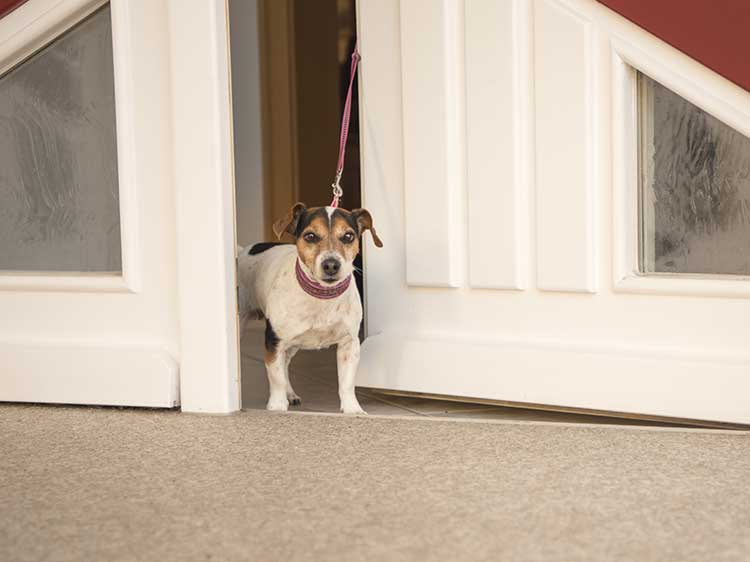
As pet owners, it’s our job to keep our beloved dogs safe. One situation that can cause stress in dogs is walking through doors, especially if something scary is on the other side. Opening doors to strangers walking by or to a vet clinic can be scary. Before walking through a door, follow these steps to keep your dog safe and stress-free.

You Should Walk Through the Door First

When something distracting or scary lurks on the other side of a door, it’s vital for you to walk through the door first. This provides plenty of time for you to assess the situation before bringing your dog along with you. When dogs walk through doorways first, especially in apartment complexes, they can easily become startled when encountering strangers, other dogs or children.

Open, Look & Listen

When bringing your dog out for a walk, grab yummy treats and leash your dog before opening the door. Then, crack open the door and peek outside for any close distractions that can scare your dog. If the coast is clear, open the door a bit wider and poke your head out for any distractions approaching or leaving the area. If it’s safe, open the door, so your dog can step out and toss a few treats on the ground. This gives your dog something fun to do while you scan the area for further distractions down the road.

If a distraction approaches that scares your dog, take a step back indoors. Close the door and give your dog several yummy treats. Pairing something good, such as treats, with a scary situation positively changes your dog’s behavior. Plus, it gets your dog back indoors quickly. Wait until the coast is clear again, then head out for a nice walk.

When walking into a veterinarian’s office, look through the glass door or poke your head through the doorway to ensure no dogs are standing nearby. If a dog or person is standing nearby, ask if they could move back, so your dog can enter. Once the doorway is clear, walk quickly to the exam room.

Dispelling Dominance

Walking through doors before your dog has nothing to do with dominance. This is a myth. Of course, dogs should learn polite manners around doorways to prevent them from running out of open doors, but again this has nothing to do with dominance. When someone mentions dominance between dogs and humans, understand they still believe in a myth that was dispelled more than a decade ago.

When pet owners walk through doors first, they’re making sure their dogs are safe.

Filed Under: Safety Tagged With: dog behavior, dog safety, dog safety tips, dog training, Dog Training Tips, doorway safety for dogs, how to teach a dog, how to train a dog, should you or your dog walk through a door first, teaching a dog, training a dog, walk through door before your dog, walking into vet office tips, walking through doorways with dogs, you should walk through door first

  • 1
  • 2
  • 3
  • …
  • 17
  • Next Page »

About

Dog Training Nation is a community of dog trainers, dog owners and dog lovers. Our mission is to provide trainers and owners valuable information to enrich dogs' lives. We cover a range of topics, from socializing puppies to dealing with aggressive dog behavior to selecting the best dog products. It is our hope you share our content to make the dog and owner world a better place.

​

Facebook

Video

Dog Training Nation is a dog training blog for pet owners and dog lovers. We cover a range of topics from puppy socialization tips to dog aggression to dog health. It is our hope you share our content to make the world a better place for dogs.

Dog Training Nation

Quick Links

Dog Training
Dog Behavior
Dog Training Videos
Become a Dog Trainer
About
Contact Us

Copyright © 2026 · Lifestyle Pro Theme on Genesis Framework · WordPress · Log in