Dog Training Nation

In Dogs We Trust

  • Home
  • Training
    • Dogs
    • Puppies
    • Clients
  • Behavior
    • Breeds
  • Health
  • Safety
  • Resources
    • Equipment
    • Books
  • Dog Training Videos
  • About
You are here: Home / Archives for Safety

Rescue Dogs Need Your Help

September 3, 2015 by Fanna Easter

New Take on Dog Rescue

Stop Passing the Buck, You Must Take Action Now
Rescue Dogs
vilevi/Deposit Photos

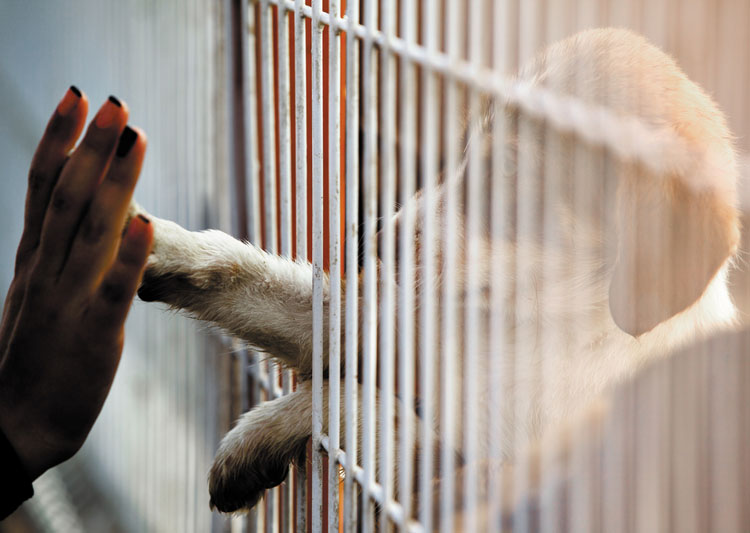
Somehow, the world envisions non-profit rescue organizations to have unlimited pet-friendly homes and no waiting list. People assume these organizations are able to accept every dog in need. Well, if this were true, shelters would be empty across the world.

Facts About Rescue Organizations

Fact: Foster homes are extremely limited and rescue organizations have very limited resources, such as funds and volunteers. When we see an abandoned dog, we need to take the initiative to rescue the dog rather than beg rescue organizations to step in. Yes, it’s time for us to roll up our sleeves and work with these organizations rather than passing the buck, which is happening at an alarming rate.

Rescue organizations excel at their adoption process. There’s a lengthy application process with requirements, home checks and legal contracts. If rescue organizations redirected all of their time and finances to adoption processes, we could make a big dent in finding forever homes for abandoned dogs. However, they spend valuable time begging and pleading people to find acceptable foster homes for homeless dogs. When no homes are available, they’re not able to welcome in more dogs.

Sound hopeless? Far from it. We need to rethink rescue processes. There’s a huge gap missing in saving and rescuing dogs, and that’s community involvement. If one person saved one dog every year, we most certainly would see a difference. Day in and day out, I see the same people tirelessly saving, nurturing and placing abused dogs into homes. These people need a break. We need fresh faces, new ideas and more people stepping in and helping. Abandoned pets are our problem, so we need to fix it together. No more calling someone else to help. You need to step in, roll up your sleeves and save dogs.

Saving Dogs is a Team Effort

Many people have tirelessly donated their time transporting, grooming, training and fostering dogs. Every bit of blood, sweat and tear is extremely appreciated, but we need more. Even non-pet people need to step in. This is not a “dog people” problem, but rather a humanity problem.

I’m not asking you to open up your home for a pet in need. I’m asking you to open up your wallet and donate time. We need you to help raise funds for these poor abandoned animals. I know you can most certainly help here.


Money makes the world go round. When sprinkled with kindness and good intentions, it’s unstoppable!


What Fundraising Can Pay For

By fundraising for donations, you can certainly ensure neglected dogs receive veterinary care, food in their belly and a safe place to stay.

Safe Housing

Due to the lack of immediate foster homes, a short stay in a boarding kennel is a safe place for stray dogs to lay low and recover until an opening pops up. But kennels cost money.

A home environment is best for all dogs, but they don’t magically appear right away. Most dog lovers are hesitant to open their homes to unknown dogs with unknown illnesses and temperaments. So by raising funds, you can help place a dog in a kennel environment until he or she is temperament tested with children, people and other pets. Kennels are good temporary options, but again they require money.

Veterinary Costs

Veterinary costs can add up, ranging between 50 percent to 80 percent of all donations. These costs can also depend on a stray dog’s needs. Some dogs are found duct-taped, discarded with broken legs or heartworm positive. Most stray dogs need to be spayed or neutered. For a single dog, these costs can quickly add up to $800. Donations can take care of this issue.

Veterinarians are Not the Enemy

Before we point fingers at veterinarians and demand deep discounts off “outrageous” fees, these folks charge a fraction of conventional human medical care cost. In addition, they walk out of college with the same amount of tuition debt as human medical doctors. Veterinarians are not the enemy. These folks are lumped into the tireless rescue fighters who have offered discounts, but they still need to feed their family. It’s our turn to help.

RELATED: Why You Should Get Pet Insurance

Food and Dog Behavior Training

Luckily, this issue is somewhat managed since large pet retailers offer free dog food to non-profit organizations. Just about every big box pet company has an active program in place. They donate toys and treats plus dog food.

Dog trainers are hidden heroes too. Many donate their time to temperament test, provide behavior protocols specific to each stray dog’s needs, and support rescue organizations and foster parents with ongoing advice and mentoring. Now, it never hurts to pay these dedicated folks either. They’re not making large profits like big box retailers. Money helps here too.

How You Can Save Animals

Find your cause. It’s pretty easy, as we’re bombarded with soulful eyes of dogs in need every day. If a stray dog shows up in your neighborhood or a friend finds a dog in deplorable conditions, jump in and help.

Set Up a Fundraising Website

Set up a website using PayPal for donations. It’s much cheaper than GoFundMe and other websites that charge between 3 to 10 percent on fund-raised money. You can also set up direct billing with the veterinarian caring for the dog.

From experience, I would set up both donation options. Some people are uncomfortable paying online while others worry about credit card information getting lost at a veterinary clinic. Setting up both options ensures you’re receiving the maximum amount of donations.

Set a donation limit that’s reasonable. Yes, we would all love to raise a million dollars for a dog, but it’s unreasonable and a bit off-putting to donators. Post a picture of the vet’s estimated bill, so donators can see where their funds are actually going.

Be honest and transparent. Explain why you’re asking for donations. Tell a stray dog’s story because that’s the reason you’re donating your time to help this cause. Keep emotions in check (I know it’s hard) and post pictures and updates. Givers want to know all of their money was used to help the dog rather than being wasted.

Lastly, open up your wallet and donate too. Yes, you’re donating your time, but give $25 or $50. Every bit of money is needed.

RELATED: How to Find an Excellent Dog Training Blog

Spread the Word

Trust me, your fundraising website will not reach goal within 24 hours. (Although I wish it did.) You’ll have to spread the word through social media, friends, family and contacts. Make it a point to meet a new contact every day and post results weekly, so folks know progress is being made.

Involve Rescue Groups

Once fundraising has begun and you’ve found a safe place for a dog in need, contact your local humane society or rescue organization. Explain to them the dog is safe and being seen by a vet, and fundraising has begun. Then, ask if they could post the dog on their website for adoption.

You should also ask if they would accept the dog you’re helping into their program, so potential adopters could be screened and home checked through their organization. As of yet, I haven’t had a rescue group refuse. Instead, they thank me profusely for doing the right thing and not dumping the dog on them.

One person, one dog every year. We can do this!

Filed Under: Clients, Dogs, Safety, Training Tagged With: do donations help dogs in need, dog training, Dog Training Tips, donating for rescue dogs, donations do matter, donations dogs, how to help a dog in need, how to help a stray pet, how to help dog rescue, how to help pet rescue, how to help rescue dogs, how to teach a dog, how to train a dog, I found a stray dog, safe places to donate for dogs, teach a dog, train a dog, worthy pet related causes

Dog Abuse Story: My Reality Check

September 2, 2015 by Fanna Easter

Helping an Abused Dog Named Noodle

Dog Abuse
Noodle, the female Pit Bull Terrier.

The last few days are a blur. A very skinny and severely neglected female Pit Bull Terrier came into my life and my world has been spinning ever since. While my soul still aches, I want to share her story with you not to make you sad, but to empower you. We all need to help.

The Story of Noodle

My day started like most days, sipping coffee and typing away at my next article. Then, an early morning phone call sank my heart to my feet.

A dear friend arrived at work earlier than scheduled on a hot and humid Friday morning. As he approached the front door, he was greeted by a malnourished female dog that was tied and duct-taped to a massive tree log. She had dragged this log for miles, as there were no homes or businesses close by. She dragged this huge truck for so long that the bottom was sanded flat.

She was filthy and extremely skinny, and her breasts told of a recent litter of puppies. Her feet were red and blistered and her neck was bleeding. She was exhausted. She could barely stand or walk. She collapsed at his feet.

My friend slowly befriended her with his breakfast and removed the log. Next, he freed her from the thick rope and duct tape choking her. It seems the duct tape was freshly applied probably within eight hours, which sickens me because some horrible person must have recently touched her and did it in pure cruelty.

Dog Abuse
Noodle, the female Pit Bull Terrier.

Fighting back waves of nausea, I had to sit down while listening to the dreadful details. My friend grasped for words followed by long pauses, as we both fought back tears. He was begging for help. We had to save her. Then, I asked for pictures, hoping with every fiber of my being that it wasn’t too bad. After viewing them, I wished I’d never seen them. Those pictures can never be unseen. They’re burned in my eyes and soul forever.

A rage filled me unlike anything I’ve felt before. I cried and screamed inside and out–how could this happen? Another wave of pure disgust fueled my rage. This poor Pit Bull girl had pulled this log along aside a busy road and no one stopped to help her! I know someone saw her. It was during rush hour for Pete’s sake!

No, I will not let her down. Cruel humans have done enough.

Stepping Into Action

Used My Contacts

Thankfully, I’m blessed with a hefty number of dog-loving contacts, so I started using them all. I begged for help on Facebook and made hundreds of phone calls. As kind souls began arriving at work, they pooled funds together and purchased her a dog crate, food and treats. She was safe, but I needed to find her a safe place for the night.

Fostered the Dog

Noodle’s story spread like wildfire. Two kind souls offered to foster her until she was able to find her forever home. Now, fostering is not for the faint of heart. It’s mentally challenging for both humans and their personal dogs. However, the reward most certainly outweighs its challenges.

Contacted a Local Veterinarian

I begged and pleaded on social media for funds, which I knew would be desperately needed to save this girl. She has probably never seen a veterinarian in her life. While the outpouring was massive, there was a delay in fundraising. Folks were unsure about donating to a website, so we set up direct billing to a local veterinarian.

Why I Didn’t Contact Animal Control

Many of you are probably asking, “Why didn’t you contact rescue?” Well I did, and they’re drowning in abandoned dogs. Pit Bulls are usually the first dogs euthanized at animal control because so many idiots are breeding them and no one adopts them out.

Time and time again, local and national rescue organizations rejected me. After hearing “Sorry, we’re full” 15 times, I learned a very valuable lesson. The problem is not rescue. It’s us. We’re asking others to clean up our mess–out of sight, out of mind, right? Well, not anymore.

Everyone, including non-pet lovers, needs to roll up his sleeves and help every animal in need regardless where it happens. We must take action and quit passing the buck. Don’t look away.

It takes a village to save a dog.

Six Days Later (8/27/15)

Noodle has gained 10 pounds, learned to play with toys and experienced sleeping on beds, which she loves. She used to be scared she’ll never eat again, but she’s learning to eat slower. She’s causing chronic stomach distention, as she drinks every water bowl dry, including the toilet. Keep in mind she’s never had unlimited access to resources. She’s scared of male dogs, which makes me think she was forcibly bred for puppies over and over again.

She loves people so much so she would rather sit in your lap than eat her chewies. She’ll probably develop separation anxiety, but I’ll see her through it. Her foster Momma is teaching her crate training skills and polite leash manners.

From a health perspective, Noodle is heartworm positive. Her vet estimates her age between one to two years old, but couldn’t give a specific number. Her young body aged fast due to a hard life. As I type, I’ve scheduled a local dog trainer to temperament test her today. I’ll follow up with phone calls.

Accepted Into a Local Rescue

Due to our fundraising efforts and attempts to find her a kind foster home, a local rescue (Lake Charles Pit Bull Rescue) accepted her into their program. You know why? Because we didn’t dump her. We took action and asked the experts to help find her a home.

You see, I did all of this from my home. I live six hours away.

It takes a village to save a dog and we need to all step in. You can do this too.

Please Help Noodle

If you would like to donate to Noodle, as her veterinary bills are huge,
please contact Gill Bright Animal Hospital at (337) 477-4252.

For checks, please add Act #14292 in the subject line and
make the check out to Gill Bright Animal Hospital. Please mail to:

Gill Bright Animal Hospital, Care Of Noodle LCPBR
406 W. McNeese
St., Lake Charles, LA 70605

Take a moment and thank Lake Charles Pit Bull Rescue. They’re located in Lake Charles, Louisiana. Also, thank Samantha Collins for donating her time to temperament test Noodle. She owns Companions TLC in Lafayette, LA. Don’t forget to like their Facebook pages too.

Filed Under: Clients, Safety, Training Tagged With: animal cruelty case, animal rescue, dog training, Dog Training Tips, help save a dog life, how to teach a dog, how to train a dog, pet rescue, teach a dog, train a dog

Should You Let Your Dog on the Couch?

September 1, 2015 by Fanna Easter

Dog on the Couch: Do’s and Don’ts

Dog Couch
trybex/Deposit Photos

Most people want to share their couch with their dogs—my dog is sitting next to me as I write this. However, you may have read that allowing your dog on the couch is not a good idea because it may send the wrong message. In my professional opinion, it’s not so cut and dry. This article will break down some do’s and don’ts when it comes to allowing your dog on the couch.

Evaluating Your Dog and the Privileges Given

To be completely honest, I think this is the most important part of deciding whether you should keep dogs off the couch. Depending on your situation (whether your dog already uses your couch or not), evaluate your dog’s behavior.

You can do this by writing down your dog’s general characteristics, such as energetic, calm, submissive and pushy. You also want to note when he shows different behaviors, such as affection, submissive urination and resource guarding. This will help you determine your dog’s couch privileges.

Remember that sitting on the couch is a privilege. If your dog’s behavior is good, then why not reward him, especially when it’s rewarding to you as well? Now, if your dog’s behavior is unacceptable, then we may need to remove some privileges until his behavior improves.

If You Let Your Dog on the Couch, Then…

In my experience, it’s good to start clean and not allow your dog on any furniture to set forth some rules. Once your dog is aware he’s not allowed on any furniture, you can begin giving him privileges, such as jumping on the couch or even on the bed to snuggle.

Set Boundaries

When inviting your dog onto your couch, set boundaries on where he can and can’t sit, especially if he’s a puppy. I enjoy my dog on the couch when I invite him up to cuddle, but I definitely don’t want two full-sized Boxers jumping up on me whenever they choose nor do I want to ask them to move all of the time for me to sit down. Establishing boundaries makes for good communication and a strong relationship between you and your dog.

How to Set Couch Boundaries

Leash Your Dog

Your dog doesn’t know he’s not allowed on the couch just like he doesn’t know not to nip your hands when you’re playing with him. It’s your job as the dog owner to train your dog to keep off the couch. Leash your dog with a six-foot nylon or leather leash and allow him to drag it around the house when you’re home.

Avoid Body Contact

When teaching your dog new boundaries, be aware this is usually new to him whether he’s a puppy or an adult dog who’s been allowed to come and go on the couch as he pleases. You don’t want to make the couch or the training negative in any way by yelling or harshly removing him from the furniture. Any body contact (i.e. pushing him off or picking him up) causes more arousal in your dog and can ultimately turn the dog training session into a game or negative situation. This is why I suggest using a leash for dog training purposes.

Reward Good Behavior

If your dog jumps on the couch, guide him off with the leash by saying “off” and redirect him to a toy or his bed. It’s equally important to reward your dog when he’s playing on the floor or lying quietly in his bed. As I’ve said before, it’s a good idea to remove all couch privileges in the beginning to avoid confusion and doing this until your dog no longer actively tries to get onto the couch.

Remove the Leash and Invite Him on the Couch

Once you’re ready to give some privileges back, take his leash off and start inviting your dog up on the couch for some TV time. If your dog is hesitant at first, know this is normal behavior. I  mean you did just teach him not to get on the couch. Continue to coax him up, giving him the “up” cue with some kissy noises and couch pats. Once he jumps up on the furniture, reinforce him with some petting and verbal praise. When you’re done with your cuddle session, give your dog the previously worked on “off” cue, so he knows it’s time to get off the couch.

Not All Dogs Can Handle Couch Privileges

Not all dogs can handle the privileges of sitting on the couch, as this causes them other behavior problems, such as possession and food guarding. I personally have a dog like this, but we’ve determined which privileges she can and cannot handle. For example, she can handle being on the couch at times, but not on the bed. To her, the bed holds higher value. This is not an easy thing to determine. If you’re dealing with any dog behaviors like this, I recommend looking for a local dog trainer who works with behavior modification.

The bottom line is if you and your dog are happy and there are no serious behavior problems, keep things the way they are. If you would like a little more control when it comes to accessing the furniture, then set a few boundaries and you should be fine. Most of us have our dogs because we couldn’t live without them. Let’s face it: they’re really adorable and cuddly. Enjoy them!

Sources:
www.animalbehaviorcollege.com
www.apdt.com
www.iaabc.com

Filed Under: Safety

Proper Pet Store Etiquette for Dogs

August 27, 2015 by Fanna Easter

Bring Your Dog to the Pet Store Without Problems

Dog Stores
Solovyova/iStock

As you may or may not know, most pet stores allow leashed dogs inside. After all, these are stores specifically for pets. Shopping with your dog can be both fun and a little overwhelming for both of you, as there is so much going on. Follow these tips to make shopping with your dog an enjoyable experience.

Preparing for Your Grocery Store Trip

As a dog trainer, I look at every situation as a training opportunity for my dogs, so being prepared for all different situations is a must for me.

I suggest visiting a pet store when shopping traffic is slow and after your dog has been walked before shopping. Choose a dog collar that best fits your dog with the least amount of safety issues, such as a properly fitted flat buckle collar, Martingale collar or a no-pull body harness. Now attach a durable nylon or leather leash–this is not the place for a retractable type leash. Remember, all dogs must be leashed when visiting pet stores.

Oh, and one more very important thing: stock your pockets with special tasty treats, as this will give you the opportunity to reward good behavior and redirect your dog out of a potentially negative situation.

Possible Stressors You Might Encounter

You may encounter some stressful situations, but you can use these as dog training opportunities.

Keep calm and be prepared to successfully navigate your dog through stressful situations, and thus create a positive experience. Be prepared, your dog will encounter automatic doors, other dogs (both friendly and maybe not so friendly), other kinds of animals (cats, birds, guinea pigs, etc.) and loud noises.

RELATED: How to Train Fearful Dogs

If it becomes too much, meaning your dog is overwhelmed and starts shaking, drooling, or barking or lunging at other dogs, leave immediately. Leave your shopping cart in the aisle and go. It’s not worth it.

Handling Stressful Situations

Stay calm and reward your dog every few seconds when encountering stressful situations. Try and be aware of your surrounding, so you can be ready for the situation rather then reacting to something that pops up. Hold your leash with one hand and food treats in the other hand before stressful encounters (i.e. screaming children and barking dogs).

Now, I understand that things do just pop up like a dog coming around the corner or a loud noise. In these instances, use that special food treat in your pocket to redirect your dog’s attention to something more fun like the smelly bones and toys!

Have Fun

Build positive associations, reinforce socialization and reward polite behaviors. Just think about all the great smells and fun toys your dog gets to see–who doesn’t want to buy new things from their favorite store? Allowing your dog to take their time sniffing and experiencing a new environment will enrich his experience. It’s very important to make every situation as positive as possible, allowing your dog to build life skills.

Just think: with lots of practice, this could be a fun outing for you and your dog even on a busy Saturday!

Filed Under: Resources, Safety Tagged With: are dogs allowed in pet stores, before bringing dog to pet store, can you bring dog to petsmart, can you bring your dog to petco

Overcoming Thunderstorm Phobia in Dogs

August 21, 2015 by Fanna Easter

How to Help Your Dog Overcome His Thunderstorm Phobia

Dogs Scared of Thunder
klagyivik/iStock

Does your dog show signs of nervousness and anxiety during thunderstorms? If your dog is hitting the hills or shaking like a leaf when the storm rolls in, this article will help you put him at ease.

Thunderstorm phobias are more common than you think. However, just because your dog has a thunderstorm phobia that doesn’t mean he’s fearful or submissive. Lightning and rain usually accompany thunderstorms, which causes more static electricity to run through things like carpet and couches, so it’s not only the noise that bothers your dog. Imagine having all that fur and it being full of static plus loud crashing noises–doesn’t sound very calm and tranquil, does it?

Signs of Stress and Anxiety

There are some tell-tale signs your dog might be experiencing stress or anxiety during thunderstorms. These signs include: hiding under furniture, shaking, whining, howling and even running around the house. However, there are some other, sometimes subtle, signs that can be easily overlooked, including heavy panting, excessive yawning, licking, pulling ears back, tucking tail in, eyes darting back and forth, and widening of eyes (whale eye or moon eye). Whether your dog is showing some of the more prominent signs of stress or more of the subtle signs, helping him cope with the situation will create a happier, calmer dog during stormy weather.

Positive Reinforcement of Alternate Behavior

There are several ways to help your dog overcome his phobia of thunderstorms. The best thing to do is create a treatment plan to modify his behavior. This sounds much more intimidating than it really is. I suggest writing it out, so that it’s easy to follow.

First, choose an alternate, desired behavior you would like to see your dog perform during this time of stress, such as a calm down-stay. You want to begin working on this behavior (if your dog does not already know it) prior to a thunderstorm. I suggest getting a rubber mat for this dog training session, as it helps minimize the static caused during lightning, and putting it in a comfortable spot away from the window where your dog can relax.

Once you have this all picked out, you can begin rewarding your dog when he’s lying quietly on his mat. At first, you may need to place food or a special toy on the mat to get him oriented. I like to call this the “safe zone” where there are nothing but good things. Always, always, always reward calm desired behavior on the mat.

Management and Setting Your Dog Up to Succeed

This is really the biggest, meatiest part of the treatment plan where you do most of your prevention work. Managing the situation and setting your dog up for success is so important. Who doesn’t want to succeed and be praised for a correct behavior? I know I do!

Okay, so how do we do this? Well, there is a lot of desensitizing that goes into the process, which you can do in small increments to fit into your daily life. Now that you have your mat, give your dog something really special to chew on and put a recording of thunder on very low.

If your dog shows no sign of stress, allow this process to go on for about 10 to 15 minutes. Do this on and off for the next couple of weeks, slowly increasing the volume. Don’t hesitate to give additional verbal praise and petting to let your dog know he’s doing a great job.

RELATED: Calming Music for Dogs

A tool available to pet owners and dog trainers for this specific instance is the Thundershirt. The Thundershirt is a shirt with a Velcro opening that wraps around the dog in multiple places. You put the shirt over your dog’s back and attach the Velcro strap under his stomach. To keep the shirt on, there’s another Velcro strap that goes across your dog’s chest.

The material is cotton and has no chemicals or vibrations. The Thundershirt acts like a hug for your dog in a scary situation. Most dogs will become very calm and relaxed when wearing this shirt. You always want to remember to reward your dog when he’s wearing the Thundershirt and showing calm behaviors in stressful situations.

Consequences for Inappropriate Behavior

Consequences are very minimal when it comes to dealing with something your dog is scared of. Using any surprise or corrective technique could cause more harm than good. However, if your dog becomes so frightened that there is no learning taking place, you may want to remove him from the situation. Put him in a dark place with calming music to help drown out the thunderstorm. You can bring him back once he has calmed down enough to re-enter the common area.

Consistency

This is the most important part of the treatment plan and usually the most overlooked. It is very important to follow through with all the exercises mentioned above until your dog is exhibiting calm, relaxed behaviors during thunderstorms. Dogs need to think it is an ordinary day with just another thing happening where good things happen to him!

Anytime you have to watch one of your family members deal with a stressful situation, it probably stresses you out as well. Hopefully, these dog training tips will help your dog with his thunderstorm phobia. If, after you try these dog training techniques and are still having difficulties, I suggest looking for a local dog trainer who can assist you and your companion.

Filed Under: Dogs, Safety, Training Tagged With: dog fears thunderstorms, dog scared of thunder, dog thunderstorm phobia, dog training, Dog Training Tips, how to teach a dog, how to train a dog, teach a dog, thunderstorm phobia in dogs, train a dog

  • « Previous Page
  • 1
  • …
  • 10
  • 11
  • 12
  • 13
  • 14
  • …
  • 17
  • Next Page »

About

Dog Training Nation is a community of dog trainers, dog owners and dog lovers. Our mission is to provide trainers and owners valuable information to enrich dogs' lives. We cover a range of topics, from socializing puppies to dealing with aggressive dog behavior to selecting the best dog products. It is our hope you share our content to make the dog and owner world a better place.

​

Facebook

Video

Dog Training Nation is a dog training blog for pet owners and dog lovers. We cover a range of topics from puppy socialization tips to dog aggression to dog health. It is our hope you share our content to make the world a better place for dogs.

Dog Training Nation

Quick Links

Dog Training
Dog Behavior
Dog Training Videos
Become a Dog Trainer
About
Contact Us

Copyright © 2026 · Lifestyle Pro Theme on Genesis Framework · WordPress · Log in