Dog Training Nation

In Dogs We Trust

  • Home
  • Training
    • Dogs
    • Puppies
    • Clients
  • Behavior
    • Breeds
  • Health
  • Safety
  • Resources
    • Equipment
    • Books
  • Dog Training Videos
  • About
You are here: Home / Archives for Safety

Dog Apartment Living: Tips & Tricks to Make It Work

June 22, 2016 by Fanna Easter

7 Tips for Dog Apartment Living

Dog Apartment Living
iStock/gpointstudio

Dog apartment living can be a bit more challenging than detached home living. In an apartment, your neighbors are so close and you share the same stairwells, hallways and entrances. All of this adds up to creating an uncomfortable environment for you and your dog. I’m sure you’re probably already aware of these issues, so hopefully these tips will make dog apartment living a bit easier for the both of you.

1. Always Keep Your Dog on Leash

As apartment dwellers, there’s a tiny tinge of guilt you feel when your dog must be leashed at all times when outdoors (I know the feeling). It’s important to understand that a leash keeps your dog from running away, walking into traffic or harassing other people and dogs. Basically, your dog’s leash is a safety line.

While we envision our dogs yearning to run freely in a never-ending pasture of green grass, most dogs would rather sniff and explore. Walks are important for releasing pent-up energy, but allowing your dog to stop, sniff and explore will mentally tire her out too. When your dog stops to sniff, she’s basically checking her social media page. She’s finding out what’s going on and who’s doing what in the neighborhood. She may respond back by marking the area. Overall, allowing her to sniff and explore is vital for dog apartment living.

2. Create a Sound Barrier Inside

Apartments share walls, elevators and entrances, which can all cause some creepy sounds. When not home, play soft music or a sound machine at medium level. Creating a calming sound will drown out any other noises and ensure your dog sleeps soundly while you’re away.

If your neighbors are loud, even when you’re home, turn on a portable fan to drown out the noise. I find portable fans provide more white noise than a ceiling fan. By drowning out typical apartment living noises, you prevent your dog from barking when they hear these sounds. Check out the benefits of calming music for dogs.

3. Make Weird Noises Fun

Some neighbors are so loud that even white noise can’t drown them out. In order to combat this, make it rain treats next time. Keep a bowl of tiny, super yummy treats near your chair and toss your dog a treat when a neighbor slams his door. When a nearby dog barks or people argue loudly in the hallway, toss your dog a treat the moment the sound begins. By pairing good things with sounds, you’re teaching your dog that weird sounds will make it rain treats, which prevents barking or stress.

4. Check Out Entrances & Exits

When walking out of your front door, or through the building entrance, take a moment and make sure the coast is clear. As you approach an entrance, ask your dog to “sit” and “wait.” Now, peek out the entrance to make sure other dogs or people aren’t approaching. Once the coast is clear, tell your dog “let’s go” and walk through the entrance way.

Checking out all entrances and exits before walking through them is so important for dog apartment living, especially if your dog reacts to other dogs or people. We lived on the 7th floor with two Rottweilers, and we learned quickly that rounding the corner with unsuspecting people approaching us will cause screams, spilled coffee and frowns.

Our Rotties were super sweet, but they scared our neighbors, so just taking this extra step reassured our neighbors that our dogs are polite. Afterwards, we witnessed many smiles going forward. Make sure the coast is clear every time.

5. Keep Your Distance

I can’t say this enough: not all dogs want to meet other dogs. Just because you pass another dog walking around your apartment building, it doesn’t mean your dog wants to meet the other dog. I’m pretty sure you don’t shake hands with your neighbors every time you see them because that would be a bit creepy. It’s the same thing for your dog. If a neighbor with a dog makes a beeline for you and your dog, just tell him you’re training a new dog behavior and don’t have time to chat, but thank him along the way.

6. Pick Up Your Dog’s Poop Every Time

Pick it up every time despite rain, sleet, monsoons, hurricanes, blizzards and heat waves. If you forget a poop bag, bring your dog upstairs. Afterwards, grab a poop bag and head back down to pick it up. When this happens to us, I place a stick vertically into the ground that’s right next to the poop, so I can find it easier. Plus, by flagging the area, your neighbors will know you’re coming back to pick up your dog’s poop—because we all know someone is always looking, right?

7. Play Dog Apartment Living Games

Walks are good, but sniffing opportunities are better, so make sure your dog has fun sniffing activities in your apartment too. Toss out your dog’s food bowl because feeding your dog in a bowl is so boring and a huge waste of an enrichment opportunity. Instead, stuff your dog’s food in interactive toys.

For example, hide bits of kibble behind furniture or scatter your dog’s kibble in a shag rug. This encourages sniffing and hunting, which is excellent mental stimulation. For games that don’t involve food (because some dogs are watching their waistlines), grab a bottle of dog-friendly bubbles and play bubble games, or play a fun game of tug. Inside your apartment, your dog can run freely and play, so take advantage of it.
Filed Under: Dogs, Safety, Training Tagged With: apartment big dogs, apartment dog, apartment living dogs, apartment puppy, dog training, Dog Training Tips, games for apartment living dogs, how to teach a dog, how to train a dog, living with dogs in an apartment, my dog barks at noises apartment, teach a dog, tips for apartment with dogs, tips for living in an apartment with dogs, train a dog

Why You Should Get Certified In Pet First Aid

June 17, 2016 by Fanna Easter

Pet First Aid Certification: Why and How You Should Get It

Pet First Aid Certification
zoran simin/iStock

“Should I become certified in pet first aid?”

You probably know the answer to this question already, which is yes! Just like human CPR, learning how to do pet CPR is a skill you’ll hopefully never need, but if the situation arises, you’ll know exactly what to do. When it comes to obtaining your pet first aid certification, there are a couple of programs to choose from and, as always, I have recommendations for you. 🙂

What You’ll Learn in Pet First Aid

Pet first aid certification is not just CPR anymore. In pet first aid certification programs, you’ll learn how to identify critical situations, such as shock and heat stroke. Plus, you’ll learn how to locate and check your dog’s vital signs, which is an essential skill required during any emergency situation or illness. You’ll also learn how to perform CPR on dogs of different sizes and what to do if a dog is choking. They’ll even train you on how to take care of a dog that is bleeding, impaled or has fractured bones. Some pet first aid courses also discuss management of insect bites too. It’s difficult to discuss, I know, but learning how to manage different emergency situations is a skill all pet owners should learn. With pet first aid training, you’ll learn how to maximize those precious moments while a dog is rushed to a veterinarian.

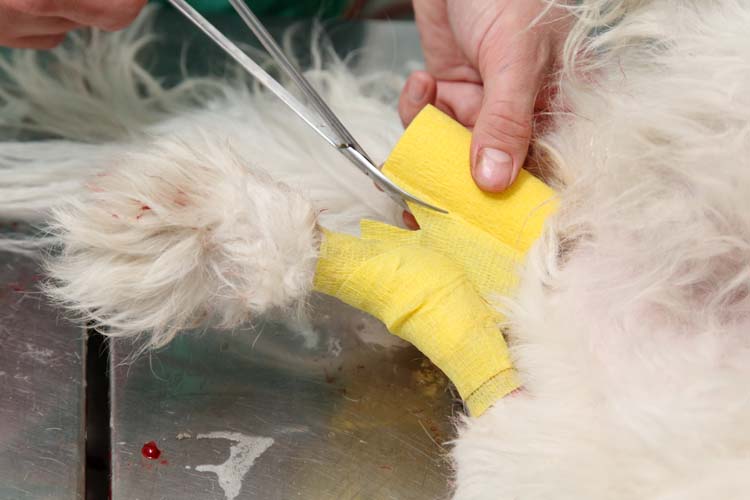
You may also be interested in: Treating Your Dog’s Paw Pad Injury

Pet First Aid Courses

There are several options to choose from. Here are the largest and most reputable pet first aid certification courses currently being offered.

Pet Tech

By far, this is the best pet first aid course out there due to its extensive hands-on workshops. I firmly believe students learn quicker and retain more information in a hands-on classroom environment with a qualified instructor.

Many years ago, I took a Red Cross pet first aid course that had an instructor who covered emergency situations from a book. Several years later, I attended an eight-hour Pet Tech course where I learned so much more and felt confident that I could calmly handle a situation. The hands-on portion was key!

Pet Tech Instructors have all completed an extensive course before teaching hands-on seminars. They work with you during group exercises and one-on-one practice sessions. Also, Pet Tech offers a smartphone app that can be used for reference during emergencies in case you forget exactly what to do.

During the course, I learned:

  • How to perform CPR for dogs of different sizes
  • How to identify and monitor vital signs (identification isn’t easy)
  • What to do if your dog is choking (whether he’s conscious or unconscious)
  • How to identify and handle heat stroke or hypothermia
  • How to control bleeding
  • How to stabilize fractures
  • How to treat minor insect bites
  • How to identify and mange a dog that goes into shock

All of this information teaches an average pet owner how to handle emergency situations when he’s rushing his dog to an emergency veterinarian.

American Red Cross

After doing some research, I don’t think the American Red Cross offers seminars or meetings on pet first aid anymore. They do, however, offer a rather large workbook and DVDs that can be purchased online as well as a smartphone app.

The app covers pet CPR, emergency situations and many other emergency topics. My favorite part of the app is that it can locate a veterinarian near you. This is an invaluable app if you travel with your dogs. The organization also offers pet first aid bags too. If you’d like to take the DIY approach, learn what to pack in a pet first aid kit here.

Which Pet First Aid Certification is Right for You?

Basically, it’s your choice. I do believe the Pet Tech program is far more superior due to its hands-on workshops. On the other hand, if you don’t have a Pet Tech Instructor in your area, downloading a Pet Tech or American Red Cross app will most certainly help you during emergency situations.

Filed Under: Resources, Safety Tagged With: getting certified in pet first aid, how to get certified in pet first aid, pet first aid for pet owners, pet tech review, red cross pet first aid

Smiling Dogs: Are They Really Happy?

June 15, 2016 by Fanna Easter

What Dog Smiles Mean

Dog Smiles
sanjagrujic/iStock

Dogs smile when they’re happy, but their smiles are different from human grins. From a human perspective, when a person displays a large, toothy, upturned, cornered grin stretching from ear to ear, this giant smile is interpreted as friendly and happy behavior. So, when a dog displays the same smiling behavior, it’s understandable why humans interpret this behavior as friendly. However, the majority of dog smiles aren’t happy ones. Here’s the difference.

Dog Smiles are Different

Taking into consideration that humans automatically interpret smiling behavior as friendliness, let’s take it a step further with an analogy. Not all dog smiles are friendly. To interpret whether or not a smiling dog is a happy dog, we must look at his body language first.

Smiling Human Body Language

Let’s assume we’re walking down a busy street and watching people interact. We notice a woman grinning from ear to ear while stiffly standing still. Her eyes are wide and round and her arms are held tightly at her sides while making direct eye contact with her greeter. Immediately, we would interpret this behavior as a bit bizarre and assume she wasn’t excited about meeting her greeter. Even though she’s smiling at her greeter, she looks a bit worried or scared. So much so, that some people would intervene in this situation by asking, “Are you okay?”

Now, if we watch a smiling woman touching her greeter’s arm and moving her neck, arms, hands and body freely, we could easily assume and interpret that she’s happy to see her greeter. With this example in mind, let’s discuss smiling dogs again.

RELATED: Why Your Dog is Shaking or Shivering When Not Cold

Smiling Dog Body Language

It’s so important to look at your dog’s entire body language before trying to understand how she feels in certain situations. Dogs will grin, which is actually called a grimace in the animal world, but this is often not friendly dog behavior.

Dog Grimace

Grimacing happens when a dog retracts the corners of his mouth backwards (toward his ears). This causes its lips to lengthen horizontally, which exposes a fair amount of teeth. Some dog experts call this a submissive grin, but I interpret a dog grimace as discomfort, stress and fear.

If you watch smiling dog videos online, you’ll notice a grimace is pretty much always accompanied by a stiff body (non-moving), pinned back ears (flat against the head), wide open eyes (white of eye showing) and firm legs. While many well-meaning pet owners assume their dog is smiling when given a verbal cue, the dog will grimace when the camera is pushed into her face. If you look within the entire video frame, the dog is usually backed up against a wall or furniture, meaning there’s no way out because a human is standing right in front of her holding a scary, flashing box.

Watch What Happens After the “Smile”

While watching smiling dog videos, watch the dog’s behavior after she smiles. You’ll notice the dog is displaying stressed behavior. She’ll turn away from the camera, yawn, constantly blink her eyes, scratch longer than 10 seconds or remain frozen in place. Thinking back to the stiff, smiling woman, we know this isn’t normal behavior.

What are Happy Dog Smiles?

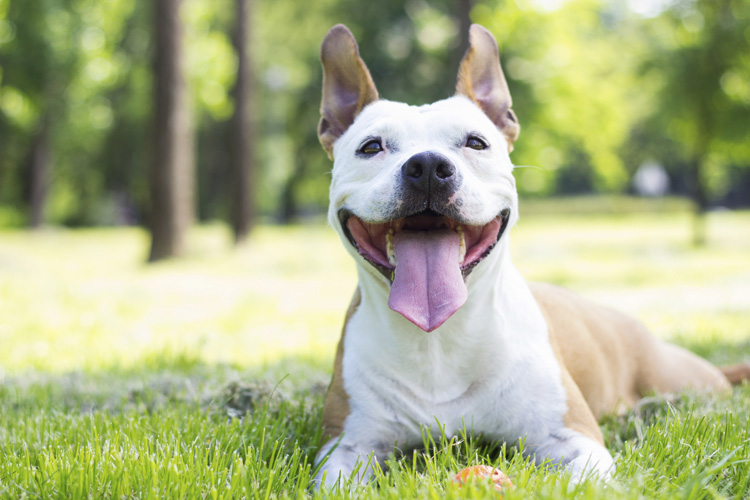
Dogs smile when they’re happy and excited. They’ll also loosely wag their tails, do the happy dance (pick paws up and down quickly) and have relaxed ears (natural placement) while moving toward their greeter. In my professional opinion, this article’s photo displays a beautiful example of a happy dog smile.

Now, I’ve personally witnessed very happy dogs flash a quick grin, with front teeth showing, when their pet owners arrive home. I was there to witness each dog’s body language, and both dogs were over the moon excited. So much so, that a tooth grin just so happened to appear on one dog’s muzzle. These happy grins were quick, less than a second, and followed by happy dancing, tail wagging and friendly dog body language.

Interpreting your dog’s reaction by focusing only on a smile is like reading a sentence and ignoring certain words—you’ll never understand the whole meaning.

Filed Under: Behavior, Safety Tagged With: are dogs happy when they smile, do dogs grin, do dogs smile, dog smiling videos, the truth about dog smiling videos

How to Protect Dog Paws From Heat

May 18, 2016 by Fanna Easter

Summer Dog Paw Protection

Dog Paw Protection From Heat
rubisco67/iStock

It’s getting warmer, which means summer is pretty much around the corner. As the temperature rises, so does surface temperatures. With that said, humans are oblivious to hot surfaces because we wear shoes; we don’t know how hot surfaces can become. Now, let’s transfer this to dogs. They don’t wear shoes and their paw pads are not invincible calluses. Your dog’s paws are super sensitive like the heels of our feet and can easily burn from exposure to warm or hot surfaces. Some dog paw burns are so severe that layers of paw pads disappear, causing tissue to be exposed. This happens way more frequently than most pet owners would ever think.

So it’s important you protect your dog’s paws from burns caused by hot surface areas, such as sidewalks, roadways, gravel, artificial grass (this stuff gets really hot!) and other surfaces that heat up quickly.

How to Protect Dog Paws From Heat

Feel Surfaces For Heat

Don’t assume surfaces are cool. Ignore the temperature outside because sidewalks can heat up quickly even on sunny 75-degree days. You need to feel surfaces for a true test.

Before walking your dog, take a moment and feel the temperature of different surfaces by standing on them barefoot. If you’re unable to stand or walk for a short period of time on any heated surface, then it’s too hot for your dog’s paws too.

RELATED: My Dog Refuses to Go Outside When It Rains

Purchase Dog Booties

There are several ways to protect your dog’s paw pads from the heat, but the easiest way is walking your dog early in the morning. Allowing cement, gravel, asphalt or any easily heated surface to cool down overnight is best, but make sure walks are completed before or as the sun is rising. An added bonus of walking your dog early in the morning is being able to watch the beautiful sunrise with your best buddy!

If walking in the early morning doesn’t work for you, and you prefer to walk your dog late in the afternoon, remember that outdoor surfaces are still scorching hot. You’ll need to purchase protective dog booties for your dog’s feet. My favorite brands are Muttlinks and Ruffwear booties. They’re easy to put on and stay on and they’ll protect your dog’s feet. However, never assume your dog’s new booties are invincible. Always check your dog’s feet several times (every couple of minutes) while he’s wearing his new booties. You want to make sure they’re working. Once you’ve test-driven your dog’s new booties several times, and you know your dog’s feet are protected, then have fun!

What Doesn’t Work

While I try to focus on what works (being positive), sometimes I need to discuss ways that don’t keep your dog’s paws protected from the heat. Paw wax, thin socks or booties, or dog booties with thin soles won’t last on hot surfaces. We all know walking on hot concrete wearing socks, thin lotion or thin-soled shoes is painful. Splurge on the good dog booties that truly work. 🙂

In Hot Climates, Set Up a Potty Area

Dogs don’t necessarily understand that hot surfaces will burn their feet. This sounds a bit naive, but do you remember walking on warm sand at the beach? It didn’t feel hot at first, but after walking for a couple of minutes, it got really hot!

Keeping this in mind, if you live in a really hot climate, fence off a shaded area for potty breaks during the day. We live in the desert. It’s literally 104 degrees today and it’s only early May, so we’ve sectioned off a shaded portion of our yard to protect our dogs’ feet. Never assume certain surfaces are cool. I was shocked at how warm our little patch of grass could get during the day.

Ignore the air temperature. Take a moment to feel surfaces with your bare feet before walking your dog on it. 🙂

YOU MAY ALSO LIKE: Stop Using Retractable Dog Leashes in Public Places

Filed Under: Equipment, Resources, Safety Tagged With: dog booties for hot surfaces, dog boots hot surface, dog paws summer, dogs feet summer, protect dogs feet hot, summer paw protection

1 Simple Way to Keep Your Dog Safe in the Backyard

May 16, 2016 by Fanna Easter

How to Keep Your Dog Safe in the Backyard

How to Keep Dog Safe in Backyard
michaelpuche/iStock

While it seems like a no-brainer, not many pet owners know a simple way to keep their dogs safe from intruders in the backyard. This simple little device will prevent most dogs from escaping the backyard. Drum roll please: place a simple lock on each fence gate.

I Learned The Hard Way

Many years ago, I was sitting in the backyard with both of my dogs when I noticed someone slowly walking up to our front fence gate. Apparently, this person didn’t see me sitting in the backyard brushing one of my dogs, which was a good thing. Once I noticed the stranger approaching, things happened really quickly.

My other dog bounced over to the fence gate to greet this strange man and, before I could say a peep, this stranger tried to open the gate. Well, the latch was a bit rusty and wouldn’t budge, so he started kicking the gate to open it! By this time, I shook off the initial shock and started screaming and running toward the gate. This well-dressed middle-aged man, wearing a crisp white dress shirt and dark jeans, ran toward the front of our home. As I rounded the corner, I noticed he was jumping into a white pickup truck with several different sized dog crates in the truck bed. My heart dropped.

As the man sped away, I gathered both dogs indoors and then called the police. My brain was racing and just shocked at what had happened. Once the policeman arrived, I explained the event in detail. And no, I didn’t memorize his license plate. I wished with everything I had I remembered.

The policeman delicately explained that several dogs within a 10-mile radius of our home had gone missing from their backyards over the last couple of weeks. Clutching my throat, I asked why someone would do such a thing. The policeman said thieves are stealing and selling dogs to animal laboratories in the next county. I’ll never forget the next words that cautiously fell from his mouth: “Buy a lock and keep all gates locked at all times.” I still live by these words every day.

RELATED: How to Find a Good Dog Breeder

How to Purchase the Right Fence Gate Lock

Your lock doesn’t need to be fancy, but it definitely needs to be sturdy. I prefer a huge combination lock, which I lock from the inside of our backyard. By keeping the lock inside and facing toward your home, you’ll prevent thieves from trying to remove the lock. When pest control or lawn care companies need access to your backyard, place the lock on the front of the gate, so they can easily unlock to enter and lock upon leaving. When you get home, move the lock inside the gate.

Key locks are nice, but many pet owners mistakenly keep the key either in the lock or next to it. Yes, you can install a camera right over the fence gate too, but a camera will not immediately stop an intruder from stealing your dog. Purchase a good lock for each fence gate; write the combination down and keep it indoors. A lock will also prevent wind from blowing fence gates open and is a way to make sure gates are closed at all times. No one remembers to close the gate.

Another Thing That Saved My Dogs

I was outdoors with them. If I were not there to intervene immediately, this creep would’ve opened the gate and stole my dogs. As of this day, regardless of the temperature outside, snow or rain, my husband or I am always outdoors with our dogs. While I was extremely lucky my dogs were safe, I learned a valuable lesson the hard way. I wish someone had shared this tip with me 17 years ago.

Now, go buy a lock and install it today and keep it locked at all times! 🙂

Filed Under: Equipment, Safety Tagged With: backyard gate lock, cheap backyard security idea, dog backyard secure, inexpensive security idea backyard, keep dog safe backyard, keeping dog in your yard, lock backyard gate, prevent dog from escaping backyard

  • « Previous Page
  • 1
  • …
  • 5
  • 6
  • 7
  • 8
  • 9
  • …
  • 17
  • Next Page »

About

Dog Training Nation is a community of dog trainers, dog owners and dog lovers. Our mission is to provide trainers and owners valuable information to enrich dogs' lives. We cover a range of topics, from socializing puppies to dealing with aggressive dog behavior to selecting the best dog products. It is our hope you share our content to make the dog and owner world a better place.

​

Facebook

Video

Dog Training Nation is a dog training blog for pet owners and dog lovers. We cover a range of topics from puppy socialization tips to dog aggression to dog health. It is our hope you share our content to make the world a better place for dogs.

Dog Training Nation

Quick Links

Dog Training
Dog Behavior
Dog Training Videos
Become a Dog Trainer
About
Contact Us

Copyright © 2026 · Lifestyle Pro Theme on Genesis Framework · WordPress · Log in