Dog Training Nation

In Dogs We Trust

  • Home
  • Training
    • Dogs
    • Puppies
    • Clients
  • Behavior
    • Breeds
  • Health
  • Safety
  • Resources
    • Equipment
    • Books
  • Dog Training Videos
  • About
You are here: Home / Archives for Safety

Which Pool Fence Is Best For Dogs? I Did The Research For You

April 13, 2016 by Fanna Easter

Best Swimming Pool Fencing for Dogs
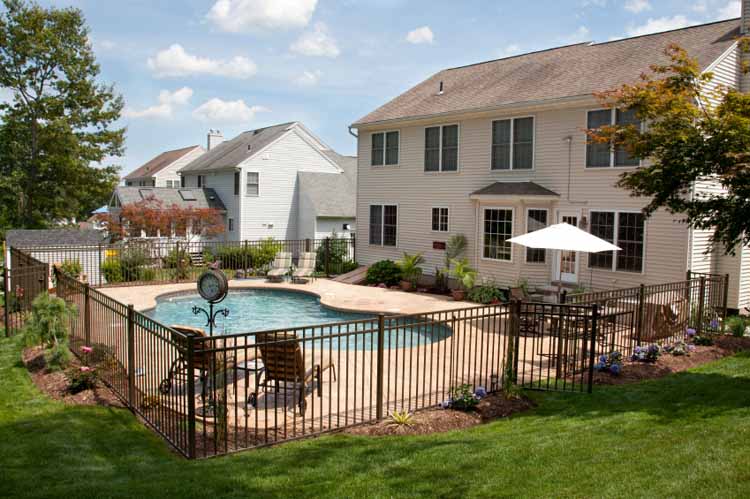
Swimming Pool Fence for Dogs
Keith Muratori/iStock

When house hunting, I did not want a swimming pool, which made searching for the perfect home difficult. Then, the perfect home fell into our laps. It was love at first sight until I noticed the pool. We have a Miniature Bull Terrier and the breed is terrible at swimming. Most sink straight to the bottom, which is why I adamantly did not want a pool.

However, we purchased our beautiful home with the pool, so I started researching best pool fencing for dogs immediately. Shockingly, tips on choosing the right pool fencing for dogs were scarce online, so I emailed and called top-notch pool fence companies for recommendations. Here’s what I found!

Wrought Iron Fence

Wrought iron fences were the most expensive swimming pool fence costing between $1,000-$5,000, depending on length. When speaking with several pool fence companies, wrought iron fencing offers limited options for fence height (standard is 5 feet tall) and spacing between railings (standard is 4 inch wide). For really small dogs, standard spacing between each bar may be a bit too wide and they can slip right between the bars. I highly recommend measuring the front of your dog’s chest (at the widest point) before purchasing.

Also, after viewing several pictures, I just didn’t like the look of the wrought iron fence around the pool. Our pool was in the middle of the backyard, and a wrought iron fence would’ve been an eye sore. Plus, it had a rather large gap under the fence. A determined Bull Terrier could easily dig under if the fence was mounted on dirt.

RELATED: 4 Tips for Moving With Your Dogs

Mesh Pool Fence

Probably the most popular and less expensive option, mesh pool fences consist of mesh panels that are pressure-mounted to evenly spaced poles installed in tile, cement or dirt. Mesh panels are flush against the ground, keeping critters out of the pool, and offered in a variety of heights. We chose a 4-foot tall mesh pool fence. Additionally, there are a few colors to choose from (we chose black) and most reputable companies offer a warranty on color fading and construction. One of the best features of mesh pool fences is they can be removed and easily reinstalled after a pool party.
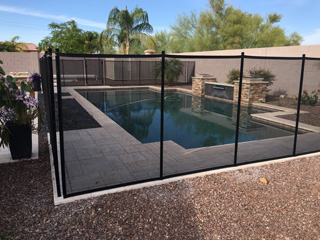
Mesh Pool Fence for Dogs
My pool 🙂

At first, I was convinced mesh pool fences would not hold back a determined Bull Terrier, so I inquired about its stability and sturdiness with different pool fence companies. As with anything, choose a reputable mesh pool brand because strength comes from the poles and not mesh panels. Cheaply made poles will bend and fall over with moderate amounts of pressure while reputable brand poles will absorb impact and bounce back into place. If you need further proof, search for “mesh pool fence videos” and you’ll watch children using different brands of mesh fencing as vertical trampolines and bowling balls knocking over cheaply made options. 🙂

Lastly, I think it looks really nice too!

How to Find a Reputable Pool Fence Company

Believe it or not, this was the easy part. I looked up pool fence companies using the Better Business Bureau website and called each company to ask for their recommendations and warranties on swimming pool fences for dogs.

Good luck, and I hope this helps!

Filed Under: Resources, Safety Tagged With: best pool fence for animals, best pool fence for bull terriers, best pool fence for dogs, best pool fence for dogs that can't swim, best pool fence for pets, best pool fence options

Cons of Using a Double Dog Leash

March 29, 2016 by Fanna Easter

Double Dog Leashes May Cause More Harm Than Good

Double Dog Leash
Jonah_M/iStock

Walking two dogs at once can be daunting, especially if one or both dogs like to pull on leash. Many pet owners attach a coupler at the end of one leash, which then forms a prong, so two dogs can be walked on the same leash. While double dog leashes seem like a fabulous idea, they do have some drawbacks.

Cons of Using a Double Dog Leash

Not Enough Space Between Dogs

Most dog leash couplers provide 1-2 feet of space between two dogs during walks, which can be a bit tight for some dogs. That’s a pretty small space for dogs during long or even short walks, and some dogs can get a bit anxious having to walk that close to another dog even if they live together. As a human example, walking two dogs on a coupler is equivalent to asking two children to walk arm-in-arm. It can get a bit too close for them. 🙂 Sometimes, I witness redirected aggression between two dogs on a coupler, especially when something scary or exciting happens.

RELATED: Should You Take Your Dog to Dog Parks?

Couplers are Inconvenient for Dogs

Remembering the small space between dogs on a coupler during walks, it’s almost impossible for a large and small dog to walk comfortably together. Large dogs have longer strides, and it’s exhausting for smaller dogs to keep up during walks. Plus, the height gap will cause a constant tugging on the larger dog’s collar, which can make him uncomfortable too.

Not Much Control When Using a Coupler

Controlling two pulling dogs on a coupler, even when they’re attached to one leash, is nearly impossible. It’s downright dangerous and difficult to prevent propulsion. While it seems having both dogs attached to one leash would give the pet owner a bit more control, it has the opposite effect. Applying simple physics principles can quickly explain how two dogs pulling forward or in opposite directions can force a single pet owner to move forward uncontrollably.

What to Use to Walk Two Dogs

While it’s so tempting to try out a dog leash coupler, I would recommend walking both dogs on separate leashes. Fumbling and untangling two leashes is a bit cumbersome, but you will have more control, especially if you’re holding one leash in each hand. I highly recommend holding the larger dog’s leash in your dominant (most used) hand. This will give you the most control.

If both dogs pull on their leashes, teach each dog to walk politely on leash before walking both dogs at once. Adding leash training behaviors during a short walk for one dog will not only physically exhaust him, but mentally too. For details on teaching two dogs to walk politely and safely together, check out that article.

Now, I’m not saying dog leash couplers don’t work. I’m just saying there are drawbacks all pet owners should be aware of before using them.

YOU MAY ALSO LIKE: My Dog is Afraid of Passing Cars

Filed Under: Equipment, Resources, Safety Tagged With: 2 dog leash coupler, 3 dog leash coupler, coupler dog leash, double dog leash, small dog coupler, swivel dog leash coupler, using a dog leash coupler, walking two dogs on leash

Dangers of Dogs Hanging Their Heads Out Car Windows

March 11, 2016 by Fanna Easter

Why You Shouldn’t Let Your Dog Hang His Head Out Car Windows

Dog Hanging Out Car Window
belchonock/Deposit Photos

In an effort to sound realistic, instead of resembling a “helicopter doggy mom” that hovers and assumes the worst, allow me to explain why dogs should keep their heads inside the car. Dogs hanging their heads out car windows is just plain dangerous, and I’m sure your children keep their heads inside the car too, right? Allow me to explain further.

Dogs Do Jump/Fall Out of Cars

Dogs jumping or falling out of cars happens more often than you think; pet owners just don’t want to admit it. It doesn’t take much for a small or medium-sized dog to fall out a half-open car window when pet owners swerve or turn sharply. Plus, your dog can easily get tossed outside of the car when a car accident happens–even if it’s just a fender bender. During dog training classes, I’ve witnessed dogs jumping or wiggling out of open car windows when they notice something exciting like another dog or person walking close by.

RELATED: Protect Your Car Interior From Your Dog

Eye and Nose Injuries Can Occur

If dogs hang their heads out of a moving car window, their eyes and nose are being exposed to wind-filled debris at 35 mph. Debris can be anything–sand, glass, bits of rubber or plastic pieces stirred up by passing cars. If you’ve ever had sand in your eye, you know how frustrating and painful it can be even after a couple of days. Oh and your dog’s nose. It never stops inhaling all those delicious scents, so a bug or shard of glass can easily get wedged inside. Even though it’s not mentioned, your dog’s ears are susceptible to ear flap hematomas (pockets of blood stuck between skin layers), which can easily be caused by ears flapping against each other or against the car.

How to Keep Your Dog’s Head Inside

Honestly, I could go on and on about the dangers of dogs hanging out car windows, but I’d rather give you advice on keeping your dog entertained and safe. Crack your car window, so your dog can experience all the different scents, yet keep her head inside the car. When cracking the window, as a general rule, the window should only be cracked wide enough to prevent the dog’s nose from poking outside. Usually, this means cracking the car window about half an inch for smaller dogs and one inch for larger dogs, but it depends on your dog’s muzzle length too. When in doubt, choose a smaller crack. By keeping their noses inside the car, dogs are still able to smell all those delicious scents while keeping them safe.

Allowing your dog to stick his head outside of a moving car window is not considered enrichment; it’s just too dangerous.

READ NEXT: Dogs Die in Hot Cars

Filed Under: Resources, Safety Tagged With: dog hands head out car window, dog head car window, dog head window bad, dog sticks head out car window

My Dog is Afraid of Passing Cars

March 1, 2016 by Fanna Easter

Dealing With a Dog Afraid of Passing Cars

Dog Afraid of Passing Cars
PauuletHohn/iStock

When dogs lunge toward or away from passing cars, it can become suddenly dangerous for both pet owners and dogs. While it’s frustrating, dogs afraid of passing cars is actually quite common, so you’re not alone. If your dog is afraid of cars driving by or when walking, try these tips to change his behavior.

Why Dogs Lunge Toward or Away From Cars

Determining the cause of your dog’s fear of cars can be difficult for most pet owners, so if needed, I highly recommend partnering with a professional dog trainer. Many times, pet owners assume their dogs want to chase a car, yet it could be something totally different.

Herding Breeds

Some dog breeds were bred to chase anything moving, and these instincts are really hard to resist. Herding breeds, and any herding breed mixes, have a tendency to herd children around the backyard or lunge toward passing cars and bicycles. Terriers were bred to watch for any fast moment, so they will chase anything fast-moving too. However, I’m not totally convinced that the chasing or herding instinct is the real reason dogs lunge or bark at moving cars.

Anxiety

By far, dog anxiety is usually the main reason dogs bark, lunge toward or leap away from cars, in my opinion. When dogs are scared and have had a negative experience with something, they can become anxious and react. Maybe a loud car zoomed pass your dog and scared him one day, or your dog is just scared of fast-moving objects near him. Plus, we assume anxiety is caused by aggression, but it’s actually the other way around. Aggression, such as lunging and barking at cars, is a symptom of anxiety.

Dog Training Tips

Make Approaching Cars Fun

If your dog is afraid of passing cars, never walk him alongside a road. So many times, unaware pet owners assume walking a scared dog next to cars driving by will teach him that cars are harmless. Actually, you’re doing the exact opposite; you’re scaring him even more.

Choose a Quiet Park for Walks

For daily walks, choose a quiet park with minimal distractions of passing cars. For walks around your neighborhood, walk your dog during minimal car traffic to keep his fears from becoming worse.

Associate Parked Cars With Treats

Parked cars are meaningless or they can be quite scary, so you need to teach your dog that parked cars mean treats appear. Grab lots of super yummy treats, leash your dog and walk toward a parked car. As you approach, take one step at a time and give your dog a treat for each step forward. You’re not really saying anything; you’re just pairing something really good (yummy treats) with something kind of scary (car). If your dog pulls back, you probably moved a bit too fast, so take three large steps backwards and reward your dog for looking at the car or not reacting. After a minute, end the session.

Practice this dog behavior several times a week until you’re able to walk right up to a car. Once you’re next to the car, give your dog five treats in a row–we call that a jackpot!

Ask Someone to Drive By Slowly

Always keep your dog leashed and grab lots of super yummy treats during these dog training sessions. Now, have a seat on your front porch. Ask a friend to drive by slowly and reward your dog the moment he notices and looks at the car approaching slowly. Reward your dog continuously, as the car slowly passes both of you. Once the car is gone, so are the treats. Basically, you’re teaching your dog that treats appear when cars appear and drive past.

Keep Your Distance

I can’t say this enough, but distance is so important for success. Start far away from passing cars; you’ll know you’re far enough when your dog can look at the car and not react. If your dog freaks out, you are way too close. Only move forward once your dog is comfortable with cars passing at that distance. When moving forward, take a couple of steps forward and practice from there. As an example, if you start 25 feet away from cars, then move in small three-feet increments forward.

If the Behavior Gets Worse

If your dog’s fear of passing cars continues or gets worse, even after some practicing, then I recommend consulting with a professional dog trainer. Dog training experts can certainly recognize specific behaviors and provide suggestions.

Filed Under: Behavior, Safety Tagged With: dog chases cars, dog chases cars on leash, dog chases cars on walk, dog is afraid of passing cars, dog is scared of cars, dog scared moving cars

How to Stop Your Senior Dog From Slipping

February 12, 2016 by Fanna Easter

Prevent Your Senior Dog From Slipping on Slick Surfaces

Senior Dog
Atlantagreg/iStock

Sharing your home with a senior dog is a privilege. So many of our beloved dogs pass away too soon. Increased age does bring about a few obstacles, yet patience and prevention always helps. When your senior dog starts slipping and sliding on slick floors, it’s time to take action.

Non-Slip Rugs

Scattering rubber-backed slip rugs on slick surfaces is a must. Usually, I create a non-slip pathway toward the back door, my older dog’s food and water bowls, our bedroom and other frequently visited areas. When in doubt, cover an area with a rubber-backed non-slip rug.

When selecting non-slip rugs, look for rugs at least two feet wide. For larger dogs, choose rugs at least three feet wide to accommodate their wider stance. Make sure each rug is covered with non-slip rubber backing and that it’s washable.

Traction Socks

Many years ago, I purchased a pair of Woodrow Wear Traction Socks and they were amazing! Each sock has an elastic band that tightens around your dog’s wrists and hocks just enough to keep the socks in place. At the bottom of each sock are traction pads, which prevent dogs from slipping on slick floors. And yes, you can most certainly leave these on your dog when you’re not at home and wash them as well.

RELATED: 3 Reasons Why You Need Non-Slip Socks for Dogs

Toe Grips

Toe grips are hollow rubber ovals that slide onto each of your dog’s nails. The entire nail isn’t covered–just the portion closest to the paw. Personally, I’ve never tried toe grips on my senior dogs, but reviews are overwhelmingly positive. Plus, toe grip designs make total sense, so I think it’s definitely worth a try. As with non-slip socks, you can keep them on your dog while you’re away.

Remember to Trim Your Dog’s Nails

This seems like common sense, but we don’t want to stress out our senior dogs with nail trims. Their nails continue to grow and to really long lengths, which is painful. Keeping your senior dog’s nails trimmed to an acceptable length will ensure the success of non-slip rugs, traction socks and toe grips. An acceptable nail length is when your dog’s nails don’t touch the floor, so you don’t hear tick-tick sounds when your dog walks on hard surfaces.

RELATED: Teaching a Dog to Use a Nail Scratchboard

Products That Don’t Work Well

Regular socks (with no traction pads), paw wax and booties just don’t work well on slick surfaces. Paw wax for traction works, but its effectiveness is temporary and requires frequent reapplication. Most booties are rubber-based, but don’t provide enough traction on slick floors.

It’s tough watching our senior dogs struggle, so take a few moments and set up their areas for safety.

Filed Under: Grooming, Resources, Safety Tagged With: dog slides across floor, dog slides on hardwood floors, dog slides on wood floors, old dog slides on floor, senior dog falls on floor, senior dog needs traction, traction for older dogs, traction for senior dogs

  • « Previous Page
  • 1
  • …
  • 6
  • 7
  • 8
  • 9
  • 10
  • …
  • 17
  • Next Page »

About

Dog Training Nation is a community of dog trainers, dog owners and dog lovers. Our mission is to provide trainers and owners valuable information to enrich dogs' lives. We cover a range of topics, from socializing puppies to dealing with aggressive dog behavior to selecting the best dog products. It is our hope you share our content to make the dog and owner world a better place.

​

Facebook

Video

Dog Training Nation is a dog training blog for pet owners and dog lovers. We cover a range of topics from puppy socialization tips to dog aggression to dog health. It is our hope you share our content to make the world a better place for dogs.

Dog Training Nation

Quick Links

Dog Training
Dog Behavior
Dog Training Videos
Become a Dog Trainer
About
Contact Us

Copyright © 2026 · Lifestyle Pro Theme on Genesis Framework · WordPress · Log in