Dog Training Nation

In Dogs We Trust

  • Home
  • Training
    • Dogs
    • Puppies
    • Clients
  • Behavior
    • Breeds
  • Health
  • Safety
  • Resources
    • Equipment
    • Books
  • Dog Training Videos
  • About
You are here: Home / Archives for Clients

5 Fun Stocking Stuffers For Your Dog

December 7, 2015 by Fanna Easter

Stocking Stuffer Ideas For Dogs

Stocking Stuffers for Dogs

Stash a few fun and interactive toys in your dog’s Christmas stocking this year. Our dogs rely on us for entertainment; they don’t have TVs, laptops or phones. It’s up to us to keep them mentally fulfilled daily. All five stocking stuffers below will keep your dog busy for hours. Plus, a few can be fun games that can be played anywhere anytime.

During the peak of the holiday season, aim to play with or provide a food stuffed toy to your dog at least twice a day. This will keep your dog happily fulfilled, as you chat away with Aunt Edna over Christmas yams.

Pickle Pocket Toy

It’s lime green, flexible, easily washable, and it has crevices for hiding food. What more could you ask for in a stocking stuffer, right? The Pickle Pocket toy is perfect for dogs that are super skilled at removing food from toys. This dog toy takes lots of patience and persistence; that’s for sure.

Smear peanut butter, cream cheese or yogurt into each crevice and freeze overnight. Your dog will have to dig in the toy for hours. Make it harder by stuffing hard treats deep into the crevice pockets; your dog has to work really hard to loosen those treats. As a rule, the Pickle Pocket seems to be easier for smaller dogs and a bit challenging for larger dogs. If it’s too complicated and your pooch gives up, bring out the Kong toy.

Tug Toy on a String

Tug toys on a string are much more fun than a regular tug toy and they’re totally portable! This dog toy has a plush squeaky toy at the end of a long rope, which you fling around the yard (or living room), as your dog stalks, bounces and chases it. Think of it as fly fishing; you bounce the line around, mimicking a running squirrel, while your dog has a blast.

While playing with tug toys on a string, keep the plush toy ground level. This prevents dogs from springing up and injuring themselves. You’ll be shocked how quickly this wears your dog out, so keep sessions under 10 minutes. If your dog catches the toy, but refuses to give it back, check out this video demo for tips.

WATCH: Teach Your Dog The Tug Game

Bubbles

So often, I simply forget dogs love to chase bubbles. Choose bubbles specially made for dogs, as many toy store options contain toxic chemicals. Some bubbles are even peanut butter scented, so make sure to give those a try.

To get started, blow a few bubbles at your dog’s level (shoulder height) so she can see them floating past her. Many times, dogs don’t really know to look up, so blowing bubbles over their heads is useless. Once your dog is focused on the bubbles, start blowing them higher.

RELATED: Under $20 Dog Gift Ideas

Bully Stick Chew

For the most part, bully sticks are easier to digest. When giving your dog a bully stick, make sure it’s big enough for her to chew and not swallow whole. This stocking stuffer needs supervision, so make sure you’re watching your dog when she enjoys her chew toy. During the holidays, once festivities have slowed down, I’ll bring my dog into the family gathering to chew her bully stick. As I’m chatting away, I’ll hold one end of the bully stick, so my dog can happily chew the other end. This way, I’m able to keep my dog entertained while I chat with family.

Please don’t give your dog rawhide even if it’s candy cane-shaped or red-and-green-colored. Rawhide is downright dangerous, as it’s one of the main causes of intestinal obstructions. Don’t believe me? Ask your vet. 🙂

Good Ol’ Tennis Ball

The tennis ball is a tried-and-true toy of the ages, which makes it the perfect stocking stuffer. Most dogs will lose their biscuits for a quick game of toss. If your dog is mad about playing ball, the holidays are a perfect time to replenish your supply. For most dogs, tennis balls are usually the most loved. Just make sure to supervise your dog around tennis balls, as these objects can be easily chewed and swallowed.

Happy Holidays! Don’t forget to hug your dogs!

Filed Under: Clients, Equipment, Games, Resources, Training Tagged With: best dog stocking stuffers, christmas dog ideas, dog christmas gifts, dog stocking stuffer, dog stocking stuffer cheap, dog stocking stuffer ideas, dog training, Dog Training Tips, how to teach a dog, how to train a dog, pet stocking stuffer ideas, teach a dog, train a dog

How to Stop Your Dog From Barking Out Windows

October 19, 2015 by Fanna Easter

Dog Barking at Windows: It’s Not a Good Thing

How to Stop Dog Barking
JennayHitesman/iStock

Recently, we started walking our dogs on the weekend through our new neighborhood. A cul-de-sac and grass-edged sidewalks are a bit different for us. We’ve lived downtown for so many years, we thought we would enjoy the slow-paced suburban life for a while. Well, walking dogs through a neighborhood is not as peaceful as walking downtown. I was pretty shocked at the difference. The main factor is bored suburban dogs are allowed to bark aggressively at walkers behind windows. Some dogs even chase walkers from window to window in their home.

Why Dogs Barking Out Windows is a Problem

Dog owners mistakenly assume their dogs are daydreaming on the window edge, watching squirrels dash and wagging as people walk along the sidewalk. However, this is not reality. Allow me to explain what’s really happening.

Dogs will do anything to cure their boredom, but their new hobby may drive you and your neighbors crazy. It’s not fair for dog owners walking their leashed dogs on public sidewalks to be threatened by a barking dog. It’s downright rude and not appreciated by fellow dog owners.

Understanding the Different Perspectives

Pedestrians

When a dog barks out the window when someone walks by, it’s jolting for the pedestrian. It doesn’t depend on the barking dog’s size–even a small barking dog is scary. I’ve witnessed everyday runners without dogs shake their heads in disappointment. No one deserves to be threatened by a lunging dog, even if your dog is behind a window.

Dogs Walking With Owners

Dogs walking with their pet owners are probably the most affected by dogs barking through windows. It’s pretty darn scary to them. Think about it from a human perspective: what if you’re walking along, minding your business and an angry person opens her curtains and starts screaming from inside her home? Then she shouts obscenities to you, staring angrily, flipping you off and beating on the glass, as you pass by. Then it continues, even after you’ve walked away from her home, you can still hear her screaming and beating on the glass. Yeah, I would call the police.

As a dog trainer, I’m the one consulted to teach the dogs minding their own business during walks how to overcome such obstacles. And it can take months. Please don’t allow your dog to harass others.

Your Neighbors

I wouldn’t be surprised if this situation hasn’t already been reported to your Home Owner’s Association (HOA) or even the police. I promise you your window-barking dog is earning a terrible reputation. If anything ever happens, your neighbors will report your dog as aggressive. Yes, it’s hard to hear, but you deserve to understand what’s said behind your back.

As a fellow dog lover who lives in a dangerous dog society as you, you’re most certainly not helping a dog’s image.

Your Dog

This is a terrible behavior for your dog to practice. It not only teaches him to bark at everything that walks by, but it also increases his stress level. Plus, window-lunging dogs learn barking makes the moving object go away, which makes the behavior worse and likely to happen more often. You may have probably noticed your dog charges toward your visitors when they walk in the door. This is the behavior your dog taught himself when barking at strangers through your window.

RELATED: Training Dogs Polite Greeting Behavior

How to Stop Dog Barking Out Windows

If your dog runs toward the window to bark, I urge you to stop this behavior now. Here are a couple of solutions that work even when you’re not home.

Management

Make sure your dog doesn’t have access to sidewalk-facing windows. It’s the quickest way to stop this unwanted behavior, especially while you’re away from home. Place sturdy baby gates in hallways to restrict your dog’s access or crate your dog when you’re not home.

As you’re probably well aware, closing heavy curtains or blinds doesn’t work, especially if used as a management tool alone. Most dogs will shred them in a frenzy to view through a window. However, closed curtains coupled with restricting baby gates are quite effective.

Relieve Boredom

Just like children, when dogs are bored, they can easily cause havoc. When you’re going to leave your dog home alone all day, hide frozen food stuffed toys throughout the house to provide your dog plenty of mental stimulation. Or better yet, hire a dog walker for a noon walk. Walks not only provide mental stimulation, but physical exercise as well.

Redirection is Your Friend

In a quiet location, teach your dog the “touch” game. “Touch” is when a dog walks toward you and touches his nose inside your hand. This is a great way to ask your dog to do something else rather than bark out the window. It’s essential to practice in a quiet place, so your dog understands the behavior thoroughly before using it as a redirection tool.

With management in place and lots of practice under your belt, ask your dog to “touch” the moment he hears someone walking past your home. If your dog starts barking, it’s too late. When your dog turns toward the front windows with his ears perked up or takes a step toward the front, say “touch” and reward your dog heavily when he responds. Always use super yummy treats and reward often. When I say reward heavily, I mean give your dog five pea-sized treats one after the other.

After lots of practice, you’ll soon notice your dog walking toward you when he hears someone walking past your home. Reward heavily!

If your friend or neighbor has this issue, please print this article for her. If it’s someone you don’t know, print and place in her mailbox. I firmly believe people do better once they know better. 🙂

Filed Under: Clients, Dogs, Safety, Training Tagged With: dog aggressive at window, dog bark out window, dog bark sounds, dog barks at other dogs, dog barks at passerby, dog barks at window, dog chases window, dog training, Dog Training Tips, how to teach a dog, how to train a dog, teach a dog, train a dog

Sharing a Bed With Your Dog

September 22, 2015 by Fanna Easter

How to Share a Bed With Your Dog

Sharing Bed With Dog
WebSubstance/iStock

“Should I share my bed with my dog?” is a common question. I truly giggle when dog owners bashfully ask if it’s OK to invite their dogs into their beds. It’s almost like they’re asking me for permission. Dogs can most certainly sleep in our beds. Both my dogs do and it’s a huge reason why we bought a king-sized bed. 🙂  Remember, all that dominance, alpha and pack leadership is pure nonsense. Don’t buy into that outdated information.

Now, there are other options if your dog causes sleepless nights either because she pushes you off your pillow or insists on sleeping right on top of your head. Just make a few changes, so you both sleep peacefully while keeping your dog close to you at night.

Designate a Spot

Both our dogs have their own spot on the bed. We taught them to toss, turn and sprawl out in their designated locations. Stella (Miniature Bull Terrier) sleeps in the space between mine and my hubby’s pillow. Sobek (Rottweiler) sleeps at the foot of the bed on my side because I’m short, so there’s extra room. 🙂

We started by clicking and treating our dogs for staying in their spot on the bed–almost like teaching “stay.” If one of our dogs migrates upwards during the night, we’ll ask him or her to wiggle back to his or her spot. Also, you can teach your dog to lie on a specific blanket or quilt first, then add his or her blanket on the bed.

Build a Bed

The first time I saw an adjoining dog bed, I was a little girl and my Grandmother had one made for her beloved T-Boy (Rat Terrier). Pop (my grandfather) not only made a platform next to my grandmother’s side of the bed, but he also built stairs so T-Boy could climb up at night. Plus, Mom Mom (my grandmother) bought him a small mattress and sewed a comforter that matched her bedding, so everything looked neat and tidy. Yes, he even had tiny throw pillows to match!

If your bed is tiny, think about adding an adjoining bed. Sobek is a massive Rottie and had cruciate ligament repair about 10 months ago, so jumping onto our bed is a bit tough now. For his birthday this year, we bought him a single bed that connects to the front of our bed. We intentionally shopped for a lower single bed frame (about 12 inches high), so he could slide right on (no jumping up). If he wanted to sleep with us, he could use it as a step stool. I must say though, he loves his new bed and snores like a freight train.

Dog Doesn’t Like Sharing Your Bed?

Some dog owners become concerned when their dogs decide to sleep on the floor rather than their bed. If your dog likes sleeping on the floor, that’s fine. It’s where she’s most comfortable. For years, we had Bouviers (big hairy dogs) that weren’t comfortable sleeping in the bed with us. They were just too hot or uncomfortable for other reasons. They would usually snore in their orthopedic beds, which were nestled in a corner of our bedroom. During warm months, they sprawled out on the cool tile in our bathroom.

Snuggle with your dogs. It lowers your blood pressure and it’s just heartwarming!

You may also like: Teach Your Dog How to Use a Ramp

Filed Under: Clients, Training Tagged With: dog sleep bed, dog sleeping in bed dominance, dog sleeping in bed unhealthy, dog sleeps with you, dog training, dog training sleeping bed, Dog Training Tips, how to teach a dog, how to train a dog, is it okay for dogs to sleep in bed, puppy sleep bed, sharing bed with dog, should you allow your dog in bed, should your dog sleep in bed with you, teach a dog, teaching your dog to sleep in your bed, train a dog

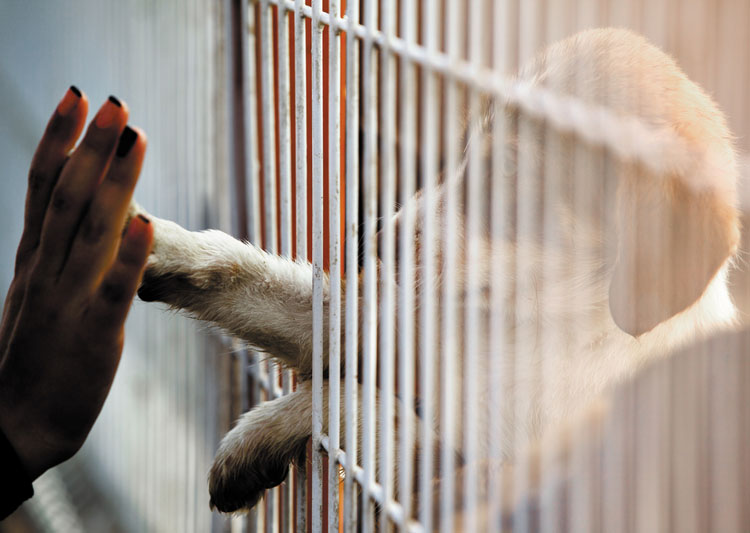
Do Donations to Stray Dogs Actually Help?

September 4, 2015 by Fanna Easter

Yes, Donations to Stray Dogs Do Help

Dog Donations
IrynaTiumentsev/Deposit Photos

We’re flooded with donation requests every day–sometimes multiple times a day. However, most of us click past photos of dogs’ pleading eyes, heartwrenching animal cruelty cases and shelters filled to the brim with dogs. Some pictures of these abandoned dogs are burned in our retinas forever.

Look, I’m just as guilty as you. I quickly click past those haunting faces because it hurts my soul and I feel so helpless. Seriously, how could I help a dog down in south Louisiana? I live so far away. Then I wonder, do donations really work and, if so, does the dog in need actually receive every penny?

Then, a heinous dog abuse case crossed my path and I refused to look away. I had to help. After that experience, I can now answer your burning question. Yes, every penny does help a defenseless abandoned dog and it does something more–it changes your life too.

Dog Donation Facts

When researching donation behaviors (I find behavior fascinating!),  individuals make up 75 percent of giving in America, according to Talk About Giving. Wow! It’s not the size of the donation that matters. It’s the heart behind the giver that makes the difference.

It seems lower income households give the most, which is not shocking, as we know what it’s like to need. Helping a defenseless animal will bring a sense of accomplishment, inner peace and deeper connection with fellow animal lovers. It’s indescribable.

How Donations Break Down

If done correctly, every penny is applied to an abandoned dog’s needs. We’ll talk about identifying legitimate fundraisers in another article because it can be tricky. If you’re interested in becoming an abandoned animal advocate, I have advice on starting up fundraisers myself. You can check out the story that changed me forever.

Most stray dogs need immediate veterinary care, food and a safe place to rest. So let’s discuss how small donations really do add up.

Food

Dog food costs range between $15-$60 per month, depending on the size and health condition of the stray dog. Most strays are very skinny, so they may eat four to six cups of dog food a day.

  • If 10 people donated their coffee money for one day ($5), they can feed a large dog for an entire month or two small dogs for a month.

Spay/Neuter

  • Most female dog spays hover between $100-$250. If 15 people donated their lunch money for one day ($10-$15), it will cover one female dog’s spay.
  • Male dog neuters are significantly cheaper, as it’s less invasive, so costs hover around $80-$150. Again, if eight people donated their lunch money for just one day, they would pay for a neuter.

Veterinary Costs

One stray dog’s veterinary care costs range between $150-$500, depending on his specific needs. When donating for veterinary care, ask the dog’s advocate to post an estimate of the dog’s veterinary costs and choose the portion of the bill you’ll cover. Most givers like to know where their costs go, so choosing provides a type of reassurance.

  • One nice dinner out ($30-$45) would cover a full vet exam.
  • Sacrificing $80 (nice dinner for two)  would cover a dog neuter.
  • Donating $15-$30 would cover tests to check for intestinal parasites.
  • 10 people donating $10 each would cover medications needed to treat any issues.
  • Eight people donating one night out ($25) would cover a high risk spay.

Every amount counts. If every person helped rescue one dog a year, we would make a huge difference! Be a dog’s voice.

READ NEXT: Rescue Dogs Need Your Help

Filed Under: Clients, Resources, Safety, Training Tagged With: do donations help dogs in need, dog training, Dog Training Tips, donating for rescue dogs, donations do matter, donations dogs, how to help a dog in need, how to help a stray pet, how to help dog rescue, how to help pet rescue, how to help rescue dogs, how to teach a dog, how to train a dog, I found a stray dog, safe places to donate for dogs, teach a dog, train a dog, worthy pet related causes

Rescue Dogs Need Your Help

September 3, 2015 by Fanna Easter

New Take on Dog Rescue

Stop Passing the Buck, You Must Take Action Now

Rescue Dogs
vilevi/Deposit Photos

Somehow, the world envisions non-profit rescue organizations to have unlimited pet-friendly homes and no waiting list. People assume these organizations are able to accept every dog in need. Well, if this were true, shelters would be empty across the world.

Facts About Rescue Organizations

Fact: Foster homes are extremely limited and rescue organizations have very limited resources, such as funds and volunteers. When we see an abandoned dog, we need to take the initiative to rescue the dog rather than beg rescue organizations to step in. Yes, it’s time for us to roll up our sleeves and work with these organizations rather than passing the buck, which is happening at an alarming rate.

Rescue organizations excel at their adoption process. There’s a lengthy application process with requirements, home checks and legal contracts. If rescue organizations redirected all of their time and finances to adoption processes, we could make a big dent in finding forever homes for abandoned dogs. However, they spend valuable time begging and pleading people to find acceptable foster homes for homeless dogs. When no homes are available, they’re not able to welcome in more dogs.

Sound hopeless? Far from it. We need to rethink rescue processes. There’s a huge gap missing in saving and rescuing dogs, and that’s community involvement. If one person saved one dog every year, we most certainly would see a difference. Day in and day out, I see the same people tirelessly saving, nurturing and placing abused dogs into homes. These people need a break. We need fresh faces, new ideas and more people stepping in and helping. Abandoned pets are our problem, so we need to fix it together. No more calling someone else to help. You need to step in, roll up your sleeves and save dogs.

Saving Dogs is a Team Effort

Many people have tirelessly donated their time transporting, grooming, training and fostering dogs. Every bit of blood, sweat and tear is extremely appreciated, but we need more. Even non-pet people need to step in. This is not a “dog people” problem, but rather a humanity problem.

I’m not asking you to open up your home for a pet in need. I’m asking you to open up your wallet and donate time. We need you to help raise funds for these poor abandoned animals. I know you can most certainly help here.


Money makes the world go round. When sprinkled with kindness and good intentions, it’s unstoppable!


What Fundraising Can Pay For

By fundraising for donations, you can certainly ensure neglected dogs receive veterinary care, food in their belly and a safe place to stay.

Safe Housing

Due to the lack of immediate foster homes, a short stay in a boarding kennel is a safe place for stray dogs to lay low and recover until an opening pops up. But kennels cost money.

A home environment is best for all dogs, but they don’t magically appear right away. Most dog lovers are hesitant to open their homes to unknown dogs with unknown illnesses and temperaments. So by raising funds, you can help place a dog in a kennel environment until he or she is temperament tested with children, people and other pets. Kennels are good temporary options, but again they require money.

Veterinary Costs

Veterinary costs can add up, ranging between 50 percent to 80 percent of all donations. These costs can also depend on a stray dog’s needs. Some dogs are found duct-taped, discarded with broken legs or heartworm positive. Most stray dogs need to be spayed or neutered. For a single dog, these costs can quickly add up to $800. Donations can take care of this issue.

Veterinarians are Not the Enemy

Before we point fingers at veterinarians and demand deep discounts off “outrageous” fees, these folks charge a fraction of conventional human medical care cost. In addition, they walk out of college with the same amount of tuition debt as human medical doctors. Veterinarians are not the enemy. These folks are lumped into the tireless rescue fighters who have offered discounts, but they still need to feed their family. It’s our turn to help.

RELATED: Why You Should Get Pet Insurance

Food and Dog Behavior Training

Luckily, this issue is somewhat managed since large pet retailers offer free dog food to non-profit organizations. Just about every big box pet company has an active program in place. They donate toys and treats plus dog food.

Dog trainers are hidden heroes too. Many donate their time to temperament test, provide behavior protocols specific to each stray dog’s needs, and support rescue organizations and foster parents with ongoing advice and mentoring. Now, it never hurts to pay these dedicated folks either. They’re not making large profits like big box retailers. Money helps here too.

How You Can Save Animals

Find your cause. It’s pretty easy, as we’re bombarded with soulful eyes of dogs in need every day. If a stray dog shows up in your neighborhood or a friend finds a dog in deplorable conditions, jump in and help.

Set Up a Fundraising Website

Set up a website using PayPal for donations. It’s much cheaper than GoFundMe and other websites that charge between 3 to 10 percent on fund-raised money. You can also set up direct billing with the veterinarian caring for the dog.

From experience, I would set up both donation options. Some people are uncomfortable paying online while others worry about credit card information getting lost at a veterinary clinic. Setting up both options ensures you’re receiving the maximum amount of donations.

Set a donation limit that’s reasonable. Yes, we would all love to raise a million dollars for a dog, but it’s unreasonable and a bit off-putting to donators. Post a picture of the vet’s estimated bill, so donators can see where their funds are actually going.

Be honest and transparent. Explain why you’re asking for donations. Tell a stray dog’s story because that’s the reason you’re donating your time to help this cause. Keep emotions in check (I know it’s hard) and post pictures and updates. Givers want to know all of their money was used to help the dog rather than being wasted.

Lastly, open up your wallet and donate too. Yes, you’re donating your time, but give $25 or $50. Every bit of money is needed.

RELATED: How to Find an Excellent Dog Training Blog

Spread the Word

Trust me, your fundraising website will not reach goal within 24 hours. (Although I wish it did.) You’ll have to spread the word through social media, friends, family and contacts. Make it a point to meet a new contact every day and post results weekly, so folks know progress is being made.

Involve Rescue Groups

Once fundraising has begun and you’ve found a safe place for a dog in need, contact your local humane society or rescue organization. Explain to them the dog is safe and being seen by a vet, and fundraising has begun. Then, ask if they could post the dog on their website for adoption.

You should also ask if they would accept the dog you’re helping into their program, so potential adopters could be screened and home checked through their organization. As of yet, I haven’t had a rescue group refuse. Instead, they thank me profusely for doing the right thing and not dumping the dog on them.

One person, one dog every year. We can do this!

Filed Under: Clients, Dogs, Safety, Training Tagged With: do donations help dogs in need, dog training, Dog Training Tips, donating for rescue dogs, donations do matter, donations dogs, how to help a dog in need, how to help a stray pet, how to help dog rescue, how to help pet rescue, how to help rescue dogs, how to teach a dog, how to train a dog, I found a stray dog, safe places to donate for dogs, teach a dog, train a dog, worthy pet related causes

  • « Previous Page
  • 1
  • …
  • 11
  • 12
  • 13
  • 14
  • 15
  • …
  • 23
  • Next Page »

About

Dog Training Nation is a community of dog trainers, dog owners and dog lovers. Our mission is to provide trainers and owners valuable information to enrich dogs' lives. We cover a range of topics, from socializing puppies to dealing with aggressive dog behavior to selecting the best dog products. It is our hope you share our content to make the dog and owner world a better place.

​

Facebook

Video

Dog Training Nation is a dog training blog for pet owners and dog lovers. We cover a range of topics from puppy socialization tips to dog aggression to dog health. It is our hope you share our content to make the world a better place for dogs.

Dog Training Nation

Quick Links

Dog Training
Dog Behavior
Dog Training Videos
Become a Dog Trainer
About
Contact Us

Copyright © 2026 · Lifestyle Pro Theme on Genesis Framework · WordPress · Log in