Dog Training Nation

In Dogs We Trust

  • Home
  • Training
    • Dogs
    • Puppies
    • Clients
  • Behavior
    • Breeds
  • Health
  • Safety
  • Resources
    • Equipment
    • Books
  • Dog Training Videos
  • About
You are here: Home / Archives for Resources

The Risks With Having A Dog Door

March 10, 2017 by Fanna Easter

You Might Want to Rethink Installing a Dog Door

Dog Door Installation
dmussman/Adobe Stock

Installing a dog door that allows your dog access to the backyard is a personal decision. As a dog trainer, I’m not very fond of dog doors. Understand that when I’m called to address dog behavioral concerns, the dog door is usually tied to the cause. It’s not the dog door’s fault though; it’s giving your dog unlimited access to the backyard that’s the culprit.

Before your hackles rise up, allow me to explain why I dislike dog doors. Once you understand the risks from a dog trainer’s perspective, then decide if a dog door would work for your dog.

Dog Door Risks

Your Dog May Bark More

Easily, excessive dog barking is the most common behavior issue during private consults—usually coupled with aggression. When dogs have unlimited access to a dog door, they’ll learn to run outside at the slightest sound and bark. Soon, this becomes a pattern, and dogs become really good at barking at anything and everything.

After a few weeks, neighbors will start complaining about excessive barking during the day when pet owners are at work. Then, neighbors will start to complain about dogs randomly barking at night. Eventually, the barking dog will be known as a nuisance barker and Animal Control will intervene and fine the pet owners.

Usually, I’m contacted right before or after Animal Control is involved. By this time, a barking dog has had plenty of time to practice barking. He’ll have become very efficient at rushing through the dog door to address whatever noise was heard. During my private lesson consults, many pet owners swear their dogs are “protecting their properties” by barking. Honestly, a dog’s presence and 1-2 barks is enough to warn intruders. Barking incessantly is a nuisance and unnecessary.

If this sounds like your dog, it’s time to lock up the dog door and hire a dog sitter for afternoon potty breaks. Also, leave soft music playing to drown out outdoor noises and prevent your seasoned barker from practicing his barking behavior again. Provide plenty of mental enrichment toys to keep your dog’s brain busy solving puzzles instead of barking.

Your Dog May Escape

When the right motivation combines with plenty of opportunities to practice climbing a fence, a dog will scale a 6-foot fence with ease. Motivation to bark includes another barking dog, kids riding bikes, or another dog approaching the fence. Pair motivation with the ability to climb a fence, and your dog will eventually get really good at escaping your backyard.

Dogs are smart. If they can’t go over the fence, they’ll go under. Don’t be surprised if your dog escapes if you give him 24-hour access to the backyard.

RELATED: The Dangers of Invisible Dog Fences

Your Dog May Become Aggressive

While incessant barking in a backyard is a common complaint from pet owners, there’s a much more dangerous issue. When dogs are allowed unlimited outdoor access without supervision, they’ll become frustrated and learn inappropriate behaviors, such as aggression.

When dogs see other dogs walk past their fence, they’ll learn to bark and even fence fight. Some dogs become very dog aggressive just from practicing this behavior in the backyard. And at times, some dogs become aggressive to people walking near the fence or children riding their bikes on the sidewalk.

If your dog is dog or human aggressive, keep him securely indoors and away from windows. Hire a pet sitter to bring your dog potty in your securely fenced-in backyard. This way, your pet sitter can redirect or reward good behavior when your dog encounters a trigger.

Thieves and Wildlife May Intrude

Most pet owners with dog door installations scoff at the idea of thieves and wildlife entering through a dog door, but it happens. While we assume our dogs will deter thieves and wildlife, sometimes these threats are actually drawn to dogs. Thieves can pepper spray your dog and enter your house through the dog door. Or worse yet, steal your dog.

Wildlife will follow the scent of food, especially dog food left near a dog door opening. Most wildlife scavenging for food aren’t very friendly either. They can seriously harm you and your dog plus carry disease.

No Dog Door, So Now What?

Installing a dog door is a personal decision, but I do think hiring a pet sitter is a much better idea. Yes, I know it’s more expensive, but it will prevent inappropriate dog behaviors caused by unlimited and unsupervised access to your backyard. Plus, hiring a professional dog trainer who provides results are expensive. Most dog trainers charge more than $100 an hour. So dog door drama costs can add up too. 🙂

If you’re one of the lucky ones without dog door drama, count your blessings. But do know, things can change quickly and you may want to ask your neighbors or set up a camera to make sure your dog is polite when outdoors. 🙂
Filed Under: Equipment, Resources, Safety Tagged With: best dog door, dog barks dog door, dog door, dog door installation, dog door security risk, doggie door, door with dog door built in, ideal dog door, pet door, pros and cons of dog doors, should i get a dog door

Why You Shouldn’t Bring Your Dog To Festivals

March 6, 2017 by Fanna Easter

4 Reasons Not to Bring Your Dog to Festivals

Dog-Friendly Festivals
kasto/Adobe Stock

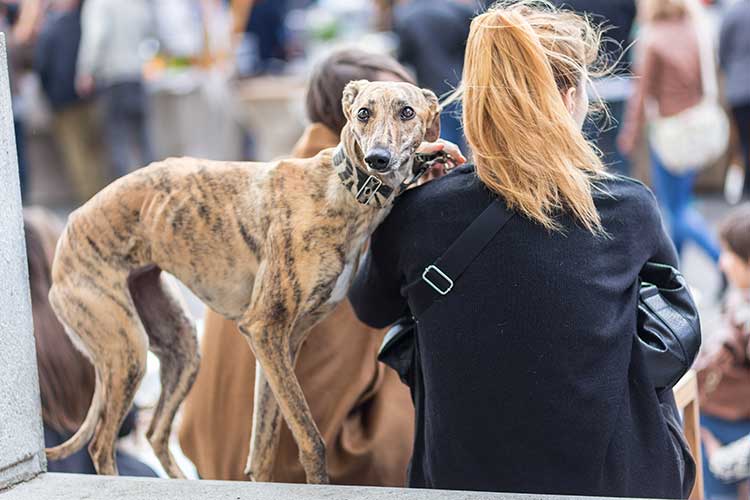
Mardi Gras was last week, but the buildup of parades and festivals had started weeks ago. I witnessed pet owners bringing their large and small dogs to these dog-friendly events, but these dogs weren’t enjoying the festivities as much as their owners.

As a huge dog lover, I completely understand why pet owners would want to share fun festivities with their four-legged family members. However, the dog trainer in me quickly intervenes to point out why dogs should be left at home. From what I saw this Mardi Gras season, it’s best not to bring your dog to festivals with you.

It’s Extremely Loud

Festivals and parades are extremely loud. Each parade starts off with a fire truck and ends with a police car blaring sirens and lights. Not only is this scary for small children—I witnessed many clutching their tiny hands over their fragile ears—it’s also frightening to dogs.

Crowds scream, school bands clang as they march past, loud music roars as floats pass by, and people push and shove for beads. Thankfully, I only spotted a few dogs within a 12-foot thick crowd. But from the glimpses between human legs, every dog I saw looked terrified. This isn’t fair to dogs.

RELATED: Fake Service Dogs Do a Disservice

Worst Place for Socialization

Dog-friendly festivals and parades are the worst places to socialize a puppy. Dog socialization refers to exposing your puppy to something positively, so he’ll learn that it’s harmless and safe.

Not only are festivals loud, but strangers lumber past and try petting unsuspecting dogs. Pair that with being stepped on or bumped into and your puppy will quickly learn that people are scary during these events. It only takes a single scary incident for your puppy to be frightened of people for years.

Overcoming this fear won’t be a simple “fix” either. Trust me.

Your Dog Will Get Hurt

People will step on and hurt your dog. Festival goers aren’t paying attention, and will accidentally step on your dog’s foot or tail. The chances of your dog being harmed is even higher when you add alcohol to the mix. 

Some pet owners think clutching their small dogs in their arms will keep them safe, but even these tiny dogs are at risk too. Rambunctious and drunk crowds will elbow and push their way through a crowd regardless.

Food on the Ground

Festival grounds are littered with dropped ice cream cones, ant-covered hot dogs and spilled beer. It seems disgusting to us, but it’s an inviting buffet for your dog. While some of these food items aren’t necessarily dangerous to feed your dog, ingestion of fatty foods can cause pancreatitis.

Pancreatitis is an inflammation of the pancreas and an extremely painful illness that can easily become a chronic issue. Plus, pancreatitis can be fatal to your dog. Treating pancreatitis in dogs is expensive too, as most dogs need hospitalization for several days.

This festival season, keep your dog safe at home with soft music and a frozen yogurt stuffed Kong. He will thank you.

Festivals and parades are meant for humans, so keep your dog safe at home.

Filed Under: Clients, Resources, Safety, Training Tagged With: bringing dog to festivals, brining dogs to parades, dog festivals, dog parades, dog training, Dog Training Tips, don't bring dog to festivals, should I bring my dog to festival, should I bring my dog to parade

The Best Affordable & Modern Fence For Dogs

March 1, 2017 by Fanna Easter

Privacy Fence for Dogs

Fence for Dogs
denboma/Adobe Stock

Good fences make good neighbors, and this applies to dogs of all sizes too. All pet owners and their dogs should enjoy the luxury of a secure fence. When selecting the best fence for dogs, choose materials that restrict visibility. While this may seem a bit secluded, this type of dog fence is key to peaceful neighbors and dogs.

Best Dog Fence Material

As a dog trainer, I highly recommend wood privacy fences. Wood is cheaper than vinyl and much stronger than PVC fencing. When constructing a wooden privacy fence, instead of placing boards side-by-side, try overlapping board edges to prevent tiny gaps. Tiny gaps will turn into larger gaps because wood dries out. Limiting visual gaps will prevent dog fence fighting behavior too, which is common in the dog world.

For a gorgeous, sleek look and a modern feel, place wooden fence boards horizontally. This may help with your home’s resale value. 🙂 Also, install boards flush to the ground to keep dogs from escaping.

When installed properly, nothing beats a sturdy 6- to 8-foot wood privacy fence that’s both modern and functional.

Finding a Fence Guy

Usually, this is the toughest part of installing a fence for dogs. Ask previous realtors for fence installer recommendations, as most have reliable and experienced construction crews on speed dial. Contact 2-3 dog fencing companies for quotes and compare for best price. Most installers will send someone out to measure your backyard and email quotes the same day.

For DIYers, there are plenty of tutorials online explaining how to install a wooden privacy fence. Plus, many hardware stores offer blueprints and step-by-step instructions. While installing a fence for dogs yourself saves thousands of dollars, it’s very labor intensive and may require rental equipment.

Never Leave Your Dog Out Alone in the Yard

Sturdy wooden privacy fences aren’t bulletproof, but they’ll prevent the majority of barking, fence fighting or escaping. A well installed fence for dogs will do its job, and the rest is up to the pet owner.

Never leave your dog outside alone. While it’s painful to hear, leaving a dog outside alone is the number one cause for several dog behaviors, including:

  • Excessive barking outdoors
  • Digging
  • Chewing
  • Escaping
  • Fence fighting

When you’re outside with your dog, you’re able to call or redirect your dog before these annoying dog behaviors begin. When dogs are able to practice a behavior, such as escaping from a fence, they get really good at it. Then, soon, a dog left alone will learn how to scale a 6-foot fence within minutes. Prevention is key. Close up that doggy door and hire a great pet sitter.

A sturdy fence will do its job, but it needs support from pet owners too.

Filed Under: Equipment, Resources Tagged With: best dog fence, best fence for dogs, best type of fence for dogs, cheap dog fence, dog escapes fence, dog fence, dog fence for fence fighting, dog fence ideas, dog jumps fence, dog proof fencing ideas, fence for digging dog, fence for escaping dog

The Dangers Of Invisible Dog Fences

February 27, 2017 by Fanna Easter

Invisible Fences for Dogs: Not as Safe as They Seem

Invisible Fences For Dogs
Steve/Adobe Stock

The proverb: “good fences make good neighbors” rings true with dogs too. Everyone needs clear and visible boundaries, and that starts with a solid and secure fence for dogs. When clients ask if invisible dog fences work, I shudder. I clearly explain to them why invisible fences for dogs don’t work and how they cause harm.

How Invisible Fences for Dogs Work

Invisible dog fences depend on an underground electric wire system to set boundaries for dogs. Rather than enclose a dog within an area using a physical barrier, such as a gate, invisible fences shock dogs whenever they approach or cross the underground wire.

Some invisible fences for dogs use small flags as physical warning markers. When dogs get close or cross those flags, they’re shocked. In addition, most invisible dog fence companies recommend setting shock collars on high and turning them down over time. This is a horrible way to teach dogs about boundaries.

Invisible Fences Don’t Protect Your Dog

Fences are made to keep certain things in and other things out. Invisible fences for dogs allow other animals into the boundary, but won’t allow your dog out to escape. For years, pet owners have tearfully described their invisible fence horror stories during our private consultations.

Invisible Fence Reviews

Once, a young Pit Bull was attacked and killed by a neighbor’s dog. Every time this poor dog tried to run away, he was shocked. Another time, a client described how coyotes carried off her small dog from her backyard. Once the small dog went missing, the pet owners replayed the security camera video and watched the horrific scene. Another story involved a hound mix that was brutally attacked my javelina pigs (wild pigs). The dog passed away shortly.

Each case could’ve been prevented with a sturdy, visible fence and pet owners being outside with their dogs. It’s only a matter of time until this happens to a defenseless dog stuck inside an invisible fence.

If these invisible dog fence reviews haven’t changed your mind yet, reputable rescue organizations won’t adopt to someone with an invisible fence.

RELATED: What to Do If You See a Tethered Dog

Invisible Fences Cause Harm

Dog shock collars hurt, and they do cause harm. Science is catching up and proving shock collars are considered dog abuse. When people insist shock collars don’t hurt, they’re wrong. As a dog trainer, I’m all too familiar with picking up the pieces after dogs have been shocked repeatedly with an invisible fence collar. This could be easily avoided.

[perfectpullquote align=”full” cite=”” link=”” color=”” class=”” size=””]One day, he casually asked why his dog was afraid to go outside and I casually replied, “Because the backyard shocks and hurts him.”[/perfectpullquote]

Here’s an all too common story. My neighbor had an invisible fence for dogs, and he literally had to push his dog out the back door to potty. One day, he casually asked why his dog was afraid to go outside. I casually replied, “Because the backyard shocks and hurts him.” While my neighbor initially looked shocked, he shook his head and said, “You could be on to something.” Within a month, their invisible dog fence was replaced with a sturdy wooden privacy fence. This story happens every day.

Don’t Believe the Hype

Invisible fence installers will try selling you rainbow and sunshine dreams of perfectly behaved dogs happily playing in your backyard, but don’t buy into it. These dog fences are cruel and won’t protect your dog. Plus, they won’t “securely” confine your dog inside a backyard. Instead, opt for a sturdy wooden fence and keep an eye on your dog when he’s outside.

Filed Under: Clients, Equipment, Resources, Training Tagged With: above ground electric dog fence, are invisible fences cruel, best invisible fence, do invisible fences work, dog training, Dog Training Tips, electric dog fence, invisible fence, invisible fence dogs, invisible fence reviews, invisible fencing for dogs, pet safe invisible fence, shock fence dogs

Traditional Chinese Medicine For Dogs

February 17, 2017 by Fanna Easter

Traditional Chinese Medicine Overview

Traditional Chinese Medicine For Dogs
Roland Gruenewald/Adobe Stock

Before modern medicine existed, an ancient form of medicine was readily practiced worldwide. Traditional Chinese Medicine (TCM) has been around for thousands of years and originated in China. In a nutshell, TCM focuses on bringing the body back into harmony, which prevents illness from occurring.

Interestingly, you can find TCM practices worldwide. Bits and pieces have been sprinkled into different cultures, and most TCM practices are known as remedies and old wives’ tales. TCM is more than superstition. Science is proving that Chinese herbs, medicines and acupuncture really do prevent and treat ailments and illnesses even in dogs.

Check out our Traditional Chinese Medicine veterinarian’s series on TCM for dogs. Dr. Mittner explains Traditional Chinese Medicine simply.

What is Traditional Chinese Medicine for Dogs?

Energy flows through a dog’s body, just like our own, in harmony. Sometimes, this energy becomes disrupted due to stress, change in temperature or change in climate. When a dog’s body is in disharmony, pet owners will notice their dogs seeking a cool or warm place to lie down. Some dogs will drink excessively, cough, seem unsettled or act oddly. This is disharmony within the body. Depending on a dog’s imbalance and element sign, TCM practitioners use Chinese herbs and acupuncture to bring the body back into balance.

My Experience With Traditional Chinese Medicine

While Traditional Chinese Medicine might sound a bit bizarre and “woo-woo,” it’s the real deal. For years, I assumed TCM was a complimentary modality filled with superstition and folklore. Oh, was I proven wrong quickly. Personally, TCM has helped my chronic back issues and anxiety immensely.

As for TCM and dogs, during an acupuncture session, I’ve witnessed my dog’s appetite bounce back within seconds after his first round of chemotherapy. Additionally, my personal dogs and clients’ dogs found tremendous relief from anxiety.

Benefits of Chinese Acupuncture

While personal testimonials work, scientific proof is better. Scientific data provides proof to science-based clinicians that Traditional Chinese Medicine does work for dogs. Many veterinary oncologists today are seeking acupuncture certification due to its benefits on their clients. After chemotherapy, acupuncture can bring the body back into harmony, improving appetite and well-being.

RELATED: What are Force-Free Veterinary Clinics?

Does Your Dog Need TCM?

All dogs are susceptible to changes in their environment, and stress is a major cause of imbalance. If your dog is anxious, your dog is acting differently, you’ve moved recently, you’ve added another dog to your household or your dog has a chronic illness, it’s worth a trip to a holistic veterinarian or Traditional Chinese Medicine practitioner.

[perfectpullquote align=”right” cite=”” link=”” color=”” class=”” size=””]TCM should be used with modern medicine.[/perfectpullquote]

As a dog trainer, many of my clients have noticed their dogs’ anxiety and stress greatly reduce once TCM practices were added to their behavior protocol. It’s important to understand, TCM isn’t a cure-all for all illnesses or ailments. TCM should be used with modern medicine.

How to Find a TCM Practitioner

Finding a Traditional Chinese Medicine practitioner can be challenging, but worth the effort. Our beloved Chinese medicine veterinarian is currently studying for her master’s degree at Chi Institute. When searching for a TCM practitioner, expect to drive a couple of hours, as many are located in larger cities. Once a Chinese medicine vet examines your dog and creates a protocol, he or she can directly ship needed supplements and Chinese herbs to your home.

If searching for acupuncture, you may find acupuncture certified general practice veterinarians in your area. You can also ask your chosen Chinese medicine practitioner for local acupuncture recommendations. Check out a few tips on finding a qualified acupuncture holistic veterinarian near you.

Which element personality is your dog? Both of my dogs are “heart” dogs. 🙂

Filed Under: Health, Resources Tagged With: does TCM work for dogs, find a chinese medicine vet, how to find a holistic vet, TCM dogs, TCM for dogs, traditional Chinese medicine for dogs

  • « Previous Page
  • 1
  • …
  • 8
  • 9
  • 10
  • 11
  • 12
  • …
  • 55
  • Next Page »

About

Dog Training Nation is a community of dog trainers, dog owners and dog lovers. Our mission is to provide trainers and owners valuable information to enrich dogs' lives. We cover a range of topics, from socializing puppies to dealing with aggressive dog behavior to selecting the best dog products. It is our hope you share our content to make the dog and owner world a better place.

​

Facebook

Video

Dog Training Nation is a dog training blog for pet owners and dog lovers. We cover a range of topics from puppy socialization tips to dog aggression to dog health. It is our hope you share our content to make the world a better place for dogs.

Dog Training Nation

Quick Links

Dog Training
Dog Behavior
Dog Training Videos
Become a Dog Trainer
About
Contact Us

Copyright © 2026 · Lifestyle Pro Theme on Genesis Framework · WordPress · Log in
