Dog Training Nation

In Dogs We Trust

  • Home
  • Training
    • Dogs
    • Puppies
    • Clients
  • Behavior
    • Breeds
  • Health
  • Safety
  • Resources
    • Equipment
    • Books
  • Dog Training Videos
  • About
You are here: Home / Archives for Resources

Bubbles For Dogs: A Great Summer Game

June 7, 2016 by Fanna Easter

Dog Bubbles to Save Your Summer
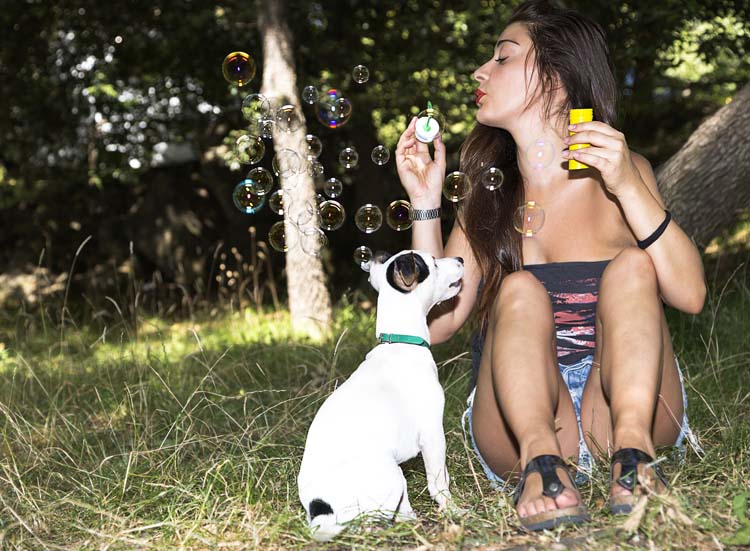
Dog Bubbles
Gianluca D’Auri Muscelli/iStock

Who doesn’t love bubbles? I mean they’re fun to watch form through the bubble wand, peaceful to watch float through the air and so enjoyable to pop. Oh, and dogs love to play with bubbles too. If you and your dog have never played with flavored dog bubbles before, you’re missing out!

Choosing Bubbles for Dogs

When choosing dog bubbles, select bubble formulas specially made for pets. Most commonly found bubbles are made for children and they contain toxic ingredients that can be harmful to your dog, especially since dogs pop bubbles with their mouths. Most dog bubbles are scented with bacon or peanut butter, which entices most dogs to chase, play, bounce and pop all visible bubbles. And yes, dog bubbles are highly scented, so expect to smell like bacon afterwards. 🙂

IncrediBubbles by Pet Qwerks

By far, IncrediBubbles are our favorite non-toxic bubbles for dogs! These flavored bubbles will stay intact longer than other bubble brands, so bubbles will land on the ground (stick on the side of furniture or even land on your dog) and not pop. They work perfectly for dogs that love to pounce on and pop bubbles instead of chasing them. One drawback about this brand of bubbles is that the solution is thicker than most other brands, so it can get a tad messy. However, it’s an easy cleanup with a wet rag. You’ll probably need to wipe or brush your dog’s face afterwards too. The mess is worth the fun though!

Bubble Machines for Dogs

If your dog is addicted to bubbles, then a bubble machine for dogs just might keep up with your bubble-obsessed dog’s demand. There are several bubble machines to choose from; some can be placed on the ground and others are handheld. One thing all bubble machines have in common is that they’ll produce a lot of bubbles quickly, so expect to refill the reservoir often. Now, if your bubble-loving pooch hovers over the bubble machine placed on the ground—hey, it happens—place the bubble machine on a sturdy stool or counter, so bubbles can float away from the machine to keep the game going. If your dog still hovers, then a handheld bubble machine is probably best.

DIY Homemade Dog Bubbles

There are many non-toxic homemade dog bubble recipes floating around online, but I haven’t had the best luck with them. When blowing homemade bubbles, I’d notice the majority of bubbles would burst as I blew through the wand or shortly afterwards. Now, I’m not a pro in the kitchen, so it could very well be an “operator issue.” Making homemade flavored bubbles for dogs can be a fun project for children; just make sure the recipe states it’s non-toxic for dogs.

Playing Bubble Games

Grab your chosen pet-friendly bubbles and your dog, and start playing bubble games on a non-skid surface. If this is your dog’s first time playing the bubble game, bend down and slowly blow a few bubbles away from your dog, so the bubbles are at your dog’s chest level. For very small dogs, have a seat on the ground and blow a few bubbles at first. Refrain from showering your dog with bubbles. This can creep out most dogs, so move slowly in the beginning.

The first time your dog sees bubbles, a couple of things can happen. Either your dog will be a bit confused and walk away or your dog will immediately pounce on them. If your dog hesitates, encourage him to play with the bubbles. Holding a bubble in your hand for your dog to investigate could help too. Just remember, it’s a game and not all dogs are excited about bubbles bursting in their faces. If your dog dislikes the game, no worries, let him scamper inside or into another room while you blow bubbles for your own enjoyment.

Bubble games are a wonderful way for children to play with dogs. There’s no physical contact, and dogs learn children make good things happen. If your dog stands too close to a child (or you) blowing bubbles, then only blow bubbles when your dog moves back from you. Trust me, your dog will quickly learn that standing a certain distance from you makes bubbles happen.

This is a great indoor or outdoor game for dogs, and very entertaining for both pet owner and dog!

READ NEXT: How to Stop Your Dog From Eating Cat Food

Filed Under: Games, Resources Tagged With: bacon flavored dog bubbles, best dog friendly bubbles, bubbles dogs, bubbles machines for dogs, handheld bubble machines dog, how to teach a dog to play with bubbles, incredibubbles for dogs review, indoor game for dogs, my dog loves bubbles, non-toxic bubbles for dogs, outdoor games for dogs, peanut butter dog bubbles, playing with bubbles dogs

Does Your Dog Pull On Leash? Try A Double-Ended Leash

June 3, 2016 by Fanna Easter

Stop Your Dog From Pulling With a Double-Ended Leash

Double-Ended Leash

When dogs pull on a leash, it’s dangerous for both the pet owner and his dog. This is especially scary when a dog is much bigger and powerful than her pet owner. I’ve witnessed dogs pull their pet owner right out of their shoes while waiting for class to begin!

With that said, there are so many new tools that really manage leash-pulling until a pet owner teaches his dog how to walk politely on leash. For example, front clip harnesses and head halters work well, but I learned a leash technique from an old-time dog trainer that still works like a charm today. So, when double-ended leashes debuted several years ago, I was thrilled!

Remember, dog leashes are used for safety, meaning they’re used to stop a dog from pulling you toward another dog or person, running away or into the street, or whatever. Leashes shouldn’t be used for corrections.

My Old Dog Leash Trick

Back in the day, I would clip a six-foot leash to a dog’s flat buckle collar. Then, I would place my left hand on the leash about three feet up and loop the remaining part of the leash in front of the dog, so it would rest on the dog’s chest. Now, both of my hands were holding the leash and pressure was applied on the flat collar (left hand) and chest (right hand holding the leash loop).

It worked magically, especially while standing still. The only drawback is 90% of pet owners would forget how to loop the leash loosely in front of their dog. Now, with double-ended dog leashes, there’s no more guesswork.

RELATED: Why Do Dogs Freak Out When You Touch Their Collar?

How Double-Ended Leashes Work

A double-ended leash has one leash with two clips on each end plus a handle in the middle. Sounds crazy, right? Basically, you’re attaching one end of the leash to your dog’s flat collar and the other clip to the front of your dog’s harness while you hold the handle. It looks a bit odd, but it works wonderfully.

Double-ended dog leads make it easy to manage your dog until he learns how to walk politely on leash. When used correctly, double-ended leashes apply evenly distributed pressure to the front of your dog’s chest and collar, which stops excess pressure from being applied to one specific spot. If your dog pulls away, the harness clip and neck collar will turn your dog’s front (shoulders) back toward you.

You’re probably thinking that a front clip harness does the same thing, but it has its drawbacks. Some dogs will continue to pull so much they will stretch out the side straps, which renders the harness useless. Hence, the beauty of a double clip dog leash because the other end is attached to your dog’s collar, which evenly distributes pressure to several areas and not just one spot.

No More Yanking Back

With a double-ended dog leash, you’re not applying pressure in just one area, which can cause injury due to a yanking motion. Instead, you’re applying pressure evenly to bring your dog toward you if she pulls forward. Think about it this way: if a man was walking into oncoming traffic and I grabbed his arm, it would be really hard to stop his forward movement. Plus, grabbing his arm would cause him to spin around and he would still move forward. However, if I grabbed his shoulders and waist at the same time, he would stop on a dime and it would cause less exertion from me.

When to Use a Double-Ended Leash

Remember, dog training equipment is used as a tool to keep your dog safe while teaching her polite behaviors. Once your dog learns to walk politely on a leash, you can switch to a single-ended leash during walks. Even when your dog learns to walk politely, feel free to use a double-ended leash during walks, especially when walking near distractions, such as squirrels.

Brand I Recommend

By far, my favorite double-ended dog leash is the Freedom Harness (one end attaches to the front of the harness and the other end clips to the top part of the Freedom Harness). While I think the Freedom Harness is an excellent idea, I really like the security of attaching to two different items because some dogs are really good at getting out of a harness when they need to. 🙂 Do know, I don’t work for this company, but I highly recommend their dog leashes and harnesses to clients. Plus, you can order these products on Amazon too.

Give a double leash a try. Let me know what you think!

Filed Under: Equipment, Resources Tagged With: double ended dog leash, freedom harness leash, how to use a double ended dog leash

Protecting Your Furniture From Dog Hair And Nails

June 2, 2016 by Fanna Easter

How to Protect Furniture From Dog Hair and Nails

Protect Furniture From Dog
imagine632/iStock

As I chatted away with my best friend last week, she mentioned struggling with massive amounts of dog hair on her furniture. I recommended a few tips, which she immediately tried. A couple of days later, she was so thrilled with the results, she suggested I should write an article about it. Here are a few ways to protect furniture from dog hair and scratches.

Pet Furniture Covers

For years, protecting couches and sofas from dog hair and nail scratches has been a constant struggle, but thankfully there are tons of furniture covers out there now. For sofas, you can use a furniture cover for pets that protect the entire surface area or simply protect the seating area; it depends on your needs.

If your small dog enjoys walking along the top of your sofa, I would recommend Sure Fit slipcovers that protect your entire sofa. Many years ago, I stumbled upon this brand and have used it for years. It’s a struggle to get the tightly fitting cover on the sofa, but once it’s snuggly in place, it’ll protect your leather or fabric sofa from tears, scratches and dog hair. This slipcover washes well too. I removed the cover once a month and laundered it in warm water, then dried it on low heat. Our slipcover lasted for years.

For dogs that enjoy snoozing in the seating area of your sofa, I would recommend a couch protector that covers this area only. There are tons of options to choose from—I don’t have a specific brand that I really like—but you can hop on Amazon and purchase a five-star-rated brand. Gosh, you can even add a splash of color to your sofa with these options or choose a color that blends in seamlessly. Not only will these covers protect your sofa from dog hair and nails, but they can also easily be removed when guests come over and launder really well.

Protecting Your Bed and Comforter

Bedding is pretty easy to protect from dogs; just throw an old sheet or blanket over your current bedding. It’s easy to remove when guests come over and you can wash it as often as needed. When we travel, we bring our freshly laundered blanket to cover hotel or guest beds. Plus, there are waterproof options as well for incontinent seniors or puppies with muddy paws. 🙂

Train Your Dog Not to Get on Furniture

Allowing dogs on your furniture is a personal choice. Personally, I don’t mind it one bit. Dogs will instinctively climb up and get cozy on your bed, chair or sofa because it’s soft and warm; it has nothing to do with dominance.

If you prefer your dog stays off your furniture, that’s fine, but you must be consistent. It’s unfair to allow your dog to lounge peacefully on your sofa one day, and then demand your dog to get off the sofa the following day. If your dog climbs onto a chair, teach him the “off” cue. With an “off” cue, there’s no fussing, yelling or punishing. All you have to do is say “off,” as you toss a treat on the floor. And no, you’re not rewarding your dog for getting in the chair; you’re actually rewarding your dog for jumping off on cue. Soon, your dog will learn the floor is much more rewarding than your chair.

Now, it’s impossible to expect your dog to lie on a hard cold floor, so invest in some comfy dog beds. Remember to reward your dog for lying in his bed by giving him food stuffed toys to enjoy while chilling on his bed. Additionally, you can teach your dog the “place” cue that will really make his bed rewarding. Don’t forget to crate your dog while you’re away. This way he doesn’t sneak on furniture while no one is home.

Punishment Doesn’t Work

Scat mats are a waste of time and money plus they can scare some dogs. There are easier, quicker and more humane ways to teach dogs new behaviors than by shocking them. Additionally, screaming and yelling will just confuse your dog. Teach him to do something else instead.

If you have a favorite furniture protector, please share it with us. We’re listening. 🙂

Filed Under: Equipment, Resources Tagged With: best bed protector for dogs, best sofa protector for dogs, how to teach dog to get off furniture, protecting furniture dogs, sure fit slipcover for dogs review, teach dog to stay off furniture

How to Protect Dog Paws From Heat

May 18, 2016 by Fanna Easter

Summer Dog Paw Protection

Dog Paw Protection From Heat
rubisco67/iStock

It’s getting warmer, which means summer is pretty much around the corner. As the temperature rises, so does surface temperatures. With that said, humans are oblivious to hot surfaces because we wear shoes; we don’t know how hot surfaces can become. Now, let’s transfer this to dogs. They don’t wear shoes and their paw pads are not invincible calluses. Your dog’s paws are super sensitive like the heels of our feet and can easily burn from exposure to warm or hot surfaces. Some dog paw burns are so severe that layers of paw pads disappear, causing tissue to be exposed. This happens way more frequently than most pet owners would ever think.

So it’s important you protect your dog’s paws from burns caused by hot surface areas, such as sidewalks, roadways, gravel, artificial grass (this stuff gets really hot!) and other surfaces that heat up quickly.

How to Protect Dog Paws From Heat

Feel Surfaces For Heat

Don’t assume surfaces are cool. Ignore the temperature outside because sidewalks can heat up quickly even on sunny 75-degree days. You need to feel surfaces for a true test.

Before walking your dog, take a moment and feel the temperature of different surfaces by standing on them barefoot. If you’re unable to stand or walk for a short period of time on any heated surface, then it’s too hot for your dog’s paws too.

RELATED: My Dog Refuses to Go Outside When It Rains

Purchase Dog Booties

There are several ways to protect your dog’s paw pads from the heat, but the easiest way is walking your dog early in the morning. Allowing cement, gravel, asphalt or any easily heated surface to cool down overnight is best, but make sure walks are completed before or as the sun is rising. An added bonus of walking your dog early in the morning is being able to watch the beautiful sunrise with your best buddy!

If walking in the early morning doesn’t work for you, and you prefer to walk your dog late in the afternoon, remember that outdoor surfaces are still scorching hot. You’ll need to purchase protective dog booties for your dog’s feet. My favorite brands are Muttlinks and Ruffwear booties. They’re easy to put on and stay on and they’ll protect your dog’s feet. However, never assume your dog’s new booties are invincible. Always check your dog’s feet several times (every couple of minutes) while he’s wearing his new booties. You want to make sure they’re working. Once you’ve test-driven your dog’s new booties several times, and you know your dog’s feet are protected, then have fun!

What Doesn’t Work

While I try to focus on what works (being positive), sometimes I need to discuss ways that don’t keep your dog’s paws protected from the heat. Paw wax, thin socks or booties, or dog booties with thin soles won’t last on hot surfaces. We all know walking on hot concrete wearing socks, thin lotion or thin-soled shoes is painful. Splurge on the good dog booties that truly work. 🙂

In Hot Climates, Set Up a Potty Area

Dogs don’t necessarily understand that hot surfaces will burn their feet. This sounds a bit naive, but do you remember walking on warm sand at the beach? It didn’t feel hot at first, but after walking for a couple of minutes, it got really hot!

Keeping this in mind, if you live in a really hot climate, fence off a shaded area for potty breaks during the day. We live in the desert. It’s literally 104 degrees today and it’s only early May, so we’ve sectioned off a shaded portion of our yard to protect our dogs’ feet. Never assume certain surfaces are cool. I was shocked at how warm our little patch of grass could get during the day.

Ignore the air temperature. Take a moment to feel surfaces with your bare feet before walking your dog on it. 🙂

YOU MAY ALSO LIKE: Stop Using Retractable Dog Leashes in Public Places

Filed Under: Equipment, Resources, Safety Tagged With: dog booties for hot surfaces, dog boots hot surface, dog paws summer, dogs feet summer, protect dogs feet hot, summer paw protection

How to Cure Dog Car Sickness

May 13, 2016 by Fanna Easter

Dog Car Sickness Remedies

Dog Car Sickness
lilu13/iStock

Oi, motion sickness is the worst. For me, it starts with a bit of queasiness and usually ends with gut-wrenching nausea that causes vomiting. I feel for motion sick dogs; my heart hurts for them. When dogs experience motion sickness, you’ll notice drooling that likely ends with vomiting–that’s no fun for anyone. Thankfully, dog car sickness usually gets better after a few car rides. However, for dogs that still get sick while riding in a car, here are a few car sickness remedies that work.

How to Prevent Dog Car Sickness

For the most part, car sickness in dogs is not preventable, but it does lessen with age. During a puppy’s or dog’s first car ride, you’ll likely notice stillness, drooling and then vomiting. After a few more car rides, motion sickness seems to disappear as your dog becomes accustomed to riding in cars.

When bringing a puppy or dog that hasn’t ridden in a car before, I would certainly assume he will become car sick. Install a crate in your car with easily washable towels as bedding, and keep your car nice and cool to prevent nausea. If your puppy or dog becomes car sick, start with short car rides around the block and slowly increase car ride distances.

RELATED: Car Seat Covers for Dogs

Treatments for Car Motion Sickness in Dogs

Some older dogs just never get over motion sickness or only become car sick during long trips, so I recommend a few treatments that really work.

Bonine

By far, Bonine has worked the best for my dogs and client dogs. Many years ago, my older Bouvier had a bout of vestibular disease, which affects a dog’s balancing system, and the emergency veterinarian recommended Bonine.

You can find these tablets at your local pharmacy or grocery store. They’re easy to slide in peanut butter, so your dog will gobble them up. I recommend giving Bonine about 30 minutes before car rides for best results. Bonine is considered non-drowsy, but it does have a bit of a sedation effect. Now, the sedation is minimal and it doesn’t have a hangover effect like Dramamine.

Dosage

For dogs and puppies over 25 pounds, give one tablet (25 mgs). For dogs and puppies lighter than 25 pounds, give ½ tablet. For dogs or puppies lighter than 10 pounds, I would recommend giving a very small dose of ¼ of a tablet. If you have any questions, contact your veterinarian for specific dosage directions for your dog.

Dramamine

For years, Dramamine has been the go-to treatment to prevent dog car sickness. However, I’ve never liked the effects during and after giving it to my dogs (or taking it myself). My dogs would literally knock out. It was challenging to get them on their feet during potty breaks or to eat meals. Plus, I found it had a lasting effect; some dogs were drowsy the following day. As with other motion sickness treatments, give Dramamine to your dog about 30-45 minutes before traveling. With that said, it does work and will prevent motion sickness. Just expect a very sleepy dog or puppy.

Dosage

Give 5 mgs for every 10 pounds of body weight. If you have any questions, contact your veterinarian for specific dosage directions for your dog.

RELATED: Turmeric for Dogs

Ginger

This powerful plant helps calm queasy stomachs and can be found in just about everything–from dog biscuits to pills. Personally, I haven’t had good luck with it. After an hour or two of giving a ginger supplement to my dogs for motion sickness, I usually end up giving them Bonine, which remedies car sickness within 30 minutes. Now, that’s just my opinion, but I would give it a try.

Stay away from any ginger products made for humans; they contain high levels of ginger, which can make your dog sick. I’ve heard several clients having great results with Travel-Eze, which can be purchased online.

Dosage

Follow manufacturer’s recommendations and only choose ginger products made for dogs. If you have any questions, contact your veterinarian.

Give a Small Meal Before Car Rides

I know, I know, many people recommend not feeding your dog before car rides, but I have to disagree. While not feeding your dog keeps cleanup easy, I’ve observed empty tummies become nauseous quickly during car rides. Now, I’m not saying to feed your dog a huge meal, but give him a light snack about 20 minutes before travel. Or better yet, give your dog a frozen food stuffed toy once he’s secured inside the car. As your dog licks at the food inside, the food inside will melt and provide tidbits every few minutes. Plus, we all know staying cool helps keep motion sickness at bay.

Good luck!

YOU MAY ALSO LIKE: My Dog is Afraid of Passing Cars

Filed Under: Resources Tagged With: dog car sick, dog car sick ginger, dog car sick natural remedies, dog car sick remedies, dog car sickness, dog motion sickness, dog motion sickness bonine, dog motion sickness dramamine, dog motion sickness ginger, preventing dog car sickness, preventing dog motion sickness, puppy car sick, puppy motion sick

  • « Previous Page
  • 1
  • …
  • 23
  • 24
  • 25
  • 26
  • 27
  • …
  • 55
  • Next Page »

About

Dog Training Nation is a community of dog trainers, dog owners and dog lovers. Our mission is to provide trainers and owners valuable information to enrich dogs' lives. We cover a range of topics, from socializing puppies to dealing with aggressive dog behavior to selecting the best dog products. It is our hope you share our content to make the dog and owner world a better place.

​

Facebook

Video

Dog Training Nation is a dog training blog for pet owners and dog lovers. We cover a range of topics from puppy socialization tips to dog aggression to dog health. It is our hope you share our content to make the world a better place for dogs.

Dog Training Nation

Quick Links

Dog Training
Dog Behavior
Dog Training Videos
Become a Dog Trainer
About
Contact Us

Copyright © 2026 · Lifestyle Pro Theme on Genesis Framework · WordPress · Log in