Dog Training Nation

In Dogs We Trust

  • Home
  • Training
    • Dogs
    • Puppies
    • Clients
  • Behavior
    • Breeds
  • Health
  • Safety
  • Resources
    • Equipment
    • Books
  • Dog Training Videos
  • About
You are here: Home / Archives for Resources

Teach Your Dog How to Use a Ramp

March 4, 2015 by Fanna Easter

Training a Dog to Use a Ramp
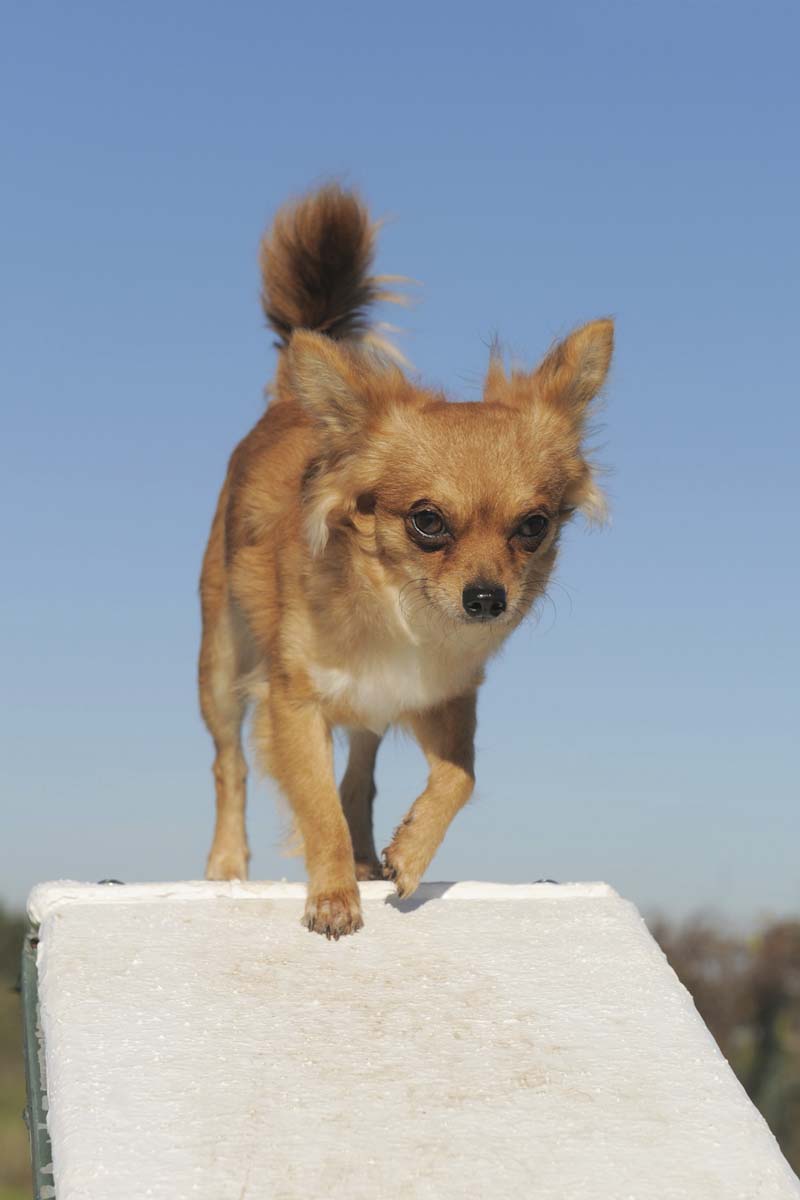
Dog RampsDog ramps are popular, as most dogs will benefit from using one during their lifetime. Ramps are extremely useful. They help small dogs on and off furniture, large dogs into and out of vehicles and prevent dogs from navigating steps after surgery.

The pet industry is filled with plastic, portable, wooden and decorative versions so choose the ramp that works best for the situation needed and your dog’s size.

Ramps are beneficial if your dog uses them. It’s important to teach your dog how to walk up and down a ramp. Dogs are smart and will likely jump over, off or go around a ramp because they haven’t learned how to navigate them yet.

How to Teach Your Dog to Use a Ramp

You’ll need lots of tiny yummy treats and a clicker. Treats should be the size of a pea, as you’ll be using plenty of them in the beginning.

Step One: Going Up

  • Sprinkle a thin trail of treats going up the ramp and take a few steps away from the ramp. Sometimes, our hovering is counterproductive and we, humans, usually feel the need to push or pull a dog closer to or up the ramp. Standing on the side of the ramp will prevent pushing forward.
  • Your dog will likely walk toward the ramp and sniff the treats or even eat a few. Praise her. She’s trying.
  • As she nibbles a few treats, praise her as she places a paw or two on the ramp.
  • If she’s still not sure, ask another member of the family to stand at the top of the ramp and praise her for touching the ramp.
  • After a few minutes, your dog will likely walk halfway up the ramp and look over the sides. Continue to encourage her to walk up the rest of the way.
  • Once she walks up the ramp, give her a handful of treats and lots of praise. I call it “have a party!”

Step Two: Coming Down

  • Using a trail of treats, sprinkle down the ramp. You’ll use the same techniques as teaching her to go up the ramp.
  • Some dogs are hesitant to walk up a ramp and others aren’t too sure about walking down a ramp. Dogs have different comfort levels just like people.

Step Three: Add a Cue

  • Once your dog willingly walks up and down a ramp, it’s time to add a cue.
  • Say “ramp.” As your dog begins to walk up or down the ramp, click and give a treat. Voila. There you go!

VIDEO: Teaching Your Dog How to Use a Ramp

READ ALSO: How to Choose a Dog Ramp
Filed Under: Dogs, Equipment, Resources, Training Tagged With: dog ramp, dog ramp video, dog ramps, dog ramps for car, dog ramps for chairs, dog ramps for furniture, indoor dog ramps, puppy ramp, teaching your dog who to use a ramp

How to Choose a Dog Ramp

March 3, 2015 by Fanna Easter

Choosing a Dog Ramp

Dog RampsChoosing a dog ramp can be daunting. There are so many options out there. I’ll share some must-have ramps, and then it’s your decision going forward. 🙂

Ramp Features to Consider

Traction

Slick surfaces are scary for dogs so choose a ramp with a slip-proof walking surface and evenly spaced grippers for safety. Ramp grippers are very beneficial for older dogs. They can push against them when climbing up a ramp and they can control their speed coming down a ramp.

RELATED: 3 Reasons Why You Need Non Slip Socks for Dogs

For outdoor ramps, choose a non-skid surface appropriate for the weather conditions in your area. For an entire week, we were experiencing an unexpected ice storm in the deep South. I literally wanted to kiss the wide grippers and heavy duty carpet on our ramp. I couldn’t imagine having a plastic version during that weather. Thankfully, my husband is handy so he built our deck ramp for $60. 🙂

Width

In my opinion, wider is better, especially for medium to large dogs. Plus, senior dogs tend to widen their stance when walking down a ramp so provide plenty of room for movement.

Steepness

As we’re aware, walking up and down steep stairs strains knees and joints so choose a ramp with adjustable steepness. Not only is it more comfortable for senior dogs, it’s also easier to navigate post-surgery patients up and down for vet visits or potty walks. Personally, I’ve had to shimmy down a ramp for 10 weeks with Sobek, a 120-pound Rottweiler recovering from ACL surgery, and our lower sloped ramp saved my back!

Furniture Ramps

Non-skid walking surface, width and steepness are definitely factors when choosing a furniture ramp. I like the ramp style better than the stair version, as it’s easier for senior dogs to climb up and down. If you find a senior dog struggling, try lowering the slope (decreasing the steepness) and adding wider gripper bars across the walking surface.

You may also like: Teach Your Dog How to Use a Ramp

Filed Under: Equipment, Resources Tagged With: best dog ramp, best ramps for senior dogs, best stairs for dogs, choosing a dog ramp, dog ramps, furniture ramp for dogs, puppy ramp, ramps for older dogs, stairs for dogs

Canine Cruciate Ligament Recovery

February 27, 2015 by Fanna Easter

Dog Harness for Cruciate Ligament Recovery

Dog Harness

Having a large to medium dog tear or rupture his cruciate ligament is tough. Supporting his rear end and keeping him quiet is enough to make you crazy! Here’s a must-have harness for your dog, which protects his back while providing support during a canine cruciate ligament recovery regardless of chosen healing process.

Help’em Up Harness

This harness is amazing! It’s heavy duty with adjustable straps to fit any size dog (10-220lbs) and wide-padded handles, yet minimally invasive so what’s not to love? Help’em Up Harness is not only for cruciate ligament repairs, but also for senior dogs with limited mobility, hip repairs and basically any type of recuperation.

Help’em Up Harness contains two pieces: a front harness and rear harness (hip lift), which attaches in the middle. You can use the front harness alone. However, it’s recommended the hip lift harness be used in conjunction with the front harness for safety measures. Check out their website for sizing and fitting.

And yes, the boys have plenty of room to potty while wearing this harness! Some folks balk at the price. Personally, I don’t see any issue. It’s worth every penny. Plus, you can’t put a price on your back so dig in your pockets — you won’t regret shelling out your hard earned cash.

Uses for the Help’em Up Harness

  • Supports dog’s rear when encountering steps.
  • Prevents slips by steadying dog’s rear end during walks.
  • Slows down a large dog during rehab walks to prevent further injury.
  • Controls dog during hydrotherapy (underwater treadmill) as harness is made from neoprene, making it buoyant and comfortable.

My Personal Recommendation

Obviously, I really like this product a lot! This harness has helped steady and slow down Sobek (Rottweiler) during cruciate ligament repair and it seems really comfortable when worn. We don’t leave it on all the time. We take it off during naps and at night. Many years ago, I purchased a large Help’em Up Harness for Kira, my Bouvier. She was riddled with arthritis during her later years. This harness was perfect for lifting, steadying and guiding her during potty breaks and car rides. Plus, it saved my back.

More:
Cruciate Ligament Repair in Dogs
Preparing for Dog Cruciate Ligament Surgery
Dog Cruciate Ligament Surgery
Dog Harness

Filed Under: Equipment, Resources Tagged With: acl injury dogs, best harness for lifting dogs, best harness for senior dogs, canine cruciate ligament recovery, Dog ACL Injuries and the Slow Road to Recovery, equipment for dogs cruciate ligament repair, helpemup harness review, Postoperative cruciate ligament care for dogs

Teaching Your Dog to Wear a Cone

February 26, 2015 by Fanna Easter

How to Make Wearing a Cone Comfortable for Your Dog

Dog Cone

All dogs, during their lifetimes, will need to wear a cone to protect a healing surgical site or wound. A cone, also known as an Elizabethan collar, keeps your dog from licking or gnawing a specific area. Don’t forget: healing wounds itch so who wouldn’t want to scratch it, right? So instead of wearing a cone of shame, make it into a party hat!

Make the Cone a Party Hat

Most dogs wake up after surgery wearing a plastic cone and do really well wearing it. Now, there are some dogs who hate it and even freak out while wearing it. So teach your dog that wearing his party hat is fun!

Practice each step several times a day. Move onto the next one once your dog performs the behavior 4 out of 5 times during a training session.

Step 1

Show your dog a plastic cone and click/treat when he looks or touches it. Practice 5 times and end training session.

Step 2

Lure your dog’s muzzle through the cone neck hole and click/treat. Practice 5 times and end training session. You’re not asking him to put his head through it yet. Move in baby steps. You can substitute a verbal “yes” in place of the click, as both hands are busy holding a cone and lure. 🙂

RELATED: Clicker Training for Dogs

Step 3

Lure your dog’s head through the cone and click/treat. Take off cone and practice 5 more times.

Step 4

While your dog is wearing his cone, click and treat every few seconds. You’re teaching him that wearing the cone makes treats happen.

Step 5

Always reward your dog with a yummy treat when putting on the cone. Once the cone is on, I provide a large food stuffed toy for him to lick. Place the toy in a corner so it’ll hold it in place. Remember, he can’t use his paws to hold it due to the cone so secure the food stuffed toy for him.

VIDEO: Teaching Your Dog to Wear a Cone

READ ALSO: My Dog Refuses to Move

Filed Under: Equipment, Resources, Safety Tagged With: dog collars after surgery, dog wearing a cone, dog won't wear cone, Elizabethan collar dogs, plastic dog cone, puppy wearing a cone, teaching a dog to wear a cone, wearing a dog cone

3 Reasons Why You Need Non Slip Socks for Dogs

February 24, 2015 by Fanna Easter

Non Skid Socks for Dogs

Non Slip Socks for Dogs

Oh, there are so many ways non slip socks are useful. I could go on and on, but here are the top 3 reasons why you need grip socks for your dog! There are tons of options out there. However, I’ll share my favorite product with you.

Benefits of Non Slip Socks

Provides Traction

Non skid socks are perfect for senior and tri-pawed dogs needing an extra bit of traction when navigating slick surfaces, such as tile and hardwood floors. With arthritis, most senior dogs’ legs will splay out from underneath them. It’s difficult to bring their legs back under them so most fall to the ground. With non slip socks, they have traction, which prevents splaying even on slick surfaces.

Protects Hardwood Floors

Sometimes, no matter how trimmed your dog’s nails are, they still leave scratch marks on hardwood floors while running through the house. Grip socks prevent damage on hardwood floors while providing traction. It’s not fun when dogs slip and crash into your breakables. 🙂

Aids in Wound Healing

Personally, I’ve used non skid socks to aid in healing foot wounds. Wearing a sock prevents dogs from licking and irritating the wound further. I would much rather use these socks than force my dog to wear a neck cone. 🙂

Woodrow Wear Socks: My Personal Favorite

Woodrow Wear creates the best non slip socks that actually stays on your dog’s foot. They are washable, made of breathable cotton fabric and have a wide band that keeps the sock on your dog’s foot. Each sock contains non-skid pads, and they’re easy to take off or put on. Plus, Woodrow Wear socks will not turn or rotate, keeping the traction pad in place at the bottom of the foot if fitted properly. When choosing a size, I recommend sizing down, meaning choosing one size smaller than your dog’s foot, as they will stretch a bit.

WATCH: 3 Reasons Why You Need Non Skid Socks for Dogs

You may also like: Dog Tug Toy

Filed Under: Equipment, Resources Tagged With: best non skid products for dogs, best non skid socks for dogs, dog gripper socks, grip socks for dogs, non skid dog paws, non skid socks for dogs, non slip dogs for older dogs, pet socks dog, socks for dog paws, tractions socks for dogs, woodrow wear socks review

  • « Previous Page
  • 1
  • …
  • 44
  • 45
  • 46
  • 47
  • 48
  • …
  • 55
  • Next Page »

About

Dog Training Nation is a community of dog trainers, dog owners and dog lovers. Our mission is to provide trainers and owners valuable information to enrich dogs' lives. We cover a range of topics, from socializing puppies to dealing with aggressive dog behavior to selecting the best dog products. It is our hope you share our content to make the dog and owner world a better place.

​

Facebook

Video

Dog Training Nation is a dog training blog for pet owners and dog lovers. We cover a range of topics from puppy socialization tips to dog aggression to dog health. It is our hope you share our content to make the world a better place for dogs.

Dog Training Nation

Quick Links

Dog Training
Dog Behavior
Dog Training Videos
Become a Dog Trainer
About
Contact Us

Copyright © 2026 · Lifestyle Pro Theme on Genesis Framework · WordPress · Log in
