Dog Training Nation

In Dogs We Trust

  • Home
  • Training
    • Dogs
    • Puppies
    • Clients
  • Behavior
    • Breeds
  • Health
  • Safety
  • Resources
    • Equipment
    • Books
  • Dog Training Videos
  • About
You are here: Home / Archives for Resources

How And When To Use A Long Dog Leash

August 23, 2017 by Fanna Easter

Walking Your Dog on a Long Leash

Long Dog Leash
DoraZett/Adobe Stock

Most pet owners feel short dog leashes are restrictive, so they dream of walking their dogs off leash. While this thought process is understandable, it’s not a safe option. Leashes are used as safety lines because they prevent dogs from running away, accidentally walking into roadways, and running up to strange dogs and people. There’s a reason states are issuing mandatory leash laws and that’s because leashes save dogs’ lives. The solution? Use a long dog leash.

Walking a dog on a long leash will provide your dog a sense of freedom, yet keep him safely contained. Before teaching your dog to walk on a long leash, you should first understand how and when to use a long dog leash. Plus, you’ll need to teach your dog a certain skill set before wandering around.

Choosing a Long Dog Leash

Safe long leashes are between 8- to 15-feet long and are made of nylon. These leashes look like super long leashes with a soft hand loop on one end and a sturdy clip on the other end. Retractable leashes are not considered safe long leashes. They’re not user-friendly due to the fickle “stop” button and the weak leash attachments inside the handle. Safe long leashes are sold in most pet retailers and online.

Use Only With a Body Harness

To keep your dog safe, only attach a long leash to your dog’s body harness. Long leashes attached to collars are extremely harmful and can cause permanent damage to a dog’s neck. Attach a long leash to your dog’s harness back clip and not the front one (i.e. located on your dog’s chest) to prevent sudden injury.

Use a Long Line Once a Dog Has Learned Polite Behaviors

Long leashes provide dogs more freedom, but dogs must have a certain skill set before walking 15 feet ahead of pet owners. Once your dog will walk politely (won’t pull) on leash 90% of the time, then it’s time to practice these behaviors using a long line.

Your dog should also respond 90% of the time to the cues below to ensure you and your dog are safe during walks with a long leash.

  • Come when called
  • Leave it
  • Sit
  • Down
  • Stay

As an example, dogs walking on a longer leash are able to chase small vermin or gobble up discarded food before pet owners are able to see it. If you’re not sure if your dog will respond to these cues, it’s best to use a 6-foot nylon leash instead of a long line.

[perfectpullquote align=”full” cite=”” link=”” color=”” class=”” size=””]Think of holding a long leash like a fishing pole; pet owners must constantly adjust the line tension, depending on their dog’s location. [/perfectpullquote]

Start With a Shorter Leash First

Walking a dog on a long leash can be challenging for the pet owner because certain handling skills are needed. Before loading up your dog and going for a walk in the woods using a 15-foot leash, practice reeling in a long leash. Think of holding a long leash like a fishing pole; pet owners must constantly adjust the line tension, depending on their dog’s location. Start slow, let out 8 feet of leash at first, and then slowly increase 1-2 feet of leash based on your environment.

Long leashes should not touch the ground during walks. Keeping it above ground prevents the leash from tangling around a dog’s legs and trees. When your dog walks closer to you, gather up the extra leash in your hands. This may seem cumbersome, but with lots of practice, it becomes an automatic response as a dog moves back and forth.
WATCH: How and When to Use a Long Dog Leash

Filed Under: Equipment, Resources Tagged With: dog behavior, dog training, Dog Training Tips, how to teach a dog, how to train a dog, how to use a long leash during dog walks, long dog leash, long dog leash for outside, long leash, long line, long line dog training, teach a dog, train a dog, using a long leash dog

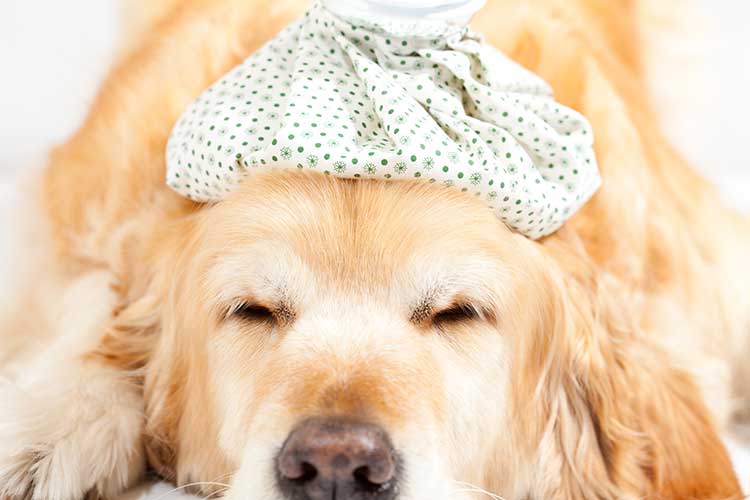
Ice Therapy For Dogs

August 16, 2017 by Fanna Easter

How to Ice a Dog’s Injury

Ice Therapy
135pixels/Adobe Stock

Injuries happen, especially with younger energetic dogs. Sometimes, ice therapy is recommended after your dog’s surgery. Ice therapy can drastically reduce inflammation, swelling and pain within minutes. Regardless of the reason for ice therapy, choosing an ice pack as well as keeping your dog still and engaged during ice therapy can be challenging. Try these tips the next time you need to ice your dog’s injury.

Choose an Ice Pack

When using cold therapy for dogs, choosing an appropriate sized ice pack is essential. Refrain from using a frozen bag of peas as a cold compress because it’s impossible to keep a dog still when food is attached to her body. 🙂 While it’s tempting to fill a plastic bag with ice cubes and use that as a cold compress, this type of compress is extremely cold and can cause more harm than good.

Instead, choose a flexible, reusable and gel-filled wrap that’s large enough to cover your dog’s injury area. Ace Reusable Cold Compress wraps work really well for dogs, and are easily found at most drugstores. Gel-filled cold wraps are moldable and much more comfortable on your dog’s skin. Keep the gel-filled cold compress wrap in the freezer for immediate use.

RELATED: Caring for Your Dog After His Neuter Surgery

Exactly, Where is the Injury?

To maximize the benefits of cold therapy for your dog, find the exact location of inflammation and pain. If you’re unsure, ask your veterinarian to show you exactly where to place a cold compress on your dog. For larger areas, choose a larger cold wrap that completely covers the injured area.

Keep Your Dog Still

Keeping your dog still is the main issue during ice therapy for most pet owners. Find a comfortable place and settle in with pillows and blankets to ensure both you and your dog are comfortable. Ask a friend to give your dog treats while you’re holding the cold wrap in place.

If you’re icing your dog’s injury by yourself, use a peanut butter plate to keep her still and happy. For the most part, once a cold compress is placed properly on a painful injury, dogs will sit still and doze off.

Ice for 10 Minutes

Keep the cold wrap in place for 10 minutes, then remove and place it back in the freezer. Set a timer on your smartphone, sit back and relax while ice therapy works its magic on your dog. Sometimes, after a few minutes of ice therapy, a dog will stand up and walk away and that’s OK. Next time you’re icing your dog’s injury, try placing a thin towel between the cold compress and your dog’s skin; she may have been a bit uncomfortable last time.

Ice therapy for dogs has proven to have anti-inflammatory and pain relieving benefits. Give ice therapy a try!

Filed Under: Health, Resources Tagged With: best cold compress for dogs, cold compress dog, cold compress for dog injury, cold compress for dog wounds, cold pack for dog, dog health, dog will not stay still for cold compress, how to ice a dog's injury, ice therapy, ice therapy for dogs, using cold therapy for dogs

Keep Allergies At Bay With This Pet Air Purifier

August 2, 2017 by Fanna Easter

Best Air Purifier for Pet Dander and Allergies

Best Air Purifier
naypong/Adobe Stock

Living with dogs means our homes are probably covered in dog hair and dander; it’s part of sharing your home with a dog. While it’s frustrating because of the required frequent dusting, mopping and vacuuming as well as the persistent allergies, there is one device that can keep pet dander and fur to a minimum.

Pet air purifiers remove pollution from the air circulating throughout your home, including dog dander. If you or your family member suffer from allergies, you’ll want to check out our recommendation for the best pet air purifier on the market. Not only is this brand listed as a top recommended air purifier, but I’ve also personally used two units for 10 years with great success.

Causes of Pet Allergies

If you share your home with a dog, there’s inevitably going to be dog dander floating around your home. Most pet owners seek “hypoallergenic” dogs, but there’s no such dog breed. Don’t believe the dog breeders who market puppies for allergy prone people and children. All dogs shed and produce dander. Some breeds may not shed hair onto the floor, but they may lose hair that eventually collect inside a non-shedding dog’s coat.

Allergy prone individuals are not allergic to dog hair; instead, they’re allergic to dog dander. Dogs shed skin cells that float in the air, and then collect onto furniture and flooring. It’s impossible to prevent dog dander, so it’s best to bathe dogs weekly and invest in a good air purifier.

How Air Purifiers Remove Pet Allergies

As air purifiers filter indoor air, the high efficiency particulate air (HEPA) air filter removes small pollution particles and emits clear air back into the room. When choosing a pet air purifier, it’s important to choose one large enough to filter an entire room. Many purifiers can easily filter air in a small or medium bedroom. For a large room, such as your living room or common area, choose a larger purifier. An air purifier that has a HEPA filter will remove pet dander and provide the best air quality.

Best Pet Air Purifier Brand

With many brands to choose from, the best pet air purifier brand is Austin Air Purifiers. Austin Air offers an air purifier that specifically targets pet dander called the Austin Air Pet Machine. Not only will this air filter remove pet dander from inside your home, but it will also remove other allergens, viruses and bacteria within 1,500 square feet. While this brand is a bit pricey, it does an amazing job and will keep allergies at bay.

Filed Under: Equipment, Resources Tagged With: austin air pet machine review, best air purifier for dogs, best air purifier for pet dander, best pet air purifier, dog training, pet air purifier review, removing pet dander from air

How To Treat Dog Yeast Infections

July 31, 2017 by Fanna Easter

Dog Yeast Infection Treatment

Dog Yeast Infections
Willee Cole/Adobe Stock

Sharing my home with a Bull Terrier means chronic skin issues are always a concern. Over the last 10 years, I’ve tried different tips and learned new tricks to keep dog yeast infections at bay. Finally, a couple of years ago, I found several products that tackle persistent yeast infections in dogs quickly and effectively.

With that said, it takes a combination approach to tame persistent skin infections in dogs because there’s no magic product that works on its own. Check out these veterinarian-recommended canine skin products that really work.

Reminder: Sometimes, certain dog skin infections won’t respond to the use of only topical products and immune suppression medications may be needed. While I employ a holistic approach, I personally feel quality of time is much more important than quantity. I don’t believe a dog should suffer.

Is It a Yeast Infection?

Before diagnosing your dog’s skin condition yourself, it’s important to know exactly what you’re dealing with first. Schedule an appointment with your veterinarian for a thorough examination.

Most vets will scrape your dog’s skin and examine the cells under a microscope to confirm a diagnosis. So many times, yeast infections mimic bacterial infections, mange and other skin disorders, so a proper diagnosis is critical. Partner with your veterinarian for the best outcome.

Dog Yeast Infection Myths

Persistent skin infections are frustrating, especially when dogs lick and chew constantly, which causes open sores. Pet owners then seek advice from other pet owners either online or in person. While some DIY home remedies have worked for some dogs with yeast infection, they won’t work on all dogs. What works for one dog may not work for another dog.

For example, some pet owners recommend foot soaks or salves. However, these shouldn’t be recommended for dogs with open sores. It’s best to get your veterinarian’s consent first. Use common sense before you run to your nearest health food store and smear apple cider vinegar on your dog’s raw feet.

Diet is a hot topic when it comes to yeast infections in dogs. Some passionate pet owners recommend a raw or home-cooked diet, but neither is necessarily a magic pill. When skin infections pop up, it’s important to use a combination approach. 

Combination Approach

A combination approach means using topical solutions, feeding probiotics, providing a wholesome diet, feeding healthy treats and grooming your dog regularly. If one step is missed, yeast infections can pop up and persist.

Of course, a healthy diet is vital. Raw or homemade diets work really well, but it’s best to feed your dog a diet that works best for him. Adding supplements, such as fish oil, probiotics, herbs and hemp oil, can certainly boost your dog’s immune system while helping him battle a skin infection. Combating yeast infections from the inside is important, but it’s equally as important to tackle skin issues topically too.

My favorite topical yeast infection products for dogs are:

  • Douxo Seborrhea Shampoo
  • Douxo Seborrhea Spot-On
  • Douxo AntiSeptic Chlorhexidine + Climbazole Mousse

Bathing a dog with a prescribed shampoo works wonders, especially if a dog is allergic to outdoor allergens. Each product can be used together, so follow your vet’s directions exactly.

We’re tried multiple store-bought or veterinary-prescribed products and essential oils, and by far the Douxo line has worked really well. On average, it takes at least 1 to 2 weeks for a yeast infection to clear up completely. My dog will stop licking at her feet, so redness subsides. Some skin infections may take longer and may require oral medications, so choose what’s best for your dog.

Being persistent and partnering with your veterinarian is key.

Filed Under: Grooming, Health, Resources Tagged With: best products for yeast infection dog, bull terrier yeast infection, dog health, dog skin issue, dog yeast infection, dog yeast infection treatment, douxo review, yeast infection dogs, yeast infection in dogs

Best Fish Oil Supplement For Dogs Of 2017

July 26, 2017 by Fanna Easter

This Fish Oil for Dogs Works Wonders

Nordic Naturals Fish Oil
bookzaa/Adobe Stock

Fish oil is good for you, and it’s excellent for dogs too! An excellent quality fish oil brand contains DHA and EPA, which are omega-3 fatty acids that reduce inflammation. Most veterinarians recommend fish oil supplements for canine skin issues, such as allergies, flea-bite dermatitis, persistent yeast infections of the skin and shedding coats.

With that said, anti-inflammatory benefits of fish oil will benefit much more than your dog’s skin. Many dogs have found pain relief from osteoarthritis, improved cognitive issues and boosted immune systems, which ultimately lowers incidents of disease and cancer. Given the number of benefits, pet owners should certainly supplement their dog’s daily meals with fish oil.

Which fish oil for dogs is best for your pet? Check out my favorite fish oil supplement that works wonders!

Favorite Fish Oil Brand for Dogs

My holistic veterinarian and veterinary behaviorist highly recommended a specific brand of fish oil and so did my personal naturopathic medical doctor. Yes, even my doctor recommended this brand for my personal supplementation as well.

Most professionals recommend Nordic Naturals fish oil for dogs and humans. There are many fish oil supplements to choose from, but there’s a reason why Nordic Naturals fish oil is the best brand.

Nordic Naturals fish oil products are tested for purity and heavy metals, and are sourced from the Norwegian Sea. There are so many additional reasons why this product is far superior other than fish oils, so check out their website for more details.

Feeding Fish Oil to Your Dog

When adding fish oil to your dog’s diet, it’s important to start slowly. Adding too much fish oil too fast will cause upset stomachs and diarrhea. Add fish oil to your dog’s meals daily, and slowly increase fish oil amounts over a 7 to 10-day period. Nordic Naturals oils don’t have a strong fishy smell, but dogs readily lap it up when poured over their kibble, home-cooked meal or raw food meal.

It’s very important to understand the recommended fish oil dosage for your dog’s size as well as her needs. Your holistic veterinarian is the safest way to find your dog’s dosage.

Many times, holistic vets recommend higher fish oil doses for dogs with arthritis and skin issues. However, never assume your dog’s fish oil dosage because it can cause tummy issues. Nordic Naturals has canine dosage recommendations listed on their label too, but always consult with your holistic vet for best results.

WATCH: Nordic Naturals Fish Oil for Dogs Review

Filed Under: Health, Resources Tagged With: best fish oil dogs 2017, best fish oil for puppies 2017, best fish oil supplement, dog training, Dog Training Tips, fish oil for dogs, fish oil supplements, how to teach a dog, how to train a dog, nordic natural fish oil dog review, nordic naturals pet fish oil, recommended fish oil dogs 2017

  • « Previous Page
  • 1
  • …
  • 3
  • 4
  • 5
  • 6
  • 7
  • …
  • 55
  • Next Page »

About

Dog Training Nation is a community of dog trainers, dog owners and dog lovers. Our mission is to provide trainers and owners valuable information to enrich dogs' lives. We cover a range of topics, from socializing puppies to dealing with aggressive dog behavior to selecting the best dog products. It is our hope you share our content to make the dog and owner world a better place.

​

Facebook

Video

Dog Training Nation is a dog training blog for pet owners and dog lovers. We cover a range of topics from puppy socialization tips to dog aggression to dog health. It is our hope you share our content to make the world a better place for dogs.

Dog Training Nation

Quick Links

Dog Training
Dog Behavior
Dog Training Videos
Become a Dog Trainer
About
Contact Us

Copyright © 2026 · Lifestyle Pro Theme on Genesis Framework · WordPress · Log in
