Dog Training Nation

In Dogs We Trust

  • Home
  • Training
    • Dogs
    • Puppies
    • Clients
  • Behavior
    • Breeds
  • Health
  • Safety
  • Resources
    • Equipment
    • Books
  • Dog Training Videos
  • About
You are here: Home / Archives for Resources

How to Choose Dog Training Treats

July 16, 2014 by Fanna Easter

Dog Training Treats

Puppy Training Treats
Fabulous treats! L-R: Dried venison, cheese, blue cheese, salami, peanut butter and hot dogs.

So many times, clients bring their dogs into the training center and their bait bag is filled with dry kibble or biscuits. Their dogs are overwhelmed with others dogs, sights, smells, sounds and ignore their owners as everything else is more exciting. Learn how to train a dog by choosing treats your dog loves!

Treats are your dog’s currency. Be generous, pay well and often.

Think about it: If I were paying you for a job well done, would you work harder for $100 or $1 bill? Now translate to food: If I paid you with donuts or broccoli, which would you choose? Personally, I would work for donuts and a $100 bill. I think you see my point now. 🙂

Now, I’m not saying you must have treats in your pocket for your dog to sit. We use treats and rewards in the learning phase, and then wean him after the dog understands the cue. By “weaning,” I’m not saying remove treats entirely. I’m saying reward behaviors intermediately (like a slot machine). We, as humans, have an obsession with weaning our dogs off treats too fast. Not sure why we do it. When you are thinking of not rewarding a dog for a great job, think of a stingy boss from your past – yuck!

RELATED: Healthy Dog Treats
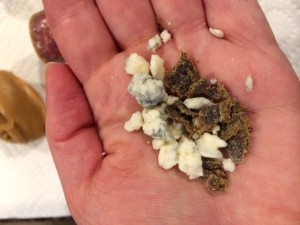
Stinky, small, easy to chew dog treats
Stinky, small and easy to chew dog treats.

Try these dog training tips when selecting fantastic treats for your pooch. He will thank you with his full attention and polite behavior.

  1. Treats must have a strong aroma. The stinkier, the better, as your dog has a fabulous nose. Meat-based treats, especially fish, smell luscious!
  2. Tiny like the size of a pea. Look for treats that break up easily and don’t crumble. Keeping the treat size tiny keeps your dog hungry, calories down and treat cost low. We ask pet parents to bring 100 tiny treats to each class. 🙂
  3. Easy to chew. Soft treats are easy for your dog to chew and swallow quickly. With hard treats, you are waiting for your dog to crunch, crunch and crunch some more before moving forward.

Some dogs love catching their favorite ball or a game of tug as a reward, but 9 times out of 10, most dogs respond to scrumptious treats in high distraction places (i.e. dog training classes). Praise is awesome too. However, this is the icing on the cake with treats. Again, think of working on a project with a friend: praise is nice for a while. Currency is better because you need to pay your bills and eat. 🙂

How to Tell if Your Dog Loves His Treats

  1. As you cut treats or open the bag, your dog is glued to your side sniffing.
  2. You have his full and undivided attention during class.
  3. Immediate and improved success when teaching behaviors.

What’s in my bait bag? Mozzarella cheese sticks, hot dogs, cooked chicken breast, blue cheese (yes, they love it!), cubed round steak and any fish-based treats.

What treats does your dog love? Please comment below and tell us what is in your bait bag!

You may also like: Picky Dog Eaters

Filed Under: Dogs, Health, Resources, Training Tagged With: dog training, dog training classes, dog training treats, dog treats, how to train a dog, how to train a puppy, how to train your dog, how to train your puppy, puppy training, puppy training classes

Clicker Training for Dogs

June 5, 2014 by Fanna Easter

Dog Clicker Training

Dog Clicker Training
Dog training clickers.

The power of clicker training for dogs is amazing. You are rewarding a thinking dog, which is awesome!

Many people use a verbal marker, such as yes to replace a click sound. Keep in mind that people can say yes using many different tones so this can be confusing and may not be the ideal word to use for the behavior praise. The click is a consistent way of marking the behavior before rewarding the treat. The click sound always stays the same whereas the cadence, tone, excitement, clarity and words used with a voice are not always the same.

Why Clicker Training Works

Hypothetically, if I placed a chair in the middle of a room and asked you to sit in it, the moment that you sat down in the chair, I would click and reward. That is the premise we have discussed using clicker training so far. Sounds simple, yet it’s possibly something that a human might get bored with rather quickly. But if every time that she asked you to sit, after you have properly done so, I could click and then reward you with a $100 bill.

What might the outcome be?

Most people would immediately continue to stand up and sit back down in the chair. What has happened is that the dog trainer has now reinforced the proper behavior using clicker training! You have learned that each click meant that you did what was asked. In this case, you were then given a $100 for doing so.

When you should click:

  • Sit: As your dog’s behind touches the ground.
  • Down: As your dog’s elbows touch the ground.
  • Loose Leash Walking: When the leash is loose (your dog is not pulling).
  • Attention: When your dog looks at you instead of the other dogs or distractions.
  • Barking: When your dog stops barking even for a nanosecond, click/treat!
  • Anything you like! If you can think it and your dog is physically able to do it, go for it!

– When your dog stretches while coming out of his crate, click and treat. Do this several times and add a cue, such as “pray.”

– Click when your dog looks to the left and add a cue, such as left.

– Click when your dog backs up and add a cue, such as back.

I have trained my Beta fish, Dribble, to touch my finger with his mouth, follow my finger around his bowl and swim through a hoop using these same clicker training methods.

While I’m not sure he could hear the sound of a click, I used a pen light and blinked when he did the correct behavior and fed him Beta kibble as a reward!

Apply Clicker Training to Other Animals

You can train chickens, horses, cows, guinea pigs and bunnies to do agility by using clicker training. I have even trained humans to sit in a chair. There are tons of games that can sharpen your clicker training skills and keep your dog mentally stimulated. I enjoy 101 Things to Do with a Box. Have fun training your dog!

VIDEO: How to Use a Clicker

What dog training clicker games do you play with your pets? Tell us in the comments below.

You may also like: Clicker Training

Filed Under: Dogs, Equipment, Resources, Training Tagged With: clicker training for dogs, dog clicker training tips, fanna easter, how to train a dog, learn clicker training, positive dog training

  • « Previous Page
  • 1
  • …
  • 53
  • 54
  • 55

About

Dog Training Nation is a community of dog trainers, dog owners and dog lovers. Our mission is to provide trainers and owners valuable information to enrich dogs' lives. We cover a range of topics, from socializing puppies to dealing with aggressive dog behavior to selecting the best dog products. It is our hope you share our content to make the dog and owner world a better place.

​

Facebook

Video

Dog Training Nation is a dog training blog for pet owners and dog lovers. We cover a range of topics from puppy socialization tips to dog aggression to dog health. It is our hope you share our content to make the world a better place for dogs.

Dog Training Nation

Quick Links

Dog Training
Dog Behavior
Dog Training Videos
Become a Dog Trainer
About
Contact Us

Copyright © 2026 · Lifestyle Pro Theme on Genesis Framework · WordPress · Log in