Dog Training Nation

In Dogs We Trust

  • Home
  • Training
    • Dogs
    • Puppies
    • Clients
  • Behavior
    • Breeds
  • Health
  • Safety
  • Resources
    • Equipment
    • Books
  • Dog Training Videos
  • About
You are here: Home / Archives for Clients

Why You Shouldn’t Bring Your Dog To Festivals

March 6, 2017 by Fanna Easter

4 Reasons Not to Bring Your Dog to Festivals
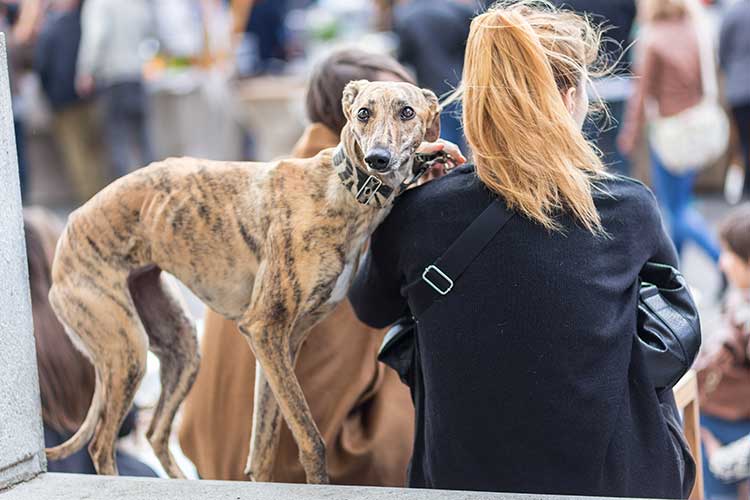
Dog-Friendly Festivals
kasto/Adobe Stock

Mardi Gras was last week, but the buildup of parades and festivals had started weeks ago. I witnessed pet owners bringing their large and small dogs to these dog-friendly events, but these dogs weren’t enjoying the festivities as much as their owners.

As a huge dog lover, I completely understand why pet owners would want to share fun festivities with their four-legged family members. However, the dog trainer in me quickly intervenes to point out why dogs should be left at home. From what I saw this Mardi Gras season, it’s best not to bring your dog to festivals with you.

It’s Extremely Loud

Festivals and parades are extremely loud. Each parade starts off with a fire truck and ends with a police car blaring sirens and lights. Not only is this scary for small children—I witnessed many clutching their tiny hands over their fragile ears—it’s also frightening to dogs.

Crowds scream, school bands clang as they march past, loud music roars as floats pass by, and people push and shove for beads. Thankfully, I only spotted a few dogs within a 12-foot thick crowd. But from the glimpses between human legs, every dog I saw looked terrified. This isn’t fair to dogs.

RELATED: Fake Service Dogs Do a Disservice

Worst Place for Socialization

Dog-friendly festivals and parades are the worst places to socialize a puppy. Dog socialization refers to exposing your puppy to something positively, so he’ll learn that it’s harmless and safe.

Not only are festivals loud, but strangers lumber past and try petting unsuspecting dogs. Pair that with being stepped on or bumped into and your puppy will quickly learn that people are scary during these events. It only takes a single scary incident for your puppy to be frightened of people for years.

Overcoming this fear won’t be a simple “fix” either. Trust me.

Your Dog Will Get Hurt

People will step on and hurt your dog. Festival goers aren’t paying attention, and will accidentally step on your dog’s foot or tail. The chances of your dog being harmed is even higher when you add alcohol to the mix. 

Some pet owners think clutching their small dogs in their arms will keep them safe, but even these tiny dogs are at risk too. Rambunctious and drunk crowds will elbow and push their way through a crowd regardless.

Food on the Ground

Festival grounds are littered with dropped ice cream cones, ant-covered hot dogs and spilled beer. It seems disgusting to us, but it’s an inviting buffet for your dog. While some of these food items aren’t necessarily dangerous to feed your dog, ingestion of fatty foods can cause pancreatitis.

Pancreatitis is an inflammation of the pancreas and an extremely painful illness that can easily become a chronic issue. Plus, pancreatitis can be fatal to your dog. Treating pancreatitis in dogs is expensive too, as most dogs need hospitalization for several days.

This festival season, keep your dog safe at home with soft music and a frozen yogurt stuffed Kong. He will thank you.

Festivals and parades are meant for humans, so keep your dog safe at home.

Filed Under: Clients, Resources, Safety, Training Tagged With: bringing dog to festivals, brining dogs to parades, dog festivals, dog parades, dog training, Dog Training Tips, don't bring dog to festivals, should I bring my dog to festival, should I bring my dog to parade

The Dangers Of Invisible Dog Fences

February 27, 2017 by Fanna Easter

Invisible Fences for Dogs: Not as Safe as They Seem

Invisible Fences For Dogs
Steve/Adobe Stock

The proverb: “good fences make good neighbors” rings true with dogs too. Everyone needs clear and visible boundaries, and that starts with a solid and secure fence for dogs. When clients ask if invisible dog fences work, I shudder. I clearly explain to them why invisible fences for dogs don’t work and how they cause harm.

How Invisible Fences for Dogs Work

Invisible dog fences depend on an underground electric wire system to set boundaries for dogs. Rather than enclose a dog within an area using a physical barrier, such as a gate, invisible fences shock dogs whenever they approach or cross the underground wire.

Some invisible fences for dogs use small flags as physical warning markers. When dogs get close or cross those flags, they’re shocked. In addition, most invisible dog fence companies recommend setting shock collars on high and turning them down over time. This is a horrible way to teach dogs about boundaries.

Invisible Fences Don’t Protect Your Dog

Fences are made to keep certain things in and other things out. Invisible fences for dogs allow other animals into the boundary, but won’t allow your dog out to escape. For years, pet owners have tearfully described their invisible fence horror stories during our private consultations.

Invisible Fence Reviews

Once, a young Pit Bull was attacked and killed by a neighbor’s dog. Every time this poor dog tried to run away, he was shocked. Another time, a client described how coyotes carried off her small dog from her backyard. Once the small dog went missing, the pet owners replayed the security camera video and watched the horrific scene. Another story involved a hound mix that was brutally attacked my javelina pigs (wild pigs). The dog passed away shortly.

Each case could’ve been prevented with a sturdy, visible fence and pet owners being outside with their dogs. It’s only a matter of time until this happens to a defenseless dog stuck inside an invisible fence.

If these invisible dog fence reviews haven’t changed your mind yet, reputable rescue organizations won’t adopt to someone with an invisible fence.

RELATED: What to Do If You See a Tethered Dog

Invisible Fences Cause Harm

Dog shock collars hurt, and they do cause harm. Science is catching up and proving shock collars are considered dog abuse. When people insist shock collars don’t hurt, they’re wrong. As a dog trainer, I’m all too familiar with picking up the pieces after dogs have been shocked repeatedly with an invisible fence collar. This could be easily avoided.

[perfectpullquote align=”full” cite=”” link=”” color=”” class=”” size=””]One day, he casually asked why his dog was afraid to go outside and I casually replied, “Because the backyard shocks and hurts him.”[/perfectpullquote]

Here’s an all too common story. My neighbor had an invisible fence for dogs, and he literally had to push his dog out the back door to potty. One day, he casually asked why his dog was afraid to go outside. I casually replied, “Because the backyard shocks and hurts him.” While my neighbor initially looked shocked, he shook his head and said, “You could be on to something.” Within a month, their invisible dog fence was replaced with a sturdy wooden privacy fence. This story happens every day.

Don’t Believe the Hype

Invisible fence installers will try selling you rainbow and sunshine dreams of perfectly behaved dogs happily playing in your backyard, but don’t buy into it. These dog fences are cruel and won’t protect your dog. Plus, they won’t “securely” confine your dog inside a backyard. Instead, opt for a sturdy wooden fence and keep an eye on your dog when he’s outside.

Filed Under: Clients, Equipment, Resources, Training Tagged With: above ground electric dog fence, are invisible fences cruel, best invisible fence, do invisible fences work, dog training, Dog Training Tips, electric dog fence, invisible fence, invisible fence dogs, invisible fence reviews, invisible fencing for dogs, pet safe invisible fence, shock fence dogs

Dog Training And Human Ego: Not A Good Mix

February 20, 2017 by Fanna Easter

Leave Your Ego Behind During Dog Training

Dog Training
santypan/Adobe Stock

As humans, we try our best to stay out of our own way, but it’s so hard. While humans are extraordinarily complex, we overthink situations and our ego gets in the way. Human egos will certainly derail dog training, which ultimately hold back a dog’s progress. Here’s how to check your ego at the door when training your dog.

How to Not Let Your Ego Get in the Way

Give Your Dog Space

Learning happens best when humans aren’t around. When dogs learn, humans want to be a part of it, which is a good thing. However, it’s better when dogs learn how to make good choices on their own without help from their pet owners. Sometimes, humans just get in the way, unfortunately.

Think about changing behavior this way: It’s better for a dog to choose how to positively react and be rewarded than having someone tell him what to do instead. It’s like cutting out the middleman—a dog learns how to behave politely when no one else is around. Now, that’s freedom for a dog!

Cater to Your Dog’s Personality

Every dog is an individual, and learns on his or her own time. Assuming Labrador Retrievers learn quicker than Basset Hounds is false. I know some Basset Hounds that fly through agility courses. Some dogs punch in and work fiercely while others prefer frequent breaks. Each dog personality has its pluses and minuses, so it’s important for pet owners to understand their dogs’ learning style and adapt to it. Take your time; there’s no hurry.

Laugh and Let It Go

Oh, this is a big one! Dogs aren’t pre-programmed machines, so they make hilarious choices sometimes. Instead of frowning with embarrassment, laugh it off! Every pet owner has been in your shoes, including dog trainers. Once, I had a male Rottweiler urinate on my leg while presenting to a large group of fellow dog trainers. Consumed with teaching, I didn’t notice it until my sock felt warm. Everyone giggled and I laughed until I almost urinated myself. Mistakes happen. It’s a valuable part of the learning process. Don’t sweat the small stuff; laugh it off and move on.

[perfectpullquote align=”right” cite=”” link=”” color=”” class=”” size=””]Dogs aren’t plotting against you.[/perfectpullquote]

Stop the Blame Game

Learning is difficult, yet necessary. Mistakes are part of the learning process. When challenges pop up, and they will, take a break and reevaluate the situation. Assuming your dog is stubborn when things become difficult won’t help the situation. When this happens, the pet owner is playing the blame game.

Dogs aren’t plotting against you. They’re simply doing what works for them, or they don’t know what else to do in that situation. Before teaching your dog a new behavior, decide what you want him to do instead, so your dog training plan is super clear. When a learner (dog) is stuck, it’s up to the teacher (pet owner) to figure out how to solve the issue.

Pet owners will become frustrated when training dogs. It’s that ego again. The moment frustration bubbles up, or your dog becomes confused, take a break and reevaluate the entire situation. 

UP NEXT: 7 Tips on Being a Responsible Dog Owner

Filed Under: Clients, Training Tagged With: dog training, Dog Training Tips, help for dog training, how to teach a dog, how to train a dog, human ego dog training, my dog is stubborn, my dog won't listen, teaching your dog, tips for owner dog training, training a dog

What To Do If You See A Tethered Dog

February 6, 2017 by Fanna Easter

Helping Tethered Dogs

Tethering Dogs
Yuri Kravchenko/Adobe Stock

I’m visiting my family in rural south Louisiana for a few weeks. My family lives in a very affluent neighborhood, but I noticed something odd quickly upon arrival. A close neighbor had a tethered dog in her front yard. Before I could mutter a single word, my mother said, “I’ve called Animal Control and the police. There’s nothing I can do for this poor dog.” Hum, let’s see about that.

It goes without saying: Tethering dogs is cruel. Please never chain a dog. If you notice a dog tethered outside, please say something to the owner. Dogs don’t have a voice, but we do.

Check County Ordinances

With easy access to the Internet today, it’s super simple to find city (or parish in Louisiana) ordinances online. Once you’ve found your county’s ordinances and laws, browse for the chained or tethering dog section. This can usually be found within ordinances pertaining to dogs, animals or animal cruelty.

Is Tethering Dogs Legal?

Every county is different when it comes to tethering dog laws, but most counties require tethered dogs to have access to food, fresh water and shelter. Additionally, pet owners may not deny dogs access from food, water or shelter for more than 24 hours. (24 hours is a long time in Louisiana heat.) You may also find strict dog chain length requirements for your county.

RELATED: What You Need to Know About HOA Pet Restrictions

My Experience

In the beginning, my family called Animal Control because this dog didn’t have shelter from Louisiana’s sweltering summer temperatures. About 24 hours after Animal Control spoke with the owner, a huge Igloo dog house was provided and the dog was tethered to a longer chain per specific county recommendations. However, this poor dog would run around in circles, shortening her chain, which restricted access to shade and water.

Well, I started taking videos and pictures every time the dog was restricted from shade and water as documentation. Apparently, the owner noticed me standing in the road taking pictures and recording her dog. Shortly after documenting, I noticed the owner started walking outdoors to unwind her dog’s chain and pour fresh water in the bowl. She knew I was watching.

Talking to the Dog’s Owner

By far, this was the hardest part. Somehow, I pulled together every bit of patience possible, walked over and knocked on the door while smiling. A middle-aged woman opened the door smiling back. After a few polite pleasantries, I expressed my concern about her dog tethered up in her yard. She explained that her German Shepherd Dog didn’t get along with her other dogs, so it was chained up. Being the dog trainer that I am, I offered her a few tips on keeping dogs separated indoors using dog crates. The owner thanked me for my advice sincerely.

Within a day or two, I noticed this young German Shepherd Dog was brought inside at night. By morning, she was chained up outside again, but at least it was a start. I will continue to educate and document for this poor dog’s sake. If you see a tethered dog, I advise you to read these tips before confronting the dog’s owner.

Be a dog’s voice because she doesn’t have one. Please.

READ NEXT: 7 Tips on Being a Responsible Dog Owner

Filed Under: Clients, Resources, Training Tagged With: chained dog outside, dog training, Dog Training Tips, how to help a chained dog outside, is it legal to chain your dog outside, neighbor with chained dog

How To Keep Multiple Dogs Calm When The Doorbell Rings

February 3, 2017 by Fanna Easter

Training Multiple Dogs to Stop Excessive Barking

Stop Excessive Barking
Stieber/iStock

A new client with three small dogs recently contacted me about excessive dog barking. She explained how her three dogs would bark insanely whenever someone rang the doorbell or knocked on the door. She’d get extremely frustrated and embarrassed when guests came over, and she just wanted her dogs calm when the doorbell rings.

When I arrived and rang the doorbell, I’m sure her neighbors three blocks away heard these dogs barking. We quickly went to work during our private consultation, and we taught each dog how to keep calm when the doorbell rings or someone knocks. Even better, my client learned how to reinforce quiet behavior.

Changing the behavior of multiple dogs may seem daunting, but it’s actually quite simple when following a few dog training tips. During our private consultation, it took 10 minutes to teach three small dogs to bark only once when the doorbell rang, and this included breaks. My client seems to be having tremendous success as well. 🙂

How to Train Multiple Dogs to Stop Barking

Choose High Value Rewards

When training multiple dogs, it’s best to use super yummy rewards. Remember, treats are a dog’s currency; it’s how he’s paid for doing a good job. Dogs love baked chicken, cheese chunks or diced up hot dogs, which can be found at any grocery store. Before a dog training session, chop treats into pea-sized bites and place inside a plastic zip bag for easy access.

Teach One Dog at a Time

It’s easiest to train one dog at a time, and then slowly add another dog into the mix. When choosing your first dog to teach, select the barkiest dog of the bunch. Usually, one dog starts the barking session and gets the others riled up—choose this feisty little one.

It’s important to focus on the barkiest dog first because it sets the other dogs up for success. Keep the other dogs in your bedroom with the door closed. If they bark while you’re training the first dog, know that it’s OK and it won’t affect their training later.

Teach Self-Control First

Grab your diced up dog training treats and get started. While standing, reward your dog for keeping all four feet on the floor or for sitting. You don’t need to cue your dog; just wait for it to happen. Reward your dog every time he chooses to stand or sit, so he quickly learns that this behavior makes hot dog pieces rain from the sky.

If your dog remains sitting and standing, which is the goal, toss his earned treat about 2-3 feet away from him. This way, he must stand up and walk away to get his earned treat. When this happens, wait for him to sit or stand next to you again, then reward. Trust me, once your dog figures out that “four feet on the floor” makes hot dogs rain from your hands, he’ll happily stand for you.

Rewarding a dog for sitting or standing teaches him self-control, rewards him for quiet behavior and teaches him how to earn treats. Once your dog can stand or sit for a few seconds, it’s time to focus on the ringing doorbell.

Have Someone Ring the Doorbell

Ask a friend to step outside and ring the doorbell. Usually, a very barky dog will bark a couple of times, then suddenly remember that standing or sitting quietly makes treats appear. The moment your dog stops barking, say “yes” and reward him by tossing a treat by your feet. Continue having your friend ring the doorbell a few more times and reward your quiet dog.

Tossing food next to your feet teaches your dog to stay or return back to you, which prevents him from running up to the front door. If your dog continues to bark, say his name, which will likely cause him to stop barking. When this happens, say “yes” and reward. Take a short break before introducing the second dog.

Now, Train Two Dogs

Once your first dog learns to bark once or twice at the doorbell, then sits or stands quietly, it’s time to introduce your second dog. Walk over and let the second dog out for a dog training session. Usually, the second dog will come running down the hallway, because she’s excited to participate in the fun.

Reward both dogs for sitting or standing still next to you. When giving out treats, prevent your dogs from fighting over treats by extending your hand out and placing the treat in the dog’s mouth that earned it. Then, reward the dog that offers the sit or stand behavior first, and wait for the other dog to figure it out.

When training two dogs together, it’s amazing how fast the second dog learns when watching the first dog. Once both dogs will stand or sit next to you for a few minutes, it’s time to practice with the doorbell.

Ask a friend to step outside and ring the doorbell again. As the doorbell rings, your second dog will likely look over at the first dog, bark a couple of times, then choose to stop barking just like your first dog. When this happens, reward both dogs for being quiet. Continue to practice and reward both dogs for choosing to remain quiet. After 1-2 minutes, take a short break before adding the last dog into the dog training session.

Train All Three Dogs

Now that two dogs have learned to stand or sit quietly when the doorbell rings, your last dog will quickly pick up this dog behavior. Ask a friend to step outside again and ring the doorbell. The moment each dog chooses to be quiet, say “yes” and reward. Practice a few more times, then end the session.

Practice Several Times Per Week

In the beginning, practice 1-2 minutes per day. During the first week, you’ll notice a huge decrease in dogs barking at the doorbell. After the first week, keep practicing 3-4 times per week with dog training sessions lasting 1-2 minutes. Use high value treats or bits of your dog’s kibble during mealtime. Practice reminds each dog how to keep calm when the doorbell rings regardless if it’s visiting guests or the FedEx guy.

Soon, you’ll happily show off your dogs’ polite doorbell skills to guests. 🙂

Filed Under: Clients, Dogs, Training Tagged With: dog barks at doorbell, dog training, Dog Training Tips, dogs barking at door, how to stop dog barking at doorbell, how to teach a dog, how to train a dog, multiple dogs bark at doorbell, stops dogs from barking at doorbell, teaching a dog, training a dog

  • « Previous Page
  • 1
  • …
  • 4
  • 5
  • 6
  • 7
  • 8
  • …
  • 23
  • Next Page »

About

Dog Training Nation is a community of dog trainers, dog owners and dog lovers. Our mission is to provide trainers and owners valuable information to enrich dogs' lives. We cover a range of topics, from socializing puppies to dealing with aggressive dog behavior to selecting the best dog products. It is our hope you share our content to make the dog and owner world a better place.

​

Facebook

Video

Dog Training Nation is a dog training blog for pet owners and dog lovers. We cover a range of topics from puppy socialization tips to dog aggression to dog health. It is our hope you share our content to make the world a better place for dogs.

Dog Training Nation

Quick Links

Dog Training
Dog Behavior
Dog Training Videos
Become a Dog Trainer
About
Contact Us

Copyright © 2026 · Lifestyle Pro Theme on Genesis Framework · WordPress · Log in