Dog Training Nation

In Dogs We Trust

  • Home
  • Training
    • Dogs
    • Puppies
    • Clients
  • Behavior
    • Breeds
  • Health
  • Safety
  • Resources
    • Equipment
    • Books
  • Dog Training Videos
  • About
You are here: Home / Archives for Dogs

Help! My Dog Hates Riding In The Car

January 9, 2018 by Fanna Easter

Why Dogs Hate Riding in Cars & What to Do About It
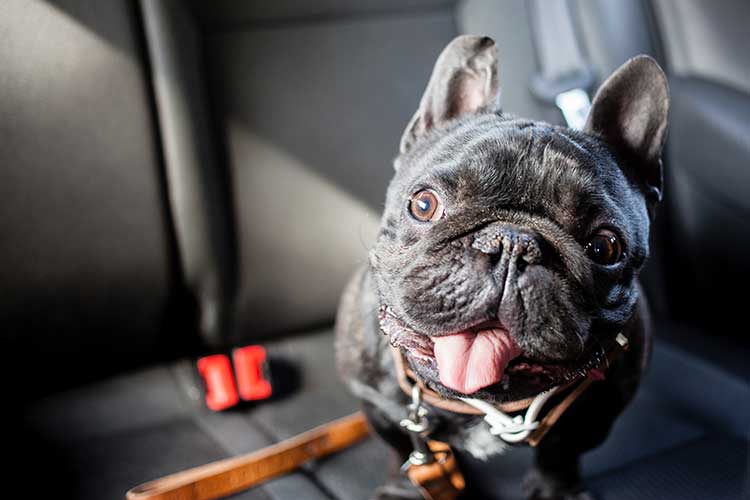
Dog Hates Car Rides
Csák István/Adobe Stock

Many dogs hate riding in cars for numerous reasons. Some dogs will bark, howl, lunge at the window, drool and even throw up. These dogs are clearly uncomfortable, so they learn to hate riding in cars. Before addressing car riding woes, it’s important to understand exactly what is causing your dog’s discomfort first.

Motion Sickness

Nausea is the worst, especially when you’re unable to get away from the cause. Motion sickness is extremely common in dogs. It’s best handled with over-the-counter medication, such as Dramamine and Bonine. For correct dosage, depending on your dog’s age and weight, partner with your veterinarian. Additionally, keep your car’s temperature on the cool side and ensure an AC vent is near your dog. Once motion sickness is prevented, it’s time to take short car rides with lots of treats, so your dog looks forward to riding in a car.

Restlessness

This is a common behavior when dogs are uncomfortable, nauseous or unfamiliar with riding in cars. It’s safest for dogs to ride inside plastic crates or secured with a crash-tested harness. Make sure your dog is comfortable first. Ensure your dog has plenty of space to lie down, stand up and turn around inside your car.

Place a soft bed or thick blankets in your dog’s crate or car seat, and provide plenty of cool water. Play soft music, such as Through A Dog’s Ear, to keep your dog relaxed. If your dog has motion sickness, address it immediately. Take short car rides, while your dog licks away at a super yummy food stuffed toy, and soon your dog will love car rides.

Scared

If your dog is scared to ride in a car, it’s vital to teach your dog that car rides are fun. Not all dogs enjoy car rides since it’s not natural for dogs to ride in cars. Start slow and reward your dog for jumping into the car first. Once loaded inside his crate, give your dog a food stuffed toy to lick, close car doors and turn on the engine while you’re sitting in the driver’s seat.

In the beginning stages, don’t drive anywhere—just let your dog learn that cars make peanut butter stuffed toys appear. After a few minutes, turn the car off and unload your dog. Practice several times a week. Once your dog will happily relax and lick at his toys, then it’s time to take a spin around the block. Continue to add a bit more distance and time while driving, and always bring food stuffed toys along for the ride. This teaches your dog that good things happen during car rides.

Dislikes Seeing Dogs or People

By far, this is the toughest car ride challenge. When dogs are afraid of other dogs and people, they will bark and lunge when these scary things become visible. Teach your dog to ride inside of a crate, and cover the crate with large towels or sheets to block your dog’s view. Additionally, play soft music to drown out dogs barking or people talking while driving. If visual barriers and soft music don’t work, it’s time to reach out for professional help.

When to Get Help

Motion sickness and restlessness due to unfamiliarity with car rides can be easily addressed with medication and dog training. Scared dogs or dogs that dislike people, that panic when riding in cars, may need additional help from a professional dog trainer and veterinary behaviorist.

When in doubt, seek help sooner rather than later.

Filed Under: Dogs, Puppies, Training Tagged With: dog aggressive car rides, dog barks at people during car rides, dog barks during car rides, dog behavior, dog car anxiety, dog car travel, dog hates car rides, dog hates riding in car, dog hates riding in the car, dog scared of car rides, dog training, how to teach a dog, how to train a dog, puppy hates car rides, puppy throws up during car rides, teaching a dog, training a dog, training dogs

My Dog Refuses To Walk Up Or Down Stairs

January 2, 2018 by Fanna Easter

How to Help a Dog Scared of Stairs

Dog Scared of Stairs
zhitkov/Adobe Stock

Walking up and down stairs seems like an easy task; however, traversing stairs can be scary for some dogs and puppies. A few stairs are easy to navigate for most dogs and puppies, but it’s when it’s a full flight of stairs that can be downright spooky for them. If you live in an apartment building or have a second floor in your home, it’s important to teach dogs and puppies that stairs are fun and safe. Below are dog training tips to help a dog scared of stairs.

First, Add Non-Slip Rugs

Most dogs and puppies dislike walking up or down stairs because they’re slippery. It takes balance and coordination to maneuver four legs within small spaces that suddenly incline or decline, and coordination has to be learned. To set your puppy up for success, place non-skid rugs in the center of each step and the top and bottom of each landing space.

Decorative stair rugs are available online for indoor stairs. For outdoor stairs, use remnants of rubber-backed rugs. Either way, providing traction is an important step before teaching your dog that stairs are fun.

Walking Upstairs

Walking upstairs is a little easier for most dogs and puppies. They can take their time placing paws strategically to pull themselves forward. While getting your puppy to walk upstairs is easier than downstairs, she may still find it scary at first. This is why it’s so important to teach puppies that treats can be found on each step.

Sprinkle a few super yummy treats on the first step, while your puppy watches you, and stand about 3-4 feet away from the step. Your puppy will likely walk over and eat the treats off the step. Next, sprinkle a few treats on the first and second step, and let your puppy find the treats. She may find getting to the treats on the second step a bit challenging, but she will figure it out and self-reward herself. After a few minutes of sprinkling treats on two steps, end the puppy training session.

Heading Downstairs

Walking downstairs is downright scary for dogs and puppies. It takes lots of balance and courage to maneuver four legs downstairs carefully while gravity is pulling you downward. Practice teaching your dog or puppy how to walk up one or two stairs first. When your puppy is standing on the second stair, sprinkle a few treats on the first stair and the bottom landing spot. If she becomes scared, while walking downstairs, pick her up and bring her down the stairs. Continue practicing daily by adding one or two stairs until your puppy is comfortable climbing up and downstairs.

When Dogs Refuse Stairs

It’s common for dogs and puppies, that haven’t encountered stairs before, to hesitate walking up and downstairs. However, if a dog suddenly becomes scared of stairs, then it’s time for a veterinary visit. Older dogs may develop arthritis, which causes severe pain while stepping up or climbing downstairs. If a younger dog refuses stairs, she may have an injury, congenital issue (hip dysplasia) or torn pad. Some dogs slip when walking up and downstairs, and become afraid to navigate stairs again. If this happens, follow the above recommendations for teaching your dog that stairs hide treats.

Take it one step at a time, and reward all progress.

Filed Under: Dogs, Puppies, Training Tagged With: dog afraid of stairs suddenly, dog hates walking down stairs, dog hates walking up stairs, dog scared of stairs, dog training, Dog Training Tips, how to get a dog to use stairs, how to teach your dog, how to train dogs, puppy scared of stairs, puppy stairs, teach puppy to climb down stairs, teach puppy to climb stairs, why puppy is scared of stairs

Dog Pawing Behavior: What It Means And How To Stop It

December 11, 2017 by Fanna Easter

How to Stop a Dog From Pawing And Scratching People

Dog Paws
lobodaphoto/Adobe Stock

As a professional dog trainer, I’ve witnessed dogs pawing people, which leave long scratches on arms and legs behind. Many years ago, during a private dog training lesson, a Great Dane welcomed me at the front door with a massive swat across my back. Wow, that scratch burned, bled and bruised over the next couple of days. The pet owner and I immediately put a plan into place to prevent it from happening again. If your dog paws at you or your guests, check out these tips to avoid painful dog scratches.

Why Dogs Paw

Dogs paw at people for numerous reasons. They paw mostly because it’s been rewarded. When a dog paws a person, the person will most likely turn around and look at the dog, which is considered a reward for some dogs. Additionally, pet owners may respond to dog paws by:

  • Petting their dog.
  • Continuing to pet their dog.
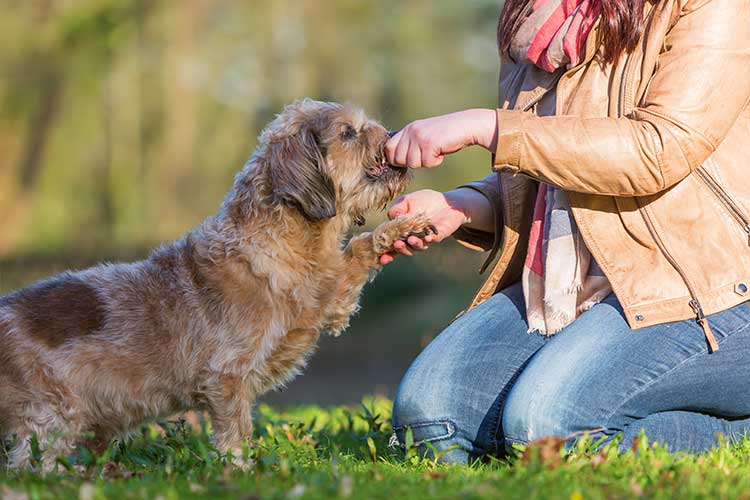
  • Picking up their dog’s paw and moving it.
  • Giving bits of food under a table when the dog paws a leg.

Teaching a dog to “shake” can increase pawing behavior. When dogs learn that “shake” makes treats appear, they will offer a “shake” behavior more often. Plus, dogs will try out their new behavior with guests in hope of treats. 🙂 Instead of teaching a dog to “shake,” teach him a stationary behavior, such as “sit.” This prevents a dog from pawing guests, and it’s a great behavior to reward.

How to Stop Dog Pawing Behavior

When behaviors are no longer rewarded, they will disappear. When a dog paws at you, take a step back and wait until all four feet touch the ground. The moment all four feet touch the ground, say “yes” and reward your dog. Of course, most dogs will paw right afterwards because they’re not sure which behavior provided the treat. Reward only when all four on the floor again.

Continue to practice daily, and wait for your dog to make a choice—watching your dog make a decision is a glorious thing to watch. Some dogs will gently place their paw on a person, think for a few seconds, then drop their paw to the ground. Reward good choices every time!

To prevent your dog from jumping up and pawing guests, teach him to “touch” guest’s hands with his nose. This keeps all four feet on the ground, gives your dog a chance to decide if he wants to greet a guest and offers a form of physical contact (like petting) for your guest.

If you don’t reward it, the behavior will disappear. 🙂

Filed Under: Dogs, Puppies, Training Tagged With: dog behavior, dog pawing at me, dog paws at me, dog paws me, dog paws person, dog scratched me, dog scratches me, dog training, Dog Training Tips, how to stop dog from scratching and pawing, how to teach a dog, how to train a dog, puppy scratches me, stop dog from scratching people, teaching a dog, training a dog

Thinking Of Getting A Siberian Husky? Read This

October 27, 2017 by Fanna Easter

Things to Know Before Getting a Siberian Husky

Siberian Husky
Zakharov Evgeniy/Adobe Stock

Everyone remembers the first time she saw or met a Siberian Husky. The encounter is truly a magical moment. This dog breed’s striking double coat, coat coloring and gorgeous eyes are true showstoppers with which many pet owners fall instantly in love. Before you buy or rescue a Siberian Husky, there are a few things you should know before adding this stunning breed to your family.

Boy, Do They Shed!

Siberian Huskies shed like a raging January snowstorm in North Dakota. Their beautiful double coat blows out profusely during spring and summer. Daily brushings with the appropriate brushing tools will help, but loose hair will still stick to furniture and clothes, hide in your refrigerator, and land in your mouth. If shedding doesn’t bother you, then consider this breed, but there’s more!

Siberians are Strong

This breed was bred to pull sleds at high speeds, meaning they are super strong. Siberian Huskies can easily pull down or knock over a grown adult, so care must be taken with small children. They move fast and love to run, so it’s important to ensure your lifestyle provides them their daily exercise!

Super Friendly With Everyone

While this breed was created to work in cold climates, they are not fierce protectors. Siberians love everyone and easily jump on and over guests, so teaching polite greeting manners is vital. While Siberians can scare some people with their medium size, plush coat and prick ears, they probably won’t bark enough to protect your home. Many pet owners love this characteristic, and adore their Siberian’s “Walmart greeter” behavior.

They are Not Wolves

Siberian Huskies have risen in popularity lately due to shows, such as “Game of Thrones.” Unfortunately, this has resulted in rescue groups drowning in owner-surrendered dogs. Siberian Huskies are not wolves nor are they even part wolf. They are domesticated dogs. If someone advertises wolf or wolf-hybrid Siberian Huskies, stay away. Sharing your home with a wolf is an entirely different and dangerous situation.

Still Want a Siberian Husky?

If you’re still interested in getting a Siberian Husky, then I’d recommend meeting several Siberians in person at dog shows. Reputable dog breeders show their dogs to a certain strict breed standard and health test all dogs. These are the Siberian Husky experts. Believe it or not, responsible breeders charge the same prices as irresponsible breeders, and responsible breeders provide a lifetime of support. Before purchasing or adopting a Siberian, contact these reputable breeders and rescuers first. Better yet, join the Siberian Husky Club of America.

Take time to learn more about your desired dog breed before bringing him into your home. Knowing what you’re getting into is best for everyone, including the dog.

Filed Under: Breeds, Dogs, Training Tagged With: before buying a Siberian Husky, dog breed information, dog breeds, dog training, Dog Training Tips, how to teach a dog, how to train a dog, owning a siberian husky tips, should i get husky, siberian dog purchase, Siberian husky, siberian husky breed information, siberian husky personality, Siberian husky puppy, things to know about siberian huskies, things to know before adopting a siberian husky, things to know before getting a siberian husky, where to buy a siberian husky puppy

How To Save Your Back When Training Small Dogs

October 6, 2017 by Fanna Easter

Training Small Dogs: Reward Without Back Pain

Training Small Dogs
Christian Müller/Adobe Stock

All dogs deserve lots of super yummy treats during dog training practice sessions. However, when training small dogs, a pet owner can certainly strain his back from repeatedly bending down to give his dog a treat. If you share your home with a small dog, give these treat tossing tips a try and give your back a rest.

Feed the Floor

When rewarding your small dog for a good job, try tossing treats on the floor instead of bending over and popping treats into your tiny dog’s mouth. Tossing treats on the floor is an extremely effective reward system, and you’re able to move your small dog around to reset for the next behavior.

If tossing treats on the floor is bothersome, place a plastic container on the floor and toss treats into that. Your small dog can perform a behavior, then walk over to her “treat bucket” to eat her earned treat.

Lightly toss treats about 2-3 feet away from your dog. Tiny bits of cheese work extremely well because there’s minimal bounce factor plus low fat cheese won’t leave a greasy residue behind.

RELATED: How to Clean Food Stuffed Toys

Use a Wooden Spoon

When training your small dog to walk on a loose leash, it’s vital to reward her often. Bending over and popping a treat into a dog’s mouth every few seconds can certainly put unneeded strain on your lower back. Instead of bending over, place a large dollop of peanut butter on a wooden spoon or rubber spatula. Hold the spoon behind your back to prevent your small dog from jumping up and trying to mug you for treats.

When rewarding the right behavior, lower the spoon down, so your dog can take a lick or two of peanut butter, then pick it back up. Some dogs will grab the entire dollop of food off the spoon (smart dog), so smear peanut butter across the spoon or spatula surface to prevent this from happening.

Between both tips, see which one works best for you. Using a peanut butter spoon works best when teaching small dogs polite leash manners, and the feeding the floor method is ideal for everything else.

Filed Under: Dogs, Training Tagged With: dog training, Dog Training Tips, dog training tips for small dogs, giving treats to small dogs, small dog training, train a small dog, training small dogs, training tips for small dogs, treat training tips for small dogs

  • 1
  • 2
  • 3
  • …
  • 32
  • Next Page »

About

Dog Training Nation is a community of dog trainers, dog owners and dog lovers. Our mission is to provide trainers and owners valuable information to enrich dogs' lives. We cover a range of topics, from socializing puppies to dealing with aggressive dog behavior to selecting the best dog products. It is our hope you share our content to make the dog and owner world a better place.

​

Facebook

Video

Dog Training Nation is a dog training blog for pet owners and dog lovers. We cover a range of topics from puppy socialization tips to dog aggression to dog health. It is our hope you share our content to make the world a better place for dogs.

Dog Training Nation

Quick Links

Dog Training
Dog Behavior
Dog Training Videos
Become a Dog Trainer
About
Contact Us

Copyright © 2026 · Lifestyle Pro Theme on Genesis Framework · WordPress · Log in