Dog Training Nation

In Dogs We Trust

  • Home
  • Training
    • Dogs
    • Puppies
    • Clients
  • Behavior
    • Breeds
  • Health
  • Safety
  • Resources
    • Equipment
    • Books
  • Dog Training Videos
  • About
You are here: Home / Archives for Dogs

Dog Breed of the Week: Bulldog

June 12, 2015 by Fanna Easter

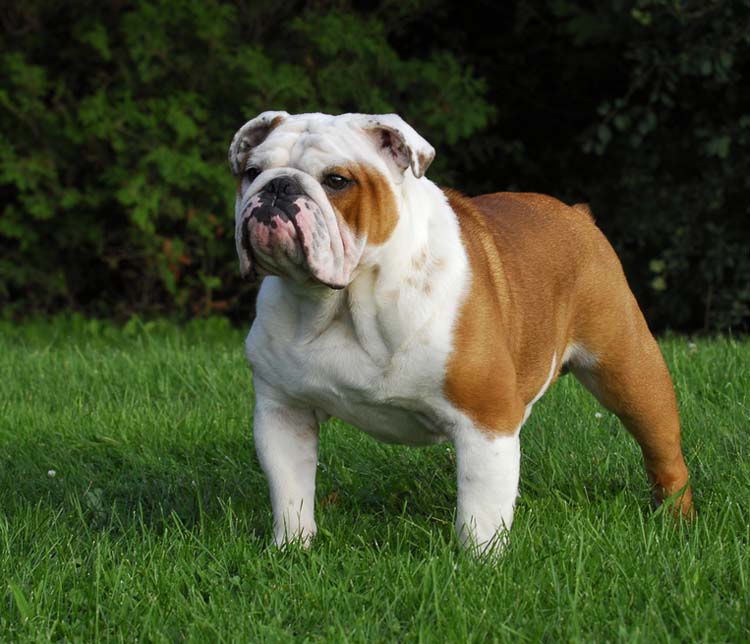
Meet the Bulldog

Bulldog
willeecole/Deposit Photos

Are you considering getting a Bulldog? Personally, I have always wanted one, but haven’t had the privilege of owning one. However, I have had the pleasure of training several Bulldogs. With that being said, I thought I would put some information together for people who are looking at adding a new member to their family.

Bulldog Characteristics and Temperament

Bulldogs are a part of the AKC Non-Sporting Group and one of the most popular breeds. You’ll find characteristics from several different breed groups in the Non-Sporting group. Their name “bulldog” originated with the dog being used for bull baiting though be it very cruel. Bulldogs tend to be very strong bodied, willed and calm. With them being so strong willed, you’ll want to begin positive training and socialization as soon as possible.

The Bulldog is a medium-sized dog that has short legs with very stout bodies. Bulldogs come in 10 different colors with a variety of four different markings. They have very short muzzles and wrinkled faces. It’s almost like they have wrinkles for you to grab while you get a nice big slobbery kiss from them!

With a short muzzle, you can pretty much guarantee snoring. Bulldogs have a soft upper palette that dangles a bit further down than longer nosed dogs, which creates a snoring sound. Plus, this makes them prone to heat stroke. There’s not much you can do about it, and most Bulldog lovers learn to love it.

Bulldog Grooming

Since Bulldogs have a short flat lying coat, you won’t be spending hours brushing them. However, all of those wrinkles can pose a little bit of a problem in the grooming department. You want to keep all of their folds, especially on their face and neck, nice and clean. A great way to tidy up dirty wrinkles is using cleansing wipes (approved for use on dogs) in between baths. Some Bulldogs are prone to severe allergies, so it’s important to find the right wipe and shampoo for your individual dog.

Nails

It’s important to keep a Bulldog’s nails trimmed on a regular basis. This will prevent overgrowth and splitting, which can be very painful for the dog. You can use traditional nail clippers or a grinder to keep them at a good length.

RELATED: Why Dogs Dislike Nail Trims

Ears

You should check a Bulldog’s ears regularly to avoid buildup and dirt that can cause infections. They have short floppy ears with several folds on their face and near their ears that need to be kept clean to prevent infection.

Teeth

Teeth brushing should be done on a regular basis. You want to make sure you use a toothbrush and toothpaste that are doggy safe. By keeping your Bulldog’s teeth nice and clean, you’ll help prevent tarter buildup, which can lead to heart disease.

Bulldog Dog Training

The key to training your Bulldog is keeping him motivated by using positive reinforcement training as well as keeping dog training sessions short. It’s best to begin potty and leash training as early as possible with your new puppy. This will facilitate boundaries and polite manners.

Finding the right collar and leash is also very important with this breed. As a dog trainer who has worked with several Bulldogs, I recommend a no-pull harness and a six-foot nylon leash for strong pullers. This will give you the best control with the least resistance until you can teach your Bulldog how to walk nicely on leash.

Exercise

Bulldogs have mild energy levels, which is great for busy families that don’t have a ton of time to exercise their dogs. I’m not saying these dogs don’t need exercise, as all dogs need exercise. A quick game of fetch or a nice walk in the morning or evening would be perfect for your Bulldog. It helps provide a healthy body and mind.

Due to their short muzzles, Bulldogs tend to overheat easily. You want to make sure it’s not too hot when exercising your Bulldog. It’s also important to pay attention to the length of time you are engaging in these kinds of activities. It’s always a good idea to have water for your pup just in case!

Conclusion

I hope this article gave you some insight on this awesome fun-loving dog breed! Below I have provided some links so you can get even more information on Bulldogs. Check them out!

  • AKC’s Bulldog Standard
  • Bulldog Rescue

You may also like:  Finding a Dog Breeder: How to Find the Right One

Filed Under: Breeds, Dogs, Training Tagged With: bulldog, bulldog puppy, bulldog rescue, bulldog tips, training a bulldog

Finding a Dog Breeder: How to Find the Right One

May 20, 2015 by Fanna Easter

How to Find a Good Dog Breeder

Dog Breeder
4774344sean/iStock

Not all dog breeders are the same. It’s important to understand the differences between responsible breeders who invest in your puppy’s mental and physical health, breeders chasing the almighty dollar (looking for financial gain) and uneducated breeders.

Don’t Let Price Fool You

Many potential pet parents assume reputable breeders charge more for their puppies. This is not true. In 25 years of experience, I’ve noticed non-reputable breeders charging the same amount or more, and they have a lower overhead because they don’t health test or take puppies back.

RELATED: Importance of Canine Health Testing

Responsible breeders lose money because they’ve invested so much in the beginning. Health testing one adult dog costs between $350-$600, depending on the amount of inheritable diseases plaguing a breed. As you read the requirements for a reputable breeder, keep a mental note of cost. You’ll quickly realize they’re not breeding dogs for profit, but they breed dogs to improve the breed–that’s their motive (currency).

You May Have to Wait

Yes, I know you want a puppy now so read on impatient reader. 🙂

Reputable breeders only breed dogs when they want a puppy so they may breed a few times a year. Unethical and uneducated breeders churn out unlimited amounts of puppies, which attracts impatient pet owners.

Oi, I can’t tell you how many people have asked my advice when searching for a breeder. They listen, take notes and ask lots of questions, then they stubble upon a kind lady (who doesn’t health test or so forth) with puppies on the ground and impatience wins. 

Understand that’s a smart business plan for unethical and uneducated people looking to make money. They have a ready supply of puppies, as most consumers crave instant gratification. Puppies are not a commodity. They live, breathe and love. Please wait for the right puppy from a reputable breeder. It will be well worth the wait. 🙂


 Responsible breeders are educated and follow specific guidelines, as they’re looking to better the breed instead of making money.

If someone doesn’t meet the below requirements, keep looking.


Good Dog Breeder Qualifications

Health Test – No Exceptions Ever

All dog breeds (even mixed) have health issues, and health testing adult dogs (over two years old) is the only way to identify and prevent chances of passing these onto puppies. Check out this article on understanding the importance of health testing and acceptable documentation verifying dogs have been tested and passed.

Never accept verbal promises. Always ask for documentation. If someone says, “I don’t have diseases in my lines,” they are lying.

Keep Puppies Until 8-10 Weeks Old

Puppies must stay with their mother and littermates until 8-10 weeks to develop mentally and socially. If someone allows puppies to leave earlier, don’t get a puppy from him. As a dog trainer, I can’t stress this enough. Most unethical breeders send puppies home earlier because they don’t want to feed or clean up after them–that’s the real reason.

Provide a Lifetime Contract

Yes, lifetime contracts. Contracts protect you and your puppy. If someone doesn’t offer a contract or limits inheritable heath issues within a 2-4 year period, walk away.

Take Puppy or Dog Back

Reputable breeders state in your puppy’s contract they will take your puppy or adult dog (at any age) back for any reason. They want to make sure their puppies have the best home, and if you don’t want that precious puppy any longer, they will take her back and find a forever home.

With that said, take a long deep look inside and make sure you’re ready to provide a forever wonderful life for a dog. If not, it’s okay and be glad you made the decision now instead of disrupting the life of a puppy or adult dog.

Microchip Puppies

All puppies must be permanently identified. This ensures your puppy is returned home if she becomes lost. If a breeder refuses to permanently identify a puppy, walk away. Perennially, I don’t trust breeders that refuse to microchip or tattoo. There’s this ugly game that some unethical breeders play. They provide puppy buyers with heath testing for dogs, which are not even the parents. Yup, and the only way to disprove is by identifying parents by scanning their microchips.

Provide Support Throughout Lifetime of Puppy

They will answer all your questions and provide tips on feeding, socializing and training your puppy. They’re right there with you, celebrating milestones and supporting you through tough times like when your puppy needs surgery to remove a swallowed toy. 🙂 These folks are educated and continue learning. You can’t put a price on having an expert a phone call away.

Member of National Breed Club

National breed club members create breed standards (describes temperament and conformation of a specific breed of dog). These folks show in conformation (dog shows) and are extremely educated about your chosen breed.

This is the perfect place to locate a reputable breeder, but make sure to interview them just like they will surely interview you too. When adding a purebred dog to my home, I’ve found my breeders through national breed clubs. The only time I didn’t, I lived to regret it–one day I’ll write about it, but it’s so painful. I’d rather keep it boxed inside my heart for now.

Don’t forget to print out these guidelines and ask lots of questions.

Find national breed clubs through AKC or UKC. Select a breed and scroll down for breed club information. To learn more about AKC, UKC or Continental Kennel Club (CKC), check out this article explaining the differences. I don’t recommend Continental Kennel Club because it’s a tough place to locate a reputable breeder. This article will explain further.

You  may also like: Adopting a Rescue Dog

Filed Under: Clients, Dogs, Health, Resources, Training Tagged With: breeder directory, find a puppy breeder, finding a breeder, finding a local breeder, finding a puppy, how to find a breeder, how to find a puppy, how to find a reputable dog breeder, puppy buyers beware, questions you should ask a breeder, what to ask a breeder before buying a puppy

Building a Dog Nail Scratchboard

April 23, 2015 by Fanna Easter

Teaching Your Dog to Trim Her Nails With a Scratchboard

Nail ScratchboardAfter finishing an entire tutorial on trimming your dog’s nails with clippers, I want to be upfront and honest. I’ve taught my dogs to trim their own front paw nails. In my opinion, it’s much easier and so much more fun for your dogs!

In the beginning, your dog will drag one front paw at a time across the scratchboard. Our goal is scratching two front paws (digging style) across the scratchboard, making dog nail trims quick and fun. Keep that in mind when building a scratchboard for your dog.

But what about filing down back nails? You can certainly follow these guidelines for teaching back paw scratches.  I noticed dogs wear their back nails down naturally through daily activities, such as walking on concrete or running in the yard.

RELATED: Dog Nail Trimming Tips: Teaching Nail Drags Across Board

How to Build a Dog Nail Scratchboard

It’s pretty simple to build your own scratchboard. All you need is sandpaper, wood and staples. After building a few and trying them out with different sized dogs, it’s best to build a scratchboard based on your dog’s paw size.

Sandpaper

Introduce self nail filing using 80 grit sandpaper. This softer grit is more comfortable during the learning stage and less likely to scratch paw pads. Once your dog learns to drag only her nails across the scratchboard, lower the grit size slowly. Remember, higher grit numbers mean softer (less abrasive) grit, which will slowly file back your dog’s nails. Most dogs are comfortable dragging their nails across 30-40 grit sandpaper, which files down nails fast.

  • Dogs under 10 lbs: 80 grit.
  • Dogs between 10-25 lbs: Start with 80 grit and slowly introduce 40 grit (medium grit).
  • Dogs over 25 lbs: Start with 80 grit and slowly introduce to 30 grit (coarse grit).

If your dog is uncomfortable using a lower number (coarser) grit sandpaper, move up size. Now, coarser grit sandpaper won’t cause your dog’s nails to bleed. It’s dragging her nails across the scratchboard too many times that causes bleeding.

Wood Backing and Staples

Trim a 2×4 into two foot pieces and staple sandpaper around front, back and sides. Make sure staples are flush with the board. You don’t want your dog’s nails to get caught in a staple. When lowering grit, I just staple it over the previous grit. For larger nail scratchboards, wrap and staple entire surface with sandpaper.

  • For dogs under 30 lbs, I recommend stapling sandpaper around a two-foot long 2×4. Wrap around front and side, and staple behind (unused portion).
  • For large dogs, screw two pieces of 2×4 side by side (creating a wide area for the dog to scratch).
  • Giant breeds: screw three pieces of 2×4 side by side.

VIDEO: How to Build a Dog Nail Scratchboard

VIDEO: How to Build a Large Dog Scratchboard

You may also like: My Dog is a Messy Eater

Filed Under: Dogs, Equipment, Resources, Training Tagged With: dog file nails, dog nail file board, dog nail scratch board, dog nail trims, dog scratching board, easy dog nail trims, how to teach dog to trim own nails, teach dog to file own nails, teach dog to trim own nails

Dog Barks When People Approach Crate

April 10, 2015 by Fanna Easter

Dog Barking in Crate

Dog Barking in CrateThis can be scary for both people and dogs. As with any dog behavior, the more it’s practiced, the stronger it becomes so let’s teach your dog that quiet behavior and guests bring goodies!

How to Keep a Dog Quiet in Her Crate

Provide a Food Stuffed Toy

Give your dog something else to do in her crate. Provide a food stuffed toy when someone arrives at your door. When the doorbell rings, which usually produces a barking explosion, give her a stuffed toy, then answer the door. By pairing a yummy treat with guests arriving, she’ll learn guests mean cream cheese stuffed toys!

RELATED: Introducing Your Dog to House Guests

Put Up Visual Barriers

If your dog is afraid of people, provide visual barriers along three sides of her crate. Blocking your dog’s view will usually stop barking. If dog barking in crate continues, try placing your dog’s crate in a room further away from the front door and living room, and play soft music to drown out voices. Don’t forget to give her a food stuffed toy to keep her busy.

Dogs bark for many reasons. Most are excited and others are nervous so determine the reasons why your dog barks. Check out this offensive aggression article for suggestions. If your dog is scared and she can’t get away, she’ll do what it takes to scare someone away.

Play the Toll Game

If your dog is overly excited when guests come over, play the toll game. Dogs can’t bark when eating treats–well 99 percent of them can’t. 🙂 So your dog learns to be quiet and anticipates your guests walking over and giving treats.

  • Give your guest a small bowl of tiny yummy treats.
  • Ask your guest to walk past your dog’s crate and toss a treat inside. Ask him to repeat three or four times.
  • Now, raise your criteria. Ask your guest to stand near your dog’s crate and toss a treat inside when your dog stops barking. Practice for one minute, then give your guest and dog a break. Pop into another room and enjoy your guest.
  • Before your guest leaves, ask him to pay the toll again. 🙂

If your dog becomes too excited and explodes into barking, ask your guest to leave the room. Once your dog is quiet again, your guest can pop in and give your dog a handful of treats. Don’t forget to practice with several different guests. I usually ask each guest to spend two or three minutes playing the toll game upon arrival.

You may also like: 4 Tips for Renting with Large Dogs

Filed Under: Dogs, Games, Puppies, Resources, Training Tagged With: dog barks at guests, dog barks at people in crate, dog barks in crate, dog is excited guests, teach calm behavior around guests, teaching calm behavior visitors

My Dog is a Messy Eater

April 7, 2015 by Fanna Easter

What to Do if Your Dog is a Messy Eater

Dog Eating

Oi, some dogs insist on spilling or carrying kibble to another spot to consume and I’m not exactly sure why this happens, but it does. So let’s tidy up our dog’s eating habits.

Place Mat Under Dog Bowl

If your dog picks up and chews her food next to the food bowl, try placing an easy-to-clean mat under her bowl. Not only will a mat catch crumbs, it’ll also protect flooring from moisture.

For food-relocating dogs, try adding a floor protector over their coveted eating location to protect flooring and keep the area tidy. This works 50 percent of the time and the other relocating percent finds another area to eat in peace.

Try Food Stuffed Toys

Stuff your dog’s daily meals into a food dispensing toy. My favorites are Kongs and the Kong Wobbler. Not only will this keep things tidy, but your dog will also be exhausted after each meal.

For food forging dogs, play along and scatter their food along a rug. They’ll sniff, hunt and chew each kibble. When they’re done, pick up the rug.

Add Yummy Stuff

Sometimes, adding yummy stuff, such as canned food or yogurt, encourages your dog to finish his meal quickly, meaning eating out of his food bowl. It’s worth a try!

Feed Him in Crate

Nothing like having raw bovine liver dragged across our white carpet, huh? My raw fed dogs eat in their crates. It’s super easy to clean afterwards, using a gentle disinfectant, such as Seventh Generation’s Lemongrass Spray. On nice days, try feeding your dogs outside. This works well for raw meaty bones.

Filed Under: Dogs, Games, Health, Training Tagged With: dog doesn't eat in bowl, dog messy eater, dog won't eat in bowl, puppy messy eater, puppy won't eat in bowl

  • « Previous Page
  • 1
  • …
  • 16
  • 17
  • 18
  • 19
  • 20
  • …
  • 32
  • Next Page »

About

Dog Training Nation is a community of dog trainers, dog owners and dog lovers. Our mission is to provide trainers and owners valuable information to enrich dogs' lives. We cover a range of topics, from socializing puppies to dealing with aggressive dog behavior to selecting the best dog products. It is our hope you share our content to make the dog and owner world a better place.

​

Facebook

Video

Dog Training Nation is a dog training blog for pet owners and dog lovers. We cover a range of topics from puppy socialization tips to dog aggression to dog health. It is our hope you share our content to make the world a better place for dogs.

Dog Training Nation

Quick Links

Dog Training
Dog Behavior
Dog Training Videos
Become a Dog Trainer
About
Contact Us

Copyright © 2026 · Lifestyle Pro Theme on Genesis Framework · WordPress · Log in