Dog Training Nation

In Dogs We Trust

  • Home
  • Training
    • Dogs
    • Puppies
    • Clients
  • Behavior
    • Breeds
  • Health
  • Safety
  • Resources
    • Equipment
    • Books
  • Dog Training Videos
  • About
You are here: Home / Archives for Dogs

Calming A Hyper Dog With A Thundershirt

October 6, 2014 by Fanna Easter

Thundershirt for Hyper Dogs
I need a Thundershirt!

Thundershirt for Dogs

Does your dog have tons of energy? You know what I mean: he bounces off the walls and sometimes off you too! Well, we recommend a product that can calm your hyper dog. Meet the Thundershirt.

Thundershirts for Excited Dogs, Really?

Yes! While Thundershirts for dogs do a great job at calming dogs afraid of storms, they’re fabulous for easily excited or hyper dogs as well. When wrapped correctly, Thundershirts press on acupressure points, which promotes calmness and soothes excited dogs. Think of a swaddled baby when crying. If you swaddle him correctly, it’s very soothing and he usually stops crying and falls asleep.

Of course, Thundershirts for dogs shouldn’t replace daily walks, food puzzles and family interactions. They’re simply a tool that teaches your dog how to calm himself down. It’s fun when adrenaline is pushing through your body, so it’s pretty important to teach our dogs how to bring themselves down and self-soothe.

WATCH: Thundershirt for Dogs

Teaching Your Dog to Wear a Thundershirt

  • Give your dog yummy treats as he sniffs the Thundershirt.
  • As you’re putting on the shirt, give him a finger full of peanut butter, as you know it takes awhile for dogs to remove peanut butter from the roof of their mouths.
  • Give your dog a yummy food stuffed toy when he’s wearing his Thundershirt, so he learns Thundershirt equals yummy food toy.
  • Follow the fitting instructions correctly. You don’t want it too loose or too tight.

If You’re New to Thundershirts

There seems to be many opinions about the effectiveness of Thundershirts for dogs. As a professional dog trainer of 22 years, they work. As with anything, they must:

  • Be introduced to the dog positively, so he enjoys wearing them
  • Fit properly

Now, nothing works 100% for all dogs, but in my classes, we have an 80% success rate with Thundershirts. Once your dog understands the process, you can keep the Thundershirt around for stressful events, such as traveling, visiting the vet, guests visiting or moving to a new home.

Lastly, I wish they made Thundershirts for people. I’d buy one!

What are your thoughts on Thundershirts for dogs? Comment in the section below!
Filed Under: Dogs, Equipment, Resources, Training Tagged With: does thundershirts work, dog behavior, dog training, dog training advice, Dog Training Tips, excited dogs, how to train a dog, how to train a puppy, hyper dog training, hyper dogs, my thundershirt experience, puppy training tips, stressed dogs, thundershirt, thundershirt for anxiety, thundershirt for dogs, thundershirt reviews, thundershirt video

Top 5 Tips for Training Rescue Dogs

October 1, 2014 by Fanna Easter

Training a Rescue DogFive Things You Need to Know About Rescuing a Dog

These five professional dog trainer tips are important when you bring home a rescue dog as you’ll need to incorporate them into your daily routine quickly. This way your rescue dog learns polite behaviors immediately. Plus, spending time with your new dog will build a strong bond of trust so start training now.

Enroll in a Dog Training Class

    • Completing a dog training class within two weeks of adoption will build a bond between you and your rescue dog. Your new pooch will learn polite manners while earning luscious treats, which means they will love you even more!
    • Choose a dog trainer that uses positive reinforcement. This means no yelling, pushing, yanking or pulling your puppy around. During classes, choose treats your dog loves!

Reward Good Behavior

    • When your rescue dog behaves as expected reward him with treats. Positive rewards are a great way to reinforce the desired behavior of your dog. Rewards can include a game of tug or snuggle time. It’s a great idea to keep a bowl of treats nearby for quick rewards. You can reward your rescue dog for things, such as: going potty outside, laying quietly at your feet, not barking, sitting when putting on his leash and coming when called.

Crate Training

    • This is your rescue dog’s sanctuary. He is safe and can relax so make it fun and rewarding to be in his crate. Feed your dog meals in his crate and provide special food stuffed toys for him to enjoy while he relaxes in his crate.

Come When Called

    • Teach your rescue dog that it’s fun to come back to you! While a rescue dog may have learned this behavior, it’s vital he learns to come back to you specifically. He’s still adjusting to his new home.
    • Use the ER Recall: Stand still, squat down and say “Puppy Puppy Puppy” using a high-pitched sound. Dogs really respond to high-pitched rapid repeating sounds. Have a party when your dog returns to you. Give him 5 treats and do the Happy Dance (always make it a big deal). You need to be much more interesting than the squirrel outside.

Engage in Daily Mental Stimulation

This is just as important as physical exercise.

    • Walk your rescue dog on leash for 30 minutes per day. Allow him plenty of sniffing opportunities. This is equivalent to reading his Facebook page. By sniffing, he is reading “posts” and may answer “posts” back. The more often you take your dog for a walk, the less likely he is to have an accident in the house.
    • Feed your dog meals using interactive toys. Pour his kibble into a food dispensing toy so that he needs to push or paw the toy to dispense his food — it’s like solving puzzles. Meals times are 20 minutes long instead of 30 seconds, and your dog will be tired afterwards.

Bark back. I want to hear back from you! How have these tips helped your rescue dog acclimate to your household?

READ ALSO: Adopting a Rescue Dog

Filed Under: Dogs, Training Tagged With: clicker training, dog training, dog training advice, Dog Training Tips, how to train a dog, how to train a puppy, obedience training, rescue dog, rescue dog tips, rescue puppy, rescue puppy tips

American Pit Bull Terriers

September 30, 2014 by Fanna Easter

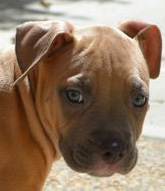
American Pit Bull Terrier (APBT) Dog Breed Information

American Pit Bull Terrier

American Pit Bull Terriers are a cross between a terrier and bulldog. During the 19th century, farmers wanted a Terrier that was tough as a Bulldog, but could still chase and kill vermin so the Bully/Terrier breeds emerged. Pit Bulls can do it all, honestly! They can hunt game like a terrier, herd cattle like a bulldog and are great family companions. Pit Bulls have many different names, but they are formally known as American Pit Bull Terriers.

Pit Bulls are negatively viewed due to breed-specific legislation claiming them a dangerous breed. This is far from the truth. Any breed of dog can be dangerous if they fall into the wrong hands and are exploited. Learn more about Anti-Breed-Specific Legislation FAQ where both the CDC and President Obama debunk this myth.

Temperament

Terriers were bred to work independently so they can be a bit scrappy with other dogs. While Pit Bulls are the larger version of Terriers, they can cause more harm due to their larger size if they are not taught how to greet dogs politely. Now, some Pit Bulls are fabulous around other dogs and some are not, it depends. However, as a whole, terriers can be a bit scrappy if dogs get in their personal space.

You may notice your Pittie gets very excited around fast movement. This is a Terrier thing, as they’re bred to hunt game. At times, Pit Bulls can become mesmerized by fast movement and they seem to tune out from their owners. They’ll usually vocalize and focus on what is moving, which can be a bit scary for unaware owners. When this happens, throw 10 treats in front of your dog. This will snap him out of his trance and focus on something else. And, it’s always best to redirect him before this happens so throw 10 treats in the opposite direction of whatever is moving really fast. Try to do this before your dog notices the fast movement.

Play Style (It’s different from most dogs!)

Most Bully breeds (Bull Dog/Terrier crossed) possess very different play styles than most breeds. They don’t understand personal space, which can easily offend another dog or person. Honestly, they don’t think they are too close. Pit Bulls will climb right into your lap. Pit Bulls play with lots of body contact, which means they will:

  • Body slam: Bump their bodies against a dog usually at full speed, which most dogs find very rude
  • Hip check: Bump their hips against another dog
  • Shoulder check: Bump with their shoulders

It’s vital to find other dogs that mimic the same play style as your Pit Bull. Also, your Pit Bull needs to learn this is not polite behavior with humans. He will think it’s fun, but most humans do not. If you are not sure about your Pit Bull’s play style, consult with an experienced dog trainer. He will make recommendations and point you in the right direction.

Grooming

Pit Bulls need regular brushing, as they do shed often. I recommend the following:

  • A rubber curry-style brush
  • Weekly nail trims
  • Ear cleanings
  • Baths as needed
  • Teeth brushing several times a week

A Few More Words About Pit Bull Terriers

I cannot say this enough: it’s not the breed of dog that is dangerous. Any breed of dog can and will bite. Following the trends, it seems people love to hate larger, shorter-coated muscled dogs, which were bred for guarding, working or herding. Many target these breeds because they can look scary. I’m not sure about that, but one thing I do know for sure is any dog can bite. Taking this into account, I would not recommend most American Pit Bull Terriers for new pet owners. They can be a bit plucky (very determined), which amounts to a huge handful for novice dog owners.

Learn more about Pit Bulls at UKC American Pit Bull Terrier Standard. They are registered through United Kennel Club (UKC). There are as many Pit Bull rescue groups, which is both good and bad, as Pit Bulls that need homes. Be sure to also check out these excellent sources for more information on rescuing American Pit Bull Terriers.

  • BadRap – Pit Bull Rescue
  • Pit Bull Rescue Central

Tell me about your Pit Bull in the comment section below.

You may also like: Training Pit Bulls

Filed Under: Breeds, Dogs, Training Tagged With: american pit bull terrier, anti breed legislation, breed legislation, bully breeds, pit bull, pitbull, target specific breed

3 Dog Obedience Training Styles

September 29, 2014 by Fanna Easter

Different Dog Trainers

Dog TrainersLet’s chat about three different dog trainers and their preferred dog obedience training styles. I will include my training style too and, I will admit, I feel a bit intimidated comparing my training style to both of these pioneers in dog training. So, here it goes!

Dog Trainer: Karen Pryor

Karen was instrumental in educating the dog obedience world about clicker training, as she was a dolphin trainer. Not only did Karen Pryor bring clicker training to the masses, she was also the driving force behind scientific research on training new behaviors. Clicker training means to mark a behavior with a click. The click means two things: I like what you did and you earned a treat. Karen does not use food to lure a dog into a behavior. She is more hands-off and will shape (reward small steps toward a final behavior like teaching a dog to walk politely on leash) and capture (click and treat when a finished behavior is offered like a dog laying down). The absence of a click means the dog did not perform the behavior correctly. Dogs quickly learn to work for the click.

Dog Trainer: Zak George

Zak George has taken social media by storm with his dog training videos on YouTube. Also, Zak has starred on SuperFetch, which airs on Animal Planet and CBBC’s “Who Let the Dogs Out.” He shows no signs of stopping, appearing on numerous prime time TV shows, getting the message out that positive reinforcement dog training methods work! His energy is fabulous, and his videos are on point so pop in and watch his YouTube channel at Zak George’s Dog Training Evolution!

Dog Trainer: Fanna Easter

About 90% of the time, while teaching classes, I recommend a clicker to mark behaviors, as dogs learn so fast using this method. I do use lures mostly when instructing pet parents how to teach their dogs to lie down as a first step to loose leash walking or when a dog becomes confused. When training my dogs, I use a clicker 99.9% of the time. When teaching people how to train their dogs, I find people will move and fiddle around when they become stressed so I recommend food lures to redirect their nervous energy. Having a dog follow a food lure will redirect the dog (decreasing the dog’s stress) while providing a moving outlet, decreasing the pet owner’s stress — a win-win! Once the fiddling around stress has successfully stopped, we go back to using the clicker.

Tell us about your dog obedience training style in the comment section below!

READ ALSO: Dog Obedience Training

Filed Under: Dogs, Training Tagged With: dog obedience training, dog trainers, dog training, fanna easter

Come When Called Part 3: Adding Distractions

September 26, 2014 by Fanna Easter

Teaching Your Dog to Come When Called

Adding Distractions to “Come” Cue

If your dog ignores you and runs off, it might need some specific training. Here is the final installment of a four-part series on training your dog to come. You’ll  learn:

  • How to perform an emergency recall
  • To call your dog indoors from the backyard
  • To call your dog back to you around distractions (squirrels, etc.)
  • How to teach multiple dogs to come back to you
  • Fun games

Directions

  • View first video and practice homework for seven days.
  • View second video, practice homework for seven days.
  • View third video, practice homework for seven days.
  • View fourth, and final, video.

Each video contains tons of information so re-watch them several times. Bookmark for easy future reference.

What you will need:

  • Delicious treats the size of a pea
  • Six-foot leash
  • Flat buckle collar or body harness
  • Clicker

Note: Always enroll your dog in a group dog training class. This video should not be used in place of dog training class attendance.

You’ve completed the “Come When Called” series. Revisit the videos as often as necessary for polite greeting behavior!

In case you missed it: Come When Called Part 1: Intro

Filed Under: Dogs, Training Tagged With: clicker training, dog training, dog training advice, Dog Training Tips, dog training video, how to train a dog, how to train a dog not to jump, how to train a puppy, how to train your dog, how to train your puppy, puppy tips, puppy training, puppy training tips, Rottweiler training

  • « Previous Page
  • 1
  • …
  • 24
  • 25
  • 26
  • 27
  • 28
  • …
  • 32
  • Next Page »

About

Dog Training Nation is a community of dog trainers, dog owners and dog lovers. Our mission is to provide trainers and owners valuable information to enrich dogs' lives. We cover a range of topics, from socializing puppies to dealing with aggressive dog behavior to selecting the best dog products. It is our hope you share our content to make the dog and owner world a better place.

​

Facebook

Video

Dog Training Nation is a dog training blog for pet owners and dog lovers. We cover a range of topics from puppy socialization tips to dog aggression to dog health. It is our hope you share our content to make the world a better place for dogs.

Dog Training Nation

Quick Links

Dog Training
Dog Behavior
Dog Training Videos
Become a Dog Trainer
About
Contact Us

Copyright © 2026 · Lifestyle Pro Theme on Genesis Framework · WordPress · Log in