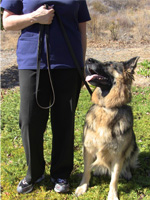
Dog Obedience Training

Ah, the magic question that I’m asked several times a day, from new and frustrated dog owners, is: Does your dog need obedience classes?
Let’s explore this question about dog obedience training.
As a dog trainer, I see things a bit differently, as over 80% of my clients are already frustrated with their dog’s behavior. The remaining 20% of dog owners who attend dog obedience classes want to prevent naughty behaviors before they happen. These pet parents usually have attended a dog obedience or puppy training class in the past.
Training Classes are a Must
Your dog needs positive opportunities to learn which dog behaviors are appropriate. Just like a small child, it’s our job to teach dogs how to behave around people and other dogs:
- On a leash
- At the dog park
- At home
- At a stranger’s house
- In the car
- In public places like restaurants
Dogs pull on a leash to move forward. They jump up to greet you, as they have not been taught how to appropriately greet you (or any humans). Your dog is not acting naughty out of spite, but he may not have been trained by you or a dog trainer as to what good behavior is.
3 Things You Will Learn in Dog Training Classes
Dog training classes are a fabulous resource to teach polite manners. These classes should be considered mandatory for all dogs and their owners. Before your hackles go up from the word “mandatory,” let me explain. Over 70% of dogs are in shelters due to naughty behaviors that can easily be fixed by taking dog training classes. It really is that simple. Help prevent a dog from potentially being put down in a shelter by training him good behavior skills.
Parking your dog is a great behavior every dog and his owner should know. It simply means that despite distractions, another animal barking at him or in any situation that you want your dog to remain poised, your dog will not act up but instead look to you for guidance.
Dog treats are the best motivators for training your pet. Some people love cheesecake while others love chocolate. Dogs are the same way. They all have things that they are excited about and love to be given whether it is:
- Cheese sticks
- Bones
- Tennis balls
- Chicken
- Turkey
- Snacks and biscuits
- Kongs
RELATED: Dog Training Treats
Finding out what motivates your dog and using this while training will produce better behavior results at a faster pace. Think of it from a human perspective. For example: If I were to ask you to take a seat in the chair and you do, but then I ask you to stand up. Next, I ask you to sit in the seat again. Eventually, you may get bored and give up. But, if I were to hand you a $20 bill every time that you sat back down in the seat, I’d bet you wouldn’t mind getting up and sitting down anymore. In fact, you would probably enjoy doing it, right?
Dog training requires the same techniques. The dog’s currencies and motivation are what you can use to train him into behaving in an acceptable or desired manner. What is your dog’s “$20 bill”?
During a group dog training class, your pet will learn foundation cues, such as:
- Sit
- Down
- Stay
- Come
- Walk politely on a leash
- How to politely behave around other dogs and people
Dog behavior amongst other dogs and humans is the most important behavior aspects that your dog should know. Most dogs perform cues like sit and down at home, but will your dog respond when a guest visits? Does he forget what you taught him when it counts out in the field or in a public place?
Are dogs ever too old to learn? Of course not!
As a professional dog trainer with over 20 years of experience, I can tell you for certain that you can teach an old dog new tricks. You can teach new behaviors, reteach foundational behaviors and how to remember dog tricks! If you adopt an older rescue dog, it’s great to bring him through a group dog training class. You are teaching foundation behavior and building a bond. It is never too late for consulting with a dog trainer!
RELATED: Best Dog Training Books
The Importance of Dog Behavior Training
Will your dog behave the way you want at the park or during walks down the street? Or in the backyard when a squirrel is teasing him from a tree? Most dogs that have not attended group classes usually have a tough time responding to cues with high distractions. These are just a few situations that dog training becomes beneficial in your pet’s life.
Basic Dog Training Classes
While most dog training classes are weekly, at the same time and day each week, classes can vary from 4-6 weeks. In a basic dog training class, you will learn to teach your dog the foundational behaviors. Your dog will learn what behaviors need to be used in place of the naughty unwanted behaviors.
For example: Training your dog to sit before he jumps on you. In my 20 years of training, I have yet to see a dog jump when sitting. Teach your dog to sit and then teach him to park so you know the difference and so will he.
Dog training classes offer a fun and safe learning environment that will set you and your dog up for success. Mistakes are ignored (and yes, us dog trainers make mistakes too) and appropriate behavior is rewarded even for humans.
Dog obedience training classes will teach you the pet owner how to train your dog. That means you will learn the skills that can prevent naughty behavior from your dog. Taking dog training classes can be addictive and it’s a lot of fun!
Have you ever taken your dog to dog training classes? Tell us about it in the comments below.