Dog Training Nation

In Dogs We Trust

  • Home
  • Training
    • Dogs
    • Puppies
    • Clients
  • Behavior
    • Breeds
  • Health
  • Safety
  • Resources
    • Equipment
    • Books
  • Dog Training Videos
  • About
You are here: Home / Archives for Dogs

What to Do When Leaving Your Dog Alone

November 9, 2016 by Fanna Easter

Tips for Leaving Your Dog Alone
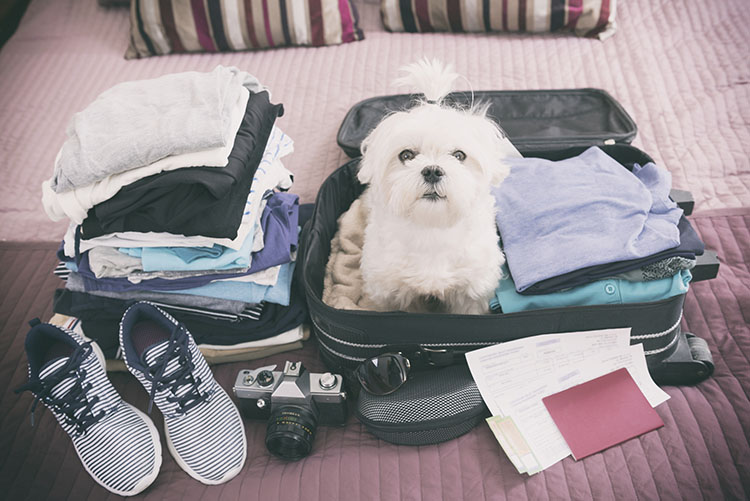
Leaving Your Puppy Alone for 8 Hours
Please don’t leave.
humonia/iStock

Oh oh, the suitcase is out. Now your dog knows you’re leaving.

It’s amazing how quickly dogs understand very subtle cues that indicate you’re leaving for vacation, work, errands or outdoors to check the mail. Next time your dog looks worried when you’re reaching for your car keys, try these dog training tips to positively change his behavior.

Pair Goods Things With Leaving

The first tip for leaving your dog alone for 8 hours is to pair good things with the action of you leaving. When we pair good things in certain situations, we teach dogs that good things happen during those situations. Think about it this way: if you’re waiting for a server to bring you a glass of wine at a restaurant, you become frustrated if it takes long. But if your server offers complimentary appetizers while you wait, it’s not so bad. Now, what if it rains $100 bills while you wait? That’s even better! You learn that waiting patiently is a good thing. 🙂

As pet owners, it’s our job to find what our dogs absolutely love! This is the first step to positively changing your dog’s behavior. Once we find it, it’s time to pair good things with leaving your dog home. Check out these examples of good things that can be paired with the action of you leaving:

  • Kong filled with layers of baked chicken and peanut butter
  • Canned food stuffed inside an interactive toy that’s been frozen overnight
  • Fetch with your partner
  • Sprinkled kibble along a huge area rug

But, How Does Your Dog Know You’re Leaving?

This next step takes a bit of detective work. While getting ready for work, watch your dog’s body language. It’s important to find which action cues your dog that you’re leaving him alone. While you assume grabbing your car keys is a cue, trust me, your dog knew way beforehand—just like getting out the suitcase is a dead giveaway.

To successfully change your dog’s behavior when you leave for work or vacation, it’s important to find the very first cue that tips your dog off. Does your dog’s face change when you’re taking a shower, running the water for your shower, combing your hair, putting out your work clothes or moving quickly around the house? My dog knows something is up the moment I touch my hair straightener. 🙂

Once you’ve figured out exactly what cues your dog that you’re leaving, it’s time to pair good things with that cue.

RELATED: Separation Anxiety in Dogs

Reiterate That Good Things Happen When You Leave

It’s important to pair something good with your “I’m leaving home” cue. As you touch your hair straightener, take a shower or put on cologne, give your dog a food stuffed toy to enjoy. If another person plans to stay home while you’re away, ask him or her to play ball with your dog outdoors. This keeps your dog happily distracted and busy with something they love.

Good things shouldn’t stop there though. Toss your dog another food stuffed toy as you’re heading out the door too. This further pairs good things with you leaving home. After a game of fetch, your family member can toss your dog a food stuffed toy to enjoy afterwards. This prevents your dog from wandering around the house looking for you. If this seems like a lot of food, split your dog’s daily meals into frozen food stuffed treats. Now, you can head off to work guilt-free. 🙂

Pair Goods Things 95% of the Time

To be effective, good things must happen often during stressful times. If it doesn’t happen often enough, it won’t work. Keep frozen food stuffed toys in the freezer for easy access. Give your dog a delicious bully stick to enjoy while you’re getting ready for work. When it’s time to head out the door and leave your dog alone, trade the bully stick for a food stuffed toy and voila! Aim to pair good things about 95% of the time.

Now, it’s time to change your behavior too. The moment you feel a tinge of guilt develop in the pit of your tummy, picture your dog happily playing or licking a yummy food toy. 🙂

Filed Under: Behavior, Dogs, Puppies, Resources, Training Tagged With: dog cries when I leave, dog gets upset when you leave home, dog hates staying home alone, dog hates when I leave, dog training, Dog Training Tips, I feel guilty leaving dog home alone, puppies cries when I leave, puppy hates when I leave, separation anxiety dog, tips to prevent separation anxiety dogs, tips to prevent separation anxiety puppies

Why You Shouldn’t Teach Your Dog the “No” Command

November 2, 2016 by Fanna Easter

The “No” Command is Meaningless

Teach Dog No
VehicleShoot/iStock

Honestly, some dogs have learned “no” is their name. It’s true, as a dog trainer, I’ve watched pet owners say “no, No, NO” over and over again to their dogs. Sometimes, the “no” command makes up the entire interaction between pet owners and their dogs. Not only is this puzzling and depressing, but it also doesn’t work.

Dogs learn to tune out unimportant information and the “no” command soon becomes background noise. So, let’s look at this word differently and see if “no” even teaches your dog anything. The answer just might surprise you.

What Does the “No” Command Mean?

Seriously, what does “no” mean? It could mean:

  • Stop that
  • Don’t move
  • Stay there
  • Don’t look at me
  • Don’t walk toward me
  • Stop touching me
  • Stop licking
  • Stop jumping
  • Don’t run away
  • Don’t dig
  • Stop barking
  • Wrong
  • Stop pulling

“No” has multiple meanings, so when telling your dog “no,” what are you asking your dog to do? It gets confusing, especially for the dog. Basically, telling a dog to stop doing something is the most common reason pet owners say “no.” Here’s the tricky part though: if your dog stops doing a behavior (i.e. barking, jumping, pulling, or growling), what do you want your dog to do instead? Before you answer, let’s visit this scenario from a human perspective.

Let’s say you and your husband go out to dinner. As you’re driving down the road, you notice that your husband is speeding. The moment you notice he’s speeding, you tell her “no.” In this situation, what are you asking her to do? “No” could mean take your hands off the wheel, close your eyes, turn around, look at you, stop the car or go faster. The word “no” provides little information. Instead, say “please slow down” and your husband will lift his foot off the accelerator.

Does “N0” Teach Your Dog Anything?

It really doesn’t. Instead of saying “no,” teach your dog an alternative behavior. When teaching your dog an alternative behavior, you’re rewarding a behavior that’s opposite of what you’re asking your dog to stop doing. This may sound complicated, but it’s actually quite easy and works quickly. Basically, you’re asking your dog to do this instead of that. Check out these examples:

  • If your dog is jumping on guests, ask your dog to “sit” instead.
  • When a dog barks, reward her for being quiet.
  • If your dog potties inside your home, reward her when she potties outside.
  • When your dog pulls on leash, reward a loose leash.
  • If your dog moves around while brushing, reward your dog when she stands still.
  • If your dog runs away from you, reward your dog for running toward you.
  • If your dog tries to eat food on the ground, teach the “leave it” cue and reward when she “leaves it.”
  • If your dog has something in her mouth, teach “trade game.”

Believe it or not, teaching and rewarding an alternative behavior works every time! Instead of focusing on what your dog did wrong, figure out what your dog should do instead. Here’s a huge hint: choose the opposite behavior. It’s really hard for a dog to jump and sit at the same time. 🙂

Should You Teach Your Dog the “No” Command?

No, you shouldn’t. Remember the word “no” is meaningless. Instead, teach your dog what to do instead. When I explain this “no” concept, most pet owners ask, “Well, what should I say when my dog is running toward a busy road?” My response to that is: “Teach your dog a rocket recall, and say “Rover, come here” when this happens. Then, reward your dog thoroughly with treats and tons of praise.” Screaming “no” won’t stop your dog from running away. I wish it were that simple.

Beware of dog trainers and websites claiming that dogs must learn the “no” command. Remember, “no” could mean anything. Plus, “no” means nothing during the learning process. If you were learning a foreign language, such as French, and I said “no” when you spoke French, what am I teaching you? Not to speak French, it would seem. But, if I asked you to pronounce a French word differently, that would help you learn quicker and faster. It’s the same with dogs, horses, snails, fish and even children. Teach an alternative behavior instead of saying “no.”

Teaching an alternative behavior may seem a bit different, but it’s the best way to stop unwanted dog behavior. Before saying “no,” figure out what your dog should do instead. Remember, teach your dog to do this instead of that!

Filed Under: Behavior, Dogs, Training Tagged With: does your puppy understand what no means, dog doesn't know what no means, dog doesn't understand no, dog training, Dog Training Tips, how to teach a dog, how to train a dog, my dog won't listen when I say no, show dog no, teach dog no, teaching a dog, teaching your dog no, teaching your puppy no, train dog to respond to no, training a dog, training your dog no

How to Teach Your Dog to Release the Tug Toy

October 14, 2016 by Fanna Easter

Teaching Your Dog to Release a Toy During Play

How to Teach a Dog to Drop a Toy
oneinchpunch/iStock

When playing tug with your dog, sometimes your dog just doesn’t want to let go of the toy. It’s very common because tug is super fun! It’s important to know that your dog is refusing to let go of the toy because releasing it means the game is over. It’s that simple. Check out these dog training tips for teaching your dog to release a toy.

Step 1) Keep Tug Toy Still

Dogs tug on toys because it’s fun and you’re tugging back. When you wave, toss or tug on a toy with your dog, it’s a super fun game. When you stop moving the toy, this should tell your dog to release the toy. When the toy stops moving, it’s no longer fun for your dog. Here’s how to teach a “release” behavior.

  1. Start playing tug with your dog for 1-2 minutes.
  2. Hold the toy completely still and wait for your dog to release the toy. In the beginning, this may take a few seconds or even a full minute, but it will happen.
  3. Patience is key here. Continue to hold the toy still even as your dog pulls and bites at the toy.

WATCH: Teach Your Dog the Tug Game

Step 2) Teach Your Dog That Release Means Another Game

The moment your dog lets go of the toy (removes mouth from toy), start moving the toy around to play another game of tug. Your dog will learn that releasing the toy makes another tug game happen. Let’s try it again.

Pull, tug and shake the toy around for a couple of minutes with your dog, then stop moving the toy again. You’ll likely notice your dog releasing the toy a bit quicker this time because he’s learning that stillness means to “release.” The moment your dog releases the toy, make the game start again.

When teaching the release behavior with a toy, there’s no need for a verbal cue. Your dog will learn that stillness is the signal to release the toy. Omitting a verbal cue works quicker because most verbal cues are used too early or too late, which confuses the dog. Toy movement means the game is on! When you stop moving the toy, it means your dog should release the toy.

Game Over

We all wish fun games would continue forever, but it’s not realistic. When it’s time to end a game of tug for the day, just stop moving the toy. When your dog releases the toy, say “all done” while tossing several treats in the opposite direction of the toy. When your dog runs over to eat his treats, put the tug toy away.

Good luck, and let me know how it goes!

You may also like: Laser Pointer Games are Bad for Dogs

Filed Under: Dogs, Games, Puppies, Training Tagged With: dog training, Dog Training Tips, how to teach a dog, how to teach your dog to let go of a toy, how to train a dog, my dog will not let go of toy, teach your dog let go, teaching your dog to let go, teaching your dog to release a toy, train your dog to release a toy, why will my dog refuse to let go of toy

Why Montreal’s City-Wide Pit Bull Ban Isn’t The Answer

October 3, 2016 by Fanna Easter

Pit Bull Bans: Why Montreal is Wrong

Pit Bull Bans
GregCourville/iStock

The City of Montreal passed a Pit Bull ban on Tuesday, September 27. New ownership of Pit Bulls and Pit Bull mixes are now banned from the city as of Monday, October 3. Previous pet owners of Pit Bulls or Pit Bull-type breeds are obligated to follow strict new laws.

Those laws require Pit Bull owners to:

  • Pay $150 for special permitting
  • Complete a criminal background check
  • Sterilize, microchip and vaccinate their dogs
  • Keep their dogs muzzled and leashed in public

If you’re not outraged yet, it gets worse. Montreal has mandated all Pit Bulls and Pit Bull mixes currently in rescue or animal control to be euthanized.

Yes, you read that right. Montreal just wrote a death sentence for innocent dogs, and this death sentence is based on complete ignorance. This new and absurd Pit Bull ban goes into effect today, and I’m livid about it.

I’m angry, and you should be too.

History of Breed-Specific Legislation

Over the last decade, American Pit Bull Terriers have been the target of completely biased discrimination. It started across the pond in Europe where the country began banning certain breeds to reduce dog bite incidents. The idea of banning what they considered were dangerous dog breeds trickled worldwide.

Not only were thousands of innocent dogs killed due to breed-specific legislation, but many families were also forced into expensive legal battles to keep their dogs. Unfortunately, many pet owners lost the legal fight and their furry family members had to pay the ultimate price.

When dog breed banning was introduced to the US, it had a domino effect. Banning certain breeds of dogs spread through cities and states like wildfire. Interestingly, breed banning picked up momentum when mainstream media discovered a huge bump in ratings while covering Pit Bull maulings. The media used this to their advantage and began reporting on Pit Bull incidents.

Within weeks, US media broadcasted anything related to Pit Bulls, continuing to paint Pit Bulls as dangerous dogs. When Pit Bull bites decreased, media then shifted their focus to mixed breed dogs that resembled Pit Bulls. Eventually, the media would cover other dog breeds and make them look vicious too.

RELATED: Training Pit Bulls

What is Considered a Dangerous Dog

Don’t get me wrong, there are certainly dangerous dogs in the world, but that’s based on behavior and not appearance. As a professional dog trainer, I’ve met scary dogs of all sizes and shapes. I knew these dogs could certainly do some damage if provoked. Sure, large dog bites will hurt more than bites from smaller dogs, but does that constitute banning all large dog breeds? American Pit Bull Terriers are actually smaller than Labrador Retrievers and Golden Retrievers, yet they’re the most popular dog breeds.

Pit Bulls Don’t Have More Powerful Bites

Pit Bull dogs don’t have a higher pressure per square inch (PSI) bite compared to other dogs nor do they have a “locking jaw.” Both of these ridiculous allegations are Pit Bull myths. Dr. Lehr Brisbin of the University of Georgia states: “The few studies which have been conducted of the structure of the skulls, mandibles and teeth of Pit Bulls show that, in proportion to their size, their jaw structure and thus its inferred functional morphology, is no different than that of any breed of dog.” (American Pit Bull Foundation, n.d.)

Pit Bulls Aren’t the Only Breed That Gets Banned

When breed-specific legislation became common practice, cities and countries quickly added additional breeds to their dog ban list. Within days, dog breed banning lists included Rottweilers, Bull Terriers, American Staffordshire Terriers, Dalmatians, Shari Peis, Bulldogs, German Shepherd Dogs, Dobermans, Rhodesian Ridgebacks, any type of Mastiff dogs and Chow Chows. Toso Inus, Dogo Argentinos and Fila Brasilerios were also added to breed bans worldwide despite being rare dog breeds. Are cities, states and countries jumping on the breed banning bandwagon? It sure seems so!

RELATED: Do Different Dog Breeds Learn Differently?

Mixed breeds are targets too. If a dog is mixed with any of the above-mentioned breeds, they’re subjected to dog ban laws as well. I’m not sure how those laws work because identifying Pit Bull mixes isn’t that easy. I’ve trained dogs for more than 23 years, and I can’t identify Pit Bull mixes. Plus, who am I to judge a dog’s fate by his appearance? Montreal passed a Pit Bull breed ban after a “Pit Bull” had killed a woman. The part that confuses me is the dog wasn’t even a Pit Bull. DNA results proved otherwise!

Why Breed Banning Doesn’t Work!

Laws are meant to keep everyone safe, including dogs. When breed-specific legislation spread across the world, something interesting happened. Studies found that banning certain breeds of dogs doesn’t work. Banning dog breeds doesn’t stop or decrease dog bites. Data shows dog bites continue to rise in areas where certain breeds of dogs are banned.

When city officials picked up on this data, many overturned Pit Bull bans. Entire countries even lifted their breed bans. Armed with this data, I don’t understand how the City of Montreal legally passed its new Pit Bull ban law when data clearly shows banning dog breeds doesn’t work.

Moreover, a task force found that the public’s safety hadn’t improved as a result of a Pit Bull ban. The county had spent more than $250,000 per year to round up and destroy banned dogs, yet safety levels remained the same (American Bar Association, 2009).

When researching credible dog bite data online, question the motive of certain organizations that cherry-pick data. Choose reputable sources with actual experts, such as the American Bar Association, CDC, ASPCA, HSUS and American Veterinary Medical Association.

What You Can Do to Save Innocent Dogs

“Doing nothing basically means you agree with the current situation.” This quote haunts me every time I stumble across an injustice. We need to do something and we need to do it now. When we work together, we can move mountains!

We can still overturn this Pit Bull law. Canadian veterinarians, Montreal SPCA, American Bar Association, outraged pet owners and ordinary people are voicing their opinions about this new law. Contact city officials or sign a petition here. If you’re a writer or blogger, please share your thoughts on Montreal’s horrible decision.

Dogs don’t have a voice, but we do. Please speak for all dogs today.

Filed Under: Breeds, Dogs, Resources, Safety, Training Tagged With: breed specific legislation, dog breeds, dog training, Dog Training Tips, how to stop pit bull ban, how to teach a dog, how to train a dog, montreal pit bull ban, pit bulls

Simple Solution To Stop Your Dog From Getting Into Your Trash

September 23, 2016 by Fanna Easter

How to Stop Your Dog From Getting Into Your Trash

Dog Proof Trash Cans
Chalabala/iStock

It will eventually happen—your dog will attempt to or actually raid your trash can. While it’s annoying and gross, it makes total sense from your dog’s perspective. It’s a buffet in there! Unfortunately, dogs don’t understand that eating trash can make them really sick. Check out these foolproof and easy tips to stop your dog from getting into your trash.

Purchase a Trash Can With a Heavy Lid

You can certainly spend hours teaching your dog to leave a trash can alone, or you can purchase a trash can with a heavy lid. Honestly, purchasing a lidded trash can is a quick and extremely effective solution. It’s not fancy, but it stops your dog from getting into your trash!

A Little Story About Management

Let me tell you a little story about managing a dog’s environment. Years ago, I arrived at a client’s home for a private lesson. Before I was hired, this client spent thousands of dollars trying to teach his yellow Lab not to chew remote controls, yet it continued to happen. During our first consultation, I sat quietly for 30 minutes while my client explained that nothing was working. Clearly, this client was upset and his poor Lab was totally confused.

Finally, my client asked, “How would you fix my dog?” This was my cue to chime in. I politely and delicately suggested placing all remote controls inside a lidded box and keeping the box on the coffee table.

There was a long pause, and I held my breath. Did I offend my client? He sat down and began to laugh. After another long pause, he said, “Wow, I never thought of that. That would work.” Whew, and from then on, all remote controls were safe and my client’s yellow Lab lived a very happy life. Plus, the issue was solved within an hour!

RELATED: 4 Tips to Make Working From Home With Dogs Easier

Choosing a Lidded Trash Can

This is the most important step. I recommend purchasing a trash can with a heavy lid. You can tell when a lid is heavy when there’s a clanging sound upon the closing of the lid. Not all trash can lids are the same. It’s best to choose a smooth-edged heavy lidded trash can. That way the trash can is securely sealed. Even a tiny lip can easily be opened by your dog’s nose.

Put the Trash Can in a Cabinet

Dogs are super smart. When dogs practice a behavior for a long time, they get really good at it. If your dog has learned how to lift a heavy trash can lid, knock it over to open it or bump it just right, then try this tip.

Place your trash can behind a bathroom or kitchen cabinet. If your dog knows how to open your kitchen cabinet, place child locks or straps to ensure cabinet doors remain closed. Now, I’ve only seen this happen a couple of times, and both times these dogs were completely bored and left alone all day.

Will This Really Stop My Dog?

Yes, using a heavy lidded trash can really does stop your dog from getting into your trash. Rarely am I able to make suggestions that work this quickly. By taking these preventative measures, your dog will stop getting into your trash can. Imagine if your ice maker stops producing ice. You’ll keep trying to get ice from it until you learn it’s no longer working. And if you decide not to fix your ice maker, you learn to adapt your life around it. 🙂 It’s that simple!

Filed Under: Behavior, Dogs, Resources, Training Tagged With: dog getting into bathroom trash, dog getting into kitchen trash, dog got into trash can, dog raids trashcan, dog training, Dog Training Tips, how to stop dog from eating trash, how to stop dog from getting into trashcan, how to teach a dog, how to train a dog, keeping dog out of trashcan, keeping puppy out of trashcan, stop dog trashcan, stop puppy trashcan, teach a dog, train a dog, trash can deterrent, trash can dog, trash can puppy, why is my dog getting into the trashcan all of a sudden

  • « Previous Page
  • 1
  • …
  • 5
  • 6
  • 7
  • 8
  • 9
  • …
  • 32
  • Next Page »

About

Dog Training Nation is a community of dog trainers, dog owners and dog lovers. Our mission is to provide trainers and owners valuable information to enrich dogs' lives. We cover a range of topics, from socializing puppies to dealing with aggressive dog behavior to selecting the best dog products. It is our hope you share our content to make the dog and owner world a better place.

​

Facebook

Video

Dog Training Nation is a dog training blog for pet owners and dog lovers. We cover a range of topics from puppy socialization tips to dog aggression to dog health. It is our hope you share our content to make the world a better place for dogs.

Dog Training Nation

Quick Links

Dog Training
Dog Behavior
Dog Training Videos
Become a Dog Trainer
About
Contact Us

Copyright © 2026 · Lifestyle Pro Theme on Genesis Framework · WordPress · Log in