Dog Training Nation

In Dogs We Trust

  • Home
  • Training
    • Dogs
    • Puppies
    • Clients
  • Behavior
    • Breeds
  • Health
  • Safety
  • Resources
    • Equipment
    • Books
  • Dog Training Videos
  • About
You are here: Home / Archives for Training

What to Do When Your Dog Hates Your Spouse

August 11, 2015 by Fanna Easter

My Dog Hates My Spouse

My Dog Hates My Spouse
oneinchpunch/iStock

When your dog hates your spouse, the entire relationship dynamic is shaken. In a nutshell, this is resource guarding. Your dog sees you as a valuable resource (i.e. you provide food, water and shelter) and wants to keep it that way.

To combat this dog behavior, your new household motto should be “everything fun comes from your disliked spouse.” By pairing fun things with your spouse, your dog will learn your spouse is actually quite nice. Think of it this way: when the disliked spouse is around, all good things rain from the sky. When the spouse leaves, all fun stops.

Regardless of your dog’s history, he can certainly learn to trust and bond with new people.

Quick Note for Favored Spouse

By pairing fun things with your spouse, your dog will begin to befriend him, so prepare yourself. Many times, this process is halted because the favored spouse becomes jealous. Her dog is now lying on her spouse’s lap and she feels left out and–dare I say–abandoned. When these emotions stir, tell yourself it’s the right thing to do for your dog and your spouse. Refrain from making snarky comments and, instead, admire and encourage your spouse for bonding with your dog.

Your dog will still adore you and much more so because you’re teaching him how to bond with others, which is a priceless gift. Plus, it’s not fun being left out. As your disliked spouse can attest, it’s downright degrading. Support and encourage your spouse and, of course, still cuddle with your dog. 🙂

Your Dog is Not Protecting You

Some people feel protected and safe when their dogs growl or charge at other people, but it’s actually quite disabling to your dog. You’re teaching your dog to fear everything, so he’s constantly lashing out. Your dog’s living in a constant state of fear. Plus, dogs of all sizes can cause real harm, so encouraging this misguided behavior is downright dangerous. What if a child or elderly person approaches you and your dog tries to bite? You will be held liable per strict laws pertaining to dog bites and you can lose your dog. It’s not fair to your dog.

RELATED: Submissive Urination in Dogs

Training Your Dog to Like Your Spouse

Your Dinner is Served

Going forward, the disliked spouse should serve your dog’s meals. To make it extra fun, try adding some canned food or dollop of yogurt. If the favored spouse is preparing meals when the disliked spouse is not home, then skip the extra food stuff. Save the lusciousness for meals served by your spouse to continue pairing good things with the disliked spouse.

Shall I Feed You Hot Dogs?

Ask your spouse to teach your dog new tricks and reward with high value treats, such as hot dogs. When your dog comes when called in the backyard, your spouse should reward with a jackpot (giving two to five treats at once).

Prepare peanut butter stuffed toys for your dog to enjoy when your spouse is around. Purchase new toys and keep them hidden until your spouse arrives home. Interactive games are awesome. Your spouse and dog should play “find the treat.” Just remember: all fun should come from your spouse.

Long Walks

This is actually a great way to bond with a new dog. You’re both in a new environment with space between you. Dogs find choices just as rewarding as treats, and during walks, they can choose the space between you. The favored spouse can tag along, but ask the disliked spouse to hold the leash so he can encourage your dog and reward good behavior.

Don’t Force Love

Your spouse should build trust with your dog and forcing any type of contact can certainly fracture all trust within seconds. Move at the dog’s pace. If he quits playing, then the game is over. Don’t push it.

If your dog charges or growls at your spouse, don’t punish this behavior. It’s like teaching a child never to say “no” when he’s scared. Boundaries are important in life, so respect your dog’s boundaries too. Instead, your spouse should turn away and ignore your dog. However, there are consequences to actions. Rather than letting your dog march back to you after charging at your spouse and lie back on your lap, crate your dog in another room with a yummy food stuffed toy while you and your spouse enjoy alone time.

If It Gets Worse or Bites Happen

Disliked spouses should not endure biting or constant threats. It’s not fair to your spouse or dog. Plus, you’re allowing your dog to practice unwanted behavior, which makes it much worse. Partner with a professional dog trainer or veterinary animal behaviorist for guidance.

Filed Under: Behavior, Clients, Training Tagged With: dog doesn't get along with spouse, dog hates boyfriend, dog hates girlfriend, dog hates husband, dog hates spouse, dog hates wife, dog is scared of husband, dog is scared of wife, dog training, Dog Training Tips, how to teach a dog, how to train a dog, teach a dog, train a dog

Dog Breed of the Week: Chinese Crested Dog

August 6, 2015 by Fanna Easter

Meet the Chinese Crested Dog

Chinese Crested Dog
volofin/iStock

What a traveled dog breed! Chinese Crested Dogs are difficult to trace  back to their hairless origins because they’re basically mutations resulting from many other breeds all over the world. Someone enjoyed their naked appearance, so he began selectively breeding for less hair.

Today, there are two varieties of Chinese Crested Dogs: hairless and powder puff. Now, the hairless version is not truly without hair. They usually have tiny tufts of fur placed on their head, feet and tail almost appearing equine. Powder puff varieties have more hair and interestingly it’s a recessive gene.

Chinese Crested Dogs are part of the AKC Toy Group, meaning they were bred as a companion dog. However, don’t let their petite and pretty looks fool you. They’re fierce ratters too!

Size and Temperament

Cresteds stand at about 11″ to 13″ tall at the shoulder and weigh between 5 to 12 lbs. They’re perfectly sized as a lap dog. Due to their small size, children should be taught how to pick up, hold and carry these dogs gently to prevent injuries. They are gentle, playful dogs that are tolerant of other pets (probably not rodents) and strangers, and truly love to be with their humans.

Health and Dietary Needs

Chinese Crested Dogs have a 13- to 15-year lifespan. As with all pure and mixed breed dogs, they have some health issues. Major health concerns include PRA and glaucoma (eye disease), deafness, seizures and patellar luxation (moving kneecap).

Finding a Chinese Crested Dog rescue or breeder may require a bit of commitment, as they’re not as common as other breeds. If you decide to purchase a Crested, it’s vital to find a reputable breeder that health tests all parents and grandparents before breeding to ensure healthy puppies and adults. If you choose to rescue a Chinese Crested Dog, ask your veterinarian to examine your Crested’s eyes, check for hearing and feel his patellas (knees).

As with all dogs, feeding your dog a nutritious high quality diet that meets his specific needs will help him live a longer, healthier life. Your veterinarian can help you choose the right diet for your dog.

RELATED: Homemade Diets for Dogs

Dog Grooming Needs

No hair, no fuss, right? Well, that’s not exactly true. Hairless Chinese Cresteds need regular skin care, such as regular bathing with a gentle shampoo, to keep clogged pores to a minimum. Don’t forget moisturizer and sunscreen. Their skin is constantly exposed to harsh elements, so it’s crucial to protect their skin. Powder puff and hairless versions should be brushed every day or two to prevent mats and tangles. Don’t forget: hairless varieties have tufts of hair that tangle easily.

Nails, Ears and Teeth

Check and trim nails regularly. Keeping them trimmed with clippers or a grinder will help prevent overgrowth and cracking, which can be very painful. Don’t forget to peek inside their ears too. They should be clean and odor-free.

Brushing your Chinese Crested Dog’s teeth is really important. They tend to have thinner enamel and irregular dentition. By brushing regularly, you can help prevent tooth loss or decay.

Exercise and Dog Training Requirements

A Chinese Crested Dog’s exercise requirements are minimal. However, they love to be involved in whatever fun their owner is having, so be prepared to have your fun friend tag along on walks and outdoor games. If it gets cold where you live, your Crested will need a sweater, as the breed has a low tolerance for cooler temperatures. If it gets too cold for him outside, indoor games of fetch and obedience will be more than sufficient for his daily exercise.

These little dogs are wickedly smart! Enroll in positive reinforcement group training classes and try agility and other fun sports, such as lure coursing, barn hunting (locating rats) and, of course, spending lots of time with you. Always keep it positive and fun just like their personality!

Conclusion

The Chinese Crested Dog is a fun, spirited and sensitive dog that can make a great addition to your family. If you’re considering one of these unique dogs, please do as much research as possible to ensure they are a good fit for you. I also invite you to visit a couple of the links listed below.

Sources:
www.akc.org/dog-breeds/chinese-crested
chinesecrested.rescueshelter.com/USA

Filed Under: Breeds, Dogs, Small, Training Tagged With: Chinese crested, dog training, Dog Training Tips, finding chinese crested breeders, finding Chinese crested dogs, finding chinese crested puppies, hairless dogs, hairless puppy, how to teach a dog, how to train a dog, powederpuff dogs, teach a dog, train a dog

Training Your Dog to Sleep Outside His Crate

August 5, 2015 by Fanna Easter

How to Teach Your Dog to Sleep Outside His Crate

How to Teach a Dog to Sleep Outside Crate
arenacreative/iStock

Several years ago, a concerned dog owner consulted me because his dog had a tough time settling down. However, when put in his crate, his dog blissfully passed out and snored. Hmm! So we just needed to teach his dog how to relax and self-settle outside of his crate and in different locations.

Now, don’t let this deter you from crate training future puppies and dogs. Crates are a very valuable tool, if used correctly.

Start Crate Transitioning

Once your puppy or dog is potty trained and chewing is a distant memory, meaning she doesn’t require constant supervision, it’s time to start teaching her to relax outside of her crate. If, at any time, a potty accident happens, it may be too early. Take a few steps back and use a crate when your dog is unsupervised.

Teach Your Dog to Self-Settle

Plan ahead by walking or playing with your dog before a family evening at home. After dinner, everyone (dog included) should pile into the living room and pop in a movie, sit back and get comfy. If needed, block doorways with temporary gates, so your dog stays with you instead of wandering away.

The first few nights, give your dog a food stuffed toy, so she has something to do quietly while the family winds down. Usually, a tired and recently fed dog will lick her toy until empty, plop over and fall asleep. After a few minutes, some dogs wake up, look around with a startled expression (they are not crated), and plop over and fall asleep again (whew, it’s safe). Some dogs just get up and pace.

Use a Tether

If your dog is having a tough time settling in for family movie night, ignores her toys and paces, it’s time to use a tether. By using a tether, your dog learns to stay in a confined area and sleep outside of her crate. Never tether her and leave, or she’ll panic, chew or break the tether anchor.

Before using a tether successfully, you’ll need to try a few tricks. Choose a corner location where two walls join to mimic a den-like environment. Now, leash your dog to a six-foot leash and tether to the bottom of your chair, moving your chair if needed. Once leashed, give her a super yummy food stuffed toy, or click and treat when she lies down quietly. Be prepared. This may take a few minutes. If using high value treats, it’ll help the process move along quicker. After a few minutes, she might lie down for awhile and then stand up and start pulling on her tether. Just click and treat (or refill her toy), so she learns to relax.

Plan to teach your dog how to self- settle during several movie nights. It may take a few practice sessions. For additional tips on choosing, anchoring and weaning dogs from a tether, check out this article.

By All Means, Keep Using a Crate

Yes! Still utilize dog crates when you’re away from home or rowdy visitors swing by. Crates should be your dog’s personal spa area. Just remember to spend a few extra minutes teaching your dog how to relax outside of a crate too.

Filed Under: Dogs, Puppies, Training Tagged With: dog training, Dog Training Tips, how to teach a dog, how to train a dog, how to train dog to sleep outside crate, teach a dog, teaching dog sleep outside crate, train a dog, when to let puppy sleep outside crate

4 Tips for Traveling With Dogs

August 4, 2015 by Fanna Easter

Traveling With Your Dog

Traveling With Dogs
lilu13/iStock

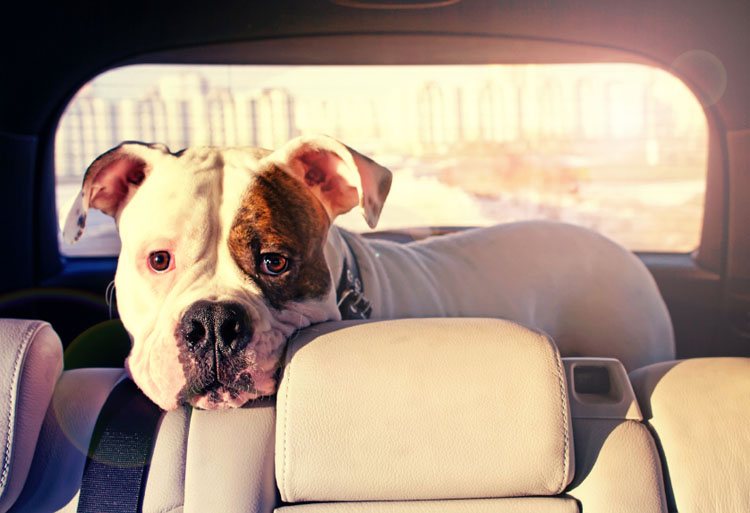
While summer was fashionably late this year, she showed up scorching hot and full of humidity! Traveling during extreme temperatures can be downright dangerous, especially with dogs. Take a few minutes to prepare. Just like preparing for road trips during the winter, you’ll need some essentials before heading out for summer fun.

Must Have Air Conditioner

Yes, keep your air conditioner blowing. Dogs have a built-in fur coat and need access to cool air to prevent heat exhaustion. Even if a dog’s coat has been shaved short, he still needs access to cool air. Dogs cool themselves differently. Humans sweat when hot while dogs pant, making it a bit harder to cool during extreme heat. Never travel with your dogs in the back of a truck during summer–it’s just too hot. Hot air blowing is still hot, so keep your dog inside where he’ll be safe and cool.

Bring Frozen Goodies in a Cooler

Pack a cooler with frozen water jugs and food stuffed toys topped off with ice. As water jugs defrost, offer your dog cool water every two to three hours. Also, you can purchase Kool Koats and soak them in water to wrap around your dog during extreme heat. Better yet, place them in your dog’s crate, so he can lie on them as needed. I keep my dogs’ Kool Koats in the cooler, so they’re accessible whenever I need them.

Traveling dogs need something to do, so give them a frozen peanut butter toy to enjoy while the family cools down with ice cream cones. For best results, freeze toys overnight before traveling, so they last awhile.

RELATED: Interactive Dog Toys for Car Rides

Travel Early

Temperatures are obviously lower in the early morning, so heading out before the sun comes up will help beat the heat. Plus, your vehicle has a chance to cool completely, which is easier to maintain since heat builds throughout the day.

While traveling late in the evening is a cooler option, it seems to be much cooler during early morning hours. Although traveling at 9 pm is much cooler than noon! When possible, plan to travel during cooler temperatures.

If Stuck in Traffic

It happens and it’s so frustrating, especially when it’s 103 degrees outside. It’s like your vehicle’s air conditioner just can’t keep up. Everyone becomes really grouchy and your dog starts to pant–take quick action. Give your dog cool water and a frozen toy. It probably won’t hurt to toss his Kool Koat in his crate, so he can lie on it to cool himself down. Worse case scenario when it becomes really hot, pour cool water from the cooler over your dog’s body until traffic gets moving again.

Stay cool this summer!

Filed Under: Clients, Safety, Training Tagged With: best dog travel tips, dog training, Dog Training Tips, how to teach a dog, how to train a dog, road trips with dogs, summer road trips with dogs, summer travel tips dogs, summer travel tips puppy, summer travel with pets, teach a dog, train a dog, traveling with dogs hot, traveling with dogs summer

Dog Breed of the Week: Labrador Retriever

July 29, 2015 by Fanna Easter

Meet the Labrador Retriever

Labrador Retriever
CaptureLight/Deposit Photos

Labrador Retrievers, also known as Labs, are ranked the most popular breed in the Sporting Group of the American Kennel Club. These dogs are very active, loving and enthusiastic, which is why many people choose to add them to their families. If this dog breed is on your wish list, then hopefully this article will give you some more insight into owning one of these wonderful dogs!

General Characteristics and Temperament

Labs are predominately a solid color with three variations, including yellow, chocolate and black. Yellow Labs can vary in hue from dark apricot (deep reddish yellow) to light gold–almost appearing white. Due to variations, white Labs are extremely uncommon. They’re basically a very light yellow Lab, so be wary of breeders toting rare white Labs at a higher price, as there’s really no such thing.

WATCH: How to Find a Good Dog Breeder

The Labrador Retriever is of medium size with an athletic body. They were bred for retrieving waterfowl and running for long periods of time. Their temperaments are well-balanced and sound, so they can endure loud sounds and rough environments.

Personally, I think they make wonderful family dogs for families that are active. They’re kind, gentle and suitable as a companion. In addition to being a working dog, they have a ton of energy.

Nutrition and Health

Labrador Retrievers tend to be healthy dogs with only a few health concerns, including hip and elbow dysplasia, eye disease and exercise-induced collapse. You can minimize the likelihood of your Lab encountering health issues by finding a responsible breeder who performs health testing before breeding dogs. Also, it’s very important to obtain a trusted veterinarian who sees your new family member for regular check-ups and vaccinations.

With any dog, it’s important to feed a well-balanced diet best suited for a dog’s specific needs. Most premium dry dog foods provide different blends that meet different dogs’ needs. They make dog food specific for puppies, large breeds, active dogs and senior dogs. Before choosing a food, speak with your veterinarian about your dog’s nutritional needs.

Labrador Retriever Grooming Needs

All Labs–yellow, black and chocolate–have a dense weather-resistant coat that enables them to retrieve waterfowl without being affected by the water temperature. I definitely recommend regular brushing to reduce shedding as well as bathing to remove excessive oil, which provides a waterproof-like barrier to their coats.

Labs shed every second of every minute. It’s quite common and expected. Make brushing your dog rewarding by pairing the experience with food or a play session. Smear peanut butter across a paper plate and brush your lab as he happily licks the plate.

Teeth

It’s recommended you prevent tartar buildup and gum disease, which can lead to heart disease, by brushing your dog’s teeth daily. Please make sure to use a dog-safe toothbrush and toothpaste.

Nails

Labs have powerful paws with fast-growing strong nails that require regular trimming, which can be done with nail clippers or a grinder. By keeping your Lab’s nails short, you will prevent splitting and overgrowth, which is very painful.

Dog Exercise and Training

Labrador Retrievers need daily exercise and mental stimulation. Remember, they were bred to work running in a field all day. If you’re considering getting a Lab, be ready for lots of play, exercise and training, so it’s important you have an active lifestyle. I have trained hundreds of Labs over the years and most had lots of energy. They are such driven, smart and energetic dogs that love to go, go and go!

It’s vital to begin teaching polite manners as soon as possible. This builds a good relationship and good manners with your new best friend. Make training fun by incorporating things your Lab likes in training, such as fetch and water play. Don’t forget your Lab will require daily exercise to help burn some of that natural energy he would use in the field.

Conclusion

As a dog trainer, I highly recommend Labs for first-time dog owners or families. Check out additional Labrador Retriever-related links below if you’re interested in furthering your knowledge on this awesome breed!

Sources:
www.akc.org
www.akc.org/dog-breeds/rescue-network

Filed Under: Breeds, Dogs, Training Tagged With: dog training, Dog Training Tips, how to teach a dog, how to train a dog, labrador retriever, labrador retriever breed information, labrador retriever dog training, teach a dog, train a dog

  • « Previous Page
  • 1
  • …
  • 31
  • 32
  • 33
  • 34
  • 35
  • …
  • 60
  • Next Page »

About

Dog Training Nation is a community of dog trainers, dog owners and dog lovers. Our mission is to provide trainers and owners valuable information to enrich dogs' lives. We cover a range of topics, from socializing puppies to dealing with aggressive dog behavior to selecting the best dog products. It is our hope you share our content to make the dog and owner world a better place.

​

Facebook

Video

Dog Training Nation is a dog training blog for pet owners and dog lovers. We cover a range of topics from puppy socialization tips to dog aggression to dog health. It is our hope you share our content to make the world a better place for dogs.

Dog Training Nation

Quick Links

Dog Training
Dog Behavior
Dog Training Videos
Become a Dog Trainer
About
Contact Us

Copyright © 2026 · Lifestyle Pro Theme on Genesis Framework · WordPress · Log in