Dog Training Nation

In Dogs We Trust

  • Home
  • Training
    • Dogs
    • Puppies
    • Clients
  • Behavior
    • Breeds
  • Health
  • Safety
  • Resources
    • Equipment
    • Books
  • Dog Training Videos
  • About
You are here: Home / Archives for Training

Dog Breed of the Week: Bulldog

June 12, 2015 by Fanna Easter

Meet the Bulldog

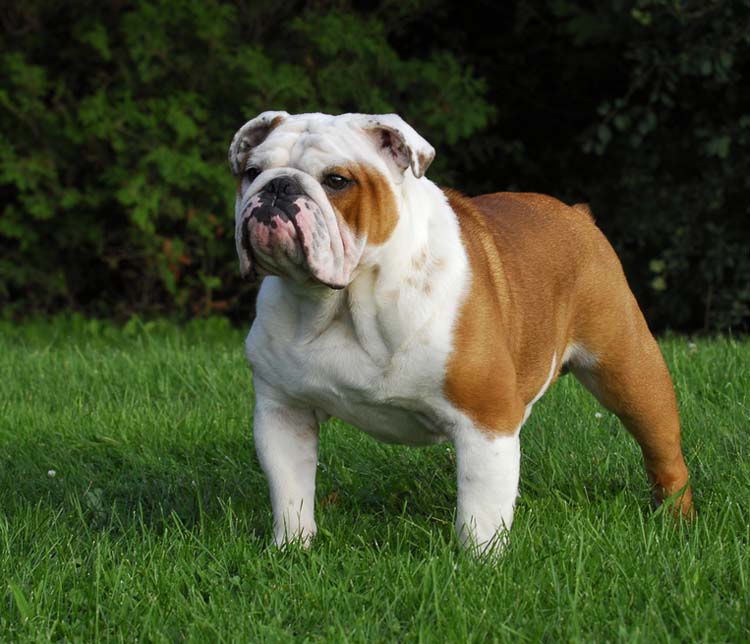
Bulldog
willeecole/Deposit Photos

Are you considering getting a Bulldog? Personally, I have always wanted one, but haven’t had the privilege of owning one. However, I have had the pleasure of training several Bulldogs. With that being said, I thought I would put some information together for people who are looking at adding a new member to their family.

Bulldog Characteristics and Temperament

Bulldogs are a part of the AKC Non-Sporting Group and one of the most popular breeds. You’ll find characteristics from several different breed groups in the Non-Sporting group. Their name “bulldog” originated with the dog being used for bull baiting though be it very cruel. Bulldogs tend to be very strong bodied, willed and calm. With them being so strong willed, you’ll want to begin positive training and socialization as soon as possible.

The Bulldog is a medium-sized dog that has short legs with very stout bodies. Bulldogs come in 10 different colors with a variety of four different markings. They have very short muzzles and wrinkled faces. It’s almost like they have wrinkles for you to grab while you get a nice big slobbery kiss from them!

With a short muzzle, you can pretty much guarantee snoring. Bulldogs have a soft upper palette that dangles a bit further down than longer nosed dogs, which creates a snoring sound. Plus, this makes them prone to heat stroke. There’s not much you can do about it, and most Bulldog lovers learn to love it.

Bulldog Grooming

Since Bulldogs have a short flat lying coat, you won’t be spending hours brushing them. However, all of those wrinkles can pose a little bit of a problem in the grooming department. You want to keep all of their folds, especially on their face and neck, nice and clean. A great way to tidy up dirty wrinkles is using cleansing wipes (approved for use on dogs) in between baths. Some Bulldogs are prone to severe allergies, so it’s important to find the right wipe and shampoo for your individual dog.

Nails

It’s important to keep a Bulldog’s nails trimmed on a regular basis. This will prevent overgrowth and splitting, which can be very painful for the dog. You can use traditional nail clippers or a grinder to keep them at a good length.

RELATED: Why Dogs Dislike Nail Trims

Ears

You should check a Bulldog’s ears regularly to avoid buildup and dirt that can cause infections. They have short floppy ears with several folds on their face and near their ears that need to be kept clean to prevent infection.

Teeth

Teeth brushing should be done on a regular basis. You want to make sure you use a toothbrush and toothpaste that are doggy safe. By keeping your Bulldog’s teeth nice and clean, you’ll help prevent tarter buildup, which can lead to heart disease.

Bulldog Dog Training

The key to training your Bulldog is keeping him motivated by using positive reinforcement training as well as keeping dog training sessions short. It’s best to begin potty and leash training as early as possible with your new puppy. This will facilitate boundaries and polite manners.

Finding the right collar and leash is also very important with this breed. As a dog trainer who has worked with several Bulldogs, I recommend a no-pull harness and a six-foot nylon leash for strong pullers. This will give you the best control with the least resistance until you can teach your Bulldog how to walk nicely on leash.

Exercise

Bulldogs have mild energy levels, which is great for busy families that don’t have a ton of time to exercise their dogs. I’m not saying these dogs don’t need exercise, as all dogs need exercise. A quick game of fetch or a nice walk in the morning or evening would be perfect for your Bulldog. It helps provide a healthy body and mind.

Due to their short muzzles, Bulldogs tend to overheat easily. You want to make sure it’s not too hot when exercising your Bulldog. It’s also important to pay attention to the length of time you are engaging in these kinds of activities. It’s always a good idea to have water for your pup just in case!

Conclusion

I hope this article gave you some insight on this awesome fun-loving dog breed! Below I have provided some links so you can get even more information on Bulldogs. Check them out!

  • AKC’s Bulldog Standard
  • Bulldog Rescue

You may also like:  Finding a Dog Breeder: How to Find the Right One

Filed Under: Breeds, Dogs, Training Tagged With: bulldog, bulldog puppy, bulldog rescue, bulldog tips, training a bulldog

Dog Breed Of The Week: Boxer

June 11, 2015 by Fanna Easter

Boxer Dog Breed Information

Boxer Dog Breed
atomadog/Deposit Photos

Have you ever considered adopting a Boxer to add as a new member to your family, but weren’t sure if the Boxer dog breed was right for you? This information will provide you with the ins and outs of owning, caring for and enjoying a Boxer!

General Characteristics

Boxers are a part of the American Kennel Club (AKC) working class and a very popular dog breed. Bred to chase wild game, Boxers love to run and jump. Be prepared, you’ll spend a great deal of time working on jumping and self-control exercises in their younger years. Lots of exercise and games like fetch will help burn some of their excess energy.

Have you noticed Boxers using their paws a lot kind of like a person taking jabs in a boxing ring? That’s how Boxer dogs earned their name. They use their front feet all the time. Take advantage and teach a cute trick like shake or wave. Everyone gets a kick out of it—pun intended.

Temperament

Don’t let excess energy worry you. Boxers are very patient. They’re truly wonderful family dogs. In my opinion, the Boxer dog breed is wonderful with children. They love to run and jump, and playing with kids in the yard is a great day in a Boxer’s world.

Boxers are wicked smart and easily trainable, but can be stubborn. Using something they love like food or their favorite fetch toy to train will help keep their attention. They generally don’t like repetitive things, so keeping dog training fun and their environment enriched.

Size

Boxers are medium to large-sized dogs and range from about 45 to 75 pounds. Male Boxers can be as tall as 25 inches where females tend to be a little smaller. However, in my house, it’s the opposite. My female Boxer is the big one and my male is smaller than average. The most common Boxer colors are fawn (called flashy fawn) and brindle with white markings.

You’ve probably noticed white (albino) Boxers as well. This is a recessive gene. White Boxers tend to be partly or completely deaf or blind, are very sensitive to the sun, and usually have many missing teeth. I don’t recommend them.

RELATED: White German Shepherd Dog

Grooming

Boxers have short and smooth lying coats, so their dog grooming needs are minimal. A nice thorough bath every couple of weeks usually does the job. It’s also a good idea to brush with a short-bristled brush in between baths to keep their coats nice and healthy.

Ears

Depending on your Boxer, he may have cropped or floppy ears. This is a personal preference, as they’re born with floppy ears, but are commonly cropped. Regardless of ear shape, it’s always important to keep their ears nice and clean.

Nails

Boxers tend to have powerful paws with strong nails. Keeping nails trimmed is a must. You definitely don’t want your Boxer sporting long nails since they love to box, right?

Teeth

Don’t forget to brush their teeth daily. Due to their pushed in muzzles, their teeth are closer together than most dogs so tartar builds up quicker.

Nutrition and Health

Boxers generally have a 10 to 12-year life span with great care. Feeding a highly nutritious diet from puppyhood to adulthood will help extend their life expectancy. It’s always a good idea to discuss your Boxer dog breed’s individual dietary needs with your veterinarian.

Every dog breed has its set of health issues. Boxers may have health issues, such as cardiomyopathy (heart muscle disease), hip or elbow dysplasia, bloat, and hypothyroidism. However, Boxers tend to be pretty healthy dogs.

Dog Training and Exercise

Some Boxers may have lots of energy. This can be both beneficial and counterproductive when training Boxers, which is why exercise is so important with this dog breed. Have you ever heard the saying, “A tired dog is a good dog”? Well this is true. These dogs require both mental and physical stimulation. If you provide your Boxer with daily exercise, dog training will be much easier. These dogs are very eager to learn and play. However, they can be a little stubborn at times.

Finding what your Boxer enjoys will be key factor during dog training sessions. Keep your Boxer motivated by providing mental and physical stimulation.

As someone who shares her home with this wonderful dog breed, Boxers are awesome family dogs for a semi-active family. If you’re interested in receiving more information about the Boxer dog breed, check out AKC’s boxer breed standard and American Boxer Rescue.

You may also like: Golden Retrievers

Filed Under: Breeds, Large, Training Tagged With: boxer dog, boxer dog 101, boxer dog adoption, boxer dog facts, boxer dog training, boxer puppy information, boxer puppy training, white boxer dog

Not All Dogs Like Dog Day Care

June 3, 2015 by Fanna Easter

How to Know If Doggy Day Care is Right for Your Dog

Doggy Day Care
Get me out of here!

I’d say 30-40 percent of dogs don’t enjoy playing with other dogs. Shocking, right? It’s true. If your dog doesn’t like to play with other dogs, it’s okay. Yes, it’s totally normal. Not all humans enjoy hanging out with a large group of people, especially rowdy young ones so why should our dogs? 🙂

Wild dogs certainly don’t play in large groups. They have friends and that’s it. If someone is rude, that person is kicked out, which doesn’t always happen in doggy day care.

Signs Your Dog May Not Like Doggy Day Care

Dog is Fearful Around Other Dogs

If your dog runs away, hides, folds ears back, tucks tail or acts generally afraid of other dogs, then doggy day care is not for him. Throwing your dog into a group of playing dogs won’t help. It’ll make it worse. I see the repercussions daily. If this happens, scared dogs will usually sit away from the playing dogs and freeze (look away and become terrified) if a dog approaches.

If dogs continue to approach and pester a scared dog, he’ll learn to fight. He is freaked out and trying to defend himself (offensive aggression). If you were afraid of snakes and were thrown into a pit filled with slithering snakes, I don’t think it would help you overcome your fear. It would make it worse. It’s the same thing with dogs so don’t force them.

RELATED: Dog Aggression

Dog Acts Aggressively Around Other Dogs

“My dog is fine with other dogs during day care, but lunges and acts aggressively with other dogs everywhere else.” Oh boy, I hear this a lot from pet parents. During behavioral consults to address their dog’s aggression toward dogs, I see a frightened dog that’s learned offensive aggression to mean: “I better get them before they get me” (defensive aggression). Yes, this was probably learned during doggy day care.

Understand aggression is a symptom of anxiety. If a dog can’t get away, he will either freeze or fight. The same happens with us–remember the snake pit? 🙂

Is This Your Dog?

Don’t beat yourself up. You do better once you know better. Pull up your bobby socks and enroll in a relaxed rover class, which addresses fearful and aggression behaviors around other dogs. Now, find an excellent pet sitter for leash walks and potty breaks.

READ MORE: Dog Day Care Interview Questions

Filed Under: Behavior, Clients, Health, Resources, Training Tagged With: best dog day care, choosing a dog day care, daycare for dogs, dog day care, doggie day care, finding a good dog day care, how to find a doggie day care, interviewing dog day care, questions to ask doggie day care

Dog Day Care Interview Questions

May 27, 2015 by Fanna Easter

Interviewing at a Doggy Day Care

Doggy Day Care
Szepy/iStock

Ask dog friends, your veterinarian and, especially, your dog trainer which doggy day care facilities they recommend and why. Then, take a peek at their websites for additional information. Once you’ve selected several locations, set up face-to-face interviews with dog day care staff before bringing your dog. Keep your dog home when interviewing. You need to focus on asking questions and watching play sessions in progress.

Don’t forget to print this article. It provides acceptable answers to questions asked as well as acceptable solutions to common issues during playtime. Lastly, trust your gut. If something seems off, leave. I wish more pet owners trusted their gut. It’s usually always right. 🙂

Remember: dog day cares teach dogs how to play politely with other dogs. This should not be a free-for-all, which teaches dogs to fend for themselves or bully and hurt other dogs. There should be rules and boundaries.

RELATED: Choosing the Best Doggy Daycare

Person-to-Person Interview

  • How are your staff members trained?
    • All staff members must be trained in canine body language, managing groups of dogs, recognizing illnesses, preventing dog fights and so forth.
  • How much experience do they have before managing a play session?
    • Must have at least six months of experience before managing play sessions alone.
  • Is there a limit to the amount of dogs during a play session?
    • Maximum of eight dogs per one staff member.
  • What happens during a pre-screening process?
    • A staff member asks questions about your dog.
    • A staff member meets and assesses your dog’s personality.
    • If all goes well, your dog meets a friendly dog.
    • For the next week, your dog learns to play with a small group of dogs.
    • During screening, don’t allow your dog to jump in and play with eight dogs. That’s scary.
  • Do all dogs pass the pre-screening process?
    • No, only dogs that enjoy playing with other dogs are allowed to play.
  • What vaccinations do you require?
    • Minimum should be rabies.
    • Contact your local veterinarian for required vaccinations in your area. Requirements depend on region.
  • What happens if my dog is injured?
    • Your dog should immediately be driven to a local vet. Ensure the facility doesn’t employ a wait-and-see method. When in doubt, get it checked out.
    • Once a vet examines your dog, then the staff member should contact you. So many dogs have suffered for hours, waiting for a call back from their pet parents. Insist your dog is seen first.
    • The facility must work with a local veterinarian during the day and an emergency vet after hours (after 5pm). Ask for his or her name and location.
    • Will day care reimburse vet bills if caused in their facility? It’s best to find out now.
  • Are staff members certified in pet first aid and CPR?
    • If so, with whom? Red Cross and Pet Tech offer excellent training on pet first aid.
    • If not, why are they not trained?  What happens during an emergency?
  • If my dog is not having fun during playtime, what will happen?
    • Your dog should immediately be removed from the play area.
    • A staff member should call and inform you of the situation (after your dog is removed from the play area).
    • I would highly recommend picking your dog up and not enrolling in play sessions any longer.
    • Ask if there’s a refund if you decide to no longer bring your dog to day care.
  • My dog can be a bully, is he or she allowed to play?
    • No. There should not be any promises of training, socialization or trial periods. Bullies should be removed immediately and not allowed in class.
  • Will my dog have plenty of rest time?
    • Tired dogs get cranky and will squabble so quiet times (naps) should happen at least once per day. Older dogs may require more rest periods.

RELATED: Appropriate Puppy Play

Watching Play Sessions in Progress

When watching play sessions during your selection process, it’s important to observe structure and consequences:

  • What happens when a dog bullies another dog?
    • The bully should be removed from the playgroup.
  • What happens when a dog is tired and lies down for a nap, but other dogs keep pestering him?
    • Place tired dog in a kennel to rest.
  • When play sessions become too rowdy, what happens?
    • A staff member interacts play by walking between dogs or separating them.
  • What happens if a dog yelps?
    • A staff member must thoroughly check out the yelping dog or better yet, remove the dog and have someone check him or her out. Then, let the dog rest before bringing him or her back to playtime.
  • What are staff members doing during playtime?
    • They should be constantly walking around and monitoring dogs playing.
    • They should not be on their phones, only playing with specific dogs or ignoring scared dogs.
    • Honestly, this is not an easy job. They are constantly hustling.
  • Are potty accidents cleaned up immediately?
    • Yes, and all accidents should be cleaned immediately. A mop and bucket should be in the play area.
  • Watch staff members’ hands. They should be gentle and friendly.
    • There should be no hitting, slapping or roughhousing.
    • Staff members should be happy to be there.

Filed Under: Clients, Resources, Safety, Training Tagged With: best dog day care, choosing a dog day care, daycare for dogs, dog day care, doggie day care, finding a good dog day care, how to find a doggie day care, interviewing dog day care, questions to ask doggie day care

Choosing the Best Doggy Day Care

May 25, 2015 by Fanna Easter

How to Choose the Best Doggy Day Care

Doggy Day Care
filrom/iStock

It’s not that hard. It just takes visiting several locations, watching and asking questions. Keep your dog at home when interviewing potential doggy day care locations. You’ll need to be focused and ask lots of questions.

Qualified Staff

This is a must, as qualified staff can spot bullies, scared or shut down dogs and ensure dogs are having a positive play experience. All staff must complete training on canine body language, manage dogs effectively, introduce dogs positively and break up dog fights (unfortunately, it happens). Plus, they must have at least six months to a year of experience before managing playing dogs alone.

Thorough Pre-Screening Exam

Oh, this is important too, but only if exams are completed by qualified staff. Your dog must be screened before being allowed to play with other dogs.

During the screening process:

  • Dog day care staff are gathering information about your dog’s play style, personality and health, which is invaluable in ensuring a fun time by all.
  • If all goes well, an experienced staff member may introduce your dog to another (one) friendly dog and then move along slowly. Dogs should be introduced to a small group of polite dogs (two to three) at first and allowed to play under supervision. After a week or so, your dog can meet and play with a full play group.
  • During a pre-screening test, your dog should never be placed in a room full of dogs as a screening test. Information must be gathered with you and your dog alone first. Before this happens, take your dog and leave.

Doggy Day Care is Not for All Dogs

Dogs that are scared, fearful, anxious, growl, snap, bite or refrain from engaging in play should not attend day care.

Forcing scared or aggressive dogs to meet other dogs will make fears worse. They won’t overcome their fears, but they will learn how to fight instead of play. I know you don’t think this can happen to your dog, but this happens every day, if not several times a day. If your dog doesn’t want to play, don’t make him. Think about it this way: if you’re scared of spiders and someone locks you in a room filled with fast-moving spiders, your fear will only worsen.

If a staff member is hesitant about adding your dog into a play session, listen to his gut reaction and don’t push the issue further. Many dogs are pushed into playgroups because pet owners want to socialize their dogs. Don’t do it. It’s not worth it. Invest in a fabulous pet sitter instead.

Limit Amount of Playing Dogs

One staff member for eight dogs is plenty. Staff members are present to ensure all dogs are having fun, playing politely and removing dogs that are tired and no longer having fun. With too many dogs, this won’t happen and it becomes a free-for-all, meaning your dog learns to threaten other dogs to keep them away.

Pushy Dogs are Not Allowed to Play

Bullies are everywhere: at schools, in our workplace and, yes, even at doggy day cares. Pushy dogs constantly pester (pick on) other dogs by pinning, holding a dog in a corner, chasing and rolling, and/or body slamming. Bullies should not be allowed to practice this behavior during playtime. They will only worsen and it’s not fair to other dogs. Bullies must be removed immediately. And if they continue the behavior, bullies should not be allowed to play again.

RELATED: Stop Bullying Behavior

Health Comes First

Potty accidents should be cleaned immediately with disinfectant and free from any odor. Also, dogs must be vaccinated with regular fecal checks, as disease spreads quickly when large groups of dogs are housed together. Lastly, play areas should be disinfected once all dogs have gone home for the day.

Filed Under: Clients, Resources, Safety, Training Tagged With: best dog day care, choosing a dog day care, daycare for dogs, dog day care, doggie day care, finding a good dog day care, how to find a doggie day care, interviewing dog day care, questions to ask doggie day care

  • « Previous Page
  • 1
  • …
  • 35
  • 36
  • 37
  • 38
  • 39
  • …
  • 60
  • Next Page »

About

Dog Training Nation is a community of dog trainers, dog owners and dog lovers. Our mission is to provide trainers and owners valuable information to enrich dogs' lives. We cover a range of topics, from socializing puppies to dealing with aggressive dog behavior to selecting the best dog products. It is our hope you share our content to make the dog and owner world a better place.

​

Facebook

Video

Dog Training Nation is a dog training blog for pet owners and dog lovers. We cover a range of topics from puppy socialization tips to dog aggression to dog health. It is our hope you share our content to make the world a better place for dogs.

Dog Training Nation

Quick Links

Dog Training
Dog Behavior
Dog Training Videos
Become a Dog Trainer
About
Contact Us

Copyright © 2026 · Lifestyle Pro Theme on Genesis Framework · WordPress · Log in