Dog Training Nation

In Dogs We Trust

  • Home
  • Training
    • Dogs
    • Puppies
    • Clients
  • Behavior
    • Breeds
  • Health
  • Safety
  • Resources
    • Equipment
    • Books
  • Dog Training Videos
  • About
You are here: Home / Archives for Training

Learn From Dog Training Mistakes

October 20, 2017 by Fanna Easter

Dog Training Mistakes Provide Valuable Information

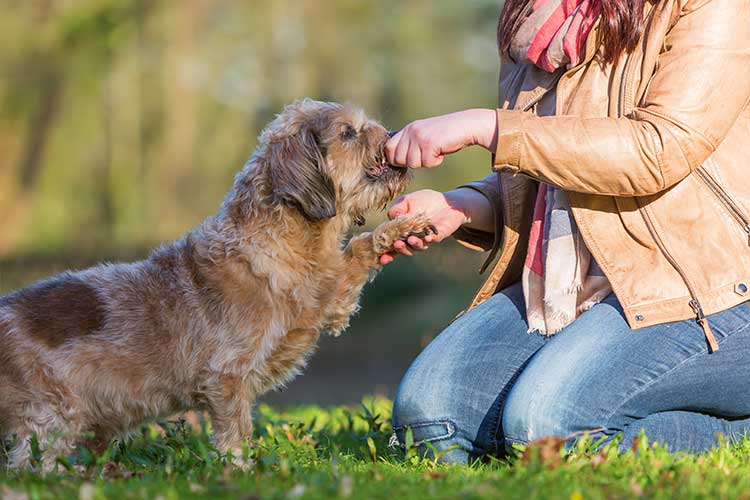
Dog Training Mistakes
Kzenon/Adobe Stock

When teaching dogs new behaviors, mistakes will happen. It’s part of the learning process. During a dog training session, either the pet owner (teacher) or dog (learner) will make a mistake. While identifying and overcoming mistakes seems complicated, it really is super easy with a few tips. When mistakes happen, remind yourself that they provide valuable information you can learn from.

Human Mistakes

It’s important to remember the dog is always right. Teaching is challenging, so reward your dog, especially when she picks up on a behavior quickly and easily. As the pet owner, it’s important to set your dog up for success by following these few easy steps.

  1. Always choose a distraction-free environment to begin training your dog a new behavior.
  2. Split the behavior into easy-to-understand sections.
  3. Encourage your dog by generously rewarding steps forward.
  4. Keep dog training sessions short (1 minute long).
  5. If progress stops, identify the issue and stop the training session immediately, then resume with an updated plan.

Here’s an example of setting a dog up for success when teaching her to lie down on the floor.

  1. Practice in your home with minimal distractions.
  2. Teach your dog to sit first. Once she sits reliably, lure her front half down with a treat. Click when elbows touch the ground and reward generously.
  3. Reward each step forward.
  4. Stop the session after 1 minute.
  5. If your dog won’t lie down, step back and figure out why. Maybe try teaching your dog with a mat under her elbows or slowing down your luring hand.

Dog Mistakes

When pet owners teach their dogs new behaviors, they are building a bond of trust between them as well as learning how to communicate effectively. Remember, dogs are considered learners during training sessions, so they can’t make mistakes. Dogs (learners) are always right even when they’re confused.

Pet owners (teachers) should remember that dogs are not choosing to be stubborn; dogs are genuinely confused in those situations. If this happens, end the training session and re-evaluate your training plan. If you find yourself frustrated because progress has come to a halt, seek advice from a positive reinforcement dog trainer.

Think about it this way: If you become confused while learning how to ski, then your ski instructor has not communicated how to ski properly. As a dog trainer, if my students become confused and make mistakes, that means I didn’t communicate how to do a behavior effectively—and I own it

Identifying Mistakes

This is the hardest part. Most pet owners immediately blame their dog when training sessions become confusing. Humans have huge egos. The best way to identify dog training mistakes is to record a training session on a smartphone.

Set up the phone, so both you and your dog are easily viewable, such as propped up on top of a table. Hit the record button, walk over and teach a 1-minute training session covering a difficult behavior. End the session, then watch the video to identify the issue.

About 90% of the time, pet owners immediately identify their mistake and adjust during their next training session. If you do this and are still stumped, send the video to a professional positive reinforcement dog trainer for advice.

Learn From Mistakes

Each mistake provides valuable information. When you learn what caused the mistake, you’re less likely to repeat it. Once mistakes are identified and changes are made, dog training success progresses quickly.

Filed Under: Clients, Training Tagged With: am I making dog training mistakes, common dog training mistakes, dog behavior, dog can't learn, dog keeps making mistakes, dog refuses to learn, dog training, dog training mistakes, how to teach a dog, how to train your dog, untrainable dog, untrainable puppy

Why You Should Never Buy A Puppy Online

October 11, 2017 by Fanna Easter

Don’t Buy Dogs Online

Don't Buy Dogs Online
WavebreakMediaMicro/Adobe Stock

Shopping online is so easy now; the world is literally at everyone’s fingertips. Online shopping offers varieties that were previously limited before. A perfect example of this is the variety of dog breeds available to consumers, giving rise to buying dogs online.

When searching for a puppy online, people usually select their preferred dog breed by reading descriptions and looking at the photos. Then, they click on links to breeders selling the puppies. This may seem convenient, but this is the worst way to bring a puppy into your life. Before buying a puppy or dog online, please understand these very common risks.

Are You Sure That Dog Breed is Right for You?

As a professional dog trainer, I’m shocked when potential pet owners choose a specific breed of dog based on Internet descriptions. Unfortunately, I’ve witnessed senior citizens (in their mid-80s) purchasing robust Rottweilers, Bouviers and Belgian Malinois, all of which are large and highly energetic dogs that can easily knock someone over. Some people purchase Mastiffs because they wanted a large dog, but were unaware that this breed drools buckets of slobber every hour.

Most online breeders are trying to sell puppies quickly, so they will tell you anything you want to hear. These irresponsible breeders will tell potential pet owners a certain breed is perfect with children, other dogs, cats or whatever. There are pros and cons to everything, including different dog breeds.

How to Choose a Breed of Dog

Before choosing a puppy to bring into your home, take the time to meet several of these breeds in person. Local dog shows are a perfect place to meet and pet dogs, talk to knowledgeable dog breeders, and have all your questions answered. Another way to meet dogs is to contact reputable breeders from a specific breed’s AKC parent club (not the breeders listed on AKC’s website).

To find reputable AKC parent clubs, visit a search engine and type in your chosen breed’s name and “club of America” afterwards. Examples include: “Rottweiler Club of America,” “Bouvier Club of America” or “Belgian Malinois Club of America.” Reputable dog breeders will spend hours explaining the good, bad and ugly of a specific breed, and will always take their puppies back.

Online Puppies are From Puppy Mills

Puppy mills continue to breed dogs in horrible conditions to maximize profits. Online puppies’ parents are kept in rabbit cages, are rarely fed, and have never seen grass or sun. These poor dogs have no veterinary care and are treated as livestock. In the past, puppy millers would sell puppies on roadsides and to pet retailers that sell puppies. Due to the upsurge of protests from animal lovers, puppy mills now hide and sell their puppies online. Don’t let their prices fool you either. Many puppy mills sell their puppies at high prices, so potential pet owners assume they’re reputable breeders.

It’s a Gamble

Puppy mills select, and even steal, photos of cute puppies to post on their website or social media page. Irresponsible dog breeders will promise a perfect puppy and tell unsuspecting people whatever they want to hear until a money transfer has been completed.

Terrible breeders will convince them that their puppies were born and live indoors, which is never true. Plus, it’s impossible to verify because potential pet owners aren’t able to visit the puppy’s home.

Once people receive their precious puppy, most are shocked that their puppy doesn’t resemble the one in the picture. And it doesn’t stop there. They’ll soon realize their puppy has health issues after a well puppy vet visit, and feel like they’ve been bamboozled.

Fortunately, most pet owners won’t return their puppy because they feel sorry for him or her. It wasn’t the puppy’s fault the breeder didn’t care. However, for puppy millers, they’re beyond thrilled with your decision because they get to keep your money and will continue to pull the heart strings of other potential pet owners. It’s a lucrative business.

Only purchase a puppy from a reputable breeder or, even better, recuse a dog in need.

Filed Under: Clients, Resources, Training Tagged With: buy a puppy, buy dogs online, buying dog online tips, how to buy a puppy online, never buy a dog online, pet shop online, puppy mill online, puppy mills, should you buy a dog online

How To Save Your Back When Training Small Dogs

October 6, 2017 by Fanna Easter

Training Small Dogs: Reward Without Back Pain

Training Small Dogs
Christian Müller/Adobe Stock

All dogs deserve lots of super yummy treats during dog training practice sessions. However, when training small dogs, a pet owner can certainly strain his back from repeatedly bending down to give his dog a treat. If you share your home with a small dog, give these treat tossing tips a try and give your back a rest.

Feed the Floor

When rewarding your small dog for a good job, try tossing treats on the floor instead of bending over and popping treats into your tiny dog’s mouth. Tossing treats on the floor is an extremely effective reward system, and you’re able to move your small dog around to reset for the next behavior.

If tossing treats on the floor is bothersome, place a plastic container on the floor and toss treats into that. Your small dog can perform a behavior, then walk over to her “treat bucket” to eat her earned treat.

Lightly toss treats about 2-3 feet away from your dog. Tiny bits of cheese work extremely well because there’s minimal bounce factor plus low fat cheese won’t leave a greasy residue behind.

RELATED: How to Clean Food Stuffed Toys

Use a Wooden Spoon

When training your small dog to walk on a loose leash, it’s vital to reward her often. Bending over and popping a treat into a dog’s mouth every few seconds can certainly put unneeded strain on your lower back. Instead of bending over, place a large dollop of peanut butter on a wooden spoon or rubber spatula. Hold the spoon behind your back to prevent your small dog from jumping up and trying to mug you for treats.

When rewarding the right behavior, lower the spoon down, so your dog can take a lick or two of peanut butter, then pick it back up. Some dogs will grab the entire dollop of food off the spoon (smart dog), so smear peanut butter across the spoon or spatula surface to prevent this from happening.

Between both tips, see which one works best for you. Using a peanut butter spoon works best when teaching small dogs polite leash manners, and the feeding the floor method is ideal for everything else.

Filed Under: Dogs, Training Tagged With: dog training, Dog Training Tips, dog training tips for small dogs, giving treats to small dogs, small dog training, train a small dog, training small dogs, training tips for small dogs, treat training tips for small dogs

Dog On Dog Aggression In The Home

October 4, 2017 by Fanna Easter

Dog Training: Dog Aggression Between Housemates

Dog On Dog Aggression In The Home
Jne Valokuvaus/Adobe Stock

When two dogs in the same home start fighting, it’s a frightening and extremely urgent situation. The tension between both dogs is pliable, and pet owners are often frustrated, yet hopeful. If your dogs are fighting, follow these steps today. Don’t hesitate because this situation will not get better on its own.

Why Are Your Dogs Fighting?

Many pet owners dwell on the exact cause for the fighting between their dogs. As a professional dog trainer, it’s extremely hard to pinpoint the exact cause for the dog on dog aggression in the home, but it’s evident that tension has been present long before their fighting began.

Dogs protect resources, such as food, toys, treats, beds, space and humans. Additionally, overly anxious dogs will redirect their frustration onto their housemate. Regardless of the reason, it’s important to understand this situation will only get worse until it’s addressed with a professional dog trainer or veterinary behaviorist.

[perfectpullquote align=”full” cite=”” link=”” color=”” class=”” size=””]Allowing dogs to fight only makes the situation much worse and is considered torture for both dogs.[/perfectpullquote]

What Should You Do First?

Prevent your dogs from meeting or seeing each other. Never allow dogs to fight it out or work it out for their spot in the pack because this never works. Allowing dogs to fight only makes the situation much worse and is considered torture for both dogs. Plus, it’s not fair to the dog being attacked over and over; his or her life is a living hell.

Separate both dogs to opposite sides of the house. Keep doors firmly closed and place gates to prevent fighting. Bring one dog out to potty at a time, and ensure each dog is securely confined in his or her area before letting the other dog out to potty. Preventing fights stops your dogs from practicing the behavior while keeping each dog safe.

Get Professional Help

Pet owners with squabbling dogs need professional help. It’s impossible to prevent housemates from fighting, even with management, without intense dog behavior modification. Contact a professional dog trainer or veterinary behaviorist immediately, and keep all dogs separated until a professional can help you implement behavior protocols.

While it’s tempting to seek advice online, it’ll be difficult to find specific answers for your case unless a professional has met each fighting dog and the environment. If someone does offer advice without meeting your dogs, that person is doing a disservice to your household.

Find a local professional immediately for best results. Plus, make sure the professional has extensive knowledge with dog aggression and uses positive reinforcement training only. Punishment will only make the problem worse.

Filed Under: Behavior, Training Tagged With: dog behavior, dog obedience, dog on dog aggression, dog on dog aggression in the home, dog to dog aggression, dog training, Dog Training Tips, dogs in same house fight, fighting dogs in same house, help for dogs fighting in same household, how to stop dogs from fighting, how to teach a dog, how to train your dog, stop dog fighting, stop dogs from fighting

How To Stop A Dog From Running Out The Front Door

September 27, 2017 by Fanna Easter

Stop Your Dog From Running Outside

Front Door Dog Gate
Yuli/Adobe Stock

Ding-dong, the pizza man is here! Your dog rushes to the front door while barking loudly. As you carefully crack the front door open, your dog pushes his head through the crack and runs out the front door. The pizza man freaks out and drops your pizza while you go out to chase your dog through the neighborhood. Yikes, how can you stop your dog from running out the front door?

Set Up a Pet Barrier

Prevention is key until a dog learns how to respond to the opening of the front door, so set up a pet barrier to block your dog from the door. While it’s impossible to add a regular gate to the front door, you can place a secure front door dog gate inside your home.

Choose a well-made gate that can be expanded around the front door area and one that your family can easily step over. For large dogs that have a history of gate crashing (knocking over gates), choose a wall-mounted version with a hinged door. Gates that are at least 4 feet high prevent excited dogs from jumping over them when the pizza man arrives.

Keep your front door barrier in place permanently; it’s an added safety piece until your dog learns to wait at the door. Also, it’s a great safety measure if neighborhood children walk in and out of your house. This management tool will keep your dog safely contained inside.

Change Your Dog’s Behavior

Placing a front door barrier is an excellent management tool, but it’s important to teach your dog how to positively react when the front door opens. Grab lots of super yummy treats, put a leash on your dog and crack open the door.

When your dog chooses to back away from the door, click (or say “yes”), close the door and then give your dog a treat. Continue to practice with your dog leashed by slowly opening the front door a bit wider. If your dog tries to rush out the door, wait until she stops and click/treat. For more details, check out how to teach your dog polite door behaviors here.

WATCH: How to Stop Your Dog From Running Out the Front Door

Filed Under: Dogs, Safety, Training Tagged With: dog front door, dog pushes out front door, dog pushes through doors, dog runs out front door, dog rushes doors, dog rushes through front door, dog training, Dog Training Tips, front door dog gate, how to keep dog inside, keep dog indoors, pet door barrier, stop dog from running away, stop dog from running out front door, stop dog from running outside

  • « Previous Page
  • 1
  • 2
  • 3
  • 4
  • 5
  • 6
  • …
  • 60
  • Next Page »

About

Dog Training Nation is a community of dog trainers, dog owners and dog lovers. Our mission is to provide trainers and owners valuable information to enrich dogs' lives. We cover a range of topics, from socializing puppies to dealing with aggressive dog behavior to selecting the best dog products. It is our hope you share our content to make the dog and owner world a better place.

​

Facebook

Video

Dog Training Nation is a dog training blog for pet owners and dog lovers. We cover a range of topics from puppy socialization tips to dog aggression to dog health. It is our hope you share our content to make the world a better place for dogs.

Dog Training Nation

Quick Links

Dog Training
Dog Behavior
Dog Training Videos
Become a Dog Trainer
About
Contact Us

Copyright © 2026 · Lifestyle Pro Theme on Genesis Framework · WordPress · Log in