Dog Training Nation

In Dogs We Trust

  • Home
  • Training
    • Dogs
    • Puppies
    • Clients
  • Behavior
    • Breeds
  • Health
  • Safety
  • Resources
    • Equipment
    • Books
  • Dog Training Videos
  • About
You are here: Home / Archives for Training

Calm and Assertive Pack Leader? Nope

April 6, 2015 by Fanna Easter

Teach Dogs Polite Behaviors Instead
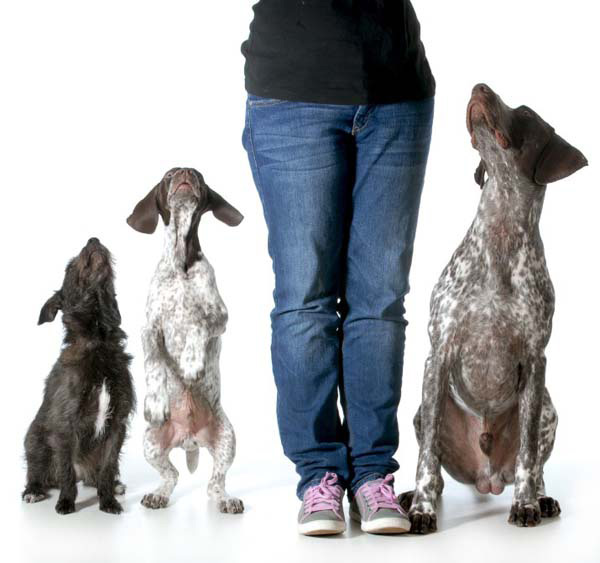
How to Assert Leadership

If you’re researching this topic, you’re probably following a popular TV personality who discusses dog training. I’m beyond thrilled you’re searching for dog training tips and would like to provide my take on the thought process of a calm and assertive pack leader.

I Wish It Were That Easy

Oh, how I wish! If it were that easy, pleading pet parent emails would disappear from my inbox and dog training blogs across the world would become silent. My phone would stop ringing and classes would be empty because pet parents would learn to be calm and assertive and their dogs would learn to listen to commands.

Beware of quick fixes in dog training. I wish with my entire heart that I could wave a magic wand and dogs would magically learn polite manners. Trust me, I’ve tried and it hasn’t worked yet (big grin!). Training dogs is not as hard as you think–that I can promise you.

Remove the pressure of walking with assertive energy (seriously, what does this mean anyway?) and take a deep breath in and out. Don’t you feel better now? Good! Now, fill your pockets with yummy treats for your dog and, by all means, walk in a normal pace and posture. Click and treat your dog for good behaviors instead.

RELATED: Clicker Training for Dogs

Stop Blaming Pet Parents

Wow, pet parents are riddled with stress, guilt and shame. They’ve been told, “If your dog is bad, it’s because of you. You caused it.” I can’t tell you how many pet parents break down during group class in actual tears and occasional sobbing. They’re worried their dog or puppy isn’t normal. What caused this fear? Who’s subconsciously telling pet parents their dog or puppy isn’t normal? Whoa, let’s stop and take a moment to bring reality back.

I honestly believe when folks know better, they do better. Someone doesn’t consciously decide to teach her dog naughty behaviors. Now, there are fruit loops in the world who make bad decisions everyday and I really don’t think they would spend time researching dog training blogs, do you? So I’m talking to you, the pet parent, trying to learn the easiest way to teach dogs polite behaviors. 🙂

Can you unknowingly teach naughty dog behaviors? Yes, it’s quite easy actually. 🙂 So shake the guilt and shame off, and learn what really works!

What Does Work

Puppies and dogs don’t come with an instruction manual nor have they read one before arriving at your home— oh I so wish they did! It’s our job to teach puppies and dogs polite manners instead of assuming naughty behaviors are plots to take over our home and lives.

Dogs are a lot like children. We spend time teaching kids where to potty, touch lightly (same as puppy nipping), play gently, self settling, behave politely in public and when guests come over, and so forth. Bingo, it’s the same with dogs! 🙂

Can you imagine walking calm and assertive around your teenagers? They would giggle and learn how to manipulate a situation for a specific outcome. That’s called learning. 🙂 Walking with your head held high and chest puffed out doesn’t teach your dog anything. Instead, spend time teaching your dog (and teenager) polite behaviors instead. Remember, there is no such thing as dominance between dogs and humans. This myth was dispelled over a decade ago.

Putting the time in now will pay huge dividends and shake off that “my dog is trying to boss me around” and “my puppy knows what I want, he’s just not doing it.” This is not what your dog is thinking, I promise. Instead, assume your dog is confused and teach him polite behaviors instead. 🙂 Dogs get confused, especially when we don’t provide clear details, so take a step back and make it easier.

Polite Manners

Looking for polite behaviors to teach? Enroll in a group class and take a peek around. We have hundreds of articles to help! Blogs are extremely helpful to reference during and after graduation, but they will never substitute a great group class and fabulous expert dog trainer.

I’m not selling anything here. I want to provide easy, honest and current dog training articles that will help you and your dog lead peaceful and happy lives. That’s worth its weight in gold for me!

READ ALSO: Feeding Multiple Dogs at Once
Filed Under: Clients, Training Tagged With: alpha humans, alpha puppies, being alpha with dogs, calm and assertive pack leader, calm assertive dog behavior, calm assertive energy people, calm assertive parenting, dog training pack leader, dominance and dogs, how to be an alpha, how to become a pack leader, how to have calm and assertive energy, teaching dogs calm and submissive, what is a pack leader

Preventing Dogs From Fence Fighting

April 3, 2015 by Fanna Easter

Preventing Fence Fighting Dogs

How to Teach Polite Manners

How to Stop Dogs From FightingFence fighting is frustrating. The first step to preventing fence fights from occurring is by installing a visual barrier along the fence line to prevent further fighting. Visual barriers help keep your dog below threshold, meaning you can teach him polite behaviors, such as “come when called.” Once your visual barrier is up, it’s important to begin teaching your dog polite behaviors immediately.

Associate Sounds with Treats

If your neighbor dog wears an ID tag, just the sound can trigger a fence fight. With repeated practice, your dog learns to follow the sound along the fence, beginning a new type of fence fighting. To nip this in the bud, bring your dog out in the yard on leash with lots of yummy treats. When your dog hears the neighbor dog’s ID tags jingle, give your dog a treat. You’re pairing good things with the jingle sound. Practice for a few days.

Manage

For the first two weeks, after a visual barrier has been set up, it’s important to walk your dog outside on leash. I know, this is not what you wanted to hear, but it’s so important to prevent further fence fighting and it’s much easier to put the time in now instead of starting all over again.

Teach “Come When Called”

Several times a day, while bringing your dog potty on a six-foot leash, practice “come” behaviors. Practice for a week using super yummy treats. If your neighbor’s dog distracts your dog, walk further away from that side of the fence. Now, using a long leash (10-15 feet), practice recalls. Until your dog reliably comes when called, it’s important to practice on leash and use super yummy treats.

RELATED: “Come When Called” Part 1: Intro

Talk to Your Neighbor

If all else fails, talk to your neighbor. I’m sure he or she is aware of the fence fighting situation too. Coordinate backyard times to prevent further issues. If your dog needs to potty and the neighbor dog is outside, bring her on leash.

READ ALSO: Fence Fighting Dogs – How to Stop the Madness

Filed Under: Behavior, Dogs, Training Tagged With: dog chases other dogs along fence, dog fights with another dog fence, dog runs along fence, fence fighting dog training, preventing fence fighting, stop fence fighting dogs

Fence Fighting Dogs: How to Stop the Madness

April 2, 2015 by Fanna Easter

How to Stop a Dog From Fence Fighting

Fence Fighting DogsFence fighting is so frustrating for both you and your dog. Yes, your dog too. You probably didn’t see that coming huh? Most pet owners assume dogs love fence fighting. While there may be a select few who do enjoy this type of exercise, for the most part, it’s extremely stressful for your dog.

If this happens in your backyard, I have a few tips that can curb this behavior so you and your dog can enjoy your backyard again.

Why Dogs Fence Fight

When dogs actually engage and fight with another dog through a fence, it’s called fence fighting. Both dogs go back and forth along the fence line and squabble. Usually, dogs are able to see their opponent, which starts a fence fighting session. And if you’ve ever tried to break this up, you know it’s pretty impossible–your dog runs past or around you and it can go on for a long time (sigh).

The cause of fence fighting usually begins with fear and frustration. Your dog learns to really dislike the neighbor dog. Trust me, the more your dog practices fence fighting, the worse it’ll get so it’s important to stop the behavior. Dogs can and will injure themselves too. Most dogs can reach each other and cause harm so it’s important to address it now.

Now, some dogs will run along a fence line when they’re overstimulated by people walking nearby, birds, walking dogs or any other type of distraction. Fence running is different than fence fighting, as they’re dealing with their frustration by running along a fence line.

RELATED: Preventing Dogs From Fence Fighting

Should My Dog Meet the Neighbor Dog?

Nope, they may fight or become friends outside of the fence. When a fence is in between them again and they’ve practiced this behavior for a while, it’ll start right back up.

Visual Barrier

A solid privacy fence is worth its weight in gold! If your dog can’t see a neighbor dog, then fence fighting is less likely to happen. If your privacy fence has holes, I recommend fixing them to prevent further fights. For chain link fences that your dog has learned to peek through the slits of, you’ll need to put up a visual barrier.

About 80 percent to 90 percent of the time, a visual barrier will halt fence fighting in its tracts. In the past, I’ve used and recommended rolled felt or carpet as a visual barrier. You just roll it along the bottom of the fence fight line and zip strip it in place. For larger dogs, I recommend four-foot high felt or outdoor carpet and roll it on the inside of the fence (your side), making sure the carpet touches the ground and not grass to prevent any peepholes. Every two feet, I zip strip it tightly into place.

Now, it’s not the prettiest thing ever, but it wears well and doesn’t smell with repeated exposure to sun and rain. After practicing good fence behaviors, I can remove it after six months or so.

You may also like: Appropriate Puppy Play

Filed Under: Behavior, Dogs, Training Tagged With: dog runs along fence, fence fighting dogs, stop dog from running along fence, stop dogs fence fighting, visual barrier dog fence fighting

Trimming Dog Nails: Clippers Mean Treats (3 of 3)

March 20, 2015 by Fanna Easter

Nail Clippers Means Treats

Dog Nail TrimmingBy now, your dog is totally comfortable with you reaching and holding her paw for five seconds. Now, let’s add nail clippers in the mix. We’re still not cutting nails, just touching nail clippers to paw and nail, pretending to trim nails.
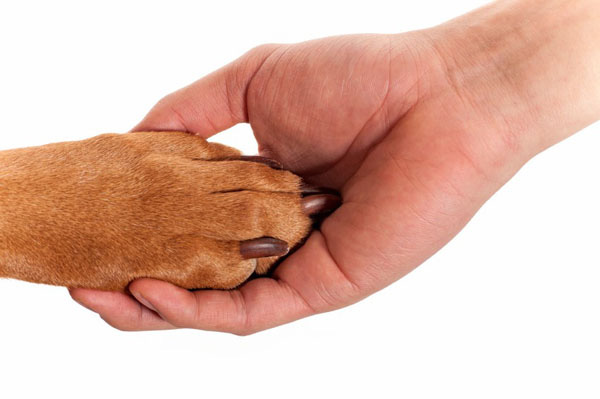
Usually, when clippers appear, your dog’s ears flatten against her head and she looks away. By the end of this tutorial, your dog will happily look and allow nail clippers to touch her paw.

Step One

Goal: Dog looks at nail clippers and gets treats.

  • Place nail clippers about three to four feet from your dog, and click and treat when she looks at them.
  • Practice five times in a row, then put clippers in a drawer and end training session.
  • Practice one or two more training sessions, rotating between front and back paws, with plenty of breaks in between.
  • When your dog will look at the nail clippers, it’s time to move forward.

VIDEO: Clipping Dog Nails – Touch the Nail Clippers

Step Two

Goal: Touch nail clippers to paw for a nanosecond.

  • Pick up and reach for your dog’s paw with nail trimmers. Practice five times and end session.
  • Pick up nail trimmers and place next to your dog’s nail just for a nanosecond. Click as trimmers touch your dog’s paw. If she moves her paw, place trimmers about one or two feet away and click/treat a few times.
  • Practice five times in a row, then put clippers in a drawer and end training session.
  • Practice one or two more training sessions, rotating between back and front paws, with plenty of breaks in between.
  • When your dog is comfortable with clippers touching her paw, move to the next step.

Step Three

Goal: Pretend to trim one nail with clippers.

  • Pick up your dog’s paw and place clippers against her nail. Click or say “yes,” as the clipper touches her nail. Release paw and put clippers down, then give her a treat.
  • Practice five times in a row, then put clippers in a drawer and end training session.
  • Practice one or two more training sessions, rotating between front and back paws, with plenty of breaks in between.
  • Once your dog is comfortable with you holding nail clippers against her nail for one second, slowly increase time to five seconds.

VIDEO: Clipping Dog Nails – Pretend to Trim a Nail

REVISIT:
Trimming Dog Nails: Reaching for Paw
Trimming Dog Nails: Restraining Your Dog’s Paw

Filed Under: Dogs, Health, Resources, Training Tagged With: clicker training nail trims, clipping dog nails tips, my dog hates nail trims, my dog hates the nail clippers, teaching nail trims, trimming dog nails

Trimming Dog Nails: Restraining Your Dog’s Paw (2 of 3)

March 19, 2015 by Fanna Easter

Restraining Your Dog’s Paw for Nail Trimming

Dog Nail TrimmingLet’s teach your dog that paw restraint is fun and pays with yummy treats! Plus, restraining your dog’s paw is an important part of nail trimming.

Step One

Goal: Wrap your hand around your dog’s paw for a split second.

  • Lightly wrap your hand around your dog’s paw just for a nanosecond and let go. Click as you’re wrapping your hand around your dog’s paw. Release and give him a treat.
  • If he moves his paw away, try wrapping two fingers around his paw. Click as you’re wrapping, release and give him a treat.
  • Practice five times in a row.
  • End session and take a break.
  • Practice during several training sessions over the next few days. Alternate between front and back paws.

If your dog pulls his paw away:

  • If this happens, release his paw and don’t click or give him a treat. We’re only clicking when he allows you to hold his paw.
  • When reaching for his paw, if he begins pulling his paw back and before you touch him, go back to this article.
  • Taking steps back is normal. Everyone needs to refresh so take the pressure off you and your dog. 🙂

VIDEO: Trimming Dog Nails – Teaching Paw Restraint (Holding Paw)

RELATED: Dog Nail Trimming Tools

Step Two

Goal: Hold your dog’s paw for one second.

  • Wrap your hand around your dog’s paw and lightly say “one Mississippi” and release. Click as you’re saying “Mississippi,” release and give your dog a treat.
  • If your dog tries to pull back his paw, hold his paw for a shorter time, such as when saying “one.” Click as you’re saying “one,” release and give him a treat.
  • Practice five times in a row.
  • End session and take a break.
  • Practice during several training sessions over the next few days. Alternate between front and back paws.

Step Three

Goal: Hold paw for longer periods of time. Try to teach for five to 10 seconds, which should be plenty of time to trim four nails, which comes later.

Following instructions in step two, slowly click when your dog allows longer periods of paw holding.

  • For two to three training sessions, hold paw for two seconds (one Mississippi, two Mississippi).
  • Continue adding one-second intervals during training sessions.

VIDEO: Trimming Dog Nails – Holding Paw Longer

READ ALSO: Why Dogs Dislike Nail Trimming

Filed Under: Dogs, Health, Resources, Training Tagged With: dog nail trims, my dog growls when I touch nails, my dog growls when touch paw, my dog hates paw touching, teaching paw restraint, trimming dog nails

  • « Previous Page
  • 1
  • …
  • 40
  • 41
  • 42
  • 43
  • 44
  • …
  • 60
  • Next Page »

About

Dog Training Nation is a community of dog trainers, dog owners and dog lovers. Our mission is to provide trainers and owners valuable information to enrich dogs' lives. We cover a range of topics, from socializing puppies to dealing with aggressive dog behavior to selecting the best dog products. It is our hope you share our content to make the dog and owner world a better place.

​

Facebook

Video

Dog Training Nation is a dog training blog for pet owners and dog lovers. We cover a range of topics from puppy socialization tips to dog aggression to dog health. It is our hope you share our content to make the world a better place for dogs.

Dog Training Nation

Quick Links

Dog Training
Dog Behavior
Dog Training Videos
Become a Dog Trainer
About
Contact Us

Copyright © 2026 · Lifestyle Pro Theme on Genesis Framework · WordPress · Log in