Dog Training Nation

In Dogs We Trust

  • Home
  • Training
    • Dogs
    • Puppies
    • Clients
  • Behavior
    • Breeds
  • Health
  • Safety
  • Resources
    • Equipment
    • Books
  • Dog Training Videos
  • About
You are here: Home / Archives for Equipment

How Muffin’s Halo Protects Blind Dogs

October 27, 2016 by Fanna Easter

Muffin’s Halo for Blind Dogs
Muffin's Halo for Blind Dogs

Several months ago, a couple consulted me about their blind dog. This case involved a younger dog that was slowly losing her eyesight, and she was bumping into furniture and walls inside her home. She had injured her muzzle several times running into a wall, and became terrified to move forward. Her pet owners felt completely helpless and wanted to improve her quality of life.

The pet owners and I agreed that moving furniture against walls would certainly help, but then I remembered something I saw a long time ago. Muffin’s Halo. They took my advice and ordered a halo for blind dogs. Soon after, their young dog regained her confidence and started happily running outdoors again.

If your dog is visually impaired, I’d certainly recommend giving this blind dog harness a try! Dogs acclimate to wearing the harness quickly and, with a bit of confidence-building games, your dog will regain her freedom again.

About Muffin’s Halo

Muffin’s Halo was created by a pet owner looking for a solution for her visually impaired dog. Muffin, the namesake for this wonderful tool, regained her confidence and was able to move through life free from stress and injury due to her new halo.

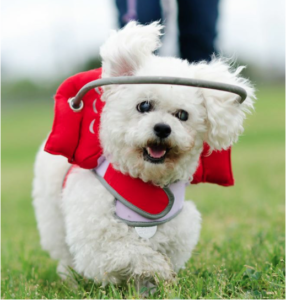
This halo for blind dogs has a lightweight ring that sits just above your dog’s head. It protrudes past your dog’s muzzle, protecting her face from bumping into walls or furniture. Not only will this ring prevent your dog from getting hurt, but it also slowly becomes a cue to navigate around an object.

Now, the ring attaches to a plush high collar that resembles angel or butterfly wings. The high collar and halo are attached to a comfortable harness that easily attaches to your dog. The harness doesn’t restrict your dog’s movement. Plus, it’s machine washable.

It’s important to securely fence off stairs and pools as a precaution. Also, move furniture against walls or provide a clutter-free walking path for your dog though each room. For the most part, small and medium dogs need at least a 3-foot wide clearance to walk through and turn around if needed. Larger dogs may need 4-5 feet, depending on their size.

Teaching Your Dog to Wear Muffin’s Halo

Dog BlindnessAnytime your dog wears a new collar or harness, it’s important to pair it with good things. You’ll need lots of super stinky and yummy dog treats that your dog absolutely loves!

  • Feed your dog treats while placing the blind dog harness onto your dog.
  • Keep rewarding your dog while she’s wearing the harness.
  • Reward her for every step she takes while wearing the harness.
  • Now, take it off and give her a break.

Continue to practice several times a day until she’s completely comfortable wearing Muffin’s Halo. Most dogs do amazingly well wearing a halo for blind dogs immediately, but it’s important to take a few extra steps to ensure she feels comfortable wearing it.

Confidence Building Game for Blind Dogs

Tap into your blind dog’s inner canine abilities—her nose! Dogs have an amazing sense of smell. They can detect cancer and low blood sugar using their noses. Once your dog is comfortable wearing her Muffin’s Halo, it’s time to teach her to walk while wearing it.

Play these games several times a day in the beginning. Going forward, these games are very useful in new environments, such as your backyard, a new home or hotel room.

To play this dog game, you’ll need several stinky treats cut into pea-sized bites and your dog with the blind dog halo on. I recommend bits of blue cheese, salmon treats or chopped hot dogs.

Step One: Follow the Treat

  • Hold 1 treat right next to your dog’s nose and give it to her.
  • Next, hold the treat about an inch from her nose, so she’s forced to take a step forward. As she walks forward, pop the treat in her mouth. Practice this a few times.
  • Now, hold a treat about 2 inches from her nose. Pop the treat in her mouth as she walks forward.
  • Continue playing this game until she quickly moves forward for a treat.

Step Two: Follow the Food Trail

  • In front of your dog, sprinkle treats 1-2 feet apart along a clear path.
  • Your dog may quickly walk along and gobble up the treats, which is fantastic! If she’s hesitant, verbally encourage her as she walks toward the sprinkled treats. The halo may touch the ground as your dog eats treats, but she’s learning that halo-bumping is harmless and rewarding.
  • If your dog’s halo bumps into furniture or walls, reward her as she’s stepping away from the object.

Keep practicing!!!

Learn More About Muffin’s Halo

Check out this video created by the inventor of Muffin’s Halo and her sweet Muffin! This product is made in the USA and available worldwide.

Do you have questions? I can answer them here!

Filed Under: Behavior, Equipment, Resources Tagged With: blind dog, blind dog scared to move, help for blind dog, muffin's halo, muffin's halo review, teach dog to wear muffin's halo, teaching blind dogs, tips for blind dogs

How To Create An Anxiety Wrap For Dogs At Home

October 12, 2016 by Fanna Easter

DIY Dog Anxiety Wraps

Dog Anxiety Wrap

Dog anxiety wraps are used to reduce a dog’s anxiety. Most pet owners use anxiety wraps when their dogs are afraid of thunderstorms, but anxiety wraps for dogs can also be used in many different situations. If your dog is continuously stressed, fearful or anxious or just needs help learning how to self settle, anxiety wraps are wonderful tools. Here’s how to create a DIY dog anxiety wrap.

Should You Use an Ace Bandage or Anxiety Jacket?

Back in the day, we used ace bandages as anxiety wraps because they were all we had. When applied correctly, anxiety wraps apply pressure to acupressure points, which promotes calmness. The best way to describe an anxiety wrap is a cozy hug. When newborn babies cry, they relax when swaddled in a blanket. Studies show anxiety wraps work well for autistic children too.

You’ve probably noticed Thundershirts and Calming Coats in most pet retailers. Both products are designed to mimic an ace bandage anxiety wrap. Anxiety jackets certainly look better than an ace bandage wrap, especially if your dog needs an anxiety wrap in public. But time and time again, I’ve found ace bandage anxiety wraps work a bit better than jackets. Plus, sizing isn’t an issue when you’re creating a custom wrap with an ace bandage. There are many anxiety wrap options, but the most popular is the half wrap for calming.

How to DIY Dog Anxiety Wrap

You’ll need a 2-inch wide ace bandage, which you can find at most drug stores. A 2-inch wide ace bandage is long enough for an anxiety half wrap. For dogs that weigh more than 100 lbs, you may need two 2-inch ace bandages for full coverage. If you need two ace bandages, you can extend the length by tying one end to another end.

Before wrapping your dog, you’ll need lots of super yummy treats, a helper and of course your ace bandage. In the past, I’ve used a peanut butter plate to keep my dog busy and still when a helper isn’t available.

While wrapping your dog, don’t pull or stretch the bandage when crossing and tying. An ace bandage wrap should give when your dog walks, sits or lies down.

  1. Start by placing the ace bandage on the front part of your dog’s neck.
  2. Bring both sides of the bandage toward the top of your dog’s shoulders and cross them (bring left side over the right side, etc.).
  3. Once you’ve crossed over your dog’s shoulders, bring both bandages under your dog’s chest and cross again (left side over right side, etc.).
  4. Bring both bandage ends up and tie on top of your dog’s waist. I recommend tying both ends on the side of your dog’s spine, but not directly on it.
  5. Anxiety wraps should stay in place for 20 minutes. Also, never leave your dog alone while wearing a DIY anxiety wrap. Remember it’s been tied into place, and can easily get caught onto something.

When to Use an Anxiety Wrap

You can use a DIY dog anxiety wrap anytime your dog needs one. You can certainly wrap your dog during stressful times, including car rides, vet visits (vet can move bandage around when examining your dog), guest visits and of course thunderstorms. Anxiety wraps work great when teaching young dogs how to self-settle too.

Anxiety wraps for dogs really do work! Grab an ace bandage and give it a try!

Filed Under: Behavior, Equipment, Resources Tagged With: ace bandage anxiety wrap, anxiety wrap, anxiety wrap instructions, anxiety wrap vs thunder shirt, bandage anxiety wrap, DIY anxiety wrap, DIY anxiety wrap for dogs, dog anxiety wrap, dog anxiety wrap pattern, half wrap anxiety wrap, how to do anxiety wrap dog, puppy anxiety wrap, wrap for stressed dogs

Leather Furniture And Dogs: How To Protect Your Furniture

October 5, 2016 by Fanna Easter

How to Make Leather Furniture and Dogs Work

Leather Furniture and Dogs
Lindsay_Helms/iStock

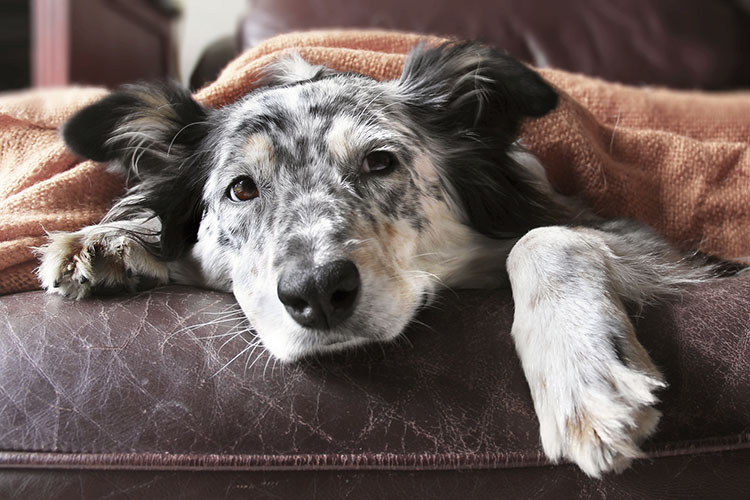
If you share your home with dogs, you’ve likely searched for and purchased dog-friendly furniture. Like most dog owners, we purchased leather chairs and sofas because they’re easy to clean and puncture-resistant. After a few months though, our leather furniture looked beat up, and I soon learned leather isn’t indestructible. Vinyl and leather furniture options are certainly dog-friendly, but you have to take good care of them for maximum benefits.

Leather Furniture Care

Use a Quality Leather Cleaner

Every 2-3 months, your leather furniture needs a thorough cleaning with a good quality leather cleaner. Leather is tough, but temperamental, so I suggest only using gentle leather cleaners. Everyday household cleaners, vinegar, baking soda and water are simply too harsh and can harm leather. Remember, leather is cow skin that’s been tanned and dyed, so harsh chemicals can cause discoloration and dryness.

RELATED: Dogs and Carpets: 4 Tips to Keep Carpets Clean With Dogs

Gentle leather cleaners will remove stains, slobber and grime, and the before-and-after difference is amazing. Before using leather cleaners, it’s best to vacuum your furniture to remove any dog hair first. Then, spray leather cleaner on a soft white towel and massage the cleaner onto your leather furniture. Over the years, I’ve found small circular motions work best.

Don’t forget to clean all cushion sides and the back of your furniture. I’ve used cleaning products made especially for leather sofas in the past, however, these products either left a sticky residue or streak marks behind. We’ve used Meguiar’s Gold Class Leather & Vinyl Cleaner for years. I swear it’s magic.

Condition Leather Furniture Regularly

After cleaning your leather furniture with a gentle leather cleaner, it’s time to moisturize. If leather is allowed to dry out, it will crack, flake, discolor and become susceptible to punctures. All leather furniture needs to be conditioned every 2-3 months, especially if your furniture sits in direct sunlight, gets regular use or is located in a dry climate.

For years, we’ve used Meguiar’s Gold Class Leather Conditioner and it works wonders! Honestly, it restores leather furniture back to its original condition; I’m shocked every time. We’ve tried leather cleaning and conditioning combos in the past, and they just didn’t condition leather thoroughly. Plus, they wouldn’t last as long. If I’m doing all of this work, it must last. 🙂

Using a clean soft white cloth, pour a tiny amount of leather conditioner on the cloth and start massaging onto the leather. Use small circular strokes, and don’t forget to condition the outer sides, sides of cushions and back of leather furniture. Now, stand back and admire your work. Your leather furniture will look and feel brand new.

UP NEXT: Protect Your Car Interior From Your Dog

Filed Under: Clients, Equipment, Resources, Training Tagged With: best way to clean leather furniture with dogs, dog training, Dog Training Tips, dogs and leather sofa, how to clean dog slobber off leather, how to clean leather furniture, how to train a dog

The Hidden Danger Behind Dog Collars

August 26, 2016 by Fanna Easter

Dog Strangulation By Collar is Real

Dog Strangulation By Collar
shrutebucks/iStock

We probably both agree that dogs should always wear their collars with a current ID tag, but wearing dog collars in certain situations can be hazardous. For years, I firmly believed dogs should always wear collars until one day when my dog’s ID tag got caught between the wires of his crate.

Now, understand, I didn’t leave him in his crate with a collar on. He chose to lie next to his crate when his ID tag became entangled within the wires of his crate. When it happened, he freaked out! Thank goodness we were home to hear his panicked screams and frantic sounds from pulling against his crate; he was choking himself. It took two people to free him from his collar; my husband and I had to cut the collar off of him. From that day forward, he never walked into that room again—ever.

RELATED: How to Get Your Puppy Used to a Collar

Dog Collar Accidents are More Common Than You Think

Freak accidents happen or so I thought. After this incident, I needed to find out if dogs strangled by collars was common or if they were just freak accidents. Well, we found out we weren’t alone.

It seems dog collars get caught in many things, and strangulation by collar has even caused some dogs to lose their lives. Dog collars getting caught or stuck happens so often that large pet retail companies created break-away collars to prevent this from happening. One thing I know for sure is large companies won’t spend thousands of dollars creating a new item unless it fills a buying niche. Their research was certainly alarming.

Please understand: I’m not saying your dog will strangle himself from wearing a collar; I’m saying it’s possible your dog can become strangled by his collar and taking a few steps to make sure it doesn’t happen to your dog is worth its weight in gold.

15% of My Clients Have Experienced Dog Strangulation by Collar

As a dog trainer, I speak with clients about their dogs every day and I’ve found dog strangulation by collar does happen. On average, I would say 15% of my clients had a similar incident with a dog collar getting caught on the wires of their dogs’ crate, fence, furniture, and even while playing with another dog.

Dog Accidentally Strangled By Collar During Playtime

The first time I heard of a dog being strangled by a collar, it was 20 years ago and happened while two dogs were playing together. Both dogs were wearing collars when one dog playfully pulled on the other dog’s collar. Her muzzle suddenly became tangled in the other dog’s collar. Well, the tangled dog panicked and started pulling away, which caused the other dog (the one wearing the tangled collar around his neck) to choke. His collar was strangling him. Thankfully, someone nearby had a pocket knife and cut the tangled collar, which freed both dogs. What a horrifying situation.

Strict Collar Removal Policies Set

Many pet-related businesses have strict rules on removing collars in certain situations. While working as a veterinary technician, it was mandatory to remove all collars from any patient kenneled—even during a hospital stay. Large retail grooming chains also have strict polices requiring dog collars to be removed before dogs are placed in their kennels. Their collars are then placed in a plastic sleeve outside of the dogs’ crates. While working in the pet grooming industry, I saw many grooming employees terminated when they failed to follow this policy. Needless to say there certainly is a trend in dog collar accidents.

When Should Dogs Wear Collars?

Dogs should wear a collar under supervision only. That means you should take your dog’s collar off whenever he’s crated, playing with another dog or left unsupervised in your home. It’s just not worth the risk.

If You Must, Use a Break-Away Collar

If you’re not comfortable with your dog running around naked (i.e. no collar), there are a couple of break-away collars on the market. Break-away collars look and feel just like regular flat buckle collars and feature a spot for ID tags too. The difference is break-away collars will unsnap and free your dog when it snags onto something.

Over the last 15 years, break-away collars have vastly improved. Back in the day, the break-away mechanism was super sensitive. If a dog sneezed while wearing this collar, his collar would unsnap. As of today, break-away collars are a great safety option. Most are versatile and have two D-rings that can be used during leash walks, which disables the break-away option. Once the leash is removed, the break-away collar option is in place.

Get Your Dog Microchipped

The main reason dogs wear a collar is to carry ID tags with their pet owners’ contact information. If our dog should become lost, we hope a good Samaritan will find our dog and contact us using the information on our dog’s ID tags. Collars and ID tags work, but it’s not a bulletproof option, so please microchip your dog. Collars can be taken off and ID tags can be lost, but a microchip is underneath your dog’s skin. It can’t be removed. I can’t say enough good things about microchips; they’re absolutely invaluable.

Have you had a scary dog collar accident? Please share your story below, so we can all learn together!

Filed Under: Equipment, Resources, Safety Tagged With: breakaway dog collars, can a dog collar be harmful, can collars hurt dogs, dog collar dangers, puppy collar dangers, should my dog wear a collar, should my puppy wear a collar, should your puppy always wear a collar

Can Dog Collars Cause Neck Injuries? Yes, They Can

August 24, 2016 by Fanna Easter

Prevent Dog Neck Injuries With the Right Equipment

Dog Neck Injury
Yurikr/iStock

Dog collars can cause neck injury. Dog neck injuries occur when dogs pull against their collars. While we assume this only happens to large dogs, it can happen to any dog regardless of size. If your dog pulls against his collar, it’s time to change up his equipment for walks around the neighborhood and visits to the vet’s office. The equipment I’m about to tell you should be used until your dog is taught how to walk politely on leash. 🙂

Why Dogs Pull Against Their Collars

Dogs pull against their collars because it works for them. Dogs will pull against restraints, such as tight collars, because these forward movements will inevitability move them and their pet owners to where they want to go. It sounds overly simplistic, but that’s why dogs pull. I see it happen every day. When a dog pulls his neck against a collar, both the pet owner and the dog move forward—or the pet owner’s arm will grow three inches longer—but something has to give.

Dog Neck Injuries are Common

It’s very common for dogs to experience a neck injury or throat damage from pulling their collars. When dogs pull against their collars, the front of their necks sustains the most amount of trauma. It’s important to understand that a dog’s trachea (windpipe) is located in the front part of his neck, which is why your dog chokes, gasps and coughs when he pulls against his collar. Other areas are affected too.

For example, a dog’s spine can easily be damaged from collar pressure, his delicate thyroid can be damaged because it sits right where a collar digs into a dog’s neck and his eye pressure can increase. Collar pressure can also cause glaucoma. A 2006 study conducted by a veterinary ophthalmologist “showed an increase in intra-ocular pressure (IOP) in dogs while pulling on a collar, confirming a correlation between glaucoma and collar stress” (Tremayne, 2006). In addition, a dog’s eye pressure can increase after just one collar-pulling incident. I mean when you think about it, all that forward pressure has to go somewhere.

RELATED: How to Get Your Puppy Used to a Collar

Best Collar for Dogs That Pull

Of course, I don’t recommend pinch or choke collars. Those types of dog collars are the main causes of neck injuries and throat damage. Somehow, pinch collar enthusiasts feel that pinch collars won’t choke a dog, but they think it’s OK for its metal spikes to dig into fleshy and fragile neck areas. I would rather base my dog training methods on facts by leading veterinary behaviorists instead of feelings.

Research shows that pinch collars do cause damage and dogs will pull against them too. Do know that flat buckle collars and Martingale collars can still cause dogs neck injury if the dogs are constantly pulling against them. If your dog pulls against his collar, regardless if he weighs 5 pounds or 150 pounds, stop this behavior before your dog gets hurt.

For strong-pulling dogs, I recommend a front clip harness. For this type of dog harness, you clip the leash in front of your dog’s chest and back. Yup, instead of putting all the force in one area of your dog’s body, this harness evenly distributes the force onto the front and back of your dog’s chest. Plus, you have more control over your dog’s forward movements because you’re controlling your dog’s body and not just his neck.

Dogs will pull against collars, it’s going to happen, so it’s important you have the right dog training equipment to keep your dog safe and prevent you from being pulled toward another dog or moving car. Plus, this harness is an excellent dog training tool to positively teach your dog how to walk politely on leash.

But What About Your Dog’s Collar?

Flat buckle collars should be worn for ID tags only. If your dog pulls, give a front clip harness a try. It’s a new piece of equipment that works amazingly and it keeps your dog’s neck injury-free.

Does your dog pull like a freight train?

YOU MAY ALSO LIKE: DIY Comfy Alternative to the Cone of Shame

Filed Under: Equipment, Resources, Safety Tagged With: can collars harm a dog's neck, dog choke collar injuries, dog neck injury from collar, dog pulling on collar eye damage, dog pulling on leash trachea, my dog pulls against his collar

  • « Previous Page
  • 1
  • …
  • 4
  • 5
  • 6
  • 7
  • 8
  • …
  • 19
  • Next Page »

About

Dog Training Nation is a community of dog trainers, dog owners and dog lovers. Our mission is to provide trainers and owners valuable information to enrich dogs' lives. We cover a range of topics, from socializing puppies to dealing with aggressive dog behavior to selecting the best dog products. It is our hope you share our content to make the dog and owner world a better place.

​

Facebook

Video

Dog Training Nation is a dog training blog for pet owners and dog lovers. We cover a range of topics from puppy socialization tips to dog aggression to dog health. It is our hope you share our content to make the world a better place for dogs.

Dog Training Nation

Quick Links

Dog Training
Dog Behavior
Dog Training Videos
Become a Dog Trainer
About
Contact Us

Copyright © 2026 · Lifestyle Pro Theme on Genesis Framework · WordPress · Log in