Dog Training Nation

In Dogs We Trust

  • Home
  • Training
    • Dogs
    • Puppies
    • Clients
  • Behavior
    • Breeds
  • Health
  • Safety
  • Resources
    • Equipment
    • Books
  • Dog Training Videos
  • About
You are here: Home / Archives for Grooming

How To Stop Bleeding After Trimming Your Dog’s Nails Too Short

November 21, 2017 by Fanna Easter

Using Styptic Powder to Stop Dog Nail Bleeding

Stop Dog Nail Bleeding
imfotograf/Adobe Stock

Sometimes, pet owners trim their dog’s nails a little too short, causing their dog’s nail to bleed. If your dog’s nail starts bleeding during a trim, don’t panic and grab the styptic powder to stop dog nail bleeding quickly. Here’s the easiest way to apply styptic powder to your dog’s nail.

Why Dog Nails Bleed When Trimmed Too Short

Dogs have a quick running along the center of each nail. The quick is basically the nail’s blood supply. When dogs’ nails grow longer, their blood supply grows too. When trimming dog nails, it’s very easy to nick or cut into the quick, which causes bleeding. Nicking a dog’s nail quick is very painful for your dog. If this happens often, your dog will eventually learn to dislike nail trims. When trimming dog nails, less is more.

What is Styptic Powder for Dogs?

Before trimming a dog’s nails, pet owners must always have styptic powder on hand. Styptic powder has anti-coagulant properties, which stops dog nail bleeding quickly. Since styptic powder can sting a bit during the application process, some styptic powder dog blends contain topical anesthetic to ease the sting. Most styptic powders also contain antiseptic properties to prevent infection.

For dogs, styptic powder is only used when a nail is trimmed too short. It should never be used on wounds, cuts or gashes. Additionally, it’s inhumane to purposefully trim a dog’s nail too short; it’s that painful.

How to Apply Styptic Powder

If you accidentally trim your dog’s nail too short, reach for the styptic powder immediately. Wet your fingertip with water, and then dip your wet fingertip into the styptic powder. Ensure your fingertip is thoroughly coated, and then place your styptic powder coated fingertip against the bleeding nail tip. Apply a bit of pressure by holding your finger in place for at least 10 seconds. If your dog moves around, provide a plate smeared with peanut butter or a food stuffed toy for your dog to enjoy while you apply pressure.

Sometimes, “quicked” nails are challenging and will continue to bleed. Continue to apply styptic powder until there’s no blood left on your fingertip. Then, give your dog something quiet to do, such as lick a food stuffed toy in her crate. After 10-20 minutes, bring your dog outdoors to ensure her nail has stopped bleeding. It’s best to keep your dog off white furniture and carpeting for a few hours.
WATCH: How To Apply Styptic Powder To A Dog’s Nail

Filed Under: Grooming Tagged With: dog behavior, dog grooming, dog grooming tips, dog nail quick, dog nail trimming, dog training, Dog Training Tips, how to put styptic powder to dog nails, how to teach a dog, how to train a dog, powder to stop bleeding, powder to stop bleeding for dogs, stop dog nail bleeding, styptic powder dog, teaching a dog, training a dog, trimmed dog nails too short, trimming dog nails

7 Dog Shedding Hacks To Keep Your Home Fur-Free

September 8, 2017 by Fanna Easter

Save Your Home With These Pet Hair Removal Tips

Pet Hair Remover
glisic_albina/Adobe Stock

Dog hair is everywhere! It’s part of sharing our homes with dogs, yet it drives most pet owners crazy. Stop dog shedding for good with these tried-and-true hacks that I’ve collected over the last 20 years as a dog trainer. Most are low cost, and some are even free!

1. Spray Carpet First

Dog hair loves to hide in carpet fibers, which becomes almost impossible to completely remove. About 20 years ago, an old-school dog show person told me about this trick. She shared her home with 10 Bouviers (100-lb. hairy dogs) and her home was immaculate. This is easily still one of my favorite dog shedding hacks because it works so well.

Dilute fabric softener with water, and then spray on carpet before vacuuming. Diluted fabric softener will loosen pet hair and prevent static cling to maximize the amount of dog hair your vacuum picks up. Plus, this diluted solution leaves carpet smelling fresh and feeling soft.

Mix 1 capful of fabric softener and 2 cups of water in a spray bottle. Lightly mist carpet and allow the carpet to dry before vacuuming. If you’re worried about spraying chemicals in your home, choose a chemical-free fabric softener, which you can find online or at most natural stores.

2. Use a Cover Sheet

When polled, most pet owners would love to share their beds with their dogs, but dislike having loose dog hair on their bedding. Give this old trick a try! Completely cover your comforter with a large, neural-colored flat bed sheet. Pull the sheet up to cover pillows, and ensure the flat sheet is large enough to cover your entire comforter for maximum protection. Some pet owners use neutral-colored fitted sheets when their dog wads up a flat sheet. Launder cover sheet weekly.

3. Vacuum Instead of Sweep

Sweeping will not remove all dog hair; it’s impossible. Instead, vacuum hard surfaces for maximum pet hair removal. Turn off your vacuum’s spinning brush to protect hardwood floors, and don’t forget to vacuum corners really well. Weekly vacuuming will prevent dog hair from floating around your home, and bi-weekly vacuuming will be needed during dog shedding season (spring and fall).

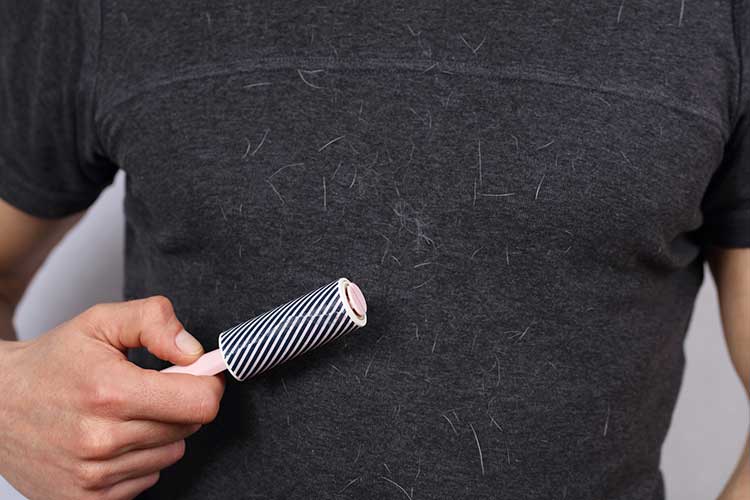
4. Remove Fur From Clothes

Super simple, environmentally friendly and free! Wet palms of your hand, then rub damp hands over hairy areas on your clothes. Just like using a lint brush, move hands in one direction, rinse off loose hair and continue until all hair is removed. Personally, I’ve used this trick after each private lesson client and when working as a vet tech. This dog shedding tip works wonderfully.

5. Change Your Air Filter Regularly

Everyone forgets to check their air filter until their AC repairman pulls out a fur-coated filter. Depending on your AC system’s needs, change monthly and choose HEPA filters if possible. Portable air filters keep dog dander and hair down to a minimum too.

6. Purchase a Car Seat Cover

Oh, cars can take a beating from dog hair. Cover your seats and flooring with car covers made for dogs. While it’s temping to cover car seats with old sheets, this type of thin fabric easily shifts when excited dogs pace around. Also, choose plastic floor covers to minimize vacuuming. They’re super easy to rinse after muddy car rides.

7. Brush Your Dog Daily

Hacks will keep dog hair off your furniture and car interior, but nothing stops dog shedding like brushing your dog daily. Throw loose hair away in your outdoor trash can to prevent hair from floating back into your home. Better yet, brush your dog in a shady part of your backyard. Birds use loose hair to build nests, and it prevents a hairy mess in your home. Choose the right deshedding tool for maximum hair removal.

Filed Under: Grooming Tagged With: dog, dog fur hacks, dog grooming tips, dog groomingd, dog hair shedding, dog shedding, dog shedding tips, dog training, Dog Training Tips, how to get rid of dog hair, how to stop dog shedding

How To Treat Dog Yeast Infections

July 31, 2017 by Fanna Easter

Dog Yeast Infection Treatment

Dog Yeast Infections
Willee Cole/Adobe Stock

Sharing my home with a Bull Terrier means chronic skin issues are always a concern. Over the last 10 years, I’ve tried different tips and learned new tricks to keep dog yeast infections at bay. Finally, a couple of years ago, I found several products that tackle persistent yeast infections in dogs quickly and effectively.

With that said, it takes a combination approach to tame persistent skin infections in dogs because there’s no magic product that works on its own. Check out these veterinarian-recommended canine skin products that really work.

Reminder: Sometimes, certain dog skin infections won’t respond to the use of only topical products and immune suppression medications may be needed. While I employ a holistic approach, I personally feel quality of time is much more important than quantity. I don’t believe a dog should suffer.

Is It a Yeast Infection?

Before diagnosing your dog’s skin condition yourself, it’s important to know exactly what you’re dealing with first. Schedule an appointment with your veterinarian for a thorough examination.

Most vets will scrape your dog’s skin and examine the cells under a microscope to confirm a diagnosis. So many times, yeast infections mimic bacterial infections, mange and other skin disorders, so a proper diagnosis is critical. Partner with your veterinarian for the best outcome.

Dog Yeast Infection Myths

Persistent skin infections are frustrating, especially when dogs lick and chew constantly, which causes open sores. Pet owners then seek advice from other pet owners either online or in person. While some DIY home remedies have worked for some dogs with yeast infection, they won’t work on all dogs. What works for one dog may not work for another dog.

For example, some pet owners recommend foot soaks or salves. However, these shouldn’t be recommended for dogs with open sores. It’s best to get your veterinarian’s consent first. Use common sense before you run to your nearest health food store and smear apple cider vinegar on your dog’s raw feet.

Diet is a hot topic when it comes to yeast infections in dogs. Some passionate pet owners recommend a raw or home-cooked diet, but neither is necessarily a magic pill. When skin infections pop up, it’s important to use a combination approach. 

Combination Approach

A combination approach means using topical solutions, feeding probiotics, providing a wholesome diet, feeding healthy treats and grooming your dog regularly. If one step is missed, yeast infections can pop up and persist.

Of course, a healthy diet is vital. Raw or homemade diets work really well, but it’s best to feed your dog a diet that works best for him. Adding supplements, such as fish oil, probiotics, herbs and hemp oil, can certainly boost your dog’s immune system while helping him battle a skin infection. Combating yeast infections from the inside is important, but it’s equally as important to tackle skin issues topically too.

My favorite topical yeast infection products for dogs are:

  • Douxo Seborrhea Shampoo
  • Douxo Seborrhea Spot-On
  • Douxo AntiSeptic Chlorhexidine + Climbazole Mousse

Bathing a dog with a prescribed shampoo works wonders, especially if a dog is allergic to outdoor allergens. Each product can be used together, so follow your vet’s directions exactly.

We’re tried multiple store-bought or veterinary-prescribed products and essential oils, and by far the Douxo line has worked really well. On average, it takes at least 1 to 2 weeks for a yeast infection to clear up completely. My dog will stop licking at her feet, so redness subsides. Some skin infections may take longer and may require oral medications, so choose what’s best for your dog.

Being persistent and partnering with your veterinarian is key.

Filed Under: Grooming, Health, Resources Tagged With: best products for yeast infection dog, bull terrier yeast infection, dog health, dog skin issue, dog yeast infection, dog yeast infection treatment, douxo review, yeast infection dogs, yeast infection in dogs

Best Chemical-Free Flea and Tick Prevention of 2017

July 21, 2017 by Fanna Easter

Recommended Flea and Tick Prevention Products

Flea and Tick Prevention
EvgeniiAnd/Adobe Stock

With a strong focus on chemical-free products for homes, it’s only natural that pet owners are seeking chemical-free flea and tick prevention options too. While many skeptics assume chemical-free options don’t work as well as chemical-laden pesticides, that’s simply not true.

Personally, I’ve found newer chemical-free pest control products work much better than their chemical-based counterparts and I’ve used both options before. Chemical-free flea protection works the quickest and lasts the longest. After years of testing flea control products in moderate and severe flea infestation areas—we live in the South—here are the best chemical-free indoor and outdoor flea products available in 2017.

Application is Key

The key to using chemical-free pest control products is to spray weekly for 4-6 weeks. While it’s tempting to focus on adult fleas because we see them, it’s important to know adult fleas are just the tip of the iceberg. Unhatched flea eggs account for 50% of a home’s flea population while the larvae and pupae stage account for an additional 45% of a flea’s life cycle (Understanding the Flea Life Cycle, 2017).

Plus, it takes 30-45 days for fleas to hatch from eggs into cocoon-spinning larvae, then pupae and finally into adult fleas. This is why natural flea and tick prevention applications, indoors and outdoors, are vital. Set frequent reminders on your smartphone. Most flea infestations return when pet owners forget to spray or skip a week.

Best Indoor Chemical-Free Pest Control Products

Over the last 20 years or so, I’ve tried dozens of chemical-free, organic and natural pest control products and many did not perform well. When searching for an effective product, look for one that repels or kills fleas and ticks within 24 hours and that lasts at least a week.

During heavy infestations, longevity may be shortened a bit with most lasting 4-5 days. Interestingly, chemical products (i.e. major name brands) took 2-3 days to become effective and only lasted 5 days during moderate to slight infestations. Hum, I found that extremely interesting.

By far, my new favorite indoor chemical-free pest control product is Wondercide Flea & Tick Indoor Home spray. Because cedar oil has an overwhelming scent, Wondercide added a bit of lemongrass essential oil into the mix for a lighter scent.

My other favorite is Vet’s Best Flea & Tick Home spray, which contains peppermint and clove oils. Oh, this one smells heavenly and works quickly!

While Wondercide products cost more than Vet’s Best, they seem to both work effectively. Vet’s Best is easily an excellent option for those on a budget. For best results, alternate between both products to help prevent pest control resistance.

WATCH: Indoor Chemical-Free Pest Control Products

Best Outdoor Chemical-Free Pest Control Products

Spraying outdoors weekly is so important. Fleas ride into your backyard on squirrels, feral cats and many other furry critters that creep around at night. For best results, mow the grass and then use a hose to spray flea and tick prevention. Really saturate shaded areas, sidewalks and patios. Rain won’t dilute the effectiveness of the chemical-free product, but instead help the natural product penetrate deep into packed dirt and mulch.

My new favorite outdoor chemical-free pest control products are Wondercide Flea & Tick Yard spray and Vet’s Best Flea & Tick Yard spray. Wondercide is a bit pricier than Vet’s Best, but it’s concentrated. You’ll need to purchase a hose attachment to dilute it during applications.

Vet’s Best is less expensive, has a hose attachment on the bottle, but goes really fast during outdoor application. Both products will repel mosquitoes too, so spray an hour before guests arrive, and you’ll enjoy an amazingly scented backyard without flying pests.

WATCH: Outdoor Chemical-Free Pest Control Products

You can’t go wrong with either chemical-free product! What natural products have you used that worked wonders at killing fleas and ticks?

Filed Under: Grooming, Health Tagged With: best chemical free flea products, cedar oil for fleas, chemical free flea product, flea and tick prevention, how to prevent fleas naturally, indoor fleas essential oils, indoor fleas natural, natural flea prevention, natural ways to kill fleas, outdoor essential oil fleas, vet's best flea review, wondered review

DIY Natural Flea Shampoo For Dogs

June 28, 2017 by Fanna Easter

How to Make a Flea Shampoo for Dogs

Flea Shampoo For Dogs
Jim Vallee/Adobe Stock

It’s that time of year when flea populations are exploding! While most Northern and Midwestern states are just now having issues with fleas, the Southern states have been battling them for months now. With fleas becoming immune to certain pesticides and a recent warm winter trend, it’s understandable why pet owners are reaching for heavy duty pesticides for their dog.

Put down that pesticide shampoo, and try this DIY flea shampoo for dogs instead! Mix essential oils with natural dog shampoo ingredients, and you have a luscious and moisturizing shampoo that will repel fleas and smell divine.

Choosing Dog Shampoo Ingredients

You’ll need Castile soap, water, a squeezable bottle and essential oils to make this amazing dog shampoo that actually repels fleas. Castile soap contains natural and biodegradable cleansers. It’s filled with rich moisturizers, such as coconut oil, olive oil and jojoba oil that can be safely used on dogs. In addition, it has different essential oils, such as lavender, almond or unscented for sensitive dogs. You can find this gentle soap online or in natural supermarkets.

Choosing an essential oil is extremely important, so always choose a therapeutic grade oil. For repelling fleas, Young Living Purification does an amazing job because it contains citronella, tea tree, lemongrass and rosemary. Stay away from essential oils containing chemicals, water and alcohol.

Homemade Flea Shampoo for Dogs Recipe

You’ll need:

  • 1 cup Castile soap
  • 2 cups water
  • 20 drops of Young Living Purification essential oil

Directions

  1. Add soap and water into a squeezable bottle, and gently swirl to combine ingredients.
  2. Slowly add 20 drops of Young Living Purification into shampoo mixture. Close and gently swirl bottle to evenly distribute oil into shampoo mixture.
  3. Keep shampoo mixture in a closed cabinet to preserve the essential oils.

Bathing Your Dog With the Flea Shampoo

Wet your dog thoroughly with warm water and add shampoo down your dog’s spine. Start lathering shampoo around your dog’s neck to prevent fleas from running to your dog’s face and hiding inside her ears. Continue to shampoo toward the back end of your dog, focusing under her tails, legs, paws and between each paw pad. Rinse thoroughly.

WATCH: DIY Natural Flea Shampoo For Dogs

Did you try this homemade flea shampoo for dogs? If so, what do you think? Please comment below!

Filed Under: Grooming, Health Tagged With: diy dog shampoo, diy flea shampoo for dogs, diy natural dog shampoo fleas, dog grooming, dog shampoo, flea bath for dogs, flea shampoo, flea shampoo for dogs, homemade dog shampoo, how to make dog flea shampoo, natural dog shampoo, natural flea dog shampoo

  • 1
  • 2
  • 3
  • …
  • 7
  • Next Page »

About

Dog Training Nation is a community of dog trainers, dog owners and dog lovers. Our mission is to provide trainers and owners valuable information to enrich dogs' lives. We cover a range of topics, from socializing puppies to dealing with aggressive dog behavior to selecting the best dog products. It is our hope you share our content to make the dog and owner world a better place.

​

Facebook

Video

Dog Training Nation is a dog training blog for pet owners and dog lovers. We cover a range of topics from puppy socialization tips to dog aggression to dog health. It is our hope you share our content to make the world a better place for dogs.

Dog Training Nation

Quick Links

Dog Training
Dog Behavior
Dog Training Videos
Become a Dog Trainer
About
Contact Us

Copyright © 2026 · Lifestyle Pro Theme on Genesis Framework · WordPress · Log in