Dog Training Nation

In Dogs We Trust

  • Home
  • Training
    • Dogs
    • Puppies
    • Clients
  • Behavior
    • Breeds
  • Health
  • Safety
  • Resources
    • Equipment
    • Books
  • Dog Training Videos
  • About
You are here: Home / Archives for Health

Why You Should Feed Your Dog Bone Broth

July 22, 2016 by Fanna Easter

Bone Broth for Dogs: Benefits & Recipe

Bone Broth for Dogs
Photosiber/iStock

News flash! Instead of squeezing every last drop of juice out of fruits and vegetables, trendy people are now slow-simmering bones for hours and sipping rich-flavored broths as a result. It’s the latest healthy diet craze, but here’s another news flash! Bone broth for dogs has been popular for years and here’s why.

Bone Broth Benefits for Dogs

Repairs Skin, Hair, Joints & Leaky Gut

Bones are packed with essential vitamins and minerals. When bones are cooked slowly, valuable nutrients are released into a tasty broth. What’s even more exciting is that bones are full of collagen, which is a protein found in connective tissues of animal bones that helps repair skin, hair, joints and leaky gut as well as make it easier to digest gelatin. Interestingly, some people swear collagen erases wrinkles too.

While dogs couldn’t care less about wrinkles—I think—bone broth for dogs can help soothe and repair a painful digestive system and repair joints for pets in need.

Supports and Repairs Joints

When my Rottweiler had surgery to repair his torn ACL, my veterinarian friend suggested feeding my dog bone broth every day to support and repair his joints. Now, both of my dogs thoroughly enjoy drinking bone broth daily, and surprisingly it really soothed my Rottie’s IBS tummy, meaning less gas and pain.

RELATED: Get Your Dog Checked for Vitamin D Deficiency

How to Make Bone Broth for Dogs

First, you need bones. You’ll need enough bones to cover the bottom of a slow cooker or pot. Fortunately, bones are pretty cheap at the grocery store. As for which types of bones to simmer, this is usually determined by availability.

If you’re struggling to find raw bones, check local Asian markets or raw dog food dealers who deliver in your area. For my bone broth recipes, I’ve used large beef marrow bones, chicken backs, chicken leg bones and even chicken feet.

Ingredients

  • Bones
  • Raw apple cider vinegar

Instructions

1. Layer the bottom of a slow cooker or pot with bones.

2. Fill pot with water. Water level should be a couple of inches above the bones.

3. Add ½ teaspoon of raw apple cider vinegar. Acid helps bones release valuable nutrients.

4. Simmer bones for at least 12 hours. I usually cook bones for 24 hours, and I use a slow cooker (crock pot).

5. After 12-24 hours, allow the bone broth to completely cool before straining out the bones.

Never feed your dog cooked bones. These bones can crack and splinter in your dog’s mouth, throat and intestinal track. I recommend throwing away all cooked bones.

6. Once you’ve strained the broth, pour it into canning jars and store in your refrigerator. Freeze excess bone broth in plastic containers. For more information, check out this bone broth recipe. It’s the one I use. 🙂

If You Don’t Have Time to Make Broth

In the beginning, I wasn’t convinced bone broth for dogs would make a difference in my dog’s health. Rather than making broth, I’d buy Honest Kitchen’s Bone Broth online. It’s a dehydrated bone broth that contains turmeric, pumpkin and parsley.

It’s super easy to make; just mix dehydrated powder into hot water and serve once it’s cooled down. Just a heads up, it can get expensive quickly for large dogs. A can of bone broth would cost us $14, and we used one can per week.

Don’t be fooled by grocery broths or stocks. These packaged broths contain onions or onion powder, which is deadly for your dog. Plus, packaged or cubed broth products contain chemicals, tons of salt and preservatives. Yuck!

RELATED: Can Dogs Eat Mushrooms?

Feeding Your Dog Bone Broth

Those who feed bone broth to their dogs regularly recommend ¼ cup per 25 pounds daily. You can pour it over your dog’s meals or serve it as an afternoon snack. One thing is for sure, your dog will love bone broth!

Filed Under: Health Tagged With: bone broth for dogs, bone broth puppies, bone broth recipe dogs, bone broth recipe puppy, bone broth slow cooker, homemade bone broth dogs, how to make bone broth dogs

How to Remove and Prevent Dog Paw Pad Calluses

July 7, 2016 by Fanna Easter

Dog Paw Pad Callus: Removal & Prevention Tips

Dog Paw Pad Callus
Wavetop/iStock

Not only is a dog paw pad callus unattractive, but it can cause pain too. Several years ago, Stella (our Bull Terrier) developed a large callus on her left front paw pad, which was attached to her middle toe pad. The rest of her paws were smooth and soft, so I was stumped. I had no idea how this happened.

I took a real close look at her nails and it appeared the middle nail was curving inward ever so slightly, causing a good-sized callus to form on the opposite side of her nail. By gosh, now that I had found the cause, it was time to remove the callus from her paw pad and prevent it from happening again.

What Causes Dog Paw Pad Calluses

Calluses form on the skin as a result of constant friction and use on hard surfaces. Calluses are different than cracked or cut paw pads. They look like a dry chunk of skin attached to your dog’s paw pad. When touching a paw callus, it feels rough, hard and firm. Some dogs develop calluses in certain areas from either walking differently or frequently walking on hard surfaces. Finding the cause of your dog’s paw pad callus is vital for prevention.

Of course, always start with a veterinary exam to rule out illnesses and other paw pad problems. Believe it or not, there are many illnesses and vitamin deficiencies that can cause dog paw pad calluses to develop, so put a plan together with your vet before moving forward. My vet agreed that Stella’s callus was due to abnormal wear of her middle toe, and explained how to remove it painlessly along with prevention tips.

RELATED: How to Protect Dog Paws From Heat

How to Remove a Callus From Dog Paw Pads

You’ll need lots of super yummy treats and a handheld pumice stone made to remove calluses. Pumice stones can be found at any supermarket in the cosmetic section. Similar to how you remove calluses during a pedicure, you’ll do the same for your dog.

  1. Soak your dog’s affected paw pad in a flat-bottom bowl of warm water for 5 minutes. If your dog won’t stand still, hold a peanut butter stuffed Kong in front of your dog’s mouth, so she can happily lick away.
  1. After 5 minutes of soaking, take your dog’s paw out of the water and pat dry with a clean and dry towel.
  1. Holding your dog’s paw in one hand, rub the pumice stone on top of the paw pad callus with your other hand. If your dog tries to pull or move away, have a friend hold a peanut butter stuffed toy for her to lick.
  1. At first, apply light-medium pressure on the callus with the pumice stone for a few seconds. Check the area; if the callus is wearing down, then continue for several more seconds. Removing a dog paw pad callus isn’t painful, but over-grinding the area can be, so move slowly and check often.
  1. Move the pumice stone around the callus until the area looks like a normal paw pad. For Stella’s paw pad callus, I had to move it all over the place because it was sitting on the outside of the paw pad.
  1. If your dog gets antsy, end the session and try again the following day.

Keep an eye on your dog’s paw pads and remove calluses if needed. Once the dog paw pad callus is gone, it’s time to prevent it from coming back.

Dog Paw Pad Callus Prevention Tips

Well, we all know Stella’s turned nail caused a callus to develop. That’s my fault, and I learned my lesson. Keep your dog’s nails trimmed short; nails shouldn’t touch the ground. You shouldn’t hear a sound when your dog walks on hard surfaces. Interestingly, I noticed another tiny callus forming where the bottom part of a nail touched her paw pad. Stella has small feet, but huge nails. We have to file the bottom of her nails to form a cylinder nail shape and prevent running and pinching of her pads.

It took several weeks to remove Stella’s callus from her paw pad and trim her nails to the right shape and length. We keep her callus soft by moisturizing her paws with either Paw Butter or good old Vaseline every day. If your dog continues to develop calluses, and they’re hard to remove, it’s time for another visit to your veterinarian. He can guide you to the next steps.

Keep your dog’s paw pads moisturized and nails short. Good luck!

Filed Under: Grooming, Health Tagged With: callous on dog paw, dog paw pad problem, dry skin on dog paw, hard spot on dog paw, my dog's paws are dry, remove callous dog paw, tips to remove callous dog paw

Dog Food Allergies: Give This Test A Try

July 6, 2016 by Fanna Easter

How to Test for Dog Food Allergies

NutriScan Food Sensitivity and Intolerance Test for Cats and Dogs

Dog Food Allergies
Natee127/iStock

Dog food allergies are a hot topic and a multi-million dollar industry. Dealing with food allergies is frustrating for both dogs and their pet owners. Thankfully, we have numerous limited ingredient diets lined up at our local pet supply store. However, when first encountering a dog food allergy, where do you start? Does your dog really have a food allergy? It’s time to find answers. Check out these dog health tips that helped my dogs immensely!

RELATED: Hypoallergenic Dogs Don’t Exist

Start With Your Vet

As with any pet health issue, always start by having your veterinarian examine your dog thoroughly. So many times, pet owners assume their dog has a food allergy when it’s usually an allergic reaction to outdoor allergens, fleas and ticks.

Before your vet appointment, write down any issues that may have caused your dog to scratch, chew or rub at her skin, and bring this journal to your veterinary appointment. Note dog food allergy symptoms, such as:

  • Does your dog immediately start itching right after walking through grass? After playing at the dog park?
  • When was the last time you applied pest control medication, and what type?
  • Did your dog start itching after ingesting a certain treat. If so, how soon afterwards?
  • What are the ingredients in your dog’s food and treats (take a pic of the dog food ingredient list)?
  • When are your dog’s allergies the worst? Spring, summer, fall or winter?

All of these questions and answers will certainly help your vet during his diagnosis. If your vet suspects food allergies, a simple test will be conducted.

Complete the NutriScan Dog Food Allergy Test

If your vet is having a difficult time narrowing down the cause of your dog’s itching, ask him to complete a food allergy test on your dog.

NutriScan Food Sensitivity and Intolerance Test for Cats and Dogs is available online or through your vet’s office. We recently completed this dog food allergy test for both of our pets, and I was pretty much spot on about their food allergies. Yet, there were a few surprises as well.

Your dog needs to fast overnight before the test, but she can have water the day of the test. A NutriScan test requires a lot of your dog’s saliva, which is collected by putting a long cotton rope in between your dog’s cheek and teeth. Once the cotton rope is saturated with saliva, place it in a plastic tube and mail for results. Test results took about 2-3 weeks, and were either faxed or emailed to my vet.

The NutriScan dog food allergy test will check if your dog is allergic to common and not so common proteins, such as beef, chicken, rabbit, white fish, salmon, milk products, peanut butter and so forth. It also checks for allergies to certain grains, such as corn, wheat, rice, lentils and several other grains. Afterwards, you’ll receive a written report listing your dog’s food allergies, weak allergic reactions and non-reactive responses.

If price is an issue, I suggest ordering this test online and doing it yourself. Our vet’s office charges an extra $100 to complete the test. If you complete this test on your own and receive the results, I advise printing a copy of the results for your dog’s veterinary record. Your vet needs to be aware too!

RELATED: Can I Feed My Dog Eggs?

Choose a Food for Dogs With Allergies

If your dog has reacted to several foods tested by NutriScan, bring this list with you while shopping for a new dog food. As mentioned before, with so many limited ingredient diets, choose a protein and carbohydrate dog food that your dog is not allergic to. Flip the bag over and review the ingredient list. Sometimes, other ingredients are listed further down the list, which can cause your dog’s allergies to flare up. Don’t forget to read the ingredient list for all of your dog’s treats as well. Even at small amounts, an allergen can cause your dog to react.

Persistence is key, and I hope a NutriScan test provides you with valuable information quickly. It surely helped us. Good luck!

Filed Under: Health, Resources Tagged With: best dry food for dog food allergies, best food for dog with allergies, dog allergies, dog food allergies, dog food allergy tips, dog food skin allergies, help for dog food allergies, my dog is allergic, my dog is allergic to beef, my dog is allergic to wheat, nutriscan dog allergy review

Summertime Dog Food Recipes for Interactive Toys

July 5, 2016 by Fanna Easter

Homemade Dog Food Recipes: Summer Edition

Homemade Dog Food Recipes
margouillatphotos/iStock

Are you looking for fresh and healthy dog food recipes to stuff in interactive toys? I’ve been experimenting lately, and I found a few cool recipes your dogs will love—just in time for summer. These frozen dog treats will taste fabulous, as they include fresh ingredients. In addition, stuffing these recipes into your favorite interactive dog toy will provide your dog much-needed mental enrichment.

Summer Dog Food Recipes

Sweet Potatoes, Molasses & Pears

Start with oven-roasted sweet potatoes, fresh pears, blackstrap molasses and your dog’s favorite interactive toy. No one likes to eat raw sweet potatoes, so peel and dice sweet potatoes into one-inch chunks. Cook them in the oven at 350 degrees until each chunk is completely soft in the center. Chop fresh pears into thick-cut French fry slivers and set aside.

Now, toss a few sweet potato chunks into the bottom of your dog’s toy. This will prevent other ingredients from leaking out. If your dog solves food puzzles quickly, smash the sweet potato inside the toy with your finger, which will make the food puzzle last a bit longer. Once the potatoes are in, drizzle blackstrap molasses over the potatoes; use it sparingly or it’ll leak out of the bottom. For the final layer, shove two to three slivers of pear inside the toy, so that pear ends stick out for easy snacking. Pop into your freezer overnight and voila—a healthy frozen dog treat!

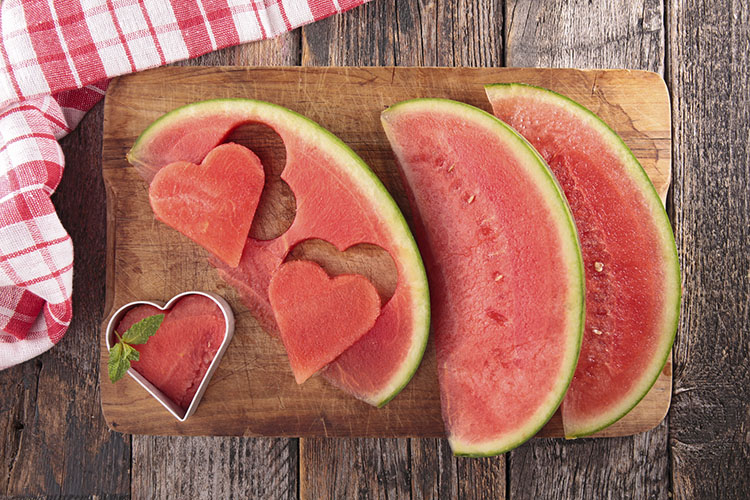
Watermelon & Honey

At the grocery store, grab a container of rindless, seedless watermelon that’s been cut into large chunks and a bottle of honey. When selecting honey, I choose locally grown raw honey that’s in a squeezable bottle. It’ll make filling dog toys much easier.

Once home, gather your dog’s interactive toys and start filling with watermelon chunks. If your dog solves puzzles quickly, smash the watermelon inside the toy. Smashed watermelon will leak, so plug holes with peanut butter (it’s an excellent edible glue). Once all toys are filled with watermelon, drizzle honey on top.

To make this dog food puzzle even harder to empty, layer smashed watermelon, honey and smashed watermelon until the toy is filled. Freeze overnight, and give as treats throughout the day. Make sure your dog has plenty of potty breaks. Your dog will need to potty about 30 minutes after eating a watermelon stuffed toy. 🙂

RELATED: What Human Foods are Bad for Dogs?

Yogurt, Oatmeal & Blueberries

For this recipe, I recommend using plain low-fat yogurt, cooked oatmeal and fresh blueberries. This is a layered food stuffed toy recipe, which means you can creatively layer many different ways. I recommend placing yogurt at the bottom of the dog toy because you can easily clean up any residue left behind. For my dogs, I start with yogurt as the first layer, add a few blueberries for the second layer and add cooked oatmeal for the final layer with blueberries on top. If your dog’s unable to digest dairy, substitute with smashed bananas or canned pumpkin. Freeze overnight and serve as needed.

Fresh food is healthy for dogs, and you’ll notice it’s low in fat too. For dogs watching their waistlines, simply add less food in each toy. Happy summer!

Filed Under: Games, Health, Resources Tagged With: interactive toy recipes, kong recipes, new ideas for dog kong, safe food for interactive dog toys, safe food to put in a kong, summer recipes for dog toys

Inflammatory Bowel Syndrome In Dogs

June 29, 2016 by Fanna Easter

Cure for Inflammatory Bowel Syndrome in Dogs

Irritable Bowel Syndrome in Dogs
Lindsay_Helms/iStock

Inflammatory bowel syndrome (IBS) is a frustrating syndrome. Pet owners with dogs suffering from IBS or inflammatory bowel disease (IBD) are always reading ingredient labels like a detective, scouring the world for something that will relieve their dog’s pain, and trying to figure out how to get medication into their dog successfully without feeling like they’re paying their vet’s car payment.

Worse yet, when you explain to friends, relatives, pet sitters, vets or strangers that your dog has a very sensitive stomach, they perceive you as unhinged. I know that “it can’t be that bad” look very well. If only they knew what you go through every single day; that’s the disadvantage of an invisible symptom and disease. With that said, I finally found a holistic veterinarian in my area to address my Rottweiler’s IBS. Eastern medicine can successfully balance out Western medicine. She suggested a natural supplement that has worked wonders!

Inflammatory Bowel Syndrome Cure

Repair & Strengthen Supplement

During our first holistic vet visit, I explained all the usual symptoms of Sobek’s IBS (I’ll skip the details, as I’m sure you’re aware of them). His worst symptoms of IBS were the whining and pain that would occur a couple of hours after he ate. The pain he felt would last for hours. Our new holistic vet recommended a powdered product that would help heal his stomach and small intestines. As I’m always willing to try new things, I went for it.

Our vet not only described each ingredient, but also explained how each one works very carefully, which was much appreciated. Repair & Strengthen formula contains cold-processed whey protein isolated from grass-fed cows (filtered to remove lactose, carbs and fat), true 6-hour colostrum and organic freeze-dried aloe vera (Aloe barbadensis). The IBS natural cure is free of aloin and anthraquinone. Plus, there are no “other” ingredients, which is wonderful!

RELATED: Get Your Dog Checked for Vitamin D Deficiency

Ingredients

Cold-processed whey protein is loaded with protein and amino acids, and it’s found in the watery stuff from milk. Now, I understood the benefits of aloe vera and colostrum, but I was worried about the whey protein. However, our vet said she’s had great success with difficult to treat IBD and IBS patients in the past. So, we tried it.

Colostrum is produced in mammals within the first couple of days. Colostrum milk is packed with immunity fighting antibodies that all babies need. 6-hour colostrum means it was collected within six hours of the mother cow giving birth, and contains higher levels of beneficial proteins, fats and carbs than if it had been collected 12 hours later.

Aloe vera is known to smooth inflammation and has been documented to heal stomach ulcers (Haris, nd). One side effect of ingesting too much aloe vera is diarrhea, which is caused by anthraquinone, but anthraquinone has been removed from this supplement (Haris, nd).

Must Be Taken on an Empty Stomach

Repair & Strengthen supplement must be taken on an empty stomach because it’s absorbed in the duodenum, which is the first part of the small intestine. Each morning, we make a paste with the powder and water, and our picky dog licks away at it. Our vet says it tastes like milk. Then, we wait 30 minutes before feeding him—that’s the hard part. 🙂 During the first couple of days, Sobek would fall asleep about 10 minutes after taking the supplement, which was totally unusual. In the mornings, he’d be hungry and pester everyone until he was fed.

Results

It’s been a couple of weeks since we started Sobek on this dog supplement, and he’s doing amazing! No more episodes of abdominal pain, frequent gas or rumbling tummy. He’s also gaining weight, which has always been a struggle. His thighs are filling out with muscle and his coat is now soft and shiny. His stools are completely normal, and he no longer whines, paces, or moves in and out of prayer position. Wahoo!

It’s Worth a Try

Now, I’m not saying this product is a miracle, but it sure has helped my dog tremendously. You know your dog well. If your dog has reacted to whey protein, then maybe you need to discuss this with your holistic vet first. If your dog is diagnosed with IBS or IBD, or you even suspect it, then I would give this dog supplement a try.

Good luck, and let me know your thoughts!

Filed Under: Health, Resources Tagged With: help for ibd dogs, help for ibs dogs, ibd dogs, ibs dogs, natural tips for ibd dogs, natural tips for ibs dogs, restore and strengthen supplement, restore and strengthen supplement dogs review, supplements for ibd dogs, supplements for ibs dogs

  • « Previous Page
  • 1
  • …
  • 13
  • 14
  • 15
  • 16
  • 17
  • …
  • 40
  • Next Page »

About

Dog Training Nation is a community of dog trainers, dog owners and dog lovers. Our mission is to provide trainers and owners valuable information to enrich dogs' lives. We cover a range of topics, from socializing puppies to dealing with aggressive dog behavior to selecting the best dog products. It is our hope you share our content to make the dog and owner world a better place.

​

Facebook

Video

Dog Training Nation is a dog training blog for pet owners and dog lovers. We cover a range of topics from puppy socialization tips to dog aggression to dog health. It is our hope you share our content to make the world a better place for dogs.

Dog Training Nation

Quick Links

Dog Training
Dog Behavior
Dog Training Videos
Become a Dog Trainer
About
Contact Us

Copyright © 2026 · Lifestyle Pro Theme on Genesis Framework · WordPress · Log in