Dog Training Nation

In Dogs We Trust

  • Home
  • Training
    • Dogs
    • Puppies
    • Clients
  • Behavior
    • Breeds
  • Health
  • Safety
  • Resources
    • Equipment
    • Books
  • Dog Training Videos
  • About
You are here: Home / Archives for Health

How To Use Essential Oils For Dogs

May 16, 2017 by Fanna Easter

Using Essential Oils For Dogs

Essential Oils For Dogs
Africa Studio/Adobe Stock

With the sudden surge of popularity, calming essential oils for dogs are popping up everywhere. As pet owners, we understand how to use essential oils for our personal use, but how should we use essential oils for dogs?

Purchase an Oil Diffuser

Diffusing is the best way to introduce an essential oil to a dog. Before diffusing, it’s vital to choose an essential oil that is lab-tested for purity. That is, it contains no harsh chemicals, water or alcohol.

Next, choose a diffuser that successfully circulates essential oils throughout a large room. The diffuser you choose should be made by a reputable essential oil company because many off-brands don’t work well. Now, place your oil diffuser in a large room on top of a shelf or countertop.

When introducing essential oils to dogs, start slow and never use a diffuser in a closed up room. Dogs have an amazing sense of smell, so essential oils can become overwhelming for them. Make sure your dog is able to leave the diffused room if needed.

Fill the diffuser with water, add two drops of an essential oil and plug in. Use 1-2 drops of lavender in the beginning and watch your dog’s reaction. Usually, most dogs will stay far away from the diffuser, but eventually choose to creep closer and closer.

Be a Diffuser

Dab 1-2 drops of lavender oil on your wrists or hands and be a walking oil diffuser for your dog. Be a diffuser during car rides, vet visits, walks, or visits with friends and their dogs. At night, I dab a drop of lavender on my neck for a restful night’s sleep. Usually, about an hour or two later, I notice both dogs snuggling up around my neck. Dab oils on you instead of your dog. 🙂

Few More Tips

Refrain from applying concentrated oils directly onto your dog’s skin. It’s hard for your dog to get away from a strong smell when it’s on his body. Be careful when diffusing strong scented essential oils, such as peppermint, lemon and cinnamon. They can become overpowering quickly. Last, speak with your veterinarian before adding essential oils to your dog’s food or water. 

Be considerate and diffuse oils for your dog. 🙂

WATCH: Using Essential Oils for Dogs

Filed Under: Health, Resources Tagged With: calming essential oils, dogs and essential oils, essential oil diffuser, essential oil dogs, essential oil for dogs, essential oil puppies, how to use essential oils around dogs, oil diffuser, use essential oils for dogs

Calming Essential Oils For Dog Anxiety

May 15, 2017 by Fanna Easter

Calming Essential Oils

Calming Essential Oils
Rawf8/Adobe Stock

For thousands of years, we’ve used essential oils to ward off illnesses, repel insects and calm anxious minds. Now, calming essential oils are becoming popular within the dog world as pet owners seek out ways to help their anxious dogs. Learn which essential oils calm dogs plus how and when to use them.

Do Calming Oils Really Work?

Two decades ago, I attended a dog training conference where I sat in on a two-hour seminar discussing alternative therapies on a whim. While I was skeptical entering the packed conference room, my attitude quickly changed when I watched these modalities work their wonders.

I specifically remember the speaker, a noted integrative veterinarian, spraying lavender oil into the air to calm 250 attendees. It seemed a bit hipster at the moment, but the lavender silenced hundreds of dog trainers within seconds (seriously, that’s a miracle!). Hmm, I thought maybe essential oils did work!

Fast-forward two decades, and essential oils for dogs are still extremely popular today. I recently attended a two-day essential oil seminar with veterinary professionals, and it’s nice to see science catching up and showing promising results within humans and dogs alike.

As for the effectiveness of essential oils for calming animals, lavender is showing great results. In a study on Effect(s) of Lavender Aromatherapy on Acute-Stressed Horses, they found that lavender aromatherapy can significantly decrease heart rate after an acute stress response. Additionally, it can signal a shift from the sympathetic nervous control from the parasympathetic system. If lavender calms horses, then it can surely calm acute or chronically stressed dogs too!

Choosing a Calming Essential Oil for Dogs

High quality calming essential oils don’t contain water or alcohol. Choose 100% therapeutic blends that are lab-tested independently for quality. My favorite single or oil blends are: Young Living Lavender Peace & Calm and Stress Away. While Peace & Calm and Stress Away are blended oils, meaning several oils are combined for a specific purpose, lavender is included in both blended options.

When and How to Use Calming Oils

Use calming essential oils sooner rather than later. Diffuse calming oils in the background to start the day off on a stress-free and positive note. Diffuse a calming oil every day for two weeks, and note the difference in your anxious dog. You’ll likely notice you’re in a better mood, and diffusing calming oils at night will help you unwind too.

A typical diffuser will emit calming essential oils into the air for two to three hours, so place it in a large room for best results. Never crate or secure a dog in a small room with a diffuser brewing nearby. Dogs must have the option to leave a diffused room if they like.

Also, it’s best to diffuse oils into the air instead of applying oils directly onto a dog. Dogs have a powerful sense of smell and applying essential oils to your dog may be too strong for him. Dab a drop of lavender on your neck before bedtime (you become a diffuser), and everyone in the room (including your dog) will sleep much better.

WATCH: Calming Oils For Anxious Dogs

Filed Under: Health, Resources Tagged With: best essential oils for dogs, best essential oils for puppies, best oils for dogs, calming oils for stressed dogs, how to choose an oil for dogs, lavender oil for dogs, oils for anxious dogs, oils for fearful dogs, oils for scared dogs, young living oils for dogs

Should You Vaccinate Your Puppy?

April 28, 2017 by Fanna Easter

What You Need to Know About Puppy Vaccinations

Puppy Vaccinations
Ivonne Wierink/Adobe Stock

Puppy vaccinations is an extremely controversial topic lately. Many pet owners are choosing not to vaccinate their dogs due to the side effects from over vaccination. Vaccinating your puppy does prevent disease, but over vaccinating can cause disease, so what should a pet owner do? Before listening to opinions and personal experiences only, it’s important to understand the facts about dog vaccines.

Dr. Ronald Schultz, PhD, Diplomate ACVIM American College of Veterinary Internal Medicine has been at the forefront of dog vaccination research. He played a pivotal role in determining 2011 recommended vaccinations for puppies and dogs. As research on pet vaccinations continue, one thing is for sure and that’s all dogs should be titer tested yearly.

What Do Puppy Vaccinations Do?

Similar to children, puppies must be vaccinated. Numerous puppies die from parvovirus every year. Yet, it could be prevented with perfectly timed puppy booster shots. Aside from parvovirus, puppy vaccinations also prevent:

  • Distemper
  • Adenovirus
  • Rabies

Before, puppies were given a combination vaccination, which is one vaccine that prevents multiple viruses. Now, it’s recommended to give a single virus vaccination and wait at least 3 weeks in between other vaccinations.

Which Puppy Vaccinations Are Absolutely Necessary?

It depends. Immunology is complicated, and one vaccination protocol won’t work for all puppies. There are many factors to consider, such as a puppy’s breed, genetics and environment.

Certain breeds of puppies are more susceptible to parvovirus than others, so their vaccination protocols will be different. Additionally, puppies living in shelters will need a different vaccination protocol than a low-risk puppy living in a home.

To learn more about which vaccinations your puppy should receive, visit American Animal Hospital Association’s 2011 recommended vaccination protocol. For an easier read, check out Dr. Becker’s outline as well as interviews with Dr. Ronald Schultz.

Adult Dog Vaccinations & Yearly Booster Shots

All puppies need a series of vaccinations to prevent disease, but the controversial question is: “Do adult dogs need yearly vaccinations?” Again, it depends. The best way to know if your dog needs an annual booster shot is through a yearly titer test.

[perfectpullquote align=”right” cite=”” link=”” color=”” class=”” size=””]Never assume a dog is immune.[/perfectpullquote]

During a dog’s annual checkup, a veterinarian takes a blood sample and sends it to a laboratory to check immunology for distemper and parvo. If a dog’s immunity is low for a specific virus, a booster is highly recommended. If a dog has sufficient immunity, then no vaccinations are needed.

RELATED: 6 Reasons Why Dogs Need Veterinary Preventive Care

My Experience

Never assume a dog is immune because you never know. Over a 17-year period, I’ve titer tested all my dogs for distemper and parvo and each one had sufficient immunity except my Miniature Bull Terrier. She needed a parvo booster when she was 3 and 5 years old because she had no immunity. That’s 1 out of 6 dogs with no immunity that shared the same household and environment as my other dogs.

Additionally, a very good friend of mine lost her 2-year-old Rottweiler to parvo due to lack of immunity. Her littermates were tested immediately, and 5 out of a litter of 7 had zero immunity to parvo. Annual titer tests are a must. Even better would be to titer test a dog after a booster shot for several weeks to confirm immunity.

Rabies Vaccinations

Since humans can contract rabies, state and county laws control rabies vaccination protocols. Each state and county has its own regulations based on the severity of rabies cases in the area. Many small mammals, such as raccoons, can pass along this deadly disease.

As of 2017, many states and counties recommend 3-year rabies vaccinations while some still recommend yearly boosters. Regardless of over vaccination concerns, state and county laws are strict on rabies vaccinations and can confiscate an unvaccinated dog.

Research shows dogs have immunity against rabies long after three years from their first rabies vaccination. With the said, research is still being conducted. Soon, rabies titer testing will become an acceptable from of immunity proof.

Partner With Your Veterinarian

Remember, your veterinarian wants what is best for your dog. During your puppy’s first vet visit, express your concerns and ask for single virus vaccination using the 2017 AAHA vaccination protocols. As for rabies, your vet will know the laws for your state and county as well as any epidemics within your area.

For yearly puppy vaccinations, request titer tests for both distemper and parvovirus. If your dog falls below the normal range, complete a booster and re-titer test to ensure your dog has sufficient immunity. Vaccinations do work, but be your dog’s advocate too!

Filed Under: Health, Puppies, Training Tagged With: dog vaccinations, giving puppy shots, puppy vaccinations, recommended vaccinations dogs, recommended vaccinations puppy, should you vaccinate your dog

Should You Feed Your Dog Grain-Free Dog Food?

April 24, 2017 by Fanna Easter

Grain-Free Dog Food May Not Be Worth It

Grain-Free Dog Food
creativefamily/Adobe Stock

Marketing is powerful, as it shapes a pet owner’s perception of consumables. Its sole purpose is to convince someone why he should purchase a product. Large companies spend billions of dollars studying human purchasing behavior, then use this data to shape pet owner purchasing habits.

From the packaging color to the placement of the item in the store to the music played—every detail is strategically reviewed to keep customers in stores longer, so they purchase more items.

With that said, dog food companies have certainly shaped pet owner purchasing habits over the last 20 years. One large dog food company successfully convinced pet owners that rice is a highly desirable grain because it’s digestible, which promotes smaller stools. Now, the pendulum has swung the other way. The new popular dog food is grain-free dog food. Have dogs’ digestive systems changed or is it marketing?

Dog Food Allergens

Food allergies are not very common in dogs regardless of what dog food companies or pet store associates are saying. It’s important to know that both flea allergies and environmental allergies are MUCH more common in pets than food allergies. However, flea, environmental and food allergies can all have similar symptoms (What every pet owner should know about food allergies, 2007). This is powerful information.

It’s extremely difficult to detect and diagnose food allergies in dogs too. To determine if your dog is allergic to a particular type of food, you’d have to put her on an elimination diet. But let’s face it: A true elimination diet is extremely difficult to follow for several months. Many factors can come into play during a several-month food elimination diet.

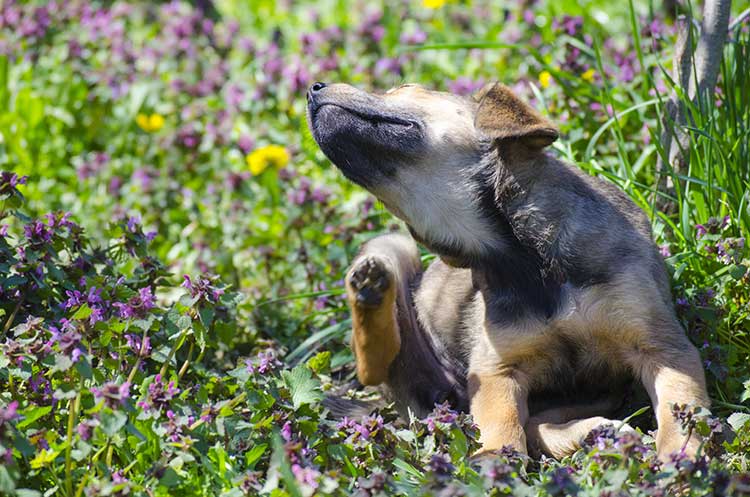
For example, a dog’s reaction to outdoor allergens may clear up due to a change in season or drop in pollen. While tiny, these changes may provide a false negative during a food trail. It’s confusing and frustrating, especially when a dog has chewed and scratched herself bloody.

What Should a Pet Owner Do?

Food matters, but it’s not a cure-all. To conquer chronic allergies, it’s best to use a combination or holistic (treating the whole dog) approach. Partner with your veterinarian to discuss a true elimination diet, but tackle environmental allergies too.

Bathe your dog weekly with a gentle or medicated dog shampoo to remove pollen. Remember, flea bites cause the same symptoms as dog food allergies, so tackle this aspect too. Given the warm winters over the last few years, fleas are rampant now and have become immune to certain pesticides. Spray your yard weekly, for at least three weeks, and discuss flea prevention with your vet. For a natural approach, cedar oil works great.

Choose a dog food that works best for your dog. Some dogs do extremely well on grain-free dog foods, which is a huge plus. Then, there are some dogs that don’t, so it’s important to find a food that your dog thrives on. By far, a balanced raw or cooked diet works best and many varieties contain whole grains, such as oatmeal.

Beware of marketing, and choose what works best for your dog!

Filed Under: Health Tagged With: does grain free dog food work, grain free dog food, grain free dog food a fad, grain free dog food for allergies, grain free puppy food, is grain free dog food better for dogs, is grain free puppy food better for puppies, should I feed grain free dog food

8 Super Quick Dog Recipes For Kongs

April 21, 2017 by Fanna Easter

Kong Stuffing Ideas Your Dog Will Love

Kong Stuffing Ideas
spiritofamerica/Adobe Stock

In a perfect world, our freezers would be filled with an endless supply of frozen food stuffed toys for our dogs. But in the real world, life gets busy and we scramble to fill dog food toys as quick as possible before running out the door.

As a dog trainer, I’ll admit that this happens to me too. While frozen food stuffed toys do last longer, stuffing a Kong last minute and tossing it to your dog is much better than nothing. If you’re looking for super quick Kong stuffing ideas, we’ve got you covered. Here are my dogs’ favorite recipes for food stuffed toys. My clients’ dogs love these Kong stuffing ideas too!

Remember: Mental stimulation is key for a happy and healthy dog, so keep your dog’s brain busy while you’re away. Take a few minutes to fill a dog toy before leaving for the day. Now, grab a Kong and get busy. 🙂

1. Slice of Bread

In a pinch, stuff a slice of bread into a Kong. Choose wheat, white or whatever leftover bread you have at home. Push the bread deep into the bottom of the toy. If needed, use the end of a butter knife to squish the bread slice tightly inside. Doing so makes the Kong last longer. As your dog licks her toy, her saliva causes the bread to stick inside the toy, which makes it even more challenging for your dog.

2. Squirt of Honey

Dogs love sweet stuff just like humans! Before running out the door, squirt half a teaspoon of honey on the bottom of a Kong. Even better is to use drizzled honey as a topper for another Kong stuffing recipe.

Drizzle honey on top of a bread slice, chopped up fruit, oatmeal or kibble for a luscious dog treat. Since honey is basically sugar, moderation is key and a tiny amount works best.

3. Store Bought Treats

Stuffing hard dog treats into a Kong works great too. Choose wide medium-sized store bought dog treats that fit snugly inside of your dog’s Kong. Then, toss to your dog as you’re heading to work. Bendable stick treats work great too. Bend and stuff a stick inside the toy until it stays firmly in place. If for some reason, treats fall out of a toy, stuff a slice of bread inside to hold everything together. Voila!

4. Chopped Fruit

If your dog is watching his waistline, stuff chopped up fruit inside his Kong. Dogs love pears, pineapple, cantaloupe, watermelon and apples. Just hold the grapes please because grapes are toxic to dogs. Seal the toy opening with a chuck of banana for a long lasting and sweet treat.

5. Leftover Oatmeal

As kiddos are heading out the door for school, stuff their leftover oatmeal inside a toy for your dog. While frozen food stuffed toys last longer, an oatmeal-filled Kong will keep your dog happy for 10-20 minutes.

To make an oatmeal stuffed toy last longer, seal with peanut butter or a banana chunk. Oatmeal is a very healthy treat for dogs. It’s full of fiber, yet low in fat, and provides additional nutrients.

6. Leftover Meat

Dogs love meat. Stuff a slice of roasted turkey or chicken inside a Kong. It’s tempting to use fatty meats, such as ham and steak, but use them in moderation to prevent upset stomachs. To keep meat securely in place, firmly squish a slice of bread or banana chunk around meat chucks inside the toy.

RELATED: Can Dogs Be Vegan?

7. Prescription Only Diets

Due to chronic issues, some dogs can only eat a prescription diet. That’s OK because pet owners can quickly stuff a toy for them too! Fill a Kong with prescription kibble and seal the top with prescription canned food. Of course, freezing would make it last longer, but something is better than nothing. 🙂

8. Cheese Cubes

Cheese, glorious cheese! Stuff cheese cubes inside the bottom of a Kong. When stuffing, really squish cheese cubes tightly inside to make it last longer. For dogs watching their waistlines, add fruit chunks with a few cheese cubes. We all know cheese and fruit taste fabulous together.

Rotate between each Kong stuffing idea. Your dog will love you for it!

Quick Kong Stuffing Recipes For Dogs

Filed Under: Health, Resources Tagged With: dog toy recipes, food dog toy, how to stuff a dog toy, puppy food toy, quick dog toy stuffing ideas, toy stuffing ideas

  • « Previous Page
  • 1
  • …
  • 4
  • 5
  • 6
  • 7
  • 8
  • …
  • 40
  • Next Page »

About

Dog Training Nation is a community of dog trainers, dog owners and dog lovers. Our mission is to provide trainers and owners valuable information to enrich dogs' lives. We cover a range of topics, from socializing puppies to dealing with aggressive dog behavior to selecting the best dog products. It is our hope you share our content to make the dog and owner world a better place.

​

Facebook

Video

Dog Training Nation is a dog training blog for pet owners and dog lovers. We cover a range of topics from puppy socialization tips to dog aggression to dog health. It is our hope you share our content to make the world a better place for dogs.

Dog Training Nation

Quick Links

Dog Training
Dog Behavior
Dog Training Videos
Become a Dog Trainer
About
Contact Us

Copyright © 2026 · Lifestyle Pro Theme on Genesis Framework · WordPress · Log in